

OUTDOORS
FORCES FOR NATURE
Meet five of the many retirees who are keeping Texas’ state and national parks running smoothly
It’s hard to say what my husband and I were thinking last fall when we decided to cram camping gear for our family of four into a 2013 Volkswagen Golf—a vehicle so compact it can barely handle a trip to Costco. The physics-defying feat of wedging in a large tent, a gas stove, cooking utensils, sleeping bags, folding chairs, coolers filled with enough snacks to feed a scout troop, lanterns, a wildlife field guide, art supplies, board games, clothing, and a variety of other sundries left us exhausted before we even pulled out of our Austin driveway.
This Tetris-like packing and sardining—like the setup for a circus clown car gag—also made us late hitting the road, and by the time we reached Davy Crockett National Forest in Kennard, the sun was already sinking. My husband and I scrambled to pitch the tent before dark, only to find that the bungee cord connecting the poles had snapped. We were fumbling with the loose ends, frustration rising, when a man with snowy hair and a kind face sidled up in a golf cart to offer some commonsense advice.
“Got any duct tape?” he asked.
His name was Bobby Tucker, a volunteer park host who, in exchange for an RV site and free electricity, spends 24 hours a week checking in guests, tidying up campsites, and rescuing visitors like us in a pinch. He’s one of at least 1,700 volunteers who donate thousands of hours at Texas’ 16 national sites and 89 state parks. Nearly 40% serve as park hosts, the majority between ages 50 and 90.
Brittney Zepeda, volunteer program manager at the Texas Parks and Wildlife Department, calls such community servants integral, explaining they do everything from maintaining equipment to restoring habitat to greeting guests. “Often, a volunteer is the first person a park visitor meets,” Zepeda says. “They are the heart of Texas state parks.”
After we rolled in near sunset and struggled with our gear, it was Tucker who greeted us, saw our predicament, and offered a simple solution. Instead of decamping—literally—to a motel, we taped the poles, built a fire, and roasted marshmallows, ending the night huddled in blankets beneath the stars.
As we learned in Kennard, the work done by park volunteers often means the difference between a pleasant vacation or a disastrous one. Whether by repairing trails, tracking songbirds, picking up trash, or even treating injuries, they make park visits friendlier, more secure, and easier to enjoy.

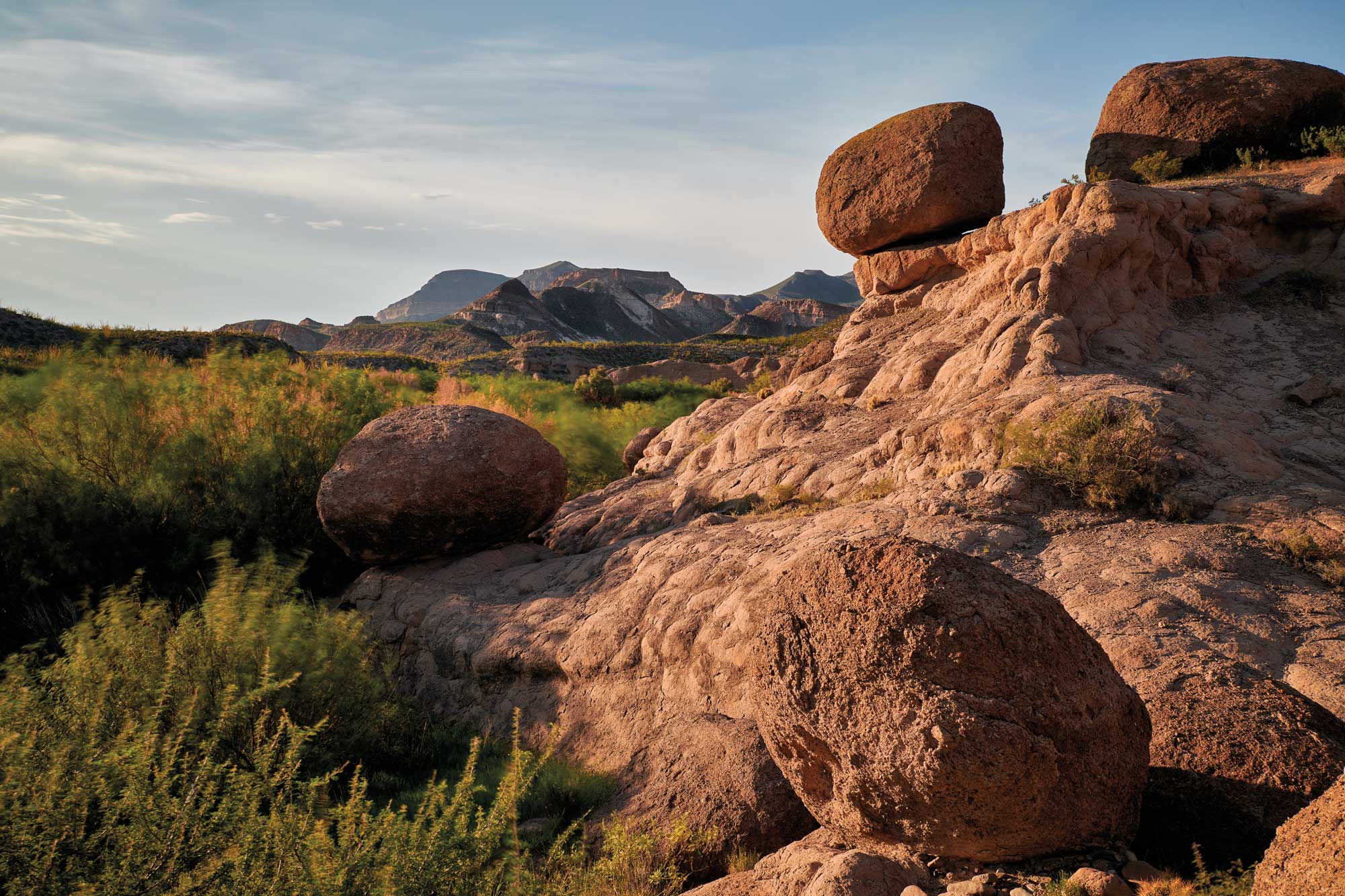
One unseasonably warm November day five years ago, Peter Ormsby nearly lost his way while hiking the strenuous 21.3-mile Rancherias Loop in Big Bend Ranch State Park, Texas’s largest preserve. Summer monsoons had washed away parts of the path, thornscrub and cacti had swallowed its signage, and stacks of cairns meant to guide trekkers had crumbled. Ormsby relied on a GPS phone app to make it out safely—an experience that rattled him enough that he vowed to do something about it.
A year later, after retiring from his career as a United States magistrate judge in McAllen, he returned to the Chihuahuan Desert to ensure other hikers wouldn’t face the same dilemma. Though his duties as a park volunteer sometimes include cleaning restrooms—his least favorite task—Ormsby, now 70, focuses on restoring trails.
Wearing thick gloves and snake gaiters to protect from plant spikes, he rebuilds lost signage and rock piles. Handsaws and loppers help clear sharp overgrowth, which can rip clothes and tear skin. “Just about everything out there wants to stab you,” he says.
His help is crucial, since the two rangers who also maintain the routes have many other responsibilities. “The folks leading the parks in recent years have been working hard to make it more accessible for visitors,” Ormsby says. “But they have to juggle scarce resources to take care of everything that needs to be done.”
This spring, Ormsby and three others rerouted a section of the park’s Contrabando multiuse trail, a 25-mile system of ancient wagon paths popular with mountain bikers. Ormsby knew it was necessary the day a cyclist nearly slid off an eroded hillside in front of him. He, along with some other volunteers and rangers, completed the project by hand, hauling picks, shovels, and rock bars 10 miles to the worksite and sleeping several nights near an abandoned mine until the job was finished.
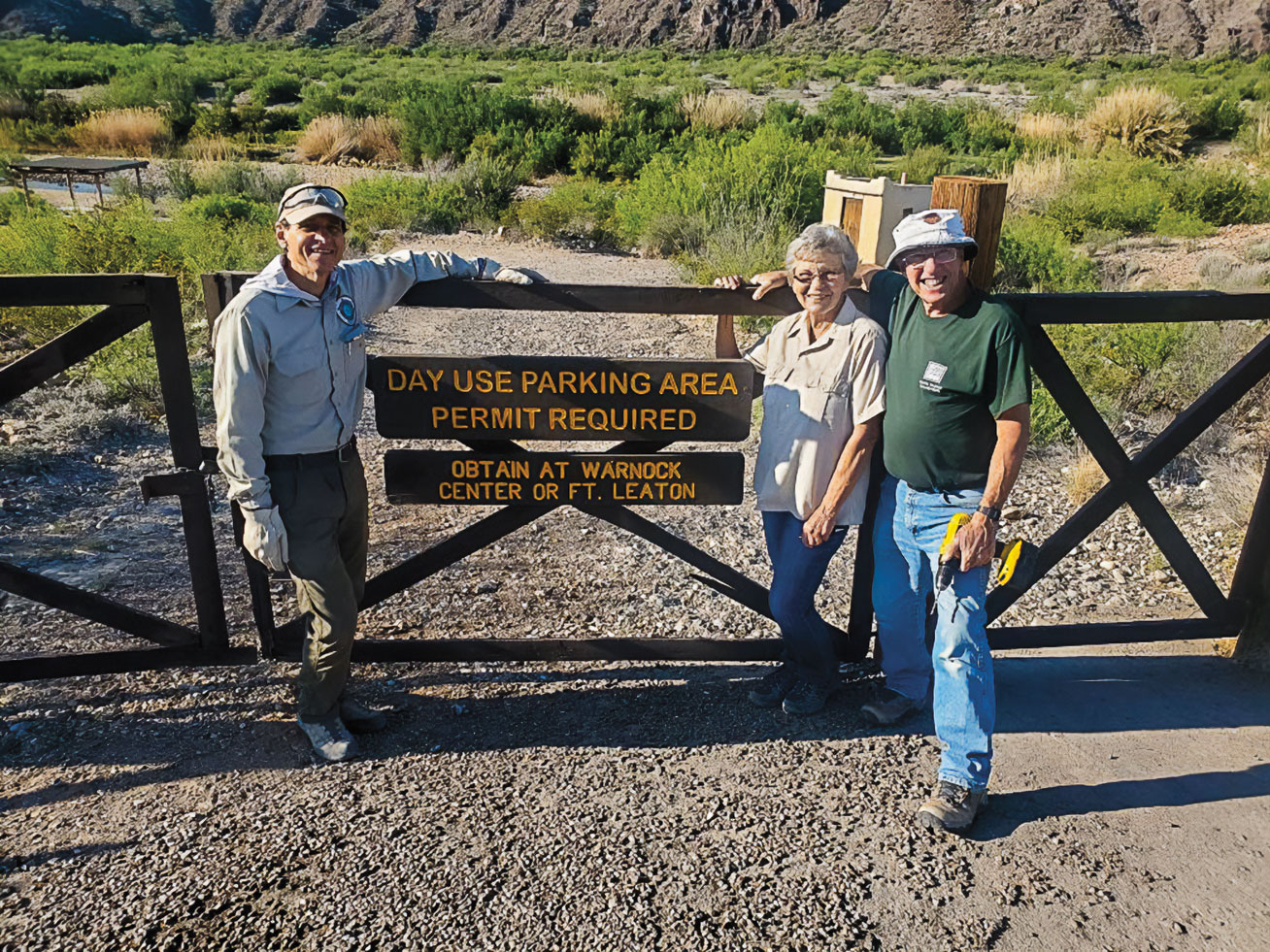
For Ormsby, such backbreaking labor offers a way to stay active and contribute to his state beyond the judge’s bench. In April, while Ormsby was finishing maintenance on the last stretch of the Rancherias Loop—which had caused him so much trouble a year before—a trekker stopped to chat. He was excited to find out who had tidied the path and impressed by how much it had improved since his last visit four years prior.
“I know from personal experience that there is something special about the rugged beauty that is found along the remote trails in Big Bend,” Ormsby says. “I’m glad when others can enjoy some of the same experiences that I have had without the stress of not being able to follow the trails.”
Altogether, he has logged more than 2,800 hours volunteering at Big Bend Ranch and Big Bend National Park, which sits beside it. Often, he hikes to remote campsites to check on folks and complete any necessary maintenance. On one of these checkups, he had to rush a heat-exhausted visitor from the Contrabando Movie Set, a former film location in the state park, to an ambulance that was alerted via satellite. Ormsby drove the man halfway to the ambulance’s Terlingua base—an experience that inspired him to become certified in Wilderness First Aid.
For Ormsby, serving is a privilege, but the solitude of the high desert also suits his personality. Since he started backpacking these same routes with his four children decades ago, he’s been continually stunned by its dramatic canyons and rock formations. “It’s the best worksite in the world, as far as amazing scenery goes,” he says.
And thanks to him, it’s also a much safer one.
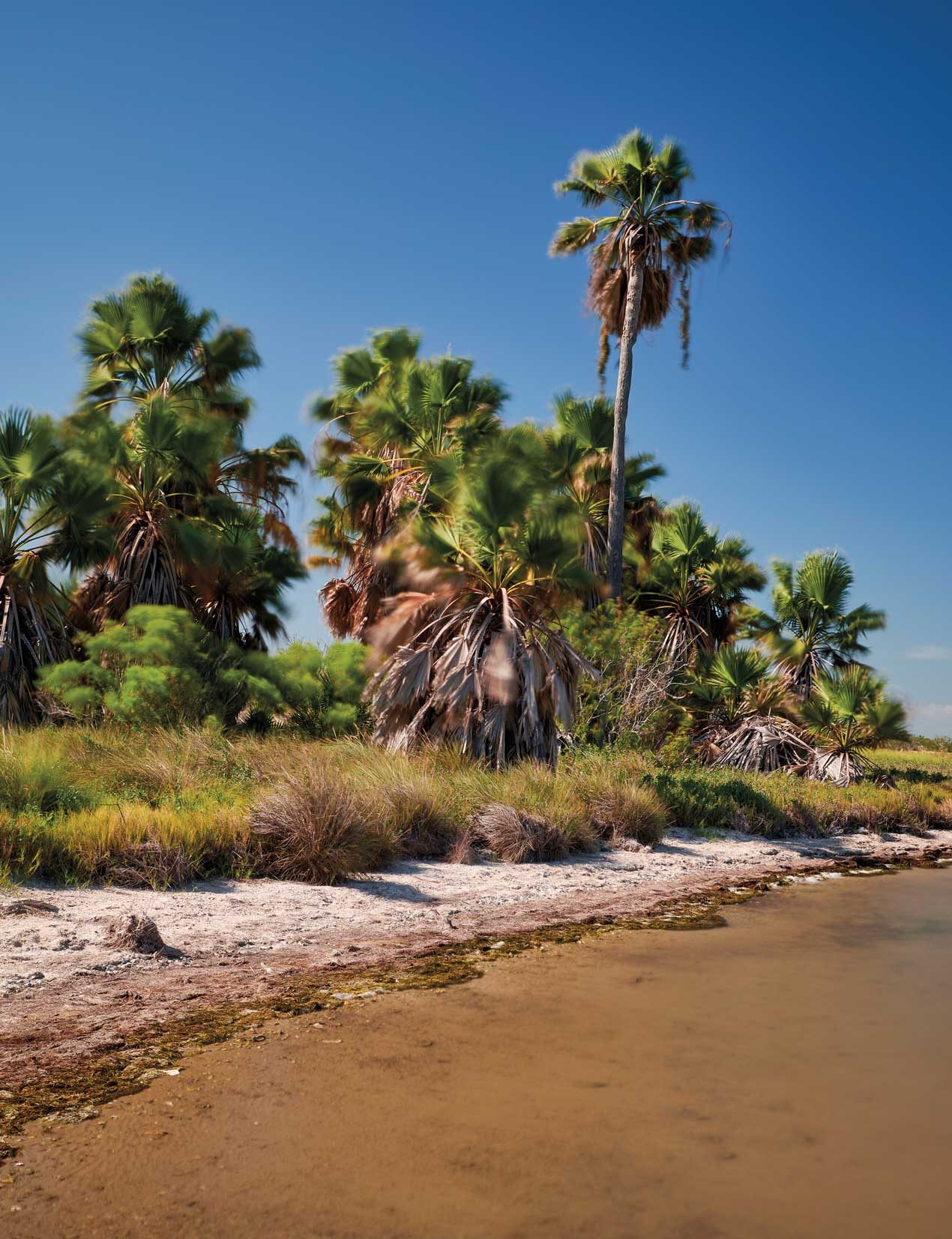
For the past 21 winters, birdwatchers Jane and Les Hall have migrated south, leaving 40 acres of snowy woods in northern Michigan for the sunny trails and coastal marshes of Texas.
The couple, who retired in the late 1990s—Les from his job as a high school principal, Jane from her elementary classroom—volunteer at two of the state’s premier birding destinations: Goose Island State Park and Lost Maples State Natural Area. They funnel their decades of teaching experience into helping birders, especially beginners, find their wings.
The Halls, both 81, began volunteering shortly after they retired and their daughter left Michigan for Texas in 2003. While visiting Lost Maples that year, Les spotted a wildlife biologist banding birds and offered to help. The park manager noticed his dedication and invited the couple to launch the park’s birding program the following year. The job required them to teach visitors about avians, build and install shelters for the creatures, and “generally act like bird nerds.” It came naturally to the two former educators. “Our job is a people job,” Les says. “We talk with people pretty much all day long, every day. That’s what we do.”
Every year now, they leave Michigan just after the season’s first snowstorm and spend Thanksgiving with their daughter near Dallas. Afterward, they steer their camper toward Goose Island in Rockport, decorating the trailer with several thousand Christmas lights and an artificial tree for the holidays. For three months, they lead birding classes and electric tram tours, pointing out herons, whooping cranes, pelicans, and shorebirds to passengers.
In March, they shift to the Hill Country gem of Lost Maples, staying through April to greet spring migrants and assist enthusiasts in spotting rarities like the federally endangered golden-cheeked warbler and the black-capped vireo. Each morning, they head out in a four-wheeler and set up a chalkboard in an area known to house several species. They record those they see and chat with curious hikers who are traveling through. “We spend a lot of time with them, helping them identify the difference between one sparrow and another sparrow,” Les says. “Some people’s eyes start to glaze over pretty quickly.”
Last spring, they counted 98 species, including painted and indigo buntings, Woodhouse’s scrub jays, and yellow-billed cuckoos. Since they started, the population of golden-cheeked warblers has increased 1,000%—thanks in no small part to Les’ other job at the park: catching and painlessly eliminating brown-headed cowbirds, which devour warbler eggs. “He breaks their necks,” Jane says, though Les prefers the technical term “cervical dislocation” and explains that ravens then carry the carcasses away.
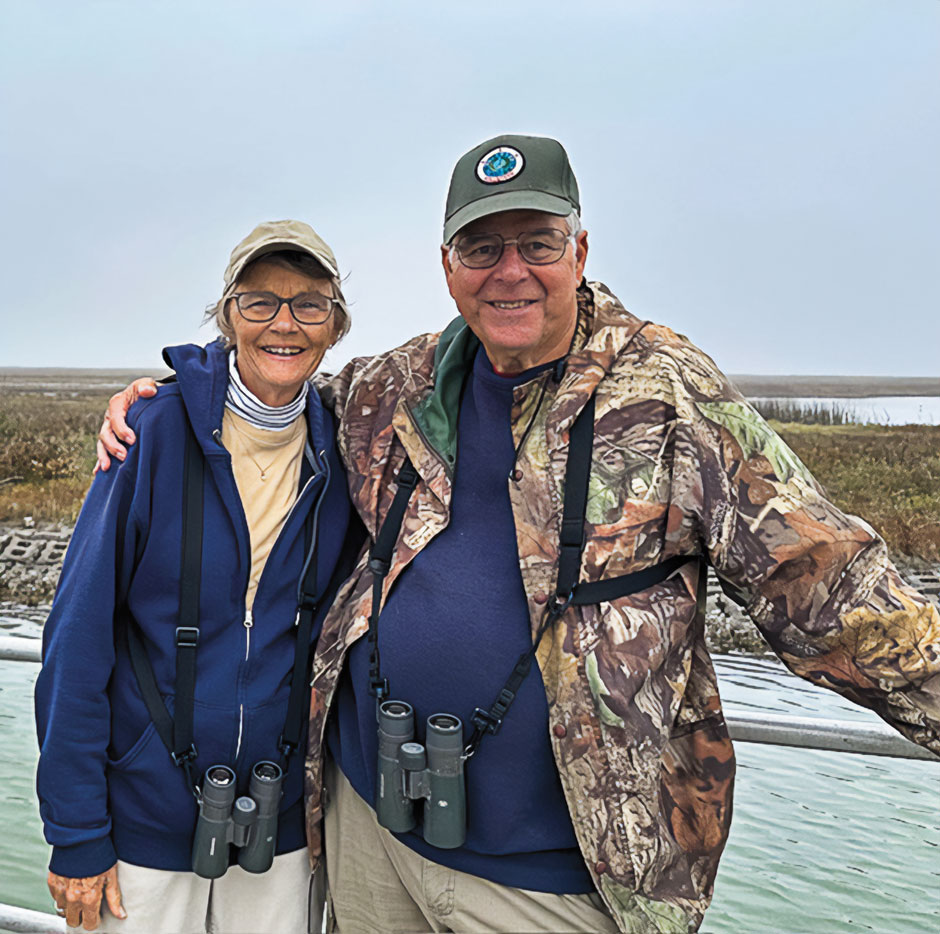
In light of that unpleasantness, the Halls would rather discuss their most memorable birdwatching season at Goose Island. A decade ago, a yellow-faced grassquit—a sparrow-size black songbird from South America and the Caribbean that rarely ventures to Texas—landed in the park, having likely joined a migrating flock of field sparrows by mistake. Word spread, and for six weeks, cars lined up at the park’s gates before they opened. “Our task was to get out in the morning, find it, and then when the birders got there, we could tell them where it was,” Jane says. “The park made thousands of dollars on that bird.”
This past spring, they were rewarded for their hustle—and 7,000 hours of volunteering—with the President’s Volunteer Service Award, a national program that was paused in May. Despite the honor, the Halls remain modest about their contributions. They don’t even consider themselves true birders. “We’re not bird nuts,” says Les, who also enjoys woodworking, welding, fishing, and hunting. Jane gardens and stays active at her church.
But that doesn’t mean the birds feel the same. In late spring, the Halls return to their home in Michigan, where they’ve installed 37 birdhouses and a family of belligerent sandhill cranes waits to be ministered to. “They get mad if we’re not here and peck the cars,” Les says. “If I’m late in feeding them, this guy comes right up to the kitchen window, looks in, and says, ‘Hey! It’s time!’”
Rhonda Farrar first visited Garner State Park in 1967, when she was 17 and country singer Jim Ed Brown’s “Pop a Top” played from the jukebox at its limestone pavilion. It marked the start of a family tradition: two weeks each summer on the Oakmont Loop, floating the Frio River by day and two-stepping at the park’s iconic honky-tonk dances at night.
“My kids are great dancers,” Farrar says. “It’s because they grew up coming to Garner since they were itty-bitty.”
After Farrar left her job as an auctioneer in 2000, her husband, Garron, urged her to become a park host so they’d have a guaranteed spot all summer long. Wanting to be truly helpful, she earned her EMT license to provide medical assistance at the park. Since then, she spends about three months each summer—from May or June through early September—stationed at Campsite 66 in her Rockwood Mini Lite, ready to assist with everything from lost wallets to broken bones.
Garner’s scenic trails and spring-fed river may be idyllic, but the park can see up to three emergencies a day. Farrar has treated compound fractures and heat exhaustion in hikers who attempted Old Baldy equipped with nothing more than flip-flops or Crocs. There are also numerous cases of scorpion stings that can make the lips and tongue go numb. “People think they’re dying,” she says. “All they need is ice and a little Benadryl.”
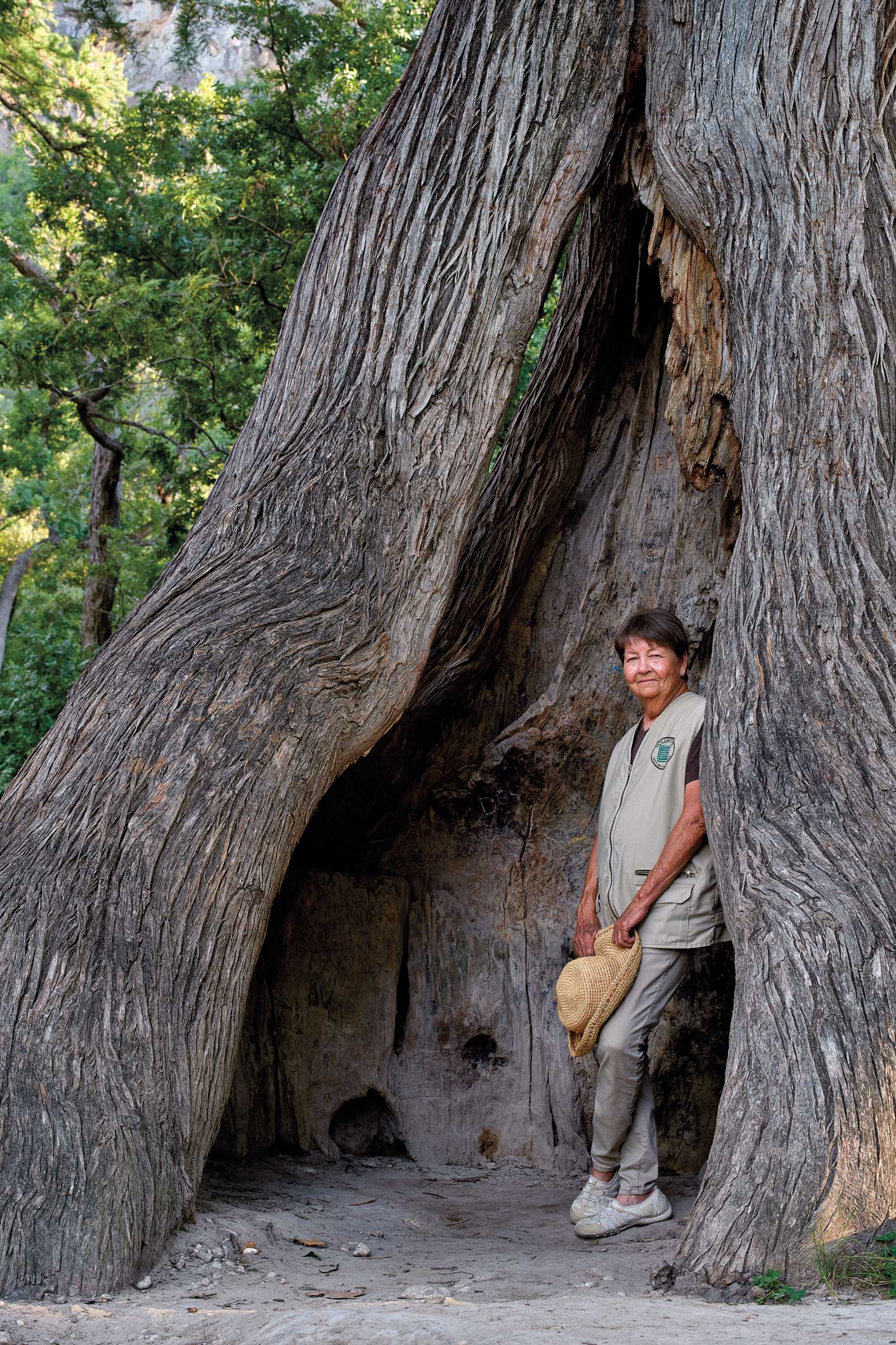
The more dramatic accidents have stayed with her, though. Once, a 10-year-old boy jumped from a rope swing across the river and slammed into cypress roots by the bank. Farrar arrived before an ambulance could reach the park and held his gaze until he blacked out. He survived—and later returned to thank her. “He was the tiniest little boy,” she remembers. “He said, ‘I remember your eyes.’”
Even after a cancer diagnosis three years ago—the only summer at Garner she’s missed since ’67—Farrar returned. Though she’s slowed down and Garron now faces his own health battles, she still responds to emergencies when needed, though EMTs from nearby Concan now cover the park.
There are still plenty of other duties waiting to be fulfilled: inspecting cabins after checkout, retrieving lost belongings, and settling disputes between campers. Once, she got a 3 a.m. visit from a man grumbling about noisy neighbors. He then returned in the morning to complain about clanging breakfast pans. “I just died laughing,” she says.
Then, there was the family who arrived, confused, at an empty site, unaware they had to bring their own gear. Farrar made them a shopping list, and they returned from San Antonio with a plethora of supplies. “Somebody at Academy must love these people, I thought,” she says.
Now 75, Farrar ends each night cruising the campground loop. To cap off the evening, she sits in her rocker playing the game Wahoo with Garron and catching up with longtime campers. The river runs lower and the buzzards are more frequent, but “Pop a Top” still plays on the jukebox, and her grandchildren and great-grandchildren dance at the same nightly gatherings where their parents once twirled.
“It takes me back to when I used to do that,” she says. “Garner is just a part of me.”
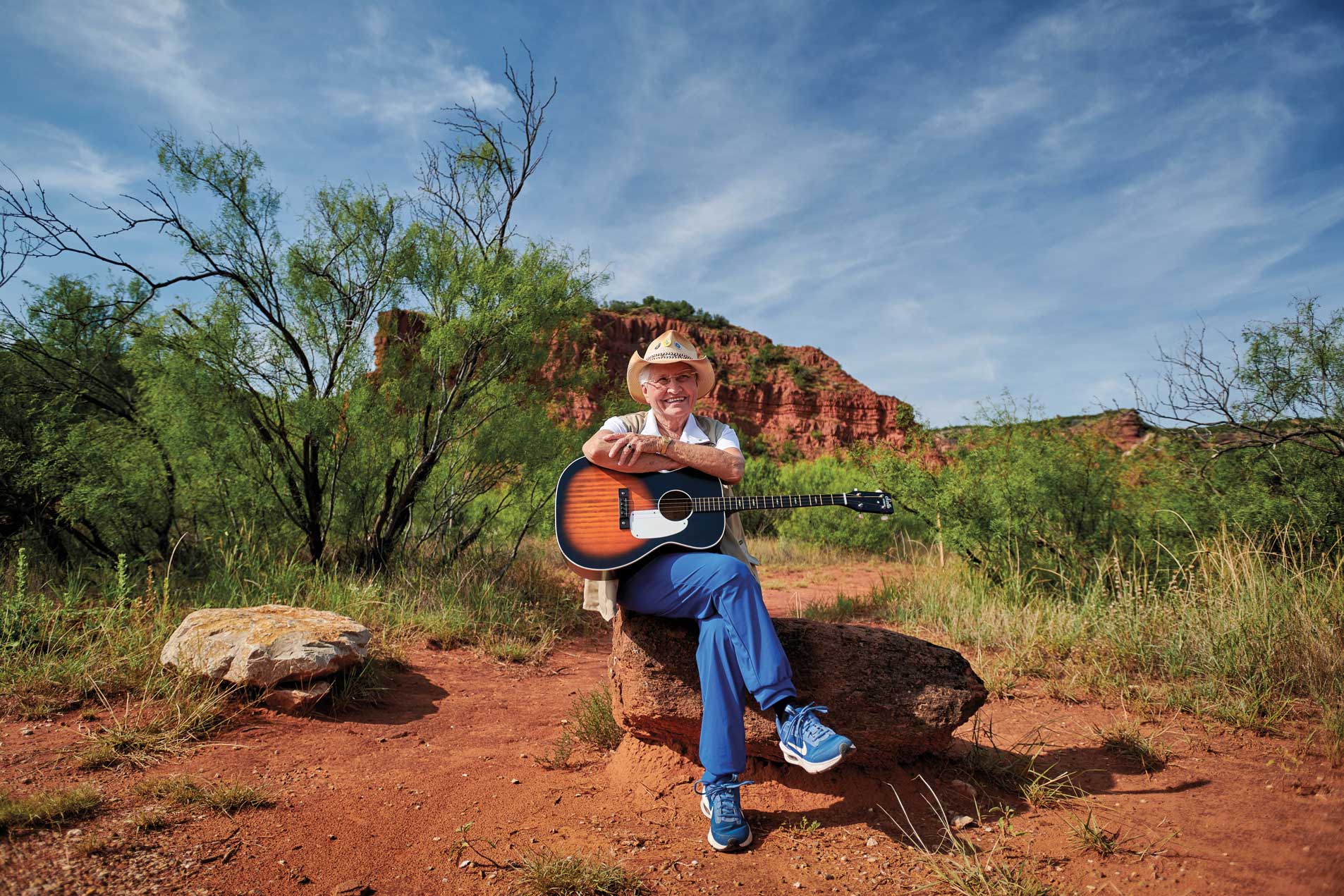
Half a century ago, Freda Bryant and her husband, John, traveled the country as Pentecostal evangelists, rarely staying in one place for long. After many late-night services in California, Kansas, and Wyoming, they often found themselves sleeping in the guest quarters of the churches that welcomed them in.
These days, Freda, 83, is the one doing the welcoming. After John passed in 2007, she moved to Lubbock to care for her aging sister Margaret. That sister encouraged her to become a camp host at Caprock Canyons, a state park they first visited during a family reunion in 1983. She now approaches her volunteer work with the same enthusiasm that she once carried to pulpits and prayer circles.
“One of the rangers told me, ‘Freda, nobody can keep up with you!’” she laughs. “I said, ‘I just want to stay busy.’”
Each day, Bryant rises before the sun to pray for the staff and campers, then walks up to 2 miles, collecting trash from nearly 50 campsites. Afterward, she scrubs the park’s trademark red soil from toilets and showers until they sparkle. “I don’t like dirty bathrooms,” she insists.
Her four-wheel-drive Ford is a familiar sight not only to campers but also to the herd of 300-odd shaggy bison who roam the park—including 60 rust-colored calves nicknamed “little red dogs.” When the animals use their heads to switch on water faucets, it’s Bryant who follows in their wake, turning off each nozzle.
Even knowing their unusual tendencies, the bison still manage to surprise her. Last year, Bryant, who stands an inch shy of 5 feet tall, didn’t notice one creeping dangerously close until it snorted just a few feet away. “I tell campers, ‘You’ve got to be a rotisserie, always turning,’” she says. “[The bison] don’t make a sound unless it’s rutting season. Then you can hear them coming from two or three blocks away.”
In her downtime from wrangling animals, she photographs rock formations—ones visitors might miss while driving through. One reminds her of a ship, another of an engine. Others call to mind a wagon train. It’s an epic setting for the purple sunsets that still astonish her.
“I’m telling you, I’ve been blessed,” Bryant says. “I’ve seen everything in these United States of America, but to me this park is the most captivating place.”
Despite her love for the canyons, Bryant left the park this fall to pastor two churches in the flatter farming towns of Turkey and Quitaque. But she insists she’ll be back. “The superintendent told me I can come out and volunteer any time I want,” she says. “And I will because I want to keep the park clean. No trash anywhere!”