

Texas Roadside Motels for Weary Travelers
MOTOR HOTELS HAVE OFFERED RESPITE SINCE THE DAWN OF CAR TRAVEL
On my first trip to far West Texas, many Decembers ago, I stayed at a roadside motel outside Terlingua in the Chihuahuan Desert. I was eager to take in the landscape, but, arriving very late, I had to wait until morning. Looking outside my window at first light, fog covered the earth like a blanket, as though the yuccas were just waking up, too. I replay the memory often, the pleasantly spartan room mirroring the rich coldness of the desert outside. There’s a particularity to encounters at a good roadside motel.
My affection for the roadside motel is not out of a nostalgia for some bygone version of America. Rather, I seek out spaces in this country where you can feel in the middle of things instead of apart and sealed off. There’s a porousness to this specific type of accommodation. It’s not a place where you shut out the world, but where you let it in a little more.
The story of the American roadside motel has its origins in that spirit. As soon as people started purchasing cars, they began touring around in them, taking in the country that was suddenly accessible to them. Early on, in the 1910s, drivers would camp out right on the side of the road, bedding and tents in tow. The number of “No Camping” signs grew along with the number of new drivers. But eventually landowners saw an opportunity in road-trippers: lodging. For a small fee, drivers could stay at an autocamp—basically an organized place to pitch a tent with on-site services. Their success led to autocamp entrepreneurs building simple cabins. A new industry was born.
In 1933, Harper’s magazine dispatched two writers to report on this phenomenon. “Ever since the war, Americans in increasing numbers have been climbing into their cars and wandering over the countryside out of sheer restlessness,” they wrote. The little cabins—called autocourts, au-tels, motorist hotels, mo-tels—were the new architecture of this national restlessness. “There’s gold in them shacks—so long as the cars keep rolling by.” And roll by they did.
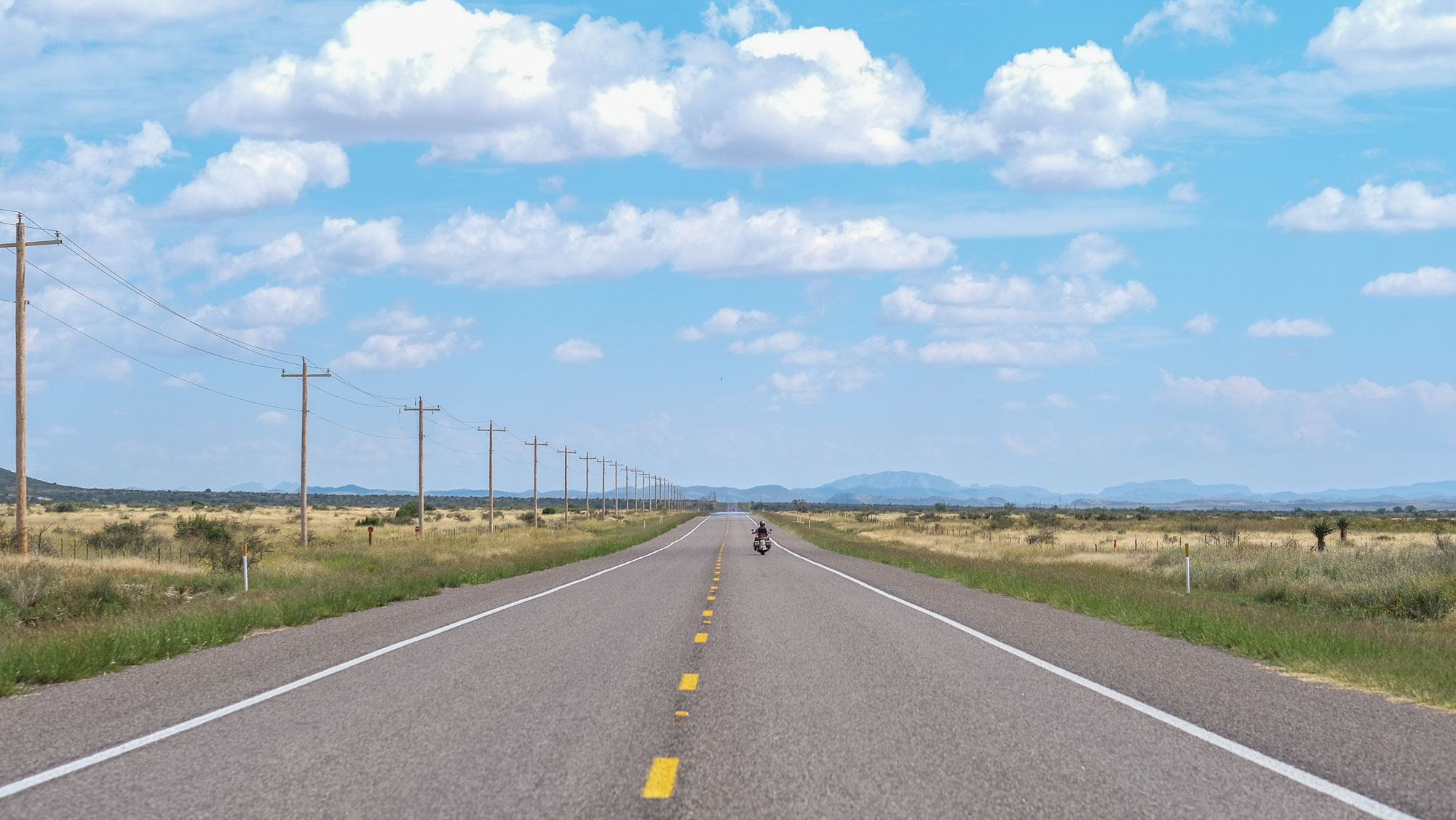
By the mid-1940s, “motel” had become the prevailing term. These were by and large mom and pop enterprises, but there was one big Texas-based exception: Waco’s Alamo Plaza Tourist Courts, the country’s first chain motel. The facade of each Alamo was a miniature replica of its namesake. This spectacle of form was important to American commercial roadside architecture. In his book Main Street to Miracle Mile, landscape historian Chester Liebs compares looking out of a moving car to watching “the movie through the windshield,” where “architectural costumery” served a purpose for the very fact that it stood out. Signs mattered, too. With a lot of competition and no Google reviews to vet, bright neon on a dark highway beckoned motorists to pull over and stay.
As road tourism grew, so did the motel industry: fewer mom and pops, more chains. With the dawn of the interstate highway system in the late 1950s, the American roadside as people knew it, and, by extension, the motel, would change forever. Many of the settlements lining the old highways were rendered ghost towns as traffic moved to the interstates. Accommodations moved to the superhighway, too. By the 1970s, the chain interstate-side motel was basically a hotel. They looked the same, felt the same. “Like the roads leading to airports everywhere, you never really know where you are,” the architecture critic Ada Louise Huxtable wrote in 1973 of the ubiquitous motel-hotel. Then as now.
To me, a good roadside motel means simple, clean, moderately priced, and not overly aestheticized, with operable windows and an unfussy vibe of its own. It’s hard to find these days, but it still exists. I went back to far West Texas to seek some out. With a steady supply of road-trippers, wilderness seekers, and art tourists, this pocket of our state is a motel haven: Historically, a lot of motorists in need of overnight lodging traveled US 90 and State Highway 118, and they still do. I gravitated toward old motor courts, relics of those decades of American road-tripping before the interstate, traces of an architecture of restlessness past.

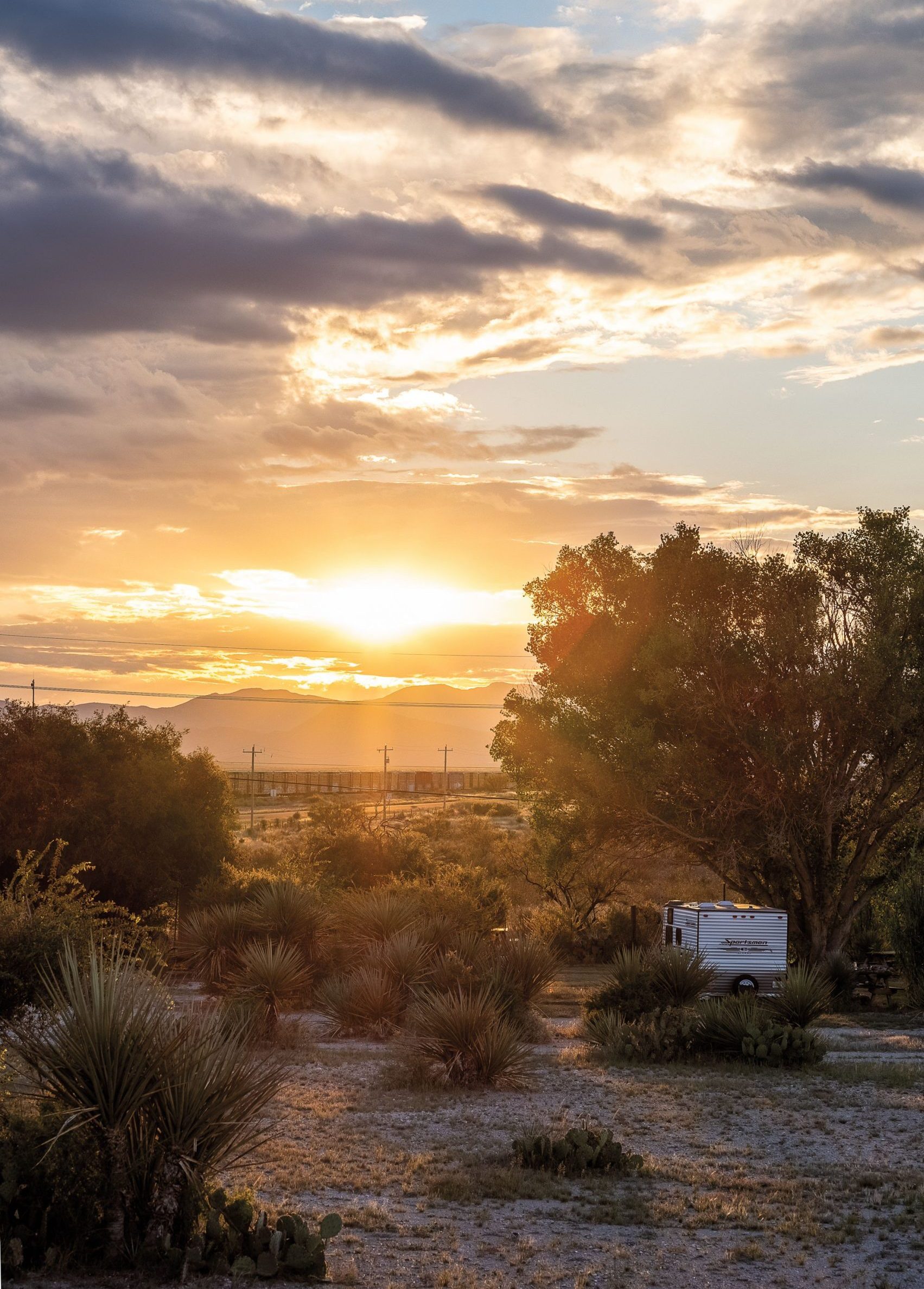
Marathon Motel & RV Park
Wim Wenders’ 1984 neo-Western film Paris, Texas, is loosely based on Sam Shepard’s book Motel Chronicles. At the start, Travis, played by Harry Dean Stanton, finds himself in Terlingua. His brother, not having heard from Travis in four years, ventures there from Los Angeles to pick him up. Together they drive to the Marathon Motel, an old tourist court that looks about as down on its luck as Travis is.
Turns out, the Marathon Motel is a real place—in Marathon. And it’s no longer derelict.
701 us 90, Marathon.
432-386-4241; marathonmotel.com
Rooms start at $110/night.
Behind any old roadside motel still thriving today is a story of luck: demolitions averted, the right proprietors appearing at the right time. Originally built in 1940, the Marathon Motel fell into disrepair once US 90 traffic dried up. By 1987, it was nearly condemned by Brewster County. John and Mary Hoover, a couple from San Angelo, stepped in that year, buying the motel as a retirement fixer-upper and restoring it to its simple glory one room at a time.
In 1999, Danny Self, an Austinite by way of Midland, was staying at the motel on a road trip over spring break with his daughter when he noticed a “For Sale” sign in the office window on his morning run. “This place is either going to really attract you or really repel you,” he says of the region, looking back, and he was so much in the camp of the former that—with no experience in hospitality—he bought the motel. “It was all built on serendipity,” he likes to say. His first big project was to build a pink adobe courtyard that 25 years later still blooms with rose bushes and native plants, an oasis in the desert. Then, Self turned his attention upward—to some of the darkest skies in the country. He coordinated with astronomers to bring high-powered telescopes to the property, inviting guests to experience the oasis above.
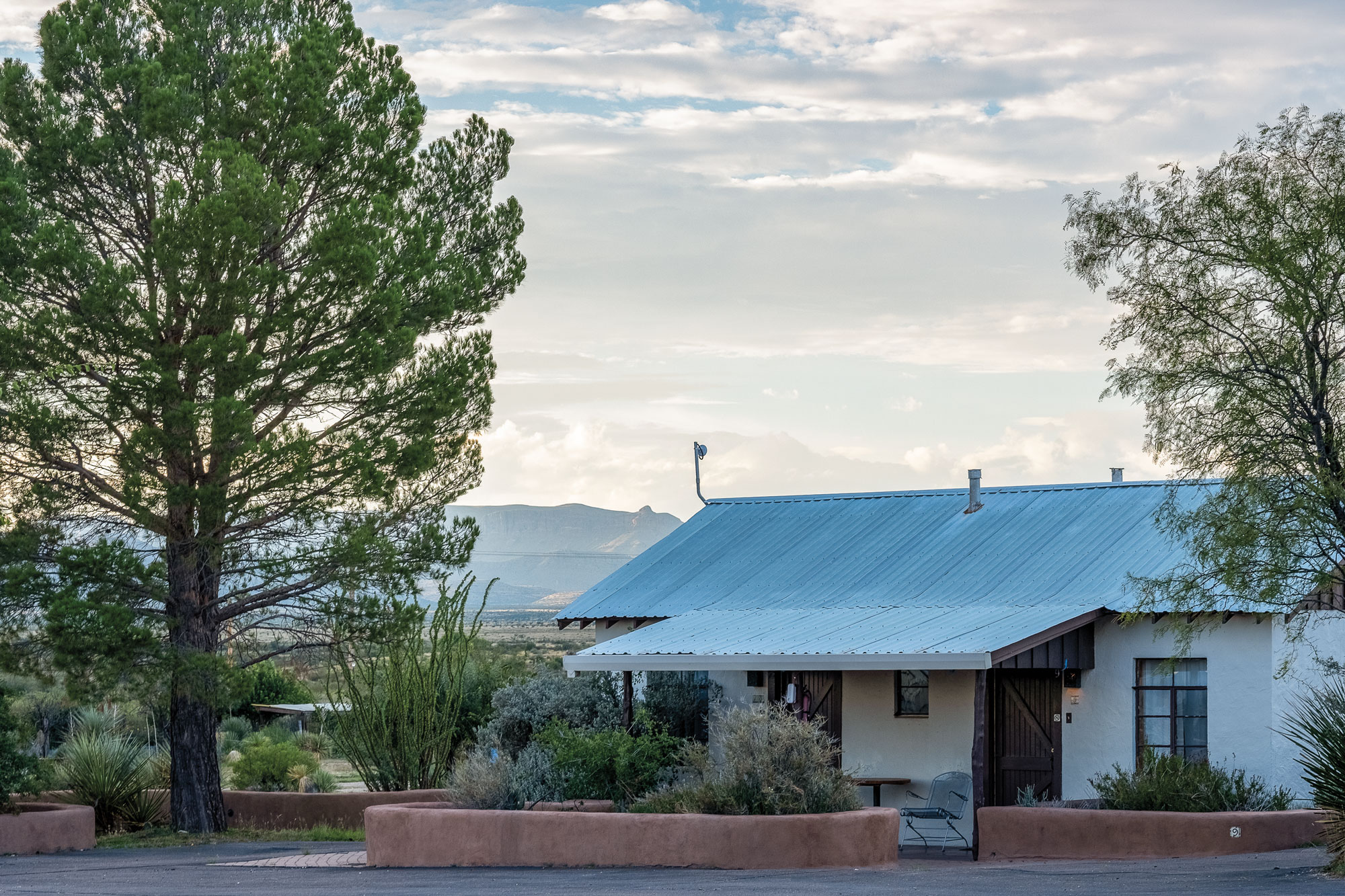
I check into Room 3, down a small hill from Wenders’ movie setting. In this small white stucco cabin, the windows are big, the light is ample, and the walls are paneled in pine. Birds enjoy Self’s gardens. I open the windows and listen to them sing before walking through the gardens to the highest point on the property to watch the sun set over the Marathon Basin. A motel sign—the same exquisite one from Paris, Texas, restored under Self’s proprietorship—flashes in neon. Twinkling white lights move like dogs chasing each other in a loop to form the letters “TV.”
I make my way toward a huge telescope beside a sign that reads “Alien Parking Only All Others Will Be Abducted.” Bill Ramey, amateur astronomer and full-time resident at the motel’s adjacent RV park, hosts the nightly star party. Six strangers, aged preteen to late 70s, and I take turns looking at a few of the 90 moons of Jupiter. The waxing crescent moon is setting in the west, and the sky transforms into a tapestry of stars.
“This is like when we were children!” a nurse from Waco shouts, eye pressed to the telescope. She reminisces about when the countryside was free of light pollution and the nights were this starry. Back in my room, I sleep like a baby on a bed whose sturdy pine headboard is inscribed with, in big cursive letters, “As Free as the Wind Blows.”
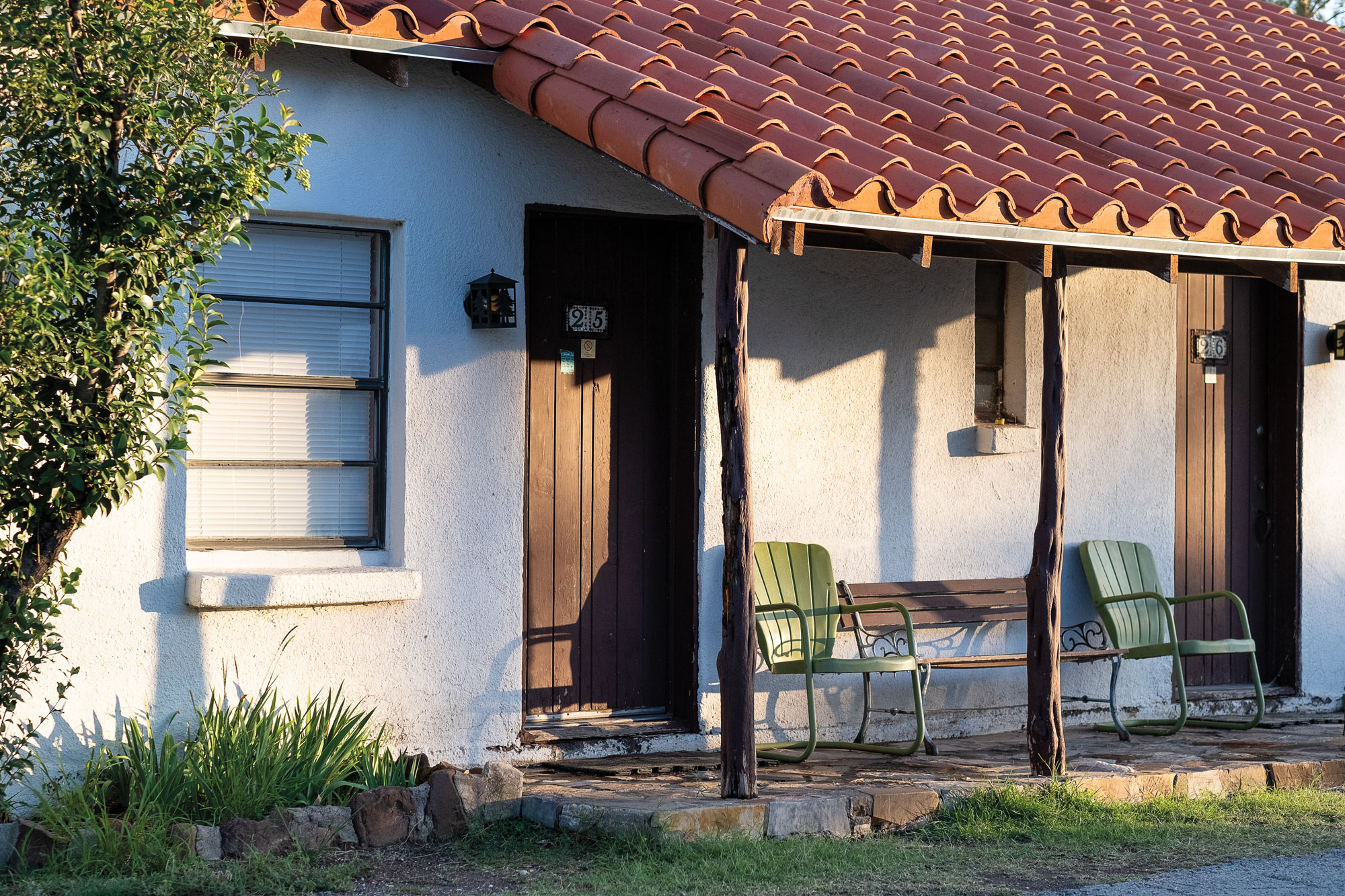
Antelope Lodge
Alpine has two standout roadside motels, though neither of them bears the word. The Maverick Inn, across from Sul Ross State University, is a renovated motor court from 1927 (then Camp Grandview) thought to be the oldest continuously operating motel in Texas. I’ve stayed there a couple of times after hiking trips in Big Bend. With its Saltillo tile floors, patinaed adobe walls, and wood-beamed ceilings, the place feels like the lodging equivalent of a good hug. This time, however, I venture to the Antelope Lodge, on the western edge of town.
2310 W. US 90, Alpine.
432-837-2451; antelopelodge.com
Rooms start at $99/night.
Built in 1949, the Antelope is made up of simple white stucco cabins with red tile roofs, mesquite vigas, and worn green metal lawn chairs the exact color of the nopales in the garden. For me, the Antelope offers the ideal motel room: flora outside big casement windows, a good writing table, concrete floors, and no television. A little austere, a place that lends itself to thinking.
Like most surviving motels, this one has changed hands a lot. New Orleans-based hotelier Jayson Seidman bought the Antelope a few years ago from the person who had bought it a few years earlier from the couple who owned it for two-plus decades. Seidman is the proprietor of several restored old motels, including San Antonio’s standout Ranch Motel. “A lot of us were not alive or were very young when the motel was in full color and firing on all cylinders, and I think our era has been observing the decay of motels,” Seidman says.
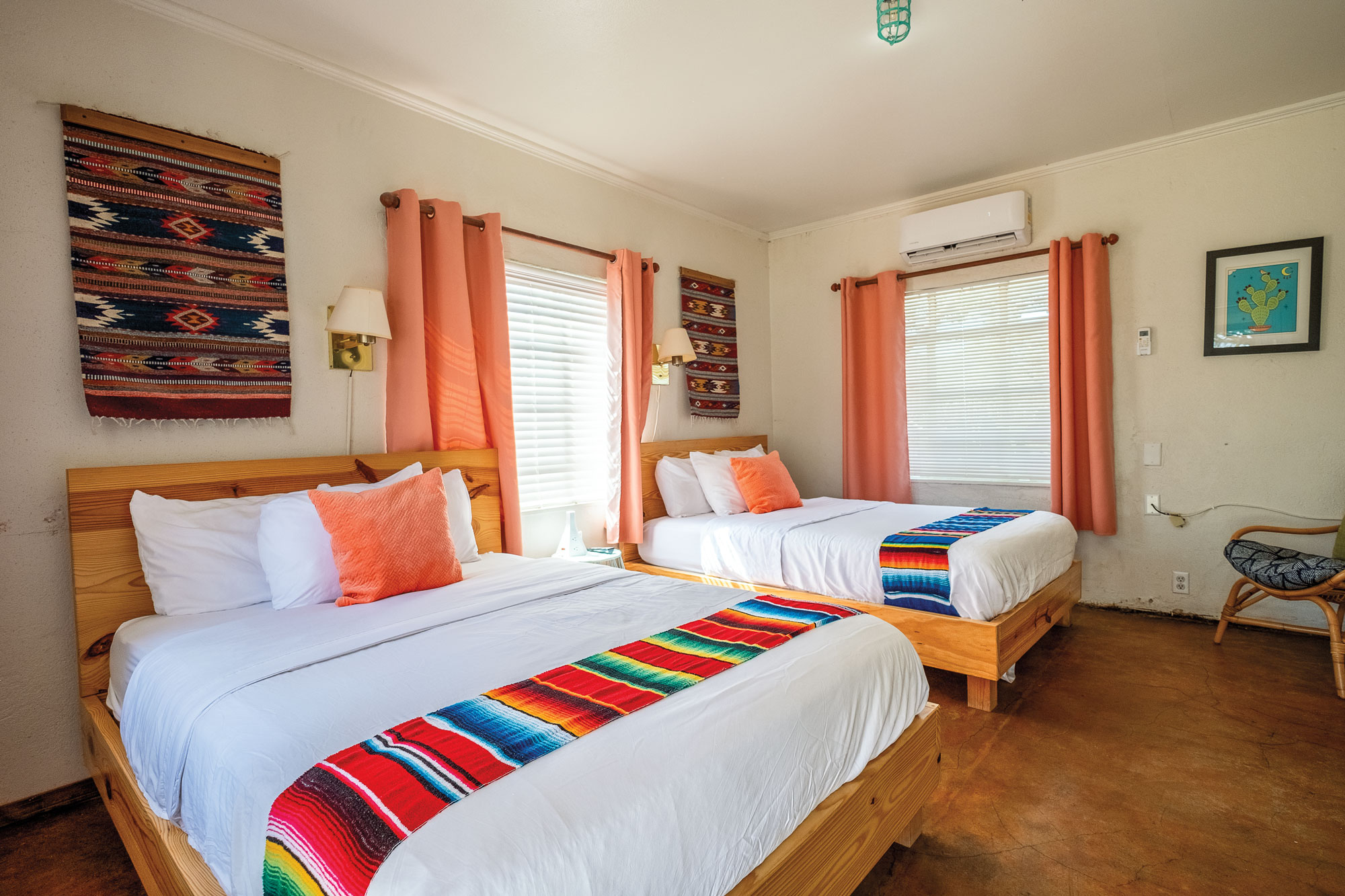
Consider him in the business of intercepting this decay. “I don’t want to try too hard to make it too new,” Seidman says, “because you’ll ultimately erase a lot of the layers.” This includes not only physical layers, but also the ones you can’t see: “The more metaphysical, soulful layers.”
I leave to meet up with a local friend of a friend. Walking around downtown Alpine, we run into Kerry Awn, an Austin legend—muralist, painter, cartoonist, comedian—who moved out here a few years ago. In a strike of kismet, I learn Awn is also a student of the roadside motel. Growing up in Houston in the 1950s with grandparents in New Mexico, he spent a lot of time in Route 66-side motels on family road trips out west. Thirty years later and back in Tucumcari for a stand-up show, something inside him stirred when he saw the motels lit up along the roadside in the dark. So, Awn started painting them—and he hasn’t stopped.
More and more abandoned motels are being demolished these days, he notes wistfully. “Sometimes they tear down the motel, but they leave up the sign.” The new LED signs just don’t glow the same as the old neon ones. “Neon is really the best,” he says. I follow Awn into his studio on 6th Street near Holland Avenue, where his motels—canvases hung up on the walls—are so incandescent that, looking at them, you feel like you’re gazing out at Route 66 in its prime through the windshield at night. Or at a television screen. Motels in full color.
Stone Village Tourist Camp
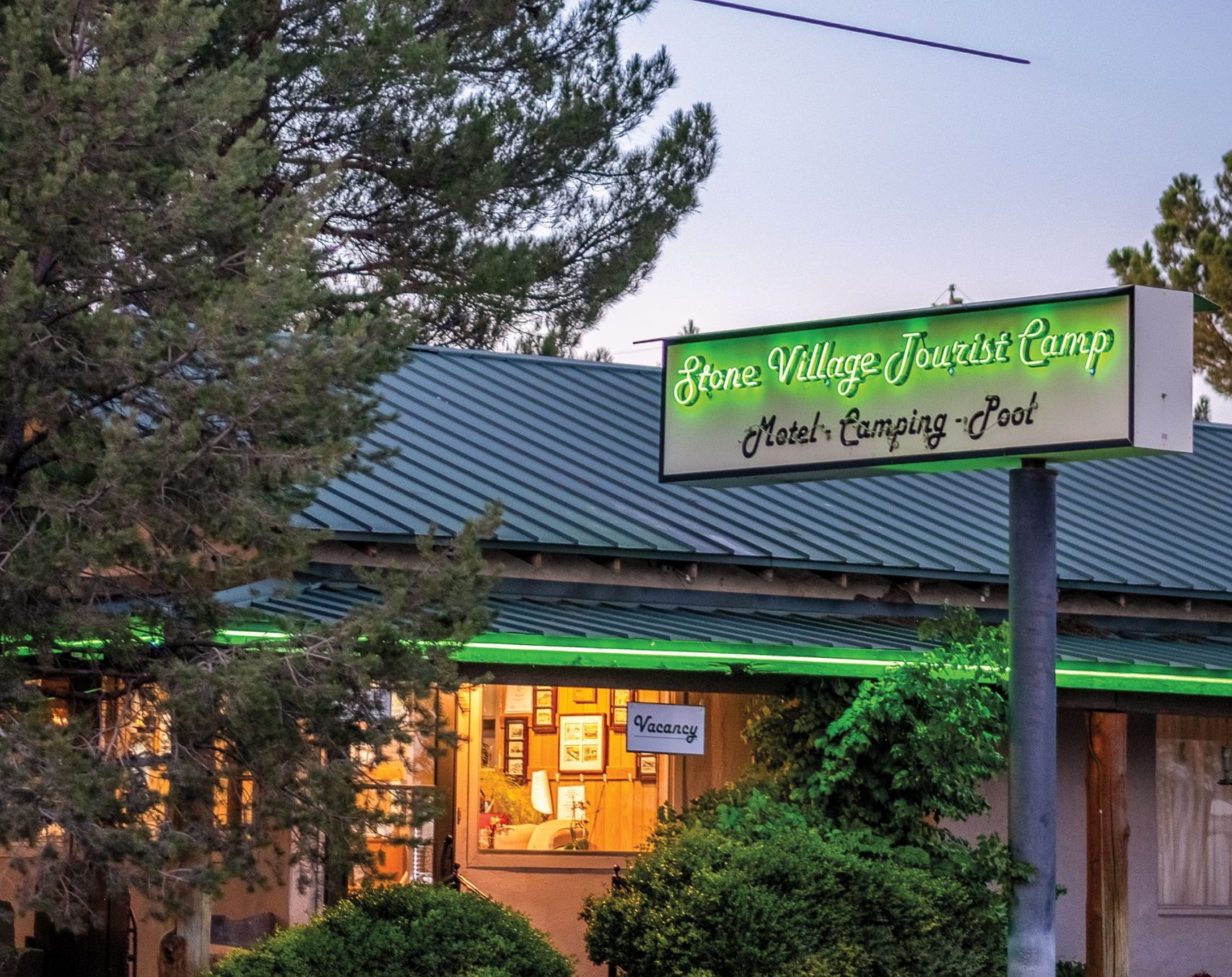
For years on West Texas road trips, I’ve stopped for supplies at the Stone Village Market, an old deli and store on the main drag of Fort Davis. Good small town delis are like good motels: rare to come across, and a delight when you do. This one sat directly next to, and shared owners with, a motel named the Stone Village Tourist Camp. Both are, in fact, clad in stone.
Randall Kinzie runs the motel. His wife, Belinda, runs the store. A cat named Charcoal runs between the two. Meeting Randall when I check in, he gives me the lay of the land: “That used to be a motel, that used to be a motel, and that used to be a motel.”
509 State St., Fort Davis.
432-426-3941;
stonevillagetouristcamp.com
Camp rooms start at $44/night
and motel rooms at $89/night.
The Stone Village first opened in 1935. Kinzie’s grandfather was the owner from 1969-1976. Joe and Lanna Duncan, lauded restorers of historical properties including Hotel Limpia in Fort Davis, El Capitan in Van Horn, and Paisano in Marfa, bought the motor court from the owner who had bought it from Lanna’s father, who had bought it from Kinzie’s grandfather. The Duncans embarked on a full renovation. They added a green metal roof that extends over ponderosa pine vigas to give each room a covered porch. They also turned the carports adjacent to the rooms into “camp rooms”—screen door, canvas curtain, iron beds, stone walls.
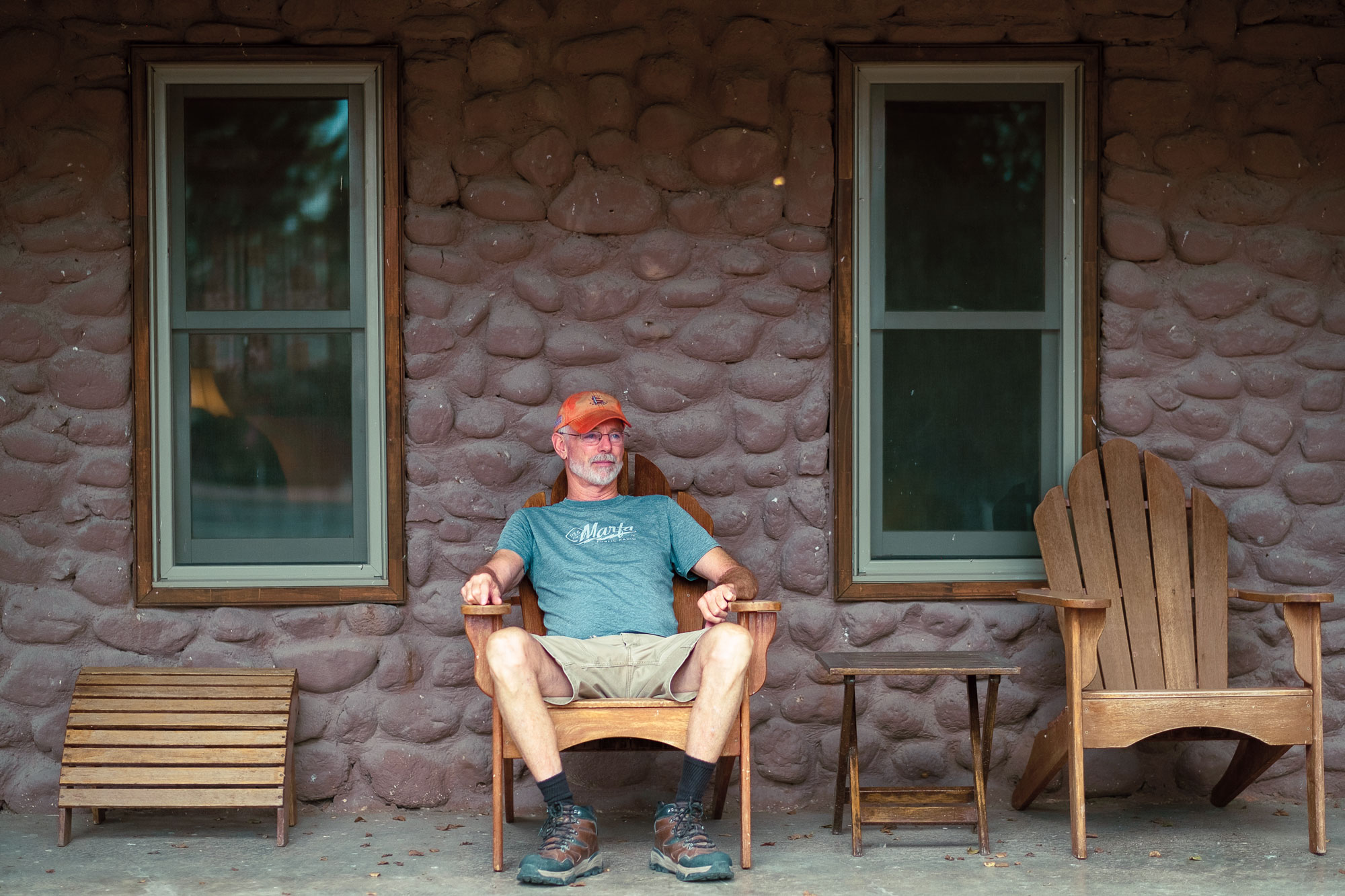
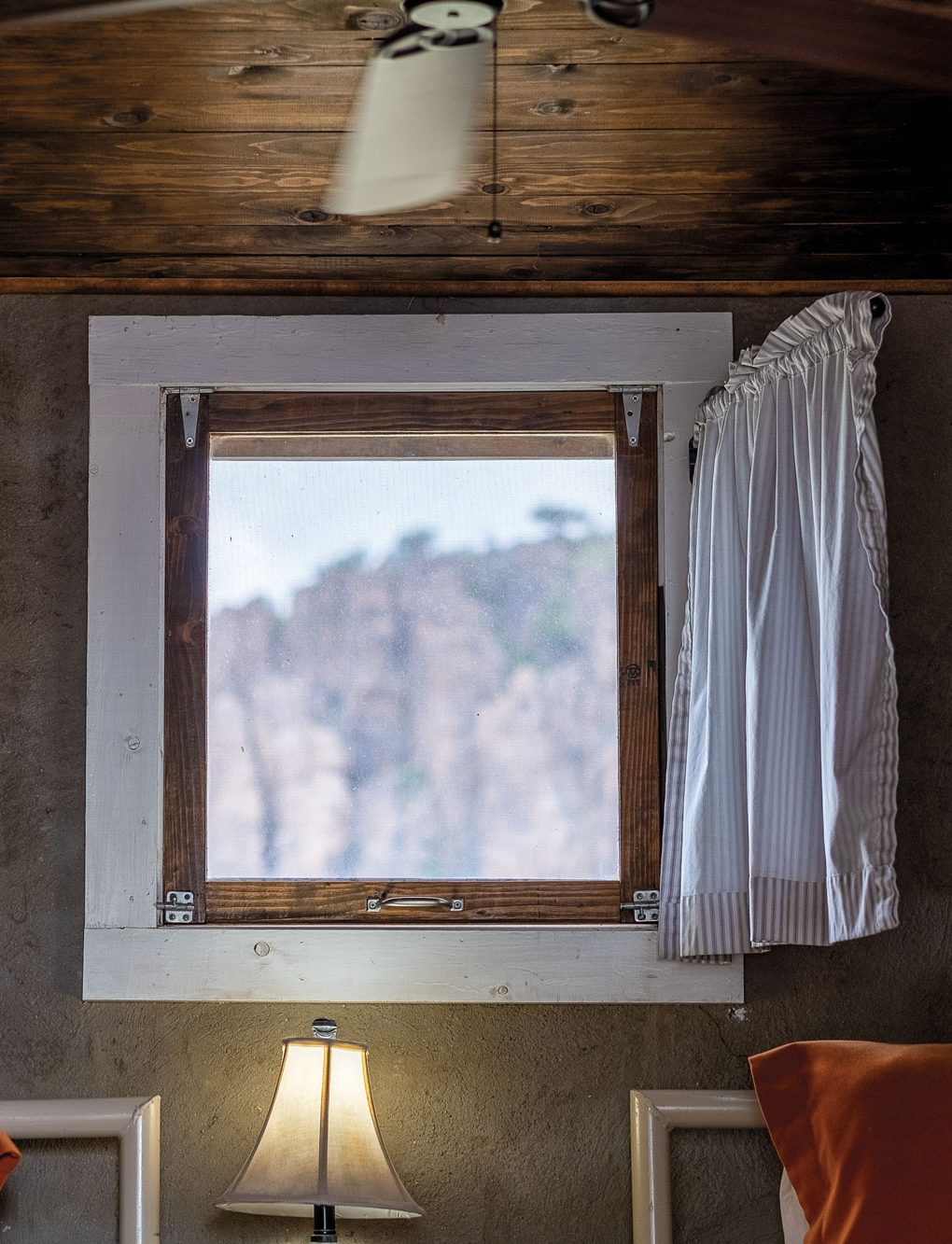
Randall bought the place in 2011. Two generations of two different families have owned it, he notes. That tracks. The rooms at the Stone Village—classic, pared down, comfortable, meticulously maintained—evoke those simple, family-run inns one finds more often on European backroads than on state highways.
It has just stopped raining and a couple of kids are already swimming in the Stone Village’s pool. On the porch, four men sit around on Adirondack chairs beside their motorcycles. I join them and discover they have been coming to this motel every year since the 1980s. It’s base camp for when they meet out here to ride their motorcycles on the backroads of far West Texas. Few cars, fewer cops. It’s clear these guys really love this motel. They prefer the camp rooms. “You’ve got a pool, a bed, the store next door, what else d’ya need?”
The bikers speculate about what this place was like in its early days. Outlaws probably came through here, one says. “Who knows,” another chimes in, “Bonnie and Clyde could have stayed out here in one of these rooms.” Who knows? I go to my room. Dark falls. The bikers’ laughter and the smell of high desert after rain floats through deep-silled, cedar-framed windows. Soft voices fade in the night, a soundtrack for motel dreams.