

RIDE OF THE CENTURY
TAKE A TRIP DOWN MEMORY LANE WITH 100 YEARS OF SIGHTS AND BITES ALONG ROUTE 66
In the beginning there lay the Texas High Plains, a vast and seemingly limitless prairie. Then, in 1876, Charles Goodnight and John Adair arrived, establishing ranches south of what is now Amarillo. Their cattle businesses necessitated trails, then railroads, then roads, and within 50 years, two important routes spilled out from what became known as the Yellow City. In 1925, the federal government gazed upon the country’s hodgepodge of randomly named highways and created a board to ensure clarity and uniformity, standardizing and regulating the interlocking roads of the nation.
Major routes were given numbers that end in zero, and the stretch of road from Chicago to Santa Monica, California—including a slice of the Texas Panhandle—was christened “60.” But Gov. William J. Fields of Kentucky claimed that esteemed numeral for a highway in his state, and the 2,000-mile western route was given a more mellifluous number by Oklahoma civic leader Cyrus Avery. Often called the father of the Mother Road, Avery served on the Joint Board of Interstate Highways and fortuitously suggested a figure that remains lodged in the American psyche to this day: Route 66.
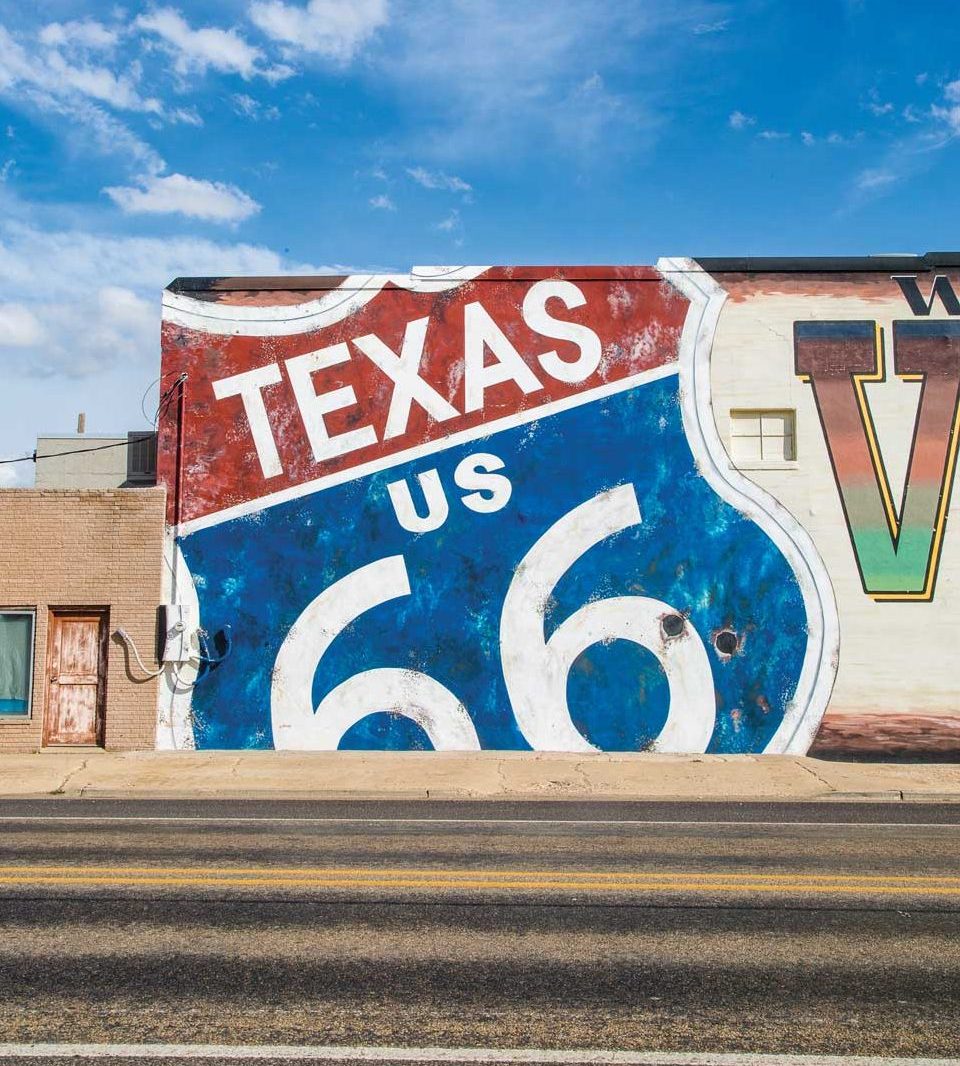
On Nov. 11, 1926, when the route became official, not a single mile of its span in Texas was paved, and travelers had to pass through gates while driving on dirt and gravel roads from Oklahoma to New Mexico. The first bricks were laid in 1927, and it would be another decade before all 178 miles were paved with asphalt—near the end of the Great Depression and the Dust Bowl.
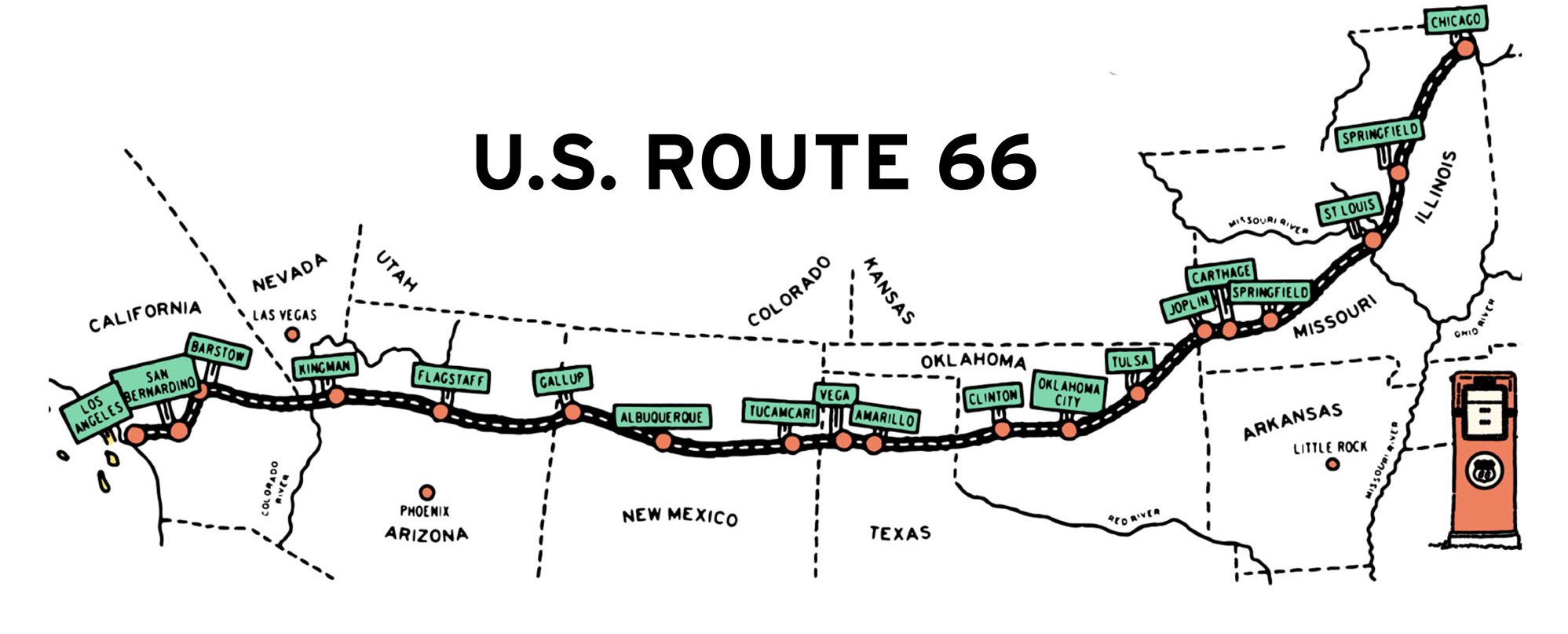
While many gas stations built during that early era remain, and their art deco lines still embody Route 66 in the popular imagination, the road’s heyday came after World War II. That’s when the nation’s newfound peace and prosperity meant that hitting the road in, say, a Chevy Bel Air became an affordable and accessible vacation for families craving adventure. In Texas and elsewhere, restaurants, motels, and other attractions enticed customers with over-the-top designs and concepts that would have gone viral before “going viral” was a thing. One example: Amarillo’s Big Texan Steak Ranch and its iconic 72-ounce cut, free to those who can finish the whole thing since 1960.
But even bigger than that gut-busting top sirloin is Route 66’s cultural impact. In his 1939 novel, The Grapes of Wrath, John Steinbeck gave it the enduring nickname, “The Mother Road.” In 1946, Nat “King” Cole famously crooned about it in “(Get Your Kicks on) Route 66.” In the early ’60s, CBS aired a Route 66 television show, an anthology-style drama. More recently, the creative team behind Pixar’s 2006 film Cars traveled Route 66 to find inspiration for their fictional town of Radiator Springs.
The creation of the Interstate Highway System in 1956 replaced much of the Texas portion of the route with Interstate 40. But curious travelers can still drive much of the original road, which was officially decommissioned in 1985. Sure, there are sections of Route 66 that dead-end and require some creative circumnavigating. But the reward is an unmatched view of Texas’ natural beauty and the perfect opportunity to embrace a slower pace. Brave those minor inconveniences, and you’ll find a road that’s still vital, still fighting—and still, true to the spirit of those intrepid entrepreneurs 75 years ago, a little weird.
After all, it takes something extra to implore travelers to stop for a selfie at your water tower in the social media era. Today, those visitors come from as far away as Shanghai and Israel, Brazil and Poland. “Our dream has always been to travel America with our own motorhome,” says Karola Rüegg, a tourist from Switzerland who embarked on the route last July. “Although we only drove part of [Route 66], it made us more and more curious. The more we saw and experienced, the more we wanted to keep going.”
For 100 years, Route 66 has fascinated the public. Whether it’s the robust history, the dazzling architecture, or the newer businesses that continue to emerge along the stretch, Route 66 makes you want to hit the road—and, as Rüegg said, just keep going.
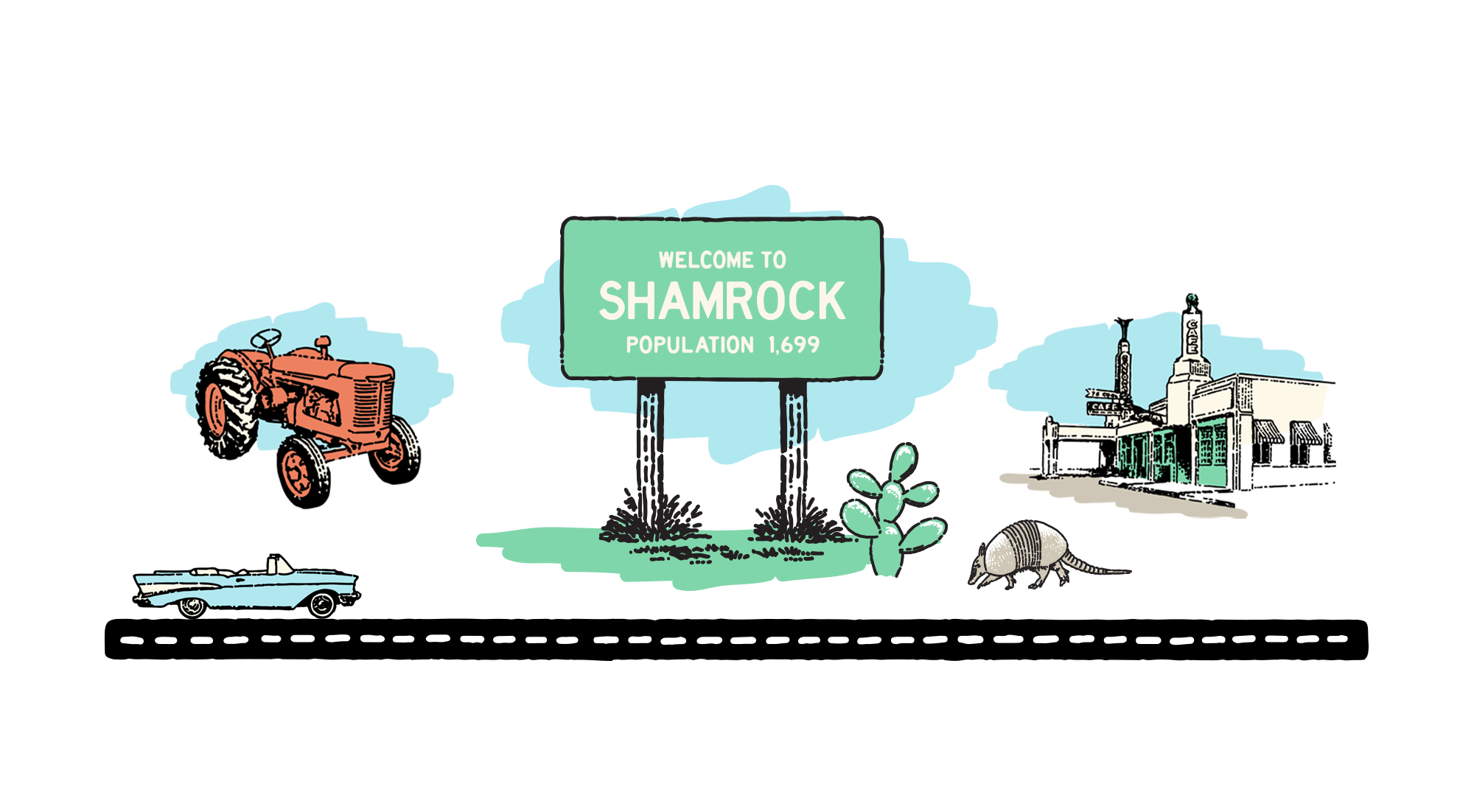
Fifteen miles south of the Oklahoma border, you’ll encounter the easternmost town on the Texas strip of Route 66, though its name conjures a land an ocean away. The city of Shamrock, population 1,699, was founded in 1902 by George Nickel, an Irish immigrant who wanted to give Texas a little taste of his home country.
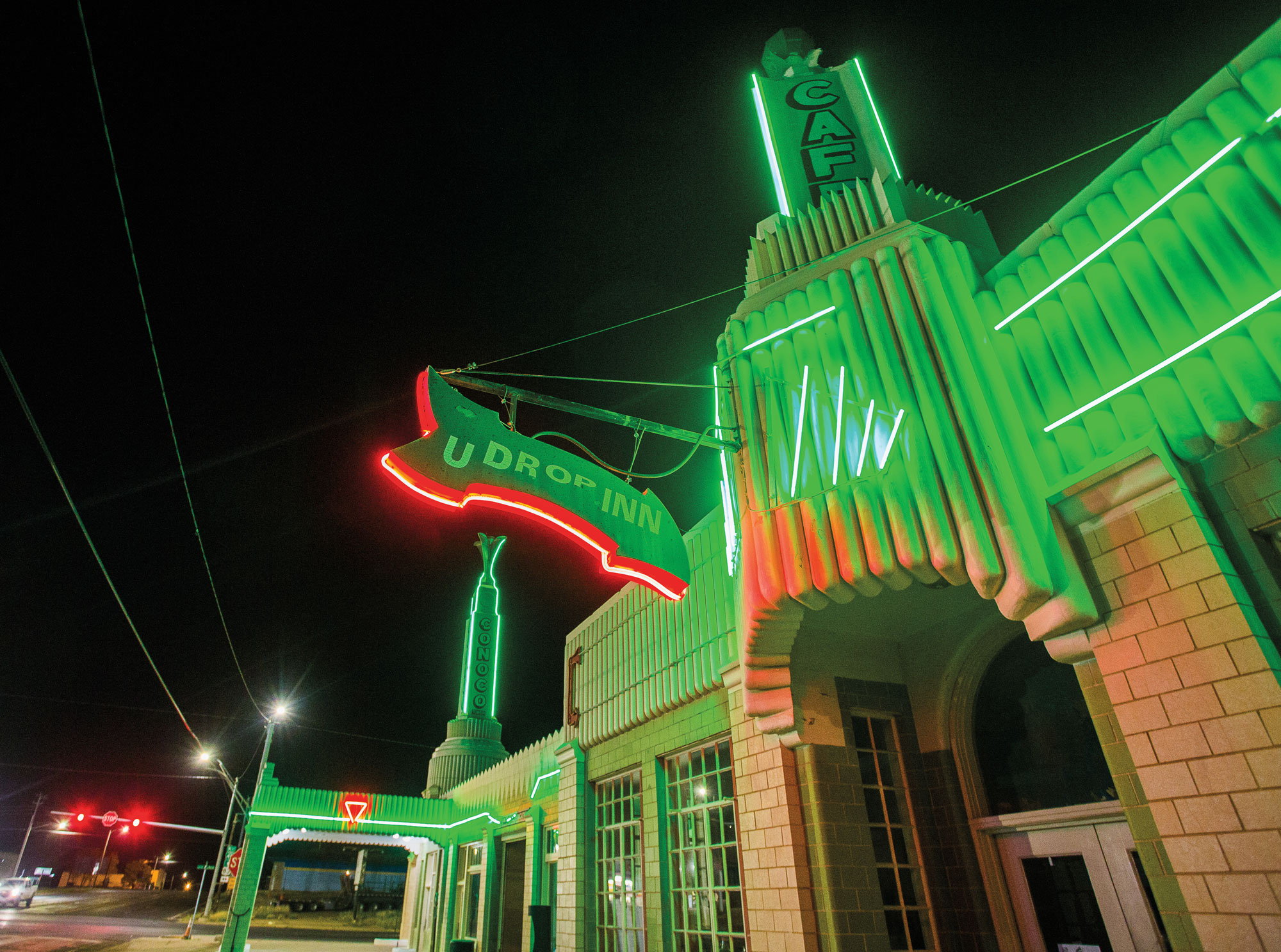
No visit through this honorary piece of the Emerald Isle would be complete without a stop at its most iconic landmark: The Tower Station and U-Drop Inn Café. The 1936 gas station and restaurant owes its moniker to an anonymous local youth, who won $50 in a naming contest. Its art deco design, meanwhile, can be attributed to original owner John Nunn, who scratched out its blueprint in the dirt using a rusty nail. According to current owner Lianne Halpern, the building is better known today as the inspiration for Ramone’s House of Body Art in Cars.
“When we first opened the café, we had a young boy named Axel come in for his birthday,” she says. “I told him that we knew Tow Mater [the film’s tow truck], and his eyes lit up. We have a sun visor for a car that looks like Tow Mater’s eyes, and we put it in an old truck. We told Axel we called Mater to come see him. It was so memorable for him that the family kept coming back.”
The smell of barbecue wafting from a smoker in the parking lot demonstrates that a visit to U-Drop is a full sensory experience. Fuel up with a pulled pork sandwich or brisket burrito and steer your ride toward the Pioneer West Museum. Completed after the stock market crashed in 1929, this former hotel once consisted of 20 rooms that would set you back a dollar for a single occupancy room. After 35 years of business, and another decade where it lay dormant, a group of concerned citizens bought the building for $10 and saved it from destruction. The museum opened in 1978 and is now home to exhibitions celebrating the town’s history, including historic figures like Wheeler-born astronaut Alan Bean and the buffalo soldiers at Fort Elliott in the late 19th century.
“Shamrock is my hometown, so I grew up remembering Route 66,” says De-An Turner, the museum’s curator. “Growing up and living in a small town, there wasn’t much to do on the weekend, but you could sure bet that everyone was out riding around honking their horns at each other on a Saturday night and ‘making the drag,’” a loop that consisted of driving from the water tower to Aubrey’s, a since-departed burger shack.
Shamrock’s citizens might not make the drag these days, but thanks to natives like Turner, the lucky spirit of the city’s founder endures.
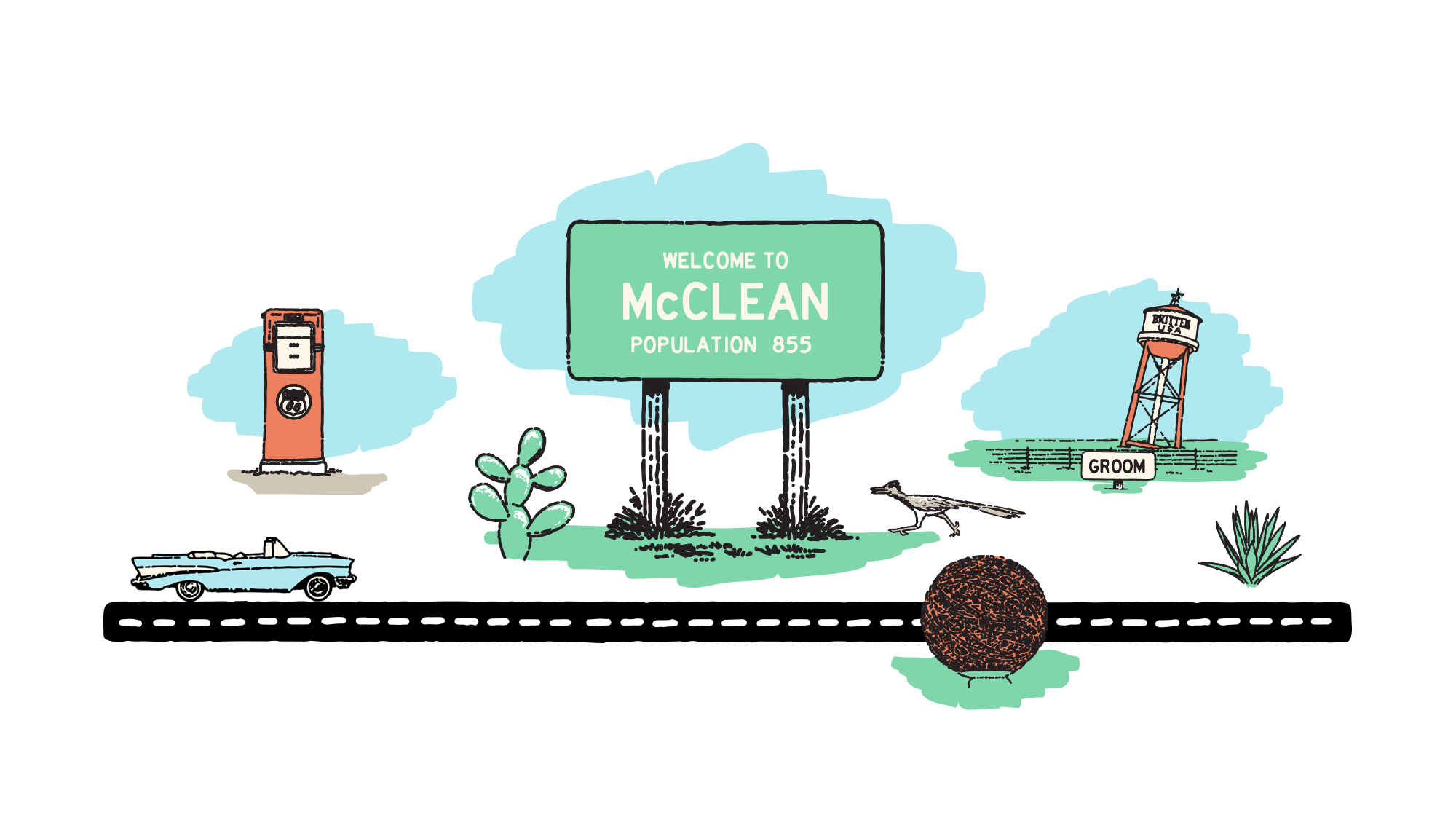
What does a small Panhandle town, population 855, have to do with perhaps the most famous nautical disaster in history? Founder Alfred Rowe was one of the ill-fated passengers aboard the Titanic. A wealthy Peru-born Briton, Rowe persuaded Texas railroad commissioner William P. McLean to build a local switch in 1901 to help him transport cattle from his RO Ranch near Clarendon. Rowe laid out the town, now called McLean, then moved back to England. On a return trip 11 years later, Rowe happened to choose a luxury liner that would spell his demise. His story, along with that of the town’s relationship to Route 66, can be gleaned at the McLean-Alanreed Museum, where you’ll also find artifacts from McLean’s past as a WWII-era prisoner of war camp for Germans, locally nicknamed the Fritz Ritz.
You’ll also be around the corner from the first Phillips 66 station in Texas, which was built in 1928, about the same time oil was discovered nearby. You can’t venture inside, but the exterior has been lovingly restored by the Old Route 66 Association of Texas, which adorned the gabled roof and retouched the vintage pumps in the brand’s early iconic orange-and-black color scheme.
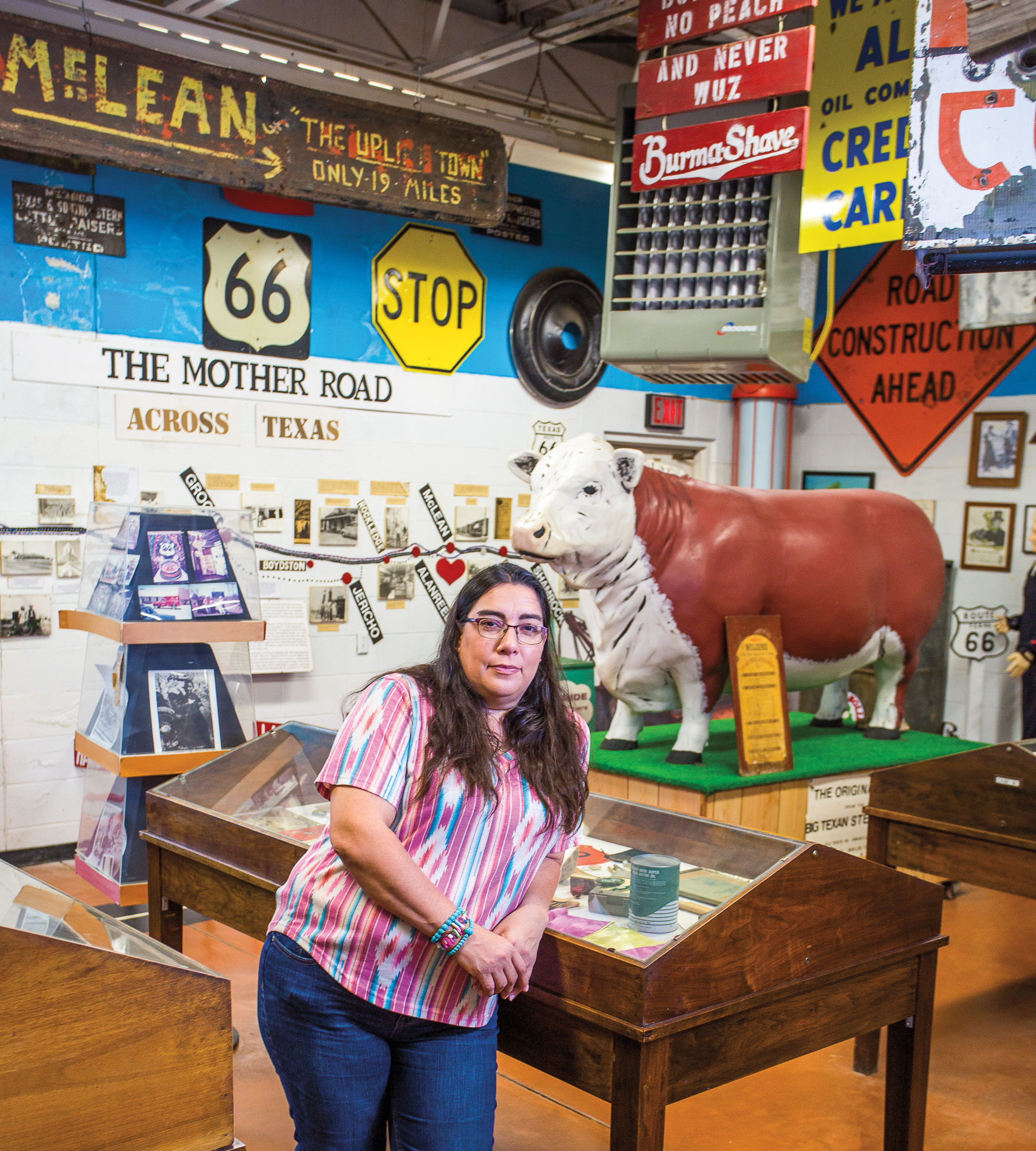
But it’s the nearby Devil’s Rope Museum that feels most in the entrepreneurial spirit of the Mother Road. Devoted to barbed wire, it’s housed in a former bra factory built of cinder block, earning McLean the nickname “The Uplift Capital of the World.” The museum opened in 1991, attracting stars like William Shatner and Scottish actor Billy Connolly, who filmed an episode of his Route 66 series here in 2011. And while the history of barbed wire is the main draw—particularly Amarillo’s role in its creation and the 1874 patent by Joseph Glidden—there’s also more than 700 Route 66 artifacts, including archival photos and a full-size replica café. “Route 66 is special to me because it’s our town,” curator Leigh Anne Isbell says. “Working at the museum, we learn from travelers and they learn from us. Route 66 connects rural towns to the rest of the country, and it still connects travelers to each other today.”
As you head out of town, stop on the side of the road and pose for a selfie with the Leaning Tower of Texas in Groom, installed in the early ’80s by former Army Air Corps engineer Ralph Britten. Give thanks for paved roads, too—the section of Route 66 between Alanreed and Groom was once known as the Jericho Gap, notorious for trapping travelers in its black gumbo soil. An especially lethal two-lane section of this road had another foreboding nickname—Bloody Alley. Don’t worry: Just like traveling by sea is safer than it was 114 years ago, the road is friendlier today thanks to modern amenities like pavement, additional lanes, and a wider surface area.
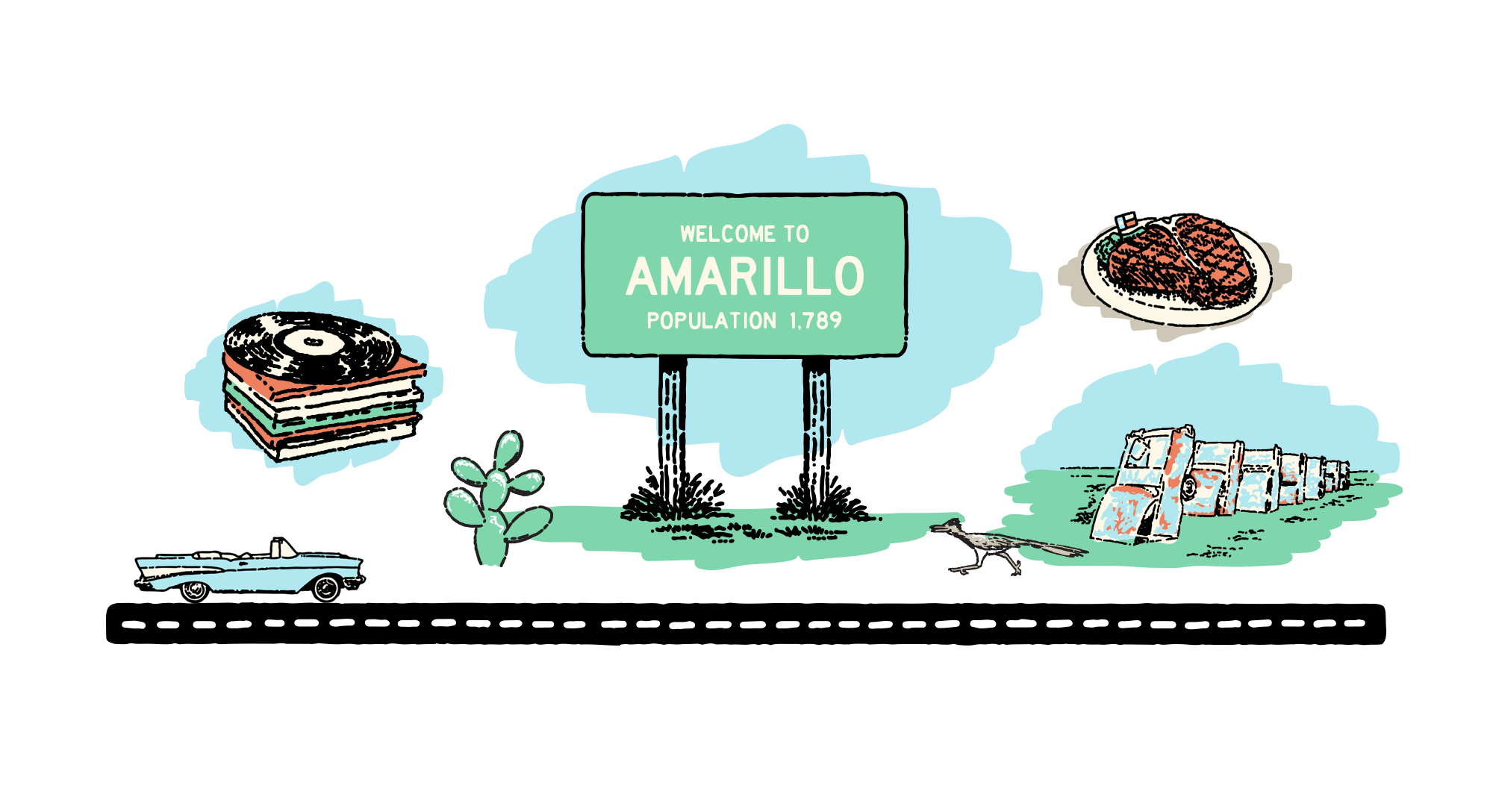
When Route 66 came into being, Amarillo was a railroad town. But the road, running through the San Jacinto Heights neighborhood, brought tourists to the Queen of the Texas Panhandle. The same year that Route 66 was commissioned, an indoor swimming pool called the Nat changed ownership and became a dance hall, where it hosted everyone from Louis Armstrong to Buddy Holly. Today, it’s an antiques shop where you can still stand on the stage and look out over a dance floor now filled with vintage trinkets.
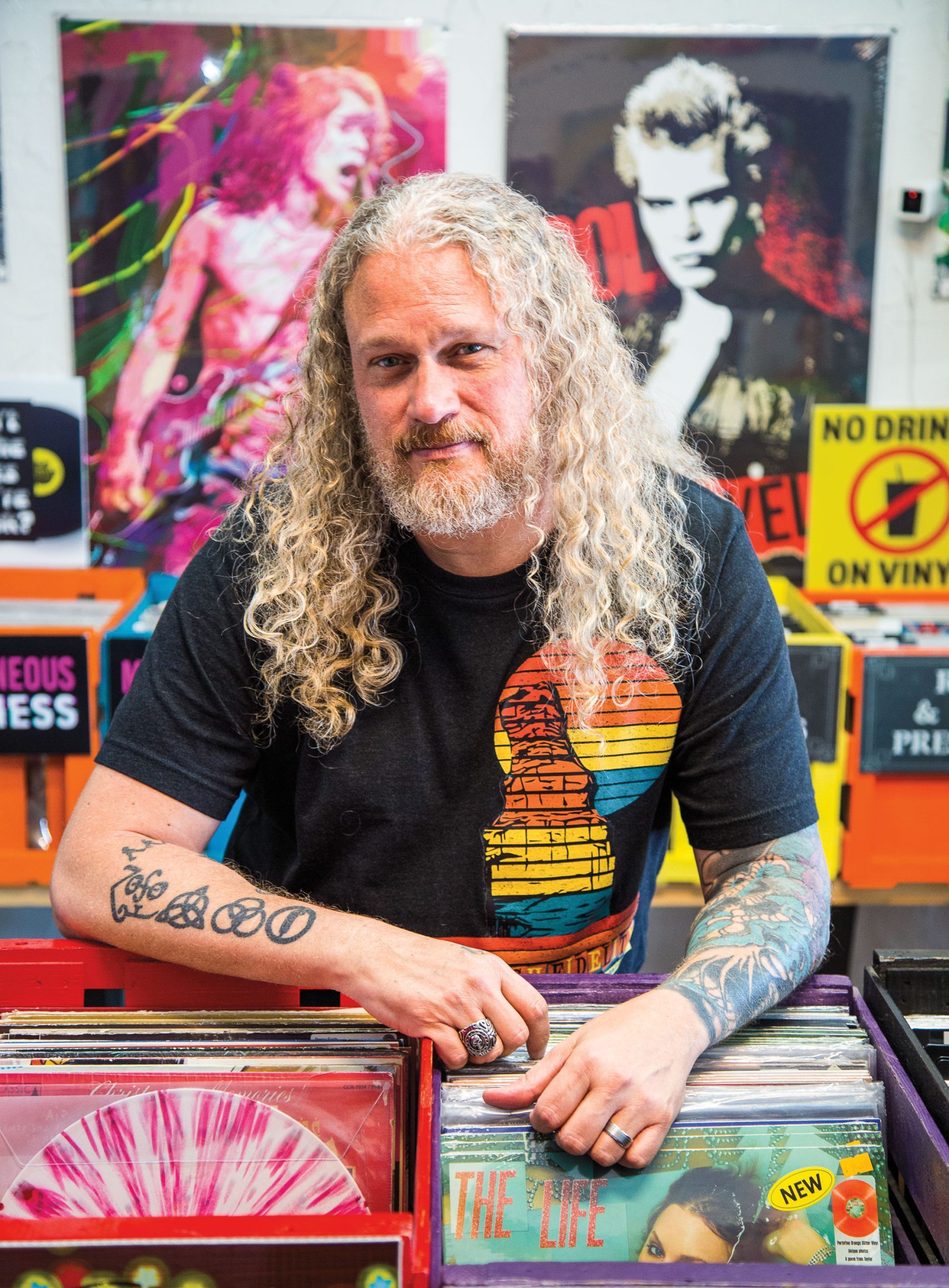
While much of the city’s connection to Route 66 is rooted in novelties like Cadillac Ranch, a handful of newer spots are bringing a 21st-century twist to the Yellow City. Just around the corner from the Nat, you can hear contemporary music at High Fidelity, a record shop nestled inside a 100-year-old building on Sixth Avenue. There, owner Ray Wilson can guide you through his expertly curated vinyl collection and tell you his favorite version of “Route 66” (Depeche Mode’s 1987 B-side). “Route 66 has an unseen magic to it,” says Wilson, whose high-profile visitors have included singers André 3000 and Billy Corgan. “It’s like all the movies, songs, and cool shops that have ever been part of the Mother Road still echo.”
The Texas barbecue renaissance came to Amarillo in 2010 with the arrival of Tyler’s Barbecue, located just off Route 66 in a former Long John Silver’s. The move from deep-fried seafood to tender, mesquite-smoked pork ribs and black-peppercorn sausage is a clear upgrade. And the exquisite meats and peach cobbler feed more than hungry tourists, as owner Tyler Frazer packages all leftovers and sends them to Another Chance House, which assists those overcoming homelessness.
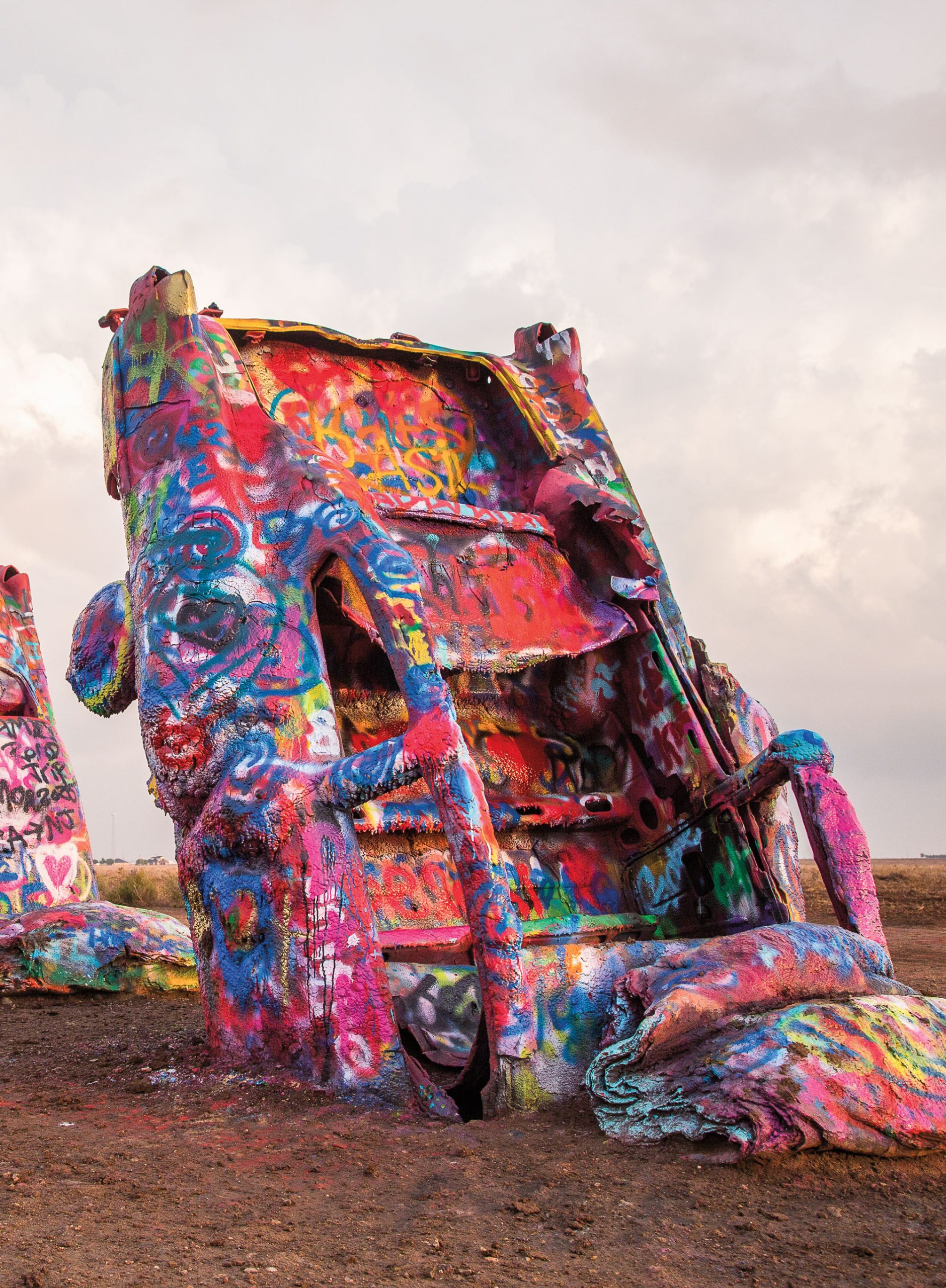
At nearby Chapterhouse Books, you might run into bestselling authors like Stephen Graham Jones, who travels through regularly, or stumble upon their Silent Book Club, a monthly event where readers are invited to share the space and enjoy the opportunity to read without interruption. “I get to be an ambassador for my hometown to people from all over the world,” says owner Lauren Pronger. “It’s great to meet people who expect something very specific from a small Texas city and see their perception of us widen to realize that no matter where we live, we all have common ground.”
Bed down at The Barfield (rooms start at $253), whose history owes much to M.D. Oliver Eakle, a founding mother of the city. An Alabama native, she came to Amarillo as a widow of a wealthy textile baron, where she bought up land, engaged in philanthropy, remarried, and became involved in the temperance movement. By 1927, she was funding the construction of a 10-story office building, where you can still see The Barfield’s original elevator doors and imbibe beers in its speakeasy like the cast of Yellowstone.
Spend much time in Amarillo and you’re bound to notice locals wearing hats and jerseys bedecked with a curious yellow creature in a cowboy hat. He’s Ruckus, the mascot of the local Double-A Sod Poodles, the only Texas baseball team along Route 66. The team occasionally dons Route 66-themed jerseys, and concessions are sold from Route 66 Grill at Hodgetown stadium, opened in 2019. As Zach Robbins, director of baseball communications, puts it, “When we’re catering to fans who more than likely have lived most of their lives here, something like [Route 66] is meaningful.”
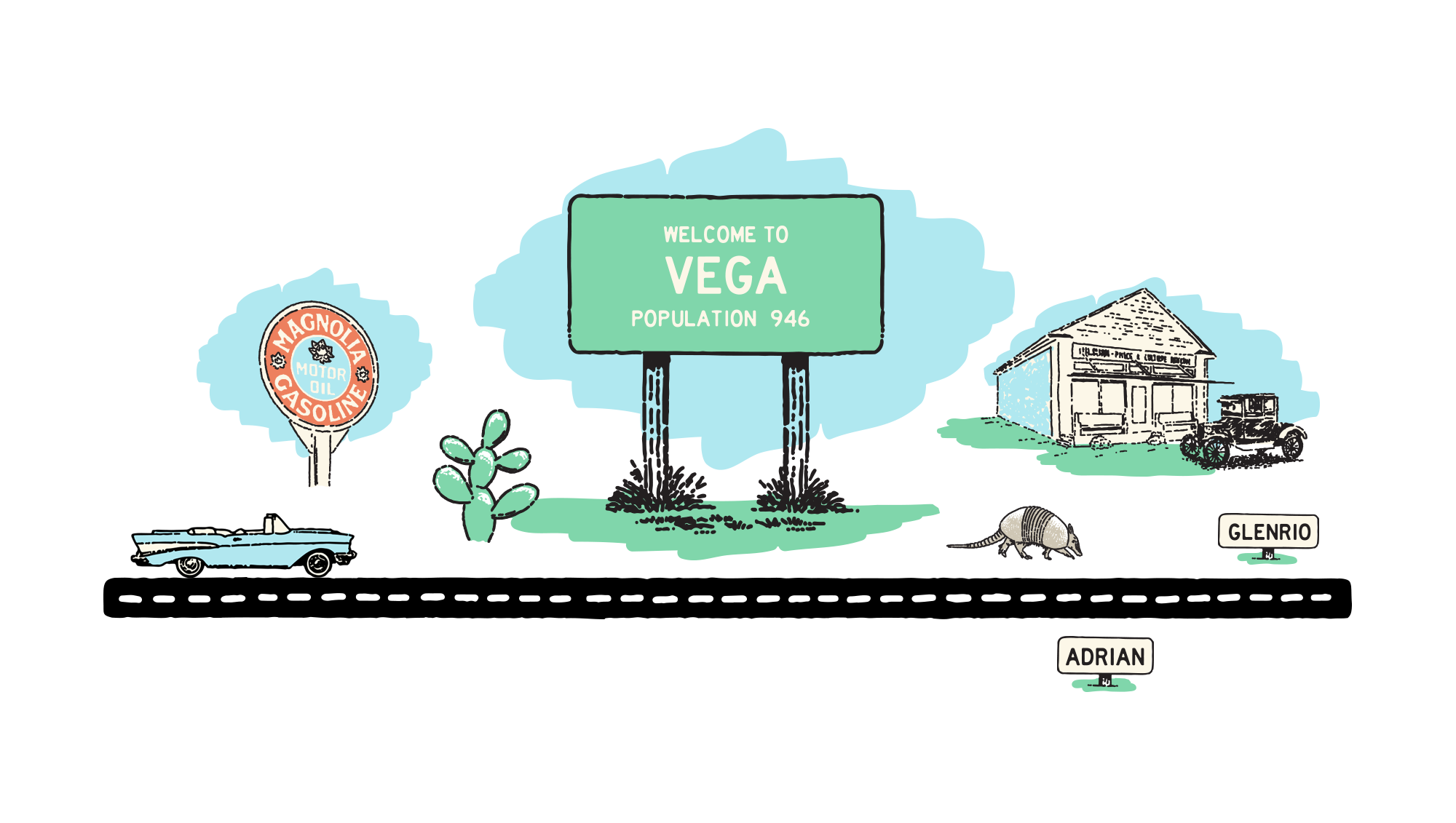
Few towns along Route 66 felt the impact of I-40 quite like Vega. Greg Conn, the director of Vega’s Milburn-Price Culture Museum, relates the story of Hugh Knox, who owned the town’s Phillips 66 station. The day before I-40 debuted in 1972, he sold $1,500 in fuel. The day after, that number plummeted to just $100—sold all to locals. “I can remember coming into town with my dad that day,” Conn recalls. “I was 10 years old. When we got to the center of town, there was no traffic at the intersection of US 385 and Route 66, and Vega looked like a ghost town. It was an eerie feeling.”
Today, that eerie feeling remains, and you have to make an effort to leave the interstate and retrace the Mother Road. But when you do, Conn’s museum—housed in a building that’s also turning 100 this year—awaits. There, you’ll find a hodgepodge of memorabilia, such as an original 1923 Model T, nicknamed Lizzy after the Cars character. But first, print a postcard using the vintage letterpress and peruse the memorabilia housed in cases that once belonged to the Alamo.
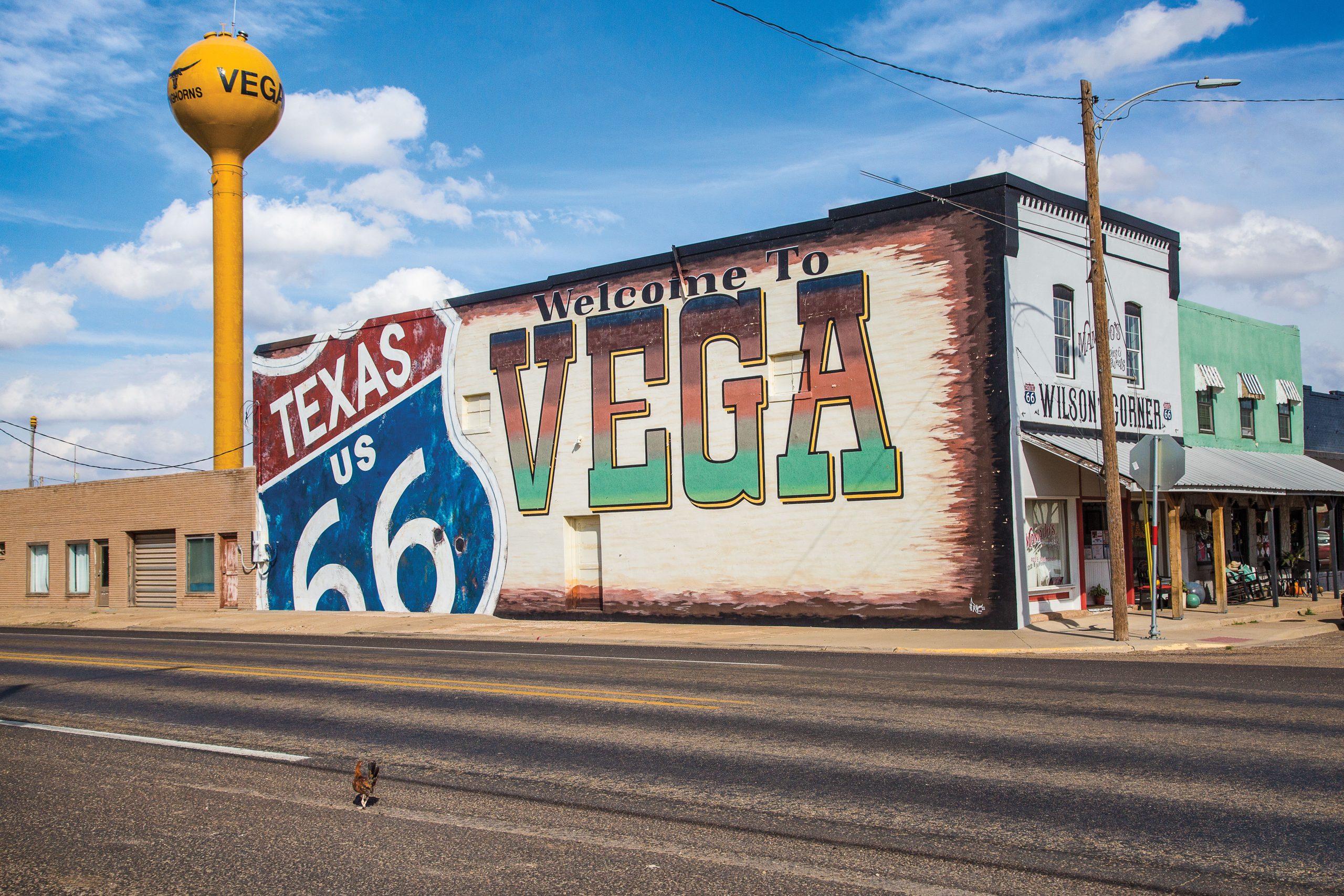
Right across South Main Street, you’ll find a fully restored Magnolia Gas Station dating to 1924. Another interpretative stop, you can usually only peek through the windows and imagine the life of its many owners who lived in a two-bedroom apartment above the shop. Another highlight are the eponymous desserts at Mama Jo’s Pies & Sweets, located at Wilson’s Corner. The shop specializes in heavenly apple and Mississippi mud pies baked by Joann Harwell, an Abilene native who learned her craft from her grandmother in Springfield, Missouri—a town also on the path of Route 66.
“This building was one of the first to be built in Vega [in 1907],” she says. “It has been used as a schoolhouse, a general store, a place for community dances, a tractor parts and repair shop, and now a bakery. I never thought I would actually live on part of Route 66 and bake my grandmother’s pies on the original road.”
Harwell is a veteran baker of the Midpoint Cafe, located just down the road in Adrian. Established in 1928 as a stop on the Rock Island railroad line, Adrian is now bypassed by I-40. But it’s worth going out of your way to enjoy a mouthwatering bacon-and-egg breakfast sandwich or classic Black Angus burger with green chiles. True to the café’s name, this is the exact midpoint of Route 66, but it might be best known for its former proprietor, Fran Houser, who inspired the character of Flo in Cars. Check out the sign commemorating the area’s equidistant position along the route. It’s next to an old-fashioned windmill, but in the distance is something very 21st-century: a wind turbine farm. It’s a sign that we’re a long way from the golden age of art deco gas stations and neon-splashed motels. But perhaps it’s also evidence that, on Route 66, the promise of the future is always just past the horizon. And the best kicks may be yet to come.