

A select few of the state’s 3.5 million small businesses have been around for decades, captivating generations of Texans with enduring hospitality that comes from deeply ingrained history and long family lineages. Whether it’s a celebrated two-stepping saloon, an iconic kolache shop, or a seminal soda fountain, there is an abundance of institutions to savor a sense of place, soak in the past, and, maybe, grab a perfect bite.

Cattleman’s Steakhouse, Indian Cliffs Ranch
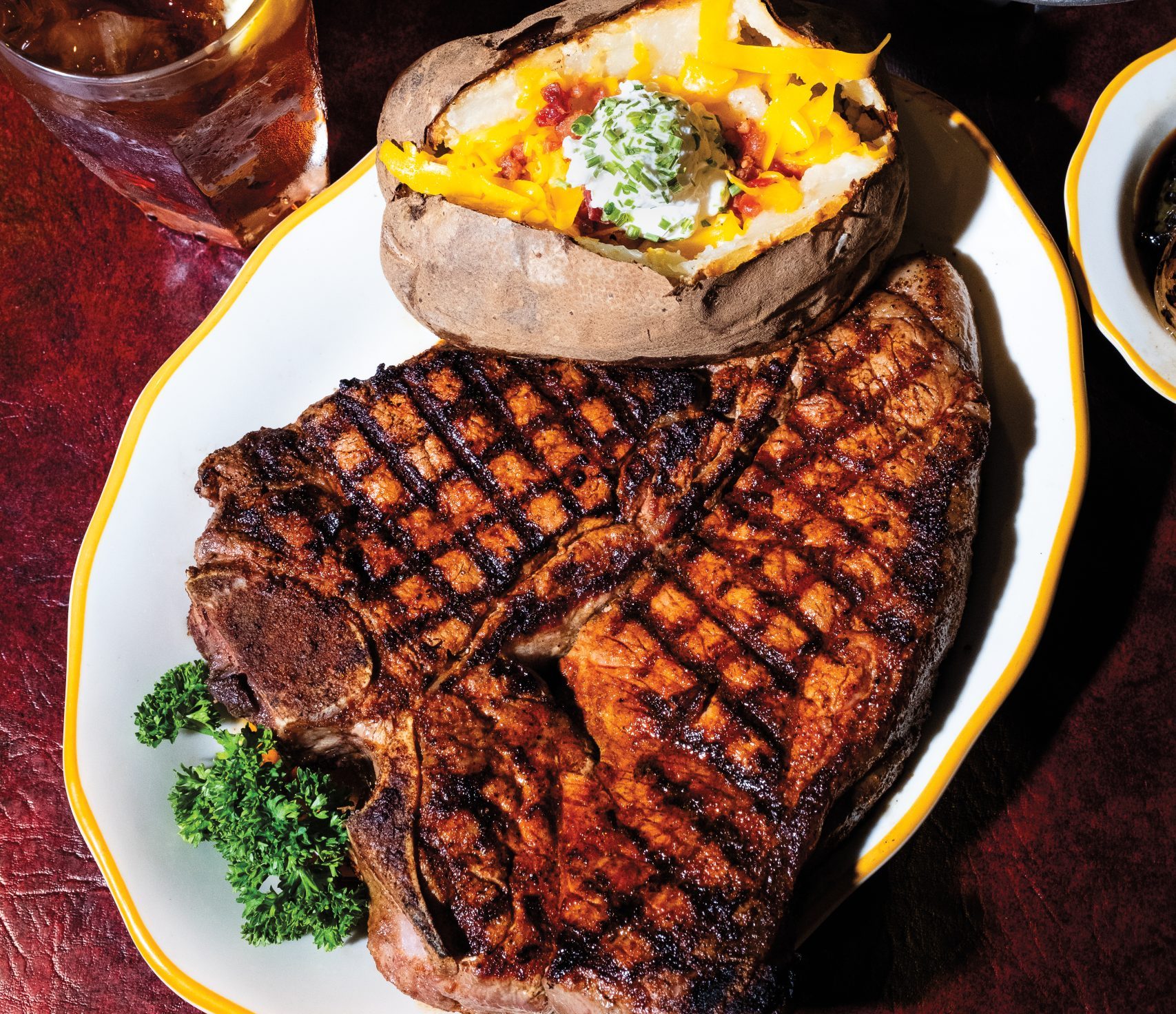
A German immigrant who’s lived in the town of Fabens since the 1960s, Dieter Gerzymisch has transformed his far-flung corner of the state into an Old West spectacle, complete with an aviary, an extensive collection of western memorabilia, and a zoo that boasts its own rattlesnake pit. Realizing that his customers would be mighty hungry after exploring all those attractions, Gerzymisch opened Cattleman’s Steakhouse in 1973. Here, they serve slabs of mesquite-kissed beef and all-you-can-eat sides like spicy ranch beans and a quirky pineapple coleslaw. For the restaurant’s motto, Gerzymisch paraphrased whiskey maker Pappy Van Winkle: “Good Food! at a profit if we can, at a loss if we must.”
Hung Fong, San Antonio
Turn your eyes to the American flag hanging from the ceiling, and you might get an idea of how long this downtown San Antonio restaurant has been in operation. Yes, that’s 48 stars. Meaning founder K.A. Huey’s family has been dishing out their famous tangy pork fried rice since well before Alaska and Hawaii were admitted to the Union. One of the first eateries on San Antonio’s Broadway drag, Hung Fong is now the sole survivor of that particular restaurant boom that started in 1939. The oldest Chinese restaurant in the state, it also has the distinction of sparking the growth of a strong Asian dining scene in the Alamo City.
Joe’s Bakery, Austin
“Joe’s is my grandfather’s boyhood dream come true,” says Regina Estrada, who now operates this East Austin recipient of the James Beard Foundation’s America’s Classics award. Following founder Joe Avila’s passing in 2010, his daughters and granddaughters have kept the family Tex-Mex legacy alive, ensuring Joe’s is still the kind of laid-back spot where you can queue up Selena on the jukebox while digging into a plate of carne guisada. Today, it serves the same migas and enchiladas along with what many believe to be the world’s crispiest bacon. To achieve the latter, the family has refined a multipart process that involves dredging the cured strips in flour, chilling them overnight, and cooking them on a seasoned griddle.

If you take a big enough stride along the sidewalk on East Washington Street in Brownsville, you’re likely to miss more than 100 years of history. Fortunately, the aroma of sizzling burgers is bound to stop you in your tracks.
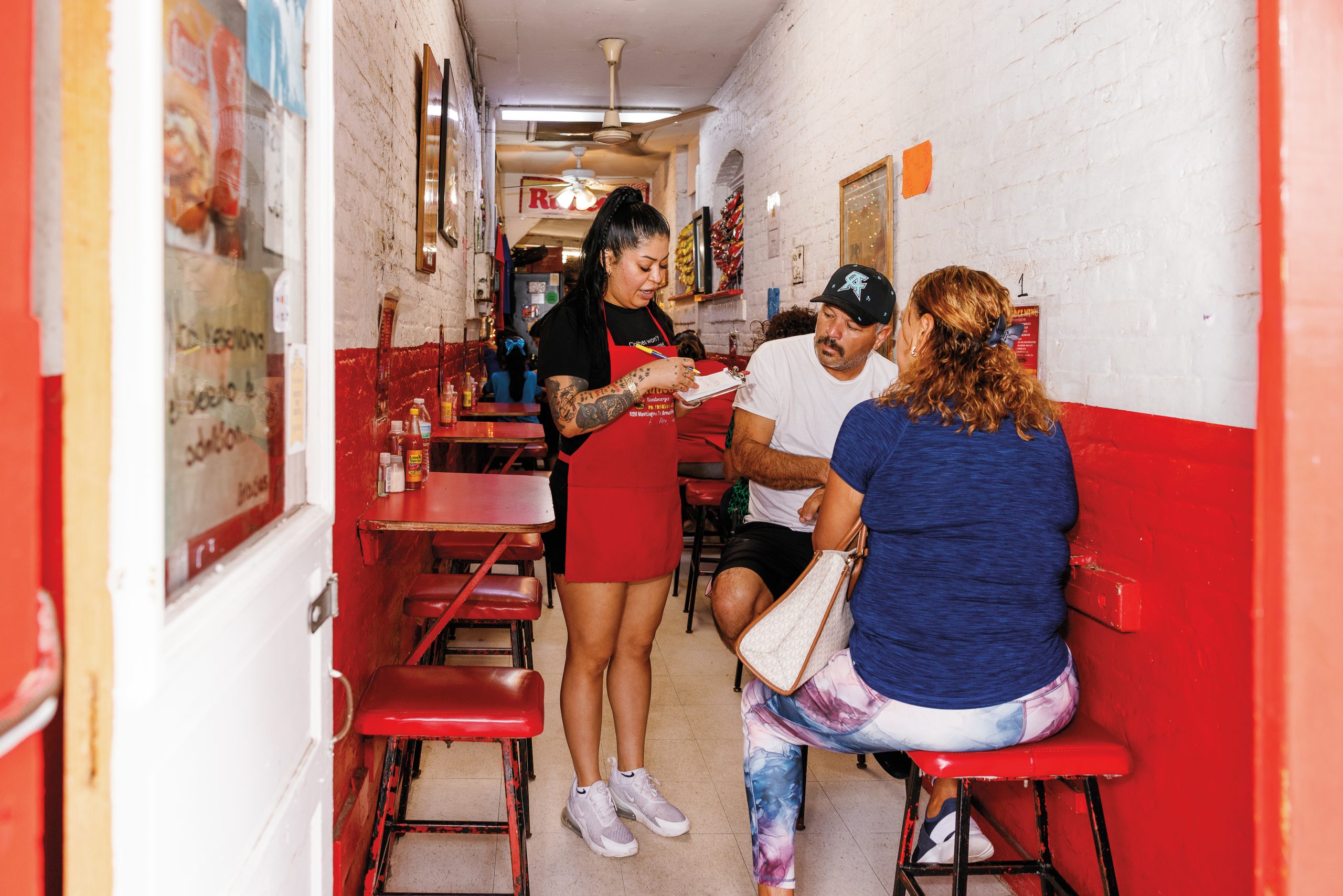
Turn toward that smell, and behind rickety red French screen doors sits one of the smallest restaurants in Texas. Separated by no more than 6 feet of space are white-and-red-painted brick walls that harbor the deep legacy of two families.
Hilda and John Rutledge opened Rutledge Hamburgers in 1922 as a street stand before converting it into a rough-hewn restaurant in the alleyway between buildings. The couple passed down the restaurant to their son, Martin, who ran it for decades before selling it to Matamoros native Gloria Perez in 1995.
But were it not for a little boy’s love of his coloring book, Perez’s life may have taken a sharply different course. On a fortuitous visit to the burger joint in the early 1980s, Perez’s son, Diego, accidentally left behind his most cherished book. Later returning to the restaurant in the hopes of calming her sobbing son, Perez was approached by Hilda about working in the shotgun space. More than a decade later, nearing the time of his death, Martin sold the entire business to her for a mere $65.
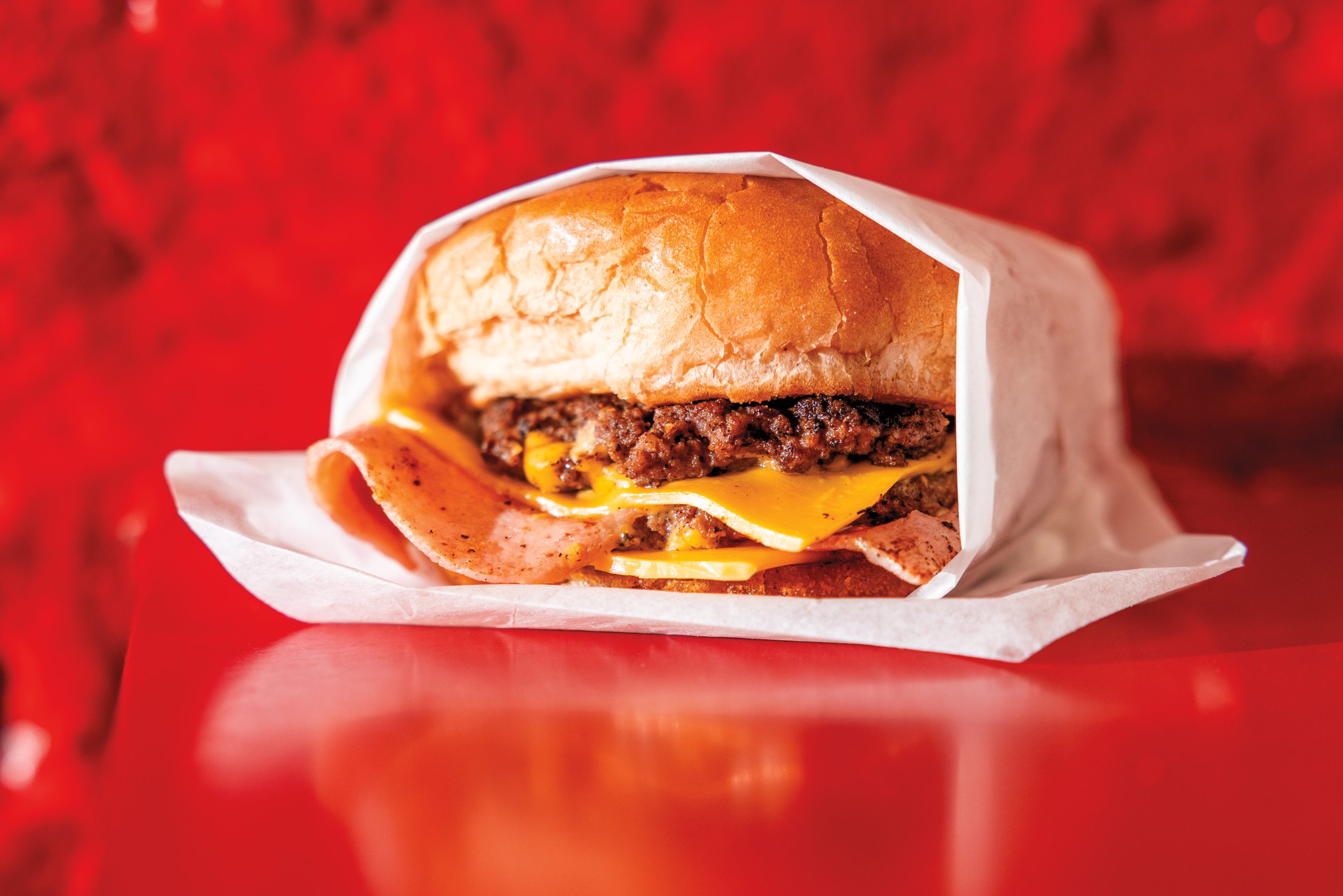
Now managed by Perez’s daughter, Sandy, Rutledge remains frozen in amber—or maybe beef tallow. The burgers are formed from fresh meat delivered daily from Sandy’s dad, Juan de Dios Perez. A single-patty offering—or what Sandy calls a “three-bite burger”—is just $2.75. A quarter more gets you a slice of cheese on top. Most customers order a double or triple version delivered in an envelope of white wax paper.
The gas-powered cast-iron flat-top producing each crispy-edged patty shimmers with a patina of decades’ worth of worn grease. The only modern concessions are a new air conditioner, a credit card machine, and nine wall-mounted tables not much bigger than you’d find on the back of an airplane seat. Otherwise, it’s the same Rutledge generations of customers have always known.
On a recent visit, Brownsville resident Erica Ramirez stopped in with her 8-year-old daughter, Avery. Ramirez recalls dining at Rutledge on special occasions in her youth, a custom she’s continued with her own family. “We just keep the tradition going,” she says. “Like it was seeing John and Gloria when I was little, maybe someday my kids will come back and see familiar faces from their childhood.” —M.O.
DISTINGUISHED DISHES

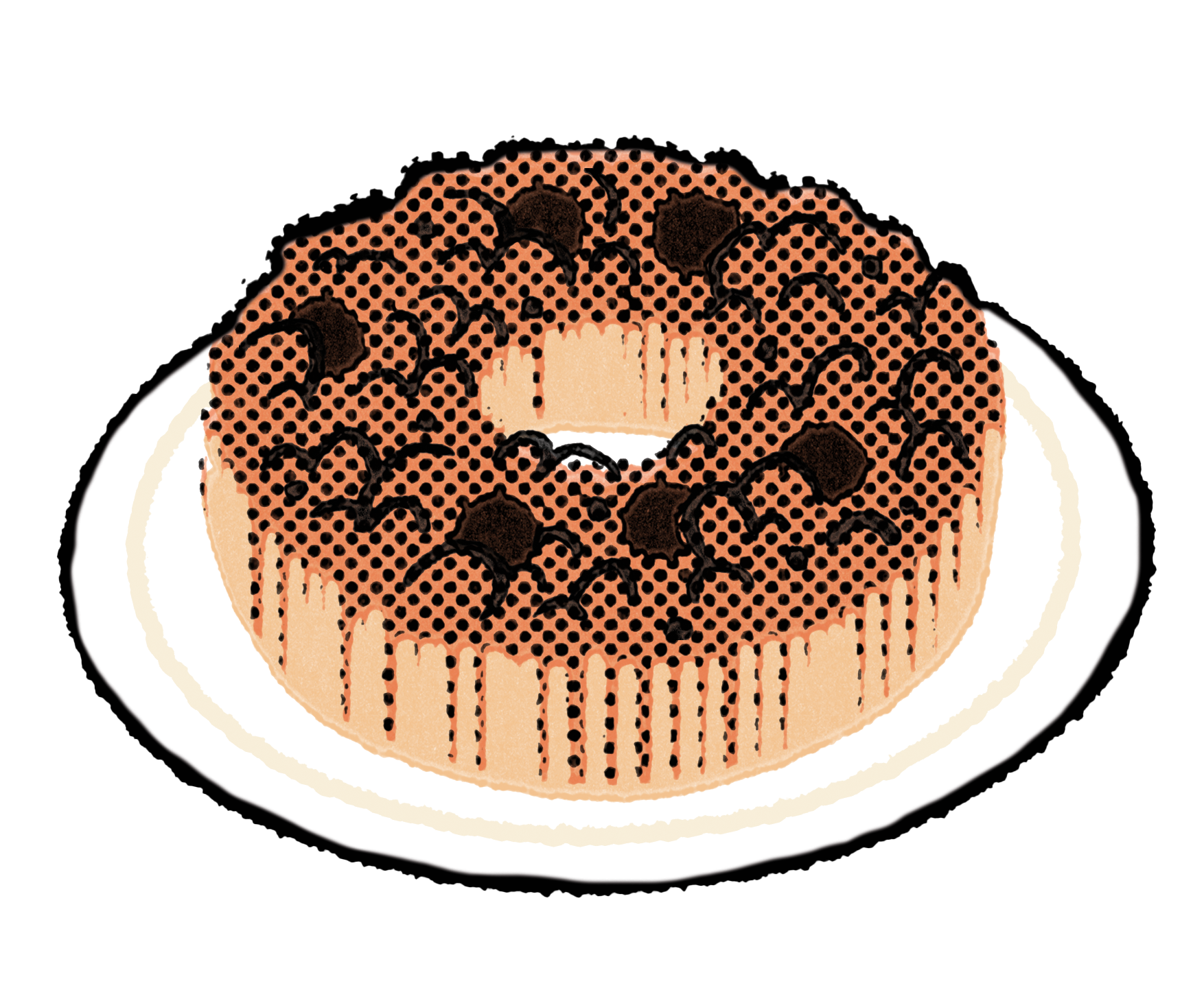
Collin Street Bakery in Corsicana didn’t invent the fruitcake—but you’d be hard-pressed to convince most Texans of that fact. After immigrating to Texas in 1896, Augustus Weidmann began making this legendary treat, which dates to ancient times, when fruits were candied and baked into cakes as a post-harvest preservation technique. Collin Street makes its version in the German tradition, with glacéed cherries, pineapple, and pecans. The real innovation came in 1914, when the bakery began shipping its cakes to customers beyond East Texas, thanks to John Ringling. One of the siblings behind Ringling Bros. Circus, he carried the cakes on his trips because of their shelf stability. By sharing with fellow travelers, he made converts of the uninitiated. “We were the first [in Texas],” says Thomas McNutt, whose family has operated the bakery since the 1940s. “And now we’re shipping a million pounds of fruitcake a year.”


Though no one person can take credit for the creation of chicken-fried steak, the dish can be linked to German and Austrian immigrants who brought over their tradition of breading and frying thinly cut meat starting in the late 1800s. Beef, abundant across Texas, was substituted for the customary pork or veal. By the 1920s, it was common cowboy fare. That’s why it’s not surprising that it has been a staple on the menu of the Old Spanish Trail Restaurant in Bandera, which has operated in the Cowboy Capital of the World since 1921. A century later, it can be found at restaurants all over Texas, including the saucer-size version at The Wagon Wheel in Eagle Pass and the queso-topped riff at Alamo Cafe in San Antonio.

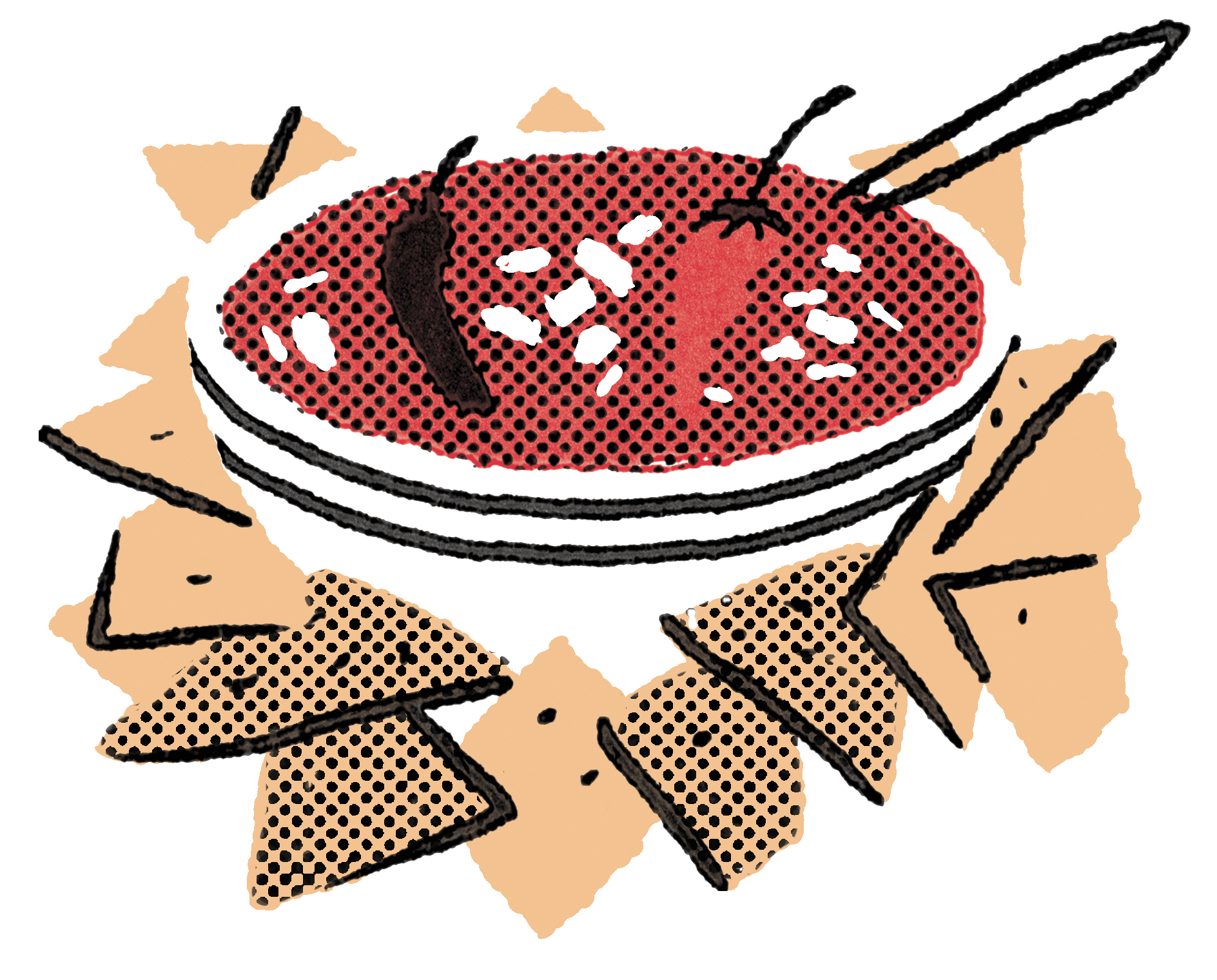
Chili con carne, now known simply as chili, has a much more complicated origin story than many might think. The dish as we know it today originated in San Antonio, where the famed “Chili Queens” would serve bowls of tender beef stewed with chiles to visitors, especially military personnel, in open-air parlors starting in the middle of the 19th century. Over the years, whether they came across it on a cattle drive or in prison yards, Texans fell in love with chili. In 1967, the famed Terlingua chili cookoff began, and a decade later, chili was enshrined as the state dish. Today, famed establishments like Tolbert’s Restaurant & Chili Parlor in Grapevine and the Texas Chili Parlor in Austin have kept the tradition alive for future generations of chiliheads.
Molina’s Cantina, Houston
Houston’s most iconic Tex-Mex begins with a love story. Ricardo Molina’s grandparents, Raul and Mary, immigrated from Mexico to the Bayou City, where they fell in love while Raul worked as a dishwasher and busboy. In 1941, the two got married and purchased the restaurant he worked in, living in a one-room space above the kitchen. Their sons, Raul Jr. and George, eventually took over the business and passed it down to their own sons. Now, Ricardo and his brothers, Raul III and Roberto, are in charge, but the chili con carne and gravy-drenched enchiladas remain the same. “We’re third-generation owners, but we’ve been serving five generations of customers,” Ricardo says. “We have kids come in, and you look up and now they’re in college and getting married.”
Riley’s Tavern, Hunter
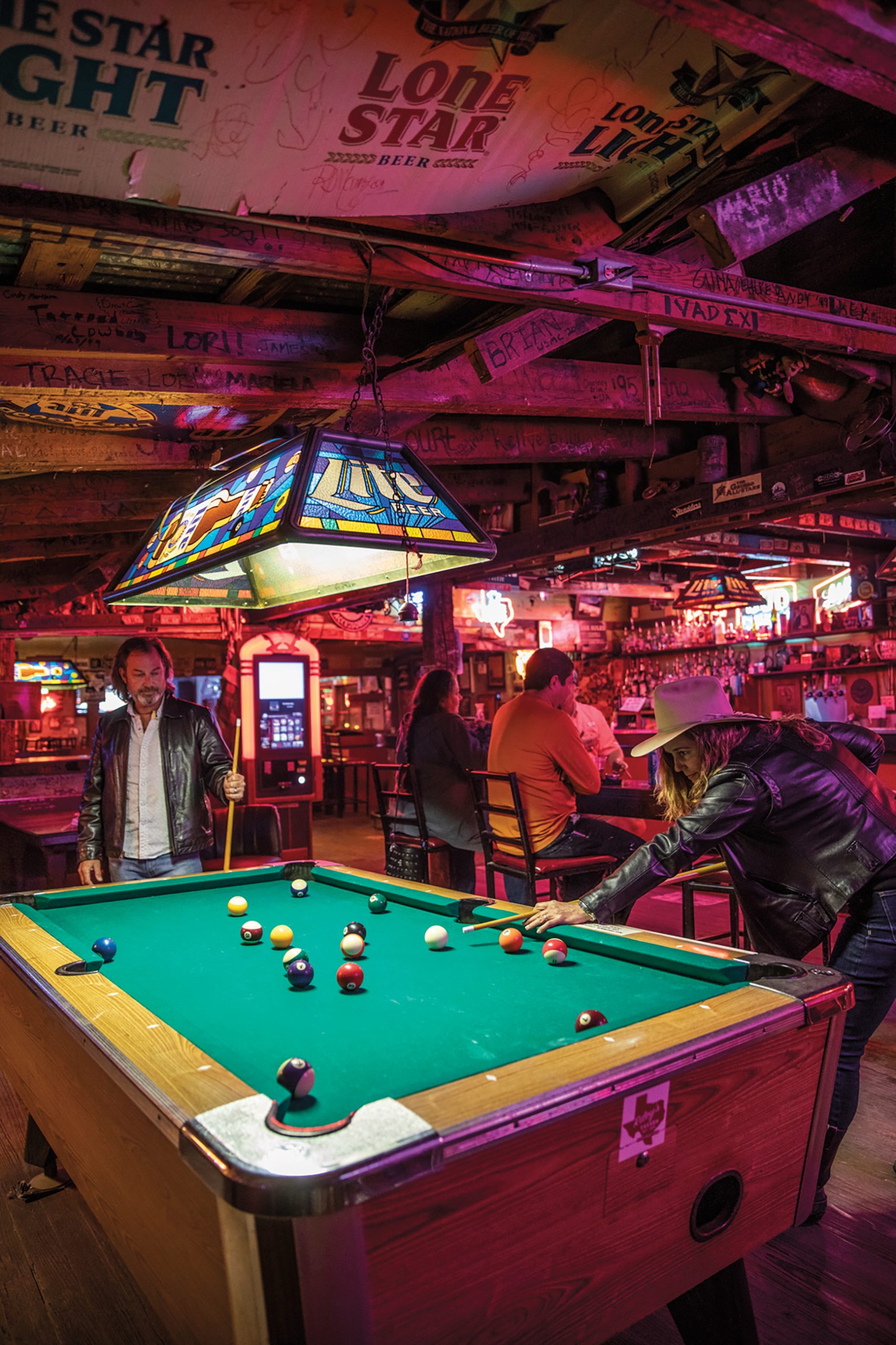
At just 17 years old, James Curtis Riley waited on the steps of the Texas Capitol to secure the first official license to sell beer in the state of Texas following the repeal of Prohibition in 1933. Mere weeks later, he founded his eponymous tavern in his tiny hometown of Hunter and kept the Hill Country’s most iconic honky-tonk afloat for nearly 60 years. In 2004, Joel and Angie Hofmann bought the bar to preserve this piece of Texas drinking history, and its mint green barroom—cured by decades of cigarette smoke—remains a staple for locals to drop in for a cold beer, shoot a game of pool, and listen to a lineup of local musicians gracing a stage that’s hosted legends including Billy Joe Shaver.
Schilo’s, San Antonio
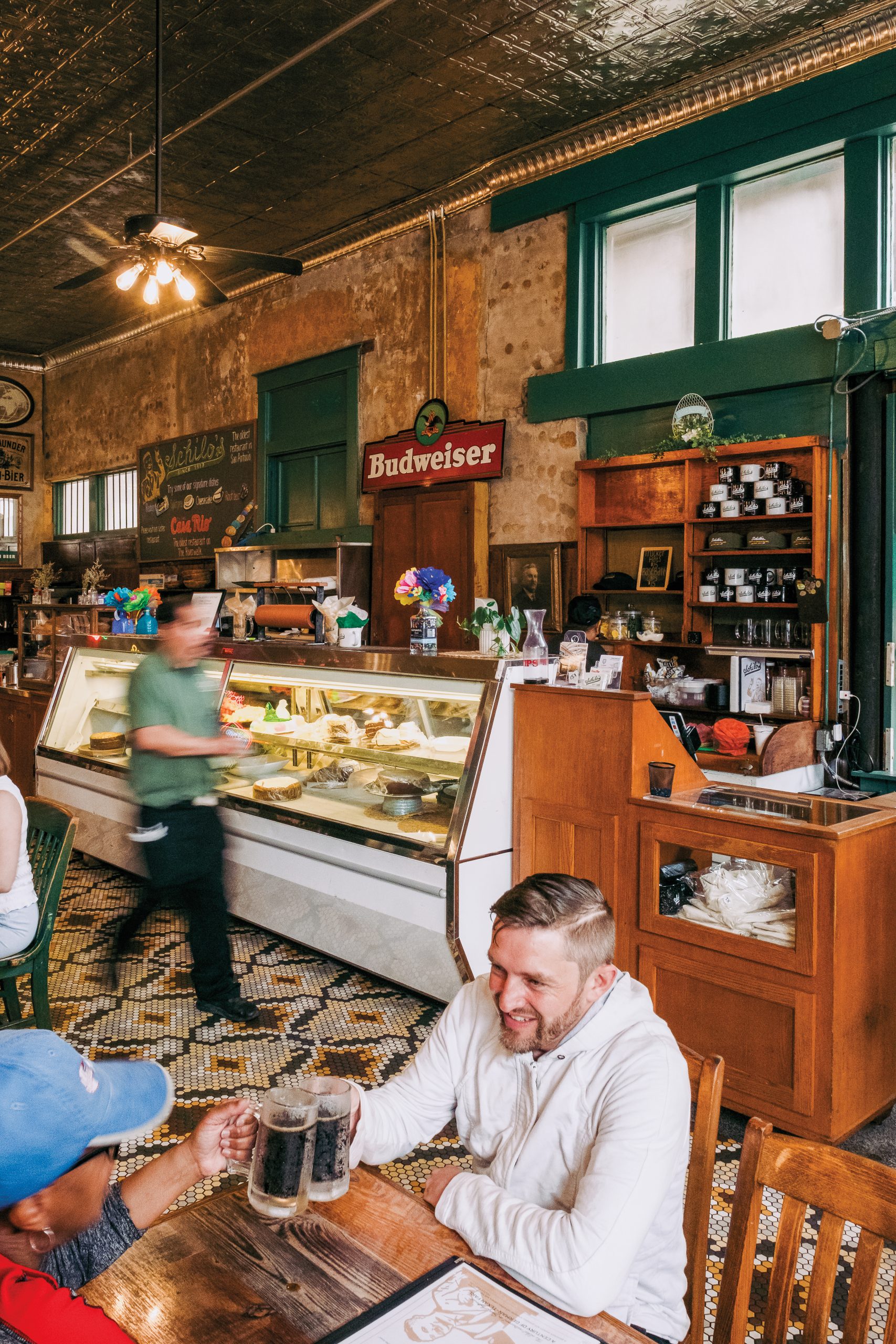
Prohibition’s interminable 13-year lifespan is considered one of the most trying epochs in American history. But in a roundabout way, it did gift us this stellar German deli. Dating all the way back to a Beeville saloon in the early 1900s, Fritz Schilo’s operations later moved to San Antonio in 1914. But as the liquor supply dried up across the country, Schilo converted his business into the deli it’s known as today. More than a century later, the frosty mugs of root beer, developed to wet customers’ whistles during that era, is still a favorite for washing down Reuben sandwiches slathered in spicy brown mustard.
Star Drug Store, Galveston
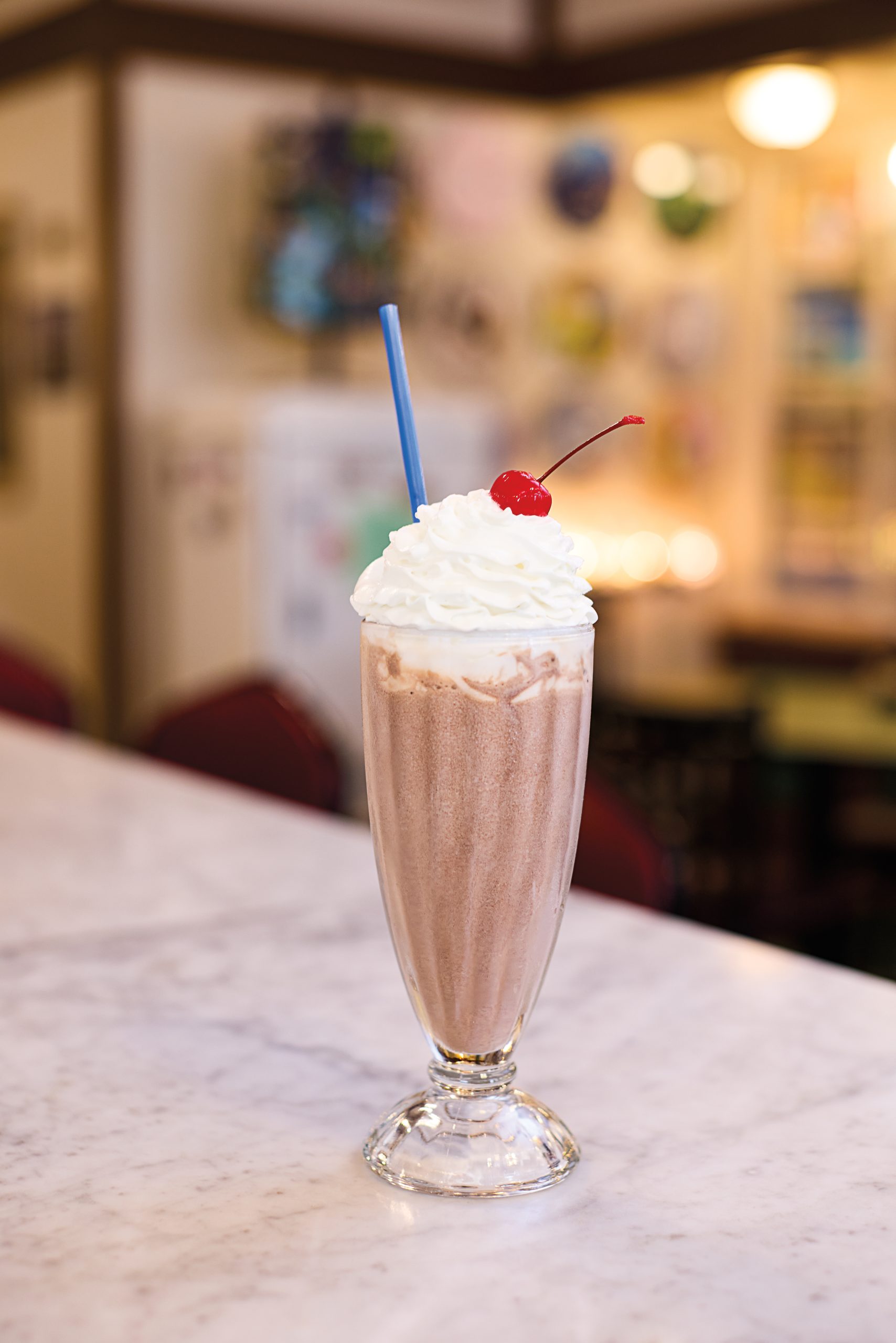
The oldest drugstore in Texas is the definition of a survivor. “This building has seen it all: hurricanes, fires, coronavirus, and desegregation,” owner Natili Monsrud says. “It’s been through so many once-in-a-lifetime things.” An interest in preserving that rich history led Monsrud’s parents to buy the restaurant in 2007, and they’ve tried to keep things traditional, despite some minor menu updates. For one, the chicken salad—a longtime staple—has been invigorated with curry powder and pineapple chunks. But those modern concessions are minuscule when customers can still belly up to the horseshoe-shaped soda fountain counter for a chocolate ice cream soda, a fixture of the building since 1917.
Slaton Bakery, Slaton
Founded in 1923 with the merger of Blue Ribbon and City bakeries, this Panhandle staple has seen the town through its booms and busts. One of the oldest operating bakeries in the state, Slaton continues to delight with house-made bread, flour tortillas, gingerbread snap cookies, and its beloved thumbprint cookies derived from a 1950s recipe. Just to keep up with demand for its vanilla wafers, the bakery opened a cookie plant five minutes down the road, where a small team mixes the mostly Texas-sourced ingredients, like Miller Milling flour and Imperial sugar.
Weikel’s Bakery, La Grange
The only thing more synonymous with La Grange than the titular ZZ Top song is the kolache dough honed by Jo Ann Schobel, the granddaughter of Czech immigrants who settled in the area in the early 20th century. A well-guarded recipe passed down by her mother, Nolie, the dough is the foundation for the bakery’s pillowy soft, handmade kolaches and klobasniky revered by travelers in the southeastern part of the state. Stuffed with traditional fillings like apricot and poppy seeds, the top-secret dough is impossibly airy and works just as well in Weikel’s equally beloved Honey Bee Rolls, hundreds of which are baked from scratch every single day.
The Wheel Deal
How Dallas pioneered the carhop
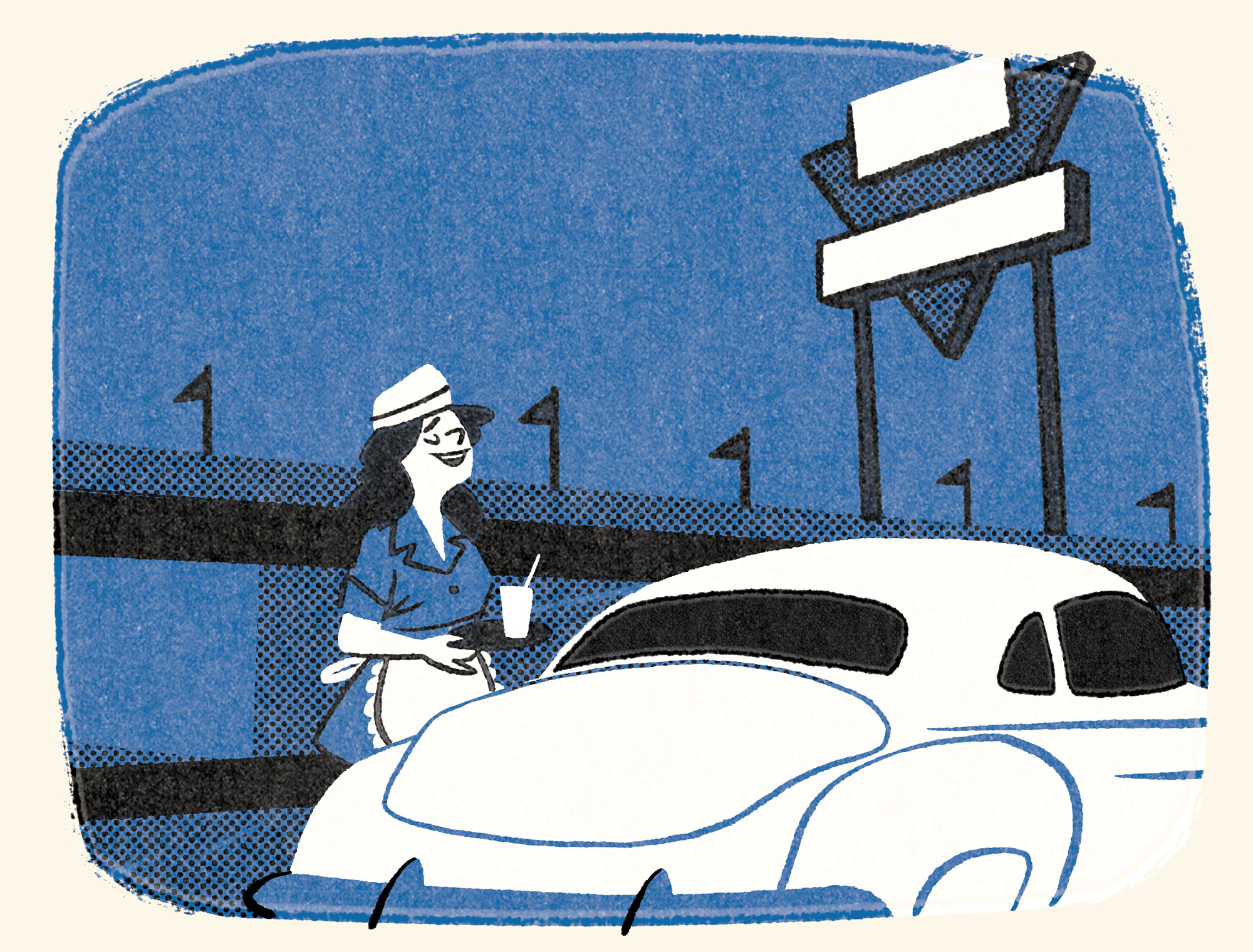
California gets all the love when it comes to car culture, but Dallas deserves credit for two inventions that revolutionized the craze. The original 7-Eleven, the first drive-up convenience store, opened in Oak Cliff in 1927. Six years earlier, in the same neighborhood, Jesse Kirby introduced the first drive-in restaurant.
Called Kirby’s Pig Stand, the latter ushered the concept of the carhop into the world. Originally, young men would run to your car like a hotel bellhop, take your order, and return with your burger. But that all changed in 1938, when J.D. and Louise Sivils introduced female carhops at Sivils in Houston, where the “curb girls” became such a spectacle, they were featured in Life magazine.
Two years later, the Sivils opened an even bigger, 3-acre location in Oak Cliff, featuring more than 100 female carhops in modified majorette outfits and three scooter-riding cigarette girls servicing up to 500 parked cars. Postcards touted the establishment as “Nationally Famous as the Originators of ‘Shorts’ for their Glamorous Girls.” Applicants were personally selected by Louise Sivils for their appearance and personality.
For a 14-year-old girl from Grand Prairie named Bubbles Cash, to whom “Dallas may as well have been New York City,” getting hired as a Sivils carhop in the early 1960s was like being discovered in Hollywood. “I had my uniform altered and had it cut down to show my top and had my pants taken in,” she says. “I had people waiting in line for me to wait on them.” Now 77, Cash is considered a North Texas legend for her later work as a famed dancer and beloved mascot of the Dallas Cowboys. —J.N.P.

Keller’s Drive-In
10554 Harry Hines Blvd., Dallas
Watson’s
Drive-In
631 W. Main St., Denison
Scott’s Drive-In
4701 Old Jacksboro Highway, Wichita Falls.

La India Packing Company, Laredo
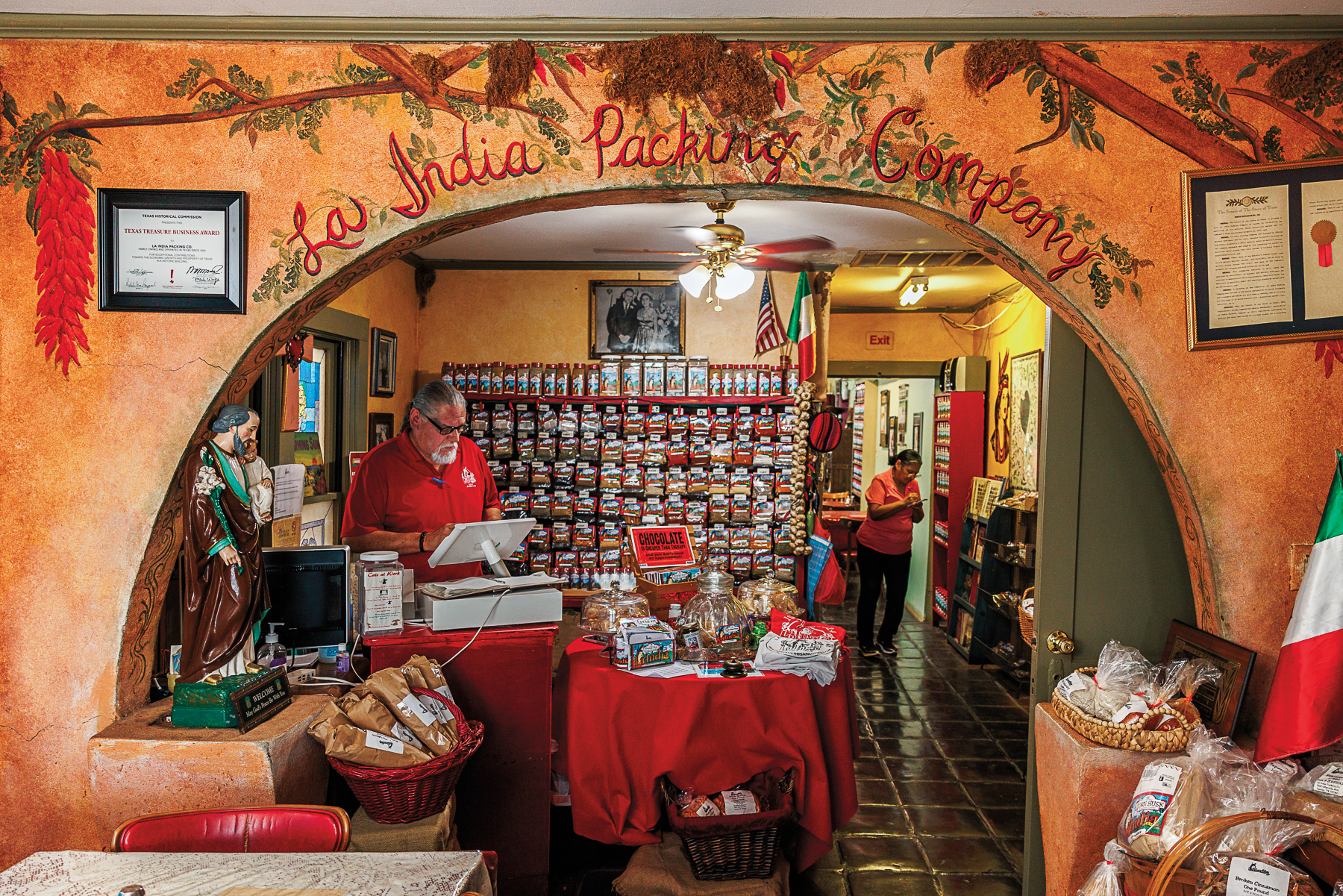
Ask for a remedy for a stuffy nose, and co-owner Elsa Rodriguez Arguindegui has the answer. “Try manzanita,” she says, motioning toward a rack of herbs stationed by the front door. “Gordolobo might also be helpful.” Like her grandparents, Antonio and Antonia Rodriguez, who started the small grocer in 1924, Arguindegui is a fount of homeopathic knowledge. Mugwort for nausea, chamomile for stress, and cat’s claw to boost immunity. It’s all on display in the old brick house, right next to a room converted into a café utilizing ingredients sourced on-site. “La India has remained true to its roots of providing traditional herbs and spices that have been integral to Mexican American culture,” says famed Laredo herbalist and ethnobotanist Tony Ramirez.
Cochran Blair & Potts, Belton
Not every department store claims its own museum (think original ledgers and vintage attired mannequins). But when you’re the oldest department store in Texas, it’s almost obligatory. Established in 1869, Cochran Blair & Potts has withstood two moves, shopping malls, discount giants, and online sales by emphasizing unparalleled customer service. Over seven generations of family owners, the store has cultivated a loyal regional fanbase by leaning into its western roots with wide selections of Wranglers and Tecovas boots. Owners Rob, Robert, and Ashley Potts aren’t coasting on their family’s reputation, either, as they continue to adapt to meet their customers’ varied needs, introducing innovations such as a mobile boot truck catering to industrial workers in the field.
Collings Guitars, Austin
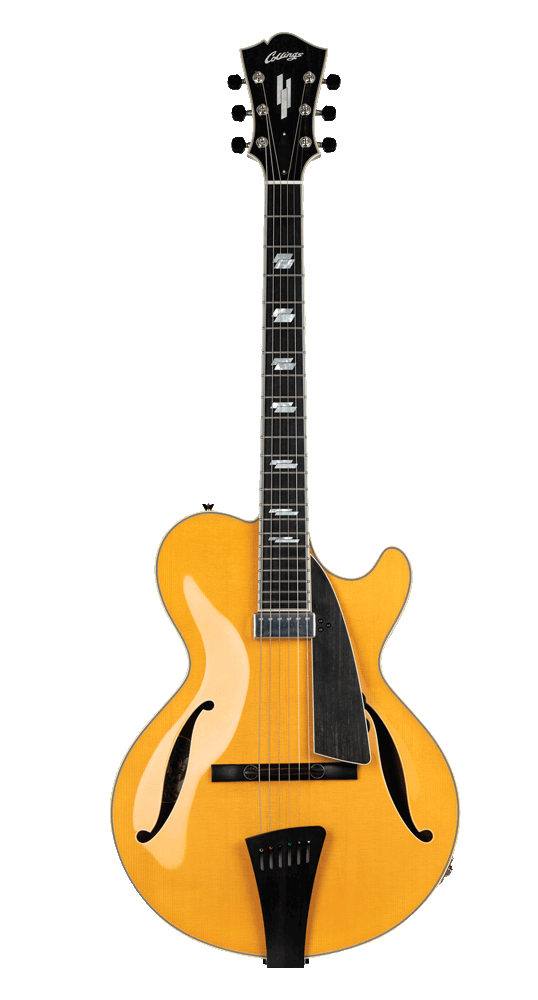
Bill Collings was a premed student and “born engineer” from Ohio who found his way to Houston in the 1970s, where he blew off school to repair guitars inside a machine shop. Soon he was building his own instruments, including a custom dreadnought acoustic guitar purchased by musician Lyle Lovett. Befriending luthiers Mike Stevens and Tom Ellis, Collings made the move to Austin and by the mid-1980s was building flattop and archtop guitars. At the time of his death in 2017, Collings’ capital city shop had 85 employees turning out electric guitars, mandolins, and ukuleles. “It’s the highest quality you can find,” songwriter Charlie Sexton says. “If Bill didn’t like something he saw in a guitar, he’d take it off the assembly line, saw it in half, and throw it in the dumpster.” The emphasis on quality craftsmanship continues nine years after Collings’ passing. “The only thing missing is Bill’s eccentric nature,” Sexton says.

A father walked his young son out of Jimmy’s Food Store in East Dallas on a sunny fall morning, a butcher paper-wrapped Italian sub tucked under one arm and his other around the child. “That’s just like it was back home,” he says in a thick Brooklyn accent.
If you’ve spent time in the neighborhoods of New York, Philadelphia, or any of the other East Coast strongholds of Italian American culture, you’re likely familiar with the store’s aesthetic: exposed wood beams, pressed-tin ceiling, a deli in the back, and rows of imported goods arrayed beneath Italian soccer club flags. The soundtrack is a mixture of chattiness and warm banter tinged with familiarity.
But Jimmy’s offers a new wrinkle with a large Texas flag draped alongside the Roma and Napoli examples. Since immigrating to the state in the 19th century from Sicily and Calabria, the DiCarlo family has been an integral part of the Dallas community.
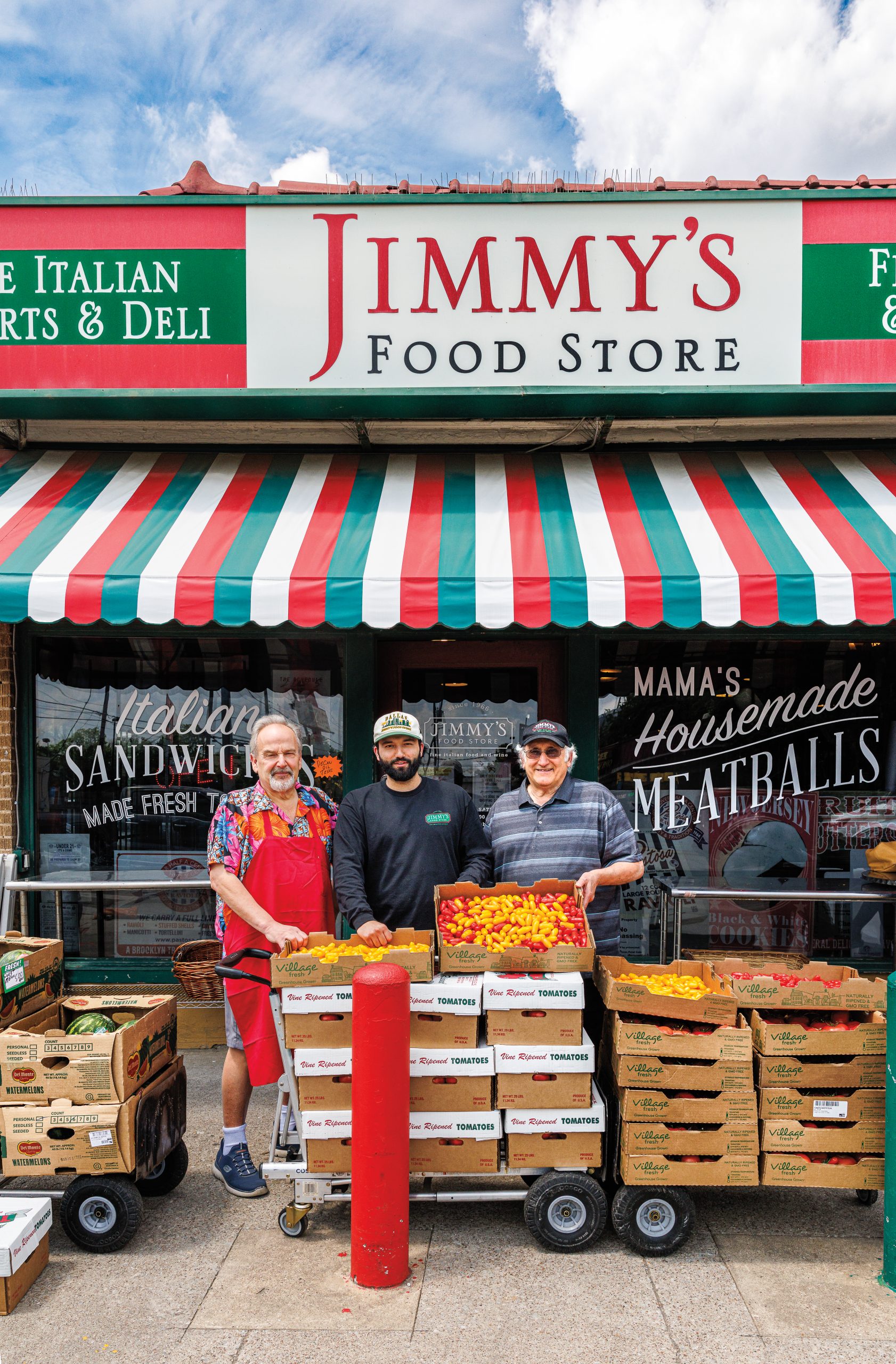
Opened in 1966 by James DiCarlo, Jimmy’s is now run by his grandsons, Paul and Michael, along with Paul’s 30-year-old son, Tony.
“There’s a reason you’re born in our family: You get a tax write-off, and it’s very cheap labor,” Michael says, with his trademark high-pitched giggle.
At first, Jimmy’s operated as a neighborhood grocery and meat market, specializing in global goods that reflected its community populated with immigrants from Mexico, the Caribbean, and Africa. Then, in the early 1990s, after listening to a relative bemoan the lack of Italian goods for a family wedding, Paul and Michael decided to shake up the family business.
For research, the brothers attended food shows in New York and visited Italian groceries throughout the eastern seaboard. They cajoled suppliers for years and eventually convinced them to start shipping rarer items like imported olive oil, aged balsamic vinegar, coffee beans, and pasta.

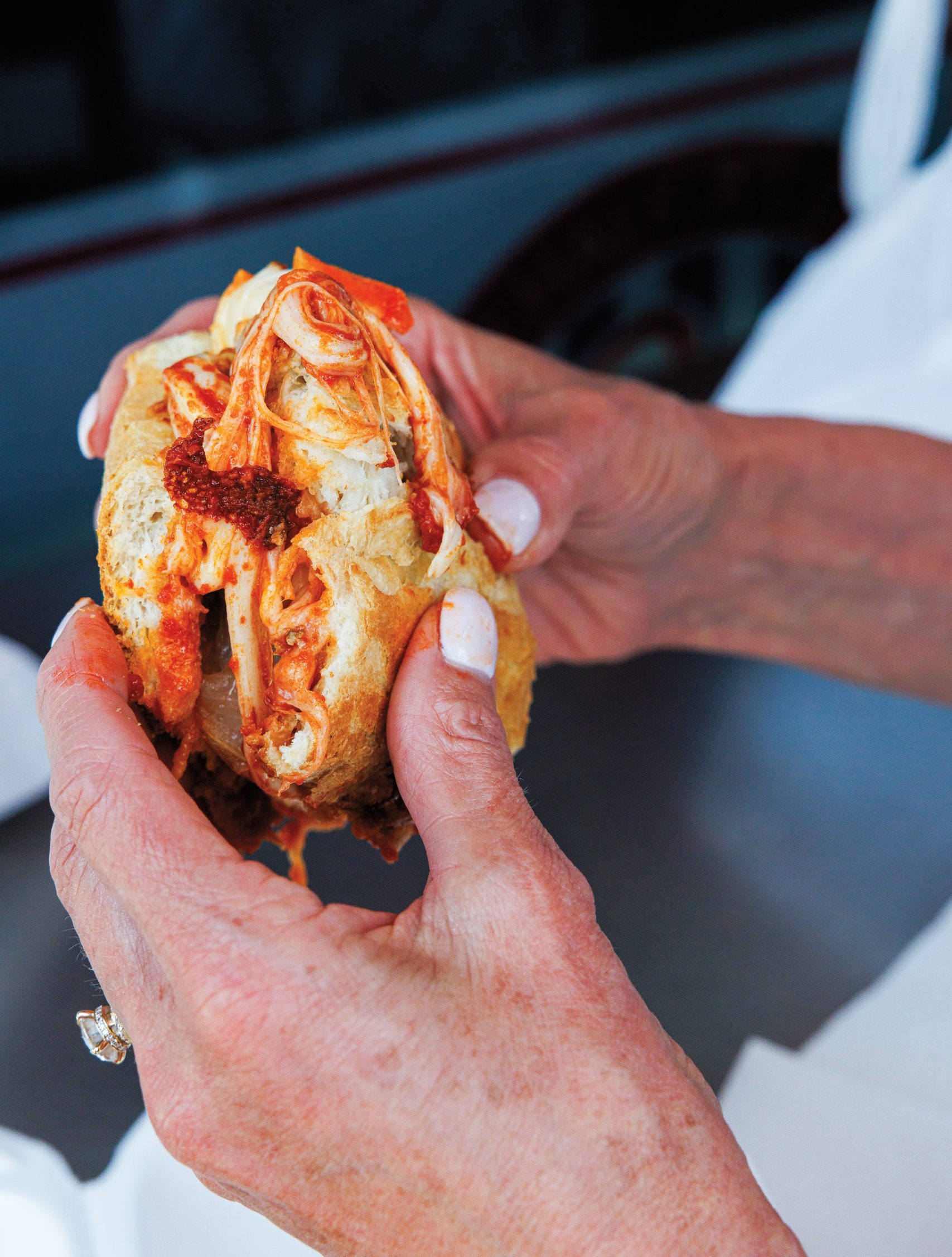
Today, they’re stocking specialty goods like fresh Pastosa ravioli and stuffed shells out of Brooklyn, Italian cookies sourced straight from La Rosa’s Pastry Shop in New Jersey, and a wide variety of canned San Marzano tomatoes. There’s also over 700 Italian wines—more than any independent retailer in the state. Even more impressive is the vast selection of house-made sausages, sauces, meatballs, and lasagna, all recreated from 100-plus-year-old family recipes.
“To have a Texan Italian family sharing their recipes is something our family wanted to offer,” Tony says. “I think a lot of people were missing their culture [in Dallas], so it was nice to fill that void.”
Following a fire in 2004, which led to a gutting of the original space, Jimmy’s dedicated itself entirely to Italian and Italian American products. This includes bread from local bakeries and an arsenal of cold cuts from abroad to make sandwiches like their Calabrese panino made with prosciutto cotto, fontina cheese, and marinated peppers; and an Italian sub overflowing with imported mortadella, capicola, soppressata, and provolone.
But don’t go looking on the internet to order the sandwiches that remind many of their favorite spots back east. Jimmy’s, which has employed many of its 25-person staff for more than a decade, is old school.
“Why would we do that?” Michael says. “We have a phone. We’re not that organized. You can come to the store.” —M.O.
Shudde Brothers Hatters, Brookshire
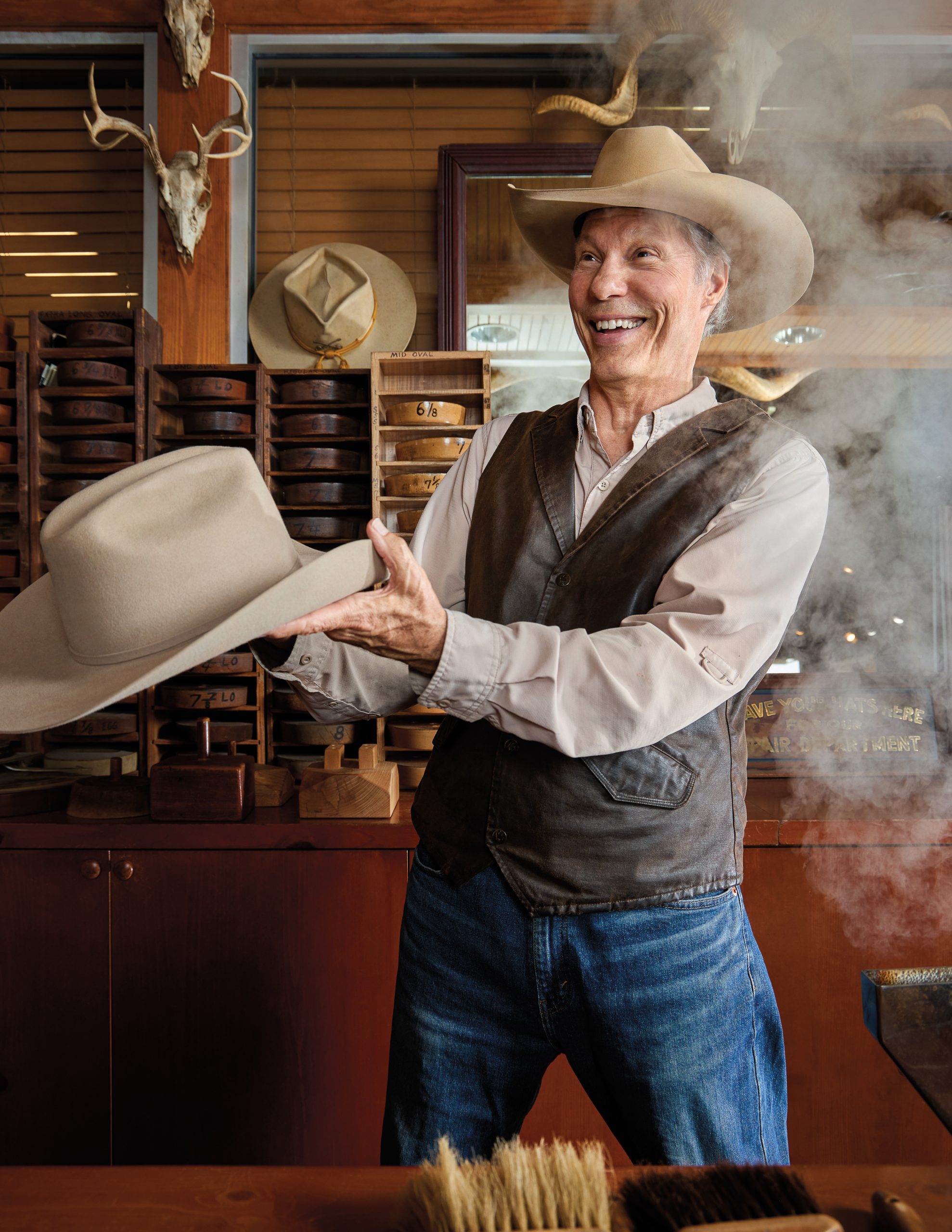
Shudde Brothers has fashioned iconic Texan headwear since 1907. Neal Shudde, fourth-generation hatter and grandson of the shop’s founder, runs the operation. Today, the store is owned by the Brookwood Community, a spiritual vocational facility for adults with functional disabilities—and all proceeds benefit the nonprofit. Given the ubiquity of cowboy hats, there are thousands of places to shop, but consider this: Shudde Brothers made and restored hats for legendary Western movie star John Wayne. If it’s good enough for The Duke, then it’s sure as heck good enough for us.
HAT TIP
Neal Shuddes’ keys for finding hte perfect fit
Shape Up: “There are primarily two head shapes: regular oval and long oval,” Shudde says. The key here is trying on several options. If it fits tight on the forehead, keep looking until one feels comfortable.
Go Big: Between sizes? Opt for larger, Shudde says. Then, use cushioned hat tape under the sweatband to make it snug. It’s much easier to tighten a hat than to stretch it out.
Add Style: With a little steam, you can give the brim a slight curve or adjust the dents in the crown. “Getting the correct shape sometimes requires using both hands and your chin,” Shudde says.
Call Ahead: Shudde recommends making an appointment if you want to do some serious shopping. That way you have a dedicated professional prepared to guide you through the process.
Barber’s Books, Fort Worth
“When author and famed book scout Larry McMurtry went shopping, he came to Barber’s,” recalls Bud Kennedy of the Fort Worth Star-Telegram. “The bookstore brought great literature to an oil-boom Fort Worth and hosted signings for everyone from Ben K. Green to Robert Frost.” Founded in 1925, Barber’s moved to its third and present location, a two-story corner building, in 1955. Five years later, the late Brian Perkins Sr. took over the business. During his 60-year tenure, Perkins shifted away from stocking new bestsellers to secondhand and rare books, such as William Faulkner first editions and a signed Ray Bradbury tome that might set you back a couple hundred dollars.
Nokona Ballgloves, Nocona
Launched 100 years ago as a leather goods purveyor making wallets, purses, and belts along the Chisholm Trail, Nokona is now the only domestic producer of baseball gloves. That specialization can be traced back to World War II, when the U.S. government granted contracts to the Texas company to make thousands of gloves for off-duty service members. Today, Nokona maintains its hands-on operation just north of Fort Worth, where its close proximity to cattle and American tanneries gives the company a competitive edge. “We have the ability to source the best raw materials,” executive vice president Rob Storey says. “And local craftsmen with decades of glove-making experience allows us to make a truly world-class product.”
Penner’s, San Antonio
The men’s haberdasheries selling proper suits and shoes vanished from the downtowns of Texas long ago. Penner’s is the proudly provincial exception. Opened in 1916, the shop distinguishes itself with an emphasis on tangerine Stacy Penners shoes and custom guayaberas, the breezy Cuban summer shirts made from Irish linen and cotton—ideal for San Antonio’s humid climate. The former defined the Pachuco lowrider culture popularized in the 1950s, but the signature selections at Penner’s transcended Westside long ago. Any guy can rock a guayabera, which simultaneously ventilates and stylishly covers up paunchiness. Musician Billy Gibbons of ZZ Top says, “We’re partial to Penner’s’ wide range of classic Stacy Adams shoes, complemented by sheer men’s hosiery, aka ‘thick ’n’ thins’—totally blues approved.”

In 2025, El Paso declared itself the official “Boot Capital of the World.” Joey Sanchez of CABOOTS begs to differ. The great-grandson of Ildefonso Sanchez, who moved to El Paso from León, Mexico, after the 1905 flood, Sanchez is well aware that his family’s hometown south of the border produces far more cowboy boots than anywhere on earth.
But north of the border? “El Paso is the gold standard boot capital of the world,” Sanchez says. The fourth-generation bootmaker points to the minute details that go into an outstanding final product: the cut of the throat, the hand stitching, the skived leather insole with goodyear welt. “You will never get that from modern boots made in León,” he says. “Only in El Paso.”
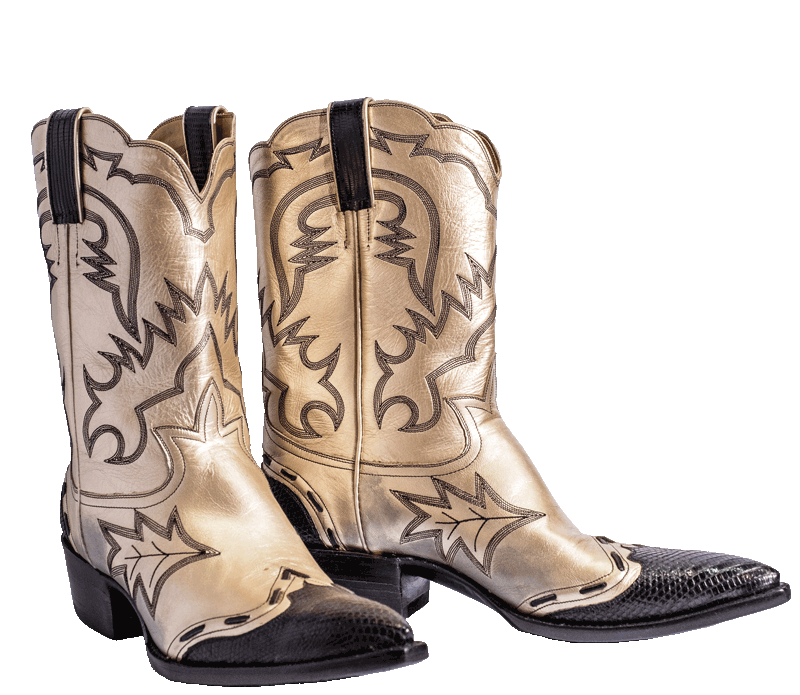
Built on the legacy of big brands such as Tony Lama and Lucchese, both now owned by subsidiaries of Berkshire Hathaway, the El Paso boot scene is dominated by small independent artisans. This includes luxury producers Tomasso Arditti and Tres Outlaws, local institutions like Black Jack and Rocketbuster Boots, and CABOOTS, where a value-priced pair of Rancho Locos starts at $500. “Quality boot wearers will continue to seek quality, and in El Paso, we make quality boots,” Sanchez says. “That keeps the phone ringing.” —J.N.P.

The Cliftex Theatre, Clifton
From the Odeon Theater in Mason to the Mulkey Theatre in Clarendon, small town movie theaters are now being revived en masse across the state. The blueprint for these kinds of restorations, though, owes a debt to the Cliftex, Texas’ oldest continually operating cinema. Debuting in 1916 as The Queen Theater, the property underwent a major community-funded restoration in 2008 that included adding historical memorabilia and furniture, as well as digital projection. “It stands out as one of the historical jewels of Bosque County,” says Brett Voss, the founder and board president of the Bosque Film Society, which works to bring foreign, documentary, and classic cinephile fare to the theater in addition to first-run features. “We plan to do everything possible to keep it alive and thriving for years to come.”
Fischer Bowling, Fischer
One of 18 nine-pin bowling clubs scattered around the edges of San Antonio, the Fischer Bowling Club is tied to the German immigrant farming societies founded in the late 19th century. Club play dominates at this circa-1938 alley, but on Saturday afternoons, the public is encouraged to join in the fun. To take advantage, get your name on the waiting list and enter the club 23 miles west of San Marcos, where the Willkommen zum Fischer sign above the four-lane alley greets visitors. Mind you, there are expectations that prospective bowlers set aside as much as three hours during crowded times, that they tip the teenagers who manually reset the pins, and that they at least tryto understand the quirky nine-pin rules.
Peter Pan Mini-Golf, Austin
At this putter’s paradise, you can tangle with a T. rex and even navigate J.M. Barrie’s namesake storybook character himself. Some of the kitschy statues at Peter Pan Mini-Golf date to its origin in 1948 and were built by cofounder Glenn Dismukes using wire frames, polyfoam, and cement. Today, the family business is still run by Glenn’s daughter, Margaret, who keeps the timeless charm alive right down to the BYOB policy that recalls an era when fun was still affordable in the capital city.
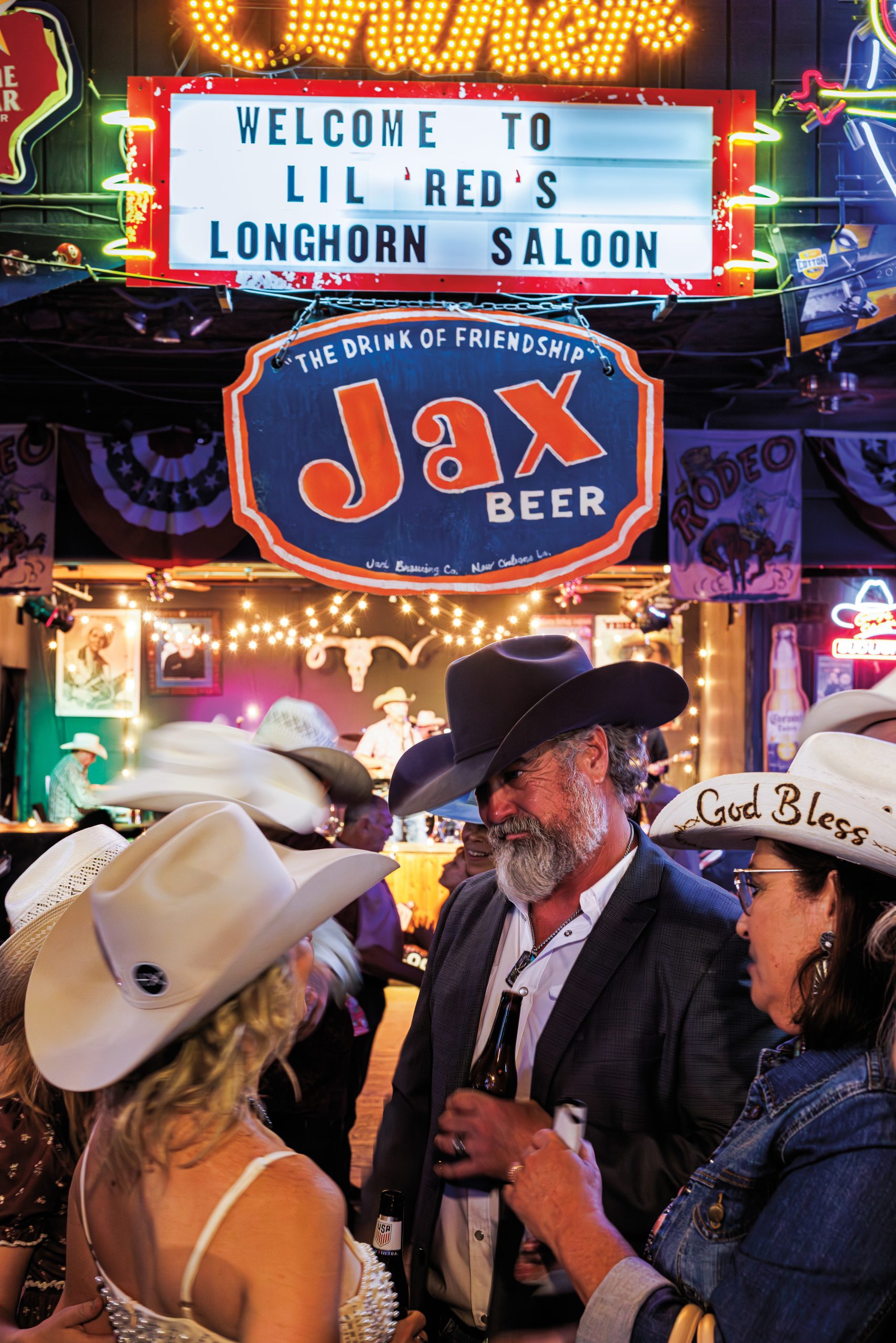
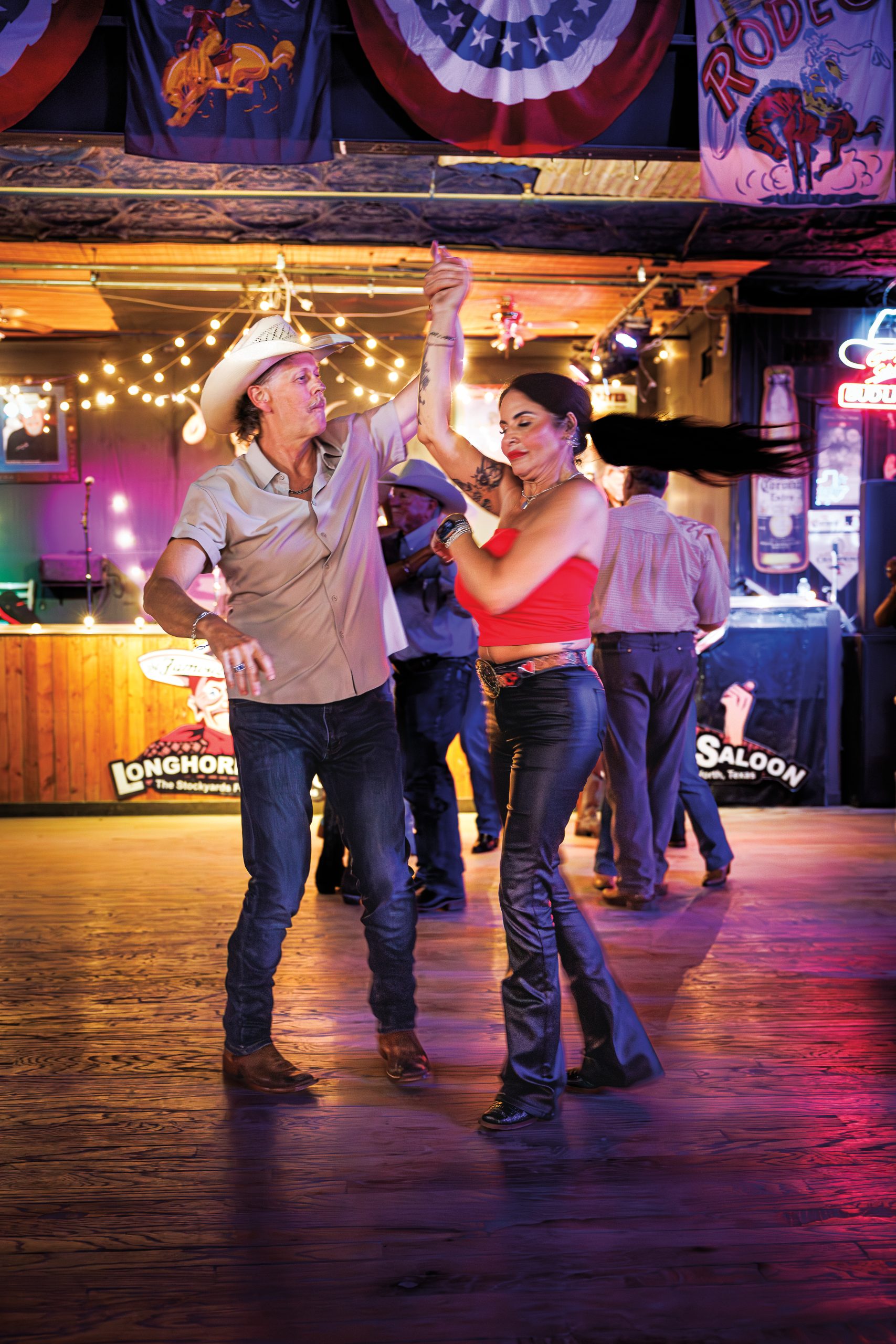

A luminous array of neon beer signs surrounds a retro marquee that reads “Welcome to Lil’ Red’s Longhorn Saloon.” At the back of the room, strands of amber rope lights frame a stage, where a country band plays for two-steppers who whirl around the wooden dance floor. The music mingles with a melody of clinking longneck beer bottles sipped on by patrons, imbibing some liquid courage as they work up the nerve to join the fun.
The glitzy spectacle of Billy Bob’s Texas tends to hog the spotlight when it comes to places for dancing to country music, but its neighbor in the Fort Worth Stockyards district, Lil’ Red’s Longhorn Saloon, feels more like a portal to Texas’ storied past. Think of it as less hat and more cattle. The rustic watering hole was founded sometime between 1910 and 1919 and was a bustling Cowtown business until the 1960s, when the rise of the trucking industry eroded the importance of centralized cattle auctions.
For several decades, a series of proprietors managed what was simply called The Longhorn Saloon. But it wasn’t until 2012, when Craig “Lil’ Red” Copeland leased the space and injected a burst of new energy that the bar became the hot spot that it is today. Visitors love perusing the impressive assortment of rodeo memorabilia, concert posters, and vintage beer ads from Copeland’s personal collection.
Lil’ Red’s is open Wednesday through Sunday and showcases live music from country artists like C.W. Sturgeon and Landon Dodd and the Dancehall Drifters almost every evening. On Thursdays, live entertainment is replaced by free two-step lessons followed by a curated playlist of Western swing and classic country to allow students to practice their new moves. —B.C.P.

It Takes Two
When it comes to two-stepping, there’s tradition, and then there’s everything else
Appearing in movies and TV like Urban Cowboy and Yellowstone, the two-step is a nationally recognized part of Texas culture. It’s a social partner dance that originated in barns and dance halls in the late 1800s and hasn’t changed much since. “This is our tradition,” says James Hrubes, who teaches two-stepping at Lil’ Red’s Longhorn Saloon in Fort Worth. “I’m 61 years old, and I’ve been dancing this since I was a boy.”
A recent uptick in popularity for cowboy culture has given rise to some consternation about the proper technique. Heck, the United Country Western Dance Council hosts contests on four continents and recognizes eight different styles, including three distinct two-steps. Plus, individual cities tend to develop regional idiosyncrasies—Nashville likes a little country swing mixed in, whereas in Austin, they’ve invented a whole new variant called the honky-tonk two-step.
But Hrubes says there’s just one authentic way to do it: Lead dancers shuffle their left foot forward and shuffle their right foot to meet it. Then, they take two steps forward, starting with the left. Following partners do all that in reverse. If you’re lost already, then it’s high time you get yourself a lesson. —B.C.P.
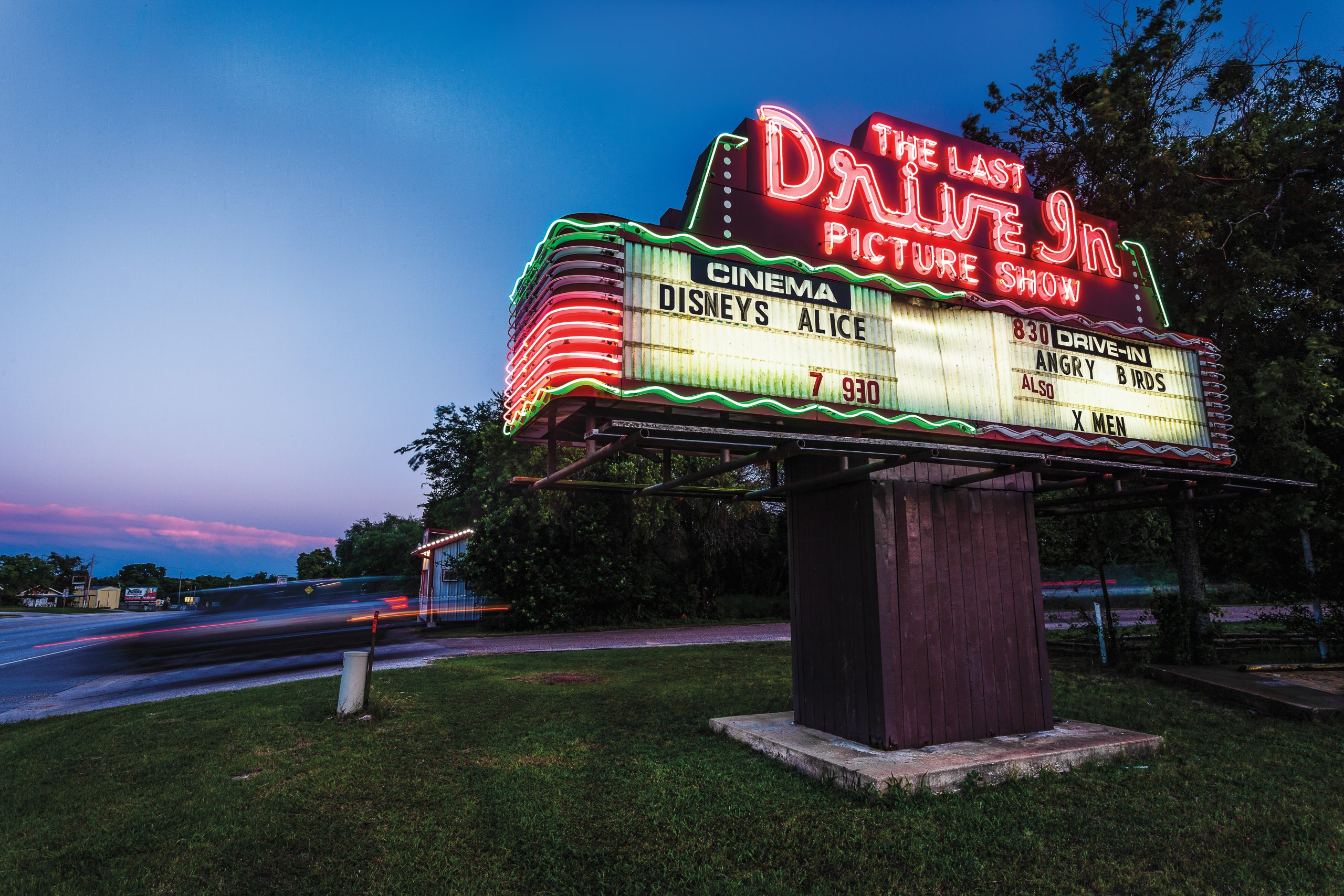

The last glimmer of sun traces the tops of trees in a brilliant orange light. It’s almost dusk in Gatesville, and the first motorists have started to arrive at The Last Drive-In Picture Show, the oldest of its kind in the Lone Star State. Operating continuously since 1950, the theater changed hands just once, in 1965, from founders the Skelton brothers to current owner, Nathan Gene Palmer.
Today, it’s still run by the same family, primarily Palmer’s grandchildren, Dana and Malisa DeLeon. Both have been working at the theater for more than 25 years, since they were just teens.
“We have people drive from quite a way—San Antonio, Austin, Dallas,” DeLeon says. “Spring into summer is our busiest season.”
Around here, things move at a pace you’d expect for a business that’s been in operation for three generations. Dana and Malisa arrive around 6 p.m. with the primary responsibilities of flipping on the bathroom lights and getting a fresh batch of popcorn going—not much different than it was in their grandfather’s era. But now the site has a mini-golf course that requires sweeping and occasional maintenance.
At the time of the theater’s debut, Texas was the reigning king of the drive-in, with almost 400 operations scattered across its nearly 270,000 square miles. Now, there are fewer than 300 remaining in the entire country. But more than a dozen still stand in Texas, offering that rare chance to watch a movie under the stars.
While The Last Drive-In Picture Show features new releases, its prices have remained a relic of the past. Patrons are charged just $10 for each vehicle, regardless of how many occupants. Popcorn costs $2. Sadly, the original metal radio boxes for listening to the films have been removed, but you can rent a retro recreation for $1 or listen to the movie’s audio track by tuning to 90.3 FM on your car stereo.
As the world turns from golden to blue, two siblings race each other across the twilight landscape to the snack stand, where they load up on popcorn, Ring Pops, Whoppers, and soda. There’s a steady flow of arrivals now, fanning out across the dusty lot to get a prime view of the screen. Families pile out of minivans to set up blankets and camp chairs. Teenagers lie down in truck beds and snuggle in. The scene itself feels borrowed from a piece of classic cinema—a theatrical recreation of a bygone era.
The world has gone dark, and all that’s left are the stars and a fingernail sliver of the crescent moon. Then, a beam of light sputters from the projector as the screen flickers to life. —B.C.P.