
I spent my childhood in Decatur wrapped up in county fairs, monthly 4-H meetings, and pledging to make the best better. I knew my way around a sewing machine as well as I knew how to show a goat, and none of it seemed odd; it was just the 4-H kid way. I knew 4-H was a path well-worn by countless Texans before me, but I didn’t realize the start of Texas 4-H was just 45 minutes down the road.

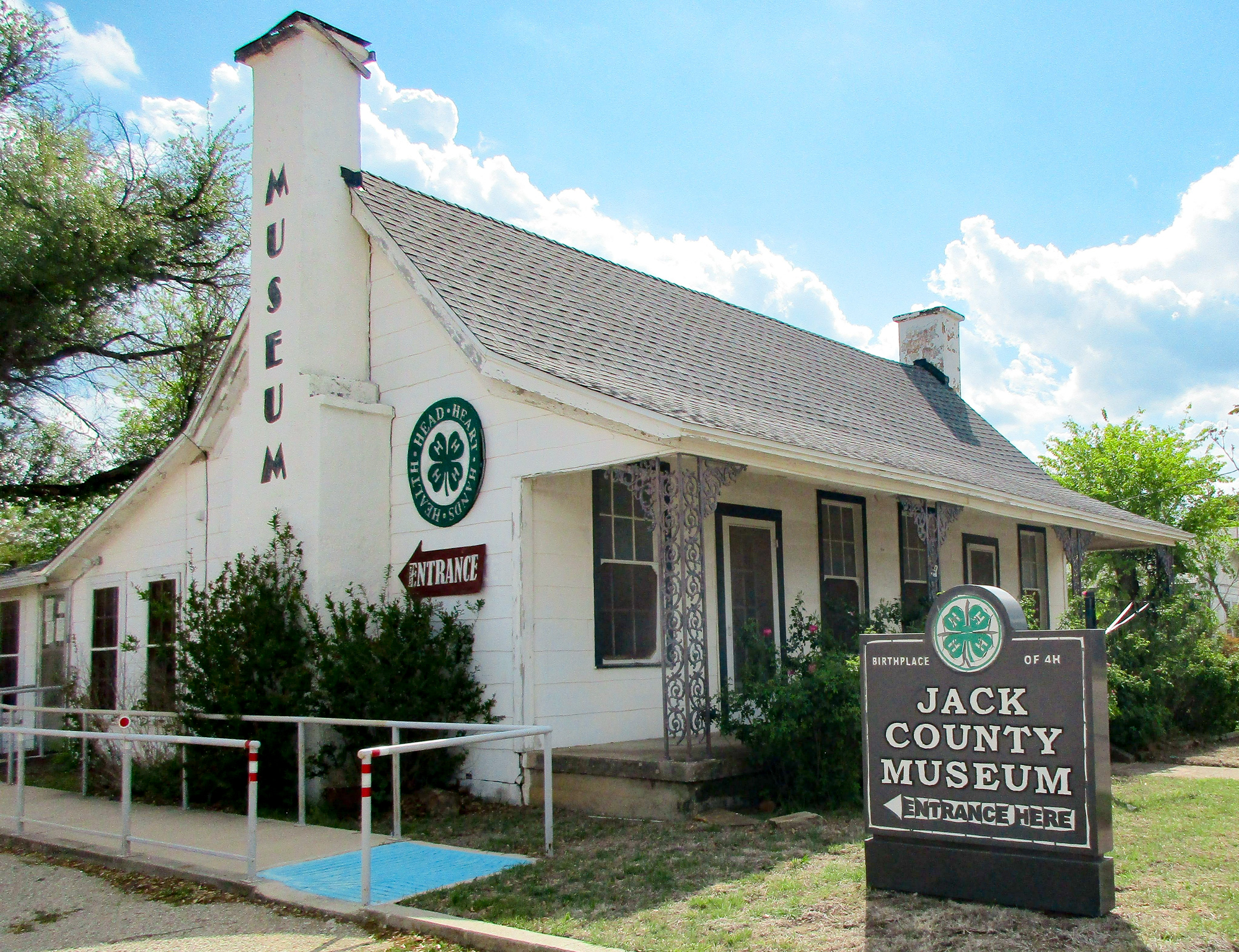
The Jack County Museum in Jacksboro looks quaint. It’s an 1882, single story home with its original stone chimneys intact that was converted into the county’s museum. A sign outside beckons visitors to the official birthplace of Texas 4-H, and it’s not an exaggeration: The building that houses the Jack County Museum is the former residence of Tom Marks, the founding father of Texas 4-H.
Nationally, the history of 4-H begins with small agricultural clubs in rural communities in Ohio and Illinois in 1902. The first Texas 4-H club bloomed five years later from an idea Marks had for the farmers of Jack County. As the county special agent, Marks was responsible for supporting developments in new farming methods. In 1907, he had an idea to increase corn outputs, but the local farmers were unreceptive to his new production tactics. Instead of giving up, Marks turned to the county’s youth and started the Corn Club.
Through the newly formed Corn Club, Marks distributed different types of corn seed to participating boys and taught them the basics of tending the crop. After its first year, members showed their yield at the Jack County Fair. As the precursor to modern Texas 4-H clubs, what started as 25 members of Marks’ Corn Club is now over 65,000 children enrolled in 4-H clubs throughout the state. Today, Marks is remembered for his role in the initial club.
“It’s incredible. The fact that he got no cooperation at first from the people he was really trying to engage, people that were trying to feed their families, and he got no help,” says Harva Kuykendall, president of the Jack County Museum board. “Because he felt so strongly, he found a different route to do that, which was the perfect route.”
Since the days of Marks’ Corn Club, 4-H has grown into a Texas staple: It even received its own Blue Bell ice cream flavor, Centennial Cupcake, in 2008. At the Jack County Museum, an entire room is dedicated to the history of Texas 4-H. According to Kuykendall, this room is where Marks held his Corn Club meetings.
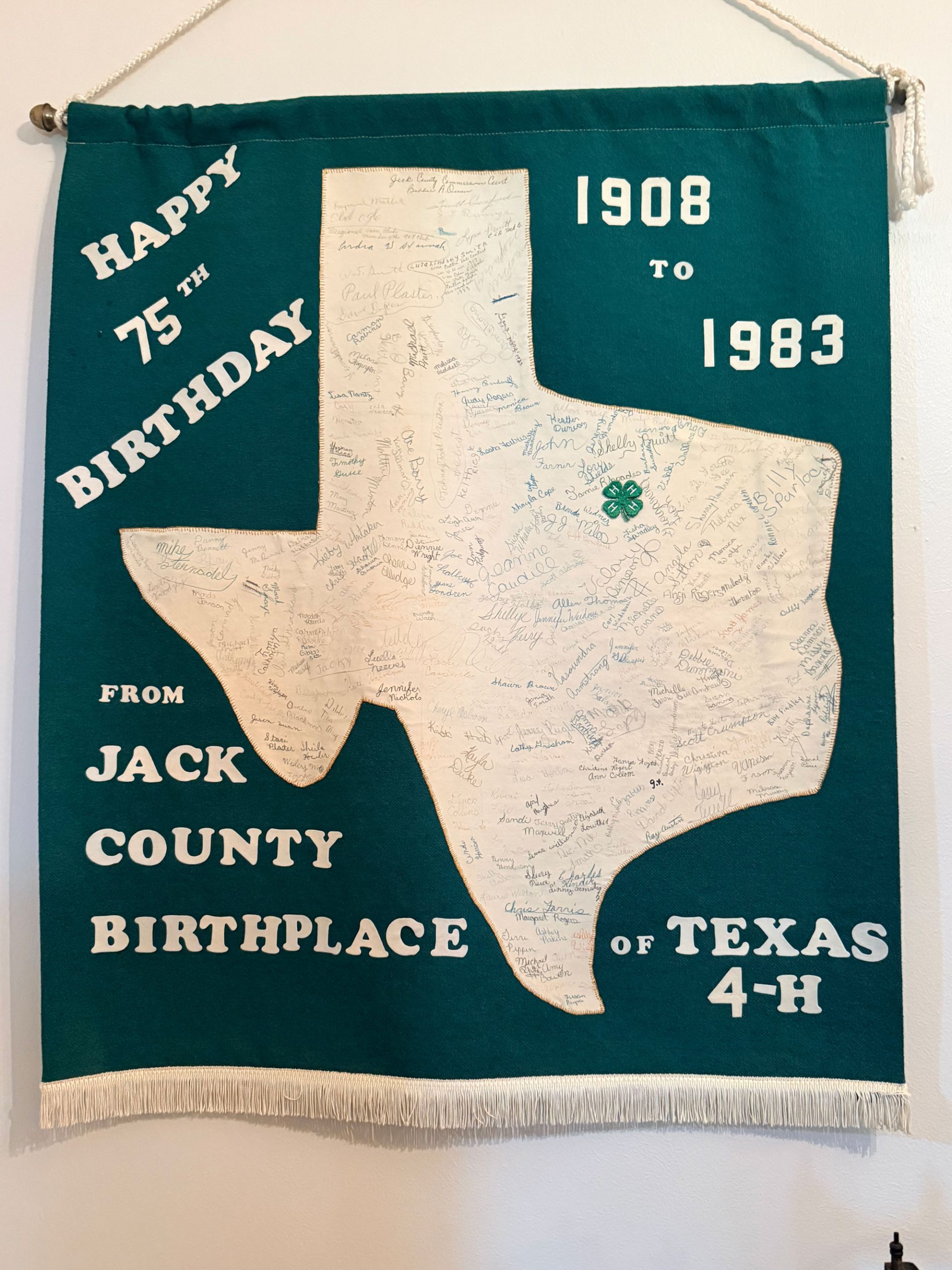
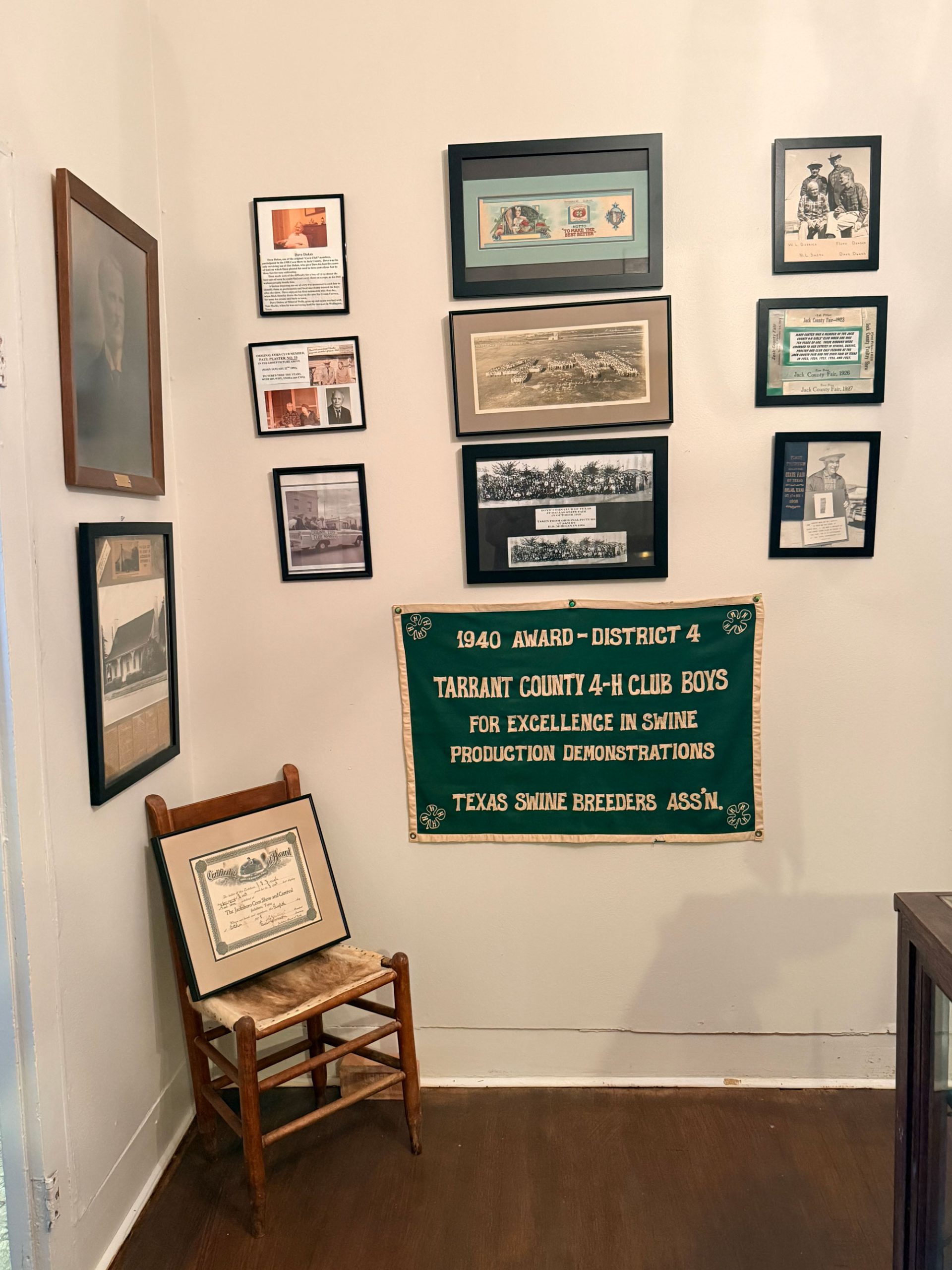
On one wall, a picture of Marks and the original Corn Club members hangs below a sign of Marks’ famous quote: “Next year I will work with the pups,” referring to Marks’ decision to work with children after the farmers’ initial disinterest. The other memorabilia on display tracks 4-H’s growth through the years, including a 75-year anniversary banner and countless medals, ribbons, and plaques from fairs.
“It usually evokes memories of [visitors] being involved in 4-H and their experience, or their children’s experience, or their grandchildren’s experience,” Kuykendall says.
Beyond 4-H memorabilia, the Jack County Museum also contains artifacts across five buildings, including an 1887 restored log cabin. Visitors can view military exhibits, displays about the area’s ranching and railroad history, and local fossils. Kuykendall says fan favorites are the museum’s barbed wire collection and a mammoth tusk.
But for this 4-H kid, the museum offers a chance to stand on sacred ground, the spot where an enduring Texan rite of passage began.