

The Iconic Wild Critters Found ’Round the State
These six animals are diverse, fierce, and independent—just like Texans
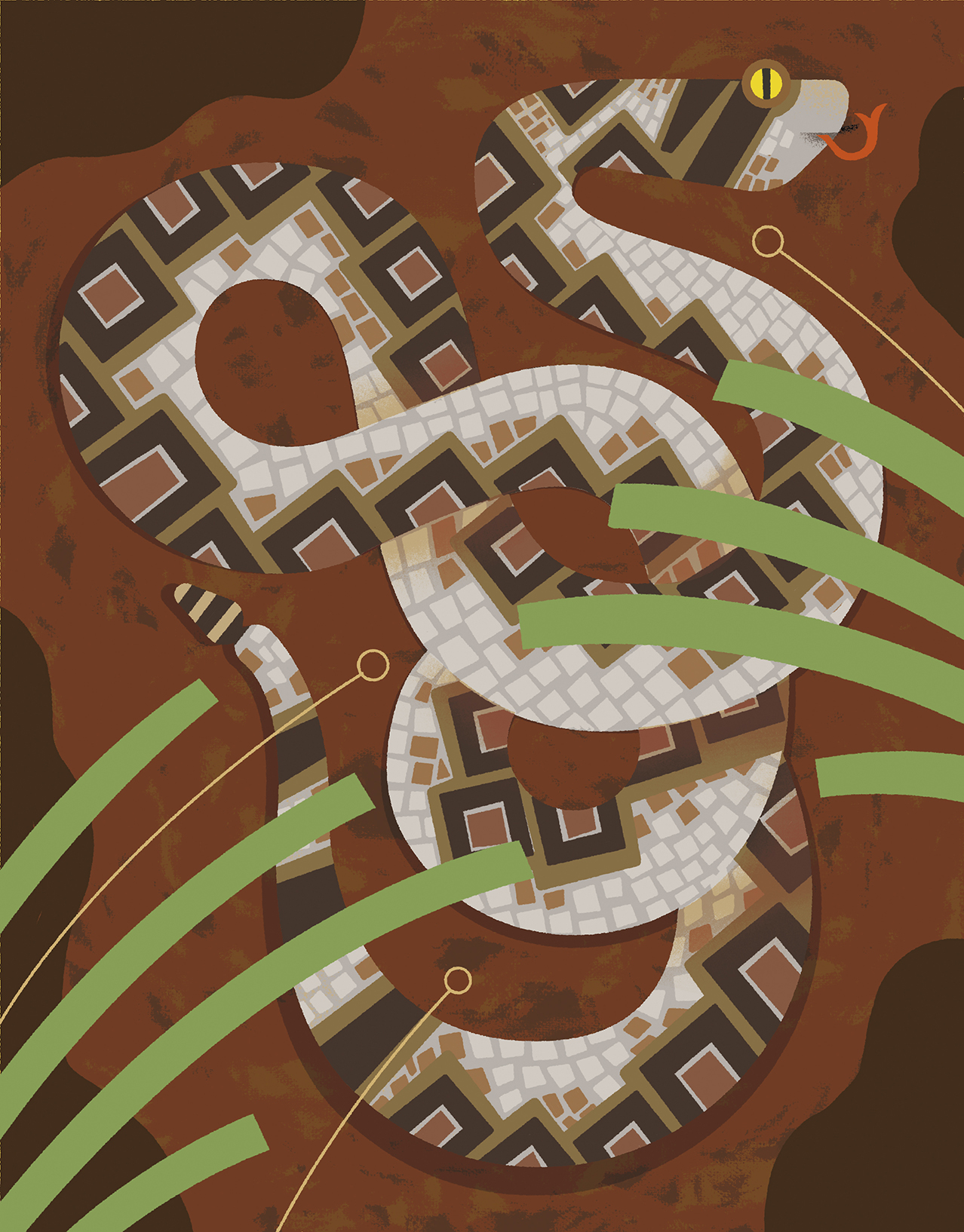
Western Diamondback Rattlesnakes

Where to Find
Throughout the state,
except far East Texas
Perhaps no Texas critter is as feared—or misunderstood—as the western diamondback rattlesnake. It’s true that the venomous snakes are not to be trifled with. On average, adults range from 4 to 5 feet long, with fangs that pack a potent cocktail of venom that attacks muscles and nerves alike. Nor are they shy about doling out that venom to anyone foolish enough to ignore their extremely conspicuous warning sign—a loud, arresting rattle.
But left to their own devices, rattlesnakes would rather use that venom to catch their preferred prey of rodents and birds, “a diet that provides real ecological services to farmers,” says Clint Guadiana, curator of herpetology at the Gladys Porter Zoo in Brownsville. The snakes also have a softer side. Despite their reputation as emotionally (as well as anatomically) cold-blooded, rattlesnakes give live birth to litters of pups, which they guard carefully until their babies’ first shed at about two weeks old. They also tend to spend winters together in communal dens, with the males conducting gentlemanly wrestling matches every spring for females’ affections. In Guadiana’s experience, rattlesnakes seem social and inquisitive. “Even if you put two or three rattlesnakes in a giant enclosure, they usually hang out together, even when they have plenty of hiding spots,” he says. “They choose to be with each other.”
Rattlesnakes spend most of their time either basking in the sun or coiled up quietly out of the way, relying on their camouflage to keep them out of trouble. When bothered, their first impulse is to flee. In this way, they embody a Texan ethos: willing to stand their ground when necessary but preferring to mind their own business. “Rattlesnakes don’t want conflict with something they see as a threat to them,” Guadiana says. “They want to avoid us at all costs.”
Texas Brown Tarantulas
Where to Find
Throughout Texas,
especially West Texas
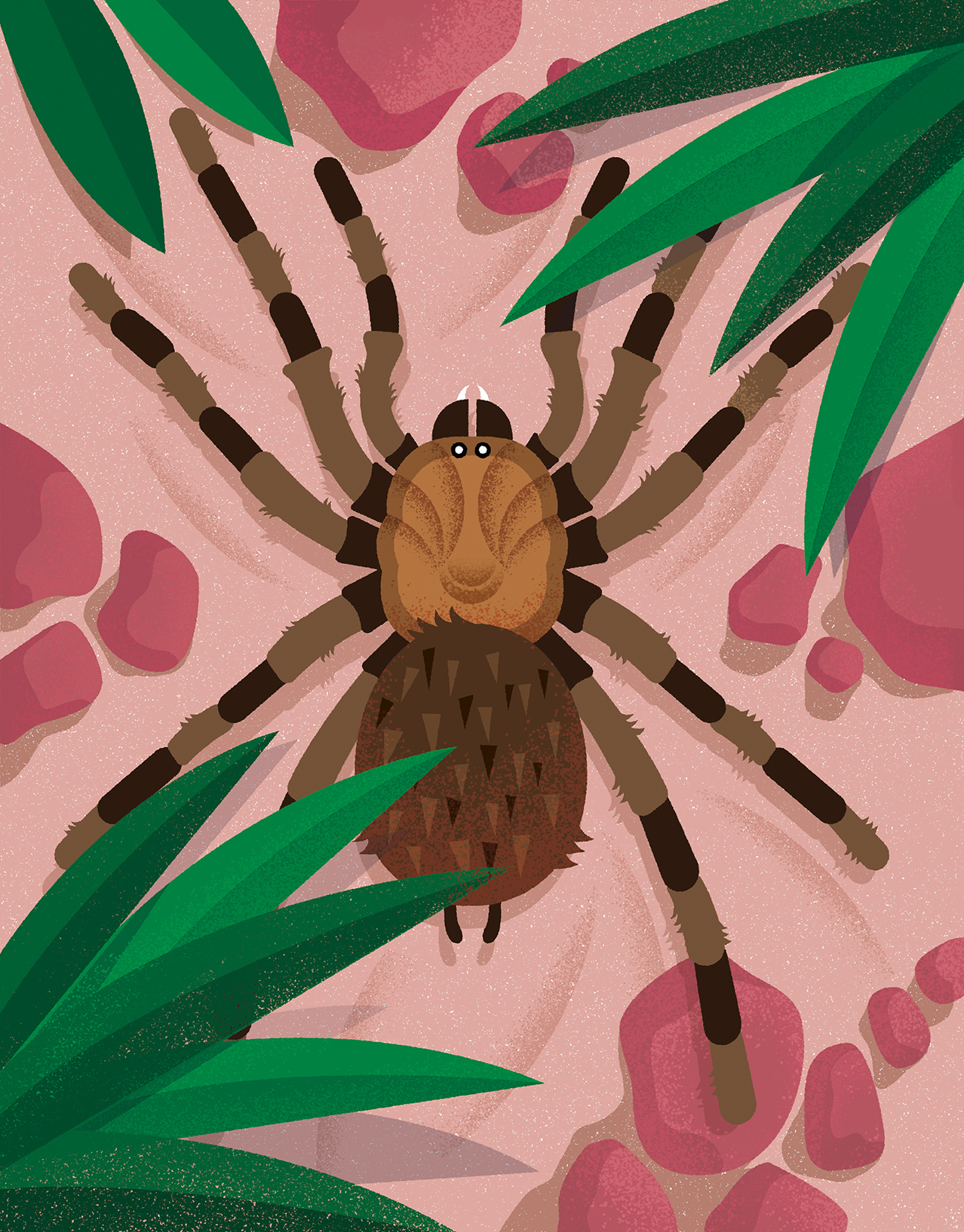
With a leg span of 4-5 inches, Texas brown tarantulas are one of the largest spider species in North America. But don’t be fooled by their scary look. “In spite of their formidable appearance, these gentle spiders are harmless and do not bite unless threatened,” says Dave Moellendorf, owner of Austin Arachnological Services, which hosts educational programs on arachnids. Their venom also isn’t serious—about the level of a bee sting—though their fangs can leave a nasty puncture wound.
Found throughout the state, Texas brown tarantulas are eager predators of insects, particularly roaches, lubber grasshoppers, and other large scuttlers. Unlike many spiders, they don’t build complex webs; instead, they live in burrows and spin silk trip lines that alert them to passing prey. In fact, they spend most of their time out of sight beneath rocks or logs, waiting for insects. But every year from May to July and again from September to November, a large number of adult males at the end of their lifespan emerge from burrows and set out on a determined march across the landscape, searching for female spiders to breed with before they die. This can be tricky: If they’re unsuccessful at courting a female, she might eat him. These “tarantula migrations” are when most Texans see them, moving determinedly across roads and lawns in search of love.
Brown tarantulas are also famous for being good roommates. Many prefer to share their burrows with tiny, narrow-mouthed toads, protecting the little amphibians in return for their services eating insects harmful to a female’s spiderlings, including cockroaches and crickets. But some animals take advantage of their hospitality, like the parasitic, predatory wasps that lay their eggs inside the spiders in a miniature inspiration for the movie Alien. It is a beleaguered life for a large, shy spider.
Armadillos
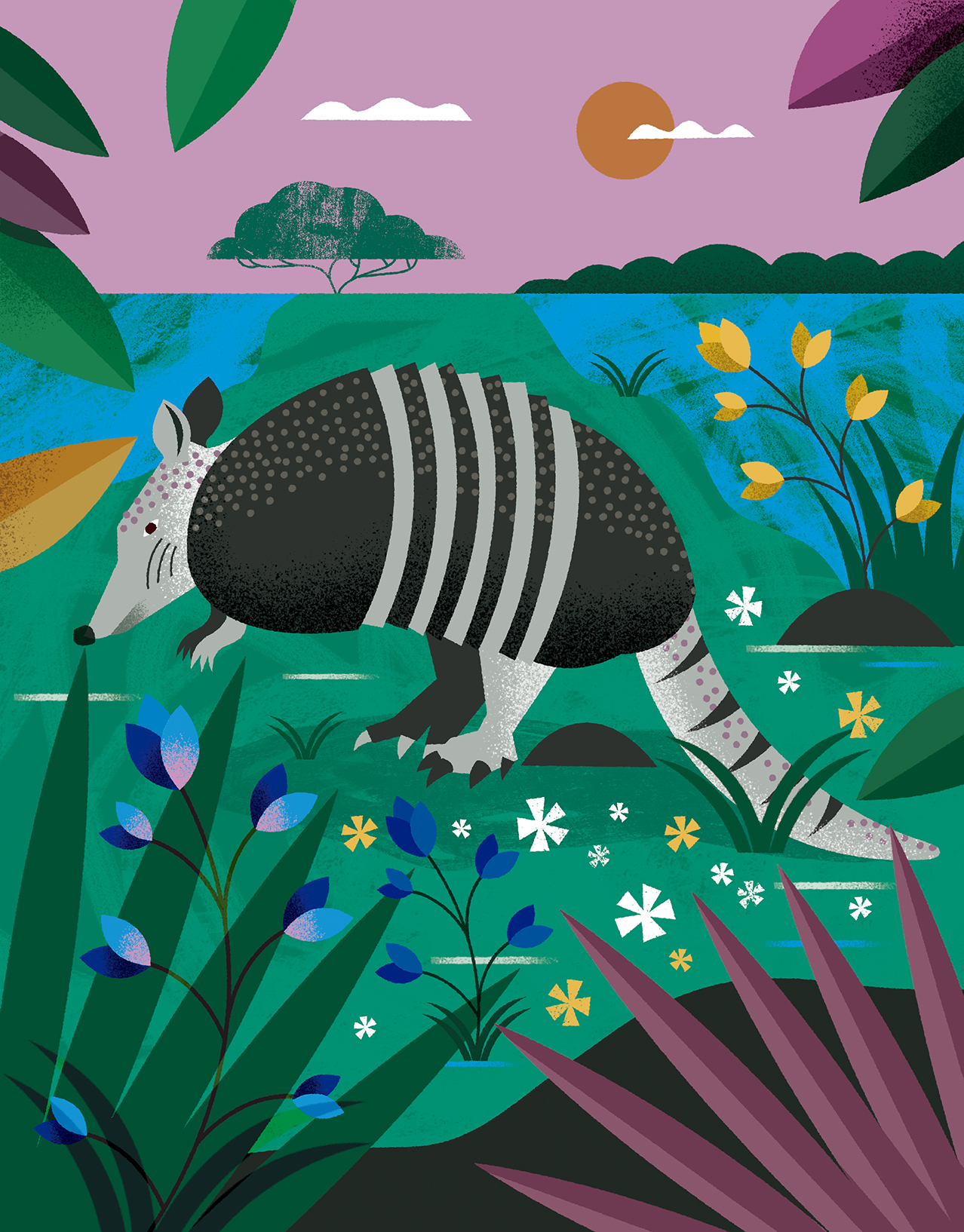
The humble, snuffling armadillo is a classic Texas character. So classic, you would be forgiven for thinking they’ve been in the Lone Star State since time immemorial. In fact, they are relatively recent immigrants in zoological terms. Armadillos, which means “little armored ones” in Spanish, first crossed the Rio Grande from Mexico in the early 1800s. As Texas grew increasingly settled, the leathery insectivores thrived across the state and beyond. “They’re fairly invincible—except to automobiles,” says William James Loughry, a biologist at Valdosta State University in Georgia who has studied the animal for 13 years.
Armadillos live life close to the ground, rummaging through leaf litter for insects, small vertebrates, and fire ants. When not digging furrows through fields and forest floors, they spend much of their time in deep, multientranced burrows where they can wait out overly hot days or cold nights. While they have poor eyesight, they have excellent memories for locating the nearest hole and can sprint for safety with surprising speed when startled. Despite popular mythology placing them in a desert setting, they prefer areas with abundant fresh water. They also, without fail, give birth to litters of genetically identical quadruplets, for reasons researchers are still struggling to understand. Add in a relatively low body temperature compared to other mammals, and you have an adaptable, successful critter whose prospects are only looking brighter as the world warms.
To date, armadillos have settled as far north as Nebraska and are heading for the Mason-Dixon Line, with no sign of looking back. But the animal tends to go unappreciated outside of Texas. “They dig up lawns, they dig up golf courses,” Loughry says. “Texas is the one place where we could tell people that we were studying them and they’d be really interested. Texans seem to like having them around.”
Where to Find
Throughout Texas,
except in the far west
Ocelots
Where to Find
South Texas, primarily
in the thornscrub of
the Rio Grande Valley
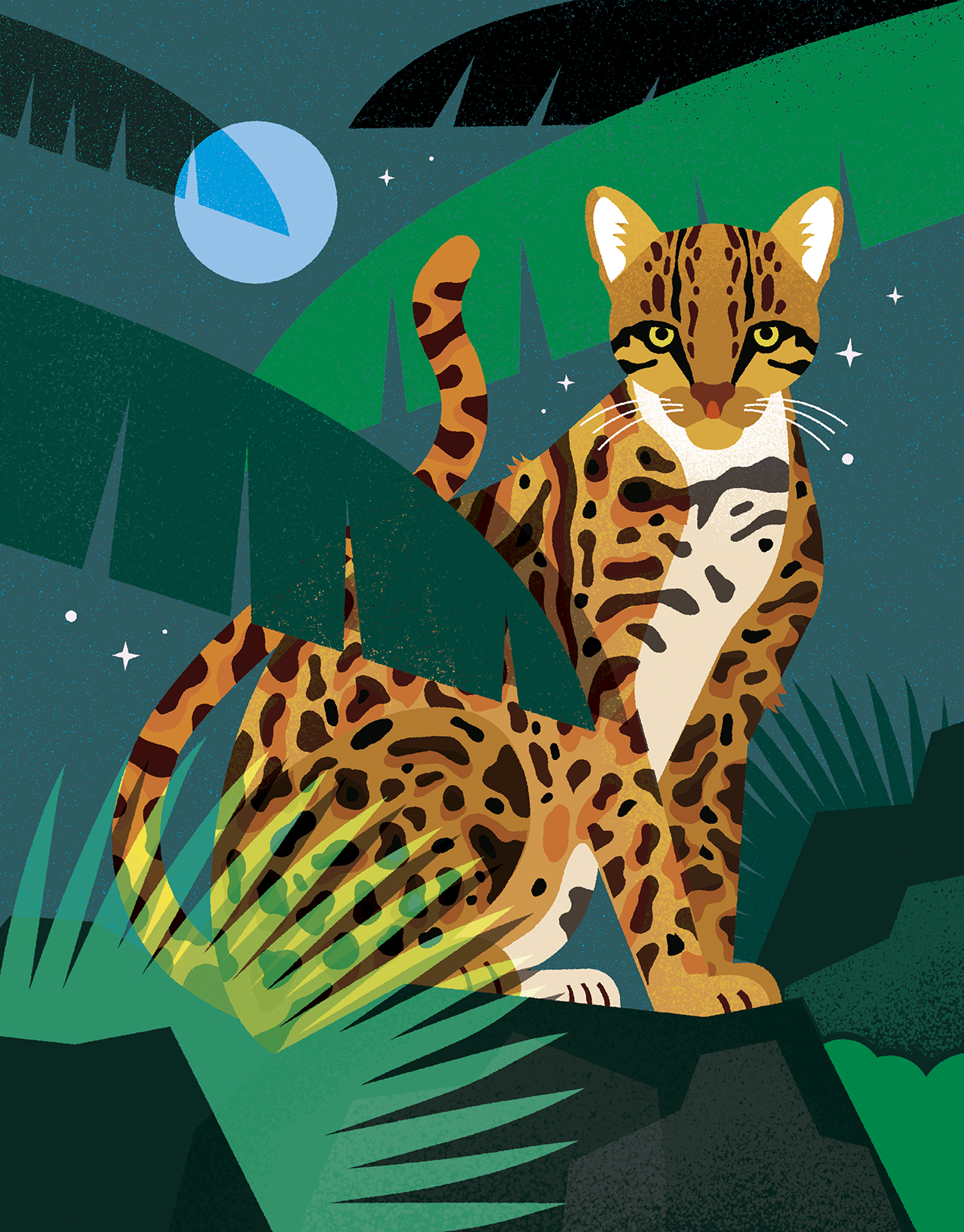
If you go to the right place, many of Texas’ iconic species are easy to find. The ocelot, a spotted cat that weighs 15 to 35 pounds, is not. Once found throughout much of the state and into Arkansas, the shy, graceful ocelot is now confined to a few counties in South Texas. While trapping and hunting them hasn’t been legal since the 1970s, “much of their habitat has been converted to farmland or consumed by urban sprawl,” says Daniel Kunz, a Texas Parks and Wildlife guidance ecologist who works with landowners to build habitat for wildlife. “They’re hanging on because of private landowners who are preserving those big tracts of habitat.”
A predator of rodents, rabbits, and birds, ocelots are generally solitary and prefer the thickest brush in the South Texas thornscrub. Kittens stay with their mother for about two years before striking out on their own. That’s where most of the ones in Texas get into trouble—many have been killed trying to cross roads. The state is now working on a reintroduction program to bring the cats to large, private parcels where they won’t be harmed by cars or other human threats.
Nonetheless, the beautiful ocelot is a beloved animal in the Rio Grande Valley. “They’re only found in the Valley, so they’re very popular and a big tourist draw,” Kunz says. Many people travel to parks like Laguna Atascosa to try their luck at spotting one. If you do, buy a lottery ticket: Seeing the nocturnal cats is incredibly rare. “We have trail cams set up,” Kunz says. “That’s our primary method for locating them.”
Javelinas
Where to Find
From the Edwards Plateau to
the Trans-Pecos, Rio Grande
Valley, and Gulf Coast
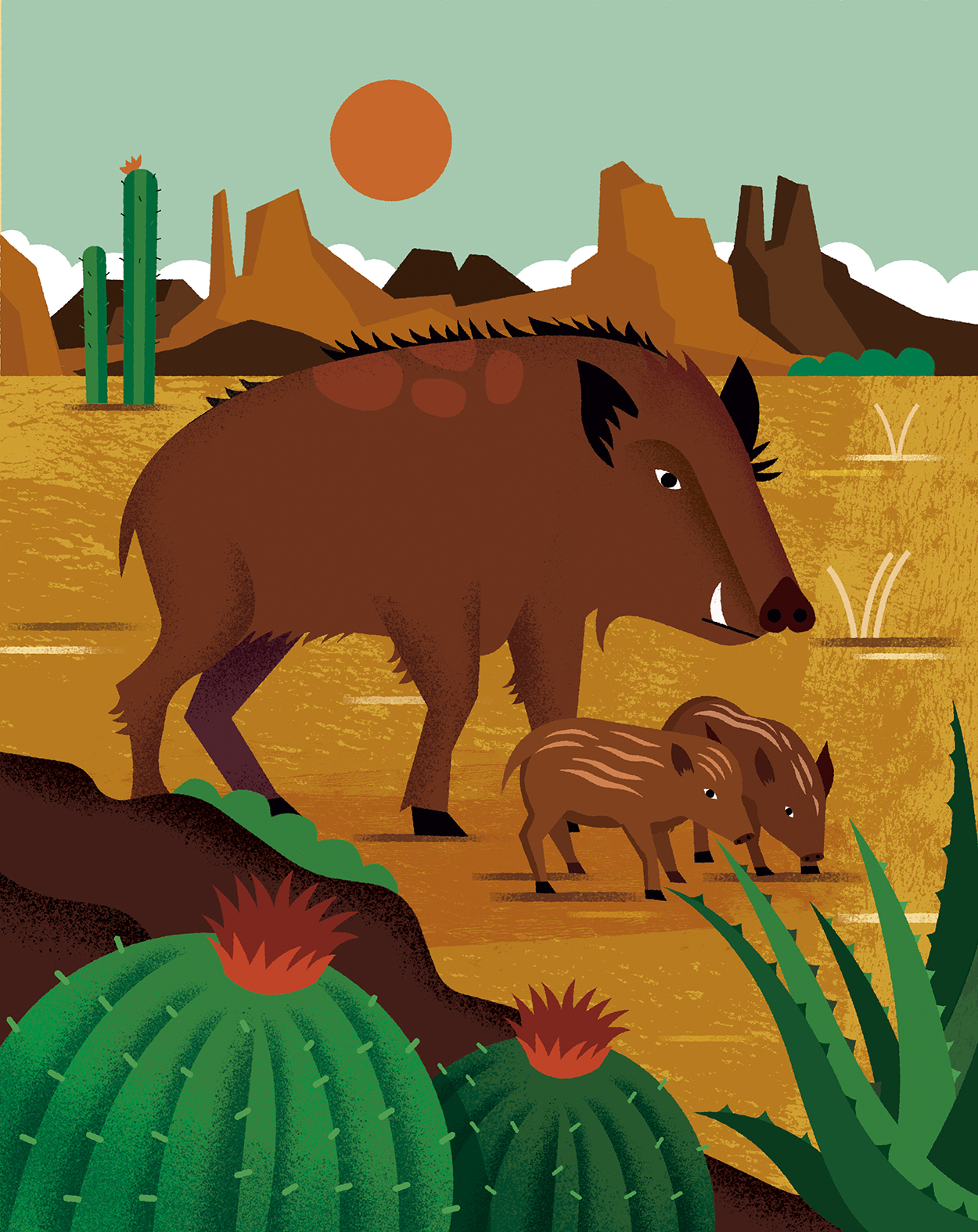
If you come across a short, furry, piglike animal moving through the brush in South or West Texas, look twice—it might be a javelina. Known elsewhere as the collared peccary for the graying ring of hair around their necks, javelinas do somewhat resemble barnyard hogs. But they are an entirely distinct and native family, separated from pigs by millions of years of evolution. They are native to Arizona, New Mexico, and Texas, but their tendency to avoid more urban areas means many Texans aren’t familiar with them. “They’re very unique,” says Stephen Webb, an ecologist with Texas A&M’s Natural Resources Institute. “We’re trying to get the misconception that they’re pigs out of people’s heads.”
Javelinas are adaptable omnivores, happy to munch on vegetation and small animals. A good chunk of their diet is prickly pear fruit and pads, in part due to their high water content. They also gladly gobble up berries and mesquite beans.
Despite being a game species, there’s little interest in hunting javelinas. “I don’t really know why,” Webb says. The animals are quite social, but their group dynamics are a bit of a mystery. While they were once hunted by mountain lions, now their main predators are people—though it’s believed that coyotes attack their young. Weighing in at up to 50 pounds with sharp tusks, an adult javelina is not an easy challenge. “They’ll intimidate people by clacking their teeth together as a deterrent,” Webb says. “Many hunting dogs have gotten in trouble by coming up on a group of javelina.”
Bison
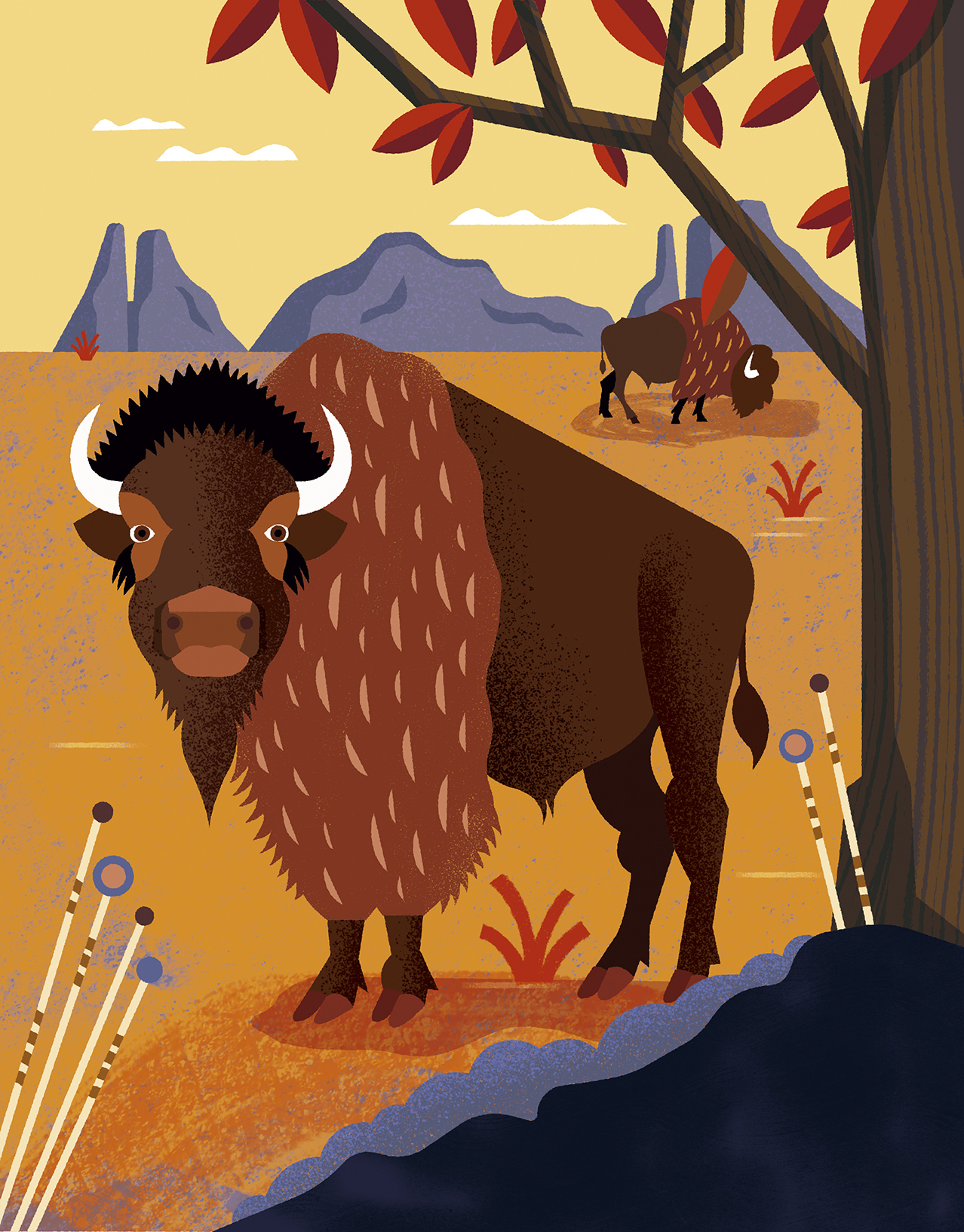
Bison once thundered across the western United States, shaping and revitalizing the rich grasses and wildflowers of the prairies with their grazing. But as Anglo settlers moved in, their hunger for pelts, desire to open up rangeland for beef cattle, and efforts to push out Plains Indians led to the wholesale butchery of the nation’s herds. By the late 1800s, the U.S. population of bison was less than 1,000, most of which lived on private ranches. One of those was in Texas, where in 1878, Mary Ann “Molly” Goodnight urged her husband to save orphaned calves from the shattered southern herd and raise them on their ranch. By 1933, the Goodnight herd had grown to 250 head and helped source bison for reintroduction efforts around the nation. After the Goodnights’ deaths, the herd roamed freely at JA Ranch in Palo Duro Canyon before it was donated to the state of Texas.
Today, the remnants of the Goodnight herd—around 300 animals—inhabit Caprock Canyons State Park as the official Texas State Bison Herd, standing as the last of the now-vanished Southern Plains bison. “They represent a unique piece of genetic information for bison in America,” says Le’Ann Pigg, the park’s assistant superintendent.
Texas bison are a bit smaller than ones found to the north, but they’re still formidable animals. Males can top 1,700 pounds and stand 6 feet tall at the shoulder. These wild animals can be dangerous if not respected, and the park advises visitors to give them space. But it’s also important for people to recognize the ways bison help manage the prairie. They aerate the soil, transport seeds, and intensively graze the prairie, making way for new growth. “We want visitors to see how bison positively interact with their environment,” Pigg says. “The prairie looks a lot different now than it did before they were here.”
Where to Find
Caprock Canyons State Park &
Trailway in the Panhandle