

FLYING COLORS
The Quinta Mazatlan birding sanctuary draws the eyes of the world to South Texas
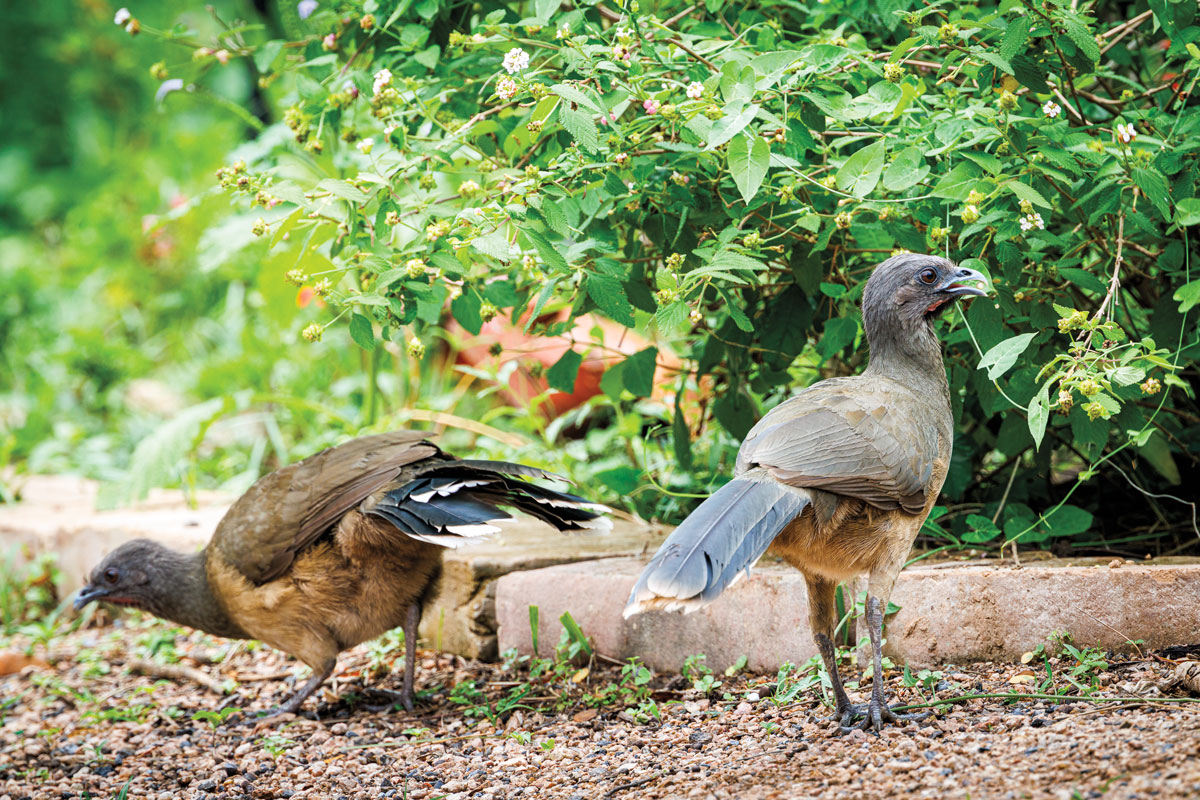
Before I see the chachalacas, I hear them. Their raucous chorus carries down from the mesquite canopy, sounding less like birdsong and more like a parking garage full of car alarms.
Urban ecologist John Brush grins. It’s a mating and territory thing, he explains, his brown hair pulled back into a ponytail. Pairs call to and fro, the male punching out cha-cha-LA, the female answering a half beat later with cha-cha-LA-ca. They learn each other’s voices. They know their neighbors. “It’s like, ‘Hey, that’s Bob. He lives down the street,’” Brush says. “‘Bob’s cool over there. I’m cool over here. But that guy? I don’t know him.’”
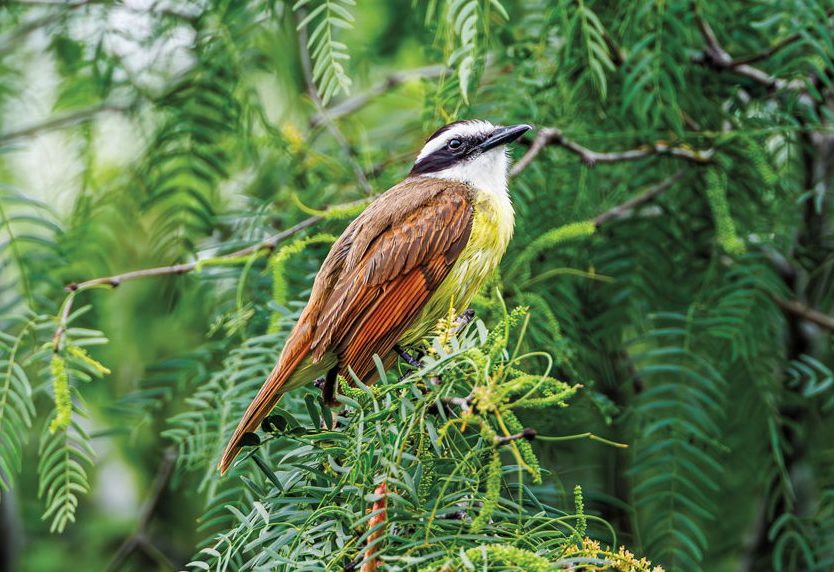
The only sound louder than the birds are the planes. Quinta Mazatlan, a 12-acre nature preserve wrapped around a Spanish Colonial Revival-style estate in McAllen, sits directly across the street from the airport—to say nothing of the shopping mall, hotel and restaurant chains, big-box stores, and apartment complexes just beyond. But it’s the park’s position at the northern edge of a subtropical zone stretching to Central America that accounts for many of the 250-plus bird species spotted here, some found nowhere else in the United States. That includes the plain chachalaca, a gawky, hopping fowl that looks like a cross between a turkey and a roadrunner. “You leave South Texas, and you’re not going to see them,” Brush says.
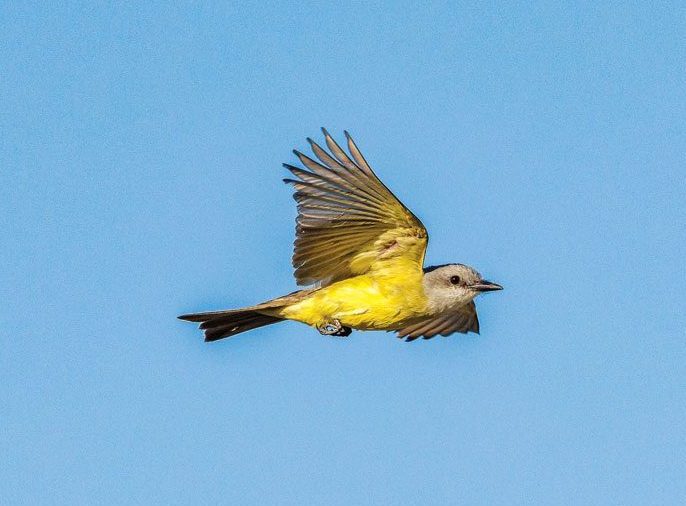
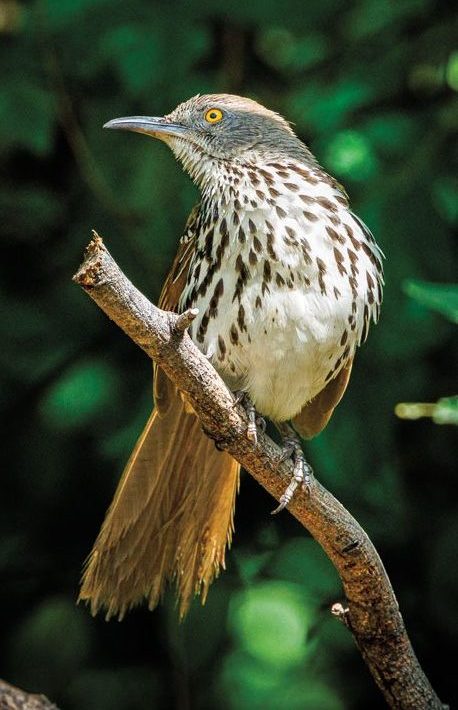
Brush grew up in nearby Edinburg and has visited Quinta Mazatlan, now his workplace, since he was a kid. Over the hour we spend on a March morning winding through its woods, he points out nearly a dozen species: a black-bellied hummingbird zipping around a Mexican wild olive, a yellow-headed parrot pecking cones atop a cypress, a group of red-winged blackbirds that sound like a computer modem dialing up. I feel like I’m walking through a zoo. I understand why birders arriving in the region often make Quinta Mazatlan, part of the World Birding Center network, their first stop. It’s a place to quickly tick off the easier species before fanning out to more than a dozen wildlife refuges, centers, and parks dotting the landscape from Boca Chica, where shorebirds dominate, to Roma, where raptors race overhead.
But Quinta Mazatlan also represents something else: a decades-long bet that what’s good for birds is also good for humans. Even land hemmed by strip malls and subdivisions can invite nature in. “You can still have places for people to go and be cooler in the shade of trees and have all this wildlife,” Brush says.
That bet just got a lot bigger. Next door, Quinta Mazatlan’s $59 million Center for Urban Ecology expansion will open in October, with roughly double the acreage of the original preserve and more than 27,000 new plants representing about 100 native species.
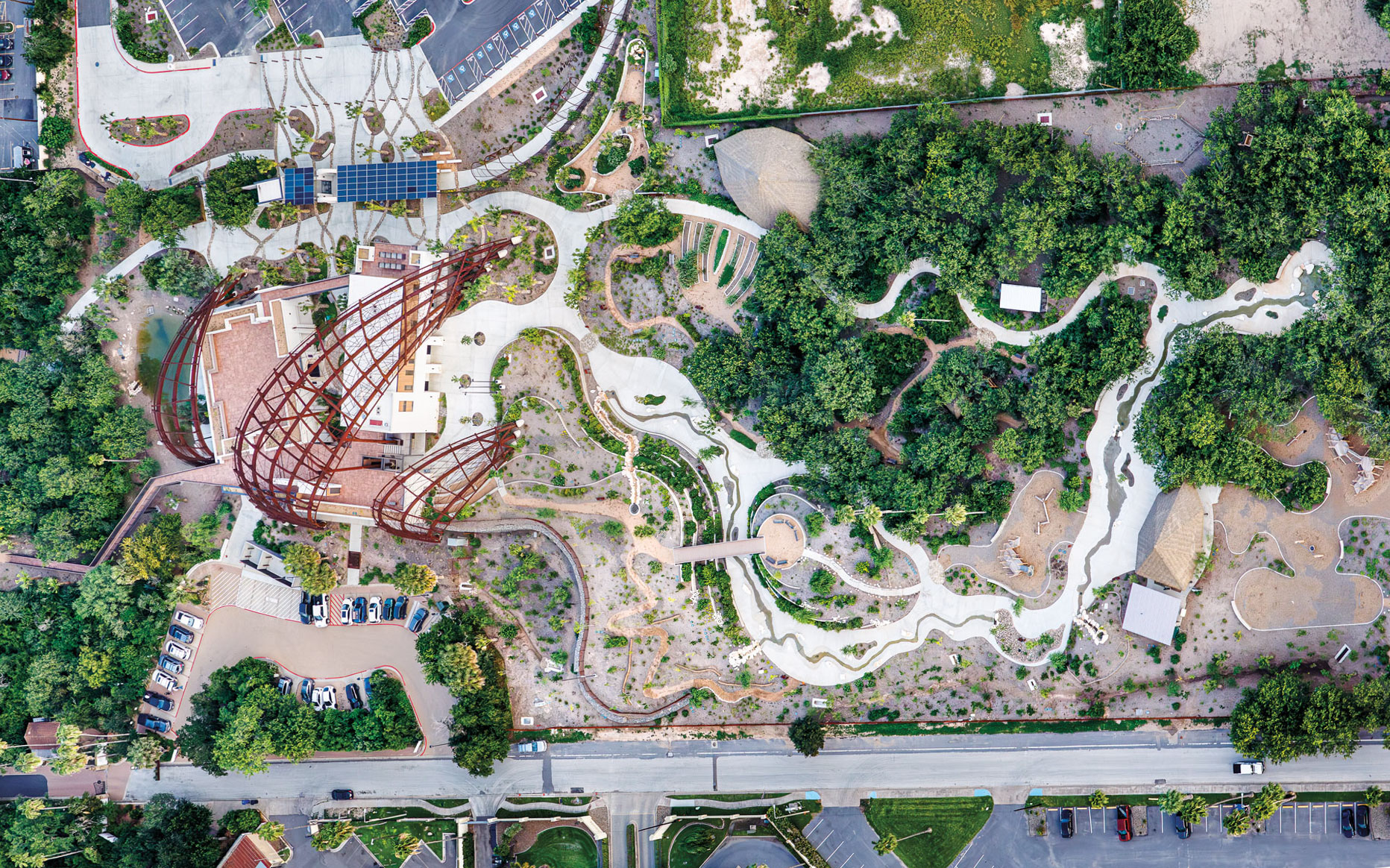
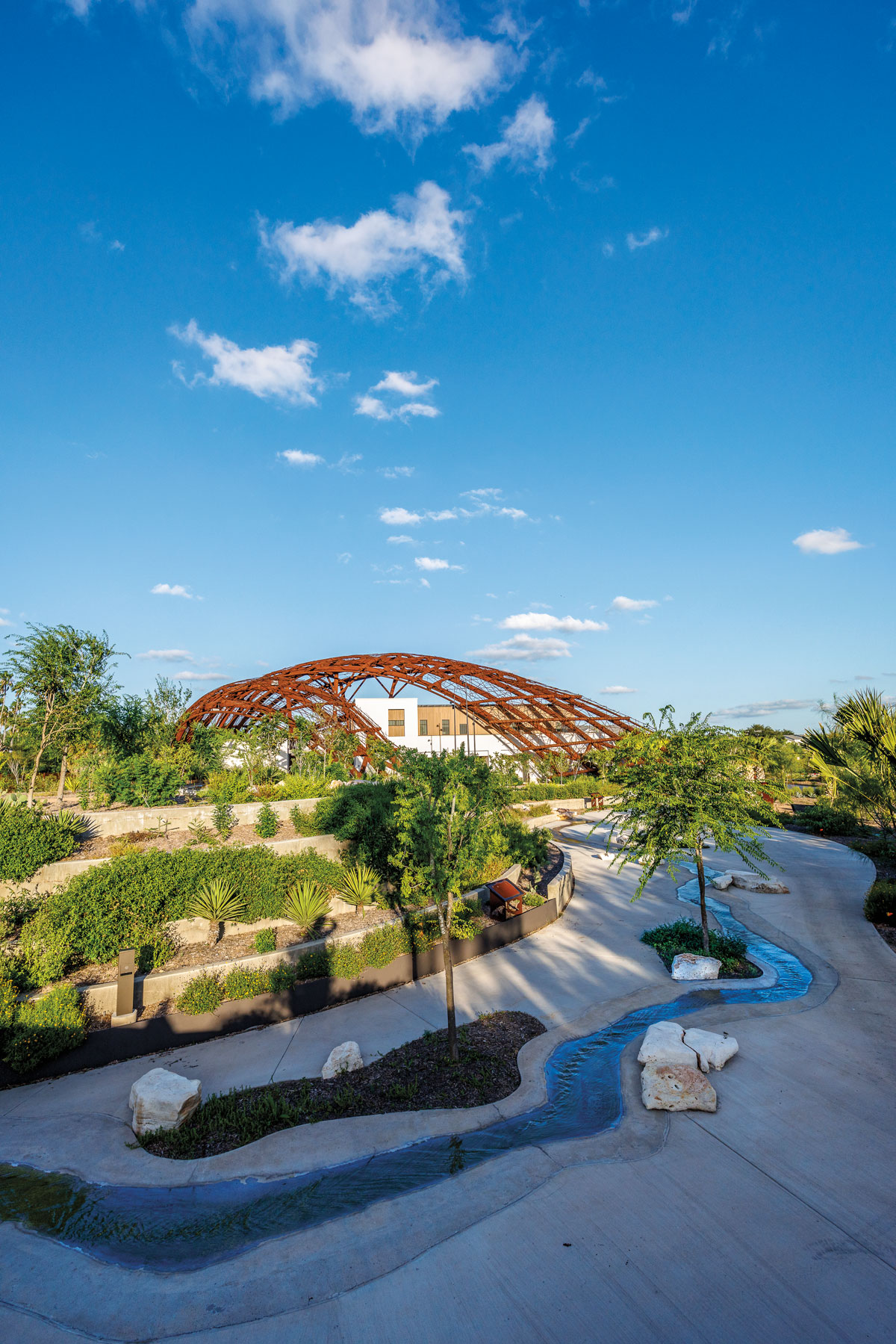
The project’s anchor is the P.A.L.M.—Plants, Animals, Land, and Mankind—House, a 15,431-square-foot educational center and urban ecology science lab designed by Overland Partners, the architects behind the Lady Bird Johnson Wildflower Center in Austin. Corten steel pipes wrap the building and overlap in the sky. Seen from above—by a neotropical migrant or a descending plane—the structure takes the shape of a bird with wings outstretched.
From the ground, the latticework reminds me less of a bird than of the thorny tangle of plants the chachalacas and other birds depend on. That ecosystem was reduced to fragments long ago—a history that Quinta Mazatlan has spent decades trying to reverse.
Before European colonization, more than a million acres of gnarly shrubs and trees like acacia, ebony, and brasil blanketed both sides of the Rio Grande—an ideal haven for the wildlife that inhabited it. Ocelots and jaguarundis crept through the forest’s shadows. The chachalaca was at home here, as were 500 other species of birds and nearly as many butterflies. In 1904, the railroad arrived, bringing developers such as the Hidalgo Canal Company, which saw not a forest but real estate. They dubbed it the “Magic Valley” and enacted their own alchemy, transforming more than 90% of the existing forest into farms fed by hundreds of miles of canals. The remnants of one still cut through the grounds of Quinta Mazatlan.
The couple who built and named the mansion at Quinta Mazatlan—“House of the Deer”—set the land on a different course. The 4.5-acre property was a grapefruit orchard when it was purchased in 1938 by Marcia Matthews, a Pennsylvania oil heiress, and her husband, Jason Chilton Matthews, an adventurer and archeologist from Virginia. Jason had a white goatee, rumored ties to the Smithsonian Institution and National Geographic, and a resume that members of the Texas Historical Commission dubbed “difficult” to fact-check. Articles in the Valley Evening Monitor and McAllen Daily Press newspapers described him as having fought alongside Lawrence of Arabia, crossed swords with Pancho Villa, and survived capture by an Amazonian tribe.
“He wore his Bermuda shorts way back then, 50 years ago, when people didn’t wear Bermuda shorts,” a McAllen woman said of Matthews at a ceremony for a historical marker in 1985. “He always carried this English walking cane, and he always talked with a certain kind of accent.”
Matthews reportedly chose McAllen as the base for his expeditions after studying a map and determining the city lay at the “crossroads of the Western Hemisphere.” In 1938, he told the Monitor, “Half the archaeological treasures of the world are only three days travel from McAllen.”
Inspired by his jaunts in Mexico, he hired laborers to erect a home from adobe, then a poor man’s material, with 12-inch-thick walls. He mixed the mud himself in an old washing machine using a recipe some heard was used for King Nebuchadnezzar’s palace in Babylon.
Matthews made a cameo on his new home’s imposing front doors, where Swiss woodworker Peter Mansbendel carved a gargoyle in his image and cherubs based on Marcia and her children from a previous marriage. Inside: a 70-foot-long grand hall with Saltillo floors, blue-and-white Talavera tiles, and cedar beams rumored to be a gift from the King of Lebanon. Also: Egyptian artifacts, medieval stained glass, 15th-century furniture, 25 Siamese cats descended from the King of Siam’s own felines, a caged monkey, a parrot that sang Italian grand opera, and so many books, magazines, and newspapers that visitors turned sideways to get around them. The walls were coated with a silvery metal paint, reportedly to deflect radar waves. Roofers later found shingles recycled from aluminum newspaper printing plates.
Most unusually, Matthews abandoned the citrus orchard to nature. “He let native trees grow in,” says Colleen Hook, executive director of Quinta Mazatlan. “He grew a forest around his home.”
Matthews planted some things, too. In 1940, he placed a classified ad offering to trade “one seed from the rare Australian Bird plant” for 500 cuttings of “corona vine”—local passionflower. Not all his choices please contemporary ecologists. At a garden club meeting in 1942, he urged members to grow Cuba laurels and African tulips, and he sought out invasive species like oleander and jasmine that are now frowned upon by scientists like Brush.
After a career of considerable breadth, Matthews died in 1964, deeply in debt. Three years later, a reporter with the Beaumont Journal stopped by the house, which a church was using as its coffee shop, and found it “cloaked in a virtual jungle of palm and mesquite trees.” The orchard was returning to forest.
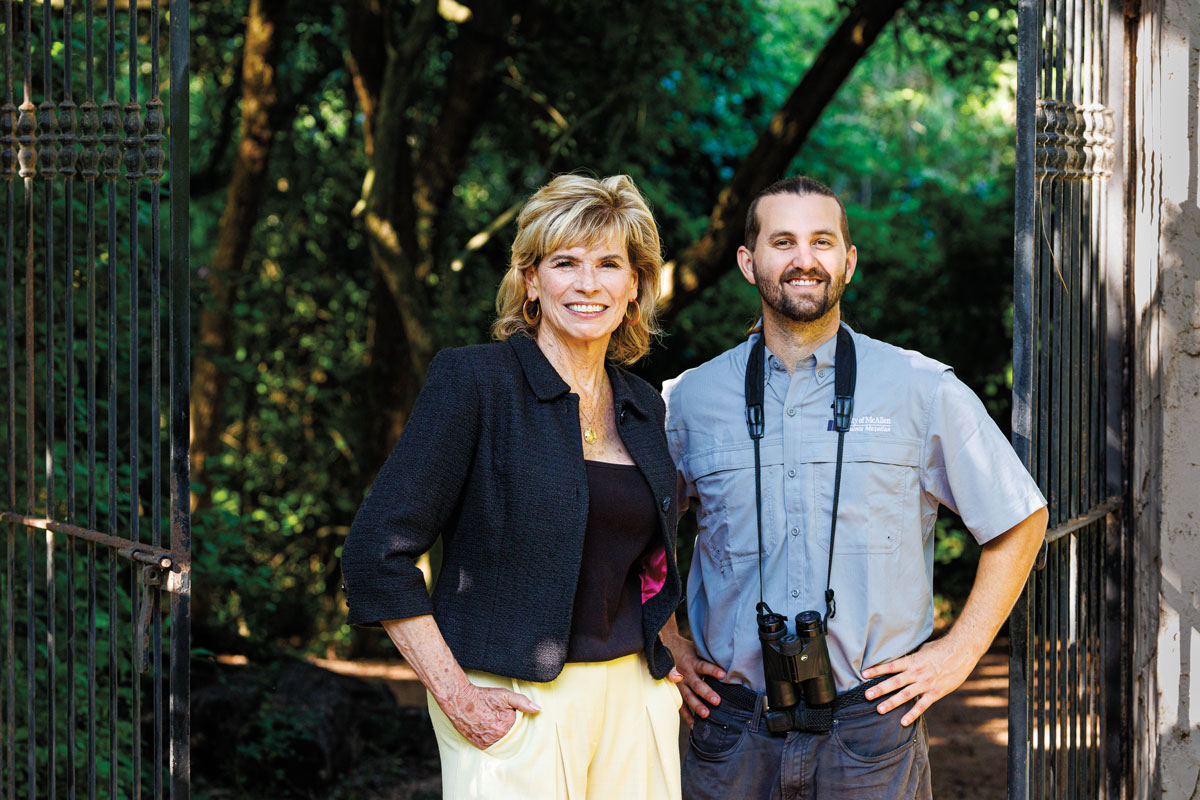
I watch an olive sparrow flit through the ironwork caging the window in what used to be the Matthews family garage. It’s now the office of Hook, who has led Quinta Mazatlan since it opened as a nature preserve and educational center in 2006. The window was her doing—installed during renovations more than two decades ago, along with the hummingbird feeder and wax-mallow plant just beyond. “There was no way I was going to work at a nature center and not have a window in my office,” says Hook, a square-jawed woman with mischievous blue eyes and not a hair out of place. “It went on the city commission agenda as ‘Colleen’s Window.’”
In 1988, Hook moved from Houston to McAllen for her husband’s work, leaving behind a job at an ad agency. She wound up helping run a photo contest for the conservation group and land trust Valley Land Fund—a role that took her out of McAllen’s concrete sprawl and onto ranches, where she experienced what the Valley once looked like. “I said, ‘Oh my gosh, there’s a forest!’” she remembers.
The VLF was among those who led the push to save Quinta Mazatlan when it came up for auction in 1998. The property, owned and expanded to 8 acres by a grapefruit industry scion, was up for sale, and developers were circling. Advocates encouraged the city to bid, their argument buoyed by a timely opportunity. The Texas Parks and Wildlife Department had announced plans for a World Birding Center—a network of native habitats guiding birdwatchers through the Rio Grande Valley—to drive ecotourism in the region. Before anyone knew whether Quinta Mazatlan might be chosen for one of the locations being scouted, the VLF put up the first $60,000. The gavel came down at $1.4 million. “We got raked in the papers for buying an old adobe house,” says Hook, who was hired by McAllen to lead the property’s transformation in 2004. Workers ripped out invasive grasses and cut trails through the forest. They also added more native plants, installed ADA-compliant bathrooms, and opened a gift shop.
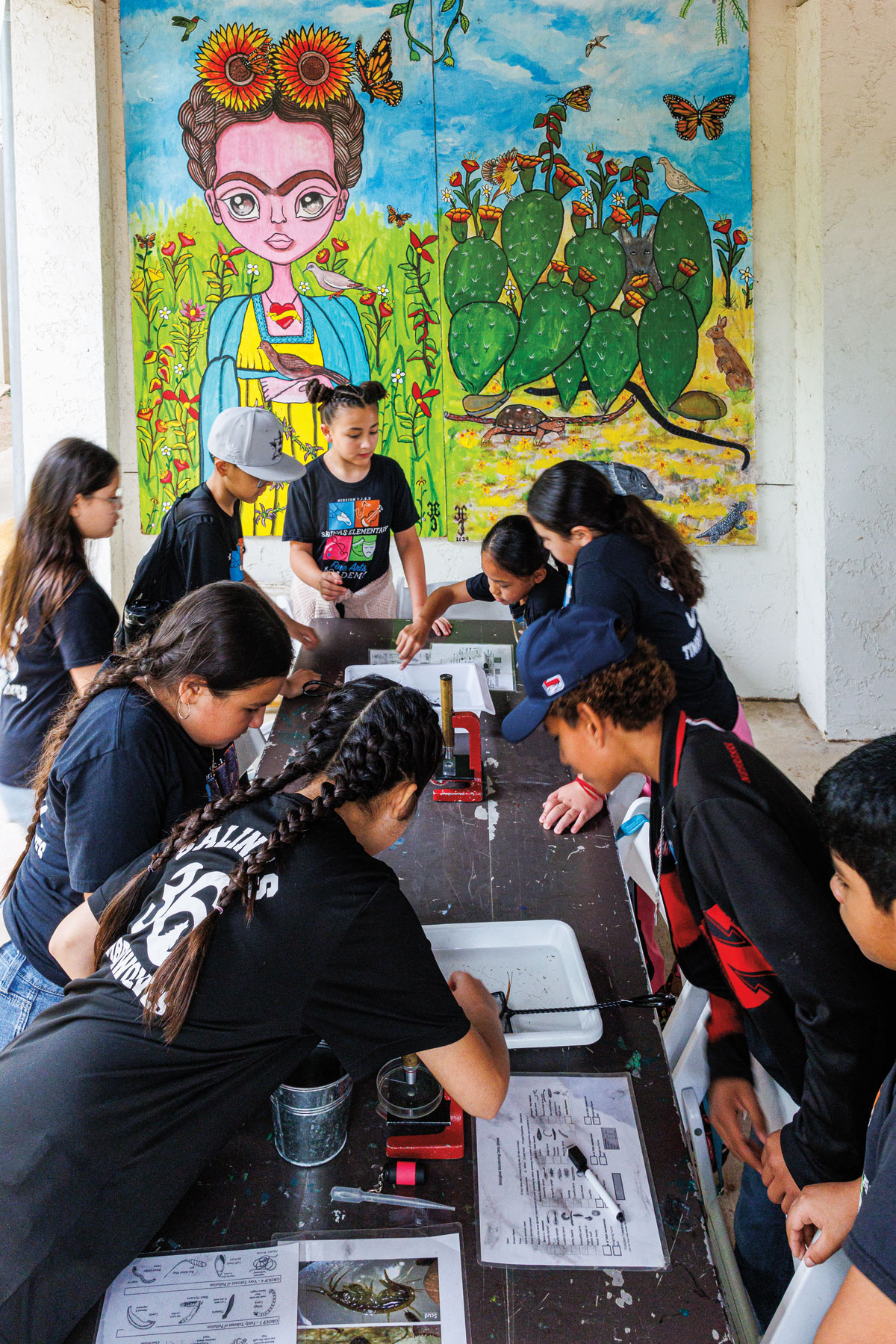
TPWD wound up funding Quinta Mazatlan and eight other sites—South Padre Island Birding and Nature Center, Resaca de la Palma State Park, Harlingen Arroyo Colorado, Estero Llano Grande State Park, Old Hidalgo Pumphouse, Edinburg Scenic Wetlands, Bentsen-Rio Grande Valley State Park, and Roma Bluffs—stringing a 120-mile birdwatching necklace from Brownsville to Roma. Yet Hook’s vision for Quinta Mazatlan—and the role it might play in McAllen—was bigger than tourism. Before the property opened, she called the school district and locked in a contract to bring third graders there as part of her vision for an outdoor living museum. “They’re the future voters,” Hook explains. “Are they going to vote for green space? Or are they going to vote for another mall?”
She wrote the curriculum in collaboration with the McAllen Independent School District after deciding what the children should call the prickly habitat. Scientists said Tamaulipan brushland or thornscrub. Spanish speakers spoke of el monte. Hook liked the sound of a thorn forest—a name that could promote a sense of place, giving kids something to value, be proud of, and fight for. “Until you know somebody’s name, there’s no connection,” she says.
Soon McAllen public school students of all ages were moving through Quinta Mazatlan alongside dedicated birdwatchers, learning the flora and fauna of the Valley, then coming back to play tour guide for their families. Hook once overheard a woman ask her young daughter whether a bird was a chachalaca. “No,” the girl said with taxonomic precision, “that’s a plain chachalaca.”
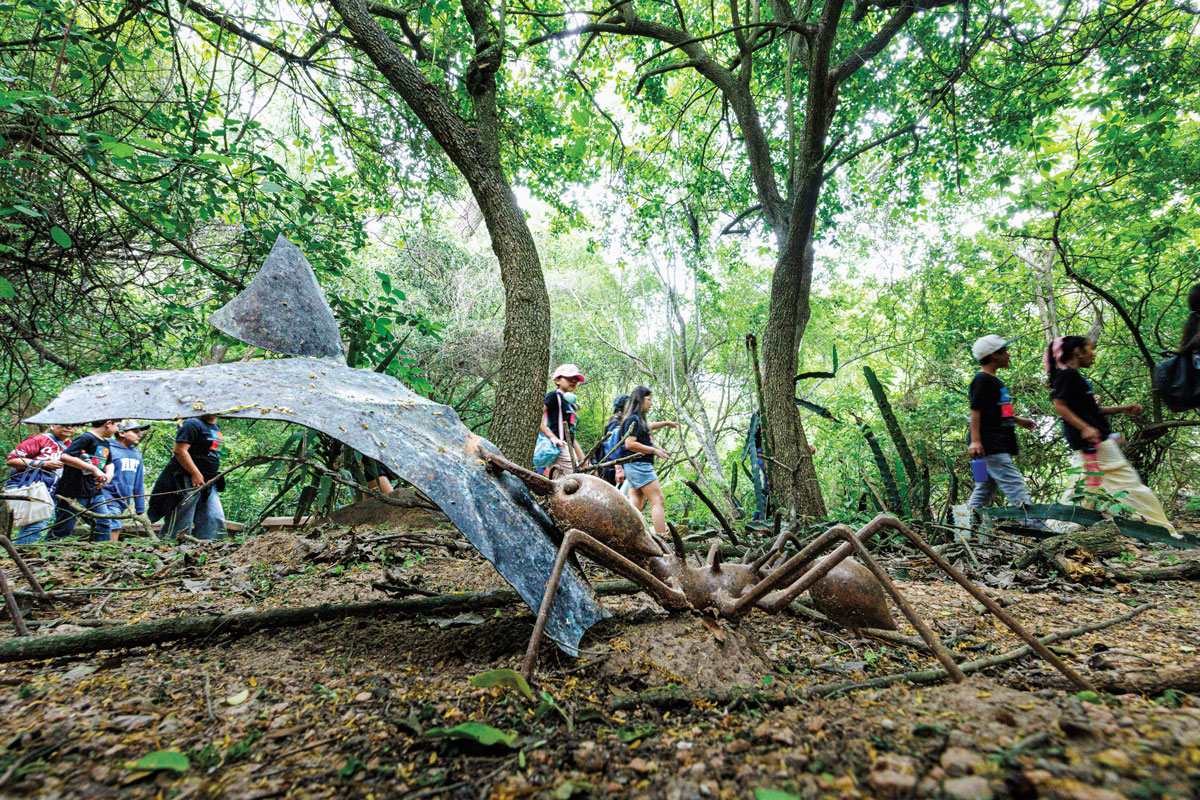
At home, Hook designed her own native garden, unworried by her HOA, which began sending letters. In workshops and other events, including Quinta Mazatlan’s annual butterfly festival, she encouraged visitors to pull up sections of their own lawns and let it go wild, like Matthews had done with his orchard. “You just take out a little patch under your window,” she says with a smile, “and then you get addicted.”
She wanted the rest of McAllen to look like Quinta Mazatlan—starting with the land next door.
Over two decades, the city of McAllen quietly bought up parcels of land adjacent to Quinta Mazatlan, expanding its ownership to roughly 26 acres by 2019, when it secured the last 6-acre plot. It’s easy to imagine what would have happened if the city hadn’t—bulldozers would level the fields, just as they had done all over McAllen, making way for retail and housing landscaped with exotic oleander and salt cedars, the latter so water-thirsty nothing native can survive around them.
Hook wanted more space for both birders and kids from neighboring school districts to roam. She also wanted to establish a science lab that could anchor serious research on urban ecology, expanding opportunities for its young scientists so they’d remain in the Valley. The contract went to Megamorphosis, in Harlingen, which subcontracted the design work to Overland Partners. Its founding principal, Rick Archer, had worked on the original World Birding Center master plan and believes that buildings can be instruments for social change. A $5 million state grant covered design costs, and Archer set to work on what he hoped would become a model for sustainable development in the region.
Rare Sightings
Illustrations by Lauren Rosenfelt
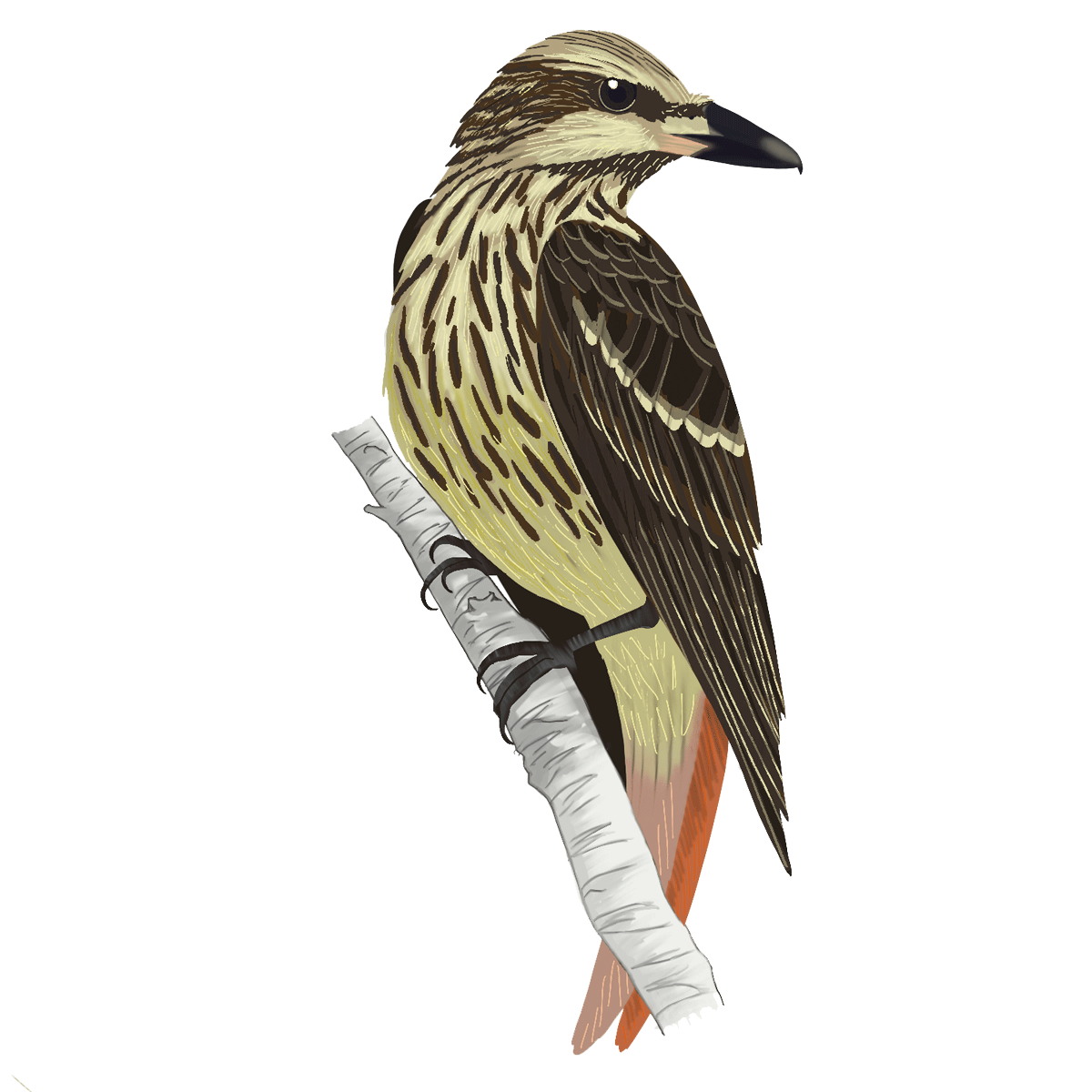
Sulphur-bellied flycatcher
Last seen july 2008
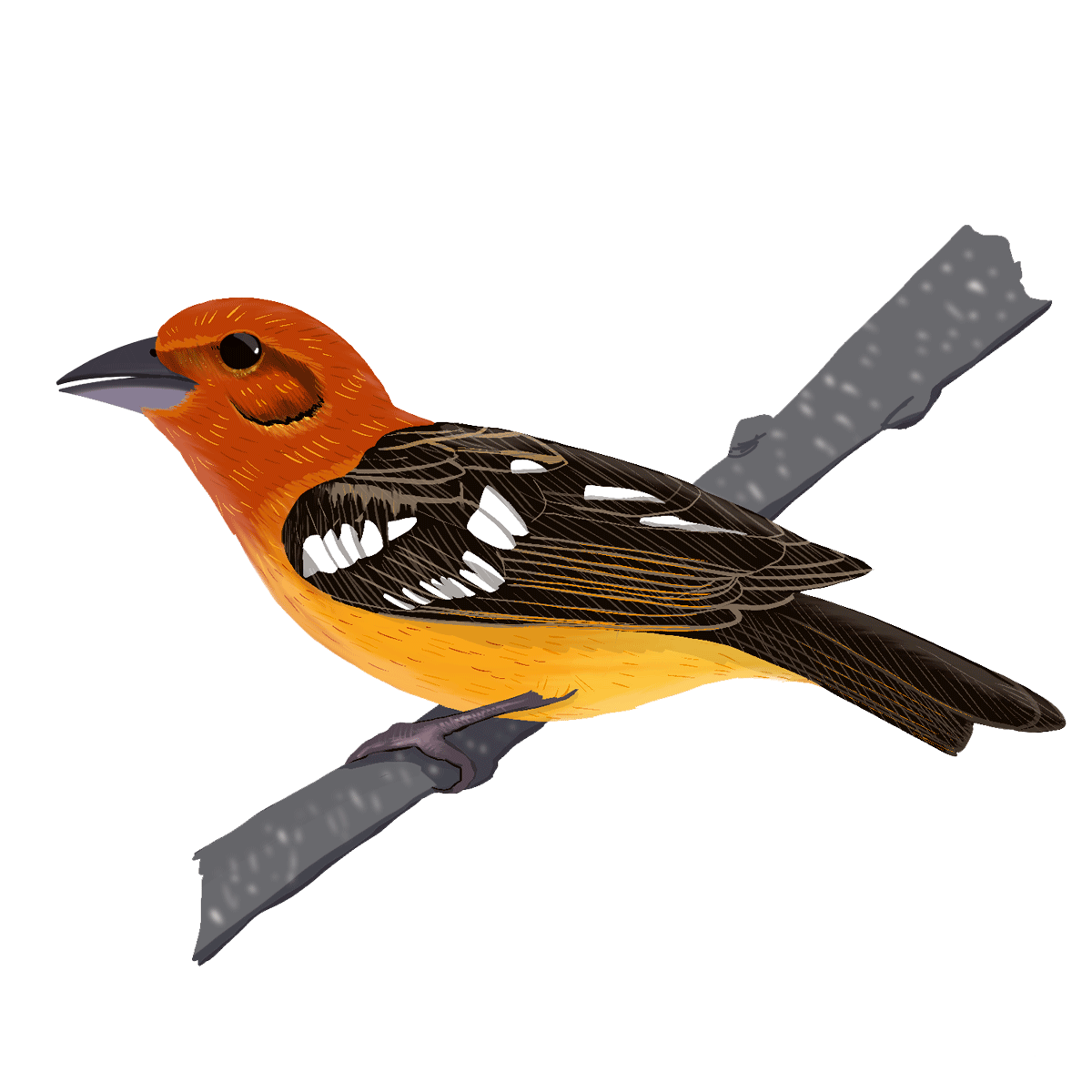
Flame-color tanager
Last seen April 2025
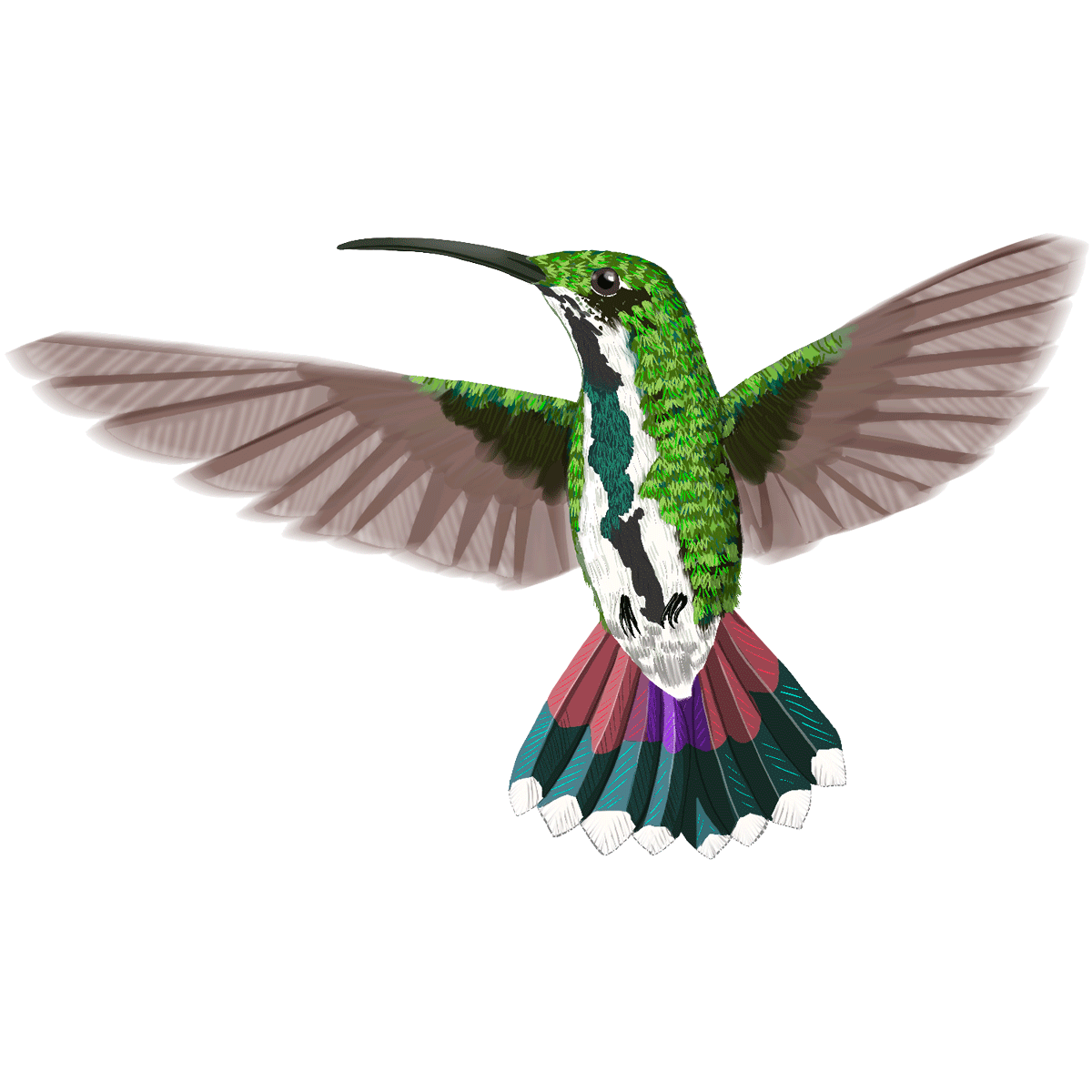
Green-breasted mango hummingbird
Last seen december 2017
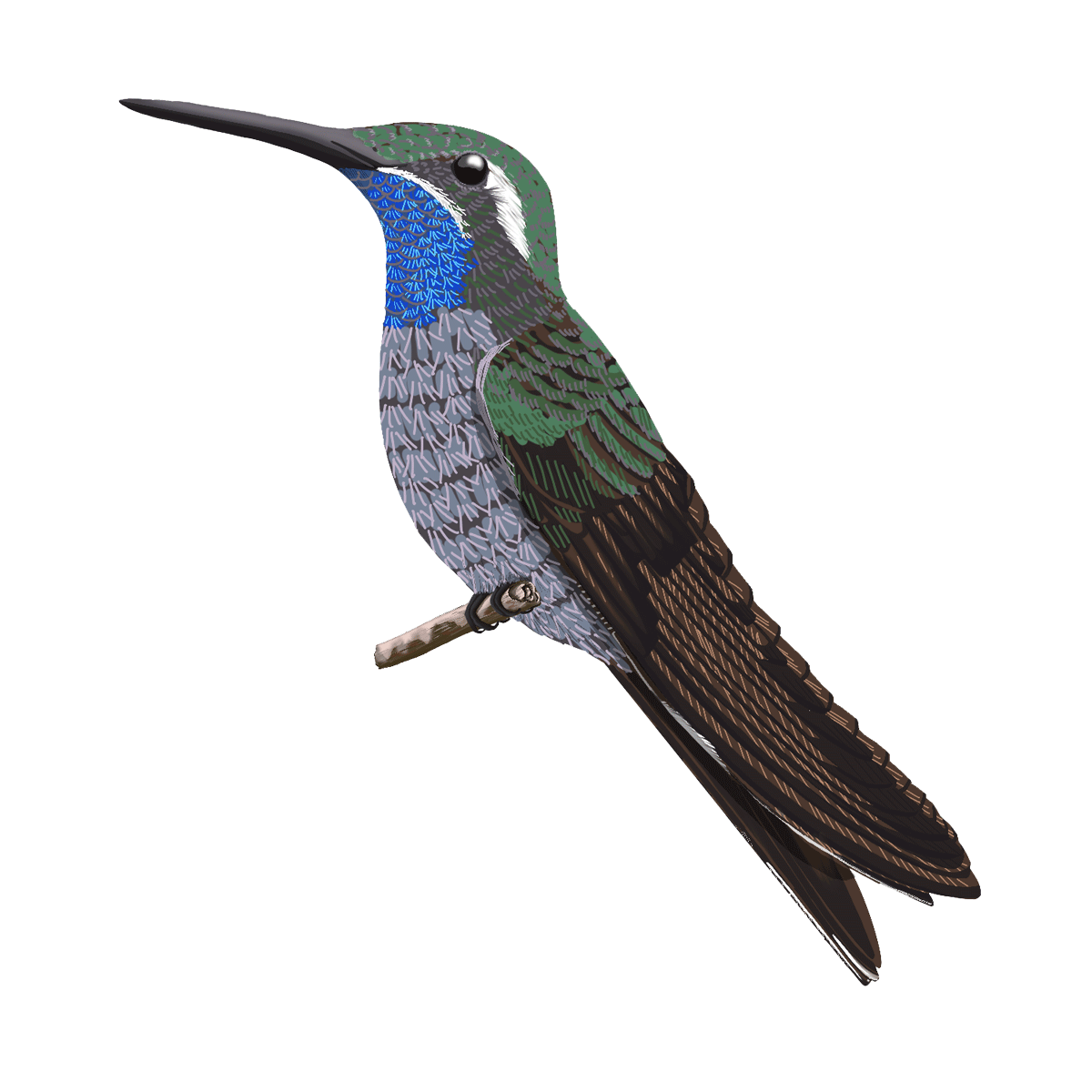
Blue-throated mountain gem
Last seen May 2014
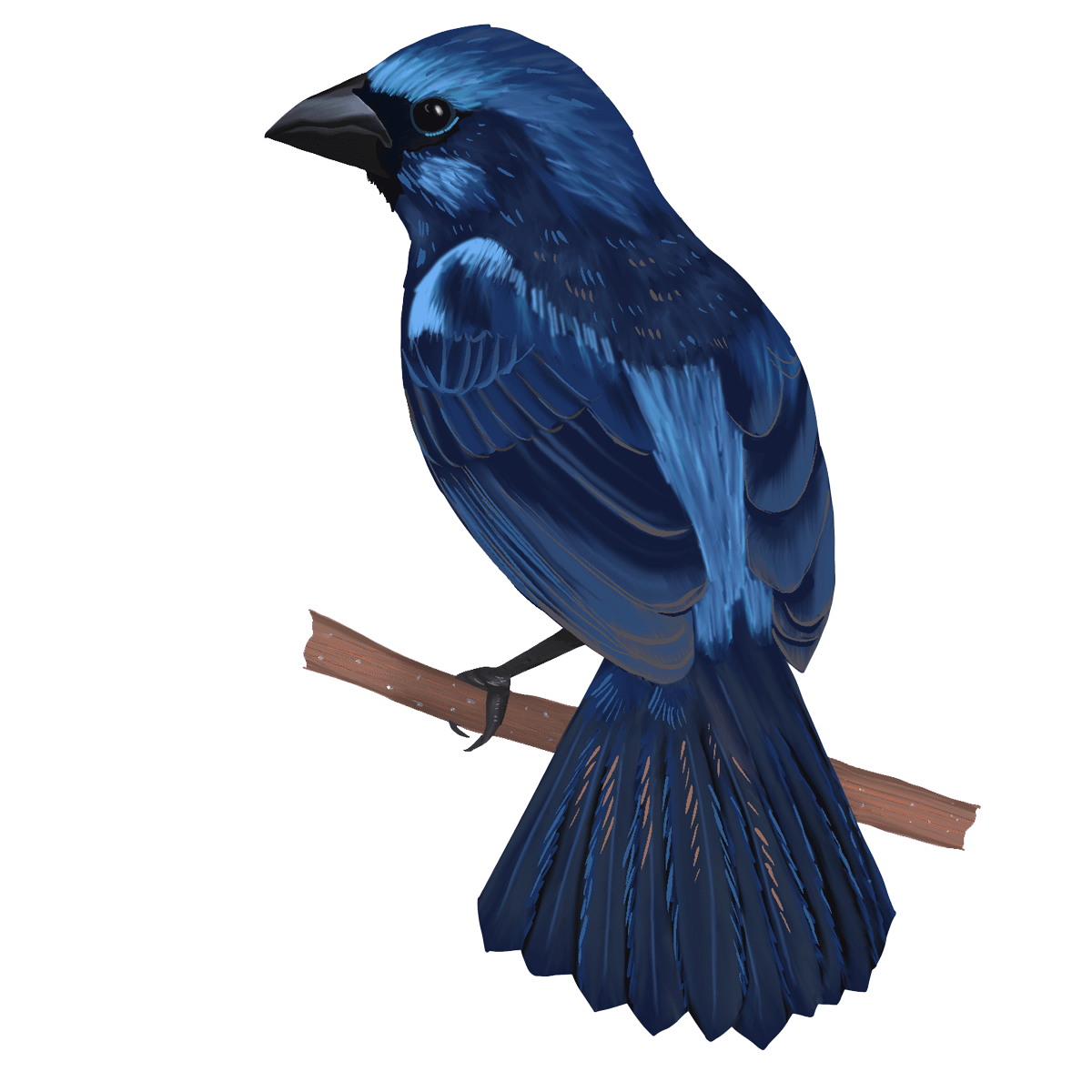
Blue bunting
Last seen jANUARY 2021
He and his team envisioned the P.A.L.M. House to be as much for birds as for people. They designed a series of white, rectangular volumes that would echo the original adobe home and sit beneath a woven-steel superstructure. The towering overhang is oriented to the winds so birds can whiz through as they travel up the Central and Mississippi flyways, the two routes migratory birds follow as they head north through Middle America. Fritted window glass would prevent collisions. Vines would climb the pipes over time and nests would fill the cavities. The building itself would transform into a habitat—a metaphor for everything the preserve was meant to do. “The only thing we really give our children is roots and wings,” Archer says.
Not everyone saw the vision. The city budgeted $34.5 million, and after the sole bid came in at nearly twice that, some suggested stripping out the superstructure. “Then you just have a rectangle,” Hook says.
Only after consultants tallied the projected $448.7 million economic impact did the city commit, cobbling together public and private funding, including from H-E-B. In Houston, fabricators rolled steel sheets into pipes—the longest stretching 228 feet and weighing 10 tons—then bent them slowly with heat. Trucked to McAllen in sections, they were reassembled midair over the white structure, workers twisting and bolting pieces together with sometimes 3 inches of clearance. Before building the surrounding parks and gardens, Ten Eyck Landscape Architects, of Austin, worked off a survey that mapped every trunk at least 4 inches wide to find the least destructive path through the property. This saved mature cacti, a mesquite mott, and 82,000 square feet of existing topsoil that construction firms typically haul off.
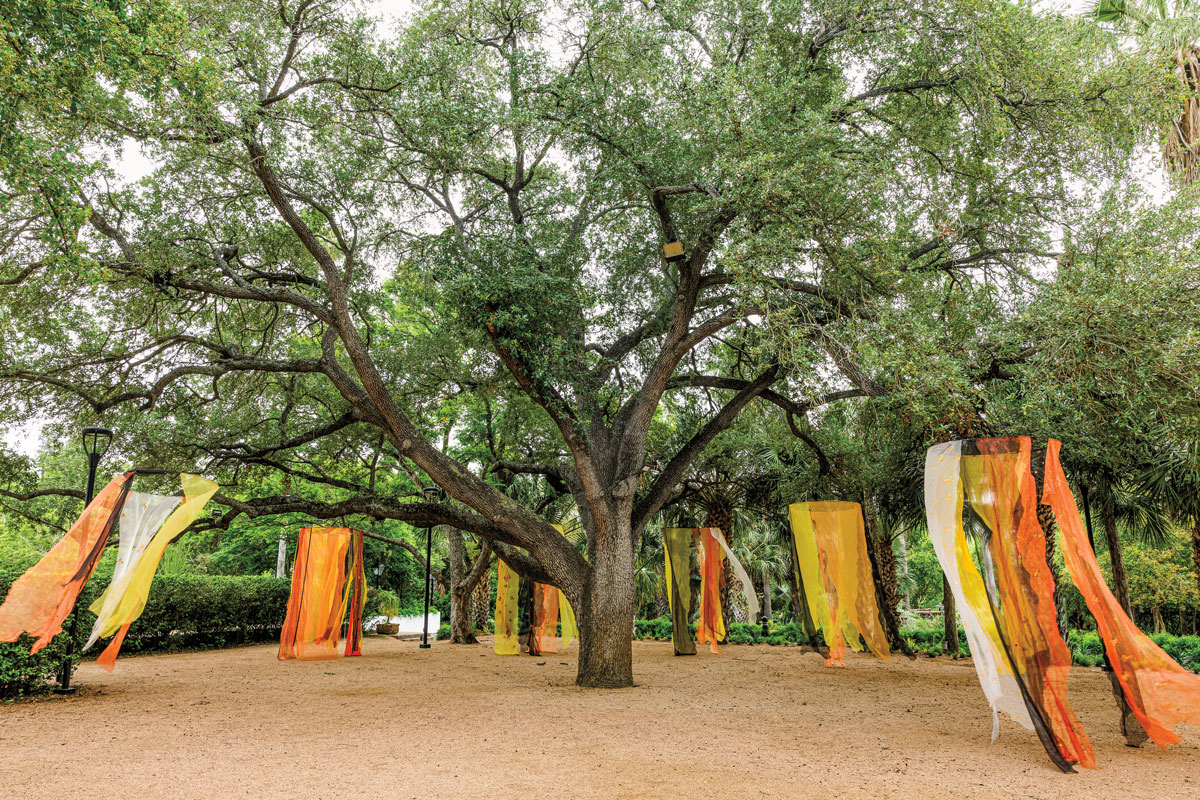
Before the house opens to the public, Hook takes me through the site at a brisk clip, logging 5,000 steps in an avocado-colored suit and heels without once losing her breath. We breeze from a parking “garden” lush with Texas ebony trees, lantana, and skeleton-leaf daisies—and illuminated at night by wildlife-friendly lights—to thorn forest restoration areas randomly planted to mimic the dispersal of seeds by animal droppings and the wind. Along the concrete path runs one of the project’s most ambitious features: a 900-foot-long scaled replica of the Rio Grande, most of it a half-inch deep stream sandblasted into the concrete. Kids will be able to take off their shoes and wade the 1/8 mile from its Colorado headwaters, conjured by a waterfall, to a shallow pool the team is calling the Gulf. “We wouldn’t have any of this habitat without water,” Hook says.
As I follow her around, I think of Matthews, the stubborn eccentric who let the land go wild with no idea what he’d started. All around us, fragrant mistflower, Vasey’s adelia, and other recent plantings soak up the sun as their roots push down. The only thing missing is the birds.
Brush isn’t just an employee of Quinta Mazatlan; he’s a lifelong birder. His father, Timothy, taught ornithology at what is now the University of Texas Rio Grande Valley, and he recruited his son to conduct bird surveys when he was in high school. Hook would spot him walking the trails alone, brown eyes peering through binoculars at screech owl and woodpecker nests, pausing to scribble in a notebook. One day in 2008, she told him to apply for a summer job, and he listened. His options were wide open after earning his master’s in biology at UTRGV. “This is where I live. This is where I grew up,” he says. “I want people to experience the same things I’ve experienced.”
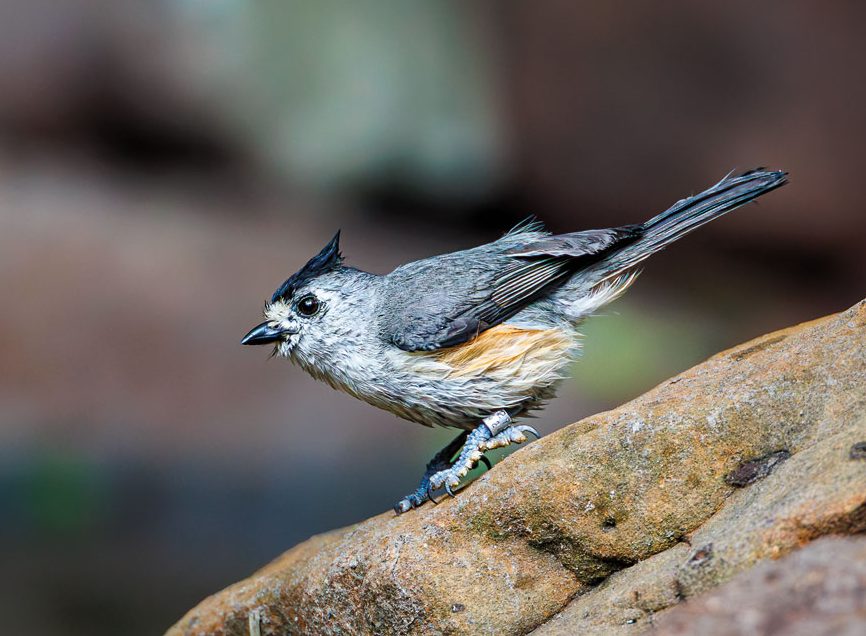
He now leads bird walks at Quinta Mazatlan, which draws dedicated watchers from across the world hoping to spot native and exotic flyers like blue buntings, crimson-collared grosbeaks, and flame-colored tanagers—all of which have made stops here. In December 2017, while walking the grounds, Brush spotted a green-breasted mango hummingbird—an unusually large variety with a flashy, purple tail—and put the word out online. Within a couple of days, several dozen people stood around chit-chatting as they waited for the bird to reappear. “It’s just a little kick, a little thrill,” Brush says.
The instinct to share what he loves extends beyond the grounds of Quinta Mazatlan. Even as construction rumbled forward at the expansion site, Brush oversaw the installation of seven “tiny forests,” each roughly 12,000 square feet, in public schools, libraries, and parks across the city. A $2.7 million grant from Texas A&M Forest Service will seed seven more that are slightly larger. Twenty years ago, Brush tells me, none of this would have been possible. A native plant pushing through a manicured park would have been pulled as a weed. “Seeing the success of places like Quinta has made the city more amenable,” he says.
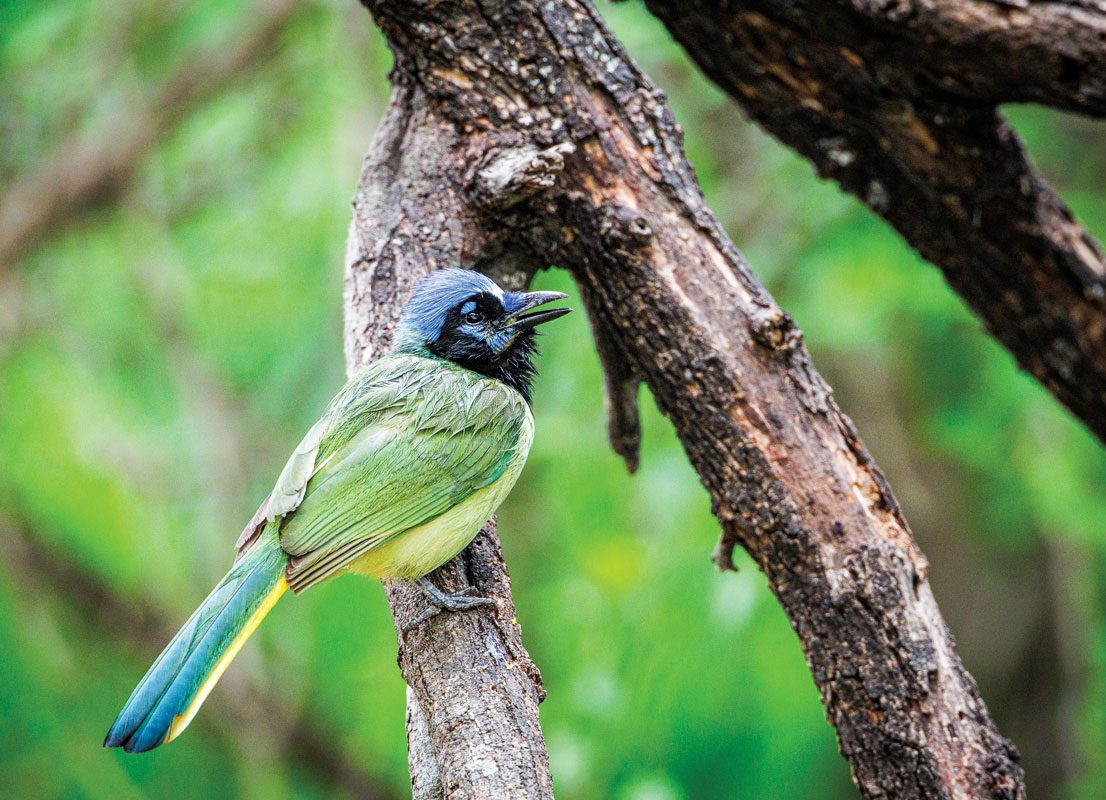
At the end of the day, I wander back alone to where we saw the chachalacas that morning, where the birdsong is so loud it sounds like it’s piped from hidden speakers. I have the park to myself—it’s Monday, and the site is closed. Frankly, I want to milk this privilege one last time. I hope to glimpse a species that eluded me that morning and that I’d only ever seen in pictures. The green jay is a classic thorn forest bird, its lime, cobalt, and gold plumage paired, improbably, with a call that sounds like an intercom buzzer. But I find only the same birds as before. I say their names quietly—Inca dove, kiskadee, red-winged blackbird—with some small satisfaction, remembering Hook’s insistence that you can’t be motivated to fight for something until you know what to call it.
I need to get on the road. I wind back along the park’s edge, where the detritus of the city occasionally blows in. Grocery sacks balloon in trees. Candy wrappers sink into leaves. I’m thinking about my route home when, just before the gate, a flash of blue and yellow catches the corner of my eye. I hold my breath, raise my binoculars, and creep toward the brush. A green jay has landed on a fallen limb, silent, its eye cocked at the forest floor. It isn’t here in spite of the city, but because of it. Then it’s gone.