

Behind the Scenes With Prairie View A&M’s All-Star Marching Band
The Marching Storm brings its high-energy act to the National Battle of the Bands
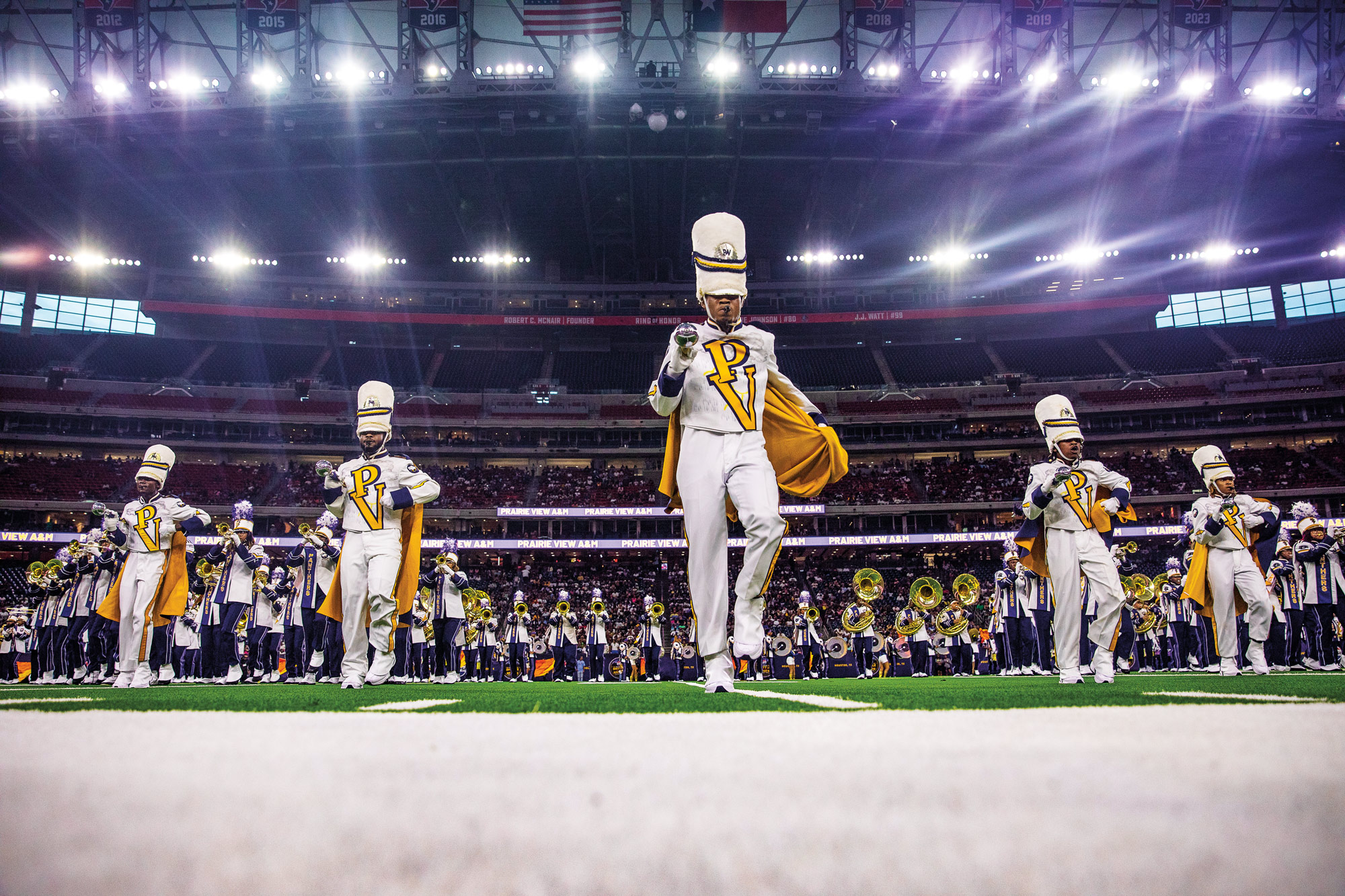
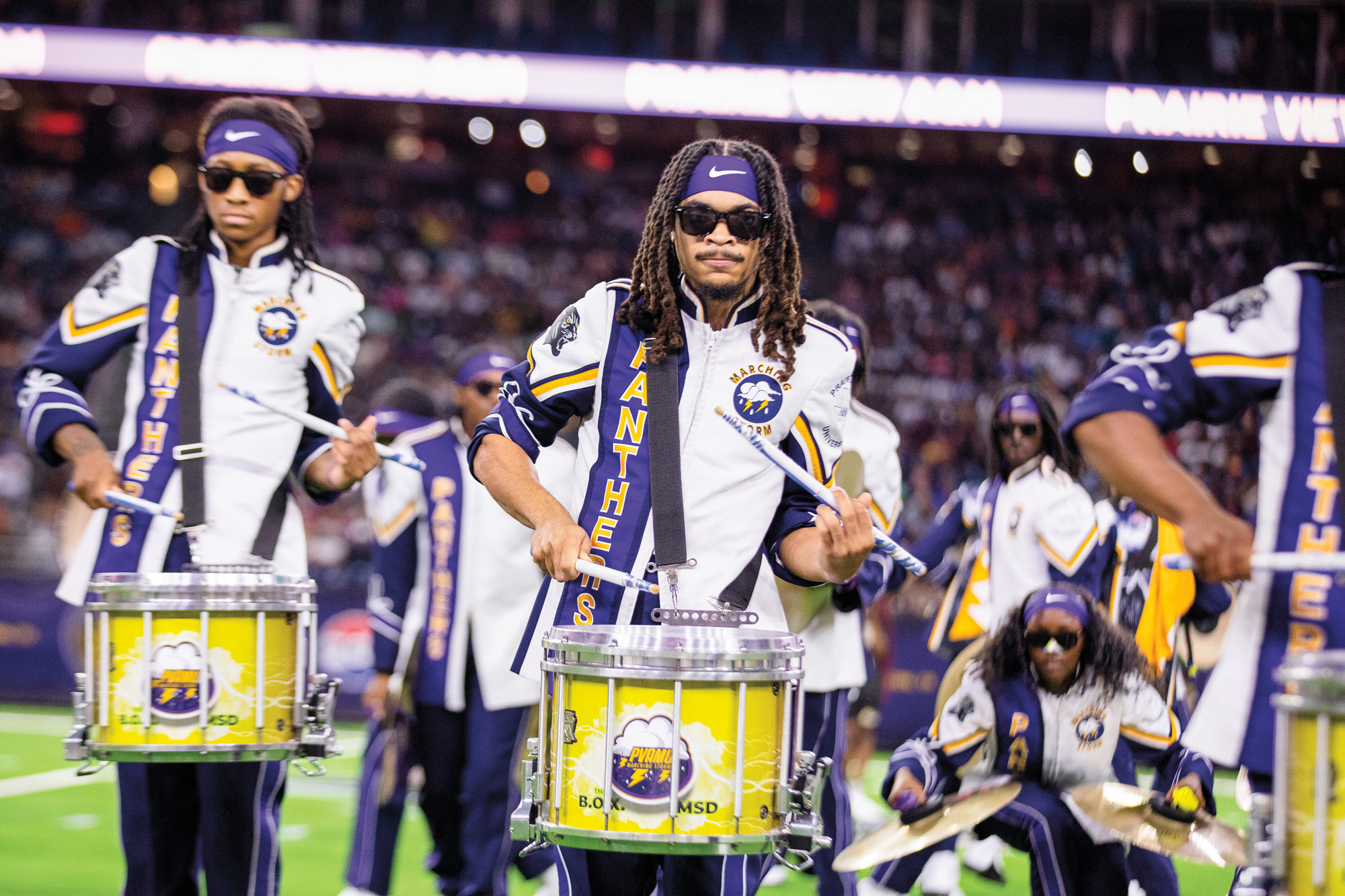
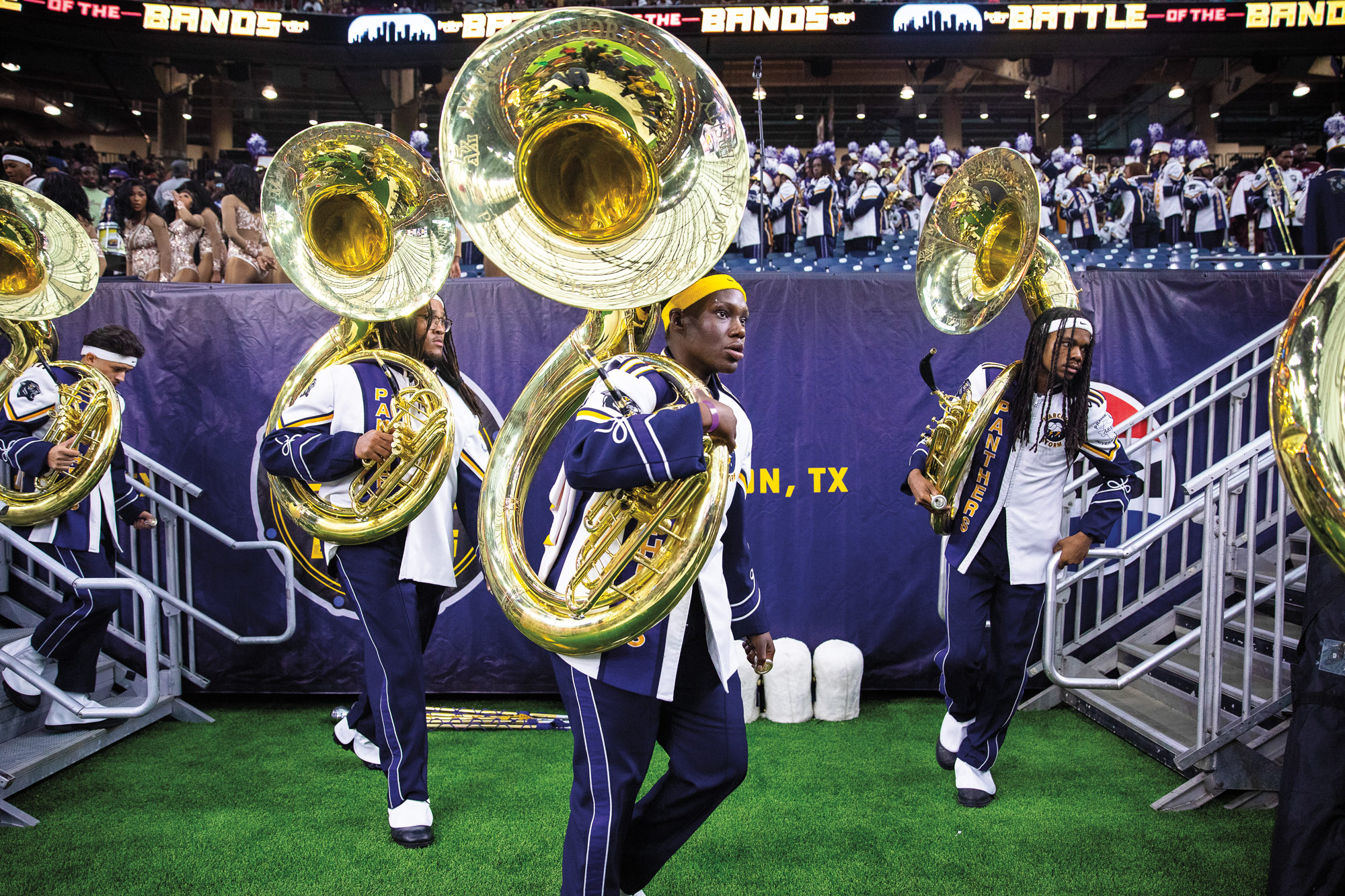
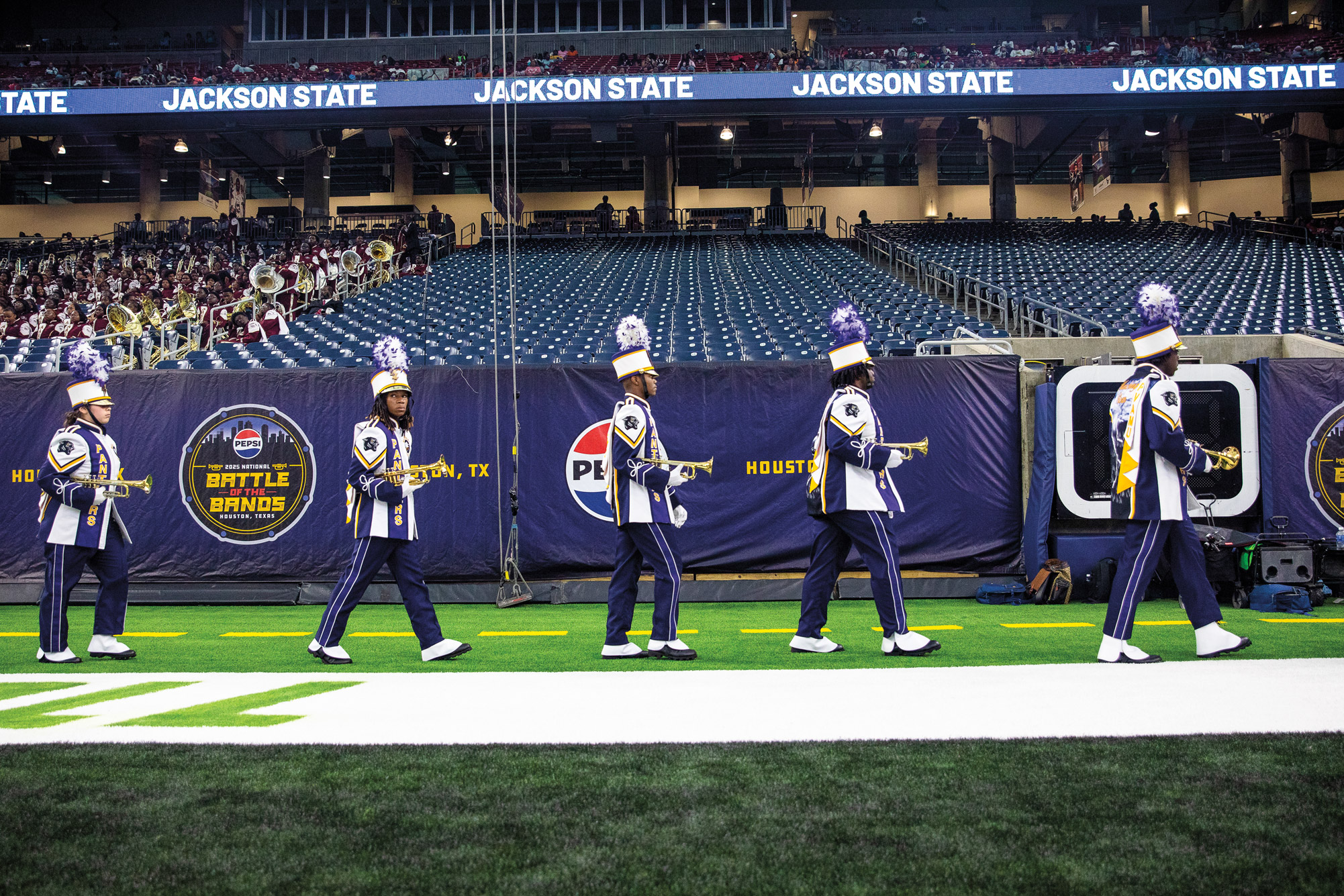
More than 40,000 fans stomp and cheer as the 300 members of the Prairie View A&M University Marching Storm band—clad in shimmering white, purple, and gold uniforms—take to the field for the Pepsi National Battle of the Bands at NRG Stadium in Houston. “All the way from Prairie View University, it’s the baddest band in the land—PV, you know!” announcer Tierra Chapman shouts into a microphone. The band members start moving into formation, and five drum majors gallop through the lines of brass players before spinning and dropping into the splits.
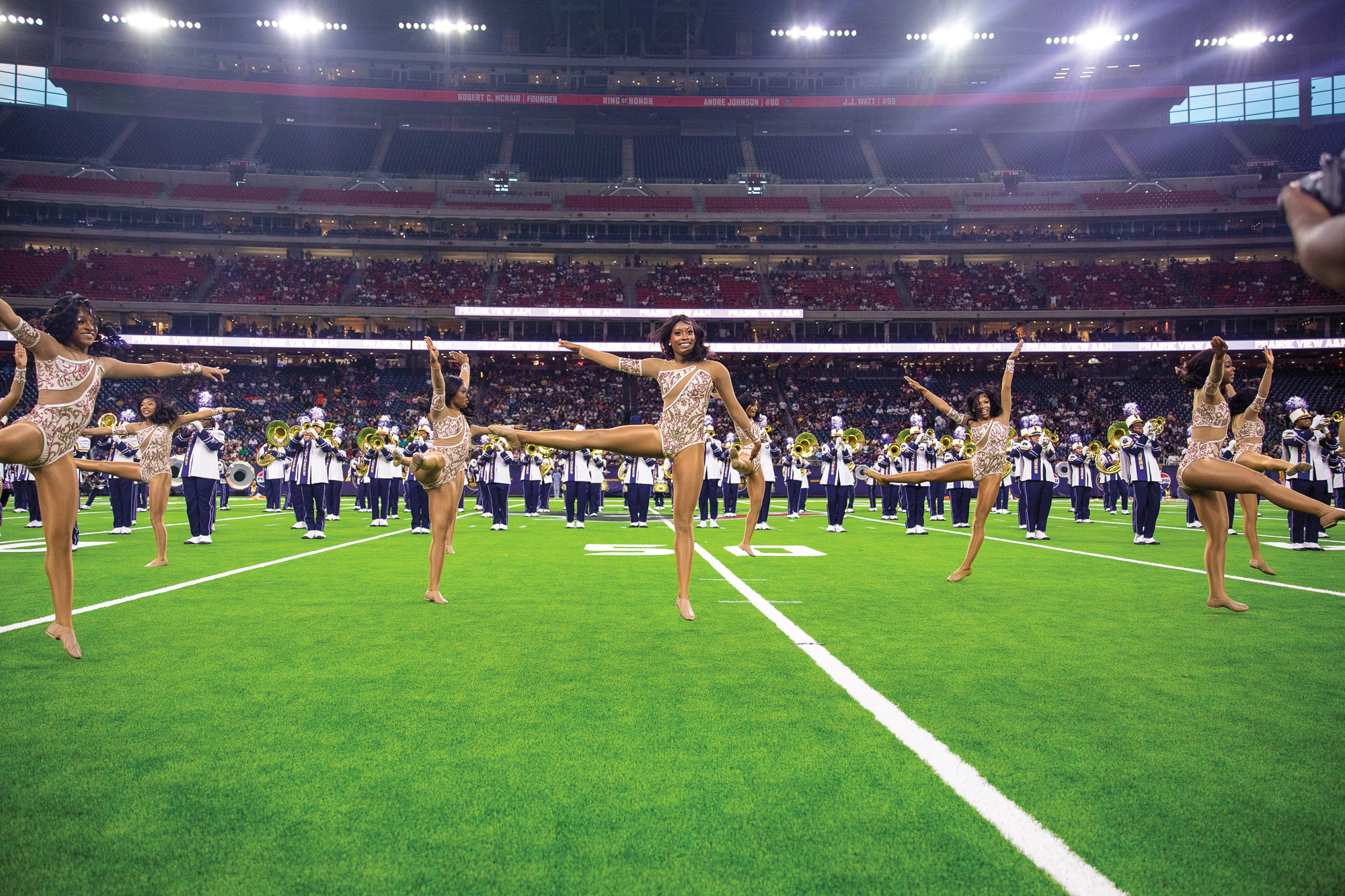
The trumpets, saxophones, clarinets, and flutes play the first notes of the Entertainment Tonight theme song. The drum line drives the beat and spins their cymbals, while the Black Foxes majorette dancers, wearing sparkly gold leotards, move through an intricate choreography of bucking, clapping, and pointing. The band shifts into “Set Fire to the Rain” by Adele and then Angie Stone’s “Wish I Didn’t Miss You” to wrap up their 13-minute, high-energy set. Unlike the military corps style typical of most marching bands, performances by historically Black colleges and universities more closely resemble a pop concert.
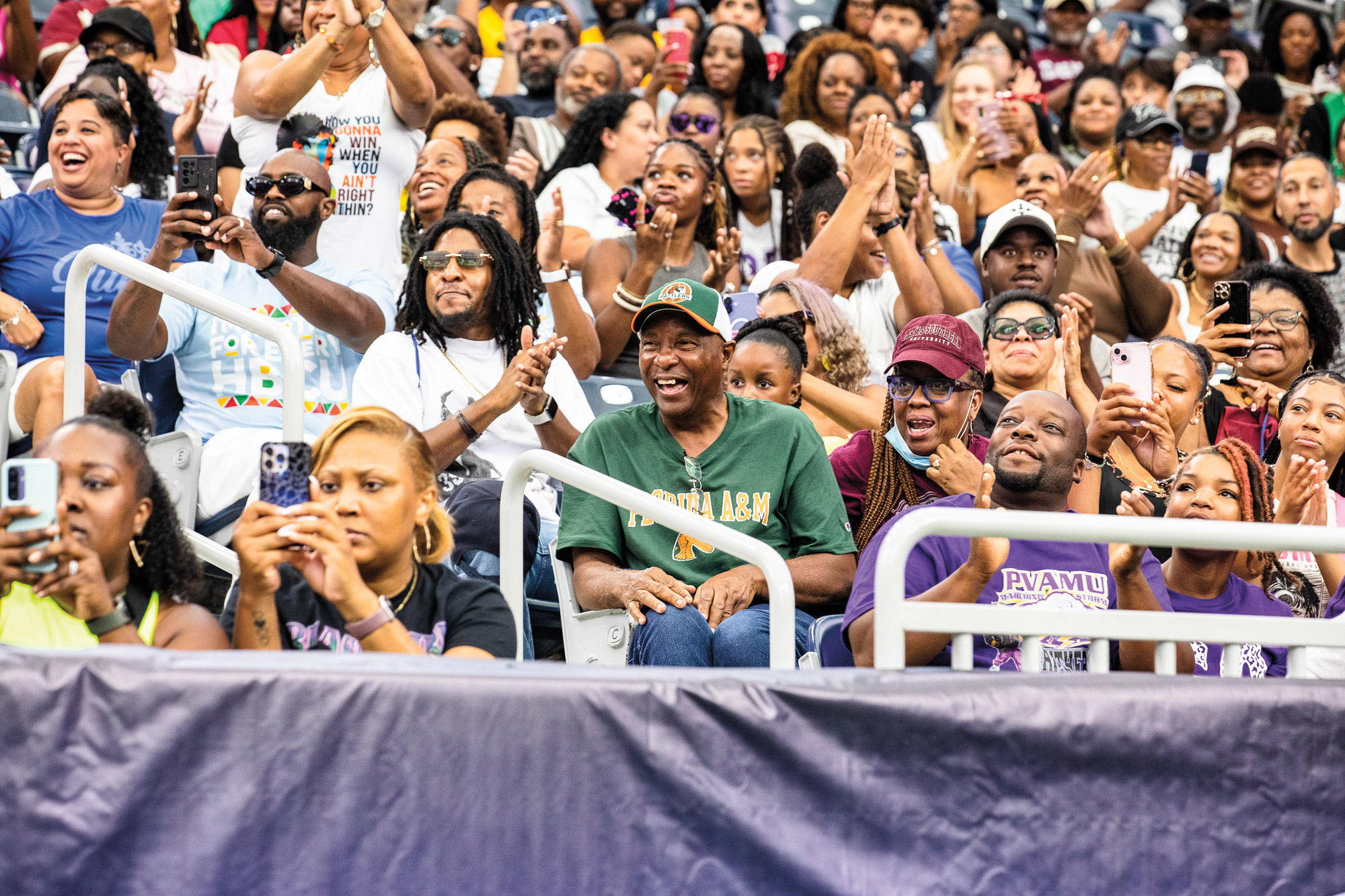
A peak cultural experience for these college groups, Battle of the Bands unites students, staff, and alumni from across the country to champion their campuses. The competition, established in 2014, is about claiming bragging rights—there isn’t a trophy given out at the end. Instead, the host asks the crowd to cheer for their favorite performance of the evening. The volume of their ovation is meant as encouragement, and maybe some good-natured instigation—not the final verdict on a winner.
“They’re invoking the history of our resilience,” says Tammy L. Kernodle, a distinguished professor in the Department of Music at Miami University in Oxford, Ohio, and one of the preeminent scholars on African American music. “When you hear a Black college band, that is a reminder of Black resilience and resistance because those bands are about Black joy.”
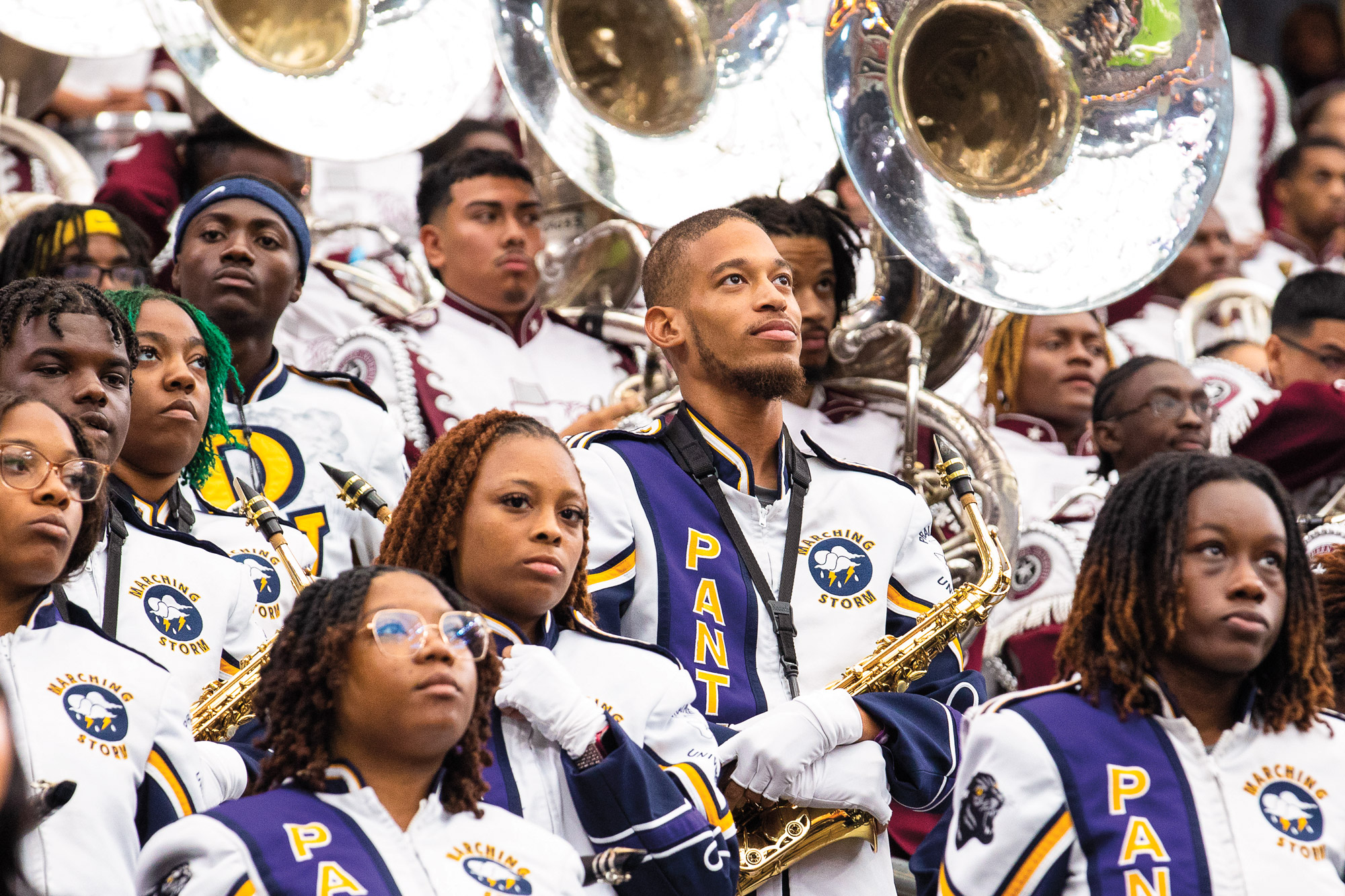
Of the eight bands performing at Battle of the Bands last August, two were from Texas: PV’s Marching Storm and Ocean of Soul from Texas Southern University in Houston. Both bands were founded in the 1940s, around the same time their long-running rivalry began. The bands regularly meet at football games when the Prairie View Panthers play the Texas Southern Tigers in the Southwestern Athletic Conference. While the football teams battle on the field, the marching bands put on a call-and-response show in the stands.
Outside of Battle of the Bands and football games, HBCU bands display their sound and showmanship at parades and community events throughout the year. “HBCU bands are significant ambassadors for their universities,” Kernodle says. “They provide a bridge between the campus and the communities.”
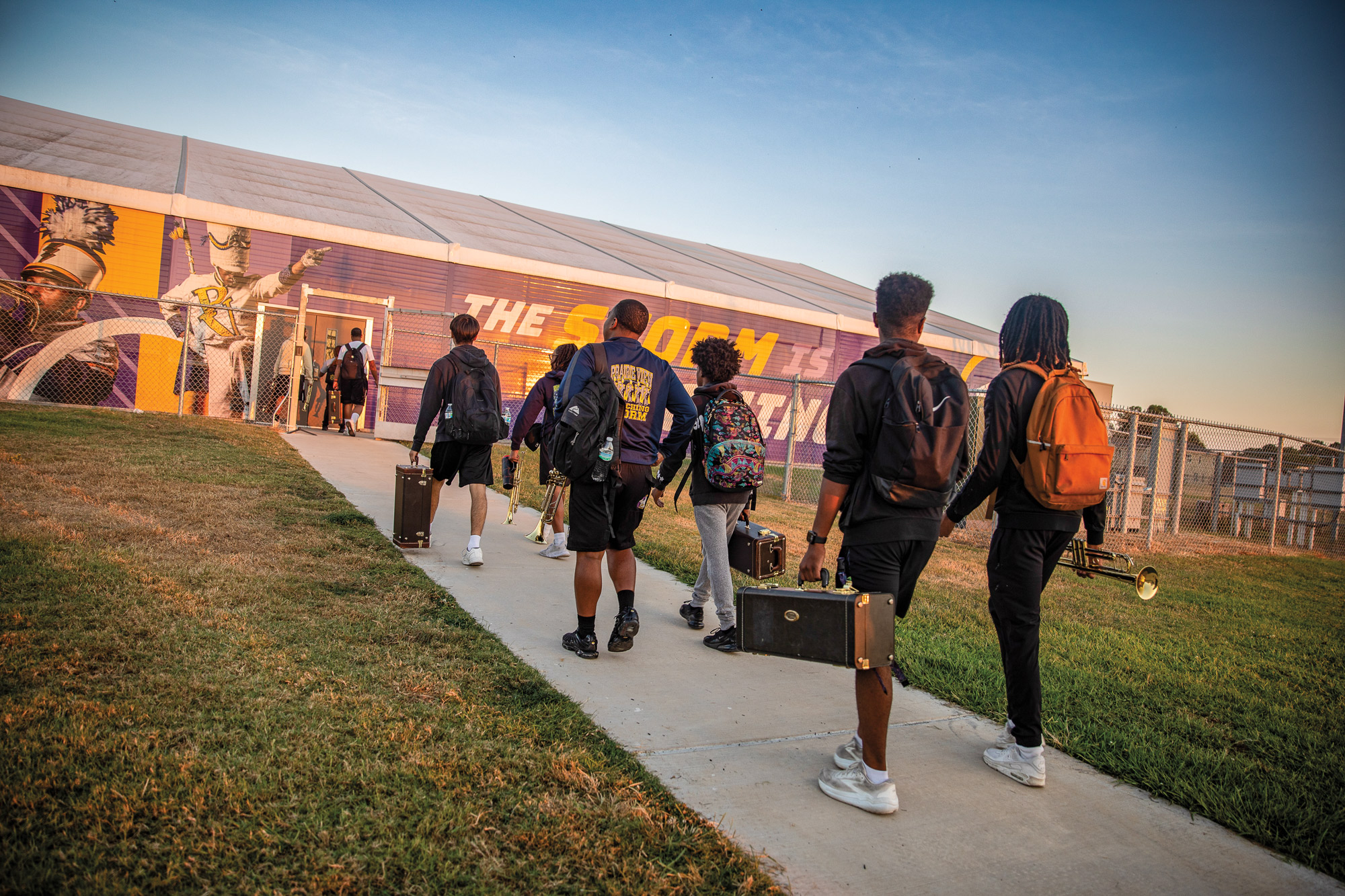
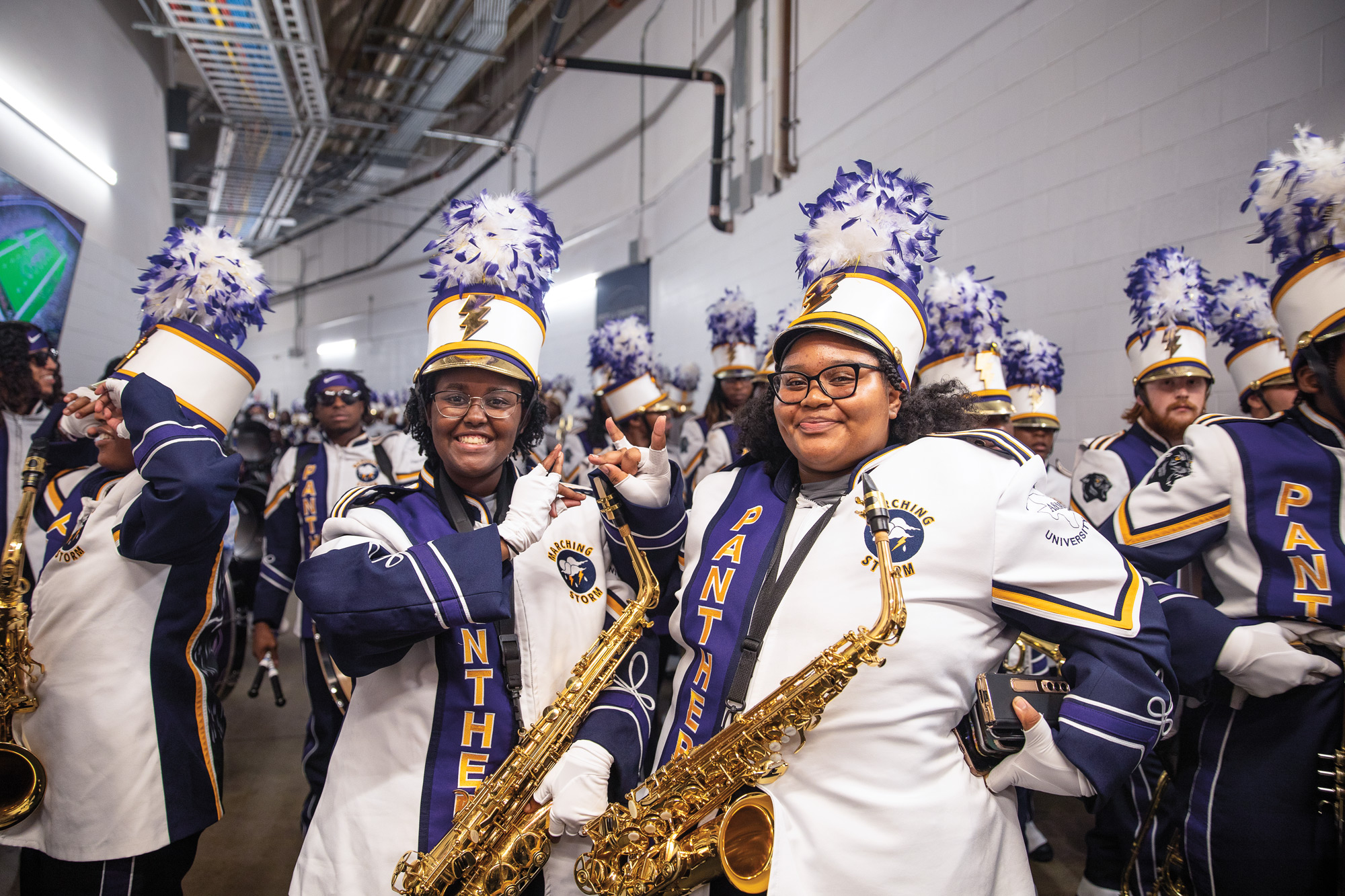
Marching Storm band members take the responsibility seriously. Up to 400 freshman from across the country audition each year for 120 spots. Once in the band, students rehearse five hours a day throughout the school year and 16 hours a day during summer camp.
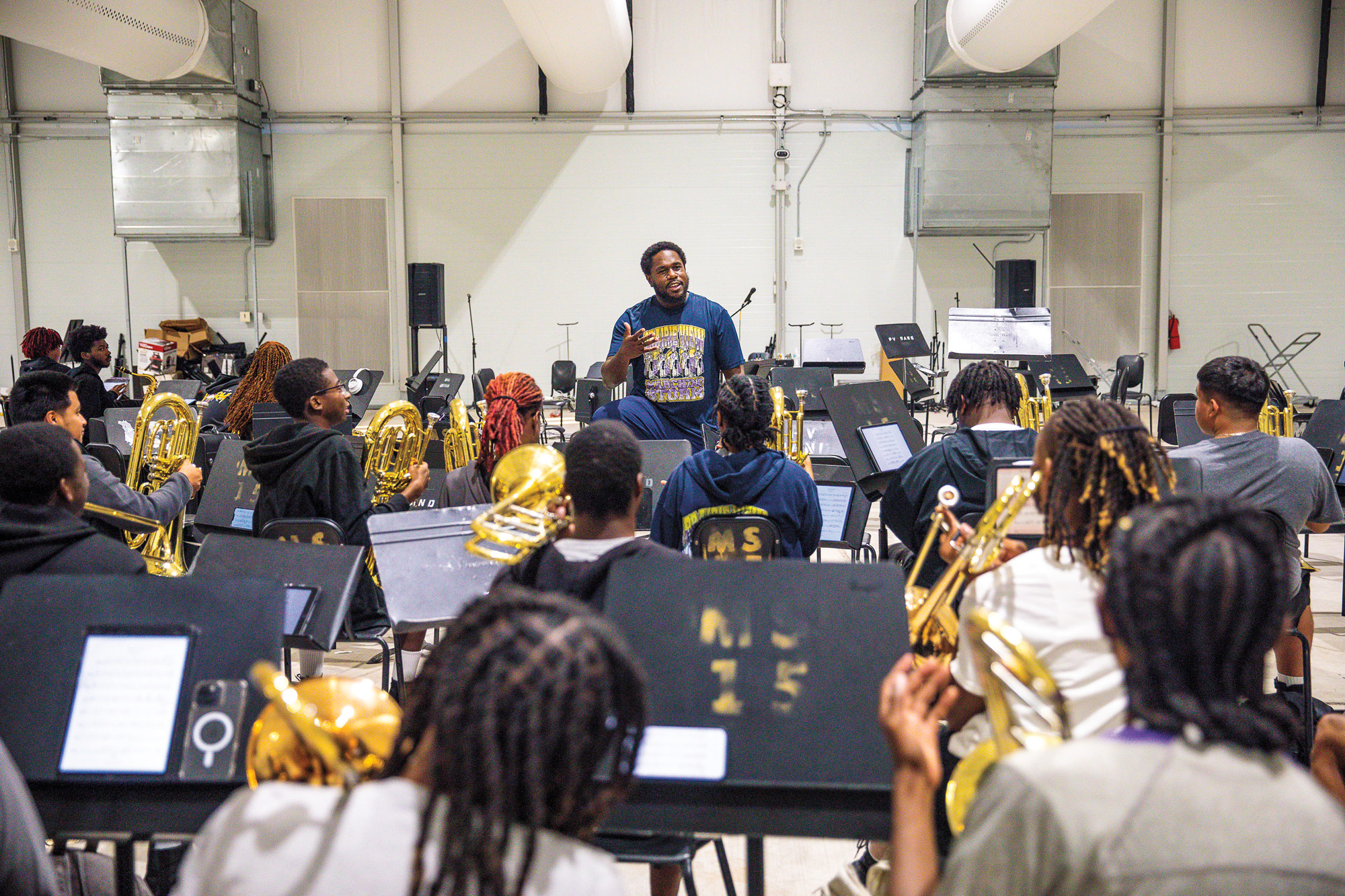
“That’s the level of energy and the work it takes to do a show like this,” says director of bands Timmey T. Zachery, who has led the Marching Storm since 2012. “People enjoy the performance, but they don’t see any of that backstory.”
As one of the captains of the band, Donovan Barnett plans rehearsal logistics and focuses on band morale. “You have to constantly think about how to improve, have humility, and see the bigger vision,” he says. Barnett, who graduated earlier this year, competed at three Battle of the Band competitions with the Marching Storm. The 2025 performance was his last, but, as he divulged afterward, it was also his favorite. “We were more confident, energetic, and focused than ever before,” he says.
Along with the Marching Storm’s energy and prescence at Battle of the Bands, Zachery says it’s the history of the band and the school they represent that sets them apart. “We put something on the field that no one else did,” he says. “And for me, that’s a win.”
__________
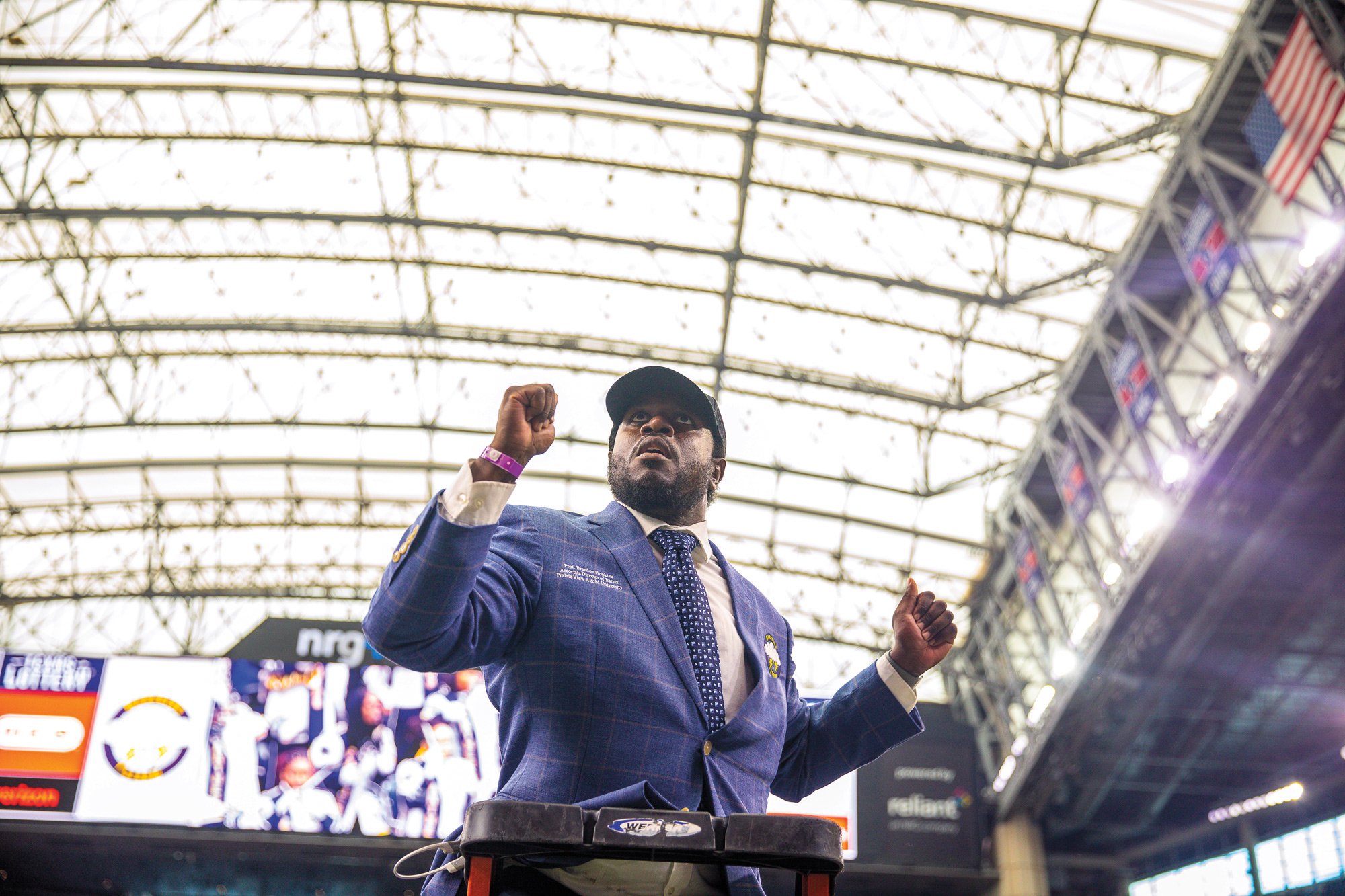
The Marching Storm, directed by associate director Brandon Hopkins, was the final band to perform at Battle of the Bands, an honor all its own. “I aspire to make sure the band always has a unique identity with a pure presentation so that when people hear us, they know that Prairie View sounds like Prairie View,” director of bands Timmey T. Zachery says.
__________
The more than 80-year legacy of the Prairie View A&M marching band started during World War II. Since many men were off fighting overseas, an all-female band called the Co-Eds formed in their absence. Once the soldiers began returning home in late 1945, the band’s size and presence grew.
__________
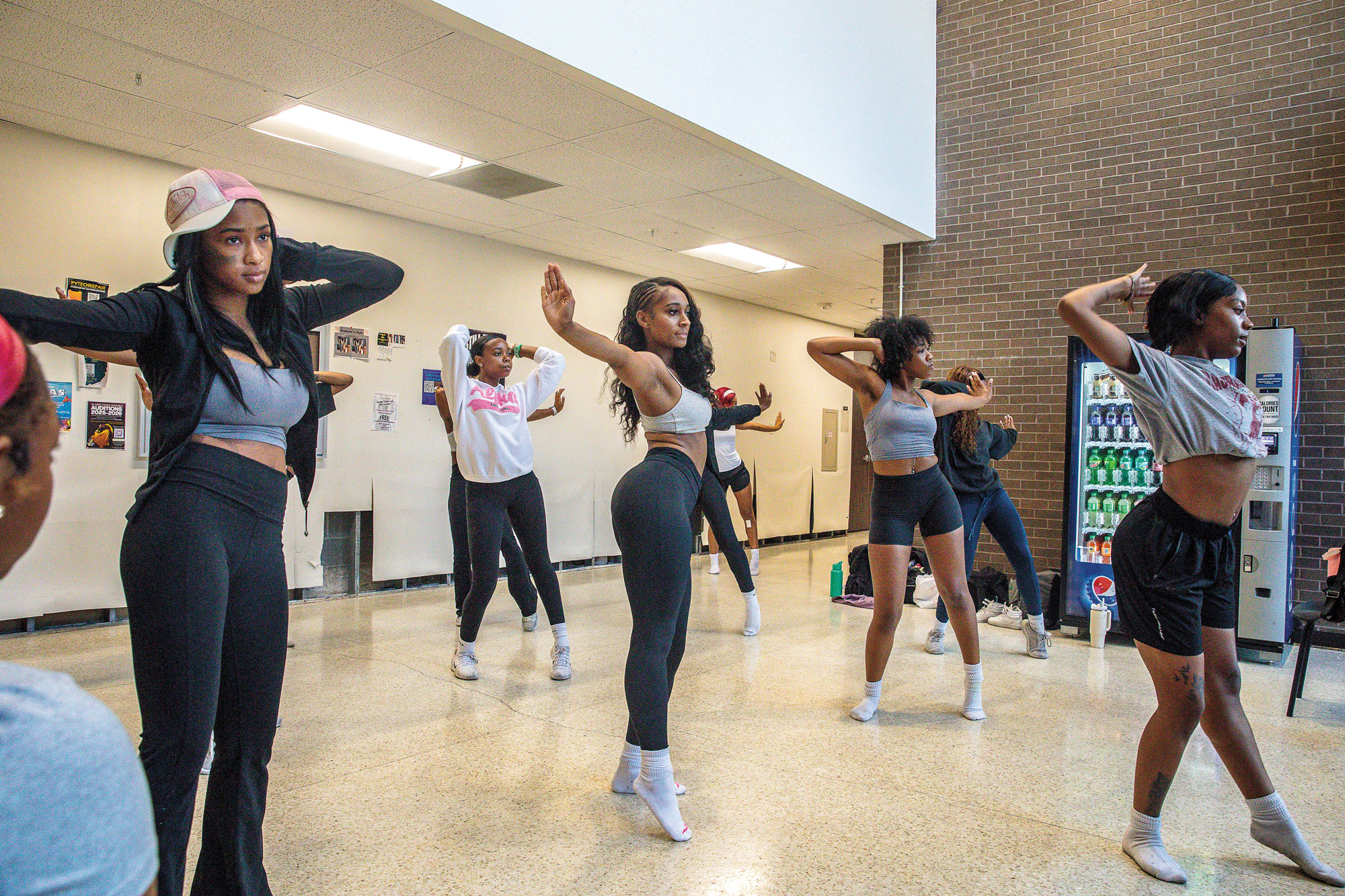
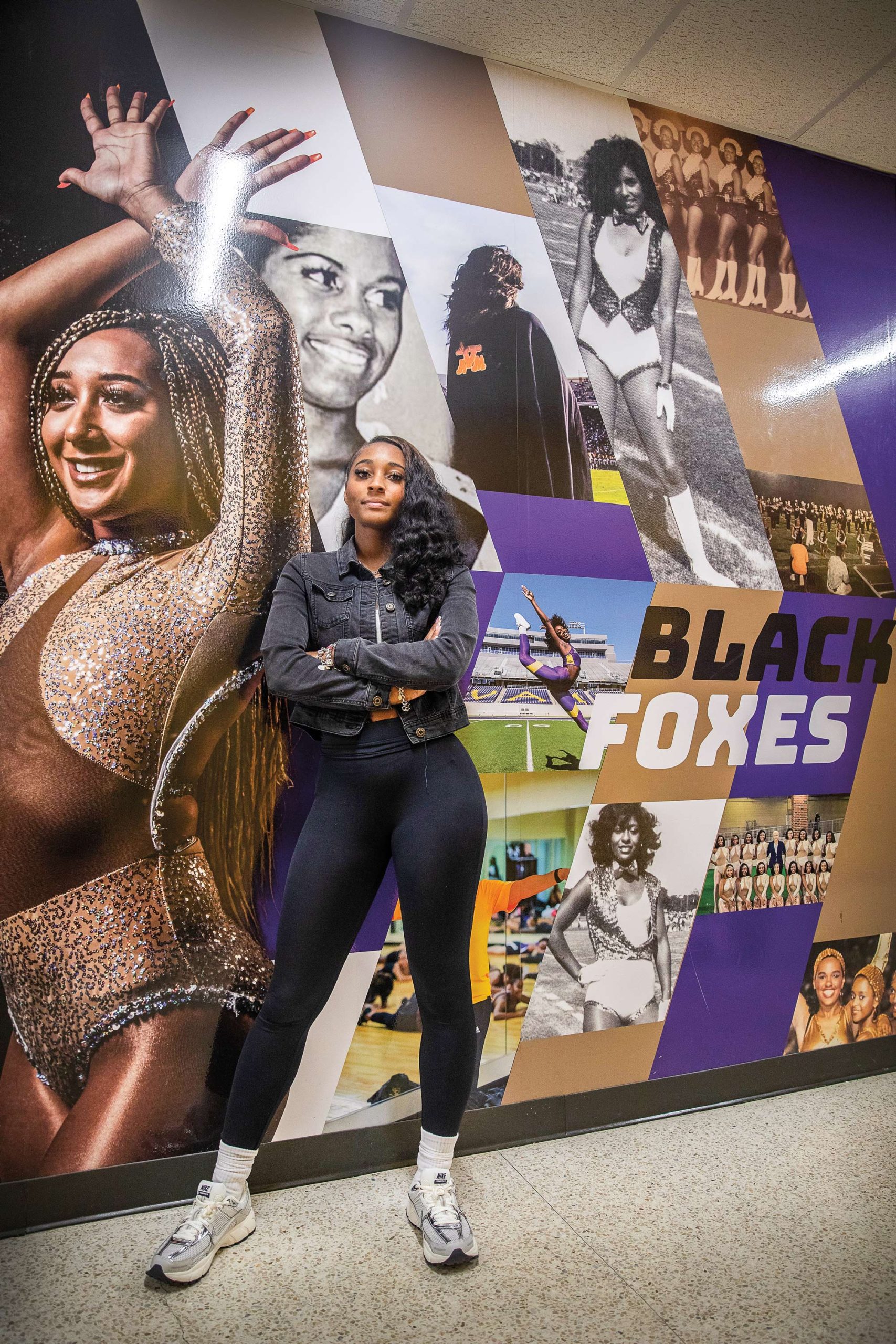
The Black Foxes dancers practice just as many hours as the Marching Storm band members. Co-captains Zariah Ray (center) and Ariah Gerald crafted the performances into a style that blends jazz, hip-hop, and ballet.
__________
The National Battle of the Bands was founded in 2014 by Derek Webber, an HBCU graduate and marketer who worked on the 2002 film Drumline. The movie about Black college marching band culture starred Nick Cannon and Zoe Saldaña and was a surprise hit, bringing in $56 million at the box office.
__________
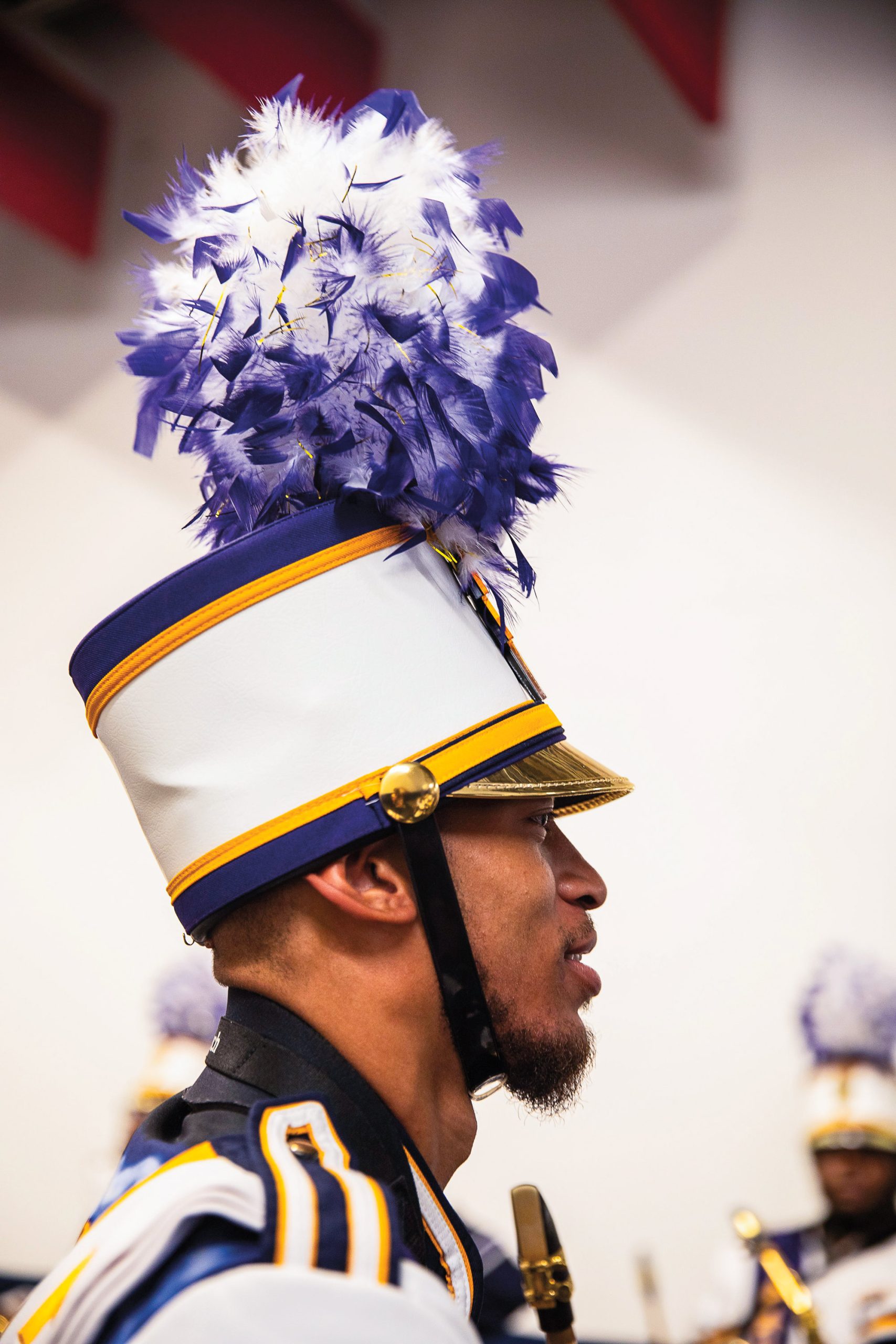
Music is an essential part of former band captain Donovan Barnett’s life. He plays piano, six types of saxophone, many brass instruments, and some strings. After graduating in May with a music education degree, he began teaching music at an elementary school in Lamar CISD outside Houston.
__________
Former Black Foxes co-captain Ariah Gerald performed at Battle of the Band three times during her tenure at Prairie View A&M. As her May 2026 graduation approached, she was already reflecting on her time with the Marching Storm. “The culture and experiences are definitely something I’m going to miss,” she says.
__________
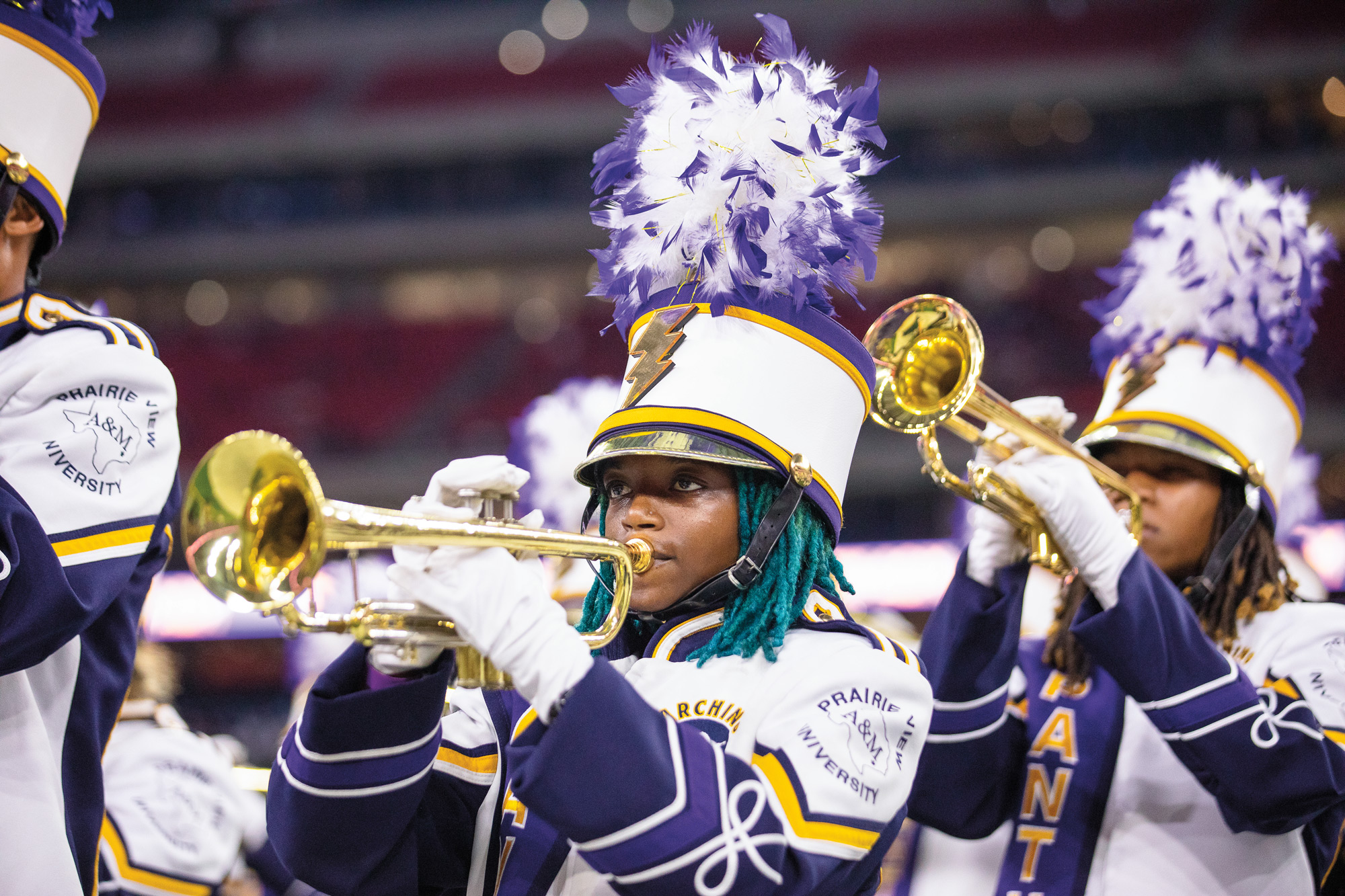
Prairie View A&M’s Marching Storm appears on Texas rapper Travis Scott’s 2025 song “4×4.” And in 2024, Beyoncé featured Texas Southern University’s Ocean of Soul in her Christmas halftime performance at the Texans-Ravens game in Houston. “For many, the sounds of an HBCU band strike up nostalgia,” African American music scholar Tammy L. Kernodle says.
__________
The modern HBCU marching band style took shape in 1946 at Florida A&M University. The school’s band, which had fewer than 15 original members, introduced high-energy strutting, horn-swinging, and powerful showmanship. Their performances established the distinctive look and sound that continues to define HBCU bands.
__________
The modern HBCU marching band style took shape in 1946 at Florida A&M University. The school’s band, which had fewer than 15 original members, introduced high-energy strutting, horn-swinging, and powerful showmanship. Their performances established the distinctive look and sound that continues to define HBCU bands.