

The Quietest Places in Texas to Visit Now
Block out the noise at these natural and human-made spaces
Noise has been a constant throughout my life. I grew up in 1950s Fort Worth under the flight pattern of Carswell Air Force Base, close enough to identify planes and jets—and to have to pause conversations when they took off or landed. By junior high, I’d moved to a home between the West Freeway and the Vickery railroad switching yard. On still nights, the shudder-and-slam of boxcars connecting and disconnecting blended with the hum of speeding tires on concrete.
Lately, I’ve been driving with the radio off. I began appreciating quiet years ago while taking my elderly parents out to eat, when conversing over the din of a contemporary dining establishment proved difficult. Now, if my wife and I are eating out with our adult children, we ask them to choose somewhere we can actually hear one another.
More than simply a personal preference, quiet places increase our well-being. “It’s been shown that sound causes stress,” says Preston Wilson, a professor in the Acoustics and Dynamic Systems and Control programs in the mechanical engineering department at the University of Texas at Austin. “I did a project trying to make an active noise control system for the neonatal intensive care unit [at a San Antonio hospital]. In neonates, that noise is counterproductive to their development. Making those facilities quiet is based on medical science.”
Quiet has become a rare commodity, one tourist destinations are increasingly offering as a lure to the sensory-overloaded.
A recent New York Times travel story headline proclaimed, “In Turks and Caicos, Golden Silence at a Platinum Price.” A private island is described as “so quiet that even the wind feels guilty for making noise.” Closer to home, Ottine Mineral Springs near Gonzales implemented Whisper Wednesdays, when calm becomes the main attraction.
Fortunately, quiet places both natural and human-made are easy to find in Texas—and for much less than the cost of a private island. The state’s landscapes offer all kinds of respites far from humans and machines: caves, canyons, sloughs, dense thickets, open prairies. Cultivated parks and gardens, museums, libraries, churches, and cemeteries also provide dependable escapes. Taking a walk on the quiet side is easier than you might think.
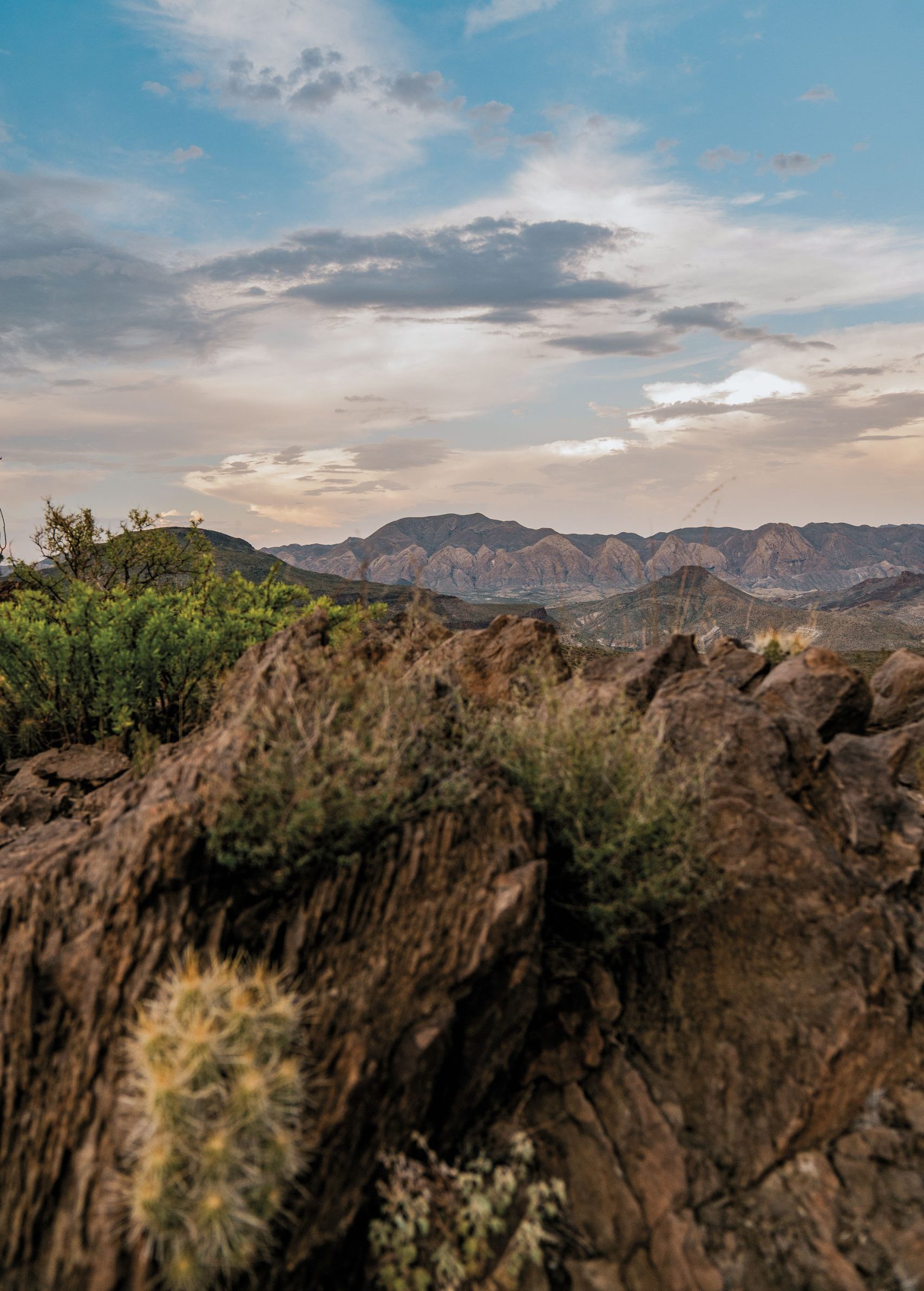
El Solitario, Big Bend Ranch State Park, Presidio
The name of this bowl-shaped collapsed volcano—an ancient caldera almost 10 miles in diameter that is best appreciated from 5,000 feet above—speaks for itself. More than 13,000 visitors ventured to the far southwestern corner of the state to experience Texas’ biggest state park last year, yet only a handful of them made it to El Solitario. I’ve been twice. Inside the jumble of flatirons, walls of steeply tilted rocks pushed upward and angled sharply by tectonic pressure that surround the caldera, an almost unnerving stillness settles in.
Former park ranger Karl Flocke says all of Big Bend Ranch is great for solitude, except the main roads. “The Solitario is a good bet because of the psychological quiet,” he says. “In addition to having hills to block wind and any other sounds that might travel, there is something about being pinned in on every side that cuts out the noise of the world—and the noises in your head.”
Big Bend Ranch State Park, 21800 FM 170, Terlingua. Admission: $5. 432-424-3327; tpwd.texas.gov/state-parks/big-bend-ranch
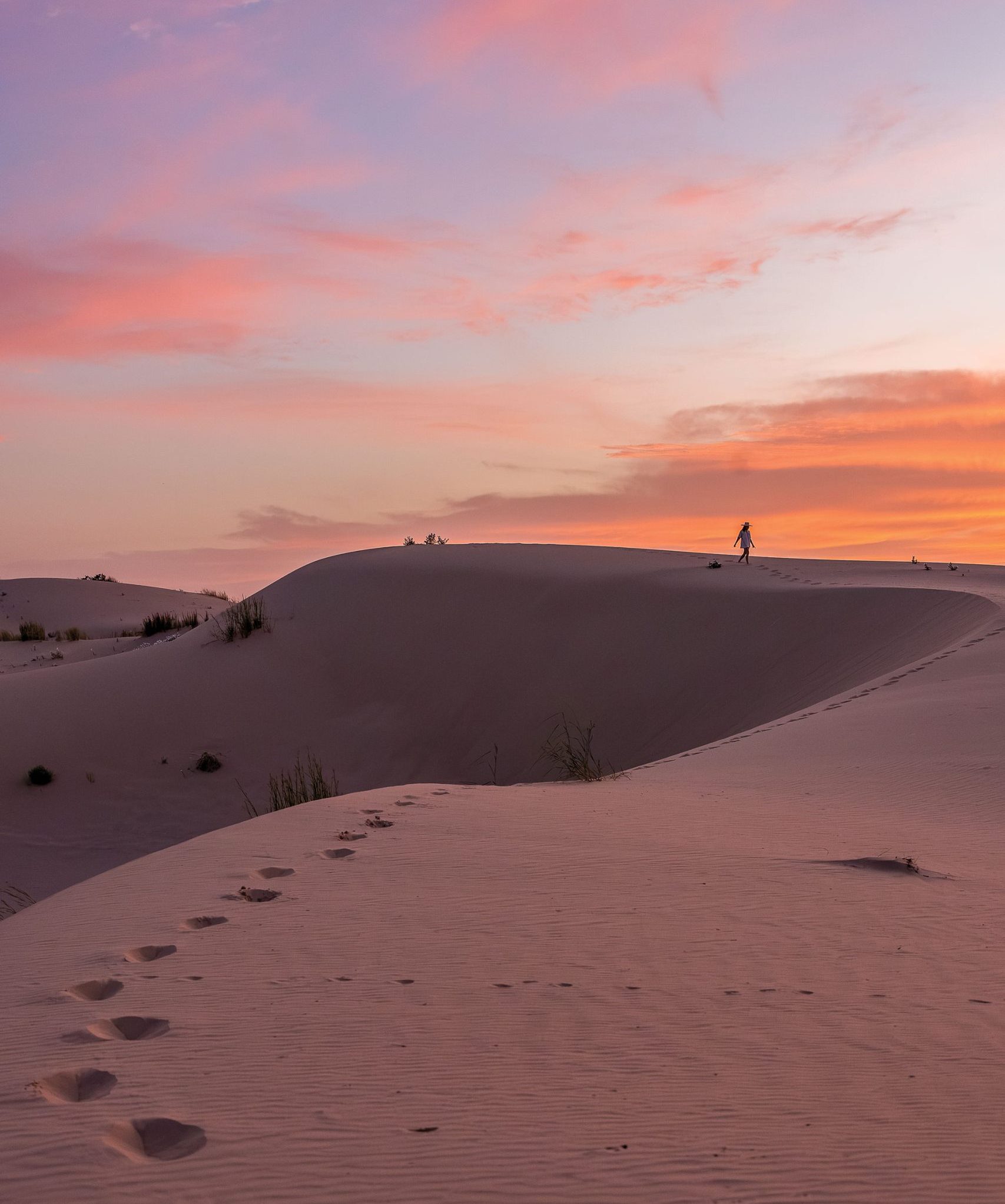
Monahans Sandhills State Park, Monahans
Sand is a natural dampening material, dense enough to block sound and absorb vibrations with an irregular surface that scatters sound waves. The trick, says park superintendent Phil Salonek, is to go a few ridges beyond the Windmill, Pump Jack, and Shin Oak day-use areas in the 4,700-acre park.
“Loose, dry sand is a porous surface, and sound is dissipated through grain-to-grain friction and tiny air pockets instead of bouncing back the way it would off rock, pavement, or water,” he says. “That is why the quiet here feels different from a forest, a canyon, or open grassland. There are almost no hard surfaces, so little echo; wind noise drops quickly once you drop below a crest; and background levels stay low.”
With an average of 150 visitors a day, it’s not much of a challenge to find an empty spot to soak up sand minus sound.
Monahans Sandhills State Park, Park Road 41, Monahans. Admission: $4. 432-943-2092; tpwd.texas.gov/state-parks/monahans-sandhills
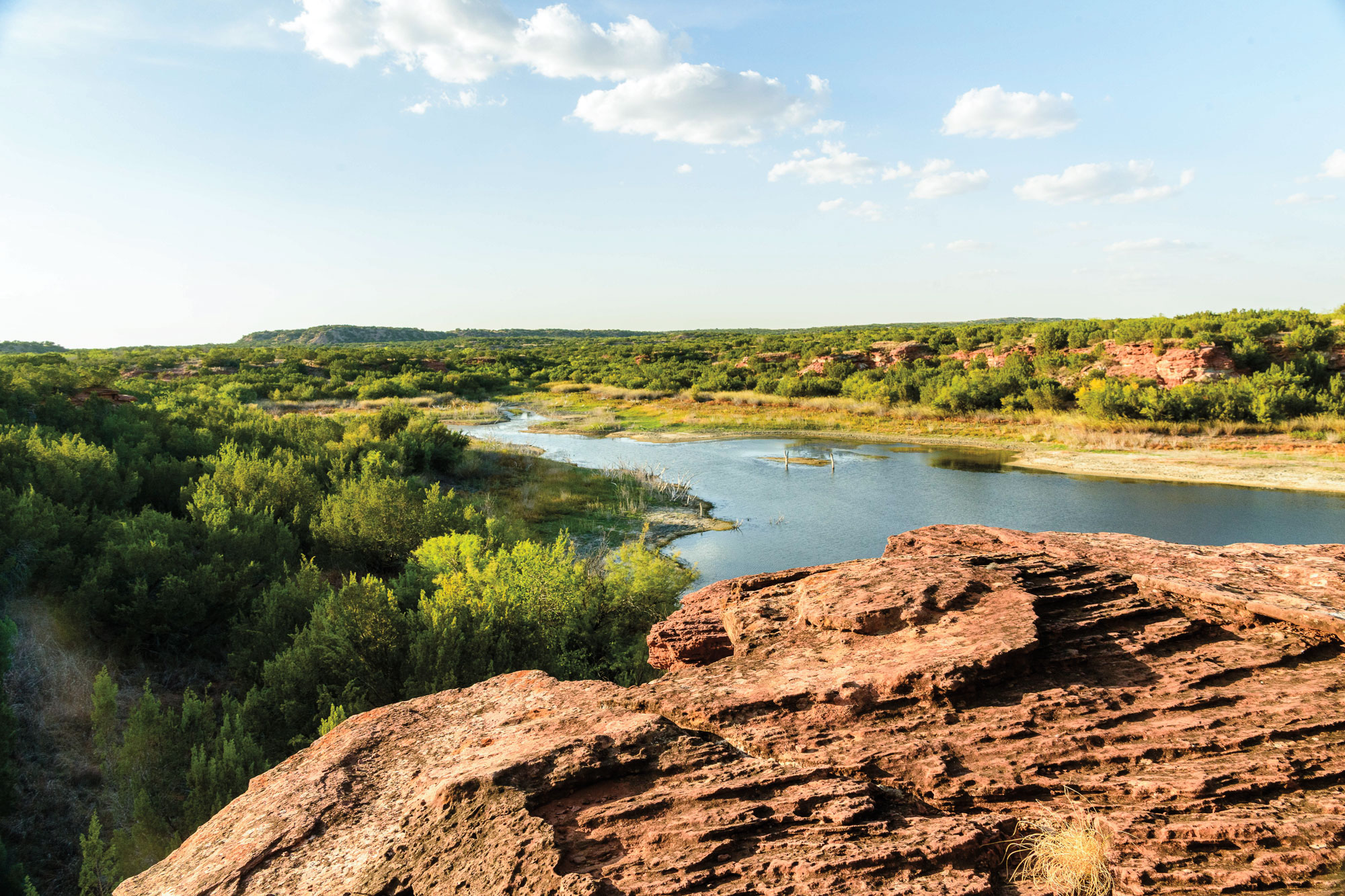
Copper Breaks State Park, Quanah
More intimate than Palo Duro or Caprock Canyons state parks and rife with canyons and draws, Copper Breaks attracts some 30,000 visitors annually to its 1,898-acre red dirt slice just south of the Panhandle.
Renee Poteet of Sylvester, an Austin retiree who chose a slower pace of life west of the 100th meridian, was searching for the Pease River on a map when she noticed Copper Breaks and its designation as an International Dark Sky Park. So, she set out on a solo campout.
Seeing the immensity of the Milky Way reminded Poteet of Walt Whitman’s poem “When I Heard the Learn’d Astronomer”: “I could ‘wander off by myself’ and ‘look up in perfect silence at the stars,’” she says, quoting the poem. “My singular disturbance was from a hoot owl that perched just above my tent around midnight.”
Copper Breaks State Park, 777 Park Road 62, Quanah. Admission: $3. 940-839-4331; tpwd.texas.gov/state-parks/copper-breaks
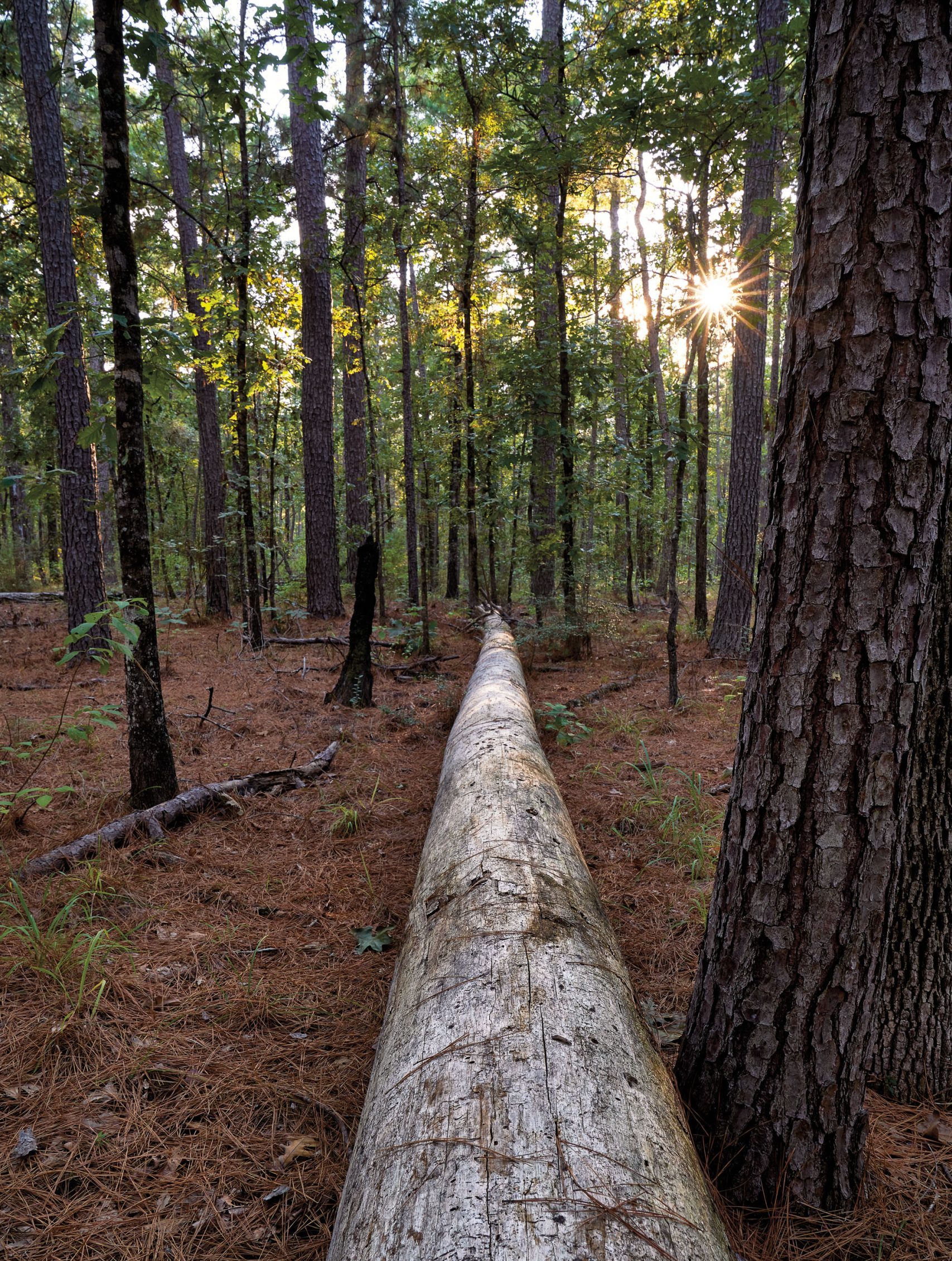
Big Slough Wilderness Area, Davy Crockett National Forest, Kennard
“We don’t have canyons or draws in East Texas,” says music educator Bing Bingham, a native of Buna. “We have sloughs, where water comes through. If the slough is dry, you can go to the bottom and you’re out of the wind and away from noise.”
The 3,639-acre Big Slough, the smallest designated wilderness area in Texas, is old-growth bottomland hardwood forest with a dense canopy of pine, oak, and hickory trees. The pine needle-padded trails muffle sound naturally, delivering solitude depending on timing and low flood levels in the area where Big Slough feeds the Neches River. Trail signage is limited.
Big Slough Wilderness Area, Davy Crockett National Forest. Admission: Free. 936-655-2299; fs.usda.gov/r08/texas/recreation/davy-crockett-national-forest
Caddo Lake National Wildlife Refuge, Karnack
The moss-draped cypress trees and still waters of Caddo can be not-so-peaceful on summer weekends when the mud boats buzz around. But a canoe or kayak still gets you into backwaters away from the din, especially around Big Lake and Goat Island. For true silence, try the nearby 8,493-acre Caddo Lake National Wildlife Refuge. “Being alone in so quiet a place was a mixture of curiosity, discomfort, and caution,” says filmmaker Jack Canson of Marshall, who found the isolation unsettling while scouting for a film location. “Why no birdsong? Why no rustling in the weeds?” The sometimes numbing stillness often associated with Caddo Lake and its environs was too eerie for Canson. But he didn’t forget it. “What little quietness I found on a three-day religious retreat in no way compared to the experience I had in 10 minutes at that spot in the refuge,” he says.
Caddo Lake National Wildlife Refuge, 15600 FM 134, Karnack. Admission: Free. 903-679-9143; fws.gov/refuge/caddo-lake
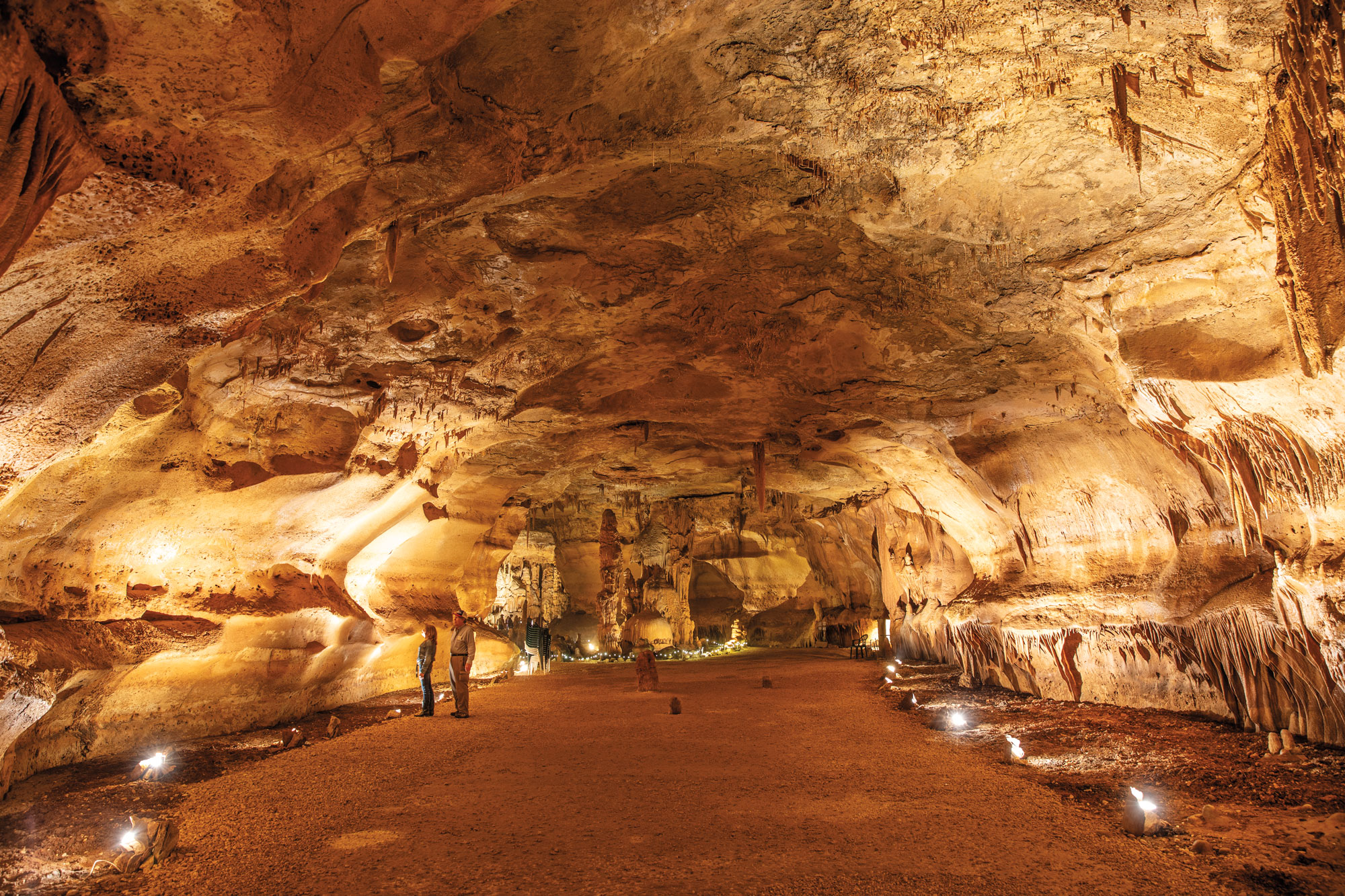
Cave Without a Name, Boerne
Commercial caves in Texas with pathways and lighting provide easy access to underground solitude. These include Caverns of Sonora, Natural Bridge Caverns, Longhorn Caverns, Cascade Caverns, Inner Space Caverns, and Wonder World. Cave Without a Name best fits the quiet profile with its compact size, low visitor count, and distance from a major highway.
Cave director Mike Burrell escorts me underground into The Throne Room, the main chamber of the limestone cavern where music performances are staged to take advantage of the room’s 40-foot-high ceiling and dynamic acoustics. “The first thing I’m aware of is I can hear myself breathe,” Burrell says. “Then, with movement I can hear my bones creak. You can hear your blood rushing in your head in here sometimes.”
Burrell concludes tours by turning off the lights and asking for a couple minutes of silence. That drew the attention of art curator and musician Hills Snyder, a professor at the University of Texas at San Antonio. At Burrell’s invitation, Snyder would bring students from his Contemporary Studio/Ancient Knowledge class to the cave early in the semester for the hourlong tour, and again at the end of the semester. Their extended sessions in the cave’s silence “always turned out to be more than two hours,” Snyder says. “Most students reacted in disbelief at the duration, reckoning it felt like about 40 minutes.” They also comment on how refreshing it is to spend time in silence. “The students understood that descent into the ground was analogous to descent into the depths of their own minds,” he says. “The quiet in that cave is a different kind of quiet.”
Cave Without a Name, 325 Kreutzberg Road, Boerne. Group tours: $18/person. 830-537-4212; cavewithoutaname.com
Rothko Chapel, Houston
The Rothko Chapel calls little attention to itself in the leafy green space carved out of the Montrose neighborhood of early 20th-century bungalows. The windowless brick building faces a reflecting pool and Barnett Newman’s Broken Obelisk sculpture, near the Menil Collection. A discreet sign at the entrance of the Rothko asks visitors to “unplug from technology,” i.e., turn off cell phones, do not take photographs, and “allow yourself to be completely present and enjoy the silence.”
The wide entry door opens into the foyer, where a docent approaches with a hushed reminder about cell phones and silence. The chapel is a muted octagonal space, 56 feet by 51 feet with a 28-foot ceiling topped by an octagonal skylight. The floor is made of asphalt paver squares.
Fourteen large-format Mark Rothko paintings, commissioned by Dominique and John de Menil in 1965, hang on the walls. The ceiling-to-floor monochromatic abstracts are meant for spiritual contemplation. Visitors sit on 12 long wooden benches to do just that—meditate on the paintings, the space, and the expanse within.
The dark paintings contrast with the room’s neutral gray walls, softened by the natural lighting overhead. This must be what the afterlife looks like. Closer up, the broad brushstrokes of nuanced black, purple, and maroon colors render each Rothko piece easier to appreciate.
It is quiet enough to hear the couple across the room softly whispering in each other’s ear as they gaze at a painting. I cringe at the racket I make every time I shift while sitting on the bench. And I can detect a barely audible low hum—the AC; this is Houston, after all. Otherwise, quiet enough.
“Almost every day, I meet visitors who arrive carrying burdens, questions, grief, or simply curiosity, and leave with a sense of peace, wonder, or renewed possibility,” says Abdullah Antepli, president of Rothko Chapel. “As someone who has devoted his life to interfaith engagement and building bridges across divides, it is deeply moving to serve a place where silence itself becomes a language of connection.”
Rothko Chapel, 3900 Yupon St., Houston. Admission: Free. 713-524-9839; rothkochapel.org
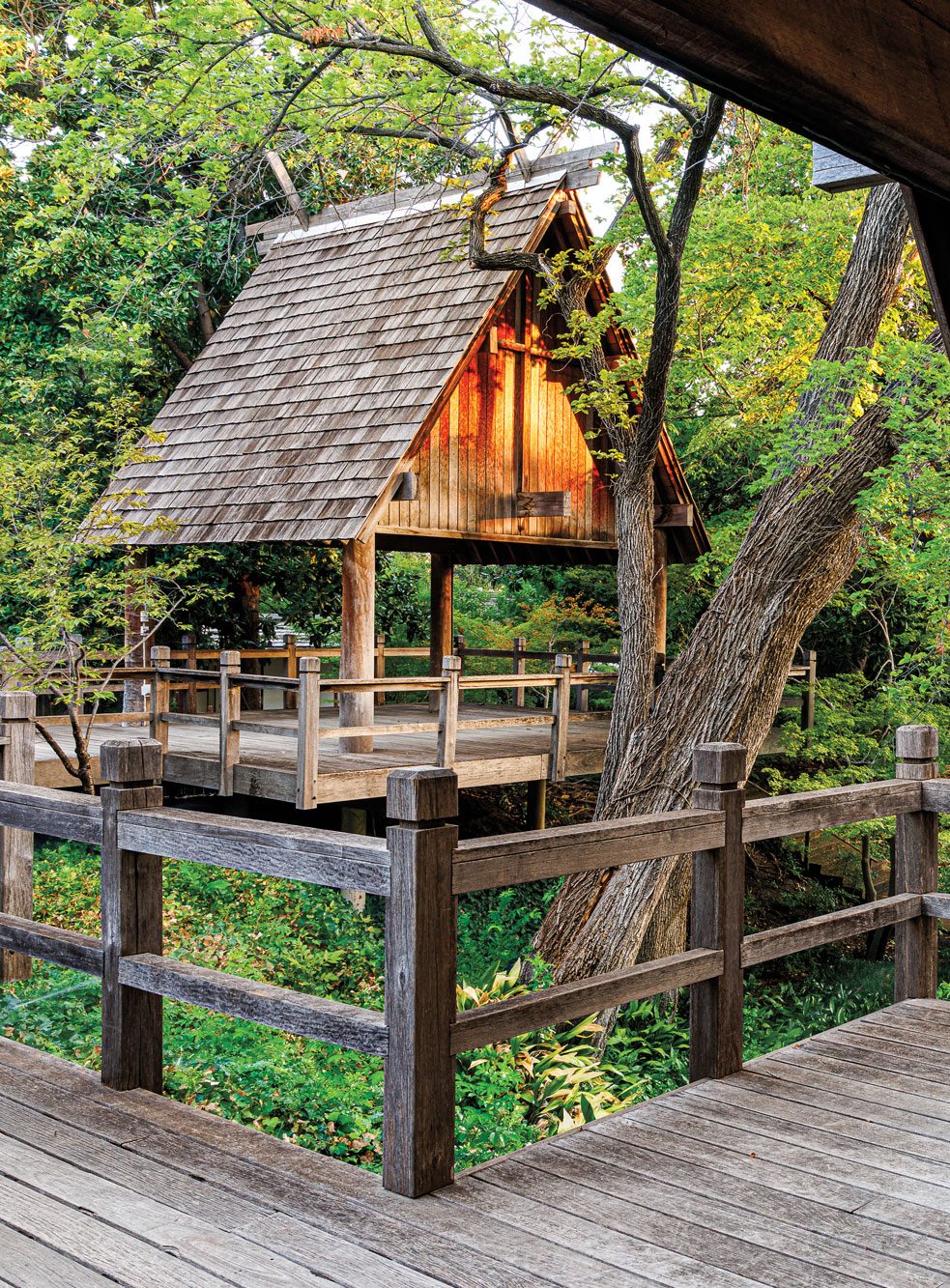
Japanese Garden, Fort Worth
Japanese gardens are traditional gardens based on ancient precepts, with asymmetrical, minimalist landscapes and meticulous arrangements of rocks, sand, plants, and pruned shrubs and trees, often miniaturized. Winding paths and water features project serenity and peace. In other words, they scream quiet.
The Fort Worth Japanese Garden, a nearly 8-acre plot within the 120-acre Fort Worth Botanic Garden, ranks as the seventh quietest spot in the country and one of Texas’ quietest spots, according to Earth.fm, an app devoted to finding quiet and natural sounds away from city noise. On my visit, the visuals in the garden provide an appropriately serene backdrop for wedding and graduation photographs. Walking the grounds reminds me of previous visits; this was my stepmother’s favorite garden. But road noise from nearby University Drive seeps through the calm. Even at the garden’s lowest point, around the koi pond, the gentle sound of trickling water sometimes competes with the hum of motorized transportation. Quiet, I guess, is subjective.
Japanese Gardens, Fort Worth Botanic Garden, 3220 Botanic Garden Blvd., Fort Worth. Admission: $15 (all gardens). 817-463-4160; fwbg.org/gardens/japanese-garden
Come to Good Skyspace, Keith House, Fort Worth
Since 1974, light and space artist James Turrell has been creating installations called Skyspaces, where programmed LED sequences complement natural light in shows lasting about an hour at sunrise and sunset. The Keith House, a community space in Fort Worth, is home of Come to Good, Turrell’s 98th Skyspace. He completed the work, his fourth in Texas, in 2024.
Though nonsectarian, Keith House adheres to the values of “truth, peace, mutual respect, simplicity, and the power of silence,” honoring Turrell’s Quaker upbringing. Three 30-somethings join me for a sunset viewing in early June. Rather than sit, I follow the others’ lead and lie down on one of the padded benches symmetrically arranged around the open room, comfortably focused on the 6-foot square in the center of the tall overhead ceiling—the portal to the sky.
The Skyspace is framed by hidden LEDs along the ceiling’s perimeter whose sequences were programmed by Turrell. Once the roof opens, the natural light begins its dance with Turrell’s LEDs. Colors change slowly enough to induce hallucinations. I’m seeing high clouds move across the square opening to a sky that no longer appears blue, but yellow. Are those high clouds or eye floaters or what? My enjoyment of the color changes is interrupted by a bird crossing a corner of the Skyspace square. A few minutes later, a jet eclipses the entire frame.
Other than murmurs between the other visitors, it is deliciously quiet.
Keith House, 4814 Edwards Ranch Road, Fort Worth. Admission: $20 (suggested). 817-924-4134; keithhouse.org
On the third Thursday of every month, music accompanies the Skyspace experience. Yoga classes, classical music, sound baths with bowls, art exhibits, and lectures are scheduled monthly. Sunrise viewings Sat-Sun. Sunset viewings Wed-Fri.
Wat Buddharatanaram, Keller
The 20-acre wooded property less than a mile from State Highway 377 evokes a small college campus commons, albeit one with two Thai-inspired stupas towering above the tree line of the suburban neighborhood.
Wat Keller, as it is locally known, is a Theravada, Dhammayut monastery that follows the Thai Forest tradition. Nine men in ochre robes and three women in lilac-and-white robes, all with shaved heads, can be seen going about their daily rituals. This is a monastery, a place of practice, not a tourist attraction. However, “all are welcome, whether you’re wanting to learn or wanting to tour,” says Maechee Sarah Hudson, the sole native English speaker residing on the grounds.
Hudson underscores the importance of respect, reverence, and open observation in a contemplative place. “Laypeople normally come to participate in the daily routine of the monastery—chores, meal offering, and evening chanting/meditation,” she explains while showing me around. “One is always invited to participate in the daily schedule or visit the monastery grounds for contemplative solitude.”
Wat Buddharatanaram, 13089 Wat Road, Fort Worth. Admission: Free. Gates usually open 8 a.m.-1 p.m. facebook.com/watkeller
The schedule at Wat Keller is posted online and on Facebook. Guests must observe the posted etiquette, which includes a dress code banning attire like shorts and tank tops, and shoes should be removed before entering the buildings.
Enjoy the Silence
Anechoic chambers take a scientific approach to eliminating noise
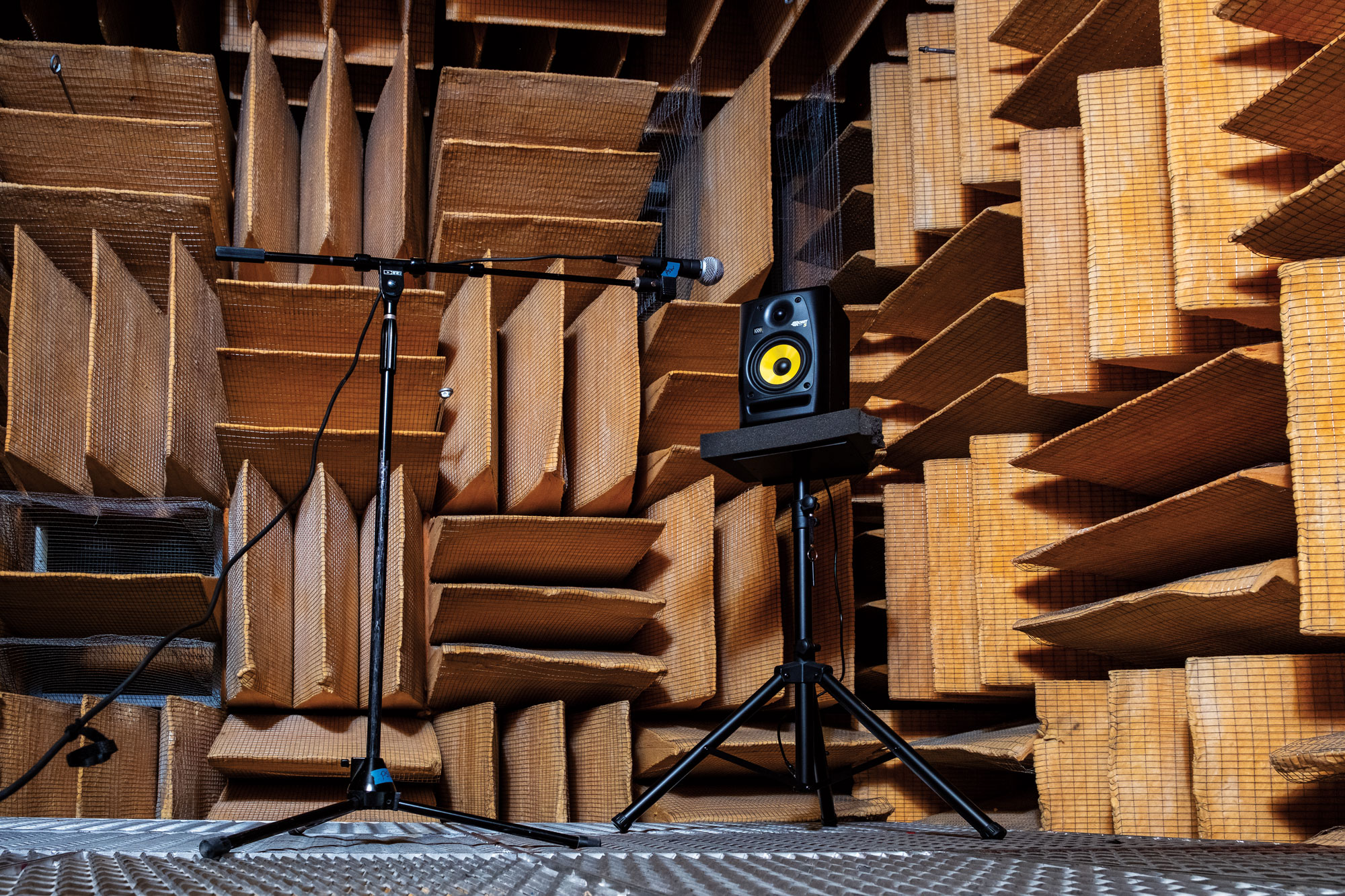
Quiet, it turns out, is all around us, available in many forms and often at an affordable price. But what about the absolute quietest quiet? Gary Hickinbotham, the chief engineer at Fire Station Studios in San Marcos, says he found it in an anechoic chamber, a space acoustically designed to eliminate all outside and reflective sounds. It was so quiet, it made him uncomfortable. “After some time in it, you can hear your blood circulating in your vessels,” Hickinbotham says.
There are at least 10 anechoic chambers in Texas designed to absorb sound waves, stop echoes, and eliminate ambient noise, primarily used by researchers to measure noise levels. Jerome Helffrich works inside the anechoic chamber at Southwest Research Institute on San Antonio’s West Side, where 3,200 employees work on a variety of innovations including fire prevention technology, a nasal spray for PTSD, and automotive fuel injection improvements.
Helffrich presses the red button marked “Chamber Access” and opens a tall metal door. Foam wedges, each about 1.5 feet deep, paired together at right angles, cover the inside walls and the 20-foot-tall ceiling, as if M.C. Escher had designed the brutalist space. A soft while light emanates from the ceiling, contrasting the red glow of the exit sign above the door.
With the lights on, Helffrich signals silence. I hear myself inhaling, so I slow down and try to breathe more evenly. My clothes rustle and my bones creak whenever I move. I strive to stand still.
Then, sound ceases. I can’t hear my heartbeat or the blood pumping through my veins. Audio flatlines. Next, I pick up a barely perceptible high-pitched ring—maybe the light or the exit sign, or mild tinnitus.
After a couple of minutes, I signal OK. I’ve had enough. Any longer and I’m squirming and fidgeting. Helffrich speaks, sounding like he’s a half-mile away, talking through a tube.
“So, that’s probably about as quiet as you’re gonna find in your life on Earth,” he says.