

BOB wiLLS FOReveR!
Thousands still flock to Turkey to swing high and low for their long-lost king
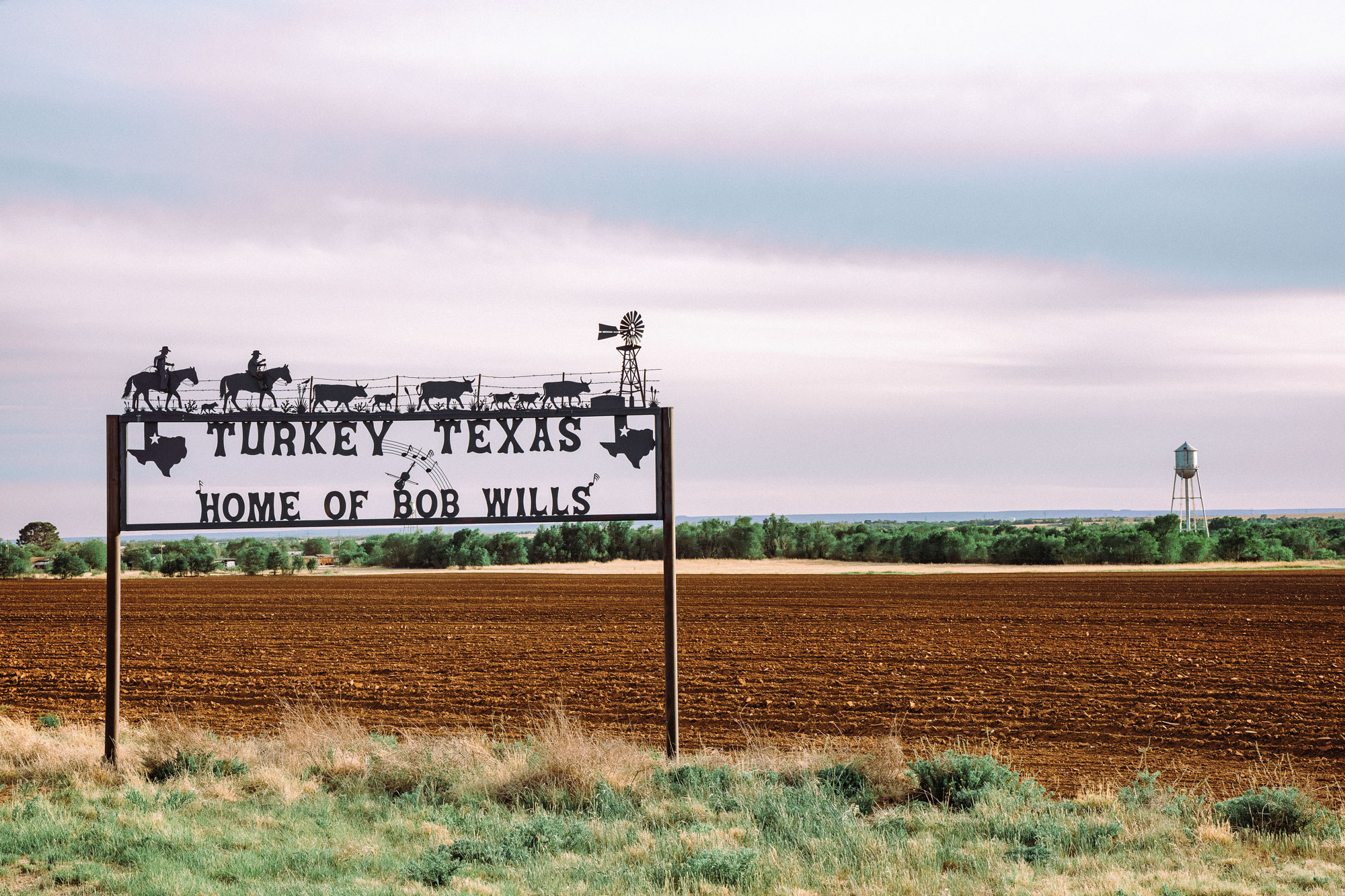
It’s a mere 82 degrees, but the Panhandle sun feels aggressive as I explore the tiny town of Turkey. I head up Main Street to the Slab, a small, covered concrete pad on Main where a swing band plays for the dancers keeping time; and then onto the Bob Wills Center, the de facto town hub. I stick to the sides of the dusty streets, weaving through neatly parked rows of RVs and returning waves from folks on passing Polaris Rangers—the preferred mode of transportation, it seems, on this Friday afternoon.
Before I reach the Bob Wills Center, I hear music again. A loosely formed band consisting of two fiddles, a snare drum, a guitar, and a banjo is playing. Under the shade of a massive cottonwood, the audience sits in folding chairs and at a picnic tables on the lawn. A guy in a hammock sticks an arm up in a lazy greeting. “This is tradition,” Lonnie Van Houten, one of many who make this annual pilgrimage, says of the jam session. “People who love to play together just know where to come.”
I’ve come to Turkey for the 54th Bob Wills Day, a three-day affair where the town of roughly 300 swells with thousands of visitors to celebrate its favorite native son. I’ve been fascinated by this event since I first heard about it as a 16-year-old staying on a farm one summer with my cousin and her grandparents in Quitaque, the town next door to Turkey. Listening to Reba McEntire CDs. Walking to Allsup’s and then back to the farm. A little dog named Spot tagging along beside us. Saturday nights riding in the middle seat in the back of an older teenage girl’s dusty Buick, blasting Brooks & Dunn’s “Neon Moon” on the blown-out speakers, a horizontal crack in the windshield.
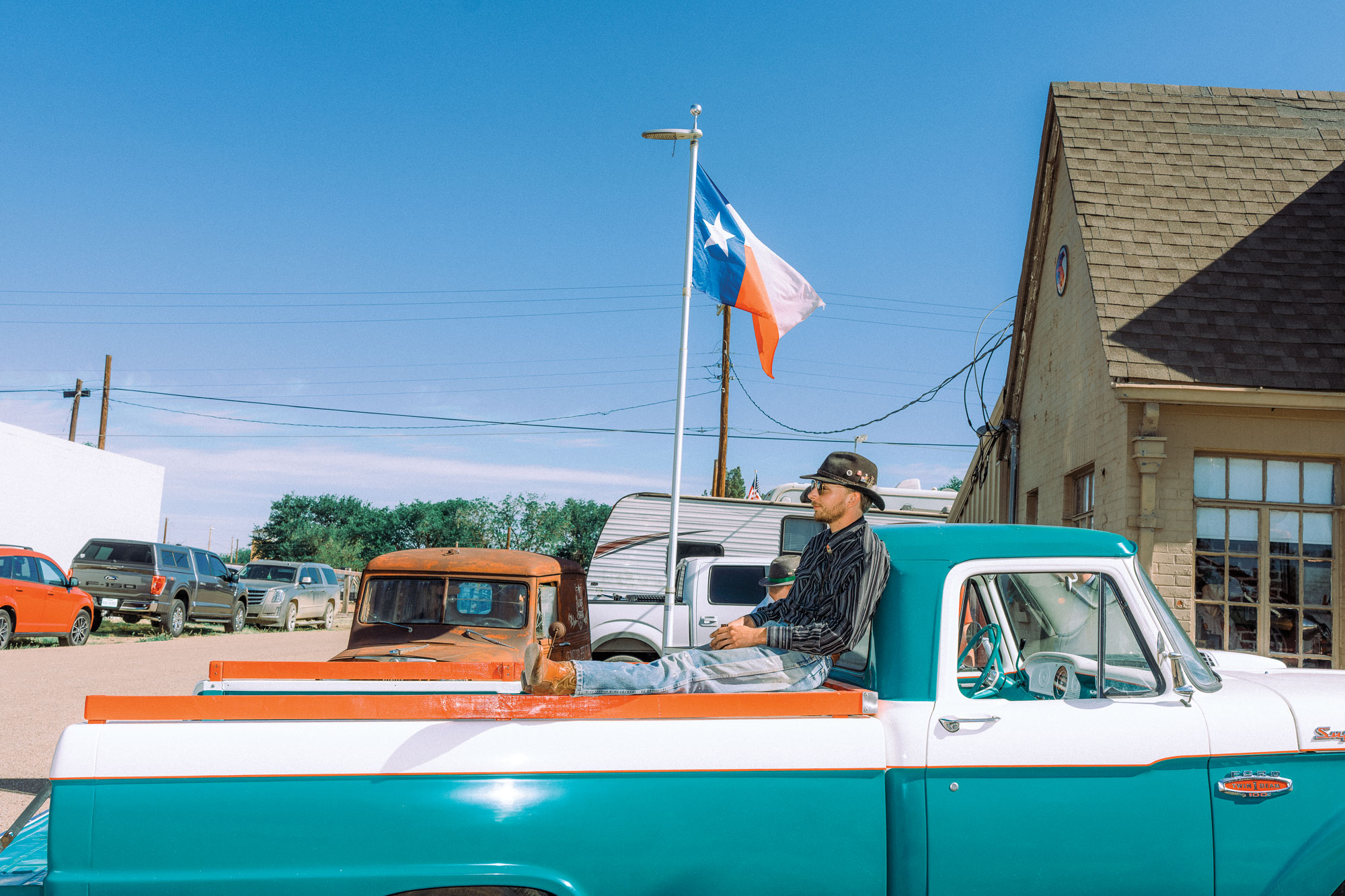
On weekend nights, we’d take State Highway 86, the dark two-lane road, to the Allsup’s in Turkey. Teenagers performing the small town Saturday night tradition. The girls sitting cross-legged on the tailgate of a Chevy talking about the boys. The boys passing around a can of dip, pretending it wasn’t making them a little queasy, trying to build up the courage to talk with the girls. The girls wanted me to know the town wasn’t always like this. I assumed they meant quiet or boring. I should check it out during Bob Wills Day, they’d say. There’d be thousands of people here, music and food—a festival. And there’d be more boys. Looking around Turkey with its dusty streets, farm trucks, and steer haulers, I had some questions. Where do they put everyone? And who is Bob Wills?
It’s been 33-some-odd years since that summer, and I now know the answer to that last question. Anyone who’s ever listened to Waylon Jennings, another Panhandle icon, knows Wills. In 1975, the year Wills died, Jennings released the song “Bob Wills Is Still the King.” That was 51 years ago, and Bob Wills is still the king.
His influence on music is undeniable. He wasn’t just a fiddler or just a singer known for wowing crowds with an Ah-haaa or even just a bandleader; he was the “King of Western Swing,” whose fusion of country and jazz peaked in the 1930s and ’40s and continued until the ’60s. Most people might know his bestselling song “San Antonio Rose,” but he also cowrote “Stay a Little Longer,” which Willie Nelson popularized in the ’70s. Musicians all over have been inspired by him, from Chuck Berry and Jimi Hendrix; to Wills’ torch bearers Asleep at the Wheel, an Austin-based Western swing band led by Ray Benson; to Austin troubadour Charley Crockett. The Texas Playboys, Wills’ backing band, still carry on their pioneering sound—the brass and the upright bass, the seventh chord drops that make you want to get moving—but with different members, of course. It’s country music, but not really.
“The only thing Western swing’s got in common with country is the hat,” Tommy Thomsen, a Western swing musician and Wills champion, tells me later in the weekend. “It’s big band and boogie-woogie and blues and jazz. It’s dance music.”
That much is clear as I continue watching the action at this lawn on Lyles Street. I want to take a seat, spend the rest of the afternoon here, drink it all in. A woman in silver braids joins my conversation with Van Houten and snaps me out of my reverie. She introduces herself—Annie Baker—and says, “You should come to church.” Before I can make excuses, she smiles and clarifies, “The Church of Western Swing.”
Van Houten leads on that there are different approaches to commemorating Wills among the two camps—the Bob Wills Foundation, which runs the Bob Wills Day events, and the Church of Western Swing, a converted church across town that was acquired by Thomsen. My ears perk up. Van Houten says the only way to understand it is to see it for myself.
“Make sure you see a full band in a concert hall,” he says. “Come to the dance tonight.”
“Do that,” Baker says. “Then come over to church. I’m at the door. I’ll let you in.” She gives me a wink.
Wills was still alive for the first Bob Wills Day, held in 1971, but two years earlier he had a stroke and mostly stopped playing. The event takes place every last weekend in April, except for the first year of COVID, and was organized by the nonprofit Bob Wills Foundation to champion his life and legacy. Over time, Bob Wills Day has turned into an important fundraiser for community efforts, including scholarships for K-12 students at the local Valley School.
“We’re here for Bob Wills’ legacy, but we’re also here for Turkey, Texas,” says Carley du Menil, event organizer and board member of the foundation. “We’ve purchased and renovated the high school and old theater. We hold two-stepping lessons to get the kids interested in the music. And, of course, everything we raise goes right back to Turkey.”
The old Turkey Public School was transformed into the Bob Wills Center, a nexus of office buildings, event spaces, and the Bob Wills Museum. This is one of those very specific small town museums where artifacts appear carefully selected and displayed with love. There are his boots, his shirts, his hats, his dad’s fiddle, and tools from the barbershop where he once worked. There are also movie posters from Take Me Back to Oklahoma and Go West, Young Lady—some of the old Westerns he starred in. Today, the museum is packed as a jam session begins.
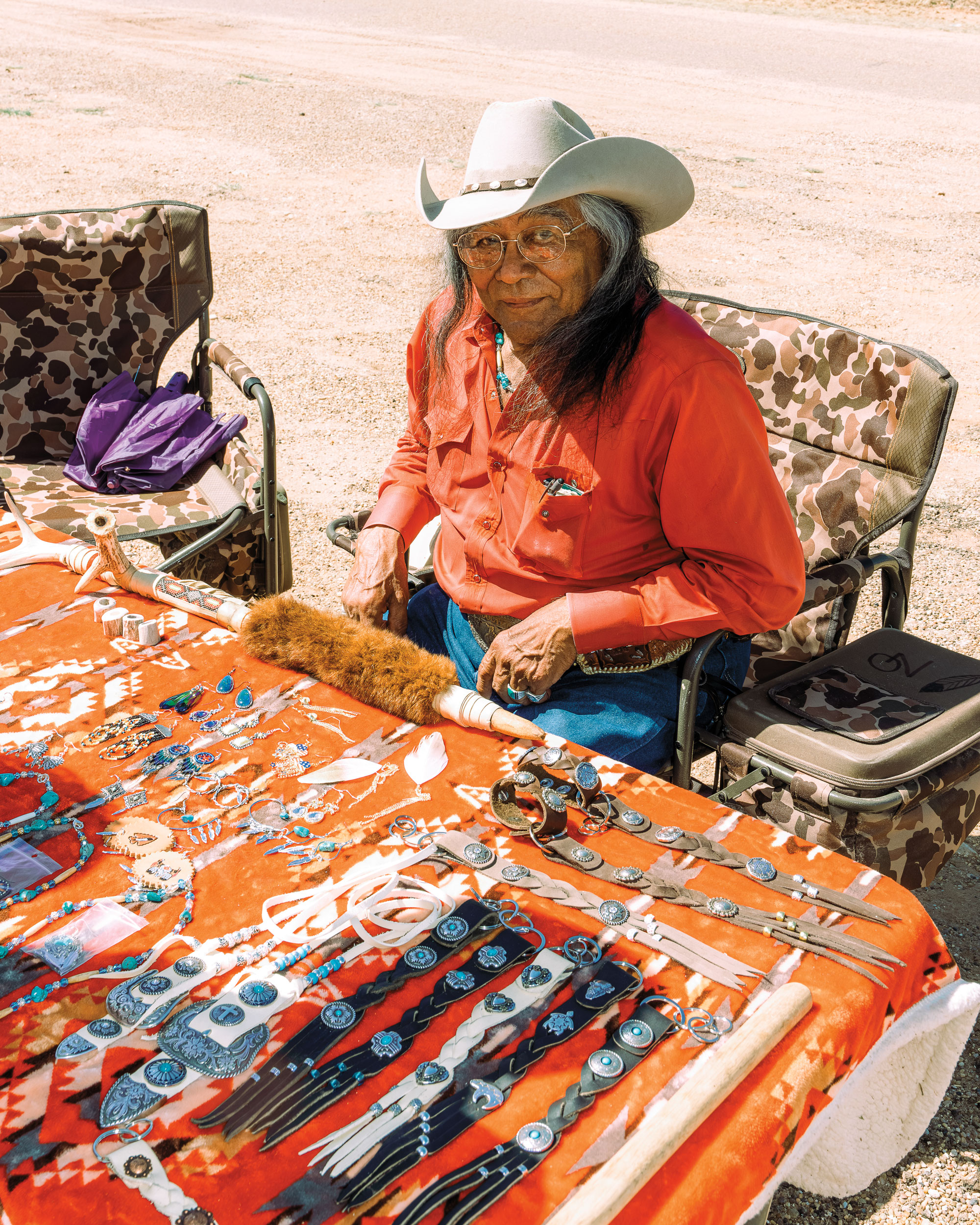
A collection of vendors occupies another space at the center. Derick and Sondra Collins, who run the Cowgirls and Crosses pop-up store, tell me this is why they come every year—the people. George Hodges, who makes beautiful knives and sells them at the festival, admits, “I can drive 45 minutes to get to Fort Worth, but I’d rather drive the three hours and come here.” Chris Rhynes, who makes jewelry, spurs, and buckles, says this is his favorite event: “Just good people.”
A small crowd has gathered, filled with cowboy hats and serious mustaches, all excited to tell me about Wills. But what they do is, they talk about how much they love coming here. How much they like seeing their friends every year. One of them, Mike Molten, says he comes here annually, this year with his kids and grandkids. He’s got a cool hat, sweat-stained and hand-creased the way a hundred bass players in Austin are trying to replicate. “It’s not as rowdy as it used to be,” Molten says. “Used to come out here and there’d be a million-dollar RV parked next to a pup tent full of hippies.”
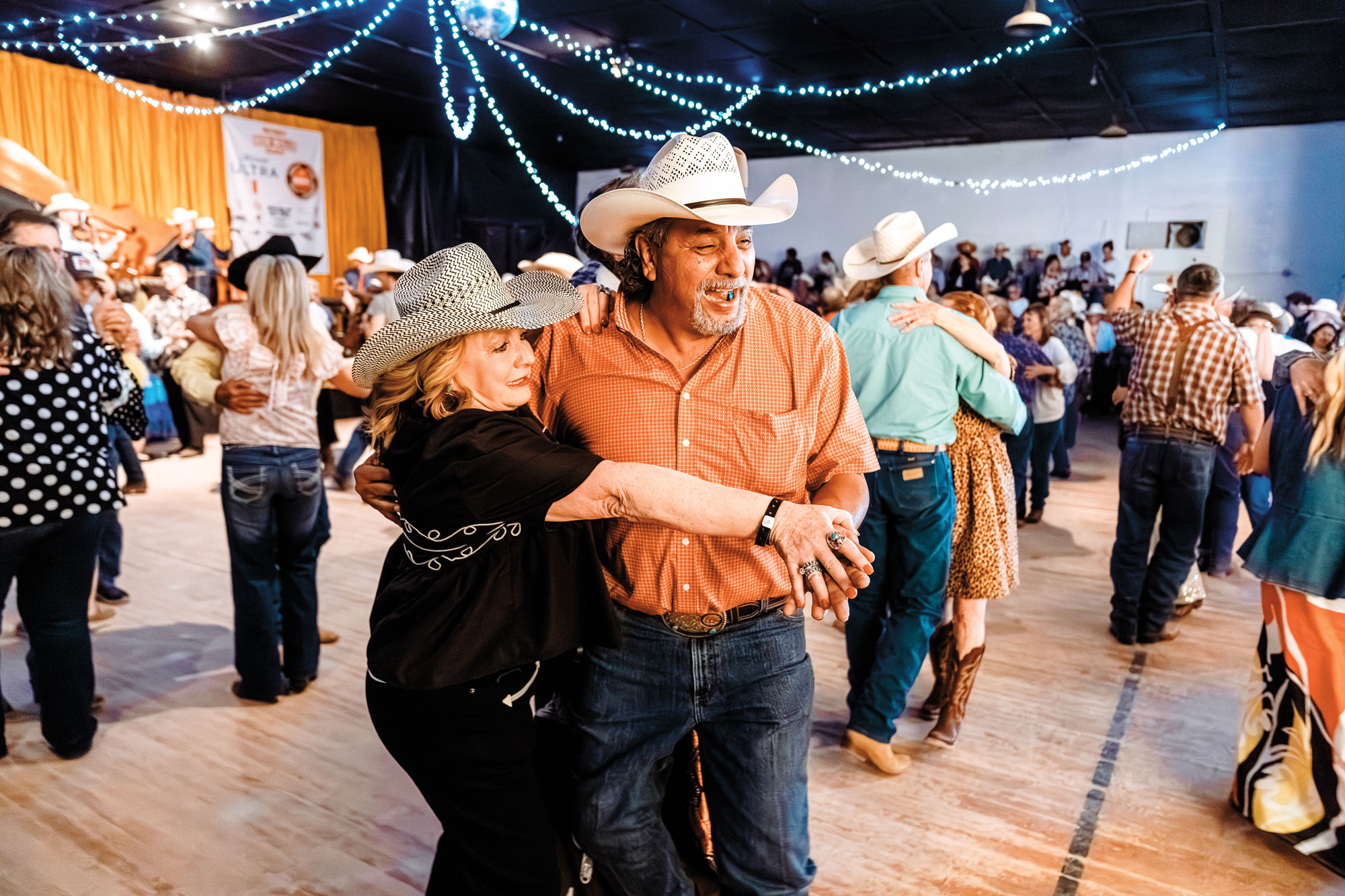
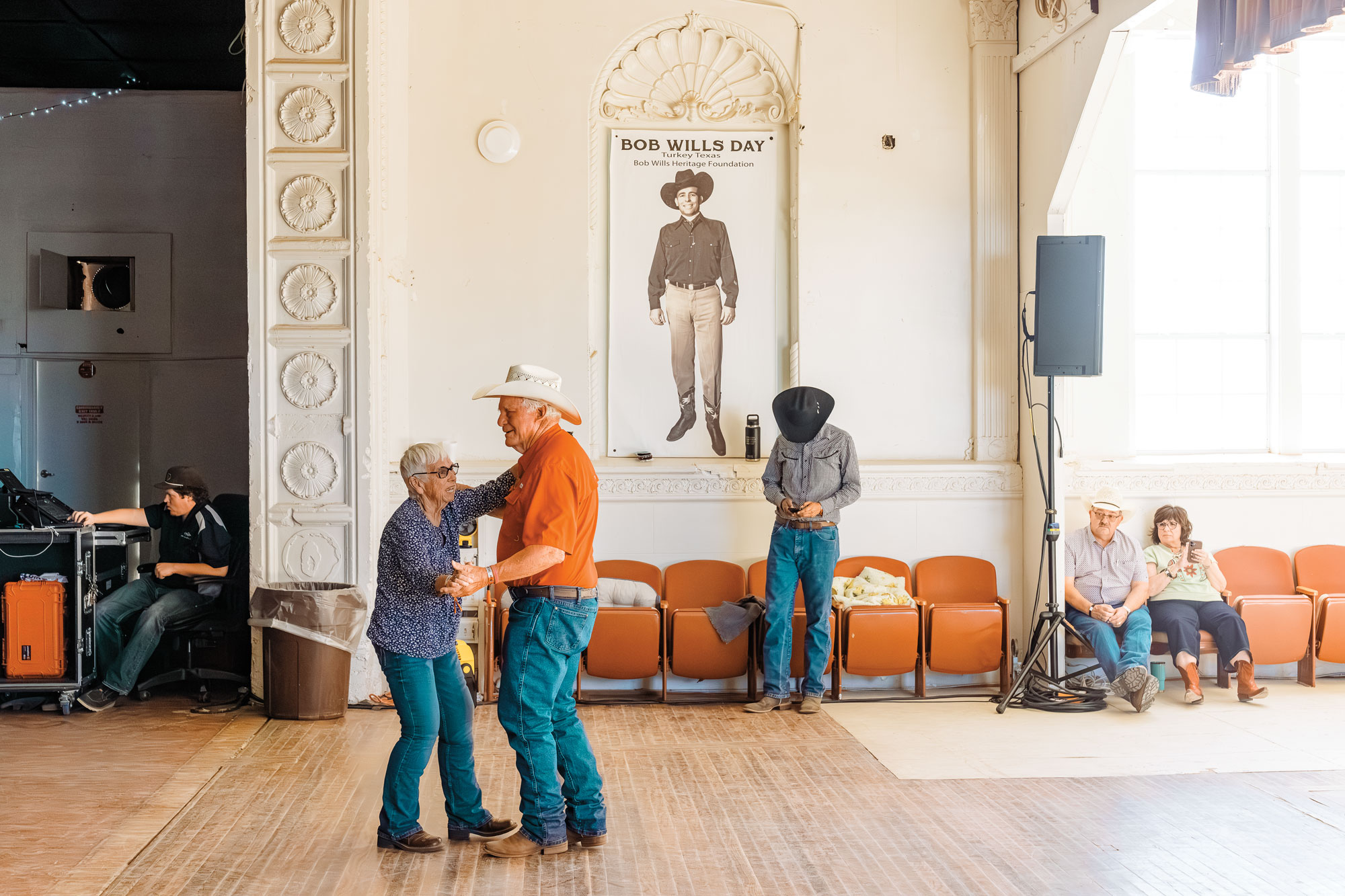
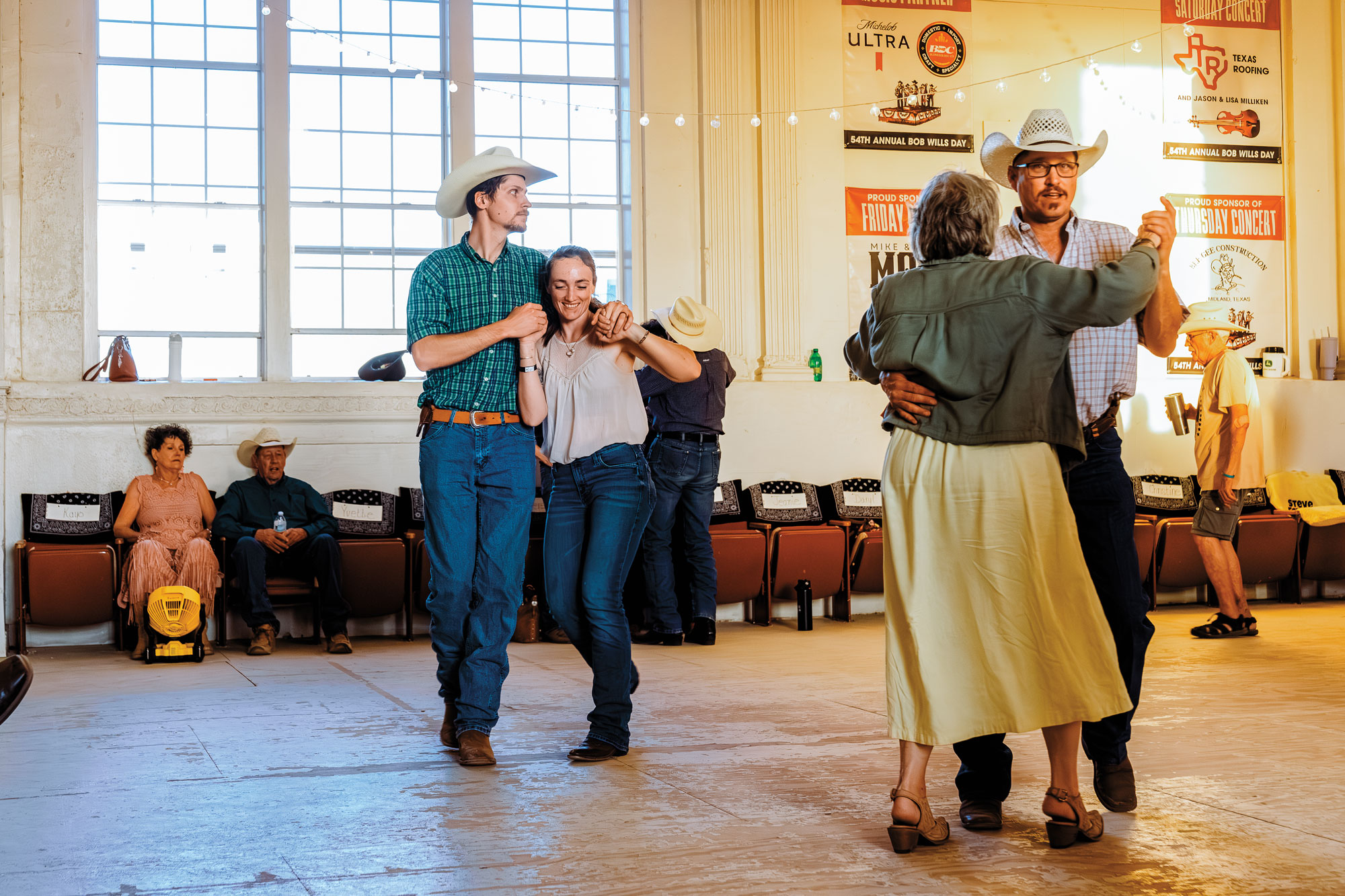
A little before 6 p.m., the dance hall starts to fill, seats saved with handkerchiefs, and a volunteer spreads powdered wax on the dance floor. People are dressed for the occasion in bedazzled white chaps and gator boots, a few in their square-toed dusty work boots. The pros show off, spinning their partners and nervous sons, counting time aloud. The sun shines through the windows, baking the smells of the old school from the cracks between the seats—chewing gum and hairspray and old tobacco. Everyone’s waiting. I ask the man next to me who’s playing tonight. He says it with reverence. Jason Roberts. The Texas Playboys.
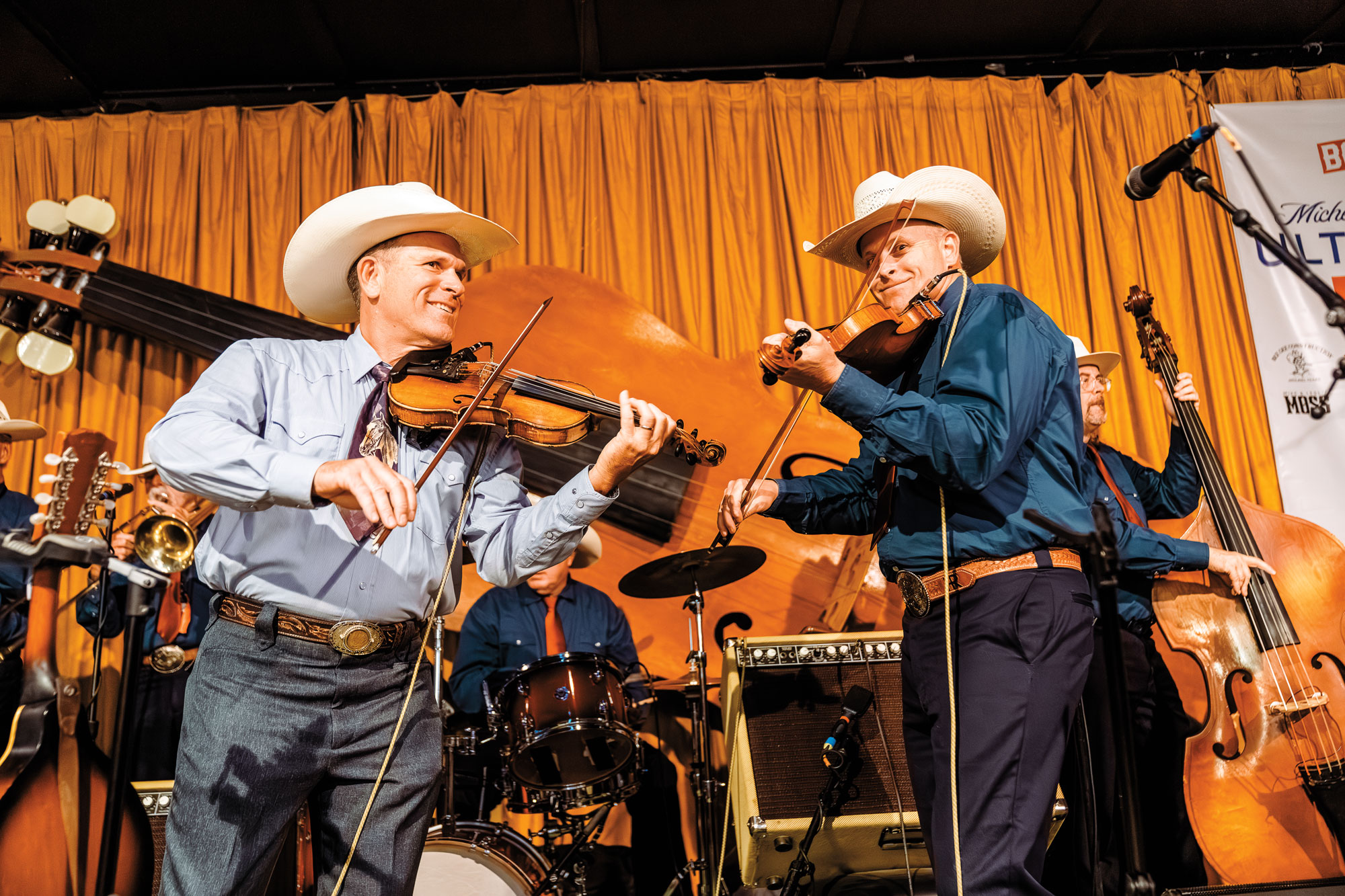
Roberts is a fiddler with great pedigree. He used to play in Asleep at the Wheel. Roberts was weaned on the sounds of Wills and the Playboys. Now he leads the Playboys, a manifestation of Wills himself. The music they play is what I’ve only heard on records. It’s the real thing: a big band, trumpets and a sax, a steel guitar and drums, each player a virtuoso.
Molten has found me in the crowd and tells me his mother used to go to Wills’ shows at Cain’s Ballroom in Tulsa, Oklahoma. And, years later, when she saw Roberts play, she swore she couldn’t tell the difference. “He’s got the Ah-haaa down,” Molten says. “But it’s the way he holds the audience and brings you right into it.” The dancers feel it. The crowd, too. I can’t dance unless my partner enjoys getting their toes flattened, but I can’t help tapping a foot. Driving away from Turkey that first night, I can hear the music in my head long after I’m out of range.
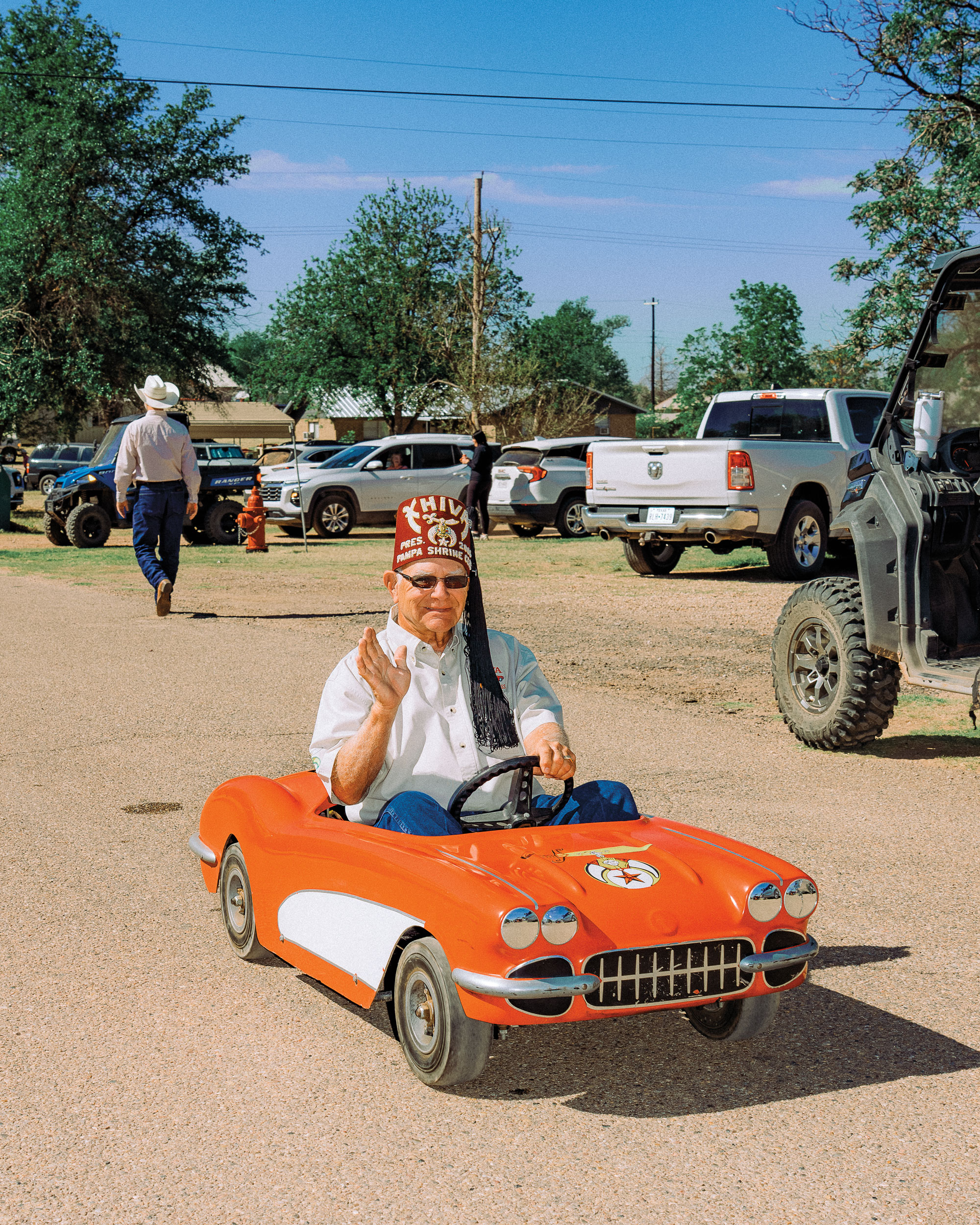
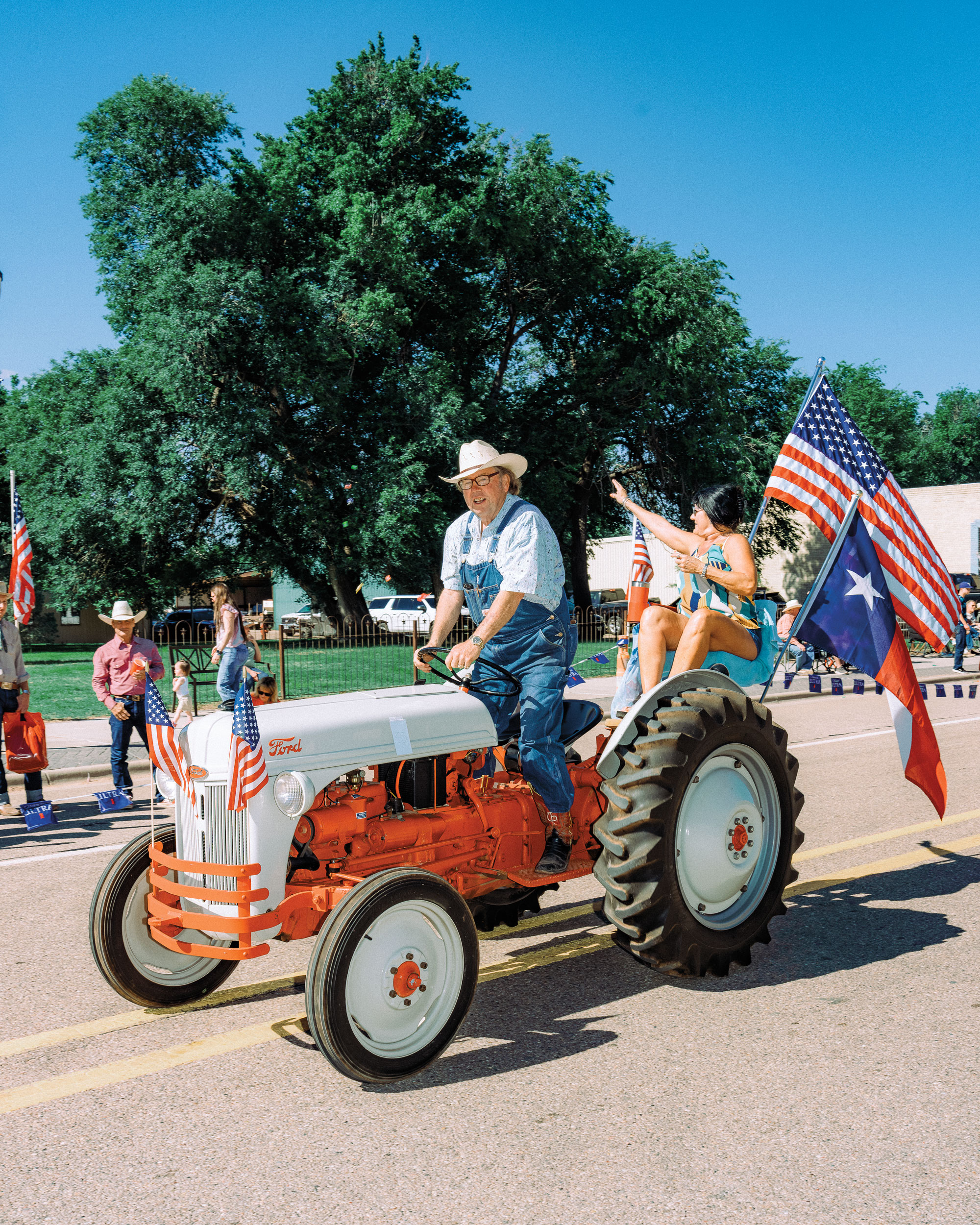
The next morning, on Saturday, Main Street is lined with lawn chairs and groups of friends and family, a bulldog in a sundress, kids in little red wagons, and babies in strollers. The big parade starts with fire engines blaring their sirens. The kids forget their perforated ear drums when the floats follow—trucks bedecked in balloons and hay bales, participants tossing candy and toys. There’s a cheer squad, Shriners in go-carts, classic cars, hot rods, and a Cadillac with longhorns on the hood and an a-ooo-gah horn. The parade lasts a solid hour.
I duck into Lacy Dry Goods after. The store soon fills with shoppers looking for a gift or a souvenir, or who’ve considered their dermatologist might appreciate their buying a hat. A little boy is parked on a bench across from me. “Stay right there,” he warns me. “You might oughta watch out. I have really bad gas.”
I thank him for the warning and venture back outside. Main Street is now full of pedestrians weaving through the hot rods making up the car show. Some are chatting about where to have lunch—many recommend Hotel Turkey, a popular spot for music and entertainment even outside of Bob Wills Day. There are also several food trucks in town serving barbecue, and the cheer squad manning the refreshment stand at the Bob Wills Center is selling Frito pies. I can’t believe how many people are here. According to the organizers, there are roughly 7,000 throughout the entire week. What’s more surprising is how orderly everything appears.
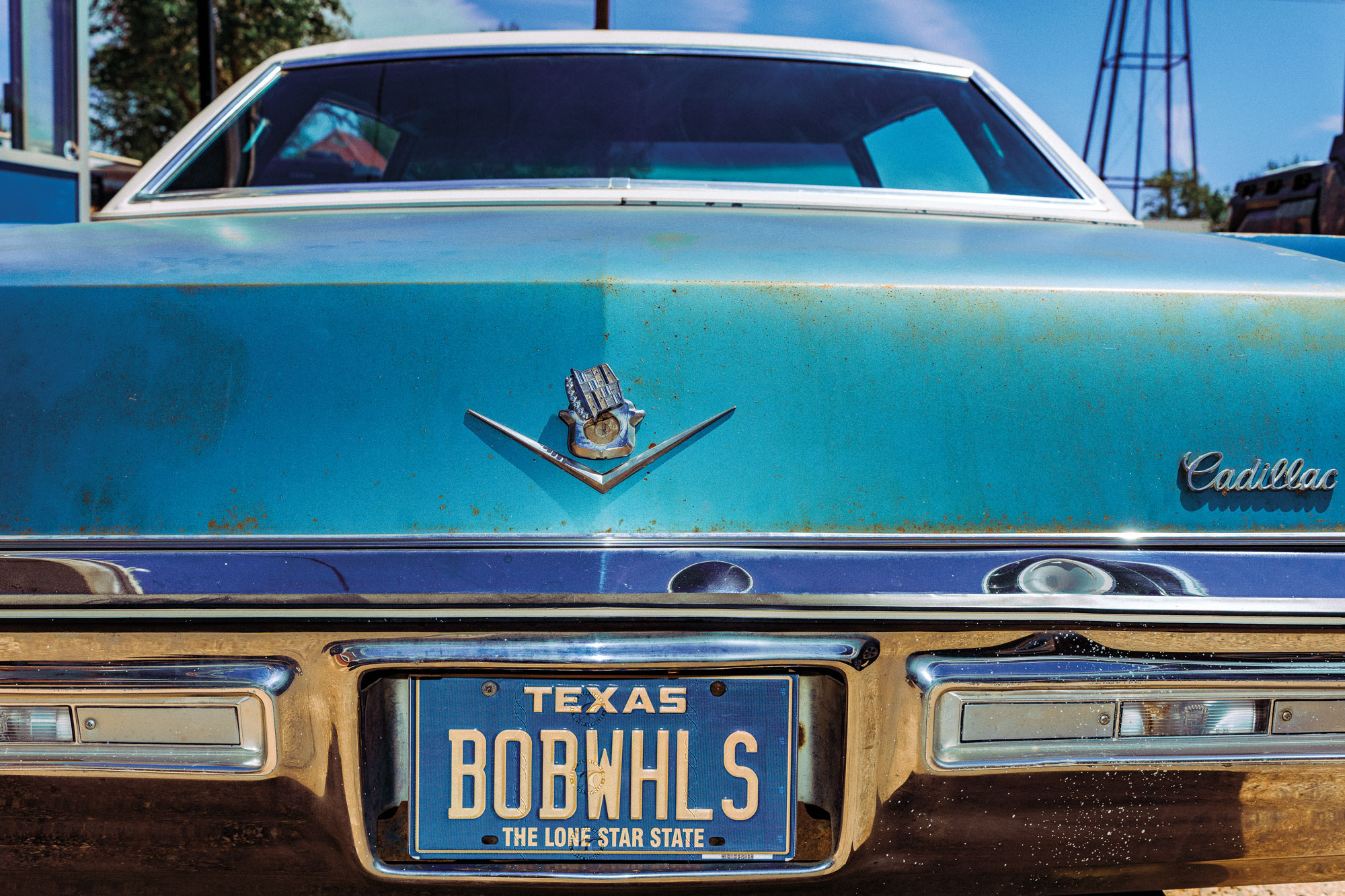
Du Menil tells me they’ve got a small, core group of volunteers. Some have been doing this for decades. “Fifty-four years of doing an event, you find out what people love and what people love to do,” she says. The car show was started by one of the volunteers and has been a hit. Du Menil believes, and I have to agree, that was easily one of the best main street parades in Texas. It might be the only parade with a swing band pulled by a Willys Jeep.
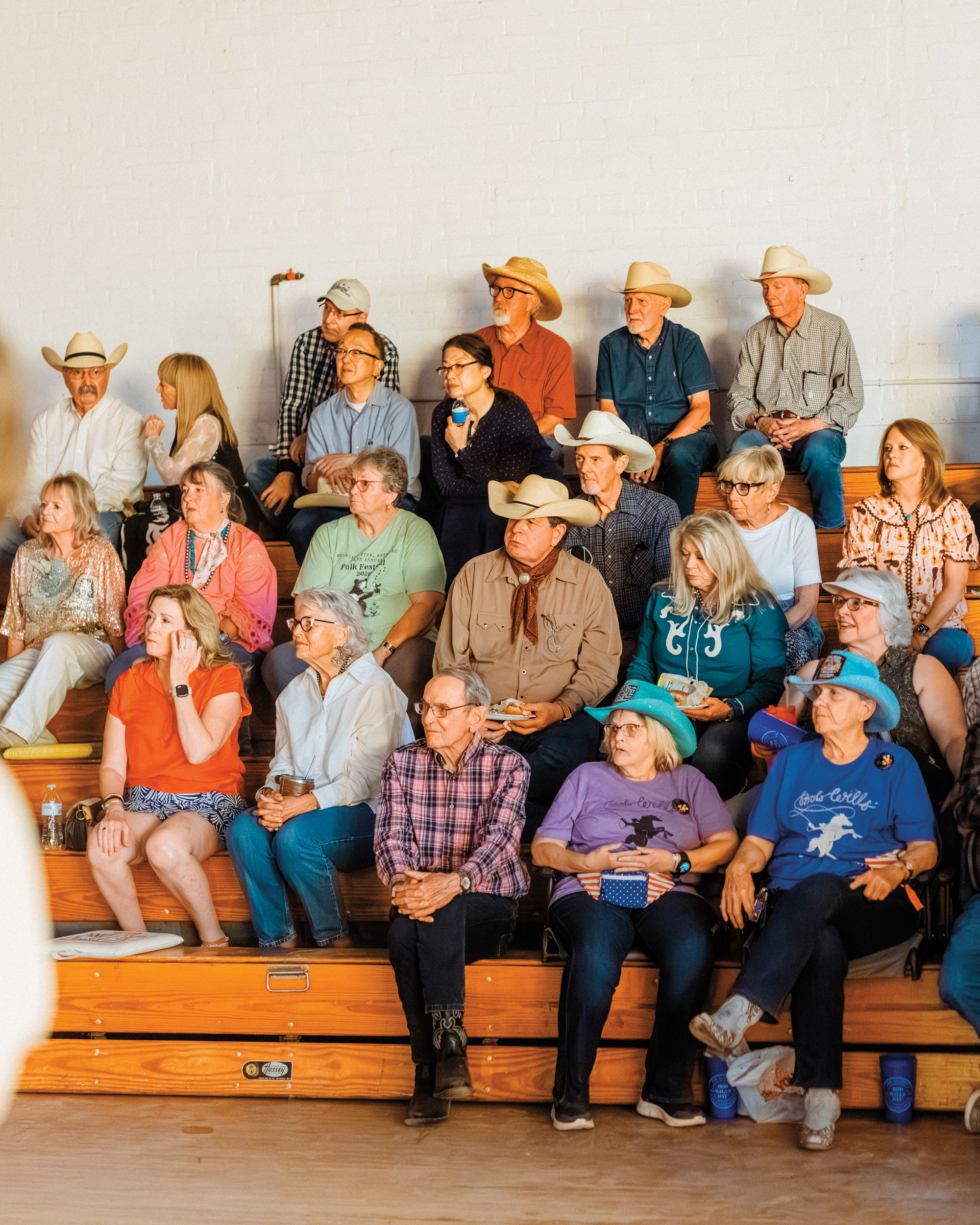
Around 11:30 a.m., I head back to the Bob Wills Center for the fiddle competition in the old auditorium. I stay a while, watching the fiddlers and their accompanying guitar players. The crowd is sleepy after the heat of the parade and car show. But not the fiddlers. They’re full of nerves as they pace, waiting their turn. Then, once at the mic, a deep breath, and with a final stretch of the hand and tweak of the neck, they start to play, some so quick and precise you can’t follow their bow hand.
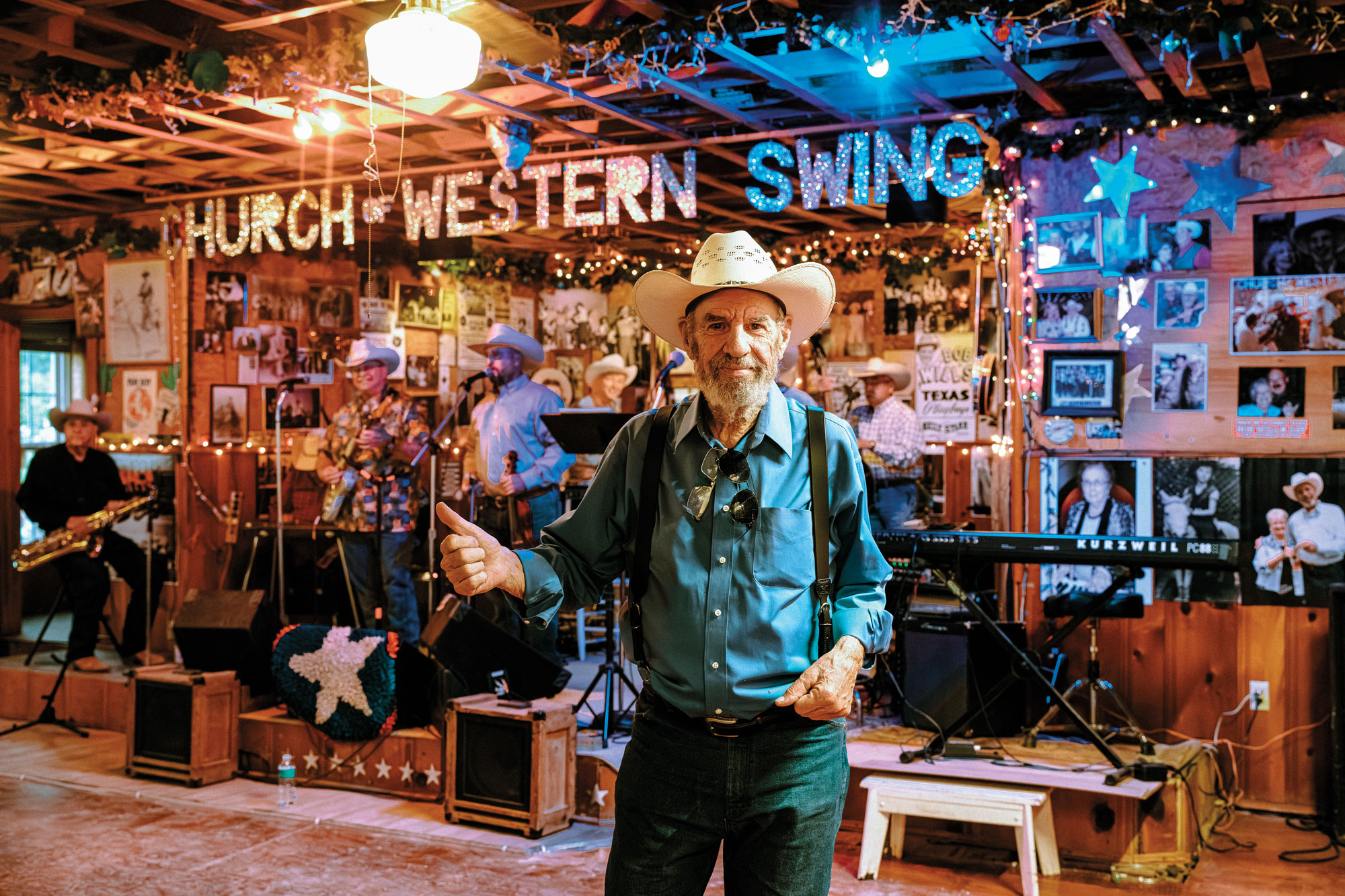
I figure it’s time I go see what all the fuss is about at the Church of Western Swing. It’s across State Highway 70, known as Houston Street. As promised, Baker, who I met on Lyles Street, welcomes me inside. I’m surprised to find this really is a church, pews and all—or was, and is again, in a sense. There’s a band playing on the stage up front, where the pulpit used to be. The walls are adorned with old band posters, memorabilia, and photographs from Wills’ and the Playboys’ heyday, when Western swing was immensely popular. Nowadays, it’s up to these die-hards to help keep it alive.
This is where I meet Thomsen, who breaks down for me the difference between country and Western swing. He’s something of a prophet, or he looks the part: gray beard and intimidating eyebrows, black leather suspenders and a straw hat. But he’s warm and welcoming and eager to talk about Wills and the church, which he bought in 2018 and runs as a nonprofit.
I tell him I’m not too familiar with Wills or his music. I thought I was, until I came here. “See, Bob Wills was raised picking cotton with migrant workers. That’s where he learned the blues. He got a job as a barber for a while, to protect his hands. But he kept those roots,” he says. “Wills used to take the Playboys to jazz clubs and tell them, ‘That’s the sound I want.’”
Thomsen says everyone in Turkey has a connection to the music, and the music is what keeps Turkey alive. They rebuilt this church from the ground up to serve as a meeting place for musicians and fans. “They’ve got the big band over across the road,” Thomsen says. “You can go there and dance and then come over here and meet people. That’s what it’s about. The music and the people who love it.”
I can’t help myself and ask about the contrast between the traditionalists and the progressives. But Thomsen brushes it off. “Well, we’ve all got our own way of keeping Western swing alive,” he says. “That’s all that matters. That this music finds a new generation to love it.”
I could happily listen to his stories all night, about making music, about San Francisco in the ’60s, about how Roberts, the new leader of the Playboys, might as well be Wills reincarnated. “It’s in his blood,” Thomsen says. “He studied all his moves, the way he sounds.” I tell him I saw Roberts play last night, and maybe because I’ve never seen Wills, when anyone mentions the name now, that’s who I’ll picture.
I say goodbye and head back across the highway to a crowded auditorium, where the dance is in full swing with the sounds of Jody Nix and the Texas Cowboys and Jake Hooker and the Outsiders. There’s something magical happening here: the full band onstage, the upright bass and the fiddler. On the old wooden floor, couples young and old two-stepping and moms teaching their little boys the moves. Teenage couples in love. Groups of teens, watching from the crowd. A man beside me in his best boots, tapping his heels to the music, looking like he’s working up the courage to ask someone to dance.
I realize I’m smiling and tapping my boot again. I heard a lot of people talk this weekend about Wills’ legacy, about preserving and celebrating that legacy. But no one could tell me what that legacy was. Maybe it’s one of those things when it’s all around you, you stop seeing it. More than 50 years after his death, maybe his legacy is the music that still inspires his fellow musicians and regular people. It’s music that brings everyone together to, as Wills sang on “Stay a Little Longer,” Dance all night / dance a little longer.