

How To Texas is a recurring column offering step-by-step instructions on how to be Texan. We’ll guide you through the cultural traditions, customs, eccentricities, lifestyles, and activities you’ll find on your travels that make the state uniquely Texan.
CULTURE
How to Pick a Perfect Belt Buckle
Complete your western wear outfit with a shiny, new custom or vintage piece
By Cat Cardenas
Maybe you’ve already picked up your first cowboy hat, bought a few pairs of Wranglers, and even gone two-stepping to break in a nice pair of cowboy boots. But as any Texan worth their salt might tell you, your outfit’s not complete until you’ve topped off your look with one final accessory: a belt buckle.
Despite being born and raised in Texas, I’ll admit I was late to adopt this particular accessory. While my mom ensured I was fitted with a hat and cowboy boots before I attended my first rodeo in elementary school, it wasn’t until college, when I started scouring vintage shops that I thought about adding a buckle to my western-wear arsenal.

In the eyes of master silversmith Clint Orms, every buckle tells a story. Triumphant banners and ornate scrollwork with custom engravings could imply that he’s looking at a rodeo champion. A cattle brand or picturesque scene etched onto the plate might tell him about the wearer’s beloved family ranch. Or, the buckle might just hearken back to the story Orms has been following for most of his life: that of the Texas cowboy.
Orms grew up in Wichita Falls, home to North America’s first ranch rodeo, and started competing in events as a child. By the time he was a teenager, he didn’t just have his heart set on snagging a championship buckle, he wanted to make his own, too. He started making his own leather belts, and upon graduating high school, he apprenticed with silversmiths and began making his first buckles inspired by vintage designs he saw throughout his adolescence.
“I saw how people would wear their grandfather’s trophy buckle, or how proud they would be to wear a buckle that they had won, and that’s what really got me started,” Orms says.
Today, he operates his flagship showroom in Kerrville, and passed down his love of the craft to his son. Over the past few decades, the company has designed buckles for major clients like the Houston Rodeo, Ralph Lauren, and Post Malone.
“It’s been a lifelong goal to do this work,” he says. “It’s important to me that our work is something that can be handed down, and can keep someone’s family story alive for hundreds and hundreds of years. We want to keep the tradition alive, and for me, a really important part of that is celebrating Texas and the American cowboy with the rest of the world.”
For Orms, the classic Western belt buckle is an homage to the Texas cowboy and what they stand for. He says that the Texas cowboy “is a figure that’s known around the world as someone of integrity—a gentleman who knows the value of hard work. I think they reflect certain values, like not being afraid to stand up for people, and doing what’s right.”
If you’re looking to add a buckle to your wardrobe, here’s everything you need to know.
Tip No. 1: Figure Out Your Style
Whether you’re going custom or sorting through secondhand finds, there are a few main options you might encounter.
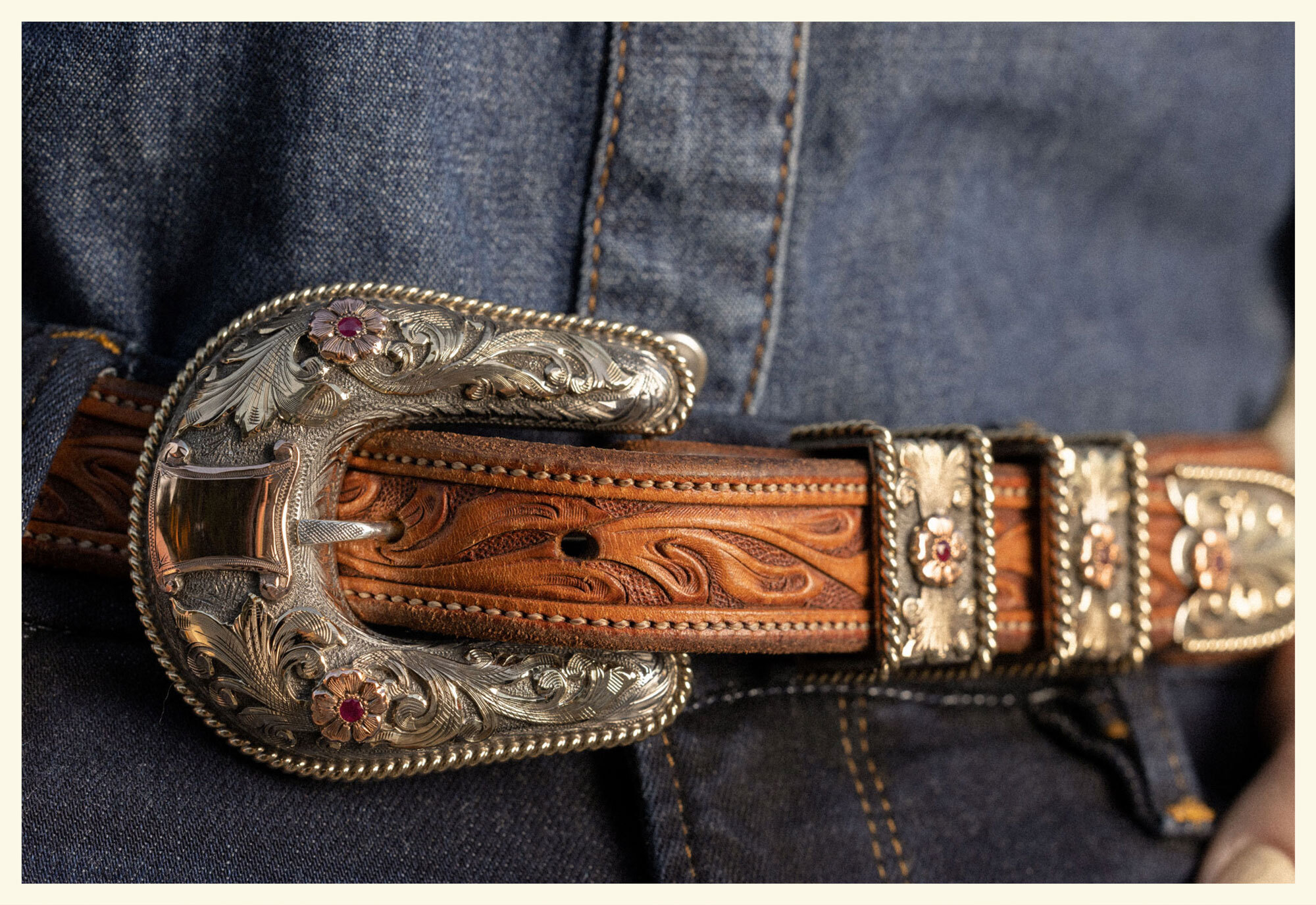
Ranger Sets: Named for the style worn and popularized by the Texas Rangers, this classic set typically comprises three to four metal pieces (the buckle, one to two belt slides, and a matching belt tip).
Trophy Buckles: A literal badge of honor, these plate-style buckles are awarded to the best of the best at rodeo competitions and livestock shows. You’ll often find these secondhand, with many of them featuring the year and location of the event.
Common shapes: Oval is most common, though you’ll also find rectangular, scalloped, starburst, and even novelty Texas-shaped buckles. Some Western belts also incorporate conchos, the shell-inspired design that originated with Southwestern Native American silversmithing.
Tip No. 2: Chose Your Material
Orms says the earliest and most lavish belt buckles were often made from sheets of silver and gold, with designs that also incorporated precious stones like rubies, sapphires, or diamonds. And while sterling silver and 10- to 18-karat gold is still the standard for jewelry-grade buckles, you can also find less expensive options.
Zinc Alloy: A mix of zinc, copper, aluminum, and magnesium that’s popular because it is durable, tarnish-resistant, and affordable.
Pewter: A tarnish-resistant metal that’s less durable than zinc, but well-liked due to its low cost and the patina it develops.
Brass: One of the most popular materials for traditional western buckles, because it’s easy to mold, create intricate designs, and develops a nice patina over time.
Tip No. 3: It’s All in the Details
Customization options are virtually endless, but Orms’ most popular designs often feature rosettes, horseshoes, and western tableaus like grazing buffalos, longhorns, or cowboys atop their horses. Pricier designs might be fully hand-engraved, rather than pressed from a mold, and could include gold or pearl inlays.
Tip No. 4: Shop Vintage
If you’re shopping secondhand for a gold or silver buckle, Orms suggests looking out for the appropriate jewelry stamp to determine the quality of the material (ie: 925 for sterling silver). Keep your eyes peeled for hand-engraved details rather than embossed designs if you want something more unique, and if you’re looking for a buckle to go on a belt you already own, check that your belt allows you to replace the buckle via removable screws or a snap-on system. Condition matters, so make sure to check for any damaged or missing pins that won’t allow you to attach the buckle.
Tip No. 5: Take Care of Your Buckle
With the right care, a belt buckle can be an heirloom that’s passed down for generations. Use a gentle polishing cloth for silver or gold, but mind the details; you won’t want to buff them down. Many people prefer the natural patina brass and copper develop, but if you want to clean up your belt, use a polish specifically made for those materials. Avoid getting any chemicals on precious stones if they’re a part of the design.