

FEATURE
Word Play
Four Texas authors changing the literary landscape at home and beyond
LAWRENCE WRIGHT
The Elder Statesman
When his family moved from Oklahoma to Abilene when he was 10, Lawrence Wright was not happy. “I didn’t want to be a Texan—as if being an Oklahoman was especially worthy,” he says. Little did the future Pulitzer Prize winner know that his new home state would shape him and his work for the rest of his life.
A staff writer for The New Yorker since 1992, Wright has won three National Magazine Awards and written 19 books, including Redemption: Faith, Justice, and Sisterhood on Death Row, which came out last month. His 2006 book The Looming Tower: Al-Qaeda and the Road to 9/11 won him the Pulitzer, and his 2013 book Going Clear: Scientology, Hollywood, and the Prison of Belief became an Emmy-winning HBO documentary. In 2018, his book God Save Texas: A Journey Into the Soul of the Lone Star State helped outsiders understand his adopted home on a deeper level—it was also nominated for a National Book Critics Circle Award. As if that weren’t enough, the Austin-based writer plays the keyboards in a blues band called WhoDo and pens screenplays and plays.
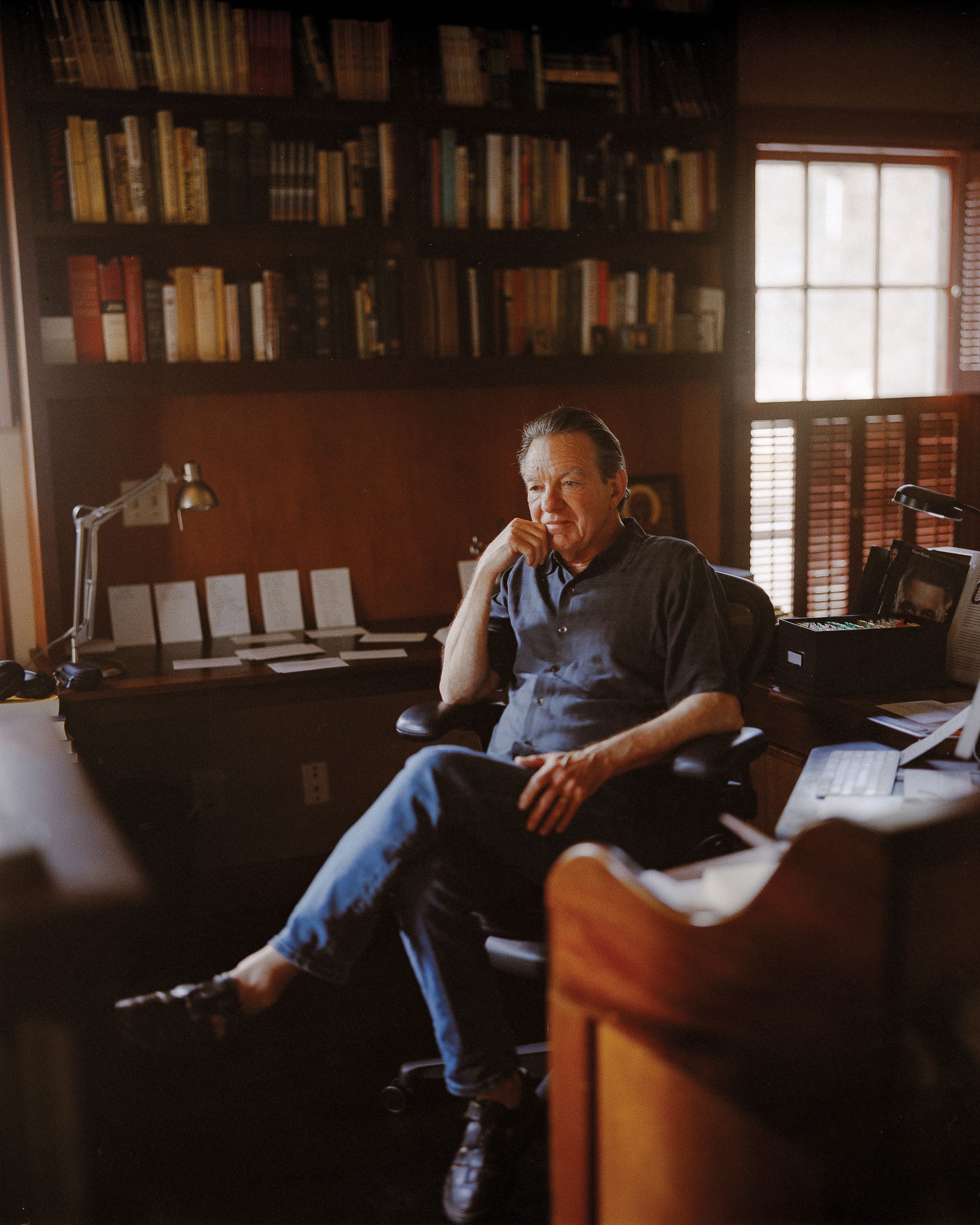
Wright discovered a knack for writing as a senior in high school in Dallas, where his English teacher had her students write a short story every weekend. After high school, he left the state and headed to Tulane University in New Orleans and then became a staff writer for the Race Relations Reporter in Nashville.
After that, Wright spent two years teaching in Cairo. When the locals found out where he was from, they started calling him “Texas.” Like a lot of people who’ve never set foot in the state, they assumed he was a cowboy—so when he and his wife, Roberta, set out to ride horses by the pyramids, two men brought out a rearing stallion for him. “It was terrifying,” Wright says. “I was ‘Texas,’ though, so I had to get on that horse. I was astride the myth.”
It’s that myth that has captivated Wright throughout his career. After Cairo, he and Roberta moved around before settling in Austin. He spent a few lean years freelancing and struggling to support their growing family, to the point that they could barely fill the car with gas. He started writing for Texas Monthly in 1980 and then became a staff writer at The New Yorker 12 years later. Based in Austin, his colleagues in New York find him “exotic.” They can’t understand why he still lives in a state as complicated as Texas. “People hate or love Texas,” he says. “But everyone has an opinion.”
When he left Texas Monthly, Wright vowed that he was never going to write about Texas again because he didn’t want to be a regional writer. But when his editor suggested he write God Save Texas, which started as a magazine article, he thought it might help him grapple with his reluctance to leave the state—and his compulsion to continue telling stories that surround it. “Other existences were offered,” he says, “but by that time, the taproot had gone deep enough into the soil. I didn’t want to be somebody else.”
LATOYA WATKINS
The Storyteller
Texas has appeared in all three of Dallas-based author LaToya Watkins’ books. Her first novel, 2022’s Perish, and her 2023 book of short stories, Holler, Child, are set in West Texas, a region that’s close to Watkins’ heart because she spent her childhood between Dallas and Lubbock.
Watkins says she’s always processed her life through journals, poems, and stories. She wrote her first poem when she was only 7 years old and often snuck off with her mom’s books by Danielle Steel, Jackie Collins, and Stephen King, which were brimming with romance, suspense, and family dysfunction. Her favorite, Pat Conroy’s The Prince of Tides, became a major inspiration for her work. “I had no business reading some of those books when I did,” Watkins says. “But I loved them.”
Although her family always praised her writing, while she was attending the University of Texas at Dallas, a poetry professor took her down a peg. “That professor said I had no business writing anything,” she says.
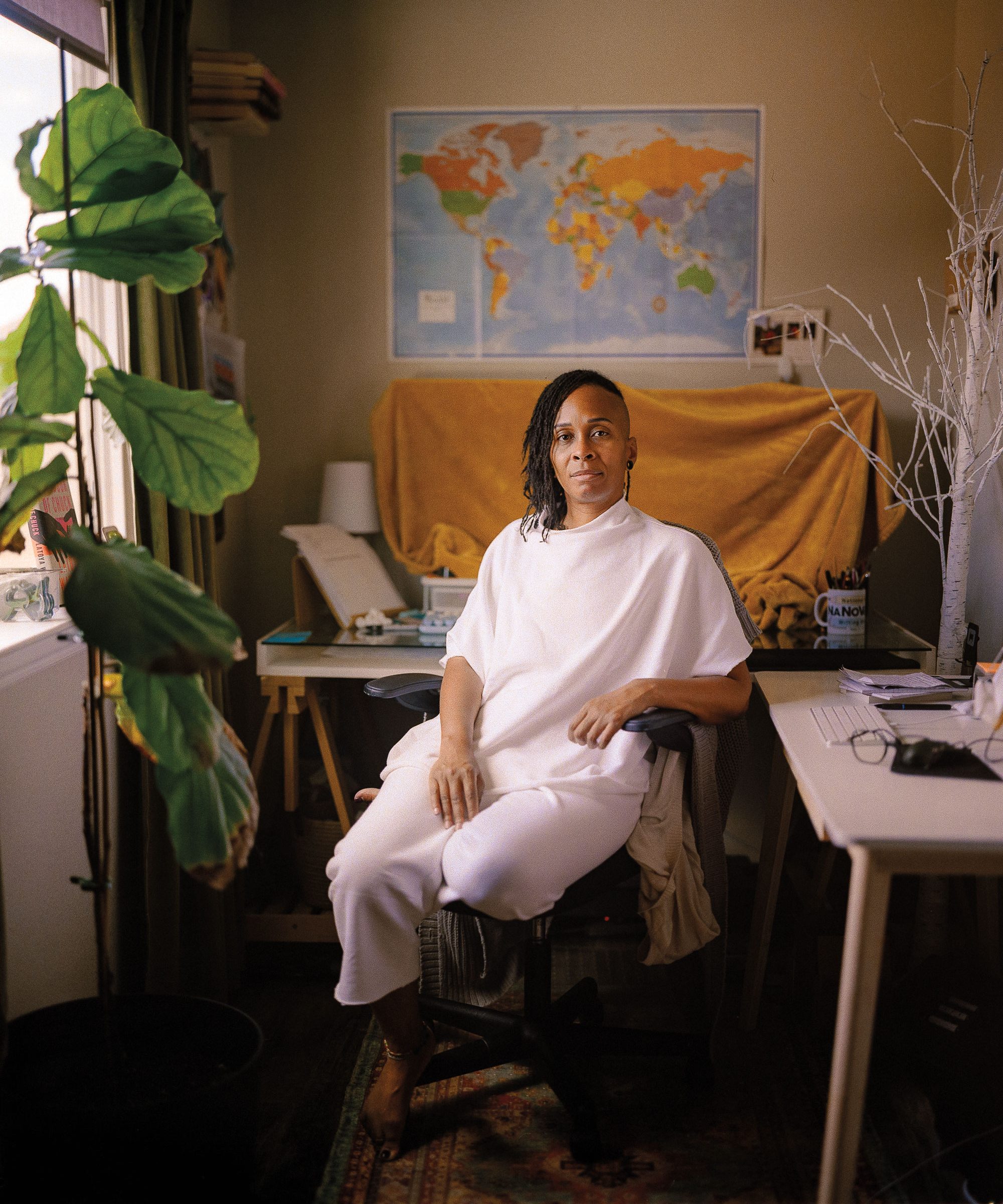
It’s a good thing she didn’t take that to heart because Watkins’ third book, The Book of Chuck, which came out this summer, has been called “a transcendent reading experience” by Kirkus Reviews. The novel is about a family whose members possess the power to predict death and takes place in multiple locations around the state.
After that professor’s discouragement, Watkins found a mentor in Richard “Clay” Reynolds, director of the UT Dallas creative writing program at the time. She figured that if writing didn’t work out, she’d study history, but Reynolds championed her work. On paper, the two seemed like opposites. He was an old-school tough guy who had a reputation for giving feedback so brutal that students would leave his class in tears.
“I thought, this is the guy I want,” Watkins says. She knew she had a lot to learn, and if she was going to give writing a shot, she wanted to be pushed, not coddled. “He didn’t care about my tears, so I didn’t give him very many of them,” she says. Before she finished graduate school, Watkins won the 2014 Pushcart Prize for her short story “The Mother,” about a West Texas woman whose son becomes a religious cult leader.
Even as the Grisham Writer in Residence at the University of Mississippi last year, she maintained her residence in Dallas, choosing to travel to Mississippi once a week. She says writing about Texas has deepened her love for it. “At first, I didn’t want to write Texas. There was a partition between me and it,” she says.
But once she started taking road trips around the state, that all changed. Watkins loves driving east of Dallas because everything is lush and “almost impossibly alive,” while heading west of the city brings an arid landscape and vast openness. “You can drive for a few hours and feel as though you’ve entered an entirely different place,” Watkins says. “I had to take that on to get others to see Texas without the partition. I had to pull it up for myself first.”
LUCAS SCHAEFER
The Breakout
For the past 18 months, Lucas Schaefer has been on a wild ride. His debut novel, The Slip, was published in June 2025, and by October he was standing onstage accepting the coveted Kirkus Prize for Fiction. The book, which took him 12 years to write, received glowing reviews from The New York Times and The Washington Post and was named a National Book Critics Circle Award finalist. “It’s been a whirlwind,” he says. “Every time I think it’s winding down, some new fun thing has sprung up.”
The Slip is an ambitious novel, following multiple characters who are connected by an Austin boxing gym—including a troubled teen, a Haitian immigrant who becomes a mentor of sorts to the teen, and an actual coyote—across different time periods. It mixes mystery and humor and intertwines cultural and political issues with the search for personal identity. “It’s not for everyone,” Schaefer says. “But the people who love it really love it.”
Schaefer grew up in Massachusetts and attended Duke University. After a brief stint in Brooklyn to follow his literary ambitions, he packed up and moved to Austin in 2006.
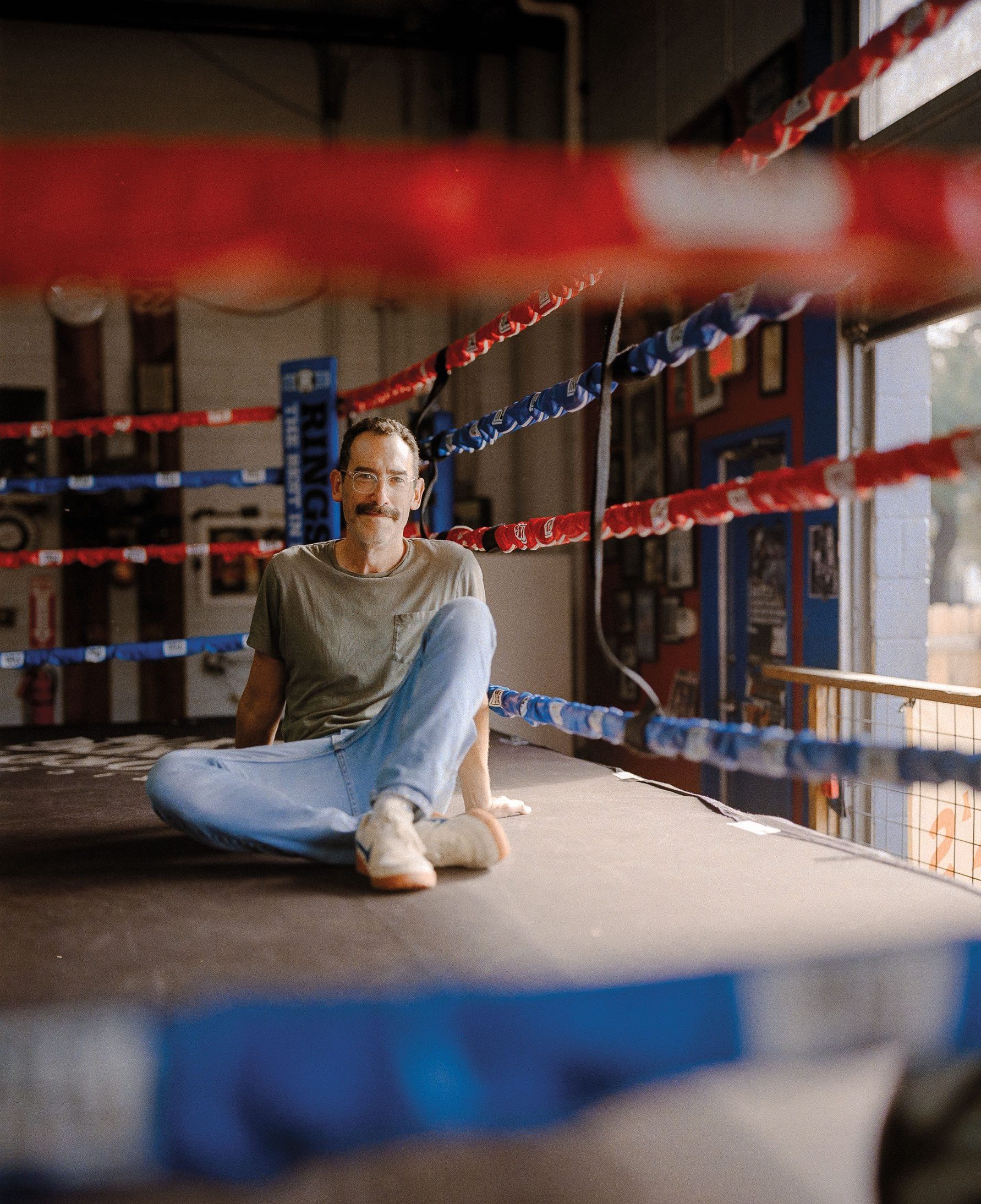
He started writing The Slip as a graduate student at the University of Texas at Austin around the same time he started taking community boxing classes from Richard Lord at his iconic gym on North Lamar Boulevard. Schaefer loved the array of people who worked out there and decided the fictional Terry Tucker’s Boxing Gym was the perfect setting for his tale.
Over the years, Schaefer got feedback from mentors like his thesis advisor, novelist Oscar Cásares, and from his husband, writer Greg Marshall, who penned the 2023 memoir Leg: The Story of a Limb and the Boy Who Grew From It. Schaefer crafted his narrative, patiently allowing the story and characters to find their ways as he earned his living as a teacher and tutor. “I was learning how to write a novel as I was writing a novel,” he says.
Schaefer researched what Austin was like in the 1990s—a predominant time period in the book. He spent hours combing through clippings and books at the Austin History Center, relived a trip he took over 20 years ago to see the Rattlesnake Roundup in Sweetwater, and even enrolled in the Austin Police Department’s Citizen Police Academy and went on two ride-alongs with officers on the overnight shift. He also wrote a big chunk of the novel in Corsicana, at the Corsicana Artist and Writer Residency.
All the work he did while not knowing if the manuscript would ever get published paid off. In 2022, his book sold to Simon & Schuster—though he didn’t expect it would win prestigious prizes and widespread acclaim.
These days, Schaefer is a visiting professor at Southwestern University, and he and Marshall are juggling writing with raising their toddler son. He has an idea for his next novel, which he hopes won’t take him more than a decade to complete. “It’s intimidating,” he says. “It’s back to the blank screen.”
MAY COBB
The Drama Queen
In July 2025, The Hunting Wives took Netflix by storm. The show, about a group of misbehaving Texas women who love guns and margaritas, became a worldwide sensation, racking up more than 20 million views in its first five weeks. But for author May Cobb, who wrote the 2021 book the show was based on, the success was a long time coming.
A native of Longview in East Texas, Cobb attended UT, graduating with a degree in English in 1996, before heading to California to study Victorian literature in graduate school at San Francisco State University. After years of freelancing and odd jobs, her debut novel, Big Woods, was published in 2018 by an indie press. “Sometimes debut authors hit the jackpot with a big book deal and that’s amazing,” Cobb says. “For me, that was not the case. It was an act of faith for a long time.”
She left California because she missed her family and Texas. “This is going to sound unbelievable,” she says, “but I even missed the humidity.” Her family struggled financially for many years while she kept typing away, conjuring up suspenseful, juicy tales.
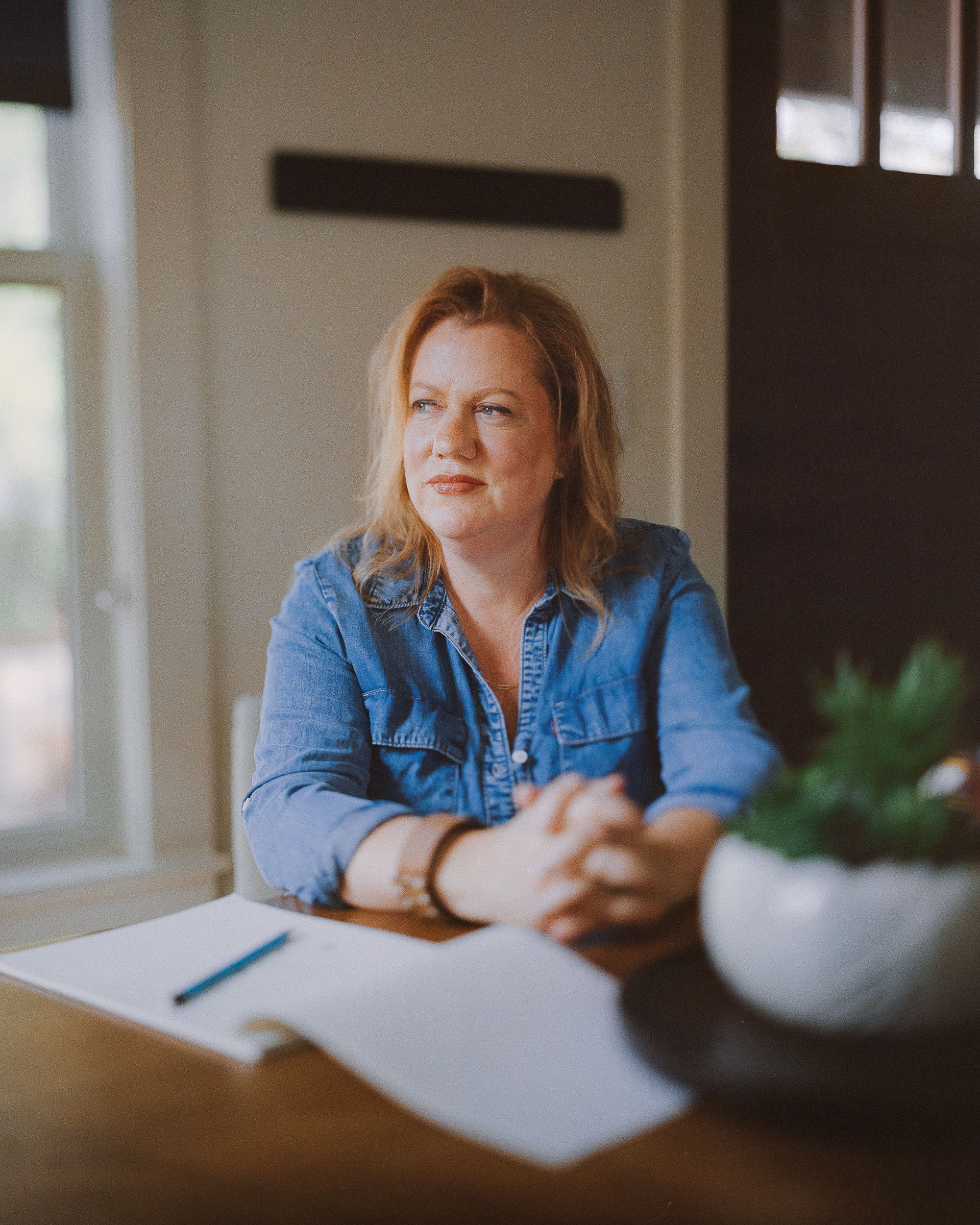
Several of her stories take place in or around Longview, and all of them have firecracker female leads, like Margot Banks in The Hunting Wives. “I love a good alpha female, and Texas is filled with them,” Cobb says.
The initial idea for her second novel came from a conversation Cobb had with her mom when they were driving through the Piney Woods near Caddo Lake. Her mom divulged that in high school in the late 1960s she was part of something called hunting parties. The wealthy guys would invite girls to the woods, and they would sit on the hoods of their trucks and shoot small game.
“I told her that could have all gone so wrong,” Cobb says. “But then I started to think that I wanted to write about this, but not make it take place in the 1960s—and I wanted it to be the women who have the club and get to behave badly.”
Cobb doesn’t write for the TV series, but she did give showrunner Rebecca Cutter, a Massachusetts native, a proper Texas tour. They went to swanky Dallas bars, ate barbecue, went skeet shooting, and stayed in a house on Lake Cherokee in East Texas. The area, which is dotted with both modest fishing cabins and stately mansions, is the place Cobb imagined as she was writing the book. Cutter was able to absorb the flavor and culture of the region in just a few days. “They nailed the Texas of it all,” Cobb says of the Los Angeles-based writers and producers.
Cobb’s latest novel, All the Little Secrets—her seventh—is the Longview-set sequel to All the Little Houses, which came out last January and was a USA Today bestseller. And the second season of The Hunting Wives returns to Netflix on Nov. 26.
With all her success, Cobb is quick to remember the years where she wasn’t sure writing would work out. She knows people have to make a living but hopes aspiring writers won’t give up. “I don’t love the messaging that you shouldn’t chase it, and you should stay practical all the time,” she says. “If it’s the thing burning a hole in your soul, listen to that—even if it feels impossible.”