

The Wind Breathes Heavy
Preserving the historic Smelter Cemetery one broken cross at a time
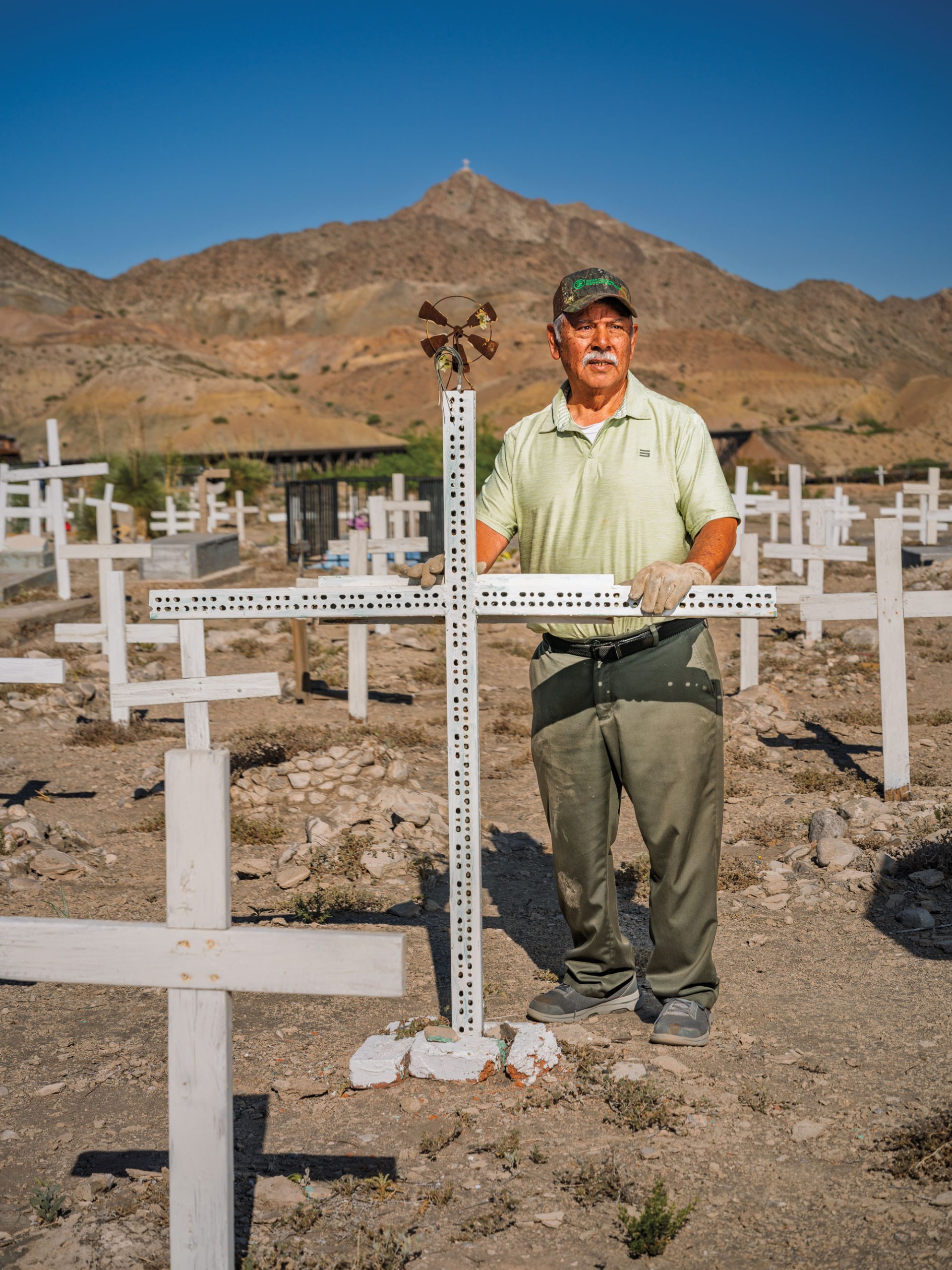
Willie Cordero stands over his own burial plot.
He’s surrounded by what he estimates is a thousand graves. The gated entrance that guards the cemetery includes signage that says it’s been around since 1882, but no one knows for sure how many people have been buried here since then, so it’s just a guess.
It’s almost impossible to tell when graves have disappeared. Some were vandalized and others—nothing more than piles of rocks and handmade wooden crosses—were cleared away. With time, some of those rocks became another indistinguishable part of the desert. After a lifetime of exposure to the heat, sun, occasional cold, rain, and even snow, the crosses eventually broke, their remains scattered around the cemetery by the West Texas wind.
“I wanted to be buried right there,” Cordero says, pointing to a different part of the cemetery that looks similar to where he stands. “But my daughter said, ‘There’s a grave there.’”
“Right there?” I ask, pointing to a place in the dirt about 8 feet away.
“Yes,” Cordero says before turning back to the piece of dirt that’ll one day be his. “I know there’s no grave here.”
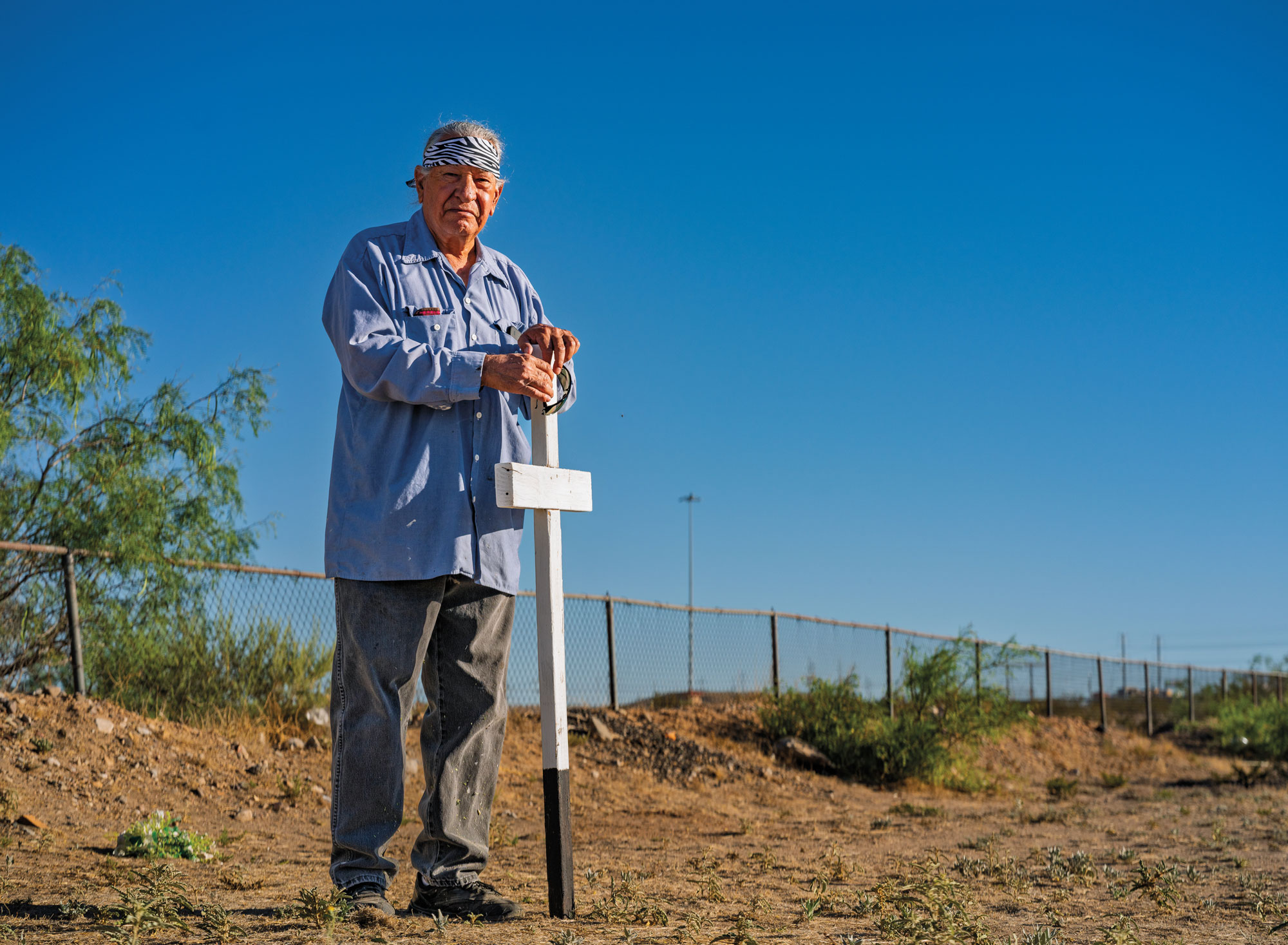
At 79 years old, his family and friends are aware this is where he wants to rest. Even if it’s difficult to drive excavating machines through the winding and unpaved narrow road full of potholes up to the cemetery. Even if that means he or someone else will have to dig his grave by hand.
“I asked the diocese for permission,” Cordero says. “I told them I would be buried here.”
Here is just inside the El Paso part of the border that connects Texas, Mexico, and New Mexico. This is where the community of Smeltertown existed from 1887 to 1973—on the Westside, next to Interstate 10, about 3 miles from downtown. Smeltertown once helped mine and produce the copper essential to the region’s growing economy, giving El Paso its early identity. But now, old photographs, fading memories, and stories told by the last handful of people who once lived here constitute most of what remains of the company town that helped create what El Paso is today—bold, persevering, unified.
At Smelter Cemetery, Cordero and a small group of friends and volunteers have gathered for a couple of hours each Saturday morning since 2019. They clean, fix, and maintain what’s left. All of them, together, try to keep the last of here alive because the houses where they grew up were razed long ago. Gone, along with the schools they attended, the churches where they prayed, the restaurants where they ate, and the playgrounds where they ran.
“You can see how much work we have,” Cordero says as he looks around the cemetery of the community where he grew up. If he could, he’d be here every day to do more of what’s needed, even if alone. But now that he’s older, he worries about falling and no one being around to help.
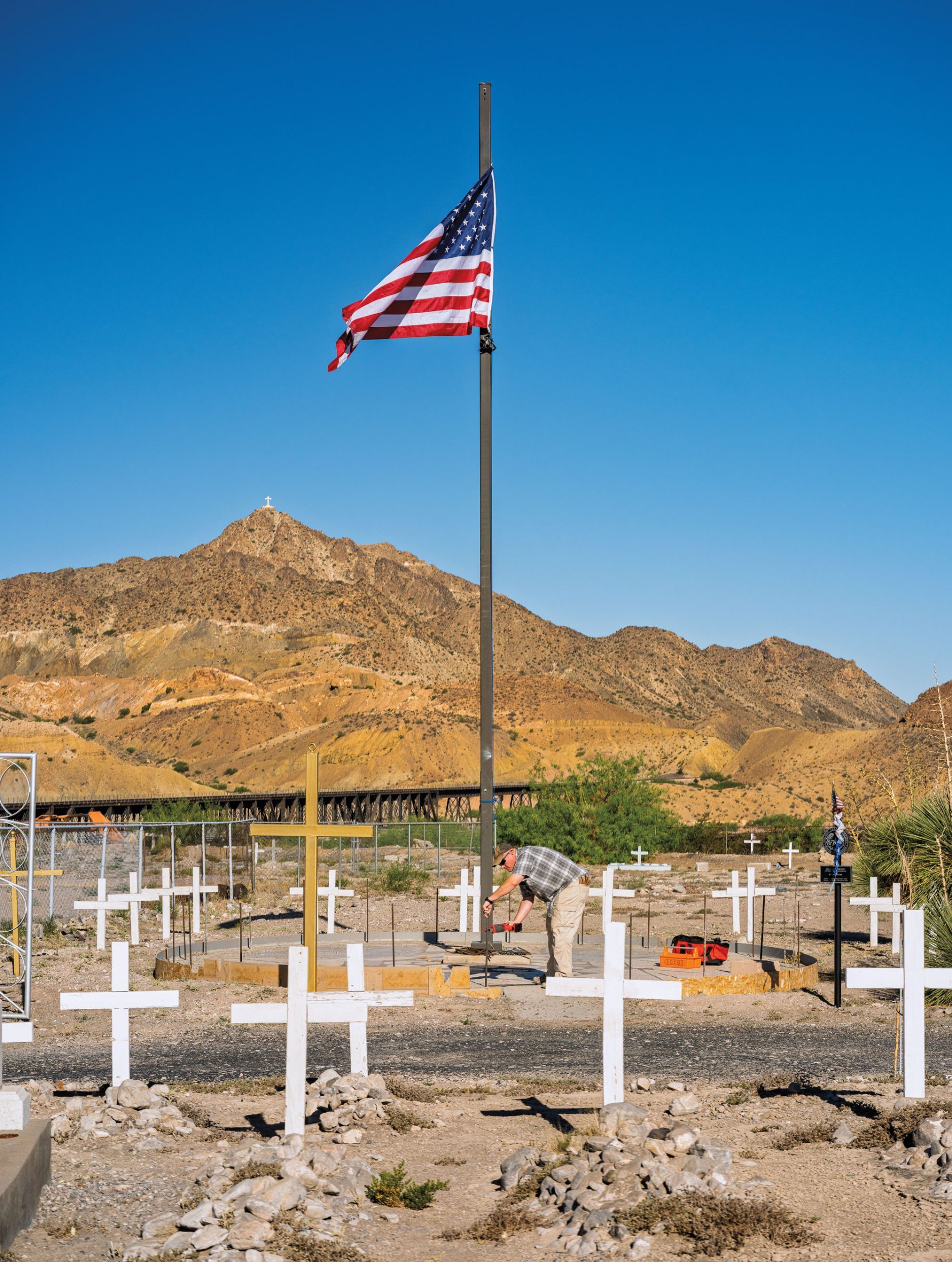
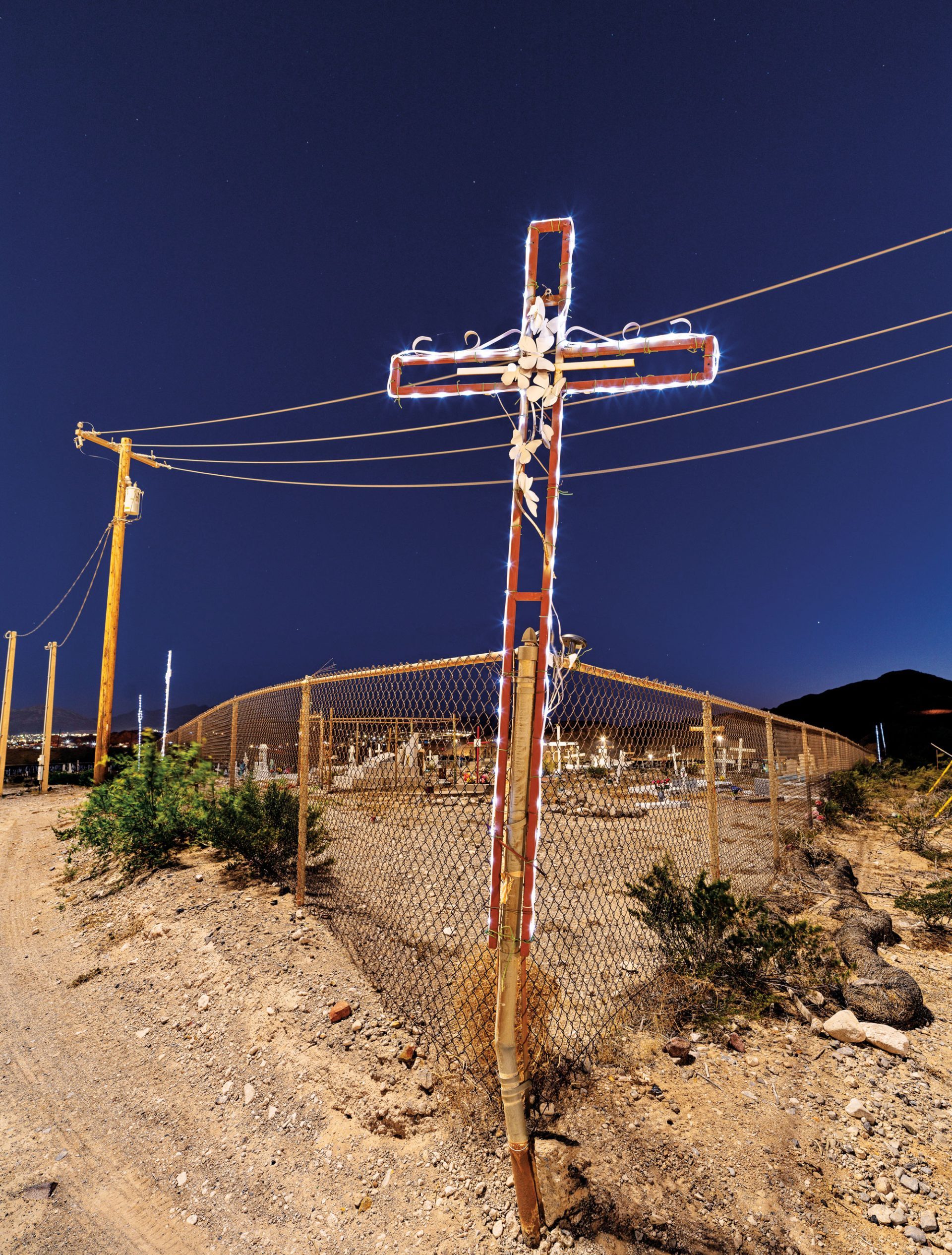
Today is Nov. 1, Día de los Muertos, and there are a few more helpers than usual. But outside of holidays that remind people of loved ones who’ve left, each Saturday morning a core group of about 15 consistently shows up to help with tasks like painting crosses and cleaning headstones. Members of a few rotary clubs come when they can.
Sometimes, the day’s work is done in a couple of hours. Other times, the labor involves a bigger project, like the memorial for the 17 military veterans from Smeltertown who died in service. That takes time and money to complete. The group is short on both—it’s funded mostly through donations—so they’ve been working on the memorial for over a year and a half.
“I saw a picture of my grandmother’s grave that needed painting,” Cordero says, explaining how it all started. Back then, the cemetery looked abandoned. After painting his grandmother’s grave, he did the same for 16 other relatives, including his parents and sister. After that, a few more people came to help Cordero, and they just kept going.
“I ain’t got nothing to give them but a thank you,” Cordero says of his fellow volunteers.
“My whole life I grew up hearing about Smeltertown,” says Monica Perales, associate vice provost of the Institute of Texan Cultures at the University of Texas at San Antonio. Her parents and grandparents were from Smeltertown. They raised her with stories of its tight-knit community, big enough, with a population of around 5,000 at its peak, to have different neighborhoods and subdivisions. The former included El Alto and El Bajo. Mexican workers and their families lived in both, except for the El Alto subdivision of Smelter Terrace. That was where white managers lived with their families. Still, Smeltertown—La Esmelda, as the Mexican residents called it—was small enough that everyone knew each other from school, church, or work.
Like many who lived there, Perales’ grandfather worked at ASARCO: the American Smelting and Refining Company. Through heating, melting, and use of chemicals, the company extracted metals from mined ore. At the El Paso plant, those metals were mostly lead and copper. “There’s a real mixed legacy,” Perales says of ASARCO. “It’s kind of bittersweet.”
Sweet because when the plant opened in the 1880s, it brought jobs to an El Paso-Ciudad Juárez area desperate for work. And it paid relatively well. The mining industry brought railroads and even a college, the State School of Mines and Metallurgy, which opened in 1913. The copper it produced was one of the Big Four Cs—along with climate, cattle, and cotton—El Paso used as a slogan in the 1920s to sell itself to potential investors.
The Guggenheim family, who controlled the country’s largest collection of mines, acquired ASARCO in 1901. During the early 20th century, they were one of the country’s five wealthiest families alongside the Rockefellers, Mellons, Vanderbilts, and Fords. That Guggenheim money remains evident around the world today. But while some places—New York, Venice, Bilbao, and Abu Dhabi—benefited from museums full of priceless fine art, the El Paso-Juárez borderland inherited the dangerous and backbreaking work of ore processing and the hazardous waste it left behind.
“With all the industry, development, and investment came environmental costs,” Perales explains.
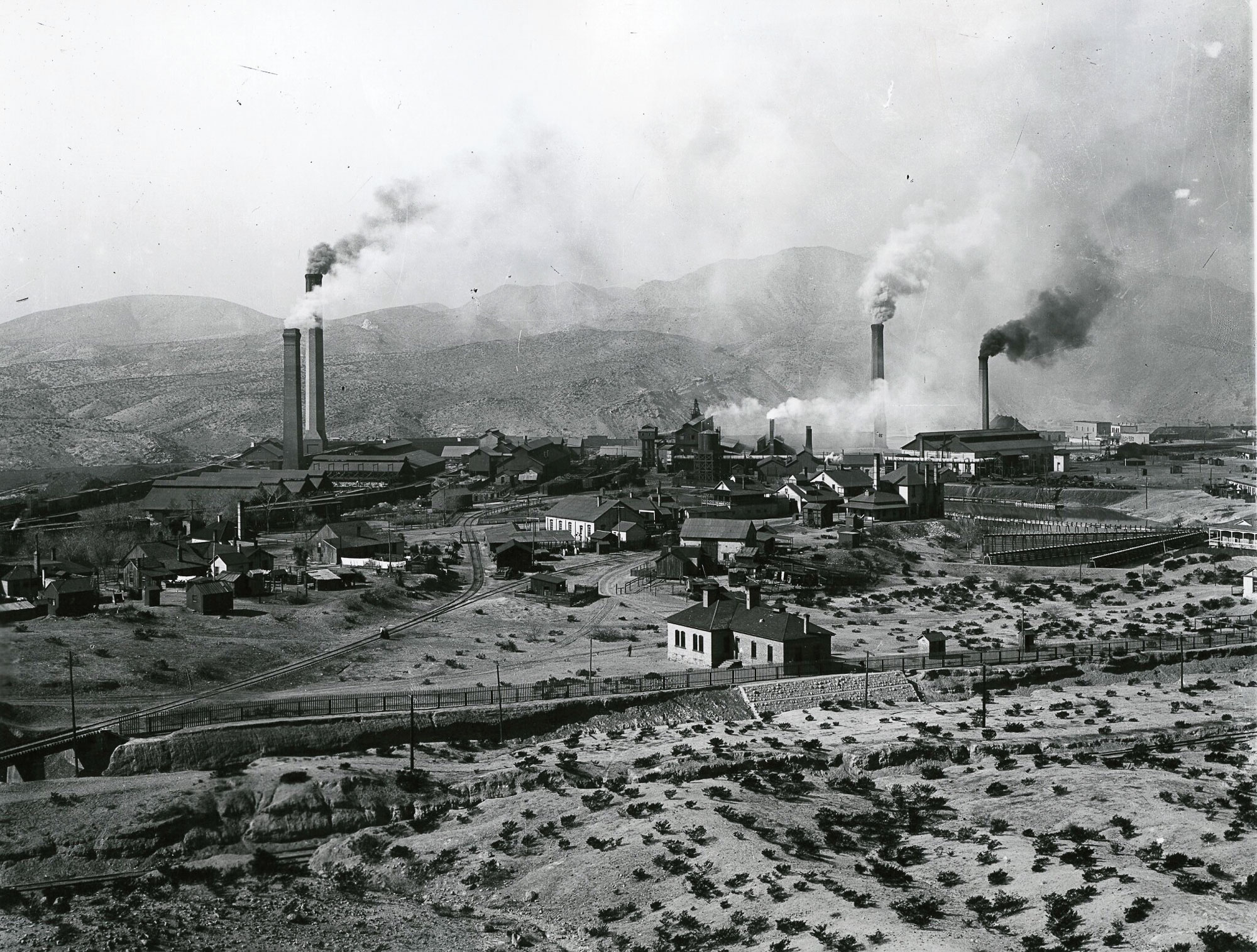
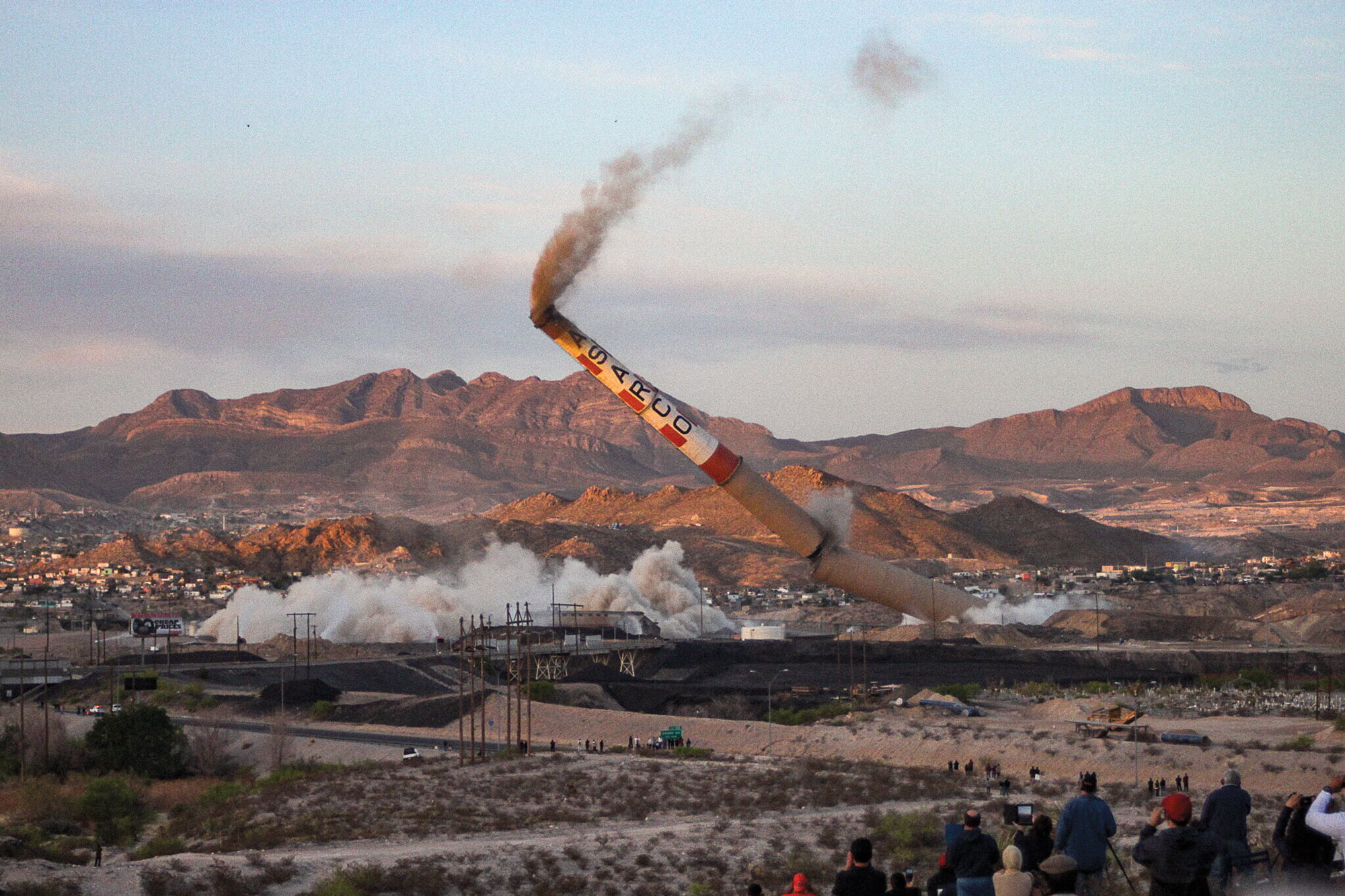
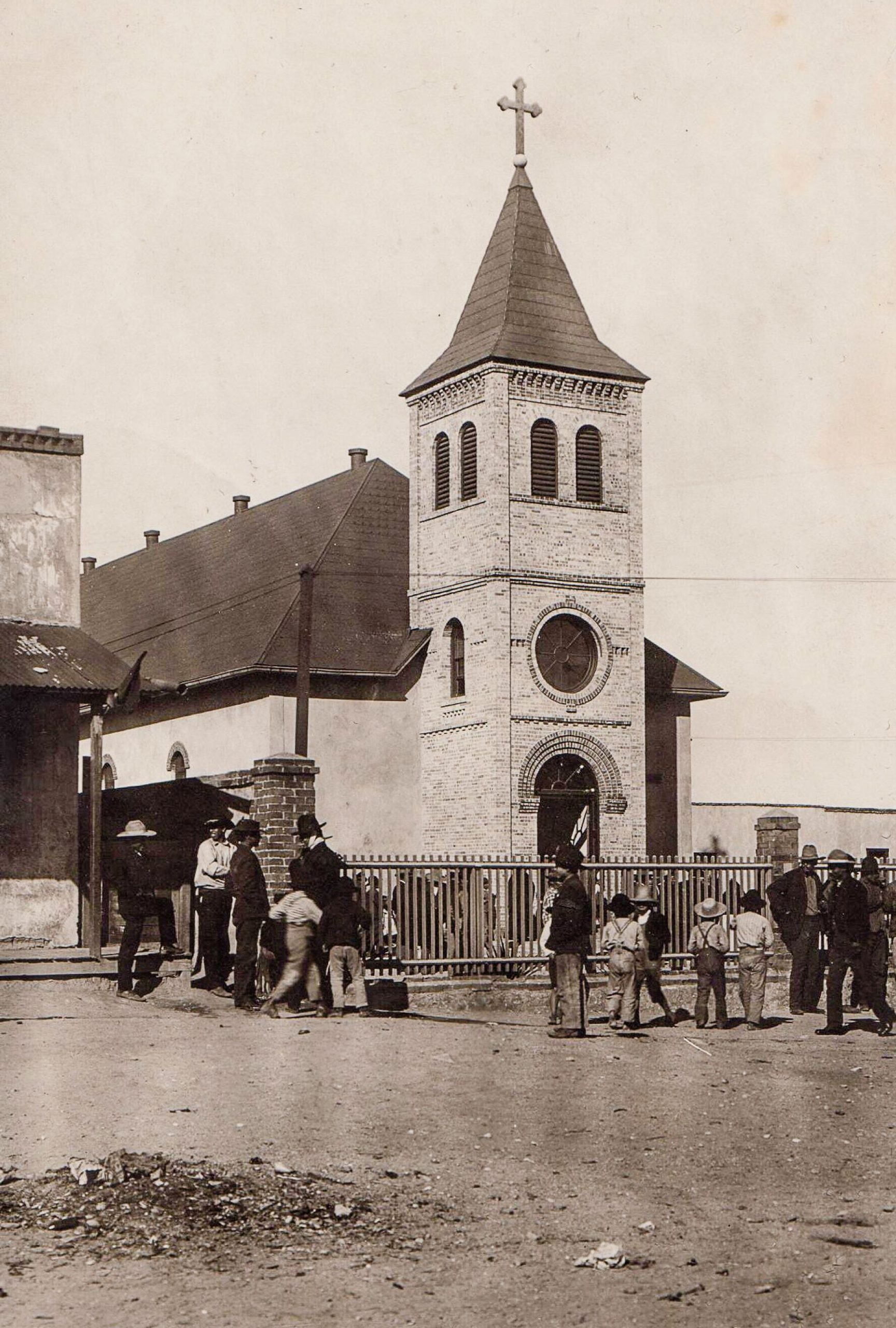
For decades, the smoke from ASARCO’s smelting process emptied into the sky, released through smokestacks that once defined part of El Paso’s nascent skyline. The Center for Disease Control said the town had one of the country’s highest levels of airborne lead during the 1970s. There are no long-term studies to measure those effects, but some Smeltertown residents claimed they could feel it in their bodies and even taste it. Mexican health officials said those who lived near the plant on the other side of the Rio Grande also suffered, according to a New York Times article from 1977.
The city of El Paso sued ASARCO in 1970 for violating the Texas Clean Air Act. The lawsuit was settled two years later, and ASARCO paid $20 million to cover fines, upgrade its smelting and cleaning systems, and pay medical expenses for the treatment of lead contamination. Years later, a study published in the New England Journal of Medicine said 53% of children who lived within a mile of the smelter had elevated levels of lead in their blood.
Since it lived in the shadows of ASARCO’s smokestacks and its toxic clouds, Smeltertown shuttered as part of the settlement. Some families left, while others fought to stay in their community. Among the protesters, some didn’t believe city officials who said their homes were poisoned. They thought it was just an excuse to erase their home. In 1971, the city had already closed their elementary school, the oldest in El Paso, rather than fixing its many problems. But in the end, when Smeltertown’s population dwindled to around 500, the protests didn’t matter. City officials said they had to leave by the first day of 1973.
That’s the bitter part of the legacy. The other side of the story explaining why, despite all the residents’ warm memories of home, a coldness permeated their separation from it and its eventual destruction. “I couldn’t reconcile those things,” Perales says, explaining why, as a student during the 1990s at the University of Texas at El Paso—the former State School of Mines and Metallurgy, incidentally—she studied ASARCO and Smeltertown further.
Perales read what had already been written, which was mostly about those who owned and ran the plant. But there was hardly any mention of the people, like her family, who lived and worked there. She spoke with others who had grown up there and gathered whatever photos of Smeltertown she could.
Years of research led to her 2010 book, Smeltertown: Making and Remembering a Southwest Border Community, and a career in academia. Some of Perales’ interviews and the photos she sourced are kept in UTEP’s Special Collections and Institute of Oral History. The media recounts days when ASARCO was still smelting copper. Back then, there were times when Perales walked to her college classes with what she describes as a copper penny-like taste in the back of her throat.
In those photos, you can see what Smeltertown was. How it was much more than just ASARCO. In those interviews, you can hear the voices of people who’ve passed, speaking of their home.
Manny Flores stands outside the cemetery’s fence, pointing south toward the empty desert that is Smeltertown today. “This used to be my playground,” he says. Since this is where parts of the 1910 Mexican Revolution were fought, he and his friends would find bullet casings scattered all over the landscape. He later worked as a furnace and water equipment operator for ASARCO. For the past four years, he’s volunteered at the cemetery most Saturday mornings.
Today, Flores is replacing the solar lights that outline the crosses dotting the cemetery’s perimeter. They light up when the sun sets. “You can see them from the highway,” he says. At night, the bright crosses look like they’re floating in the middle of the dark desert.
Flores and the other volunteers have strong connections to Smeltertown. Some of the older folks once resided here. They can point to a specific spot in the distance and say, “That’s where we lived,” even though the adobe and stucco houses are no longer there. The younger members descend from long-gone family members who could do the same. They’re the children and grandchildren of people the older folks knew. Almost everyone here can take you to a relative’s grave and tell you how they passed.
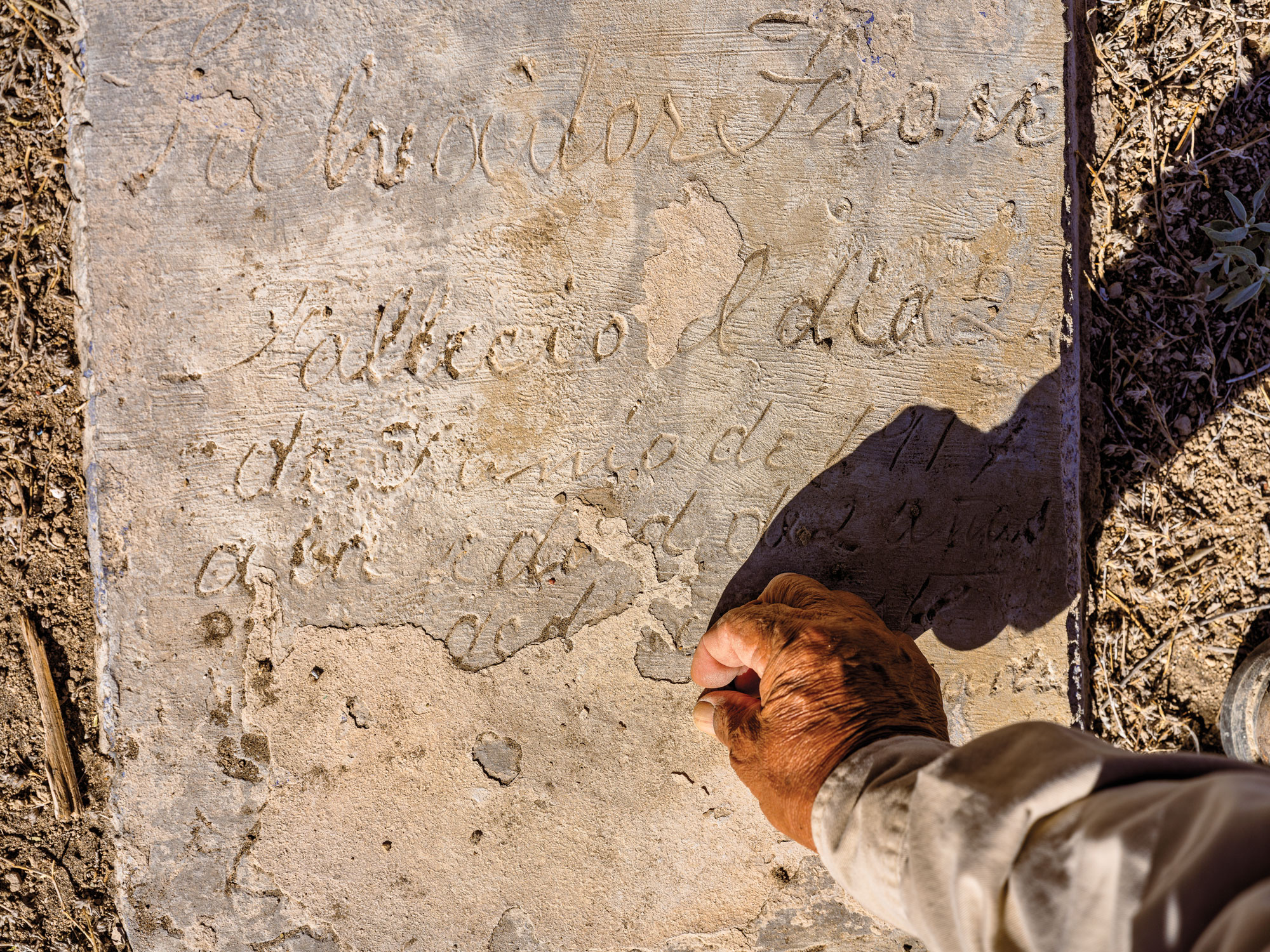
Because life and work in Smeltertown was hard, there are several who died of accidents. Some passed from illness and disease. Others died tragically young, like the 4-year-old boy whose grave is decorated with a red toy truck, its bed filled with rocks to keep the wind from taking it.
Flores admires his finished work on one of the crosses. “Let’s go do the next one,” he says. He moves to another whose solar lights need replacing.
“I’ve been playing golf for 67 years,” Flores tells me. “Ever since I was 10 years old.” It’s one of those conversations that no one knows exactly how they start. The type of small talk that helps pass the time. There to keep you going on those days when the wind breathes heavy into your ear, carrying dirt that makes your eyes red. The sort of mindless conversation that distracts from the realization that no one here is fast enough to keep up with time.
The volunteers start shifts at one end of the cemetery, pulling weeds, picking up small pieces of wood that used to be crosses, and fixing collapsed graves. By the time they reach the other end, it’s time to return to where they started. In the weeks and months it took to work their way across, the weeds have sprouted again. Another cross has broken and needs replacing. Another grave has collapsed into itself.
So much time has passed that the contents of a sealed bottle of liquor left atop a grave are slowly disappearing. No one knows who put it there or when. But its label has faded and the brown liquor has evaporated to white.
“That looks good to me,” Flores says after another cross is done. “Let’s do the next one.”
A couple of hours have passed since everyone first gathered on this Day of the Dead. The shadows cast by the crosses aren’t as long as they once were. The work’s over for today, so the volunteers put their tools—wheelbarrows, paintbrushes, shovels, and rakes—back into the shed next to the portable bathroom. Carlos, Oscar, Yolanda, Federico, and Virginia. Ryan, Rowan, Harvey, Tore, and Rosemary. Robbie, Lalo, Manny, Rene, and Roselinda. Some worked alone and others together. Some helped with tasks that didn’t require much walking, and others did the more strenuous labor.
“They’re all my right hand,” Cordero says. They’re the ones he can only pay with the most heartfelt thanks.
The temperature’s risen in the last couple of hours and along with it the desire for a cold drink. They reach into a cooler and sit on a bench beneath a shade they’ve built from metal posts and framing studs, galvanized steel roof panels, and other donated building materials.
“Pa’ la salud, dinero, y amor,” Cordero toasts. “Pero más bien pa’l dinero porque se puede comprar el amor.” To health, money, and love. But mostly to money because you can always buy love.
Everyone laughs. They sit and rest surrounded by what’s returned to mostly open desert. Even ASARCO is gone from El Paso. They filed for bankruptcy in 2005 and later paid $1.79 billion to clean their hazardous pollution. Not even the smokestacks are here anymore; they crumbled in an April 2013 demolition.
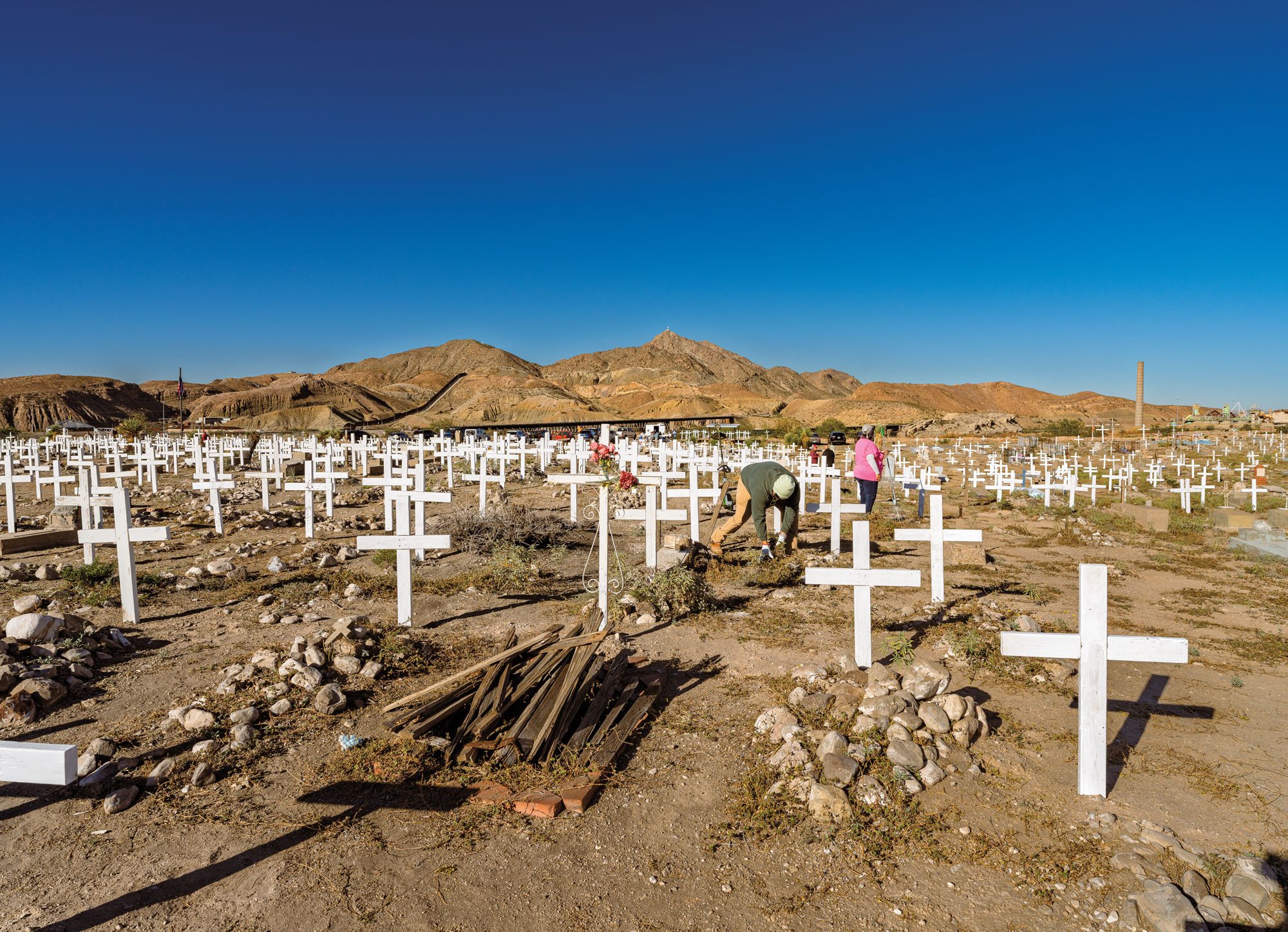
Besides a few inroads, the last of what remains of Smeltertown is this cemetery, where the gathered laugh and talk of yesterday as music plays. In a mix of English and Spanish, they discuss who lived where and when. They tell stories from decades ago about who did what with whom, and sometimes they even know why. They share memories of younger versions of themselves back when this was their home.
“I put my name up there,” Flores says as he points to the bridge connecting two sides of the Rio Grande. “I put it there in 1966.” He recalls how more than half a century ago he jumped in those waters, then climbed the pier of the bridge. “It’s probably still there,” he adds. A voice says he should go up there to check. Everyone laughs. Then they start to plan for next week.
There’s always a weed to pull and a wooden cross to replace. There’s always a crumbling grave that needs a return to life. There’s always someone who needs to bring the cold drinks for the end of another Saturday at Smelter Cemetery. That’s when they’ll gather again beneath the shade to tell stories in the last remnant of a place that doesn’t exist anymore, somewhere between here and there, between Mexico and the mountains of Texas. The present and the past. The rubble of the living and the memories of the dead.
“You can see how much work we have to do,” Cordero tells me again. He removes his sunglasses along with a baseball cap that covers his long braided gray hair. “I hope and pray somebody will continue keeping the cemetery clean after we’re gone.”
Beneath the shade that helps guard from the eternal sun, he’s among friends. Laughing and smiling and remembering, he sits 30 feet away from where he wants to be buried.