

The Fort Worth Light Bulb That Never Goes Out
At 117 years old, a Palace Theater relic is the world’s second-longest burning bulb
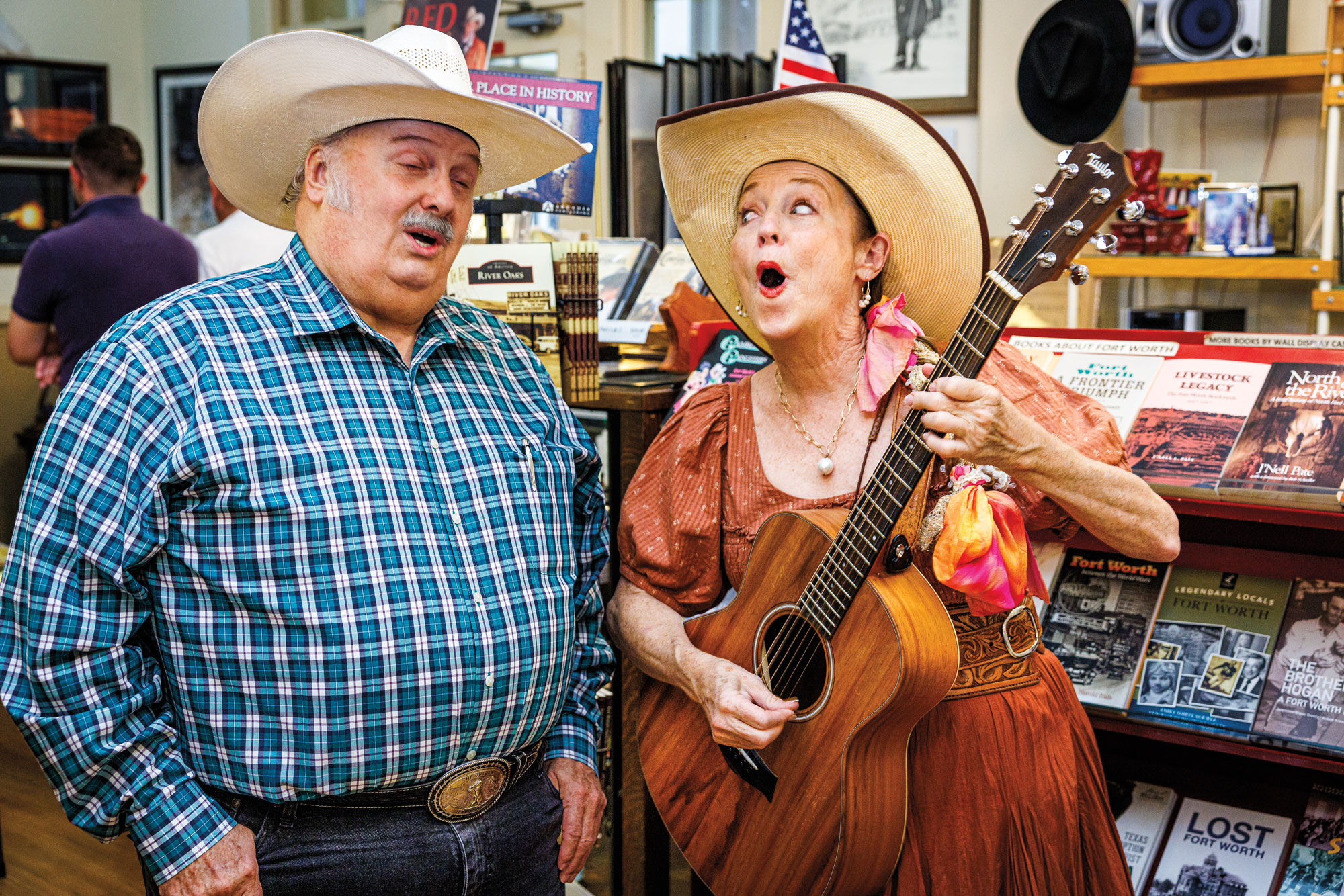
About the time I scamper inside office 113 of the old Livestock Exchange in Fort Worth, Devon Dawson is strummin’ and hymnin’ her parody of Hank Williams’ beloved camp-meeting classic, “I Saw the Light.” From underneath a cowboy hat, her ponytail braided with orange scarfs, the fringe of her petticoat dancing above her toe-tapping boot, she approaches the chorus and shouts “Everybody! Come on, now!” and about a dozen of us sing:
I saw the light, I saw the light
All through the day and all through the night
So happy to see this historic sight
At the Stockyards Museum, I saw the light!
I paid my three dollars, and I saw the light!
When she hits the final chord, everyone’s laughing and clapping, a few people even yippie-ki-yaying. And seeing as I’ve bobbed and weaved my way along the Dallas-Fort Worth corridor under the influence of an entire pot of coffee and a heavy foot, the world, to me, is absolutely humming.
Within the former financial stronghold for the “Wall Street of the West” turned roadside museum, we are all relishing this little jubilee. The front door is brass-knobbed with gold stencil flourishes across its windowpane, and every time it opens, people from as far away as England, France, and Australia filter in. Since 1989, the North Fort Worth Historical Society has run this museum in an effort to “preserve the historic sights and sounds of the area,” as director Teresa Burleson puts it. Seeing as the Stockyards has undergone a dramatic facelift over the past six years—going from a somewhat dilapidated labyrinth of corrals, cattle chutes, and old businesses to a newfangled drag of trendy shops and restaurants—their mission statement might be as relevant as ever. If that’s not enough of a reason to pop your head in, the museum’s treasurer, Skip Humphrey, has another: “We’re the cheapest thing down here.”
No matter which way you slice it, the Stockyards Museum is certainly a bargain, as it ensconces you in Fort Worth’s roughcast beginnings. The walls and display cases are absolutely crawling with Cowtown artifacts: leather saddles and a rolltop desk, collections of arrowheads and a giant windmill tail fin. On one of the glass cases rests an antique cattle prod, and if it weren’t for the toe-tag-like label, it could easily be mistaken for some barbaric device circa the Spanish Inquisition. And we haven’t even gotten to all the paper goods—there are enough photographs, maps, programs, documents, and illustrations in this place to make even the most ardent ephemerist swoon.
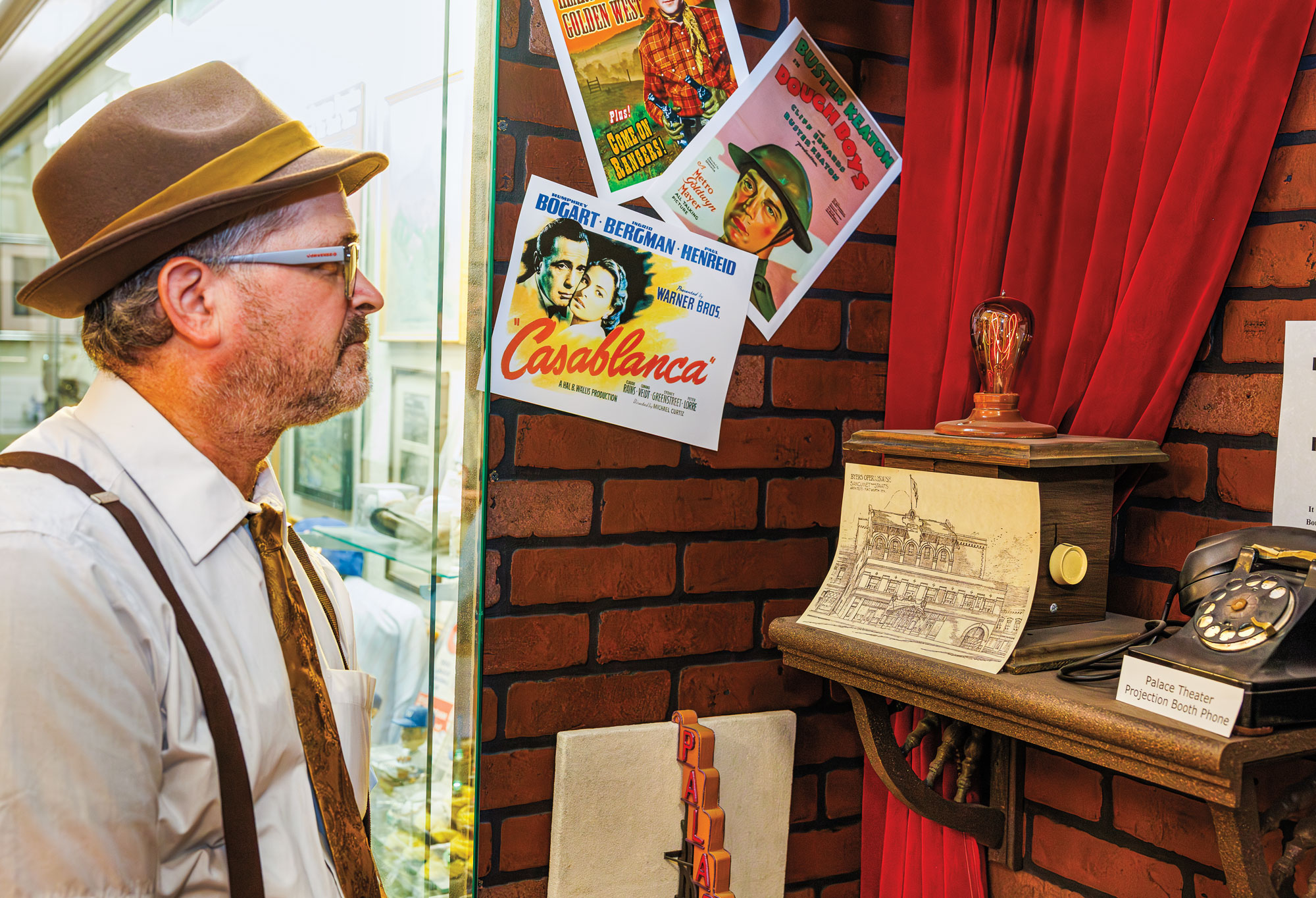
Today the limelight is on one of the museum’s more unique pieces: a light bulb that’s been burning for 117 years, the world’s second longest. Known as the “Palace Theater Light” (or the “Eternal Light”), the object is an anomaly of consumer culture writ large, an incandescent light bulb that electrician Barry Burke screwed into the backstage ceiling of Fort Worth’s Byers Opera House in 1908. It has lit the path for Lillian Russell and the cast of Owen Wister’s The Virginian; for Richards and Pringle’s Georgia Minstrels and the bushwacking outlaw Cole Younger; for various singers, thespians, dancers, comedians, and catch-as-catch-can wrestlers.
But I’m less interested in the theatrics that passed beneath it than I am in our relationship to it. Like one of the last surviving soldiers of some nearly forgotten war, this bulb attracts attention not just for its age, but also for being a backward-looking seer into history’s great electrical divide. Somewhere deep down inside of us, I think there’s a recognition that this bulb—along with all the electric lights, from the arcs to the incandescents to the fluorescents and beyond—helped transform the Texas landscape.
As people grab chocolate cupcakes with light bulb frosting, I walk up to this handblown bulb and lean almost nose-to-nose with its soot-caked face, its looping carbon filament glowing meekly back at me. In my one moment of private communion, I realize I’ve never looked at a light bulb from this angle. I’ve never tried to view one through the prism of awe.
After a brief conversation with two attendees who are dressed up as Bonnie and Clyde—a duo who hid out in Cowtown during the 1930s—I wander into a conversation circle where someone’s recounting yet another piece of Fort Worth history. But my eyes keep drifting back to the bulb’s display case. Earlier, I had spied a hefty manuscript sitting next to the Stockyards novelty baseball cap worn by Steve Zahn in the movie Sahara, and now, during a lull in conversation, I find myself pointing at it, casually asking if I can peruse its contents. After a brief deliberation, the staff agrees.
Filled with switchback cursive and big blocks of red-letter days, the journal dates from 1919 to the mid-1930s, a period after which the Byers had been remodeled and rebranded as the Palace Theater. By then, Barry Burke had departed for greener pastures and Harry Gould—whose daily ledger rests before me—had been installed as manager. As I flip through its delicate pages, my finger scanning over smeared entries, I’m looking for firsthand accounts or insights vis-à-vis the bulb’s growing stature. Essentially, I’m looking for personal reflections that will help me understand how we started thinking differently about this thing, what an academic might call “the psychology of the endless incandescent.”
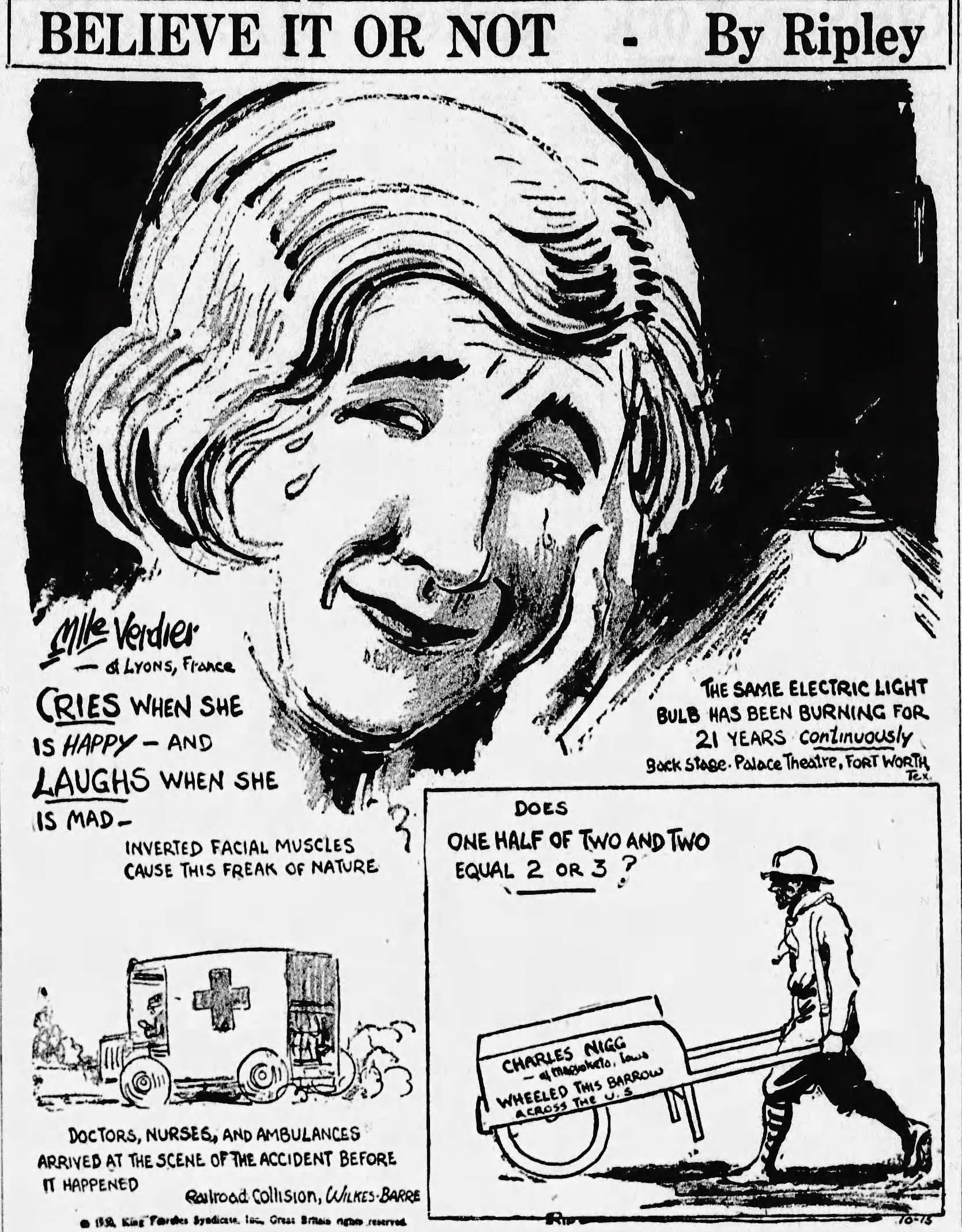
As far back as 1930, people started recognizing the bulb’s Methuselah-like stature, and when it turned freakishly old at the age of 21, Ripley’s Believe It or Not! began to show interest. Newspapers ran with the story, and by 1936, Burke was regularly writing Gould letters inquiring into the light bulb’s status. This might sound preposterous to most when you consider how seldom we think about the nature and intricacies of lighting, but at the time, among “theatrical men,” lighting was all the rage. The ability to control the color, projection, and intensity of light was fundamental to a show’s atmosphere and paramount under one very basic premise: It’s bad business to distract or possibly blind your audience. Hence, the advent of indirect illumination. In fact, lighting was such a sticking point industrywide that the Byers dedicated an entire page to a picture of its new switchboard in 1911’s opening night playbill. It touted “93 switches and 27 bank dimmers, largest this side of Chicago.”
Some might say our little light bulb was merely guarding the backstage hallway, a far cry from the orchestra of lights that vigilant owners obsessed over and theatergoers wanted to dreamily fall into. But at some point, Burke started to think about his ancient bulb in a cosmic sense, in a John-Adams-and-Thomas-Jefferson-die-on-the-same-Fourth-of-July sort of way. According to Elston Brooks in the Fort Worth Star-Telegram, Burke started to believe the length of his lifespan had become irrevocably intertwined with that of the bulb’s. At what point he conjured such a notion is unclear, but one might suspect it developed in 1925, when he was kidnapped while walking home one evening. Held at gunpoint and driven back to the theater, Burke was forced to open the safe, after which the bandits bound him to an auditorium chair and left him overnight. As Burke spent the next six hours confined in the darkened theater, his bulb glowing in its isolated hallway just beyond the stage, it’s safe to say he had plenty of time to contemplate both his life and that of his plucky little bulb.
But part of Burke’s perceived bond may have been a matter of historical perception as well. As much as anyone else in this museum can appreciate having an affinity toward worldly objects, we may never be able to understand the reverence people once had for lights because of the simple fact that we didn’t live during the electric light revolution of the late 19th century. Before that, an entire generation was reliant upon fires, lamps, and gas fixtures, their inconveniences ranging from sootiness and noxious smells to flaming mortal danger; a time when doctors’ buggies clattered over the landscape and people slathered themselves with kerosene just to keep the mosquitos at bay. But in the snap of a finger, as if millions of years of groping in the dark had been nothing more than a bad dream, people walked out of their doors and onto avenues ablaze with electric light.
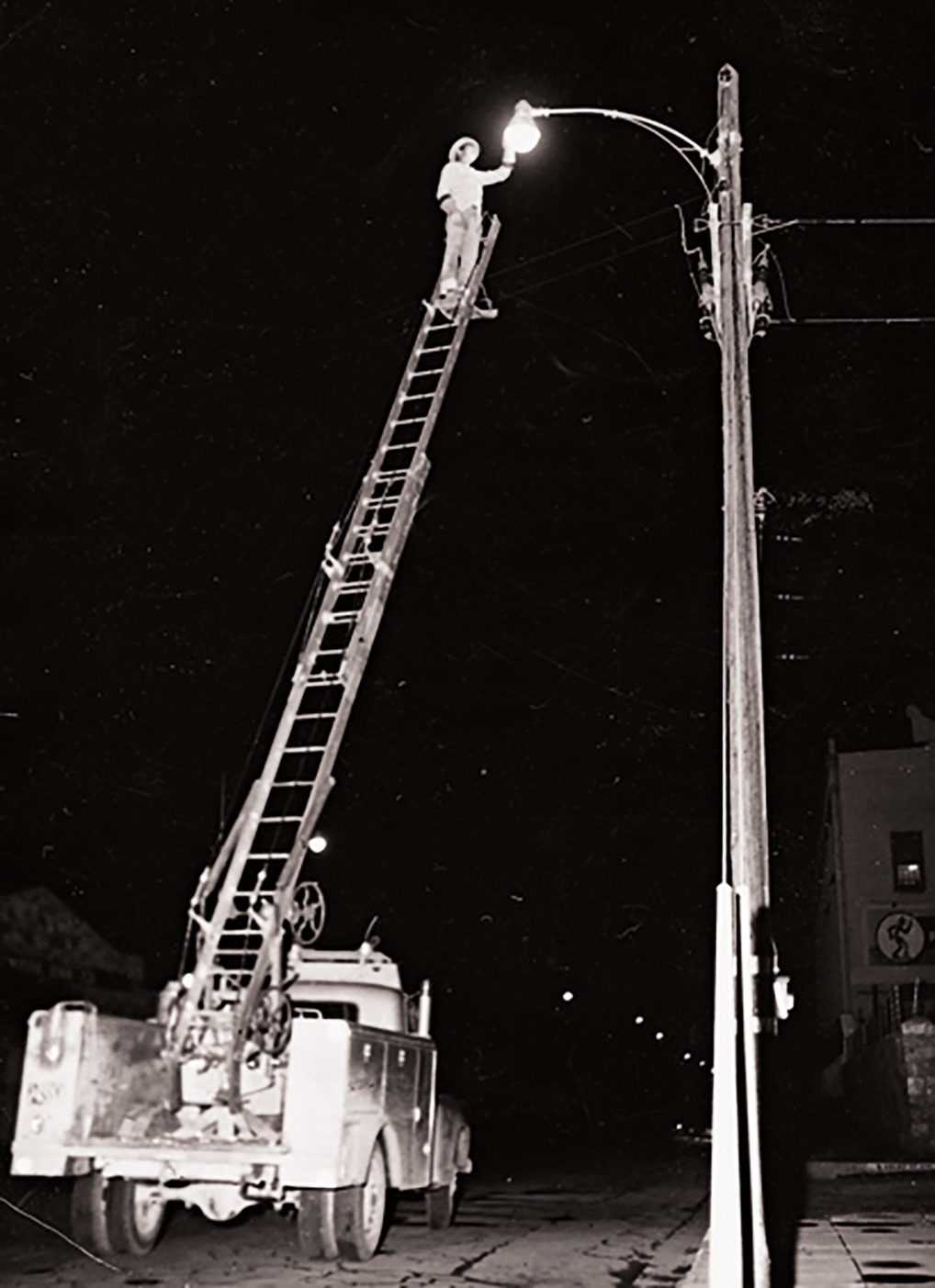
The first great surge occurred between the early 1880s and the early 1900s, and with it, an immediate reflection of people’s priorities. At around 50 lights for $1,000 a year, business leaders and city officials across Texas started placing lights atop government buildings and town squares, inside saloons and hotels, and within many of their own homes. Employing just one bulb or two, merchants could extend their hours, offering the novelty of nighttime shopping and respites from the midday heat. In places like Beaumont and Orange, lights flooded the floors of the sawmills, enabling the pine barons to cleave away great hunks of the Big Thicket overnight. Out west, lights illuminated the remote mining tramway that spanned the Rio Grande at Boquillas.
Like an Ashcan fever dream come to life, clusters of men boxed and gambled under streetlights; beachgoers frolicked in Galveston’s tide as the bright arms of an aerial swing twirled behind them; and endless lines of people strolled the electrified halls of the State Fair, Spring Palace, and Electric Parks. Towns began lashing themselves together with power lines, and according to historian Julie Cohn, “system operators called each other to say, ‘I need you to speed up the generators. I’m losing power over here.’”
The introduction of lights drove people to work and play in ways they hadn’t experienced before, but for those on the farms and outskirts of towns, they were left looking in. In 1897, one young woman living in Rhome wrote into the Dallas Morning News and said on clear nights, when she looked south over the prairie and clouds were rolling in, it all appeared on the horizon “like the flames of a far-off fire.”
But perhaps the clearest sign that this illuminative boom was rewiring people’s brains came in what they thought they saw. As the 19th century drew to a close, the fog of technological bewilderment and a nationwide discussion over the imminent specter of air travel caused some North Texans to look into the night sky and claim they were collectively seeing the future. In 1897, the Dallas Morning News reported that people had witnessed lighted airships adrift in the night—airships that simply were not there.
The Path to Enlightenment
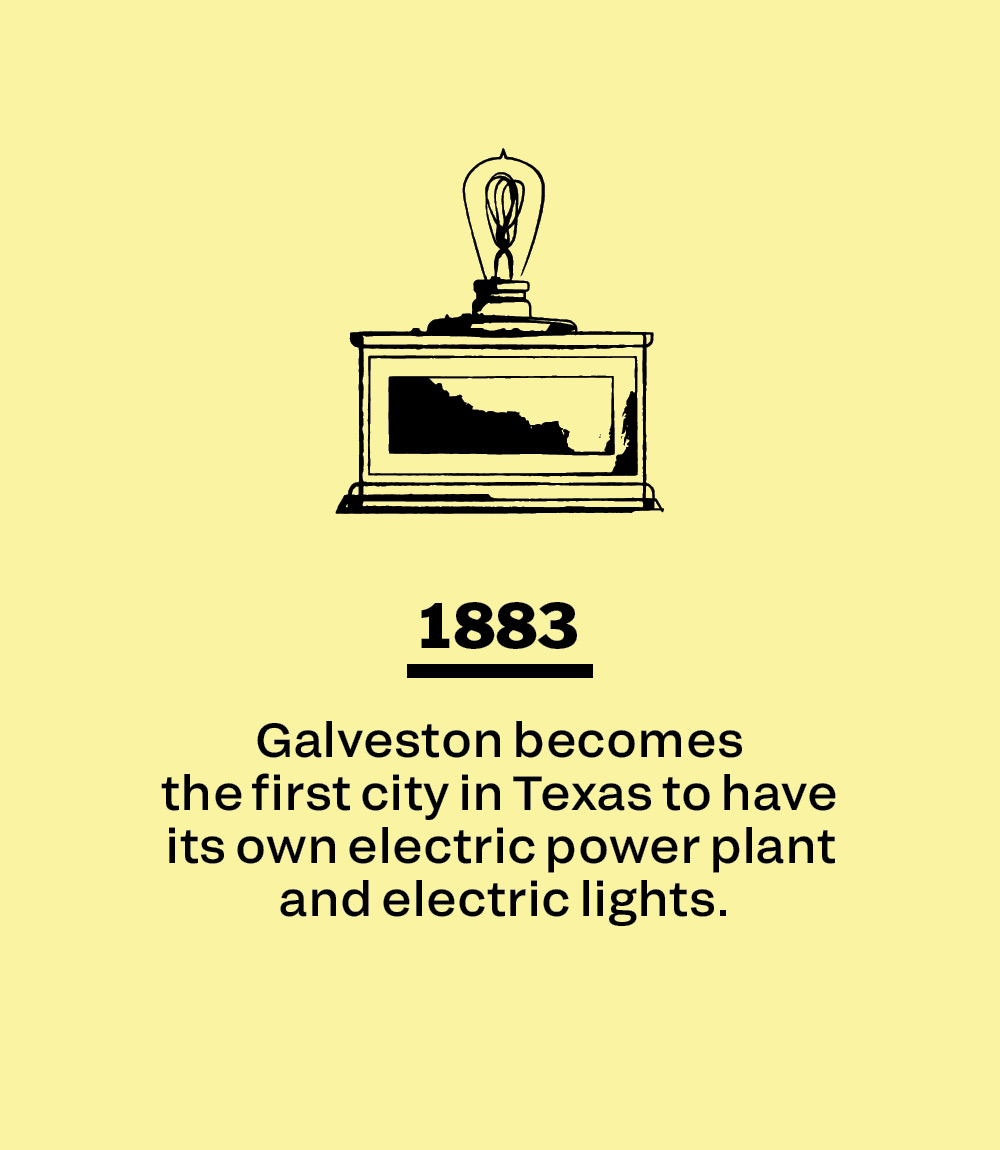
Key dates that help illuminate Texas history
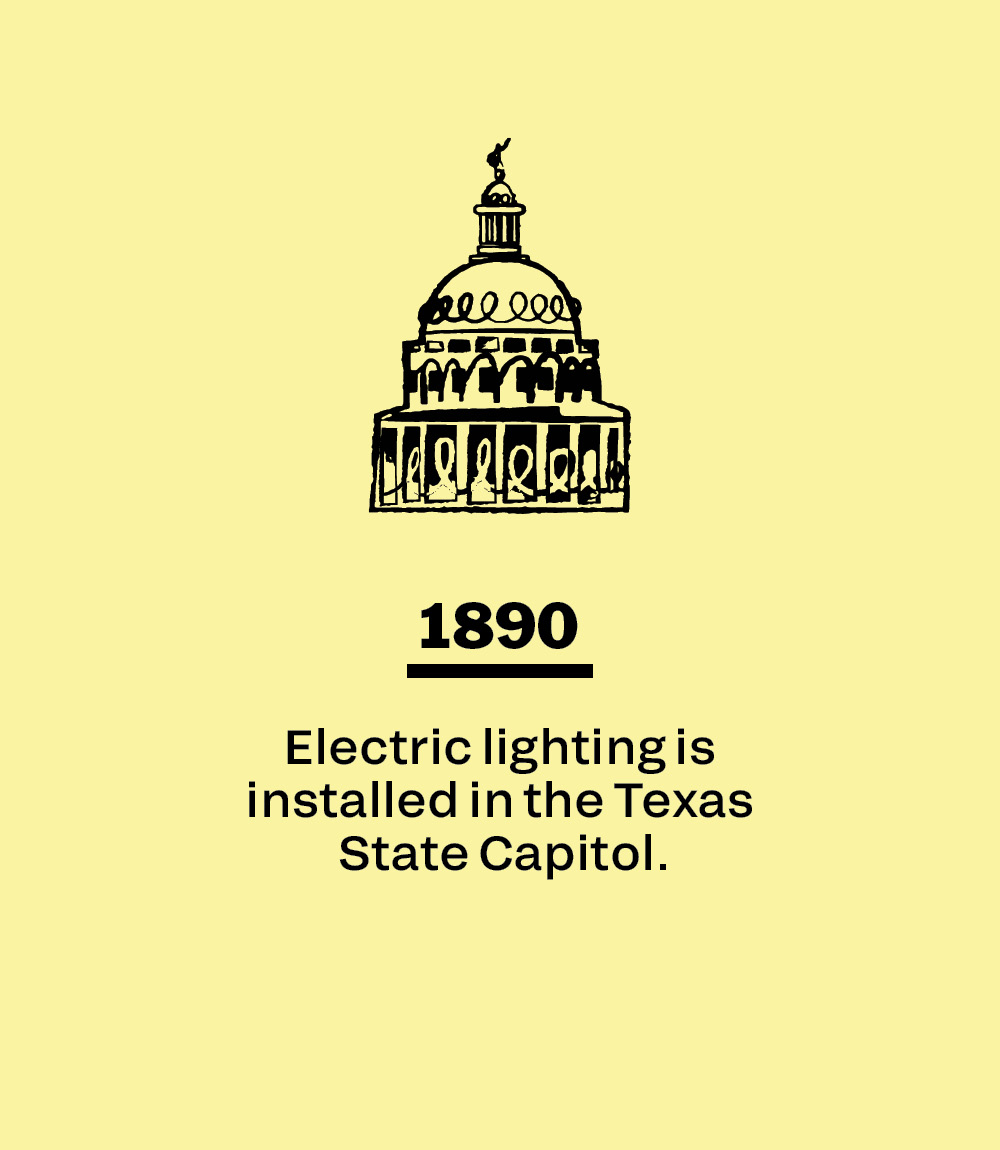
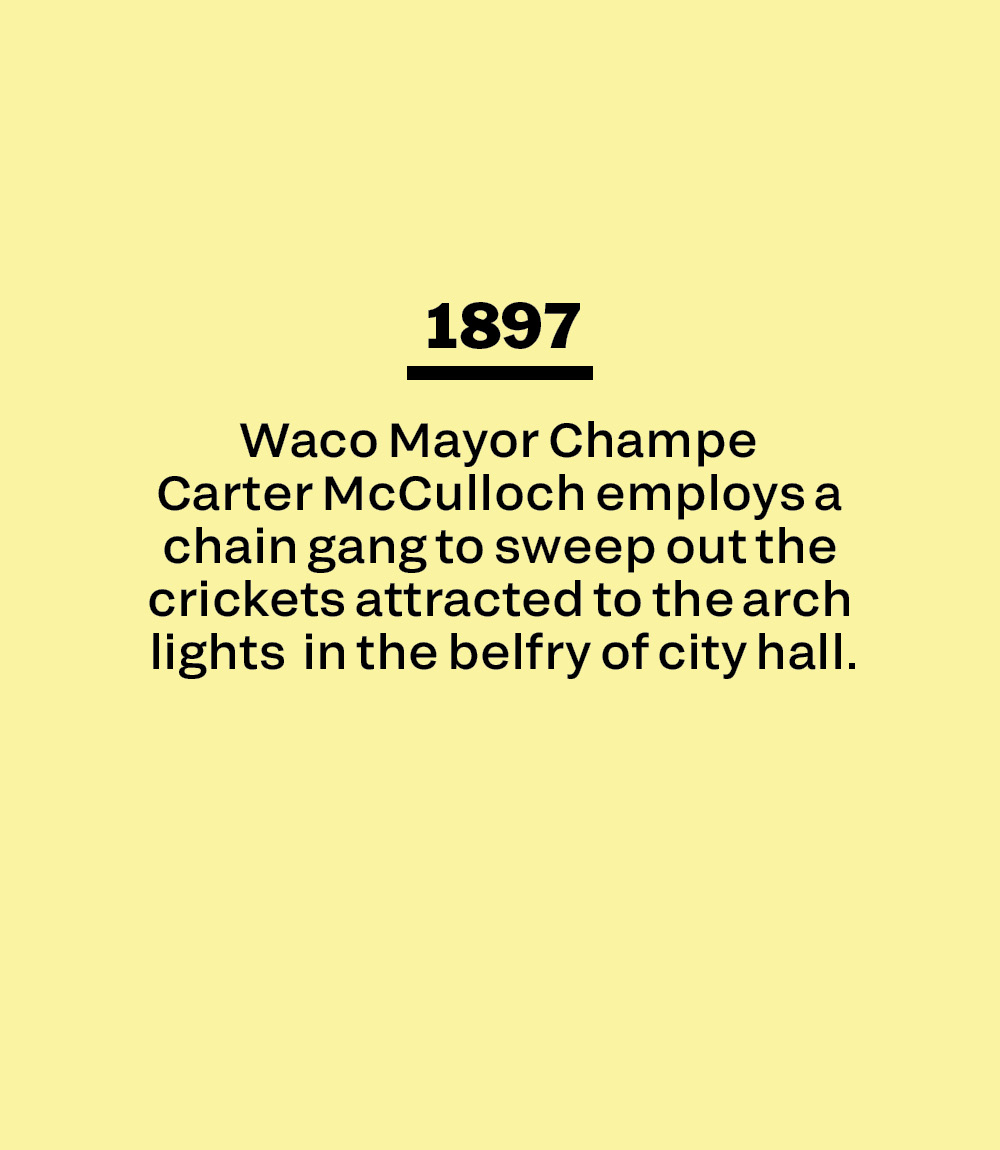
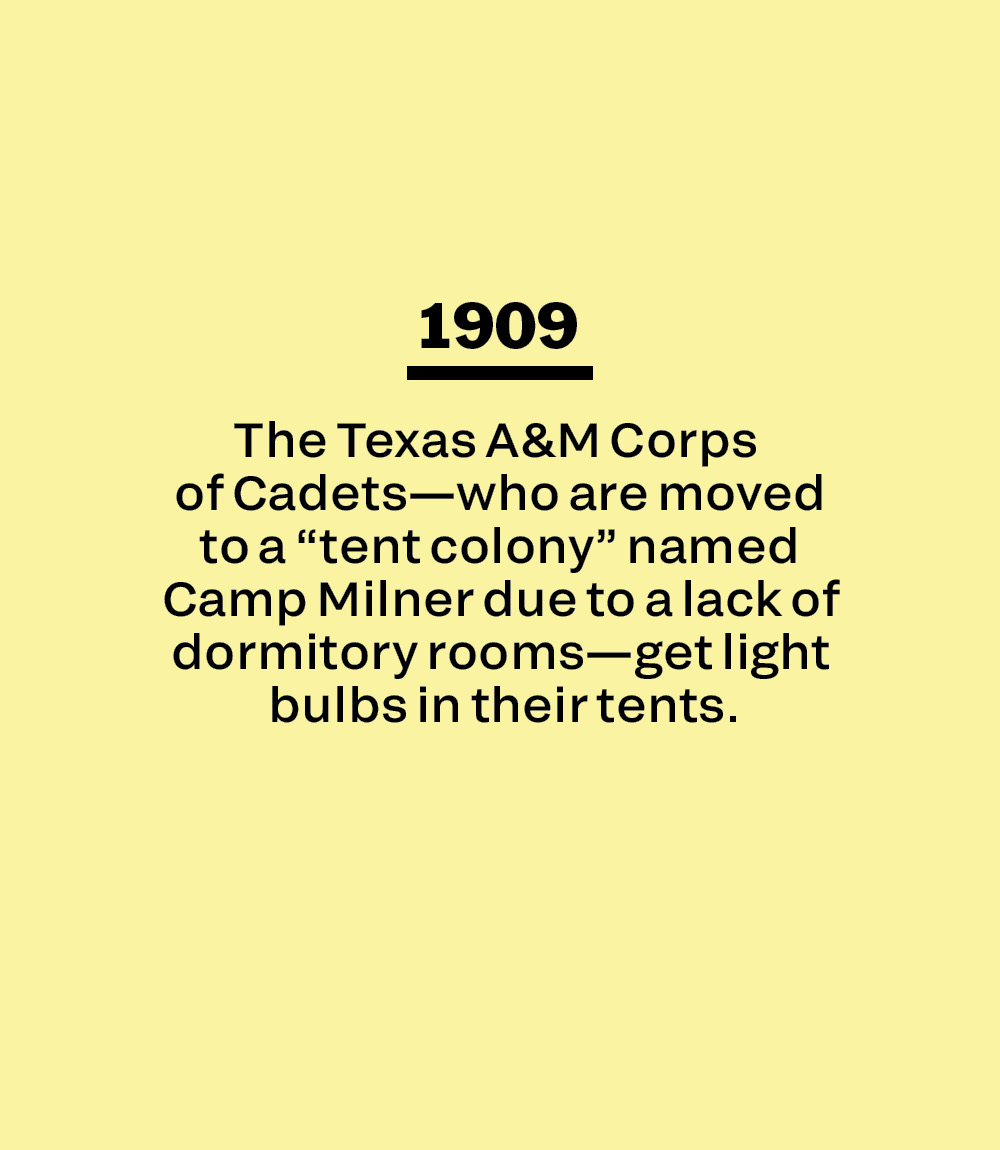
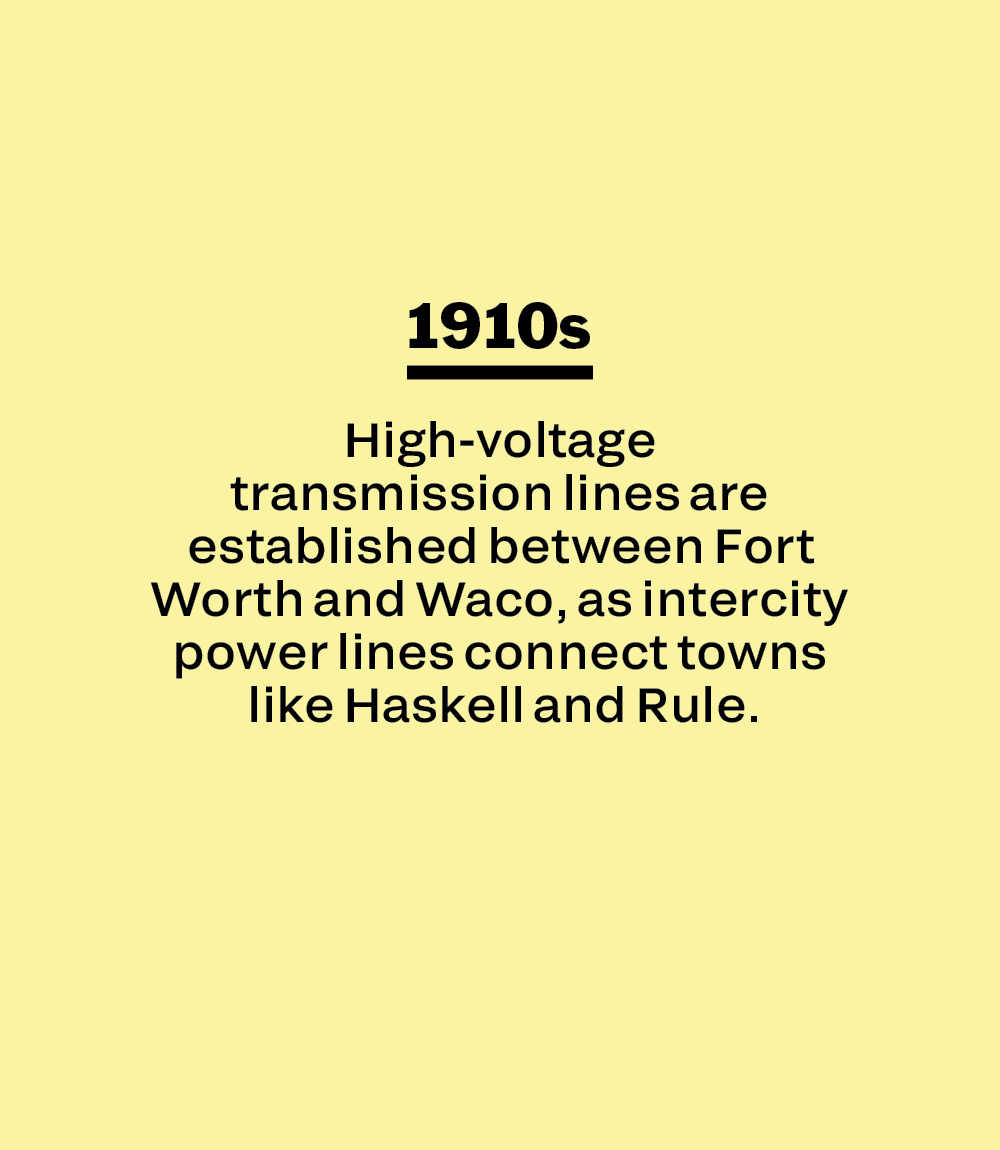
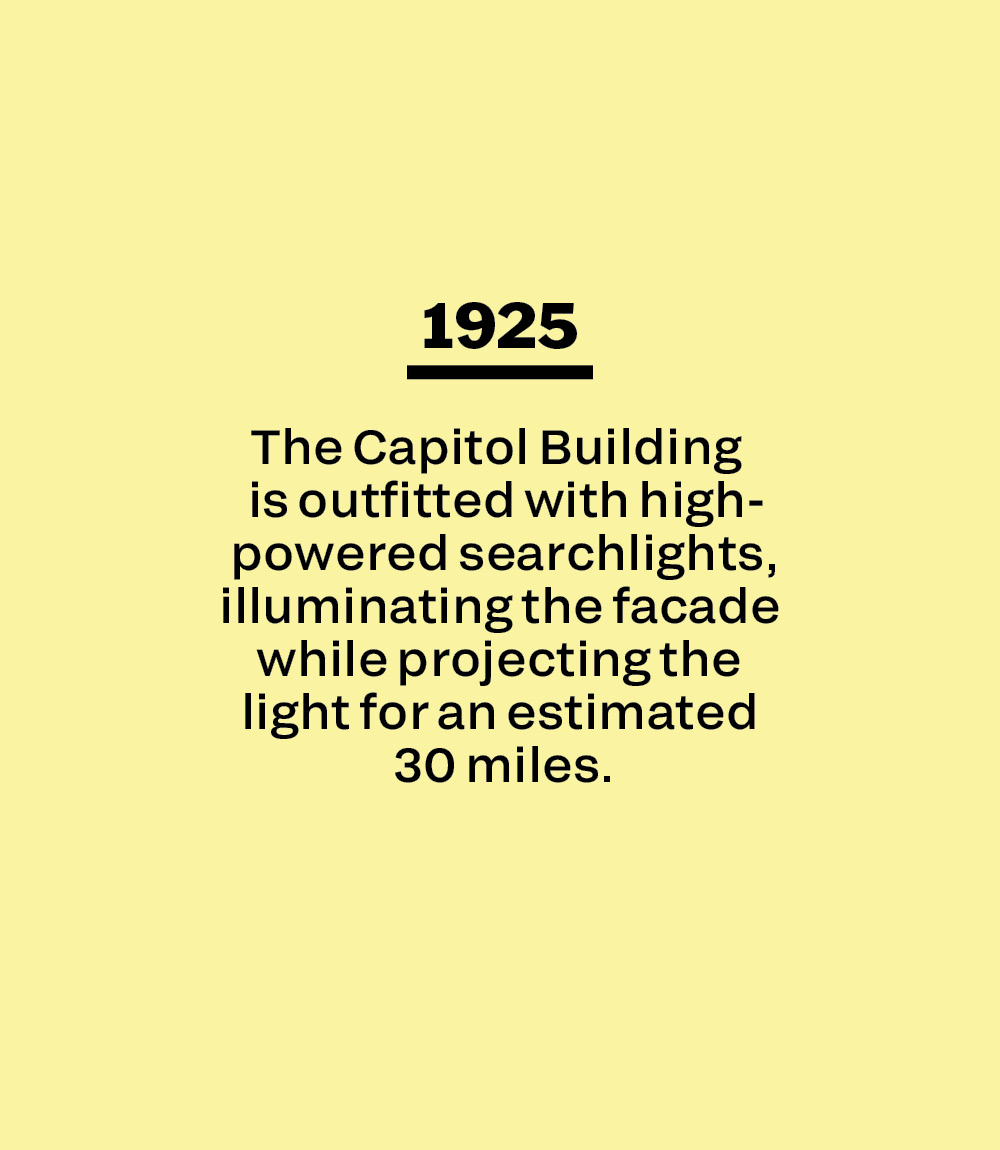
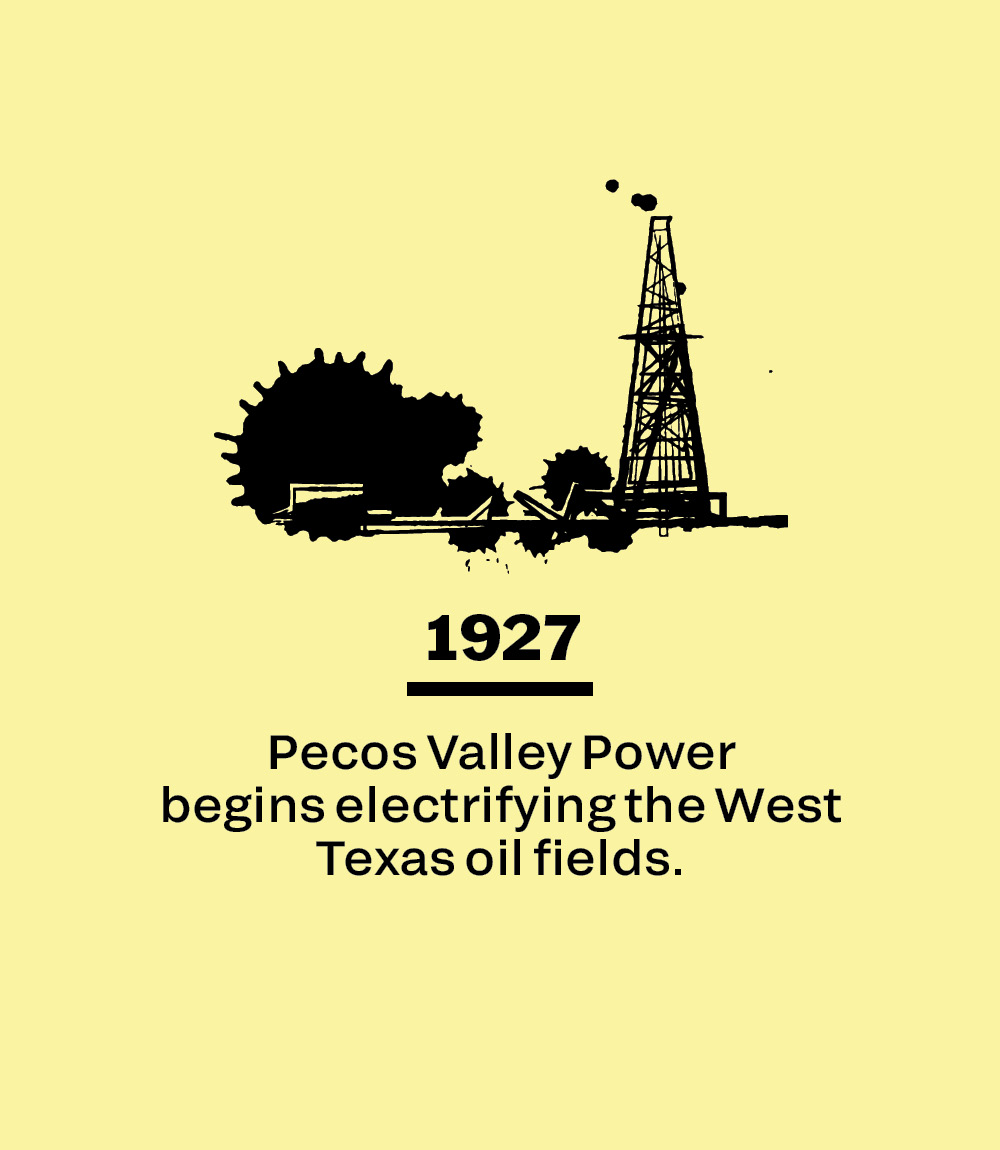
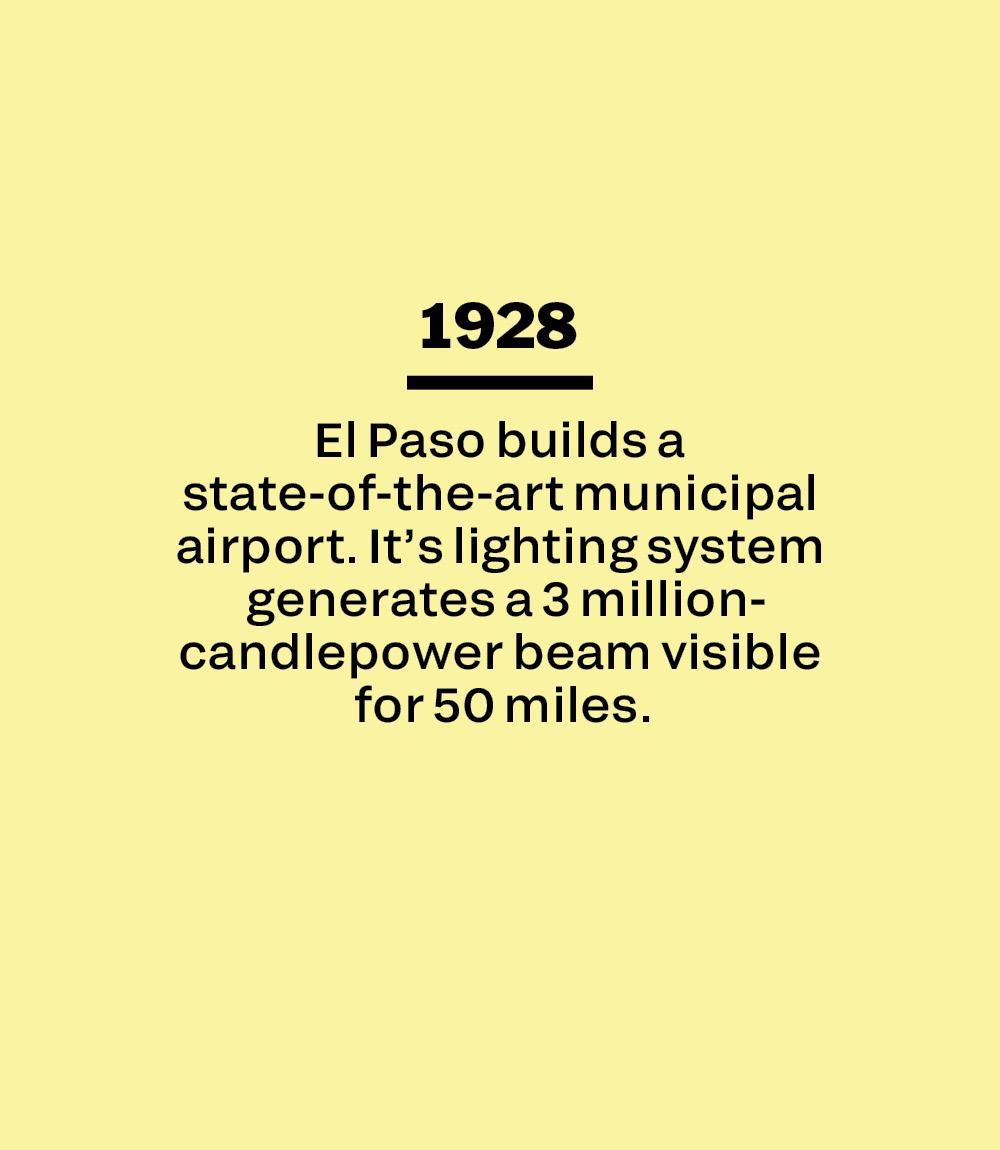
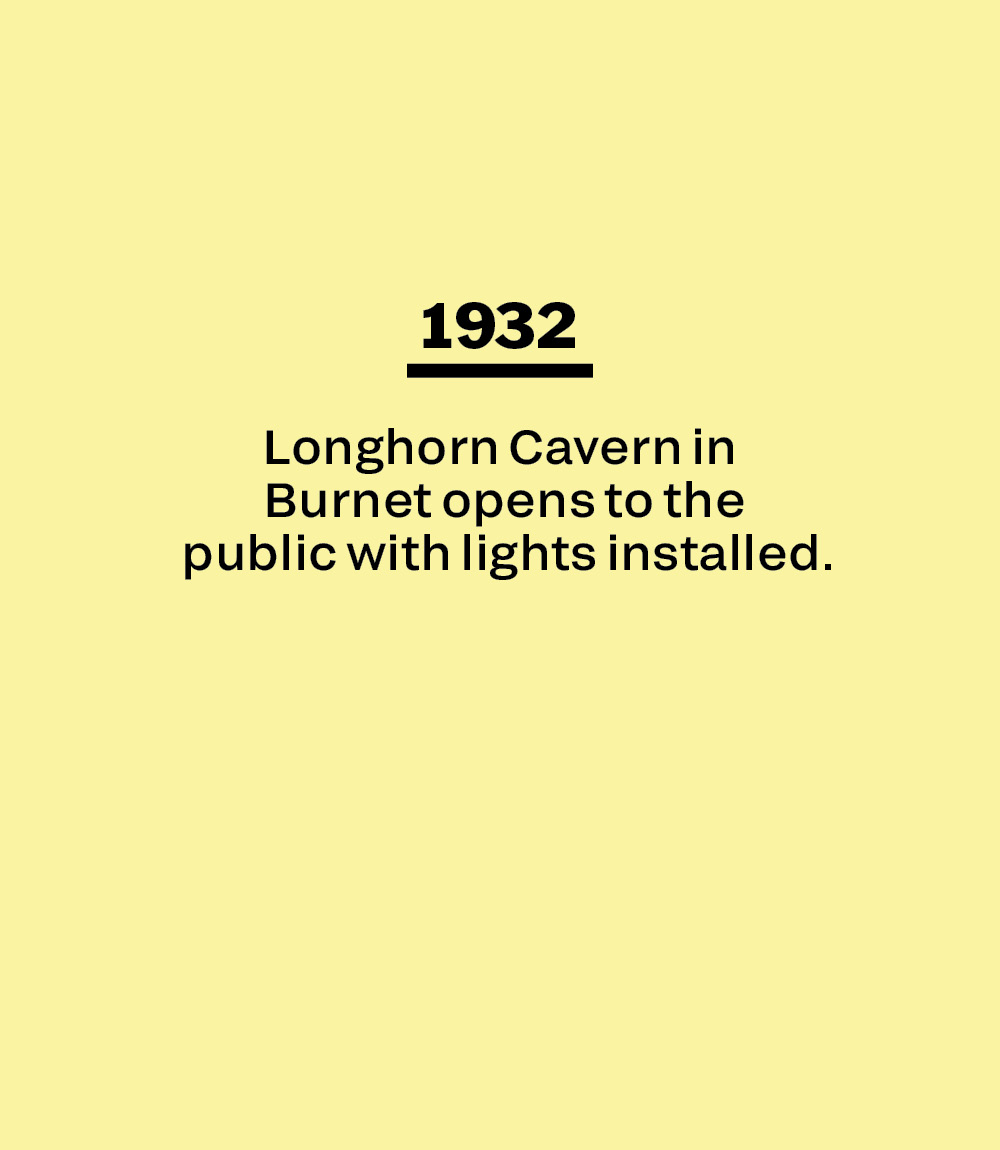
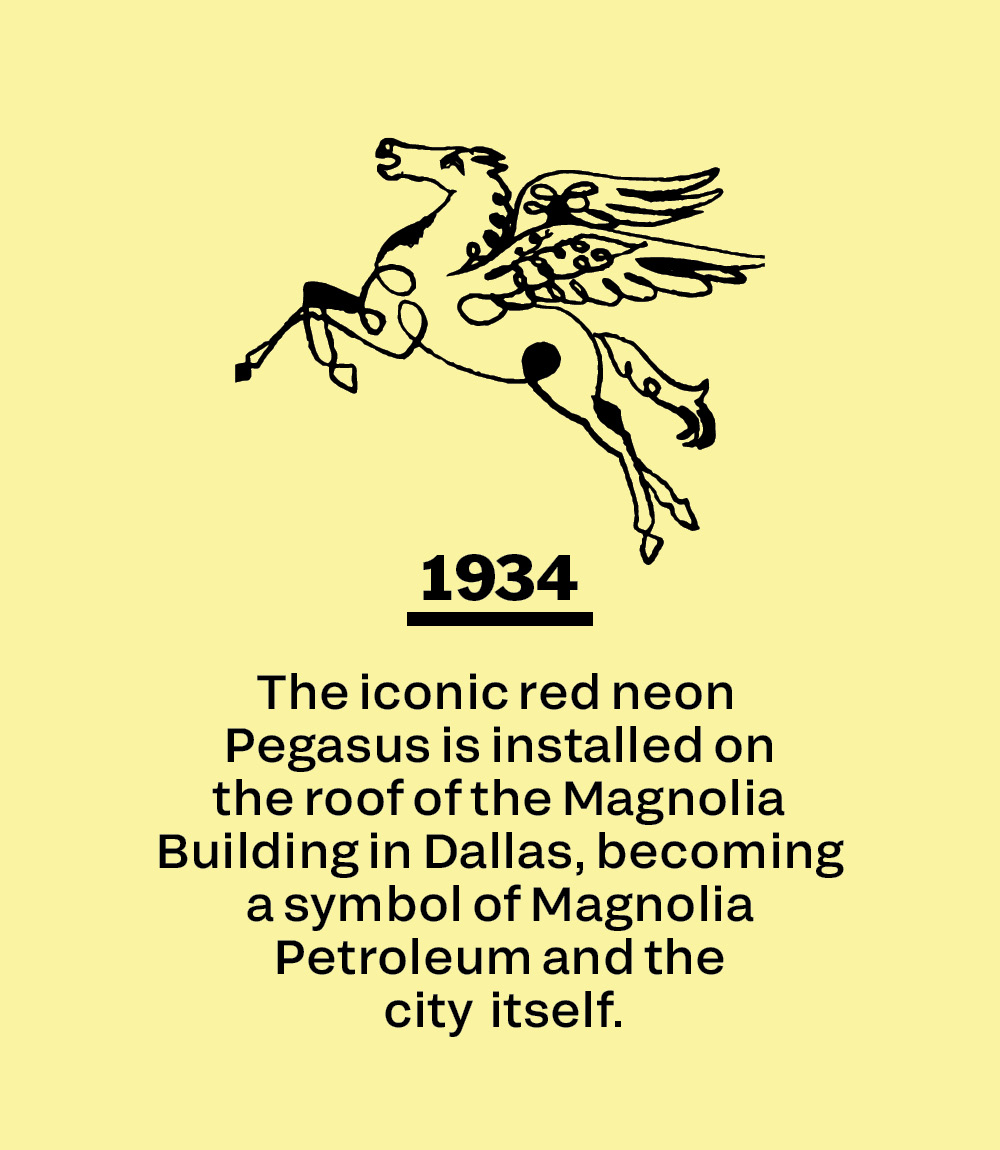
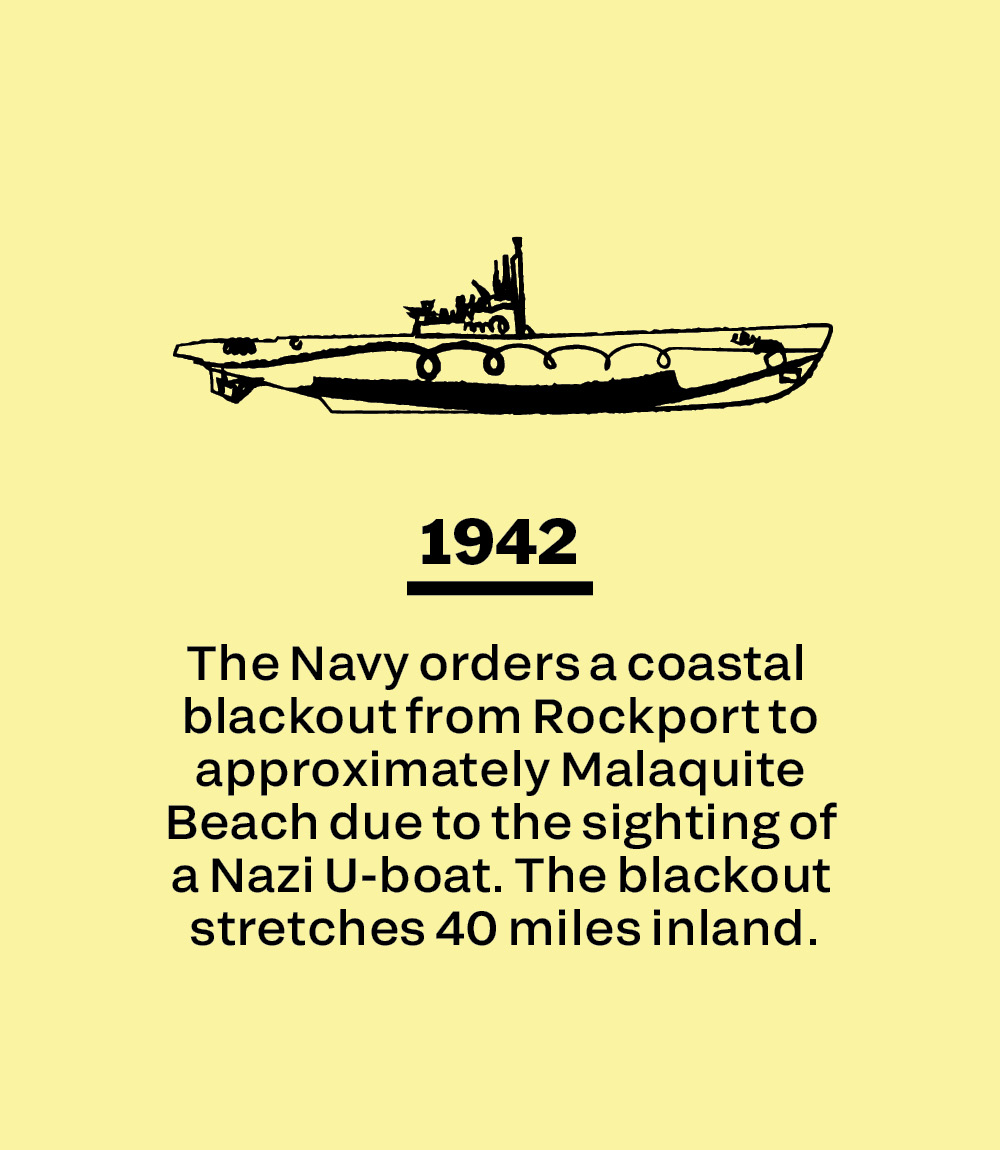
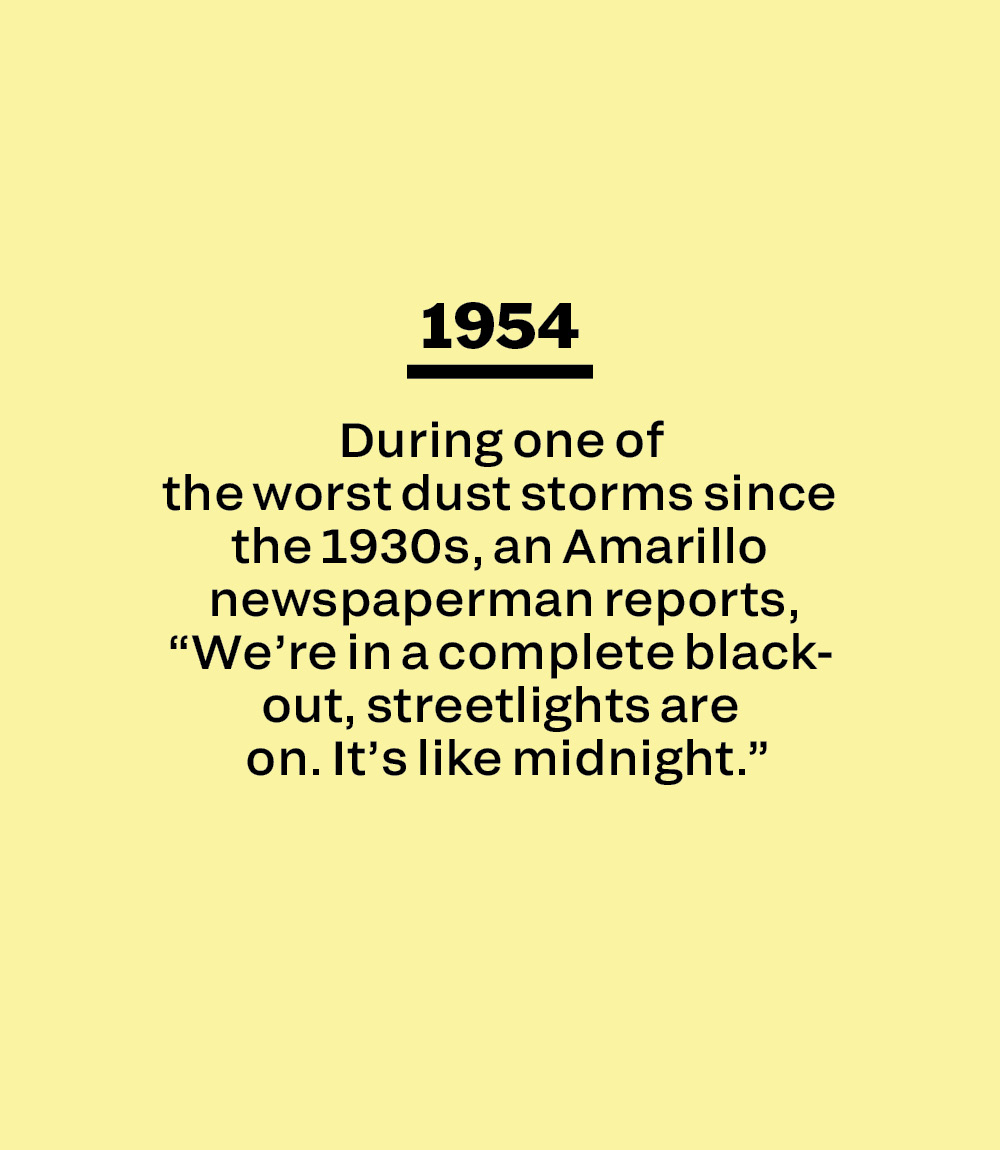
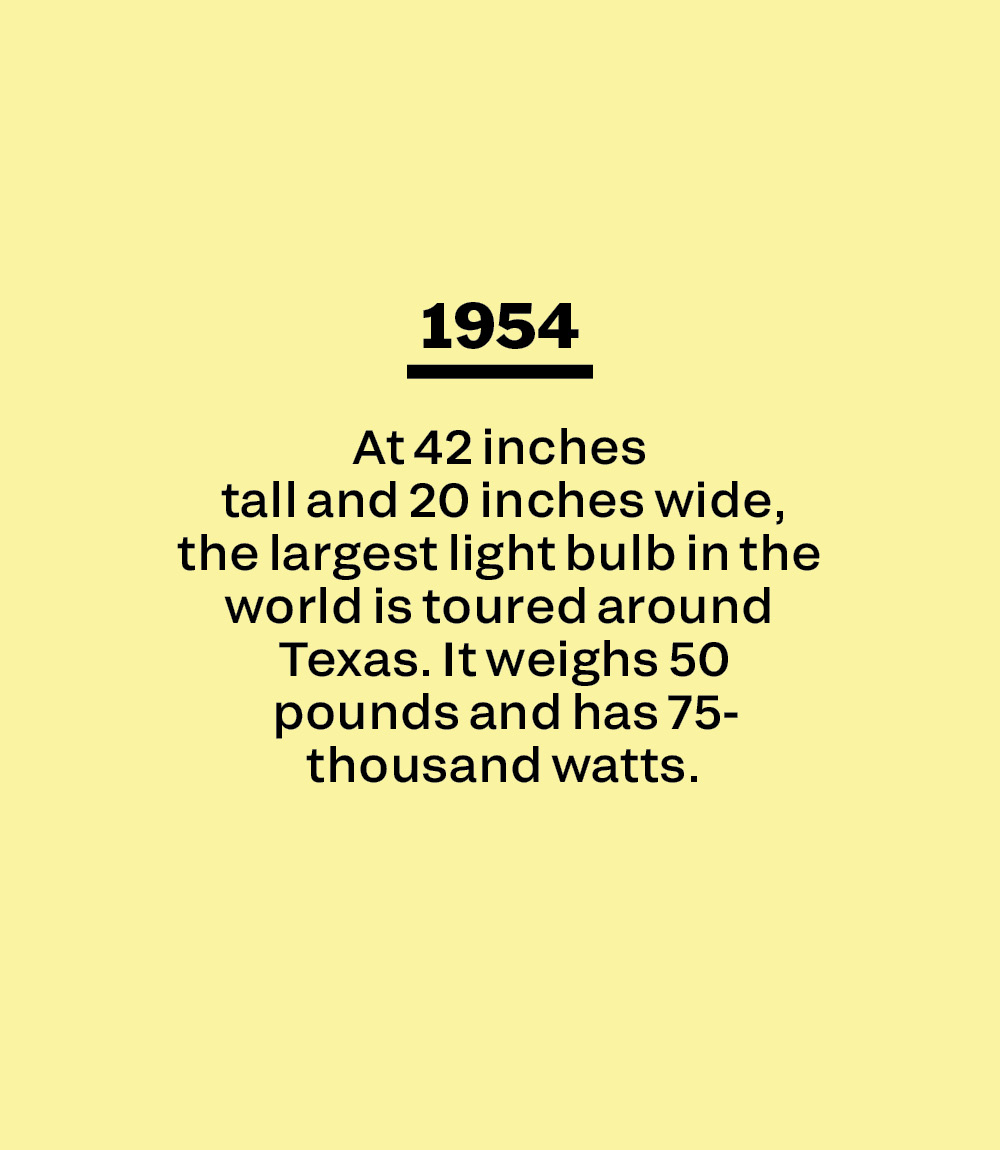
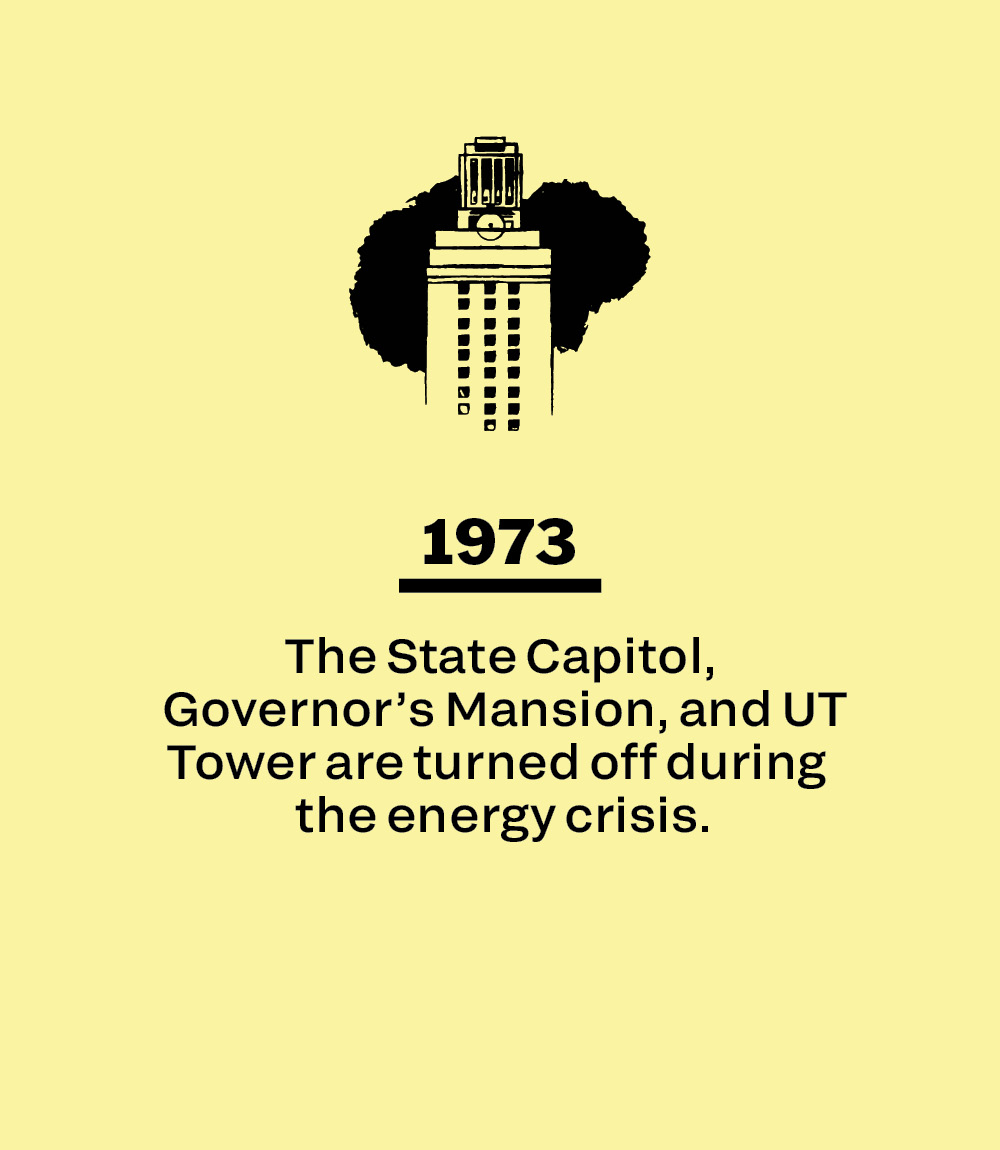
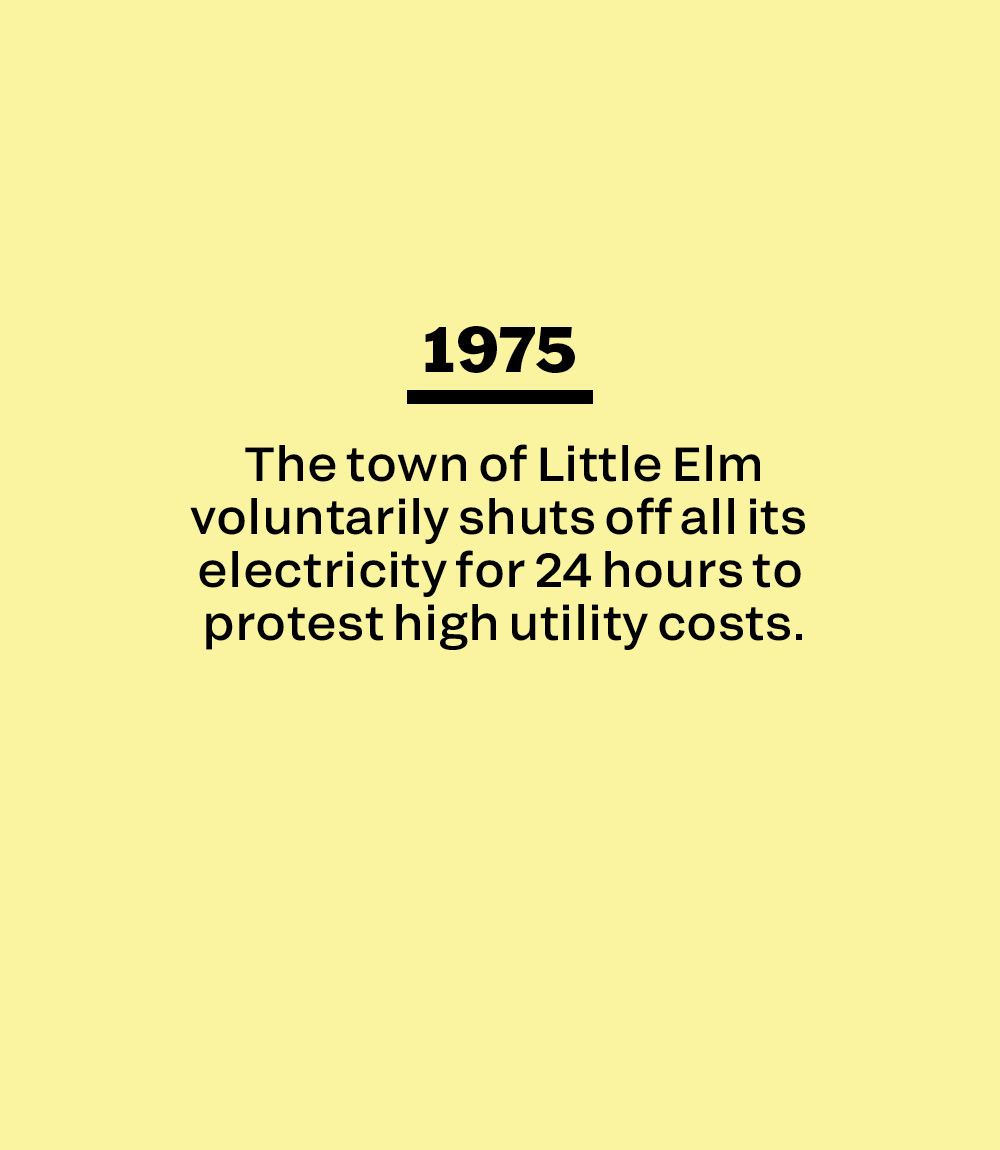
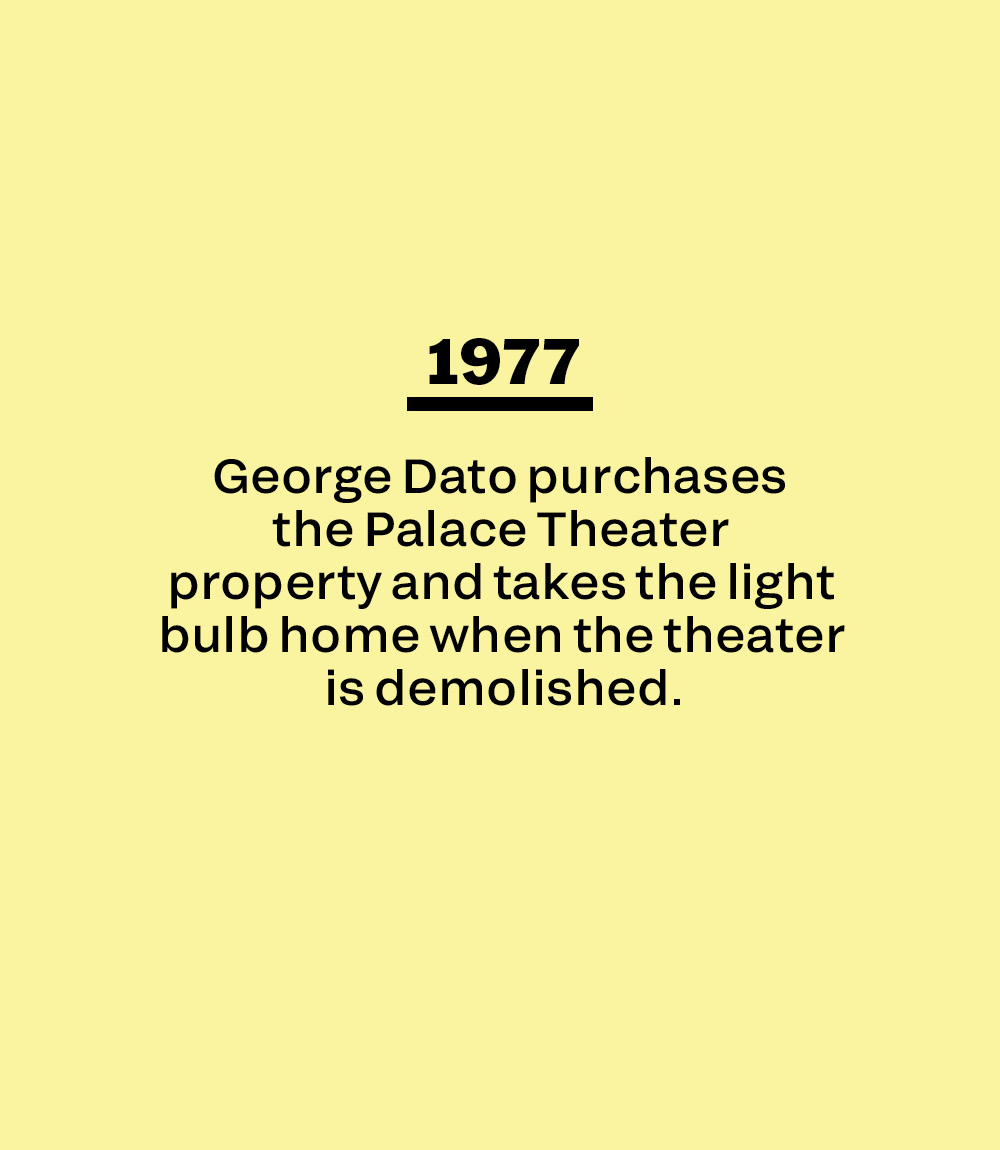
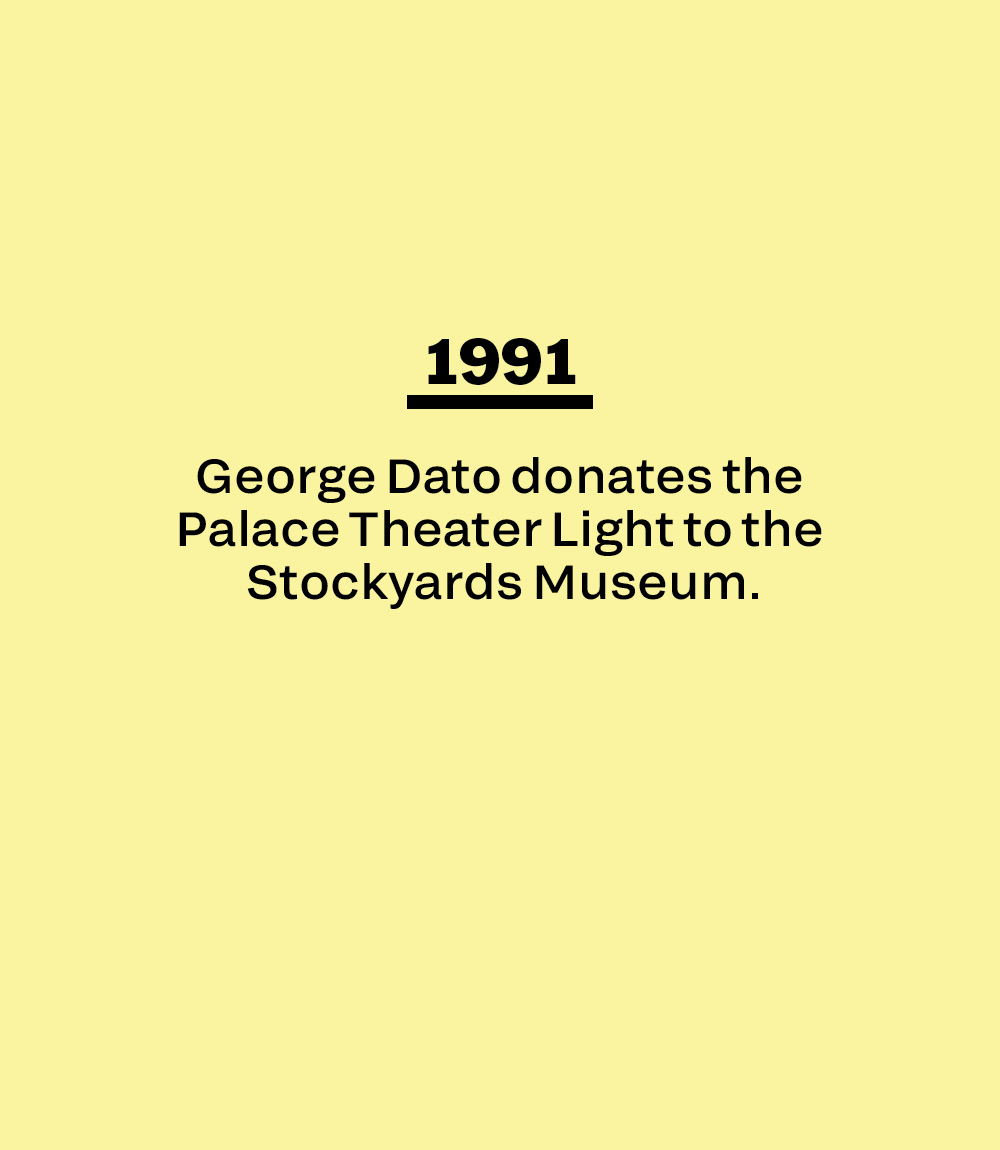
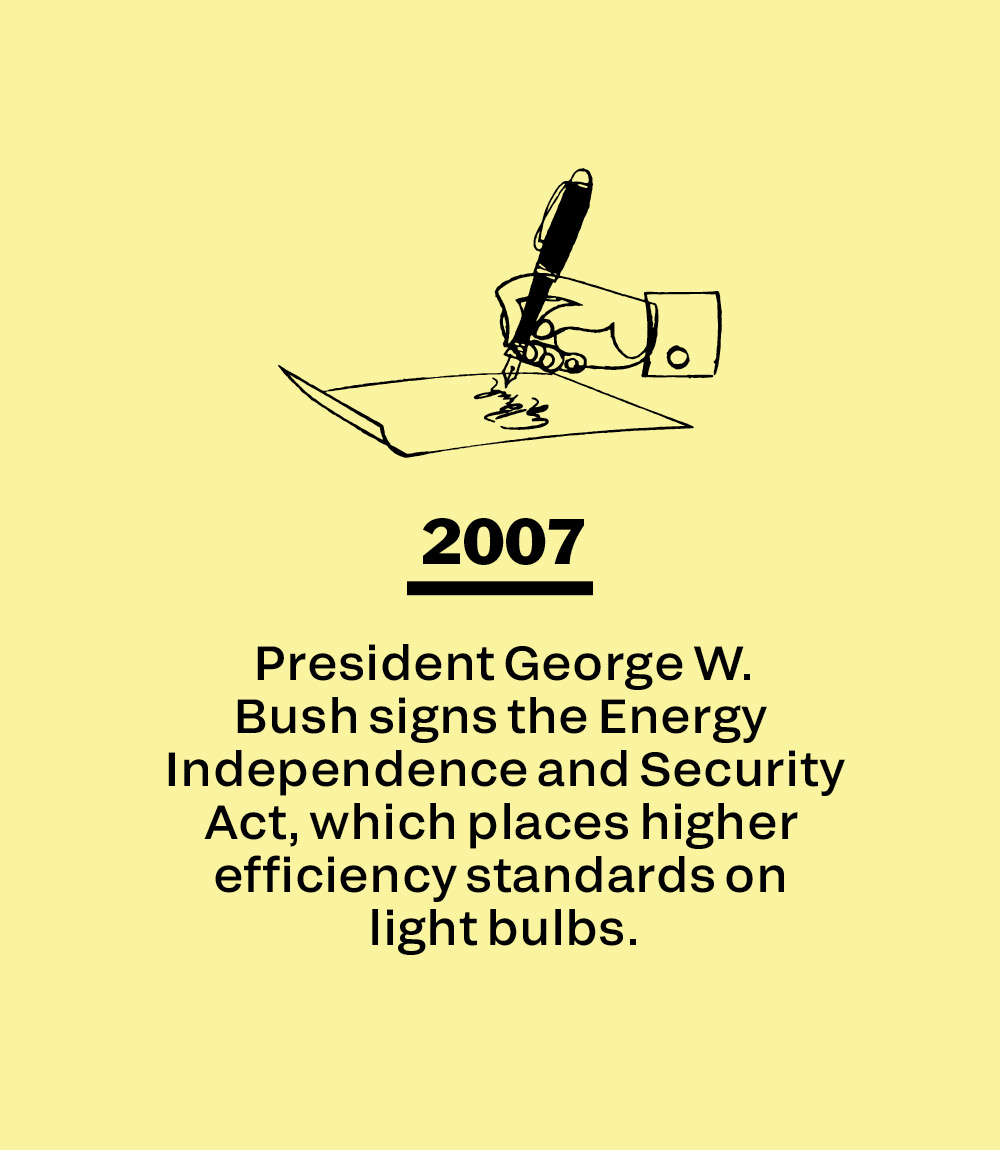
As I’m flipping through the journal, I hear a voice call out from behind: “For heaven’s sake, if you see something that says, ‘I changed the light bulb today,’ don’t tell us! And don’t print it!”
That’s Donna Donnell.
Donnell is another member of the North Fort Worth Historical Society, and while she’s kidding about the prospect of a possible switcheroo hidden in Gould’s journal, the bulb has been subjected to the occasional, unavoidable power outage. That means it hasn’t technically burned for 117 years straight. The same can be said though about the Centennial Light in Livermore, California, the Guinness record holder for longest burning light bulb at 124 years of age. There are other light bulbs just as old, even older—but the distinction lies in what a court might call “intent of and attempt at continual use,” meaning these bulbs have allowed only a few hours of darkness to seep in over the entire course of their lives.
While it’s hard for experts to explain why these bulbs haven’t burned out, the general idea of extinguishment should be broached. For starters, there’s always been an underlying question about a light bulb’s longevity, with papers as far back as the early 1940s discussing “if light bulbs were made to last as they once did.”
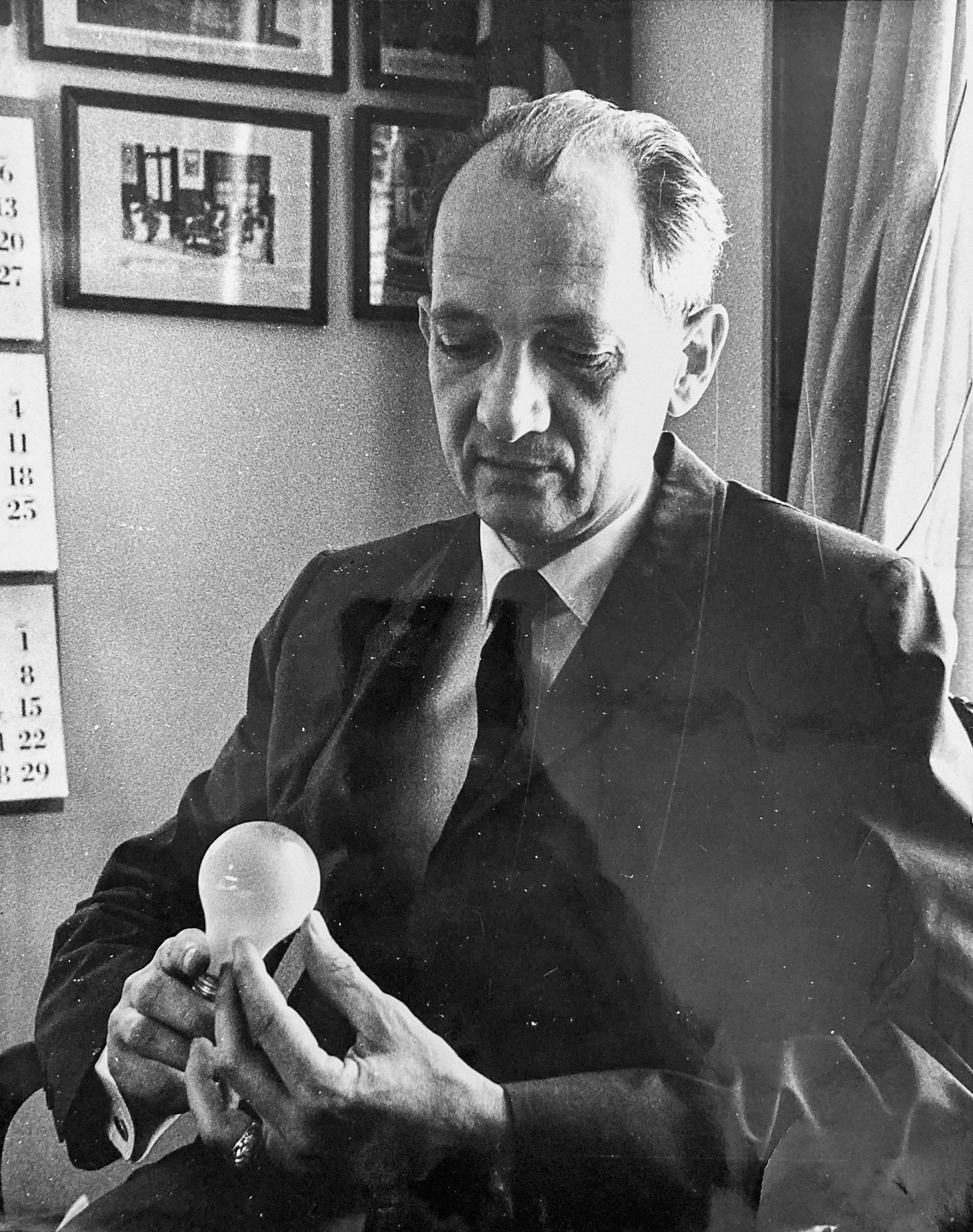
In 1964, Congressman Jack Brooks of Southeast Texas called out General Electric and other producers for the sole purpose of publicly shaming them into lengthening the lifespan of everyday household bulbs. With official government announcements and publicity photos, his campaign appears to have been a genuine attempt at saving consumers and the federal government money, as he claimed the government spent nearly $2 million a year on light bulbs. But it may have been a wooing campaign as well because President Lyndon B. Johnson had embarked upon a crusade of his own. When LBJ learned the White House spent $4,600 a month on lighting, he responded by shuffling around the grounds and switching off lights in unoccupied rooms, claiming the overall effort cut the executive’s light bill nearly in half. Unsurprisingly, Republicans pounced on it. Leading up to the next election, Barry Goldwater’s campaign hawked anti-Johnson buttons that read, “Turn Out Light Bulb Johnson!”
Of course there’s tremendous irony in this, considering Johnson played an instrumental role in shaping how Texans viewed the Rural Electrification Act of 1936. At a time when 98% of Texas farmers didn’t have access to lights or electricity, Sam Rayburn of Texas’ 4th congressional district co-authored the act and pushed it through Congress. But it was his protégé, LBJ, who traveled to rural schoolhouses and electric roadshows across Central Texas, cajoling farmers into paying the required $5 to join the new age of light, electricity, and farming innovation. In those first few years in office, Johnson was a man obsessed with “dams, dams, dams” and “cheap power,” as his wife, Lady Bird Johnson, once put it. A man so consumed by dreams of erecting utility poles in 3 inches of Hill County dirt that he didn’t even know who Lana Turner was. Supposedly.
And this dual preoccupation of ours—the desire to generate and harness light, as well as our fear of letting it go out—is nothing new. We generally think of light first and foremost as a means of seeing, but it’s also a source of protection, a source of calling out to others, and, for most of our history, light has been inextricably linked to our means of cooking and warmth. The need for light is ingrained in our bones as much as our needs for community and shelter and meaning. So, even though our desire to improve the lifespan of light bulbs can seem unnecessary at times, it’s simply a modern-day version of an instinct that traces itself back to our origins.
As you can probably imagine, this has made us a little touchy when it comes to our lights. How else would you explain the bizarre reactions to events like the 1888 sabotaging of power lines over a saloon in Laredo, which plunged a large portion of the city into darkness; or, in 1945, when striking power plant workers at the Lower Colorado River Authority threw a 100-mile radius of Texas back into night? The former incurred a rebuke from a local reporter who said if the culprits were caught, trial by jury would be too generous an outcome. But the latter received a quick dispatch of Texas Rangers, with the Corpus Christi Caller-Times reporting that Thomas Blanton, a former congressman and anti-unionist, was advocating for a machine-gun posse to set the strikers straight.
We are so fascinated and horrified by the spectacle of our lights going out that in the early 1940s, when cities around the state ran blackout drills as a means of preparing for the possibility of air bombardments during World War II, thousands of people from surrounding towns came to watch. They parked on the hillsides and waited for “the flames of a far-off fire” to be doused. For some, this was a novelty, perhaps even a way of connecting during an incredibly uncertain time, but for many farmers and Dust Bowl migrants, for people living along the cities’ edges—many of whom were Black, Hispanic, and poor—life without electric lights was still an everyday reality. And this would be true into the second half of the 20th century.
But this incredible chasm never deterred the business leaders and city officials of yore from flaunting their mastery over lights in rather garish ways. When LBJ was stumping for presidential candidate Hubert Humphrey in Houston, he did so under the 50,000 lights of the Astrodome’s scoreboard. But the same childlike instinct that tells us our names need to be written not just in crayon but in the largest, brightest contexts possible also led us to bathing our buildings in light—what’s known as “Architecture of the Night.”
Popularized by influential skyscraper architect Raymond Hood, it’s a form of celebrating the beautiful combinations of light, verticality, and sharp edges, creating nighttime monuments like the Tower Life Building in San Antonio. But we couldn’t just get while the gettin’ was good. We were determined to beckon people from as far away as possible, doing so by placing even brighter lights atop even taller buildings. First at 30 miles, then 80, and finally 120 miles with 1954’s Republic National Bank Building in downtown Dallas. It had a half-billion-candlepower light that rotated and glowed with such force that it could theoretically reach past Ardmore, Oklahoma, an effort that was only inhibited by the earth’s pesky curvature. It was a bulb so bright, so magnificent, so incredibly wonderous that it burned out once a month.
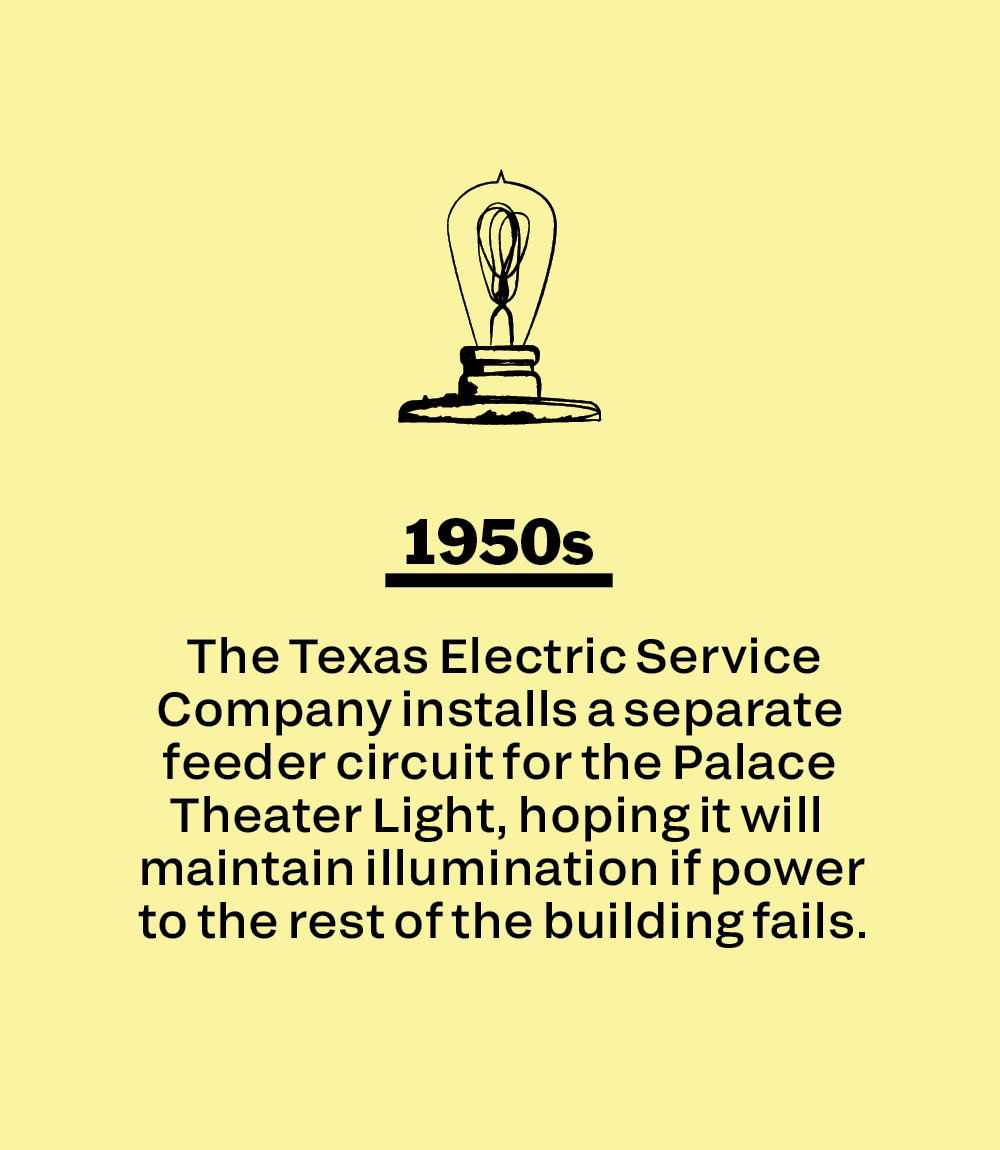
I’ve scoured Gould’s journal for over an hour, but I’ve come up with zilch. The entries are predominantly staff schedules and newsreel runs. The closest I’ve come to a bulb reference is a hand-drawn circuit diagram with a squiggly line labeled “Rheo,” the Greek-derived prefix meaning “flow” or “current.” It’s undoubtedly a reference to a rheostat, a device used to dim lights. But I can’t imagine the Palace Theater Light being connected to a rheostat in a backstage hallway. Today, however, it is. As the star of the show, it’s screwed into its own handmade electrical box, one that features a rheostat and a surge protector. It’s a bulb of low watts and long leisure.
Before I leave, I ask if I can take the journal with me, just so I can finish going through it. But this request is politely denied. Donnell, however, promises to peruse the rest with a fine-tooth comb, and since she specializes in the genealogy of “dead people and 19th-century prostitutes,” as she laughingly says, she knows her research. If anyone’s going to find anything, it’s Donnell.
Outside the Livestock Building, picnic tables are planted around pop-up bars, café lights strung overhead. Signs blaze along East Exchange Avenue as people walk past cafés and boutiques, the smooth bricks of Mule Alley leading to the four-star Hotel Drover. There, a lasso-tossing neon cowboy stands out front, and it isn’t lost on me that ornamental gas fixtures sit atop the hotel’s stone fountain, the exact type of illumination that community leaders would have ditched over a century ago. Every light down here has been methodically considered, deftly arranged in a way that’s meant to draw me in. And like a magic lantern, it’s worked. I have found myself pausing, marveling, and I’ve done it all without once stopping to ask, “From where does all this light spring forth?”