

With more than 1,000 venues scattered across 268,820 square miles, no other state in the country has carved out a musical identity as iconic as Texas’. For every fabled stage that has stood the test of time, countless others have flickered to life all too briefly before sputtering out like a neon beer sign on the fritz. Recent years have even seen the fall of storied establishments like Kendalia Halle in the Hill Country, Fitzgerald’s in Houston, and Threadgill’s in Austin. Amid such closures, the longstanding venues whose walls still reverberate with music have become even more treasured and important. From vast dance halls built by German immigrants to gritty nightclubs that dared to push artistic boundaries, these are the state’s bucket list destinations for live music.

THE STAMPEDE
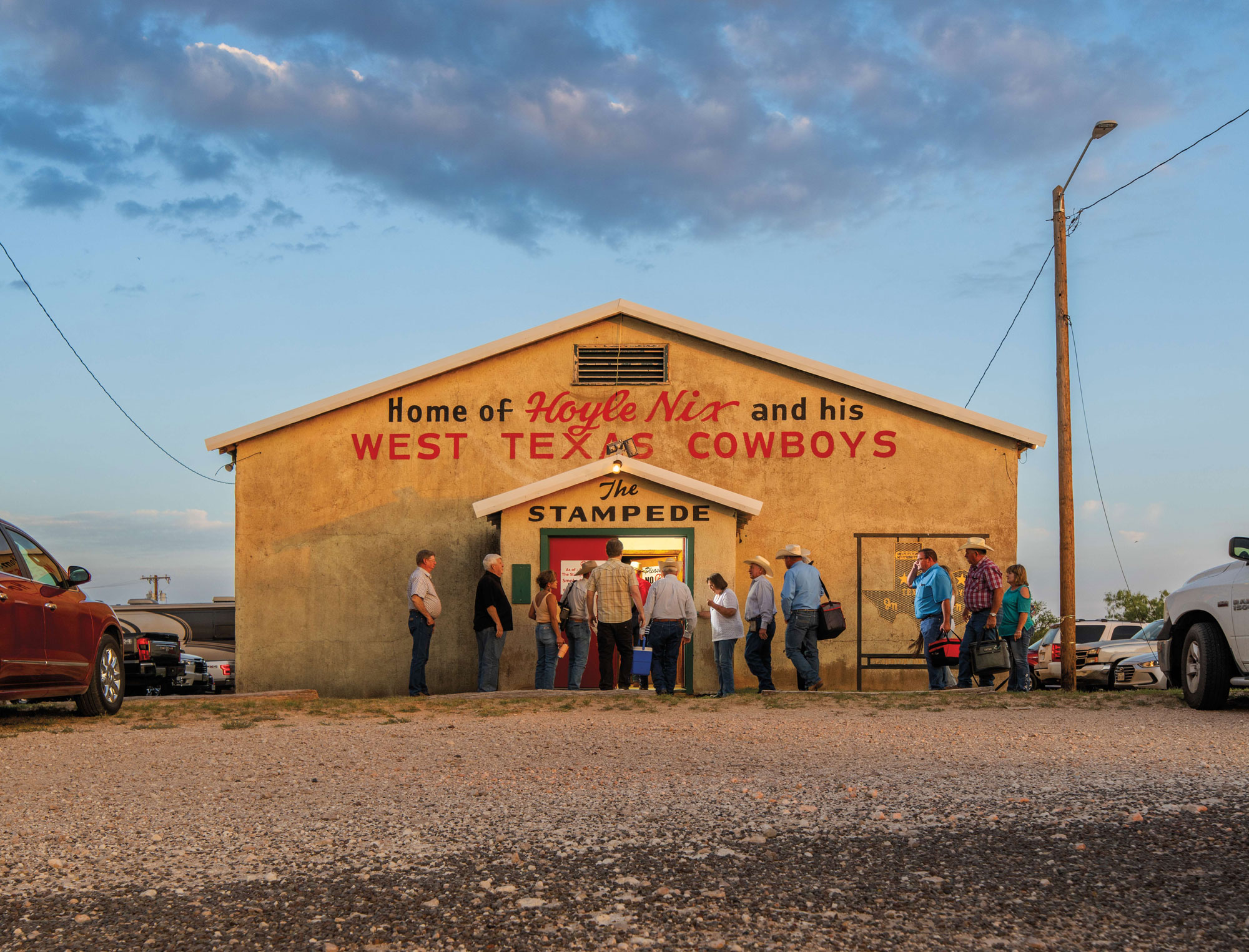
When fiddler Hoyle Nix opened the Stampede on May 8, 1954, it was as sparse as a spare rib chewed to the bone—and just as flavorful. There were no tables or chairs, just a few benches lining the unfinished wooden walls. But over a thousand people crammed into the dance hall for some merriment that night. The venue might feel like it’s in the middle of nowhere, but it has been at the center of country music on the Texas plains for seven decades.
The space was planned as an outlet for Hoyle and his band, the West Texas Cowboys, who had already garnered regional renown in nearby towns like Abilene and Lubbock. That reputation made the Stampede an esteemed destination for the surrounding communities, and the venue’s fame was etched in stone when Western swing legend Bob Wills took notice and started playing there regularly in the 1950s.
Hoyle’s son Jody took on the drums in his father’s band at 8 years old and even sat in on songs with Wills. Today, he carries on the legacy by running the space and leading the Texas Cowboys. Jody cites two simple reasons why the Stampede still draws hundreds each year: “One, the place has a lot of history,” he says. “And two, because they like to dance to our music.”

ON THIS DATE
SEPT. 8, 1973:
After a debilitating stroke four years earlier, Western swing bandleader Bob Wills made one of his last public appearances with some help from the West Texas Cowboys.

THE CONTINENTAL CLUB
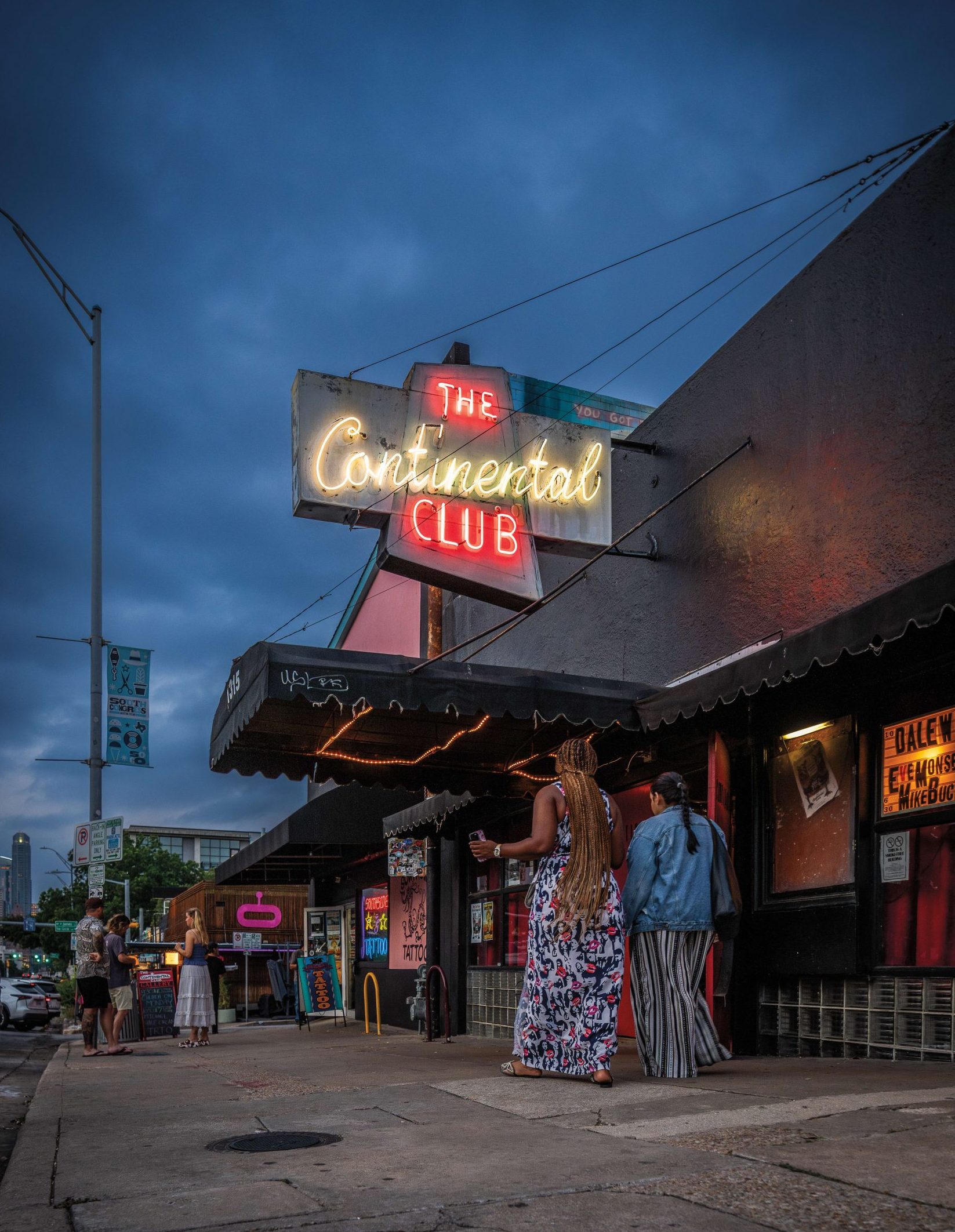
Beneath the glowing red lettering of the Continental Club’s neon sign, a line of patrons extends up South Congress Avenue in Austin. It’s a Monday night in the dead of winter, and inside the venue, country crooner Dale Watson is performing a scorcher of a set for a packed house. Couples two-step down front as onlookers huddle around the dance floor. Onstage, Watson preaches the benefits of Lone Star Beer in one of his trademark bits of banter: “It eats calories, creates brain cells, and is the only beer served in heaven.”
Even as sleek condos and high-end retailers transform the capital city, the Continental Club remains anchored to an era that put Austin music on the map. “The club really hasn’t changed,” owner Steve Wertheimer says. “The fact that there’s still a few places that have stuck to their guns makes it special.”
Opened in 1955, the Continental Club had a colorful evolution from chic supper club to burlesque bar to working-class dive over its first two decades. But in the late ’70s and early ’80s, it emerged as one of the city’s prime live music rooms—especially under then-manager Roger “One Knite” Collins. The late local legend Stevie Ray Vaughan first played the club in 1980, and it eventually became a haven for not only rock and blues but also punk, new wave, and garage acts like True Believers and Roky Erickson.
Wertheimer took over in 1987 and has maintained the club’s spirit, booking classic performers like Watson as well as modern, arena-caliber artists like Jack White and Leon Bridges for special appearances at the legendary 175-person-capacity venue.
“Continental Club is the CBGB of the South,” says Austin musician Ben Kweller, who has played both renowned venues.
Wertheimer reflects on the comparison to the iconic New York institution that birthed Talking Heads and Blondie. “In both of those places,” he muses, “the reputation is much, much bigger than the square footage.” continentalclub.com

ON THIS DATE
DEC. 15, 2012:
Led Zeppelin front man Robert Plant appeared with his then-girlfriend Patty Griffin at the Continental to play a show benefitting the Health Alliance for Austin Musicians.

BLUE LIGHT
Despite producing legends like Buddy Holly and Waylon Jennings, Lubbock didn’t really have an operational venue that embodied the city’s musical spirit—until the Blue Light came along in 1999. Whatever it lacks in longevity, the bar has made up for by quickly churning out an impressive succession of artists who put West Texas country music in the spotlight. Artists like Wade Bowen, Flatland Cavalry, and Josh Abbott Band all cut their teeth there, and Robert Earl Keen even name-checked the club on his most recent album, Western Chill.
“There’s always been this really cool lineage where we all help each other out,” says Abbott, who first played the Blue Light in February 2006. “There’s an emphasis on songwriting and finding your voice and sound.”
That ethos is evident in the bar’s trademark Songwriter Night every Monday, which rejects more than one kind of cover. Admission is free, and performers can’t play anyone else’s songs—it’s strictly original material. With the venue’s proximity to the Texas Tech campus, regulars include both cowboy poets and inebriated frat boys just looking to party. Artists who succeed here need a wordsmith’s acumen and a showman’s energy. It’s sink or swim at the Blue Light, but the good news is that there’s a close-knit cadre of musicians to offer a life raft. bluelightlubbock.com

ON THIS DATE
JAN. 24, 2007
Less than a year after its formation, Josh Abbott Band filmed its first-ever music video for the song “Buried Me” at the Blue Light.

KESSLER THEATER
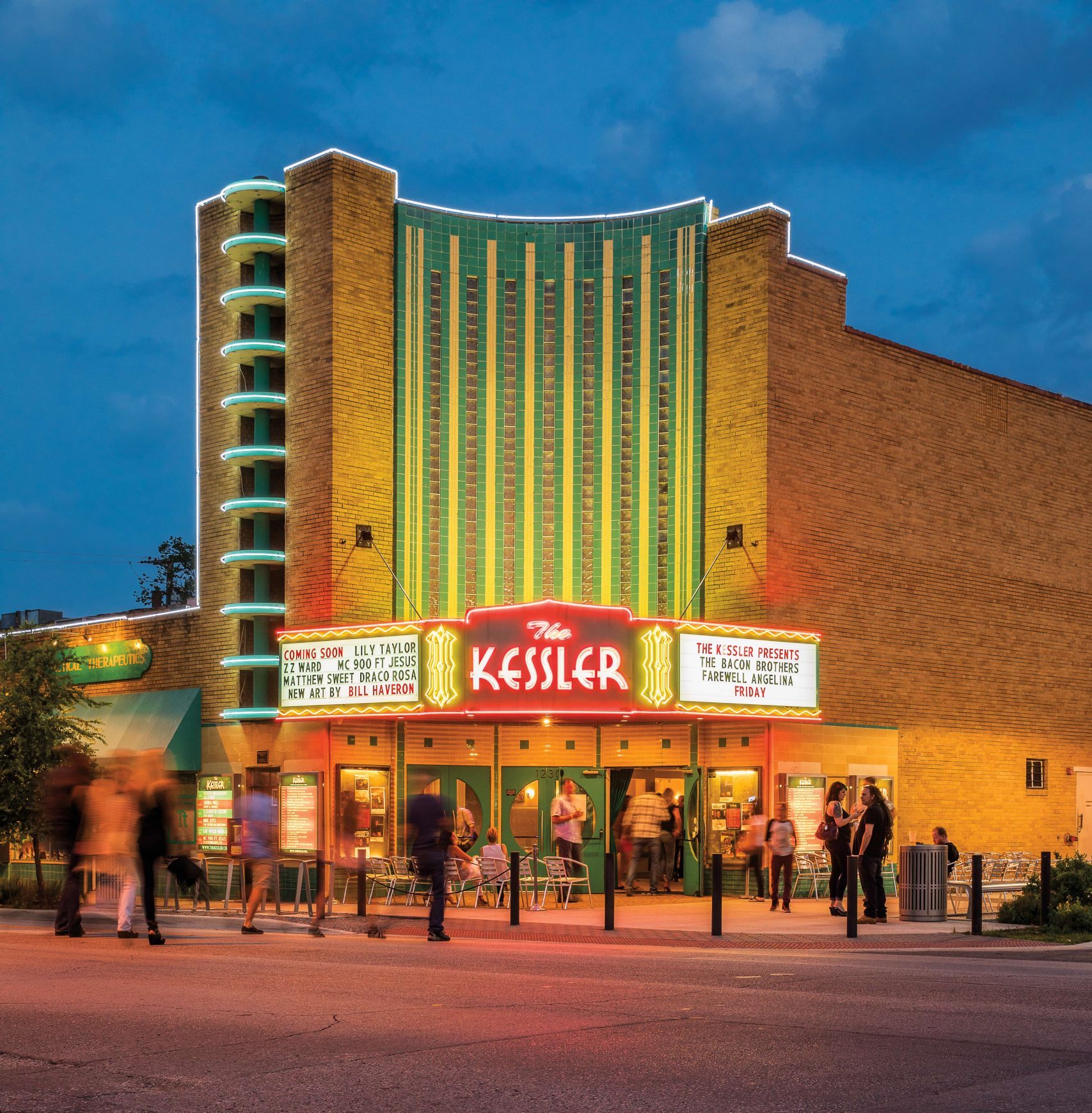
Don’t bet against the Kessler Theater. Originally constructed in 1942 in the Southwest Dallas neighborhood of Oak Cliff, the building saw catastrophic ruin twice: first by tornado in 1957 and again by fire in 1962. But nothing could prevent it rising from the ashes, always better than before. After years of disuse, the venue was purchased by developer Edwin Cabaniss, who gave it an extensive renovation with retro décor and an impeccable sound system before reopening it in 2010. With its theater acoustics and recent upgrades, the Kessler just might offer the best audio experience for live music in Dallas.
Through it all, the historical theater has retained its gorgeous art deco aesthetics. Comprised primarily of sandy-hued bricks, the building juts upward with inlays of glass block and turquoise tile above its striking marquee. Tiered rings of green neon light adorn the left side of the facade, and in the evenings, the structure radiates with an inviting warmth.
Since reopening its doors, the theater has become a haven for songwriters like Steve Earle and blues guitarist Sue Foley. The best seats in the house might be in the balcony, which features vintage chairs original to the venue. After they survived the tornado, a local resident stashed them in a basement for years, and Cabaniss was able to acquire them for the restoration—one more testament to the Kessler’s impressive resilience. thekessler.org

ON THIS DATE
OCT. 21, 2010
Songwriter Guy Clark performed one of the venue’s earliest “Storytellers at the Kessler” shows. The Monahans native treated the audience to anecdotes from his storied life and classic songs like “L.A. Freeway.”
LONGHORN BALLROOM
When it opened in 1950, the venue known today as the Longhorn Ballroom was called Bob Wills’ Ranch House. Built by O.L. Nelms specifically for the king of Western swing, the cavernous club on the outskirts of Dallas drew hordes of fans to see the famed fiddle player. But crooked accountants and bad business partners led the club to financial ruin in just two years.
Nelms restructured the staff and turned management over to the infamous Jack Ruby, who was a nightclub operator prior to his notoriety as Lee Harvey Oswald’s assassin. Since the venue sat on unincorporated land on a small island surrounded by a split in the Trinity River, Ruby didn’t have to follow the conventional laws of segregation. In 1954, he booked Nat King Cole to play to an integrated audience, a business decision unthinkable in Jim Crow Dallas.
But in the late ’50s, Nelms sold the business to musician Dewey Groom, who cemented the venue’s legacy by renaming it the Longhorn Ballroom, erecting the iconic marquee, and booking everyone from George Jones to the Sex Pistols. At the height of its repute in the ’70s, the venue’s penchant for showcasing a diverse array of music made it a hangout hip enough to attract buzzy clientele like Mick Jagger. The space has changed hands several times since 1986, though longtime employees like Jeff Liles—who booked acts like the Ramones—still help run the business today.
After a tumultuous period, the Longhorn Ballroom was renovated in 2022 with a series of museum-quality installations, such as Tammy Wynette’s glass-beaded blouse and her old Gibson acoustic guitar. The memorabilia alone warrants a visit, not to mention the venue’s return to form with great acts like Tanya Tucker and Charley Crockett. longhornballroom.com

ON THIS DATE
OCT. 21, 2010
British punk band the Sex Pistols played one of just seven U.S. shows at the Ballroom, a legendary gig where bassist Sid Vicious was smacked in the face with a can of beer and performed the rest of the show bloodied.
A BRIEF GUIDE
TO HILL COUNTRY DANCE HALLS AND HONKY-TONKS
While Gruene Hall is the archetype for live music venues in Central Texas, it’s far from alone. Whether they’re stately halls, glorified barns, or ramshackle roadhouses, these remote locales share an ability to distill life to its most essential components. Time vanishes when you’re sharing drinks with old friends or swaying in the arms of your sweetheart. Immortalized by lore and sustained by word-of-mouth, these venues seem to spring up out of the Texas dirt like oases waiting to be discovered.
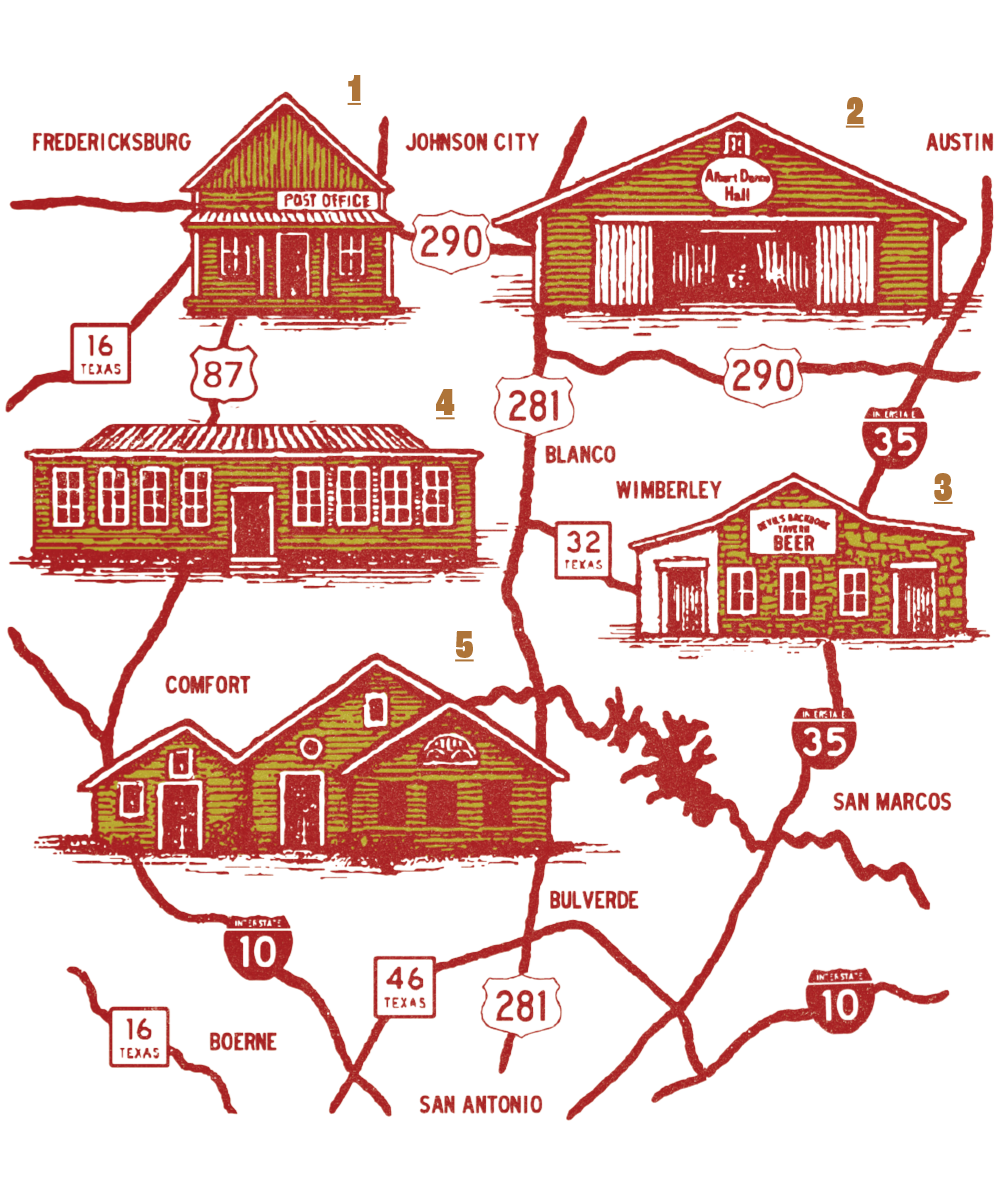
1 LUCKENBACH DANCE HALL
Built in the late 1880s, this classic dance hall in the small town of the same name became a popular destination thanks in part to the 1977 song “Luckenbach, Texas (Back to the Basics of Love)” by Waylon Jennings. luckenbachtexas.com
2 ALBERT DANCE HALL
Constructed in 1922 as a community gathering place for Saturday night social dances, this simple, tin-covered structure in Stonewall is still serving the same purpose more than 100 years later. albertexas.com
3 DEVIL’S BACKBONE
Equal parts dance hall and honky-tonk, this watering hole south of Wimberley opened in 1932—just as Prohibition was winding down—and has been beloved by two-steppers ever since. devilsbackbonetavern.com
4 TWIN SISTERS DANCE HALL
A few miles south of Blanco sits this pristine dance hall, constructed in 1879, with a gorgeous dance floor and an arched ceiling paneled with white wood. Events are like special occasions, held only on the first Saturday of each month. twinsistersdancehall.com
5 ANHALT HALL
An exquisite gem of a venue constructed in 1879 in Spring Branch, Anhalt Hall looks like it has been encased in amber for more than a century. Dancing beneath its wooden rafters wrapped in strands of lights will transport any reveler back through generations of time. anhalthall.com

GRUENE HALL
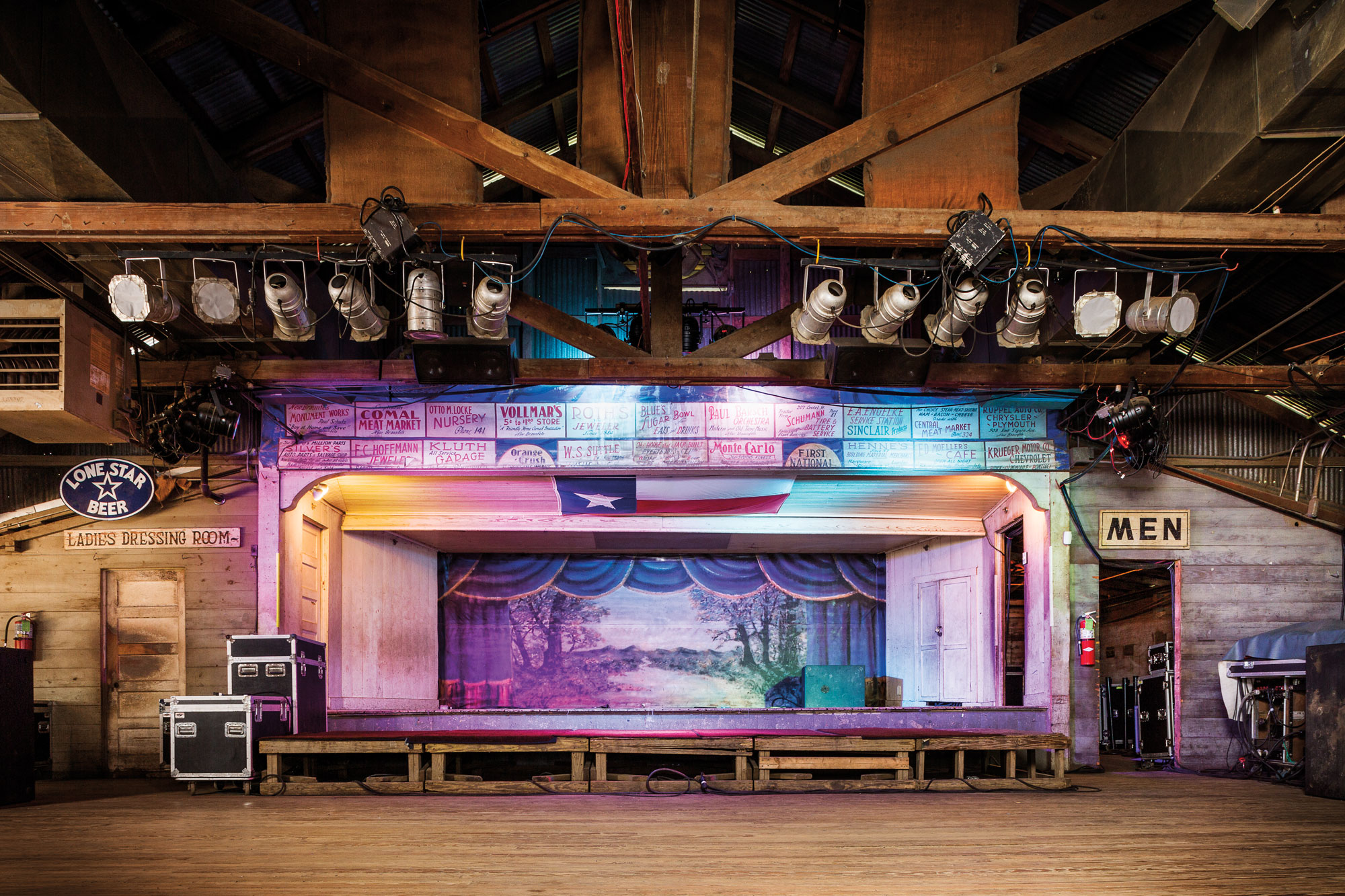
If Texas music is your religion, then Gruene Hall is Mecca. Heck, the white wooden facade of the oldest continuously operated dance hall even exudes a near holy light that beckons the state’s most devout. Built in 1878 by Heinrich D. Gruene—the second son of German immigrant Ernst Gruene—the hall survived the Great Depression and Prohibition and was home to polkas and schottisches before those traditional European dances gave rise to two-stepping. Trace back the roaring river of Texas music and you’ll find Gruene Hall at the headwaters.
The list of notable names to grace its stage are as sprawling as the gnarled branches of the live oak trees that shade the picnic tables in the site’s spacious beer garden. George Strait, Garth Brooks, Loretta Lynn, Kris Kristofferson, and hundreds more have made appearances on this hallowed ground.
Inside the venue, the setting isn’t so different from how it was almost 150 years ago. Dusty floorboards knock under boot heels, exposed rafters form a vaulted ceiling, and music-loving Texans sit at long wooden tables. A vibrant display of neon beer signs adorns the space above the bar, where thirsty patrons sporting cowboy hats sip on beers. The open-air space allows cool breezes during temperate times and has ceiling fans running exhaustively during the long summer months. But true zealots are happy to visit year-round, no matter the weather.
This sanctuary has long been the territory of music luminaries, and that remains true today. In February, Lyle Lovett and his band played a three-night stint that drew sold out crowds. Halfway through the set, Lovett paused to tell a heartfelt story about his friend Townes Van Zandt before performing a cover of the late musician’s song “Flyin’ Shoes.” The audience went pin-
drop silent for the meditation on mortality.
In that moment, you’d swear everyone thought they’d died and gone to heaven. gruenehall.com

ON THIS DATE
NOV. 16, 2016
George Strait performed a surprise show to celebrate the release of his new album, Strait Out of the Box: Part 2, honoring one of the venues that gave him his start all the way back in 1975.

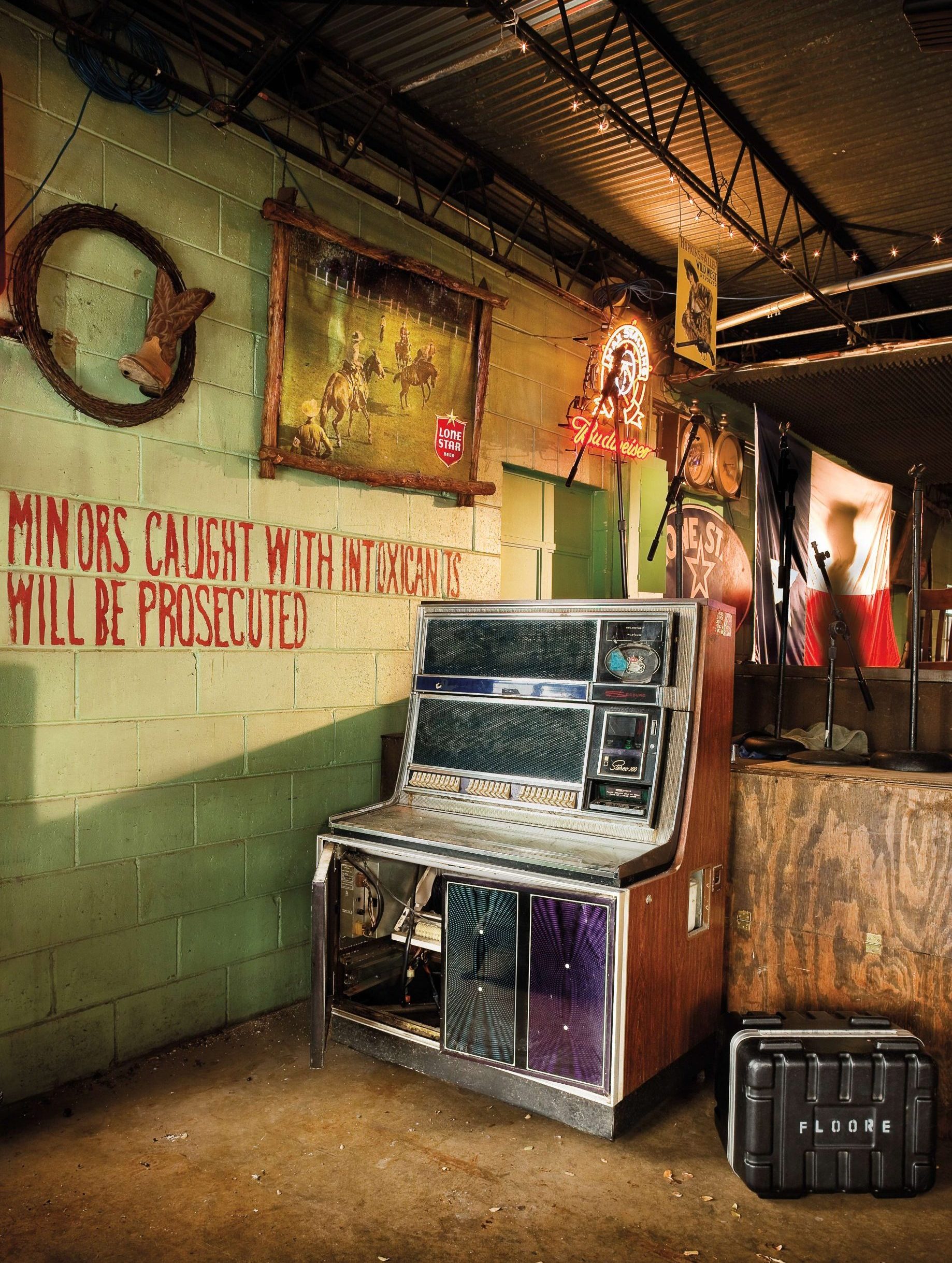
JOHN T. FLOORE COUNTRY STORE
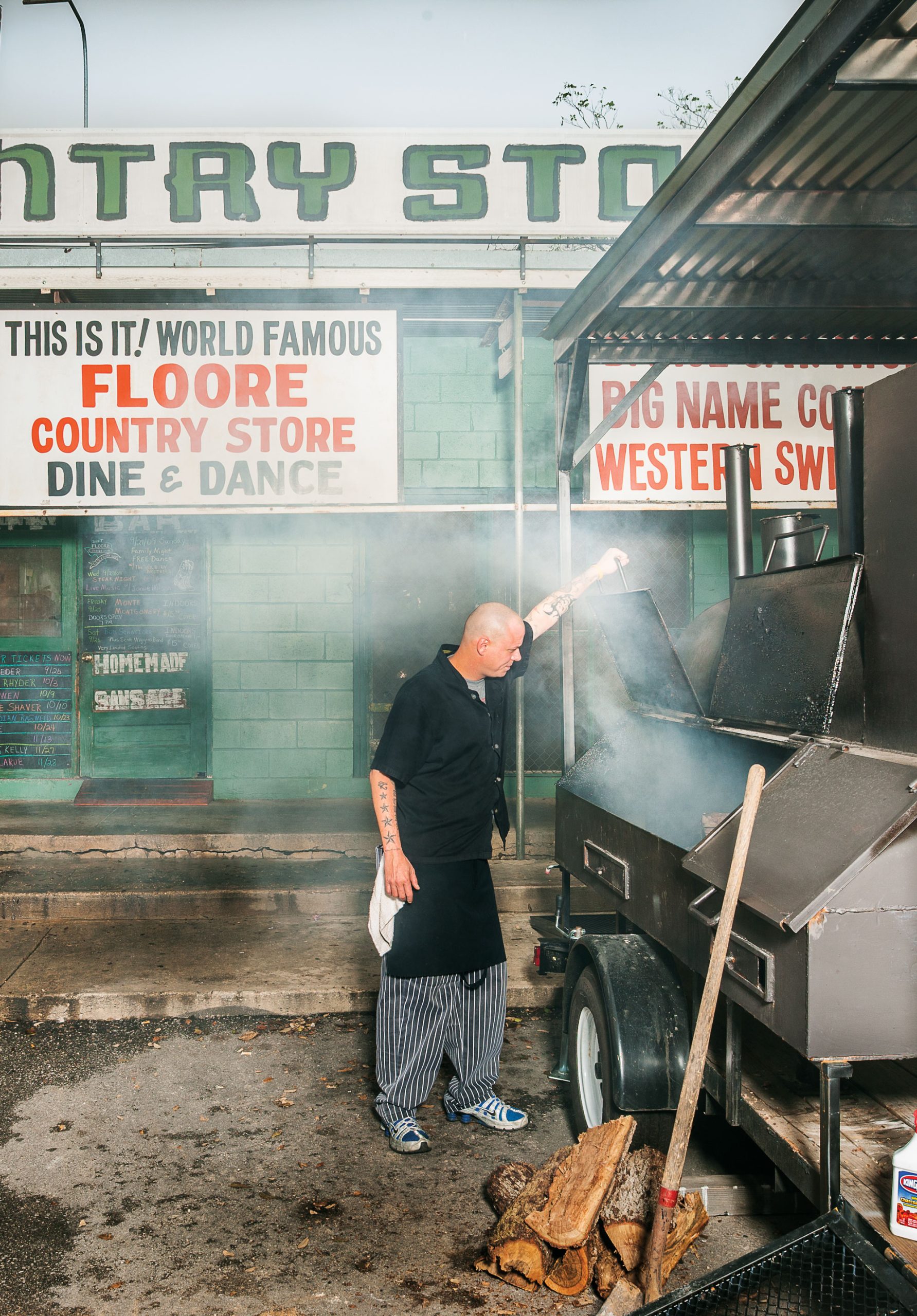
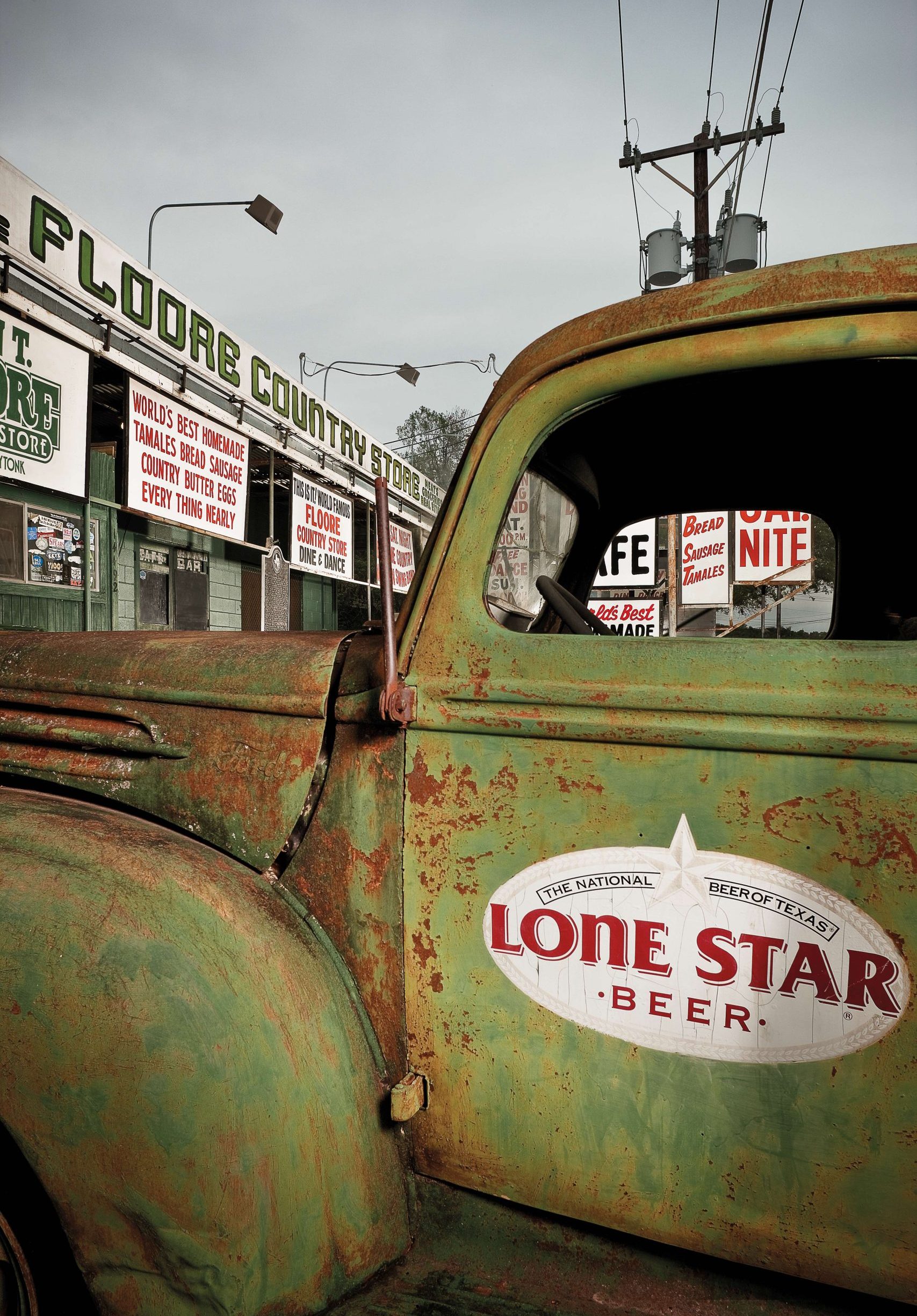
There’s nothing more Texan than a story of humble beginnings. Former theater manager John T. Floore opened this eponymous spot in 1942 as a grocery store to serve the small community of Helotes, which didn’t become an incorporated city until 1981. But after a few years, the unassuming site northwest of San Antonio emerged as a hub for live music, hosting performances by greats such as Hank Williams, Bob Dylan, and Elvis Presley. Vintage posters and photographs of music legends adorn the walls and an array of artifacts—ragged old boots, wagon wheels, saddles, and rusty tools—dangle from the ceiling.
Floore’s (as it’s colloquially called) has also been hailed as a favorite by Willie Nelson, who established a partnership with the proprietor in the 1970s. One sign still standing out front touts: “Willie Nelson. Every Sat. Nite.” Some say that advertisement was more marketing scheme than guarantee, but the Red Headed Stranger did play there often after moving back to Texas from Nashville in 1971.
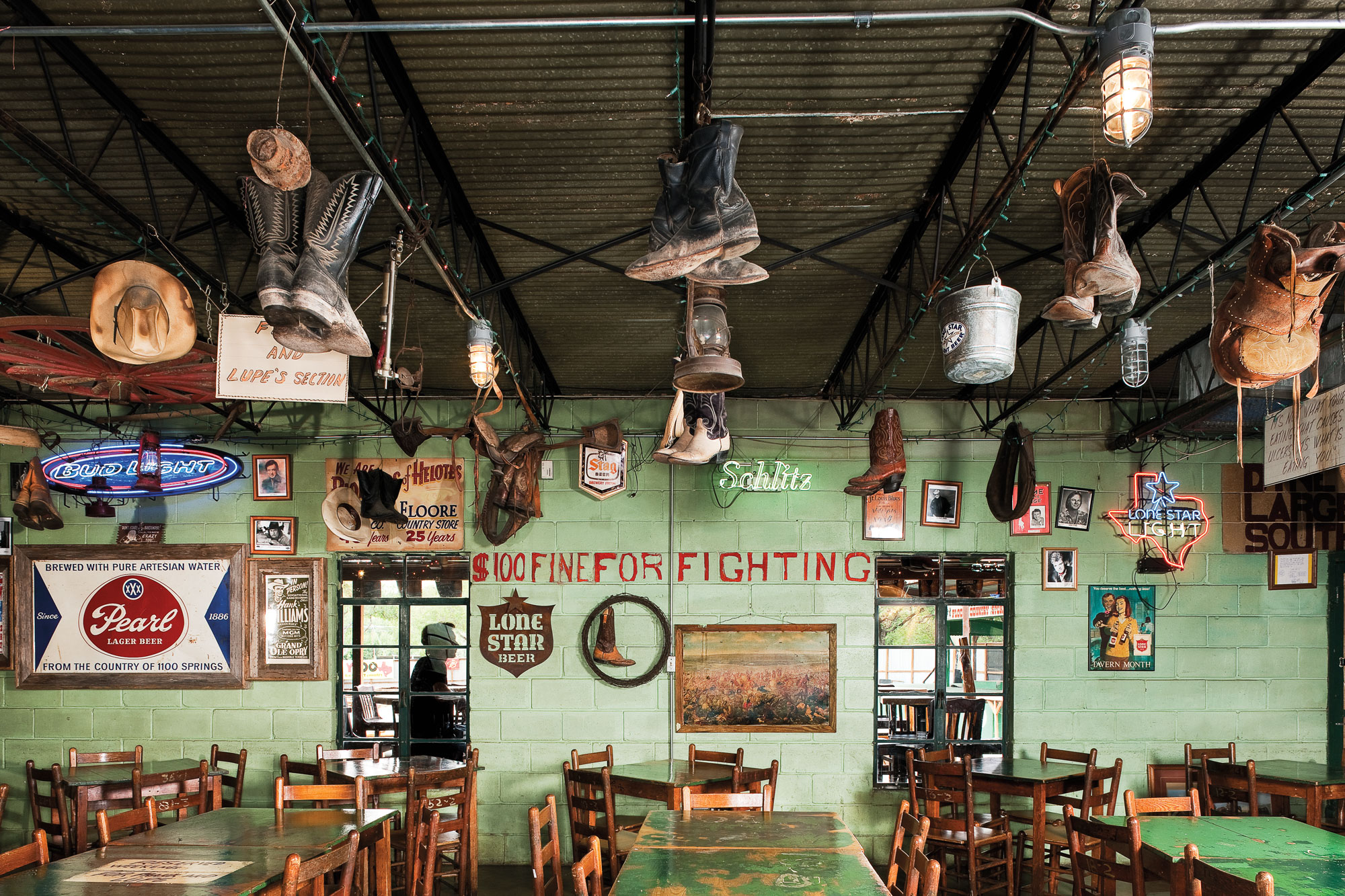
From its onset, the venue has catered to a down-to-earth crowd of families and locals, especially during its decades-old “Dine and Dance” event on Sunday afternoons. On any given weekend, groups that are three generations deep line up at the counter to buy longnecks of Bud to wash down pulled pork sandwiches and hand-cut french fries. When the band launches into Johnny Cash covers, dancers ages 18 to 81 promenade around the room.
“That was the first place we ever played with Willie,” says Asleep at the Wheel front man Ray Benson. “It was great because grandmas would come and babysit the kids while mom and dad danced and drank.” At Floore’s, it’s not just the rustic décor or traditional music that feels nostalgic—it’s also the way the venue exudes a bygone sense of familial warmth. liveatfloores.com
ON THIS DATE
NOV. 16, 2016
Thaddeus Rose and Eddie, a made-for-TV movie starring Johnny and June Carter Cash, premiered on CBS. The film includes footage of the iconic signage outside John T. Floore Country Store and a scene inside the dance hall.


ANDERSON FAIR
Houston’s Montrose neighborhood has been a hangout for artists and freethinkers since the ’60s. Consider it the Lone Star version of San Francisco’s Haight-Ashbury district or New York’s Greenwich Village. In 1969, when Marvin Anderson and Grey Fair opened the aptly named Anderson Fair Retail Restaurant in the neighborhood southwest of downtown Houston, the eatery served cheap spaghetti lunches. But its clientele was mostly musicians and poets, so within a few years, the patrons had turned the place into a hot spot for songwriters.
Unlike the Texas honky-tonks and dance halls that exuded rollicking energy, Anderson Fair was a listening room. People were there to hear the artists, and if you talked during a performance, you were politely asked to leave. Nothing mattered but the song—a fact that should be painfully obvious looking at the building, which was built with recycled wood and vaguely resembles a dilapidated barn. Today, the venue sits between a series of modest bungalows and the loading dock for an art supply store, and it showcases music on weekends.
Despite its unassuming digs, Anderson Fair has hosted a staggering cast of songwriters: Lyle Lovett, Townes Van Zandt, Lucinda Williams, and Guy Clark, to name a few. Perhaps its lasting legacy is Nanci Griffith’s gorgeous album One Fair Summer Evening, which was recorded live in the venue in August 1988. andersonfair.net

ON THIS DATE
AUG. 16, 1994
One of country music’s most unsung talents, Blaze Foley, played a set at Anderson Fair about five years before he was tragically shot and killed in South Austin.

STARLIGHT THEATRE
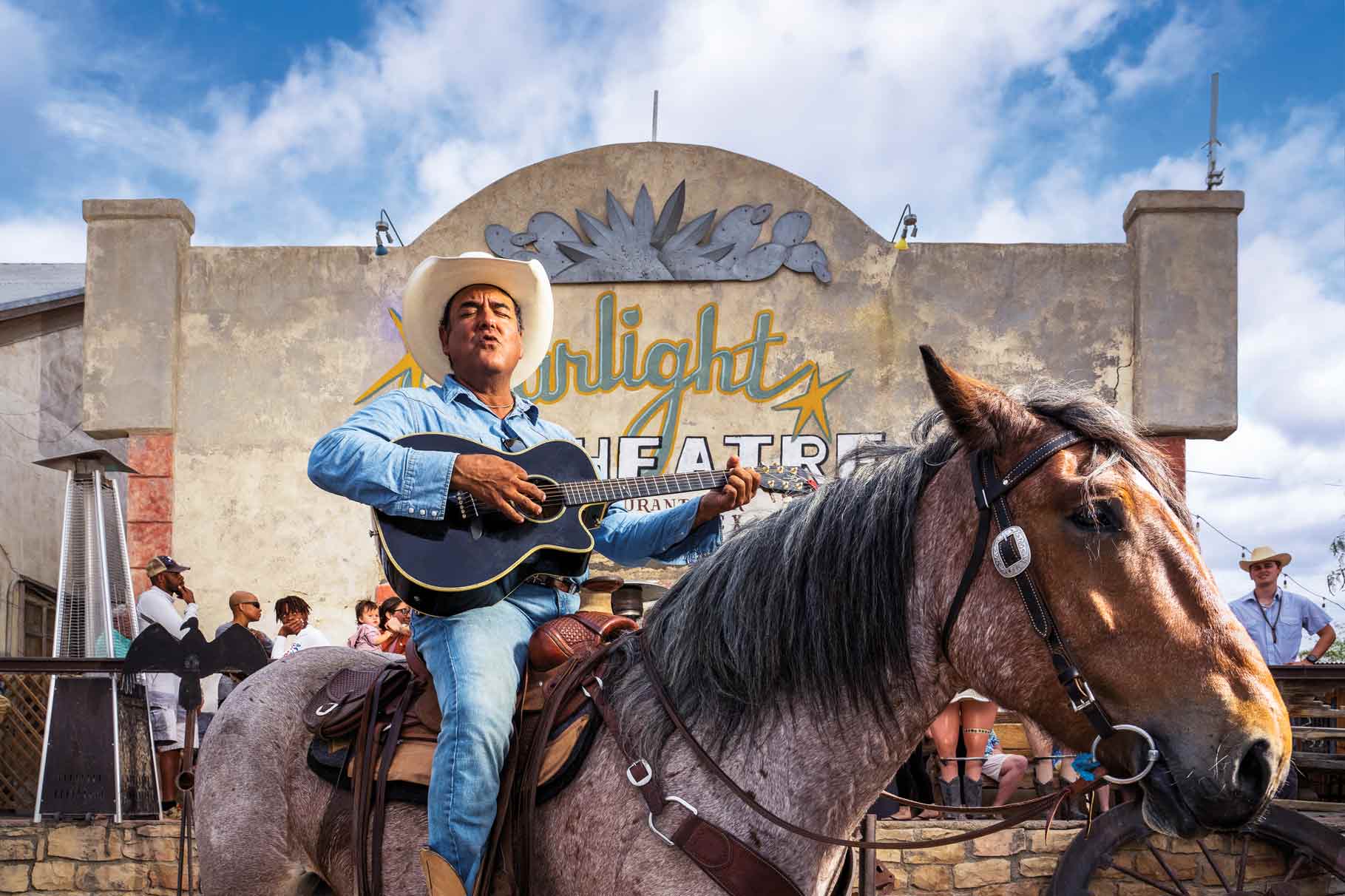
Plenty of Texas’ classic music venues feel anachronistic when you walk through the door. But you have to enter an entirely different world long before arriving at the Starlight Theatre. Located at the edge of Terlingua, a ghost town in the Chihuahuan Desert, the venerated saloon sits on a dusty landscape dotted with scrubby creosote bushes and pale green prickly pear cacti. In the distance, the rugged Chisos Mountains form a jagged border along the horizon.
Until 1991, the Starlight didn’t have a roof, which is how the fabled establishment got its name. Even though this far-flung outpost put a lid on the place and evolved from a no-frills cantina into a full-blown restaurant, it retains plenty of charm. Patrons dine within adobe walls below animal skulls and colorful flags dangling from the ceiling. Near the stage sits a stuffed goat with its head thrown back and a bottle of Lone Star stuck in its maw. That’s Clay Henry, and before his demise, he was elected mayor of Lajitas, a nearby town of about 100 people.
ON THIS DATE
NOV. 3, 1973
During the World Championship Chili Cookoff, Texas’ favorite music ambassador, Willie Nelson, performed a blistering set to a small crowd inside the Starlight Theatre.
Most nights at the Starlight feature live music during dinner hours, while the kitchen serves up chicken-fried antelope steaks and homemade chili. The venue has some tales that add to its mystique—appearances by Willie Nelson and Jerry Jeff Walker among them—and there are a few special occasions of note, including the annual Townes Van Zandt cover night, typically hosted on Jan. 1. Some of the best performances happen spontaneously on the front porch, where a crooner might stop by and start strumming his guitar.
But truth be told, the journey to the edge of civilization demanded by the venue matters more than who’s performing. The whole point of the Starlight isn’t seeing some notable name—it’s gazing up into to those heavenly bodies above and letting the world melt away. thestarlighttheatre.com