

How To Texas is a recurring column offering step-by-step instructions on how to be Texan. We’ll guide you through the cultural traditions, customs, eccentricities, lifestyles, and activities you’ll find on your travels that make the state uniquely Texan.
CULTURE
How to Make Real Texas Chili
Beans or no beans? Well, it depends.
By Wes Ferguson
Are pinto beans swimming in a piping-hot bowl of chili really as blasphemous as some adherents claim? For decades, the noisiest chili heads in the state have waged a fiery war against the co-mingling of beef and legume in a traditional bowl of red.
The no-bean zealots have it all wrong, says Kathleen Tolbert Ryan.
“All these people are fighting over the beans,” she says. “We’re fine with them.”

Ryan is the daughter of Frank X. Tolbert, a journalist, historian, and restaurateur who wrote the classic book A Bowl of Red in 1966. He also co-founded the original Terlingua International Chili Cook-Off in 1967 and lived out his days as the undisputed authority on all things chili con carne.
During a little downtime on a recent afternoon at her business, Tolbert’s Restaurant & Chili Parlor in Grapevine, Ryan pulls out her phone and loads up a video. It’s an undated news program where her father weighs in on the supposed controversy.
“A lot of people think we’re against beans. We’re not,” Tolbert tells his interviewer. The misguided rule, he says, is all based on a misunderstanding. Tolbert had long advised that beans simply not be simmered in the same pot as the chili. “If you cook beans with beef,” he says, “you flunk chemistry, because you turn the beans into a goo.”
Instead, Tolbert clarifies, a discerning chili chef should fully cook the beans prior to adding them to fully cooked chili, easy as that.
Still, pinto beans and other additions are not allowed in competition chili, where the focus is on the meat and spices. Beans come optional in the bowls of red that Ryan serves at her chili parlor, where she still uses her father’s secret recipe she has loved since childhood, although she has slowed down a bit in recent years.
“It’s getting spicier now, the older I get,” she says. “I can’t take the heat like I used to.”
Ryan was a young girl when her dad wrote his history and cultural appreciation of chili con carne, which he grew up eating from chuckwagons on a family ranch in the Texas Panhandle. He traced the traditional grub to chili queens who sold bowls of chili con carne and other Tex-Mex fare from the 1860s to the 1930s at open-air stalls on plazas in San Antonio.
In 1970, Ryan became a “gofer” at the cook-off in Terlingua, back when the judging was still held in the roofless ruins of the Starlight Theatre. She quickly graduated to judge, a role she’s held for more than half a century.
Now her family is also partnering with Fort Worth’s Renfro Foods to bottle a chili starter blend named for her dad. Just add meat (and beans, if you want). The product could hit shelves later this year.
Ryan explains how to make a proper bowl of red.
How to make texas chili
Step 1: Where’s the beef?
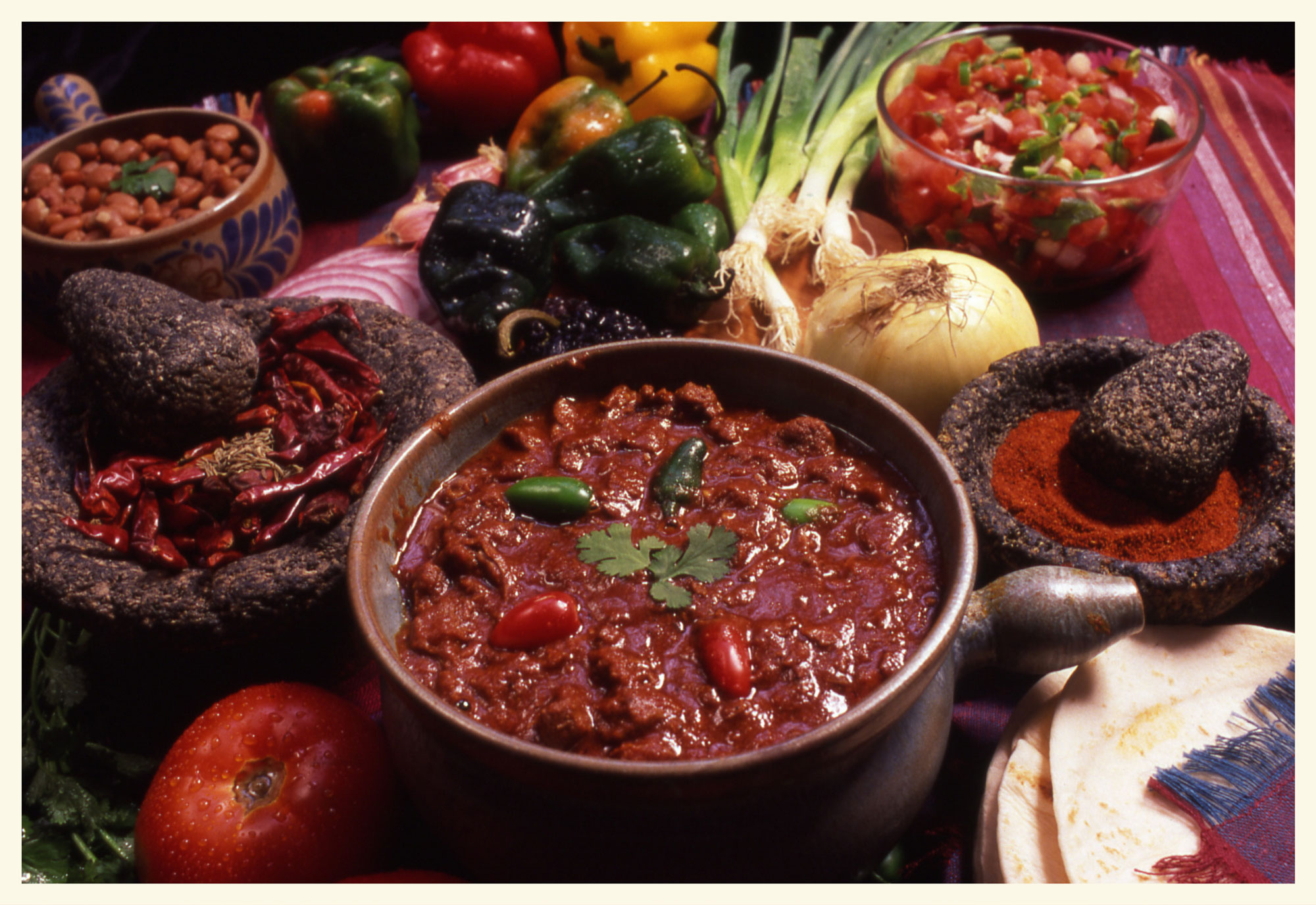
Start with a beef blend of 80% meat, 20% fat. “You don’t want meat that’s too lean,” Ryan says. Also, she says, don’t grind your meat too finely. “We like meat that has chunks in it,” she says, adding that finely ground beef is “more like a no-meat soup.”
Step 2: Time the spices
After you’ve browned the beef to “get all the pink out,” Ryan says, add the spices. Her blend is a closely guarded family secret. Whatever you decide to use—cumin, cayenne pepper, oregano—just be sure to use the freshest spices you can find, when they’re still at peak flavor.
“Don’t go using packages of some mix,” she says.
Step 3: Go low and slow
Simmer the chili, careful to avoid overcooking. “Don’t boil it to death or something,” Ryan says. Once the pot is done, there’s no big rush to bowl up the chili. “It’s always better the next day,” she says. And again, if beans are your style, remember to simmer them separately to add later.
Step 4: Your bowl, your way
Once the Texas red is done cooking, there’s no wrong way to construct your perfect bowl.
“To me, chili is really good with chips or cornbread,” Ryan says. “A lot of people love crackers. At home, we pile on red onions, cheddar cheese, and Fritos.”