

Last Bud Not Least
This spring, gaze beyond the bluebonnet and discover these five overlooked wildflowers
The sight of parked cars cluttering the sides of Bracken Cave Road in Comal County has become commonplace on balmy spring days. Their passengers stand nearby, cameras and iPhones at the ready, gazing across a monochromatic white field. A slight breeze ripples its surface, the individual flowers forming the expanse barely detectable. The snowy field recalls a sea of frothy waves, the effect created by thousands of recently sprouted rain lilies undulating after a shower.
Texans adore our spring wildflowers: the iconic bluebonnet, firewheel, castilleja (or Indian paintbrush), pink evening primrose, and prairie coneflower. But to focus exclusively on that small group of plants is to miss out on a true Texas bounty. The state is home to nearly 2,700 wildflower species that erupt everywhere from the Piney Woods to the Panhandle and from the Trans-Pecos down to the Rio Grande Valley. “There’s a huge amount of diversity out there,” says Michael Eason, author of the field guide Wildflowers of Texas and vice president of conservation at the San Antonio Botanical Garden. “If you stop and walk around and really take a look, you’ll start to notice.”
And you don’t have to drive far beyond Texas cities or hike into the wilderness to find them. Some of the best places for surveying the breadth of Texas’ flora are roadsides, Eason says. Often hidden in plain sight, underappreciated specimens buck convention with atypical pigments, fleeting lifespans, and blooms in every shape imaginable. Fences and mowing programs, like one implemented by the Texas Department of Transportation, shield these thorny, fuzzy flowers from farming operations and keep invasive plants at bay. TxDOT also sows about 30,000 pounds of myriad wildflower seeds each year. This partnership with nature ensures roadsides across the state offer a kaleidoscope of color: delicate ivory, soothing lavender, scarlet-orange, and everything else beyond the blue.
Ocotillo
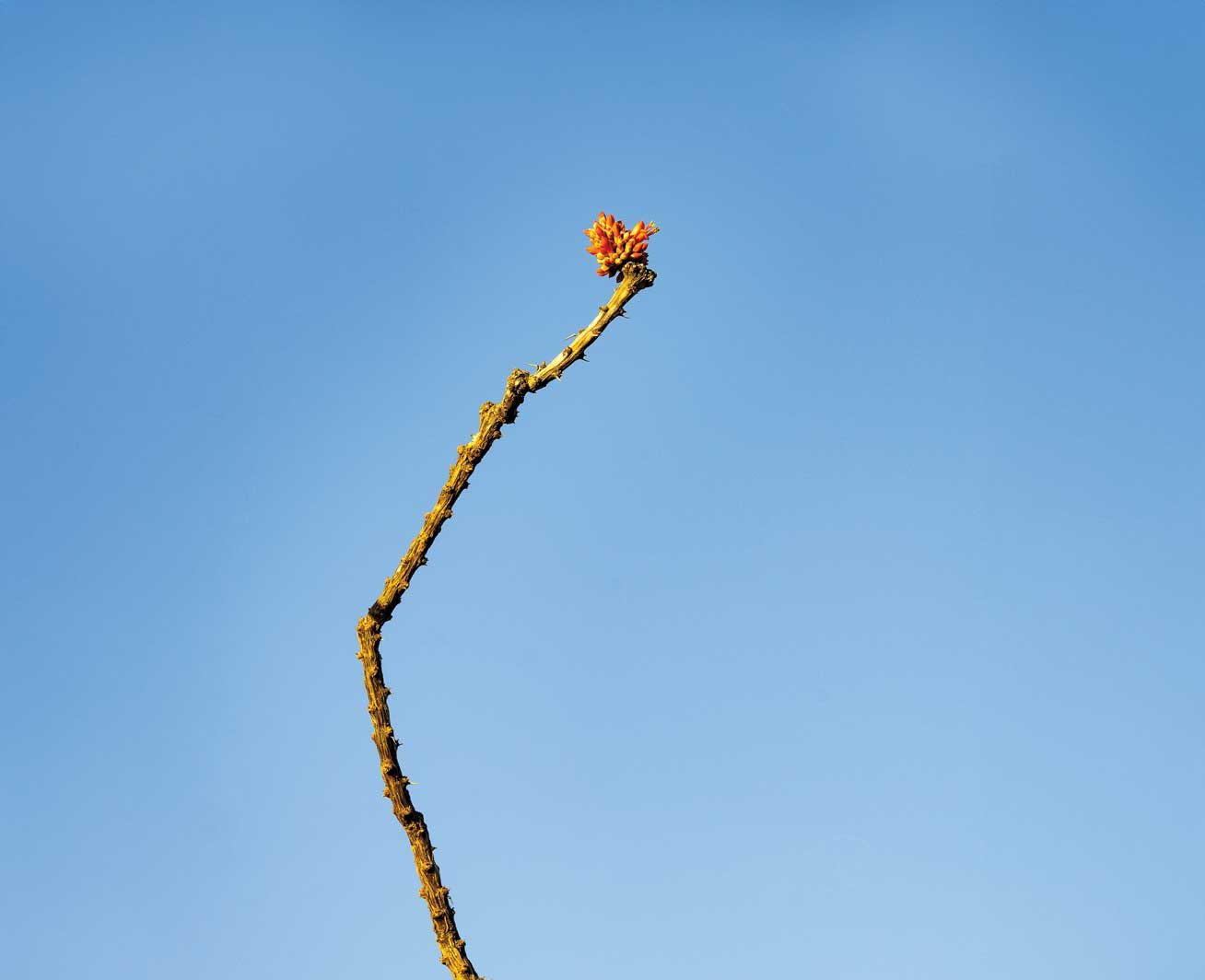
The unbranching stems of ocotillo snake toward the West Texas sky like arms in supplication. When its request for rain is granted, the shrub quickly sprouts tiny green leaves that last while the moisture lingers. As the soil dries, the leaves wither and drop, leaving a brown shoot with a lifeless appearance that belies the activity inside.
A spiny shrub rather than an herbaceous flower, ocotillo are able to survive monthslong dry periods by photosynthesizing in their stems. Their flowers also respond to rain, bursting forth in reddish orange blooms even outside their typical spring-and-early-summer growing season.
In some parts of the ocotillo’s range, plant dealers have dug shrubs from private landowners’ property—with permission, but the practice has left fewer to propagate. “This overharvesting could lead to the demise of the ocotillo,” says Lisa Gordon, executive director of the Chihuahuan Desert Nature Center and Botanical Gardens near Fort Davis, which features examples of the plant. If you live in the Trans-Pecos region and want to grow ocotillo, try purchasing plants grown from seed or cuttings from trusted sources such as the Sul Ross State University Plant Resources Center.
The Trans-Pecos also showcases architecture crafted using ocotillo. A practice seen throughout the Southwest, ocotillo construction utilizes dried stems to help build homes and fences, a technique developed by Indigenous peoples and subsequently adopted by European settlers. For instance, an ocotillo fence has stood for decades near the Sauceda Ranger Station at Big Bend Ranch State Park. A relic of the site’s former life as a working ranch, it still sprouts leaves and flowers after significant rains. Another compelling example can be seen at the Thunderbird Hotel in Marfa, where ocotillo fences surround the pool and run alongside the office building.

Where to Find
In the Chihuahuan Desert west of the Pecos River. Ocotillo grow in Big Bend National Park, along roadsides near Fort Stockton and Marathon, and in the Franklin Mountains of El Paso.
When in Bloom
Spring, summer, after a fall rain
Bloom Color(S)
Flaming orange-red
Size
Up to 20 feet tall
Hill Country Rain Lily
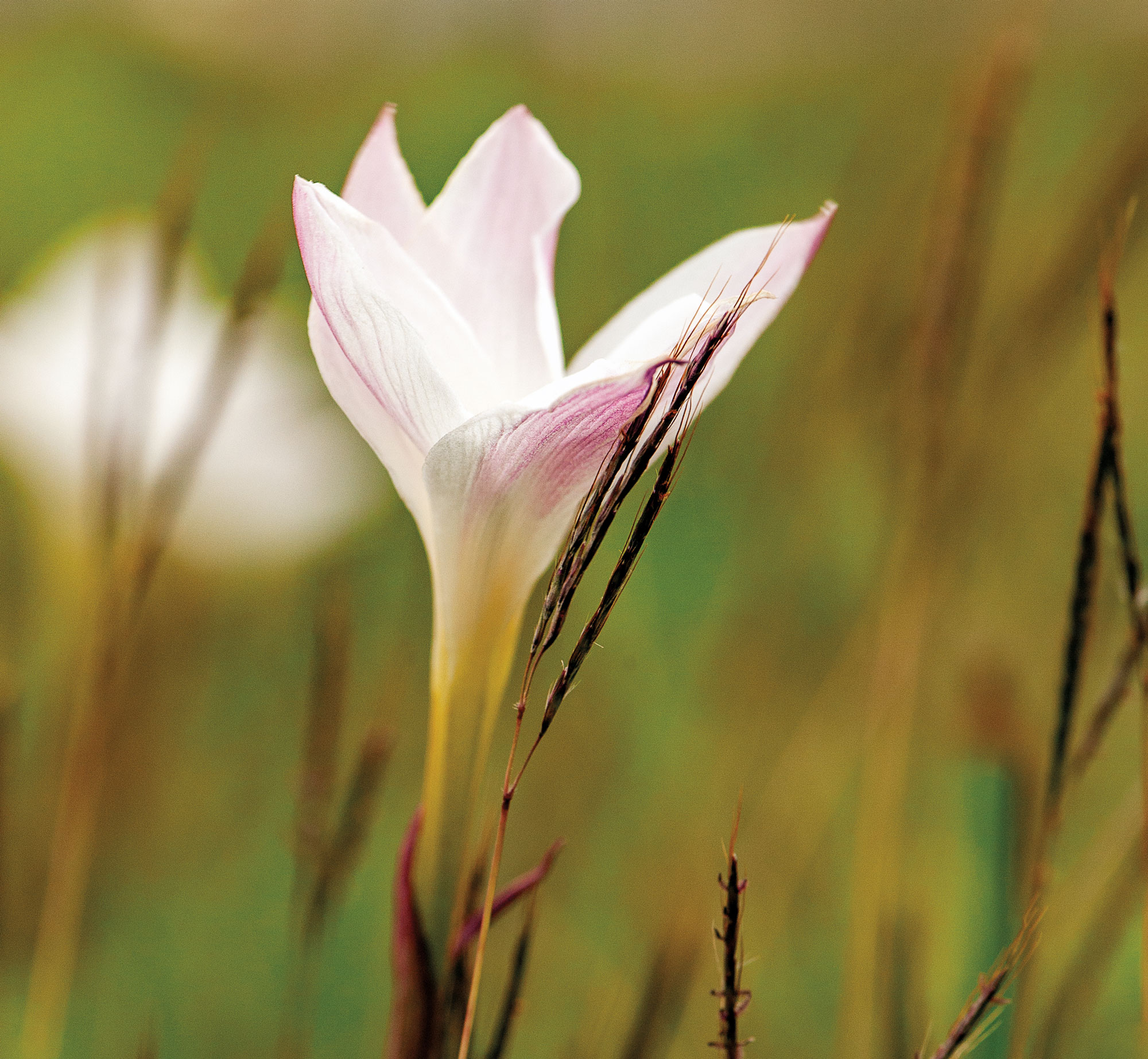
As their name suggests, rain lilies respond to spring and early summer downpours. Within a day or two of a deluge, the creamy trumpet-shaped flowers pop up in fields and yards from Brownwood to Corpus Christi. Their sweet fragrance and pale petals, bright in the moonlight, attract pollinating moths. After a day, those blooms turn light pink, and after two or three, they wither. The plant then goes dormant until the next seasonal rainfall. “One of the things I like about rain lilies is that they are so ephemeral,” says Andrea DeLong-Amaya, horticulture educator at the Lady Bird Johnson Wildflower Center. “It’s hard to take them for granted.”
As the flower fades, it forms a capsule that ripens and opens to drop black, papery seeds. The newly sprouted seedlings resemble grass for their first few years, displaying only a leaf or two and storing most of their energy in the bulb growing underground. Eventually, a soaking rain will trigger the plant to erect a flower stalk, and the cycle begins again. Because the seeds usually fall close to their mother plant, clusters of dozens or hundreds of rain lilies can emerge after a storm, giving any roadside the appearance of a snow-dusted field.

Where to Find
Central Texas and the eastern portion of the Edwards Plateau to the coast. Eason has personally spotted hundreds of thousands of the flower west of San Antonio along Interstate 10 after a rain.
When in Bloom
Spring and summer after rains
Bloom Color(S)
White, pink
Size
Up to 1 foot tall
Drummond’s Phlox
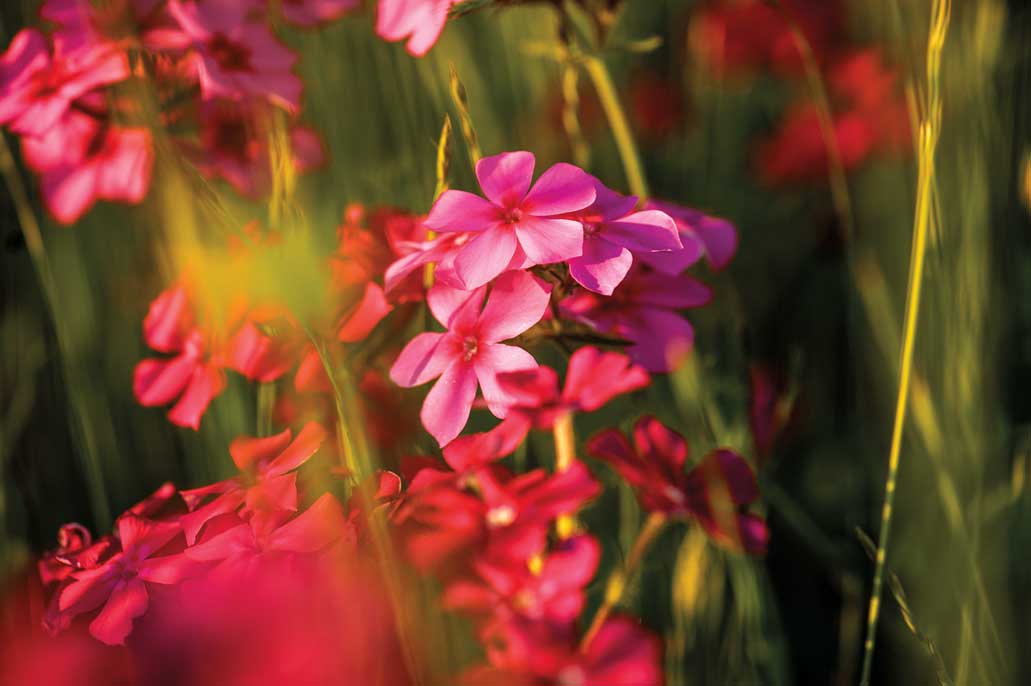
AAs an aspiring gardener growing up in Longview in the ’70s, Greg Grant admired the Drummond’s phlox he saw in open pastures and in a neighbor’s yard. Different plants produced a host of five-petaled flowers in peach, white, red, blinding fuchsia, and even pink-and-white stripes. Fields of phlox were “like a multicolored floral carpet,” says Grant, a columnist for Texas Gardener magazine and the Texas A&M AgriLife Extension Service horticulturist for Smith County in East Texas.
Nearly two centuries ago, the plants also caught the eye of Scottish botanist Thomas Drummond during a collecting expedition. One of several naturalists who traveled through North America gathering plant and animal specimens to send back to Europe, Drummond took samples of 750 species of plants during his 1833-34 travels in Mexican Texas. It was a rough journey: He faced floods, extreme heat, food shortages, and a debilitating bout of cholera. Nevertheless, Drummond shipped phlox seeds to England, where hybridizers developed numerous colors of the flowers. The plant became a popular ornamental in European gardens, and varieties cultivated in Europe were later sent back to the U.S.
That Drummond managed to survive, much less preserve his specimens and seeds, is incredible, Grant says. “It’s hard to even fathom the fact that somebody is traipsing through Texas when there’s no water, no electricity, no bathroom, no towns, no roads—and yet he’s still contributing to science and horticulture to this day.”
Where to Find
Central and East Texas, from the Dallas-Fort Worth area to the South Texas Plains, and as far east as Lufkin. They can be prominent along US 281 south of San Antonio to Alice and Falfurrias.
When in Bloom
Spring and early summer
Bloom Color(S)
White, red, pink, lavender, peach, multicolor
Size
6-20 inches tall
Gregg’s Mistflower
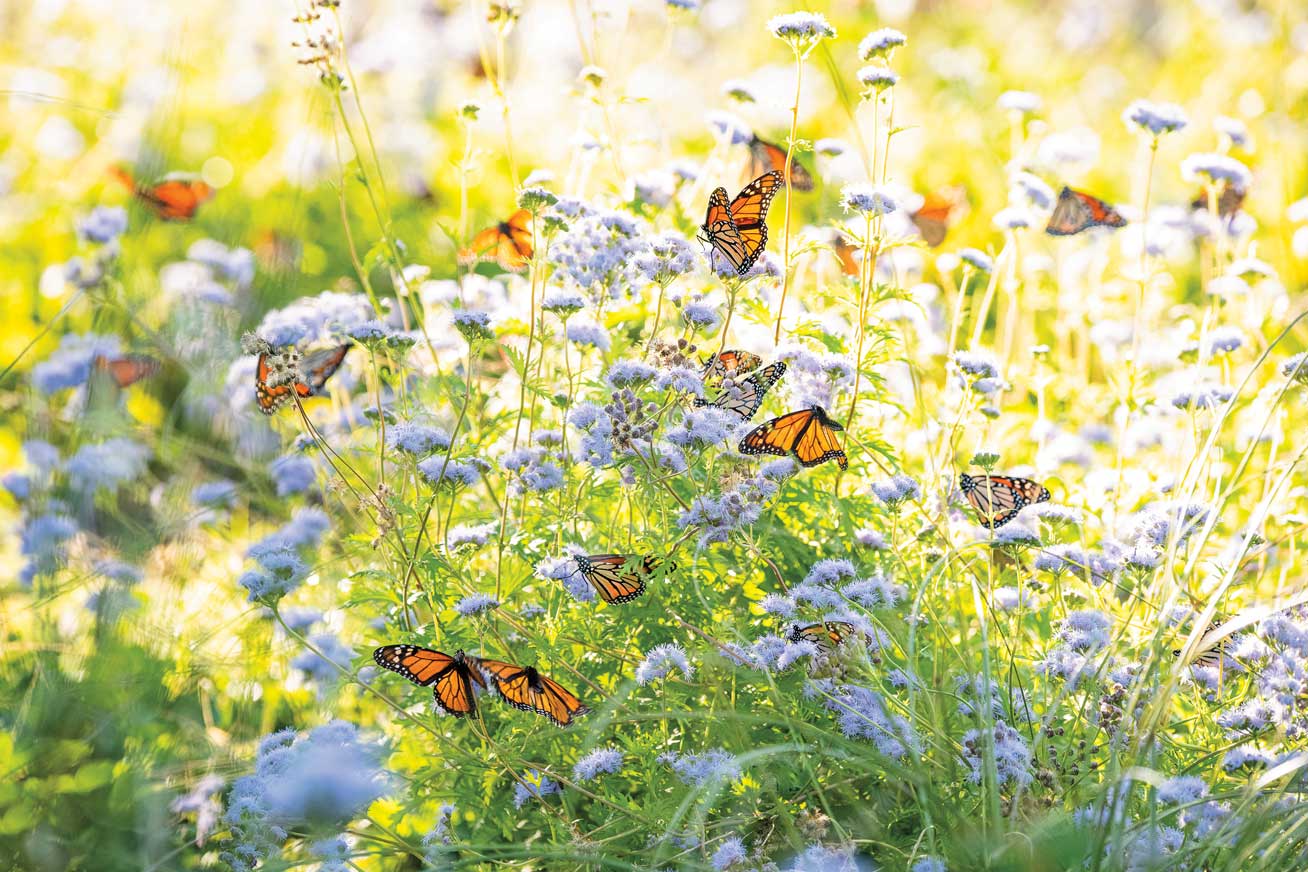
ANative to the Edwards Plateau and the Trans-Pecos regions, Gregg’s mistflower is a hardy plant with a long bloom period that flourishes in all kinds of soils with minimal maintenance. Some experienced gardeners consider it a “garden thug” for its tendency to take over a plot, Grant says, but a master’s frustration is a beginner’s good fortune: “A plant that most people couldn’t kill is a good thing.”
Along with 22 other species of plants, Gregg’s mistflower is named in honor of Josiah Gregg, a native Tennessean who spent much of his adult life traveling throughout the Southwest as a merchant and correspondent during the Mexico-American War. He explored Texas from 1841-42, taking copious notes on the natural world that informed his 1844 book Commerce of the Prairies.
His namesake plant’s fluffy lavender blooms attract clouds of monarch butterflies and their lookalikes, queens, especially in late summer and early fall. The flowers produce an alkaloid compound called intermedine that male queen butterflies convert into a pheromone to attract females. Once they’ve found a partner, males combine unconverted intermedine with sperm and nutrients and pass it to females when they mate; this makes her eggs bitter, protecting them from predators. The relationship between the queens and the flowers is mutually beneficial. “As the butterfly pollinates the flower, the flower allows the butterfly to reproduce,” says Monika Maeckle, the author of The Monarch Butterfly Migration and founder of the San Antonio Monarch Butterfly and Pollinator Festival.

Where to Find
From the Hill Country southwest to the Rio Grande and throughout the Trans-Pecos. Look for them in the Chisos Basin at Big Bend National Park, near the visitor center and along the Window View Trail.
When in Bloom
Spring, summer, fall
Bloom Color(S)
Purple
Size
Up to 2 feet tall
Goldenmane Tickseed
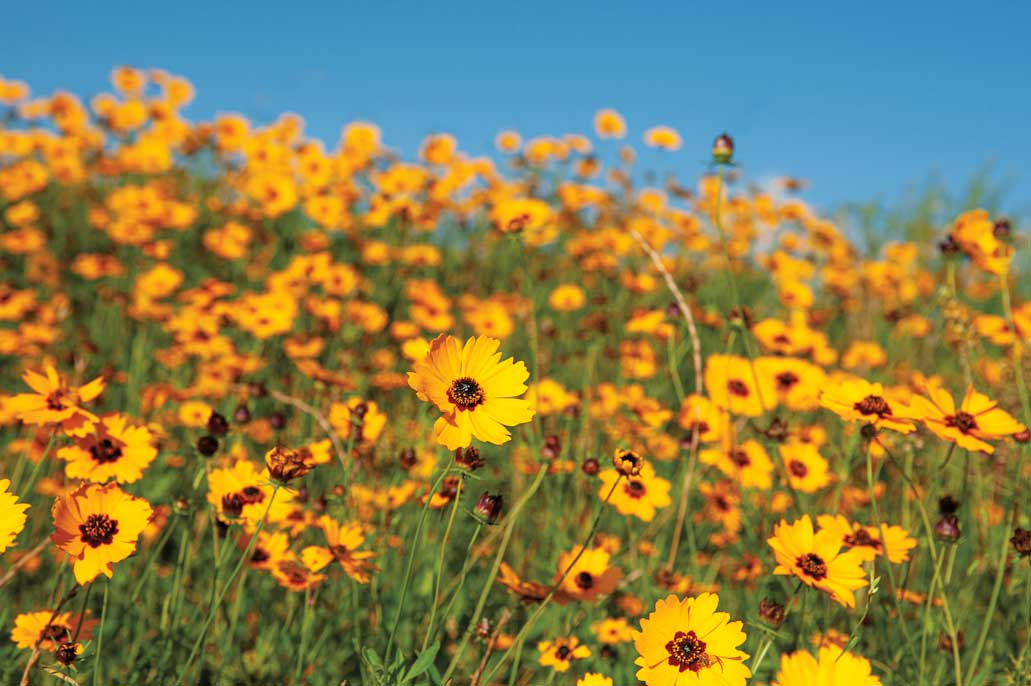
ACheerful Coreopsis basalis thrives from the Edwards Plateau in the west to the Post Oak Savanna in East Central Texas, as well as along the Gulf Coast. In early spring, it blooms abundantly in Galveston’s historic Broadway Avenue cemetery complex, an explosion of gold against the weathered gray stones.
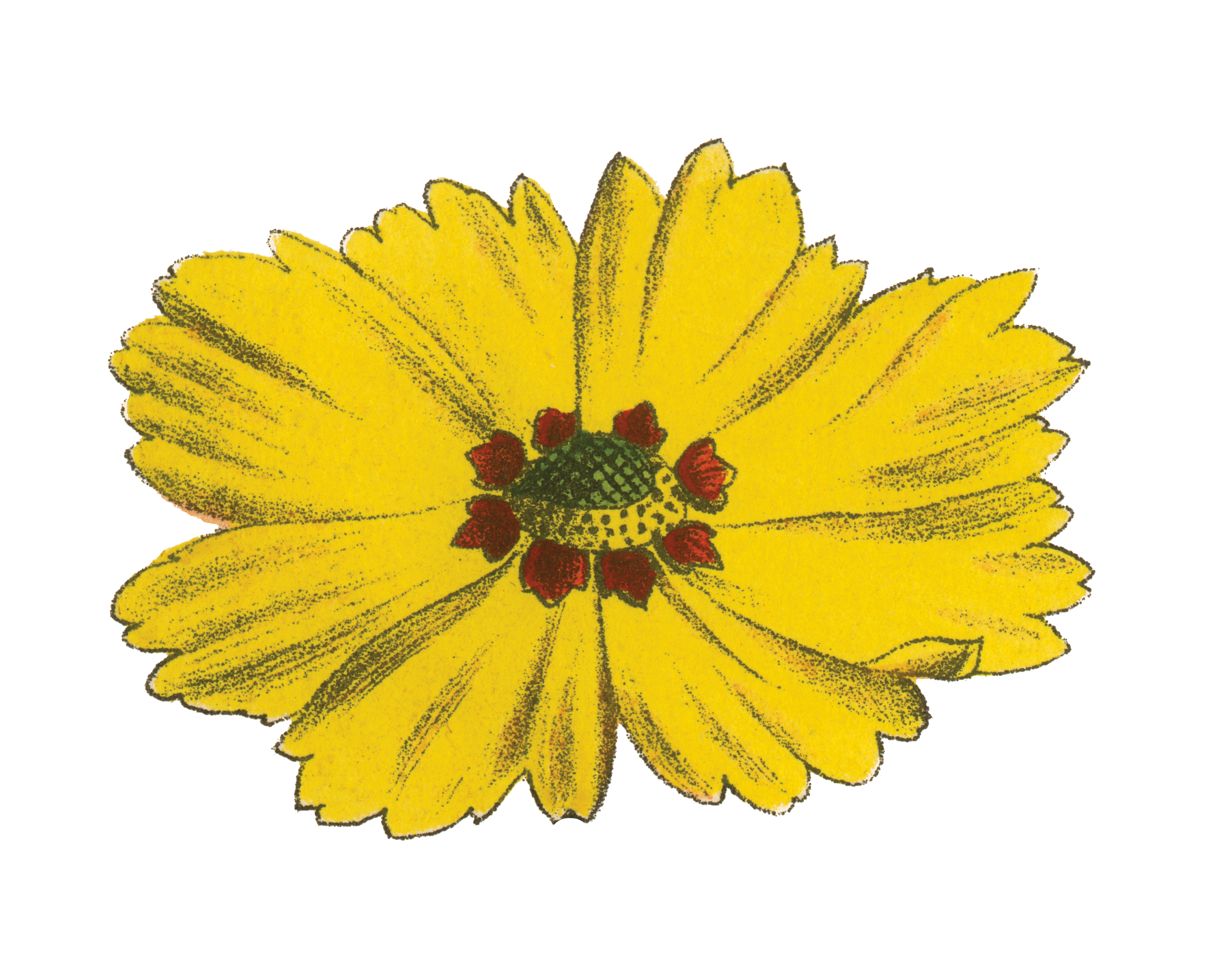
Coreopsis, like sunflowers, is a member of the Asteraceae family, formerly known as the Compositae family—so named because each flower head is actually a cluster of multiple flowers. Plants in this family generally have ray flowers, which most observers recognize as petals, and disk flowers, numerous tiny florets in the center. This feature makes the Asteraceae family especially attractive to bees and butterflies, DeLong-Amaya says. “The butterflies like to land on the flower head and perch while they take nectar from all those individual flowers,” she says. “It’s an efficient way for them to forage instead of them having to hover or cling onto something.”

Where to Find
Concentrated in the east-central part of the state, from Austin to east of College Station and south to Galveston and Corpus Christi.
When in Bloom
Spring and summer
Bloom Color(S)
Yellow
Size
Up to 20 inches tall