

WILDLIFE
Creature Feature
Seven animals you may see, hear, or smell under the stars
By Asher Elbein
This story is part of “Night Shift,” a feature on nighttime adventures in Texas.
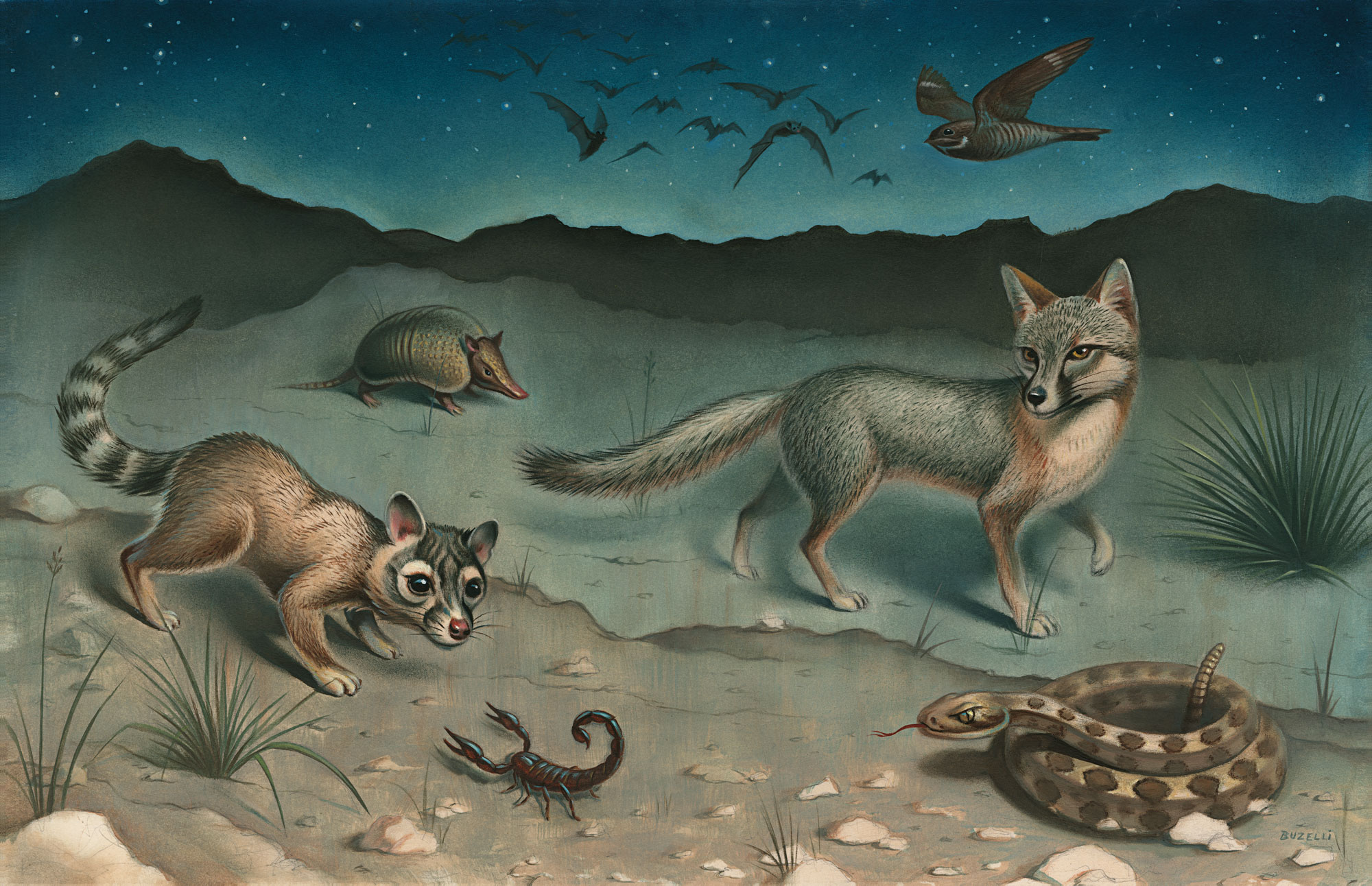
A number of species go out and about after dark, preferring the cooler temperatures and soft gloom to the harsh sun. (Who can blame them?) These are a sampling of some you could glimpse in the moonlight.
RINGTAILS
Though they’re often mistakenly referred to as ringtail cats, the shy hunter is not a cat at all; it’s actually a relative of the raccoon. Fond of rocky and desert landscapes, the elusive animals are most likely to be seen during a night hike near water and caves in the Panhandle Plains, Hill Country, and West Texas.
Armadillos
Hear rustling during a night hike? Chances are you’ve stumbled across an armadillo. These snuffling beasts like it cool, so they most often leave their burrows in evenings to forage. During early summer, mothers bring out their quadruplet babies to rootle in the leaves with them.
scorpions
These shy arachnids with poor vision are at their most active in the dark, creeping out from burrows or hiding in logs and rocks to hunt other invertebrates. In the deserts of West Texas, you can observe scorpions by shining a UV bulb. They glow with fluorescent radiance under a black light.
mexican free-tailed bats
Thirty-two of the 47 known species of bats in the U.S. can be found in Texas, but the most commonly seen species is the Mexican free-tailed bat, which settles in maternity colonies all around the state. Peep 20 million of them at dusk at Bracken Cave near San Antonio, where they erupt each evening to swallow up migrating insects.
rattlesnakes
Rattlesnakes do their best hunting at night. Several species found throughout Texas prefer to coil up in the brush alongside rodent trails, relying on their heat-sensing pits to help them target scurrying rabbits and rats. Keep an eye out for them if driving or hiking backcountry roads after dark.
common nighthawks
On summer evenings, nighthawks—adorable, big-eyed birds—soar in elegant turns over canopies and plains. The first sign of their presence is their call: a short, sharp peent, peent. Like bats, they snatch bugs out of the air, and dusk is your best chance to see them in their element. At daybreak, their black-and-white camouflage- patterned feathers make them almost invisible.
gray foxes
Night in Texas state parks sometimes brings the wild yipping and glibbering of coyotes. But if you’re lucky, you might see a quieter shape skulking around a campground: the gray fox. Found throughout the state, these animals climb trees and dine on rodents and fruits.