

The Great Texas Beach-Off
Roughly 60 beaches dot the Texas coastline—from a remote island that has hosted five U.S. presidents, to a space station with rockets blazing, to a wildlife sanctuary that makes you feel like you’re on Survivor. Here, seven writers present their cases for the best beach in Texas.
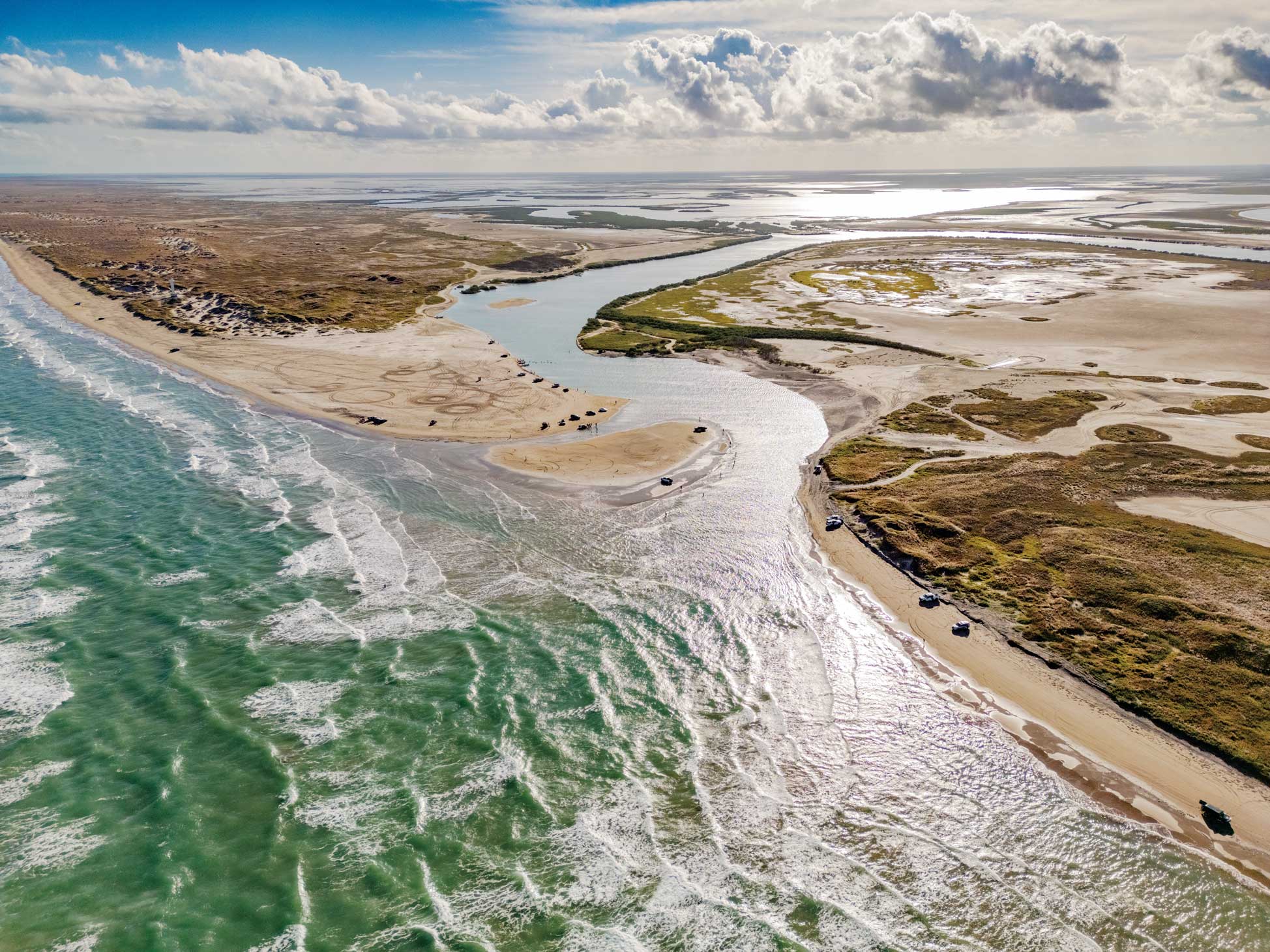

Boca Chica
Boca Chica is the best beach in Texas because
there’s great sand, great surf, great dunes—and nothing else.
By Joe Nick Patoski
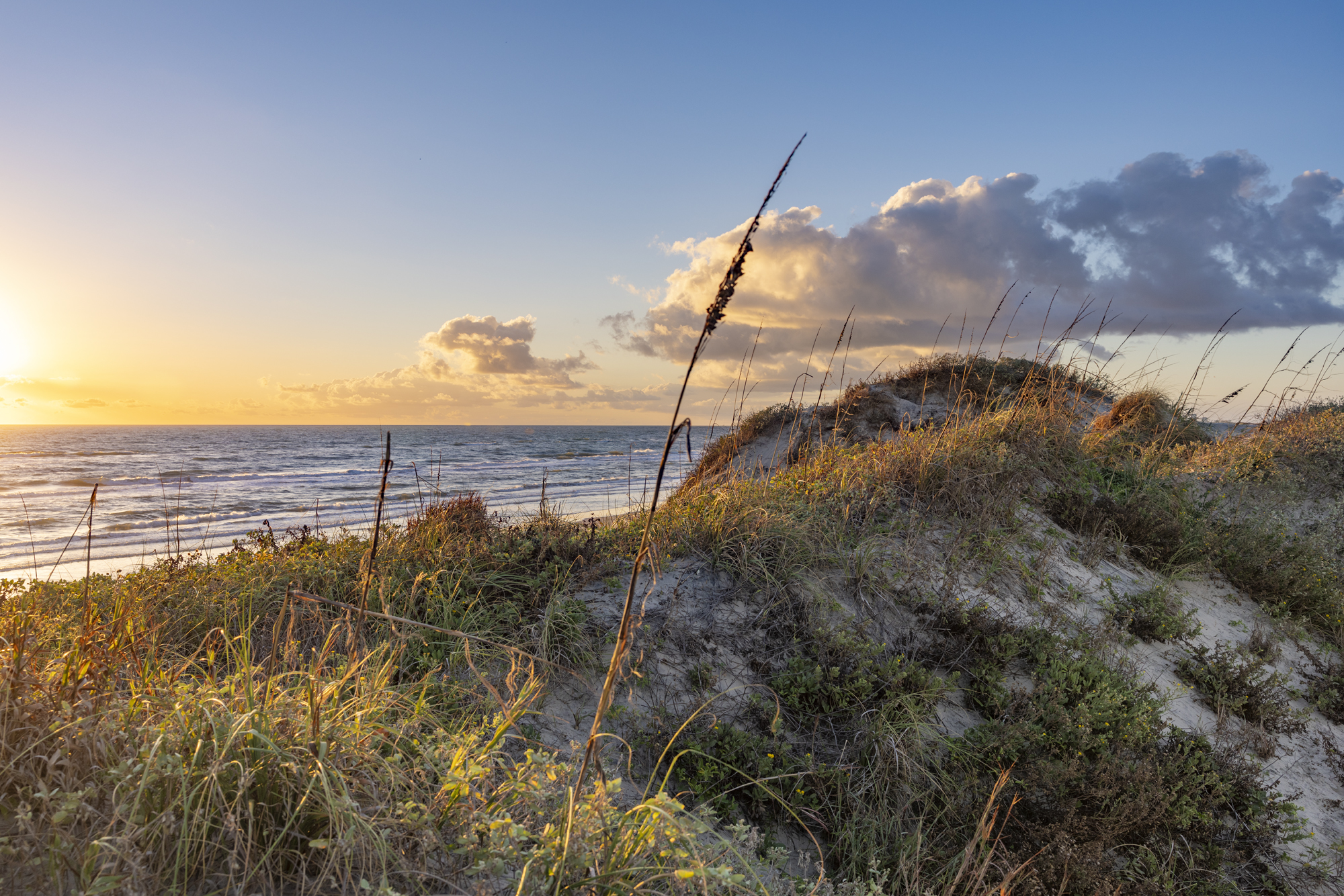
Over a lifetime of Texas coastal recreation, I have observed that the grains of beach sand get whiter and fluffier—and the water clearer—the farther south you go down the coast. Boca Chica is as far south as you can get. This is pura playa: unspoiled and hard to get to.
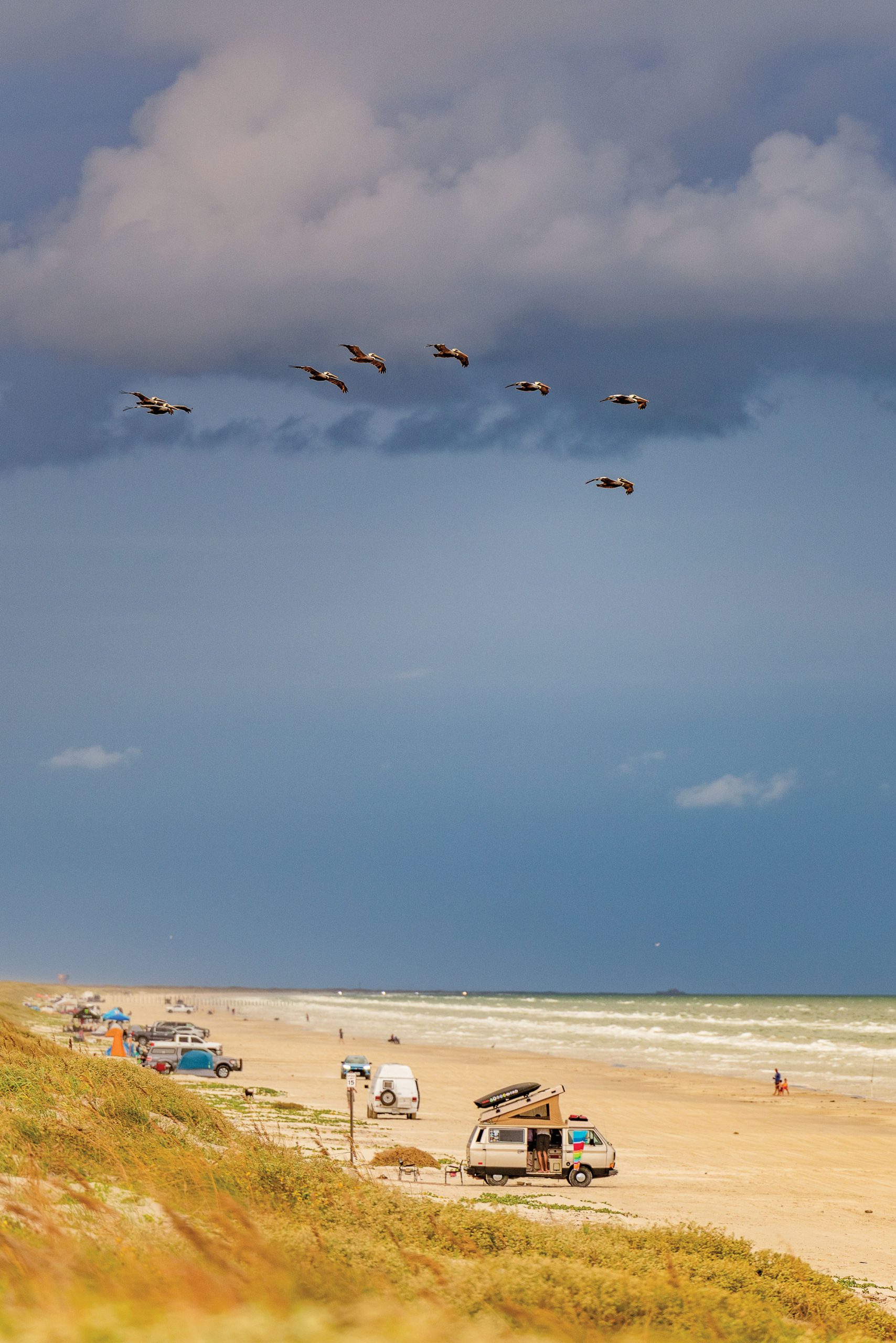
“My favorite beach on the coast used to be Boca Chica—before Elon,” says Richard Moore, naturalist guru of the Rio Grande Valley and creator of KVEO-TV’s Outdoor Report. He’s referring to the SpaceX rocket launch site Elon Musk established on the peninsula 12 years ago. The biggest rockets in the world, which blast off less than a mile from the beach at SpaceX’s Starbase, have dramatically changed the approach to Boca Chica. But once you’re on airy white sand, it’s pretty much the same as it ever was.
Boca Chica was always considered Brownsville’s beach, accessible long before bridges connected the mainland to either end of Padre Island. Despite attempts to transform the area with resorts and golf courses, it remained stubbornly undeveloped until SpaceX broke ground on its headquarters in 2014.
The 25-mile drive from Brownsville on State Highway 4 is often bumper-to-bumper slow, with big trucks hauling heavy machinery on the unimproved two-lane blacktop. But the eye candy along the way—row after row of gray Cybertrucks; Starhopper, the retired prototype of the Starship program; various megabuildings and launchpads—is more visually stimulating than the usual shell shops and condo high-rises leading to many other Texas beaches.
There is absolutely no infrastructure on Boca Chica beyond beach condition signs at the end of the pavement. No restrooms, no umbrella rentals, no vending machines, and sometimes no cell service. This is a bring-your-own-everything beach. There is nothing for sale, nothing to buy. Nada.
Go left and it’s 5 miles to the jetties directly across from South Padre Island. Go right and it’s 2 miles to the very end of Texas, the boca of Boca Chica, the mouth of the Rio Grande. On the beach, you’re standing on one side of an international border, and those people splashing around and fishing on the other side are in Mexico.
Access to Boca Chica is subject to high tides and inclement weather, naturally, but also to rocket tests and launches (for updates, text BEACH to 866-513-3475 or visit starbase.texas.gov). Like everywhere along the Texas coast, incursions of seaweed and Portuguese man o’ war can harsh your vibe. But on a warm sunny day, expect to join dozens of other beachgoers setting up shop beside their pickups to lounge in the sun, fish, swim, surf, beachcomb, wander, or simply enjoy the sea breeze, the shorebirds, the dolphins, and the squadrons of pelicans overhead.
The beauty of Boca Chica is that it’s stripped down to the basics. It may be a whole other deal behind your back with the space industry, but in front of you is the Texas Gulf at its very best. One last thing: Remember to pack out your own trash. This is a sore subject. Daily beach cleanings like they have at Port Aransas and South Padre would be a nice upgrade. Do you read me, Starbase?

BEACHING 101
SUNSCREEN
“Wear sunscreen,” Chicago Tribune columnist Mary Schmich wrote in a 1997 commencement speech parody that went viral. “If I could offer you only one tip for the future, sunscreen would be it.” Sunscreen skeptics spread disinformation, overblowing the risks of wearing sunscreen and underplaying risks of skin cancer. The American Medical Association recommends an SPF of 30 or higher, and that you reapply every couple of hours if you’re getting wet. —John Schwartz
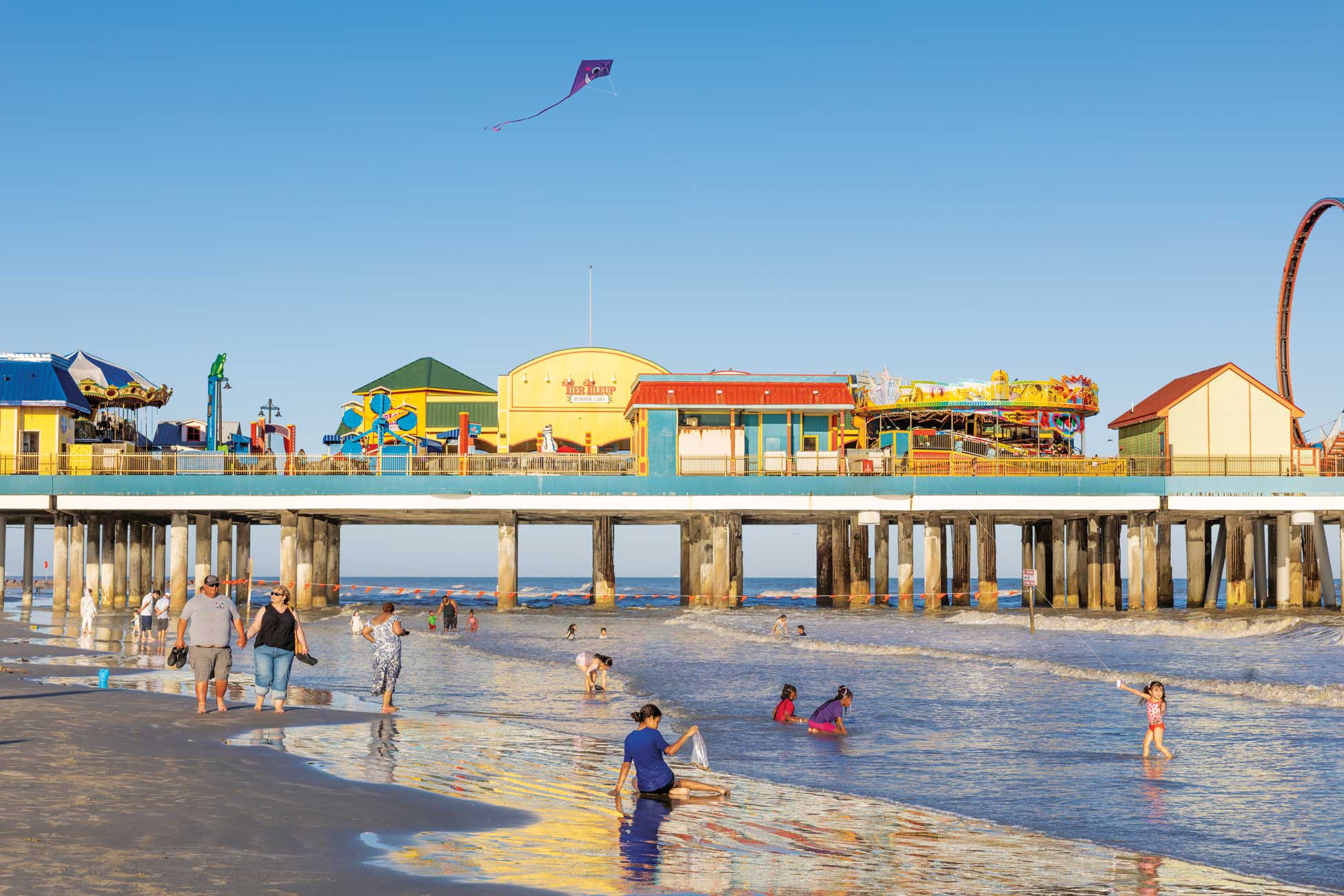

Galveston
Galveston is the best beach in Texas because it offers everything from kid-friendly surf to endangered turtles to the freshest catch of the day.
By Greg Marshall
It is a chilly, moody winter morning on Seawall Beach in Galveston. The grackles outside the Kroger across the street are making a racket, and 15-month-old Oscar’s dimwitted minders, not yet fortified with caffeine, want him to stay in his carrier, bundled in his dinosaur coat. Like any insatiable junior adventurer, our son refuses.
He sweeps a chubby hand toward the orange-rimmed vastness at the edge of the world, then at a great blue heron strolling the surf, and wordlessly though not quietly demands to be lifted out of his carrier and let down. Where his parents see nothing in the sand, Oscar discovers clusters of paw prints, likely from a marsh rabbit. A tern cuts across the sky. On the seawall itself, some long-forgotten hand has painted a mural of enormous angelfish. Farther down, the languorous purple tentacle of an octopus rises from dune grass and dried-out shrubs like an ancient leviathan.
My late father, despite working in an office, spent a not-insignificant portion of his life in pink swim trunks and a snorkel mask. He used to say, “Put kids around water and magic happens.” As a teenager, I rolled my eyes and turned up the volume on my Discman. Now I understand the magic he meant wasn’t just for kids. It’s for parents, too. One minute you’re crushing a cockroach in your roadside motel, cursing those rowdy birds outside, and the next you’re following your son toward the freezing surf at dawn, recast as a swashbuckler’s sidekick, coffee be damned.
Later that morning, after we’ve warmed up with eggs and waffles, we meet Will Wright of the Galveston Historical Foundation on the seawall. Despite the hurricane of 1900 and Hurricane Ike over a century later, most visitors don’t think about this 10-mile concrete barrier as hurricane infrastructure. Instead, it’s where people jog, bike, walk dogs, and meet friends. “Galveston’s really weird, and I mean that in all the best ways,” Wright says. “There are so many different ways you can interact with the city, but it all comes back to the beach.”
I’ve only seen a fraction of Galveston’s 32 miles of shoreline. My previous trip here was in November 2012 for a Liza Minnelli concert at The Grand 1894 Opera House. I stayed at the Grand Galvez hotel and remember musing, with an outsider’s know-it-allness, that the city was still in shock from Ike, every sway of a crystal chandelier foretelling doom. The beaches, too, held their share of beer bottles and cigarette butts.
It feels petty to bring up litter in a place repeatedly swallowed by storm surges. I mention it only because I can’t believe how clean the beaches are on this visit. Wright and Elizabeth Walla, the Galveston Park Board’s environmental programs manager, are quick to point to the daily efforts of the board. Funded by the hotel tax, a crew of 36 scours the beachfront every day, including holidays.
“I like to call them little beach fairies,” Walla says. “They start around 5 or 6 in the morning and are usually done by noon, so most people never even see them. Visitors just show up and say, ‘Wow, the beaches are so clean.’”
What surprises people is that most of the debris collected on Galveston’s beaches has washed in, not been left behind, Walla says. Research from the National Oceanic and Atmospheric Administration shows the Texas coastline receives 10 times more marine debris than any other Gulf state, largely due to ocean currents.
During the summer, Walla’s crews manage roughly 2,000 trash cans across the island, sometimes emptying them three times a day. “We’re a city of about 55,000 residents, but we host roughly 8 million visitors a year,” she says. “Keeping our beaches clean isn’t just about tourism; it’s about caring for our home.”
Another group patrolling the beach: sea turtle researchers from Texas A&M’s Gulf Center for Sea Turtle Research. Galveston waters are home to green sea turtles and critically endangered Kemp’s ridley sea turtles. Scientists rescue injured animals, monitor nests, and relocate eggs to improve survival odds before releasing hatchlings into the Gulf. Aspiring naturalists like Oscar earn sea turtle stickers for doing their part to clean up the island. Galveston also sits along the Central Flyway, one of North America’s major migration routes, making it the envy of birders. Each spring and fall, more than 300 avian species arrive to rest and refuel here. Some stay to nest.
The same can be said for surfers, who can now gather at the Texas Surf Museum, recently relocated to downtown from Corpus Christi. It’s a friendly scene, the museum’s manager, Eduardo Hernandez Lopez, tells me. “When you catch a wave in Galveston,” he says, “everyone celebrates.”
To do his part, William “Boog” Cram, owner of Ohana Surf and Skate, sponsors events like dog surf contests to raise money for the pet population. Cram says he is one of very few BOIs—Born on the Island—still around. If you’re an IBCer, you’re an islander by choice. “Galveston is a lazy seaside village,” he says. “I say seaside, but it’s really the Gulf. You hear that quote, ‘Once you’re here, you’re on island time,’ and it’s true. Once you make it over the causeway, you smell the salt air and start to relax.”
Before leaving town, we hit up Katie’s Seafood House on Pier 19. The short drive gives Oscar a front-row seat to a parade of watercraft he’s previously only seen in picture books: shrimpers, a naval vessel, an oil rig. Galveston is, after all, a working waterfront. Its commitment to industry, heritage tourism, and sun-drenched fun makes the beaches here so special. After a day catching waves or rescuing sea turtles, visitors can shake off the sand and check out seafood markets or the Pleasure Pier, a historic boardwalk with midway games and a roller coaster.
We pull into a parking lot patrolled by pelicans. Under a heat lamp on the restaurant’s deck, our waitress gives Oscar a squishy shark toy in exchange for a high-five. With every eye-bulging squeeze of the shark, Oscar throws his head back in ecstatic laughter, already preparing for the moment he’ll bolt for the beach again. Who can blame him? It’s where the magic happens.
BEACHING 101
SHARKS
Sharks make for great nightmares and an endless stream of movie marathons. But while the occasional shark bite makes headlines—like when as many as four people were bitten by a single bull shark at South Padre Island in the summer of 2024—the probability of a bite anywhere along the 367 miles of our beaches is slim. Since 1911, fewer than 50 shark attacks have occurred on the Texas coastline. —J.S.

Port Aransas
Port Aransas is the best beach in Texas because the sand is unmatched.
By Erin Quinn-Kong
There’s an hourlong wait for the Port Aransas Ferry when my husband, kids, and I arrive on a Friday night in October for a weekend at the beach. But we can’t get too irritated—that’s part of the experience in Port A. So is driving onto the ferry and floating for less than 10 minutes across the channel as seagulls and pelicans fly overhead. Shrimp boats, palm trees, and rainbow-colored cottages greet us as we disembark on the northern tip of 18-mile-long Mustang Island.
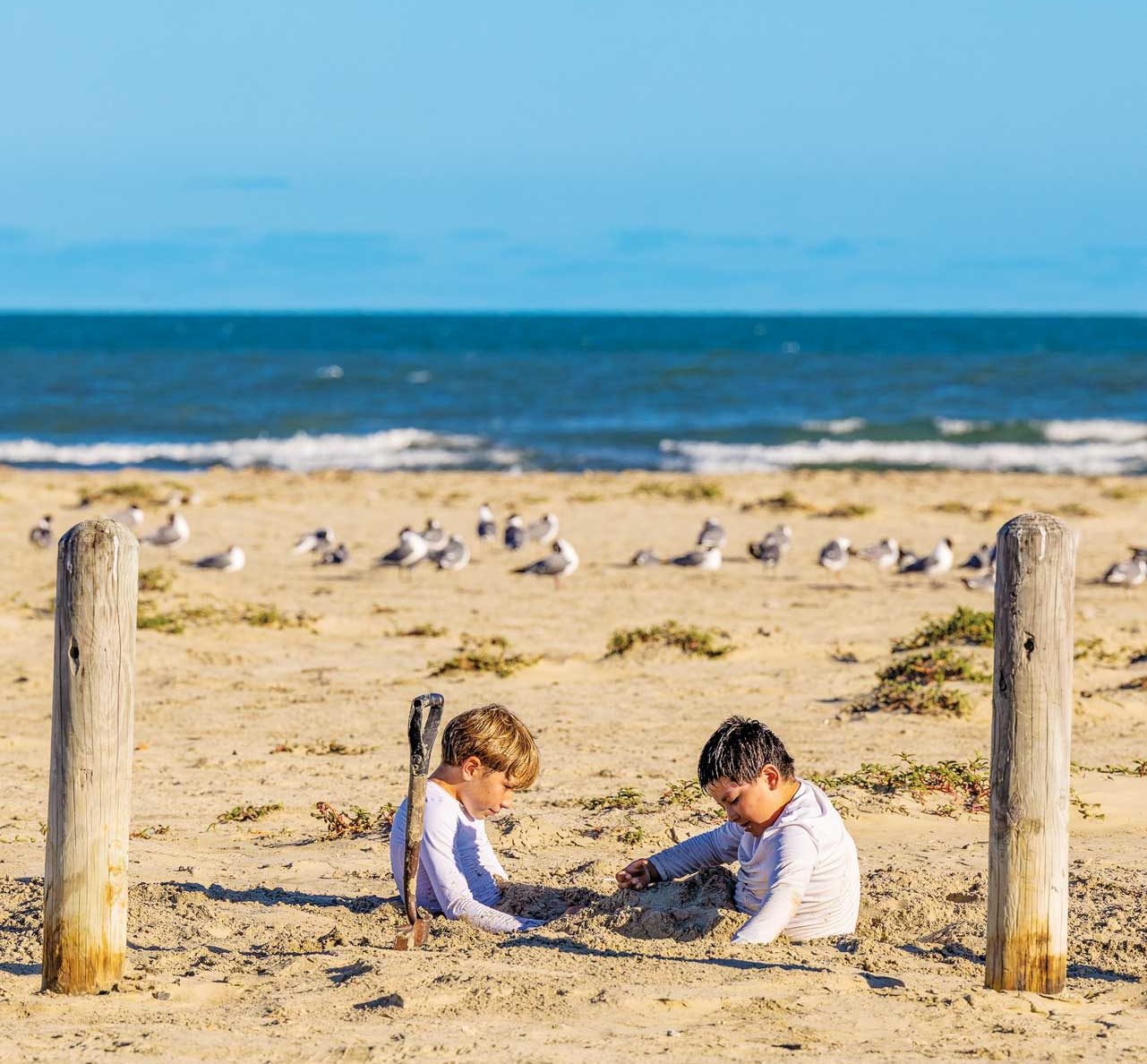
The next morning, we take the easy five-minute walk from our Airbnb to the beach, a cooler and toys packed to maximize our time. The weather is perfect: sunny, clear-skied, and breezy. We set up our base, squish the sand between our toes, and revel in the scene. A dad pulls his son on a boogie board in the surf as the little boy squeals with joy; kids build sandcastles and poke at jellyfish that have washed ashore; and dozens of colorful kites fly overhead. People of all ages stroll by as they search for pretty shells and walk their dogs, which are delighted to splash around in the waves and chase sandpipers.
I love Port Aransas because it’s a classic beach experience with clear Gulf waters, white sand, and an island vibe that isn’t muddied by a busy boardwalk. The community is jovial and welcoming to all: Sunbathers share the beach with trucks and anglers, and restaurants provide lawn games for kids while pouring strong margaritas and pumping loud music.
Kenneth Dunton, chair of the department of marine science at the University of Texas at Austin, has lived here for 40 years. He rides his bike to and from work every day and used to store his surfboard at the office so he could catch some waves over lunch. But there’s another special element to Port Aransas he admires.
“I’ve been to beaches all over the world, from the Antarctic to the Arctic, and the sand in Port Aransas is very special,” Dutton says. “Padre Island to the south has a lot of shell hash and sand mixture, while the Mississippi brings very fine sediment from the north. The combination makes sand that packs well, isn’t too coarse or too fine, and is perfect for making sandcastles.”
After we’ve had our fill, my family and I head out to explore the town, spending some time at the playground at Roberts Point Park before stopping at the South Jetty for a stroll. My fisherman husband pulls out leftover mullet he used as bait earlier in the day, and our kids shriek with excitement as they toss fish directly into pelicans’ mouths. Minutes later, we spot a pod of dolphins swimming in the channel—this time I squeal right along with them.
Tale of Two Islands
Padre Island was one contiguous island until 1957, when the Mansfield Cut was trenched to allow for boat passage. Together, the Padres make up the longest barrier island in the world. Both islands are majority publicly accessible.
North Padre
North Padre Island is the best beach in Texas because there are few markers of human life, lots of wildlife, and plenty of adventure.
By Julia Jones
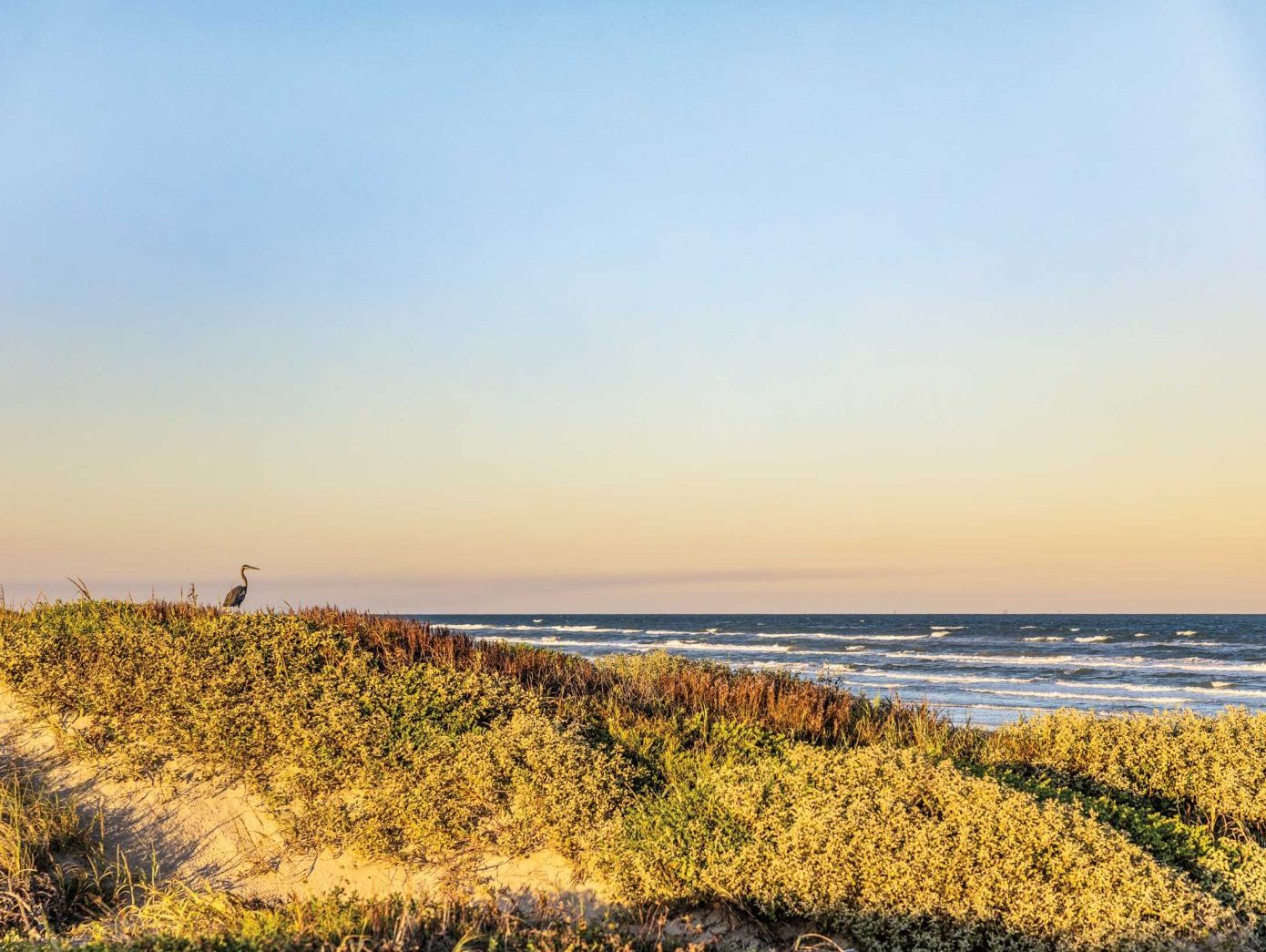
It’s just after dusk on the northern edge of North Padre Island when my husband and I see them: deer, staring hypnotically toward the roaring ocean. It’s a windy 55 degrees, and mist is obscuring our view. As we approach, we realize they aren’t deer, after all, but eerie artworks on the dunes. The creatures, known as “dune deer” and constructed out of debris from palm trees, represent what I love about North Padre. It’s a place not concerned with fitting in—not loud or boisterous. It finds its identity in what the ocean can bring.
The inhabited part of the island boasts a strong small town spirit, with locally owned restaurants, souvenir shops, and its own newspaper, Island Moon. There’s even a mini golf spot, Treasure Island, which we’ve frequented on our trips to the coast. But we prefer the simple act of waking up early for a day of lying on the beach and dipping our toes into the waves.
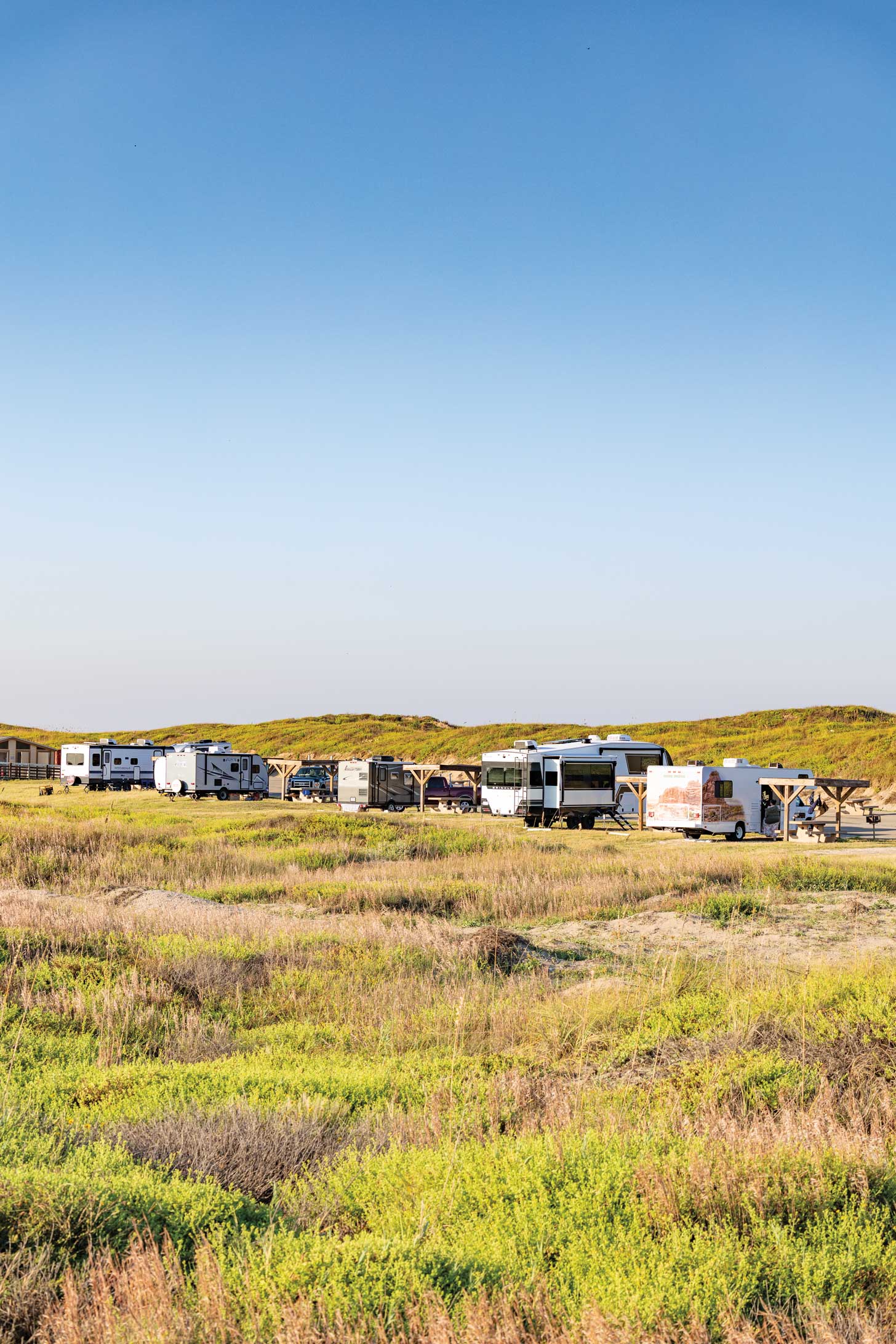
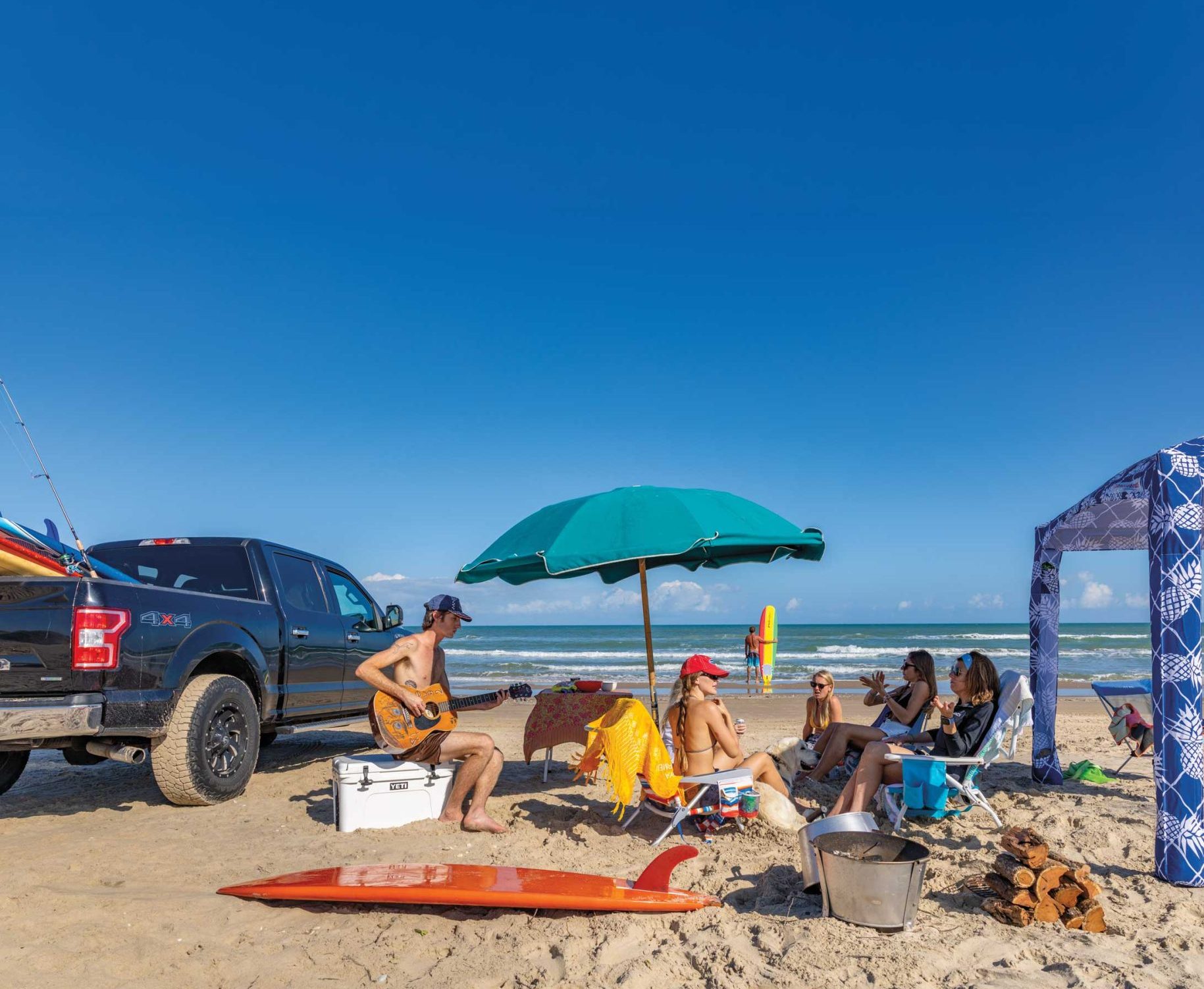
There’s plenty of space to roam on the island’s soft-sand shores, and they’re nearly all open to the public for exploration. Padre Island National Seashore, the longest stretch of undeveloped barrier island in the world, comprises the bottom 66 miles of North Padre—and anyone with a four-wheel-drive vehicle and a day pass to the park can drive the full length.
“It’s a place of constant motion and tension, where nothing is ever fixed and everything is shaped by change,” says Kelly Taylor, Padre Island National Seashore chief of interpretation. “PINS protects that edge in its most natural state.”
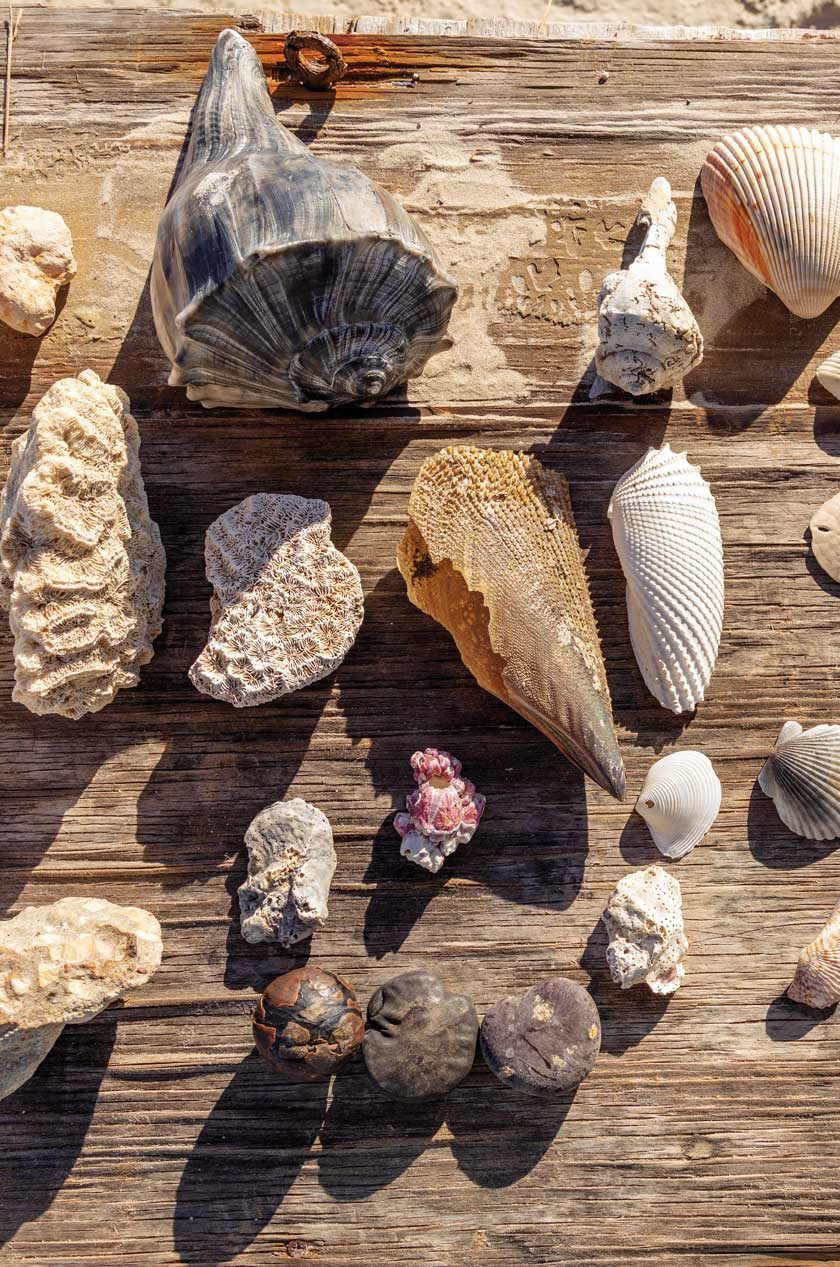
Along the national seashore, shell seekers can stop by Big and Little Shell beaches to pick up coveted finds like lightning whelks, sand dollars, and the giant eastern murex. The most daring can make the full trip to the Mansfield Cut, which separates North Padre from its noisy southern neighbor with 125 feet of water. But we prefer a quieter visit, ideally in winter or early spring. That’s when visitor counts are at a low, bird migration is at its height, and the hypnotic coastal wind brings unexpected sights.
Year Established
1968, Padre Island
National Seashore
Population
30,000
Miles of Coastline
75, “Longest Undeveloped Barrier Island in the U.S.”
Visitor Count
573,255 (PINS in 2025)
Beach Driving
Partial
Prominent Shipwrecks
San Esteban, Espíritu
Santo, Santa María de Yciar (oldest excavated shipwreck in the U.S.)
Bay Names
Baffin Bay and
Laguna Madre
Nicknames/
Designations
The Island, La Isla
Blanca (The White Island), Isla de los Malaguitas (Island of the Malaquites, a band of the Karankawa people)
Bridge
JFK Memorial
Causeway
Attractions
Padre Island National
Seashore, Treasure Island Golf & Games
Wildlife
Texas Sealife Center,
Packery Channel Oak Motte Sanctuary
South Padre
South Padre Island is the best beach in Texas because it’s the closest thing to paradise in the state.
By Danielle Lopez
South Padre Island is where I experienced my first taste of freedom. The summer after I graduated high school in McAllen, I spent an unsupervised week there with friends. Our days consisted of flying off Jet Skis in the Laguna Madre, experiencing summer romances, and imbibing the things our parents rightly feared. But they knew times like those were a rite of passage.
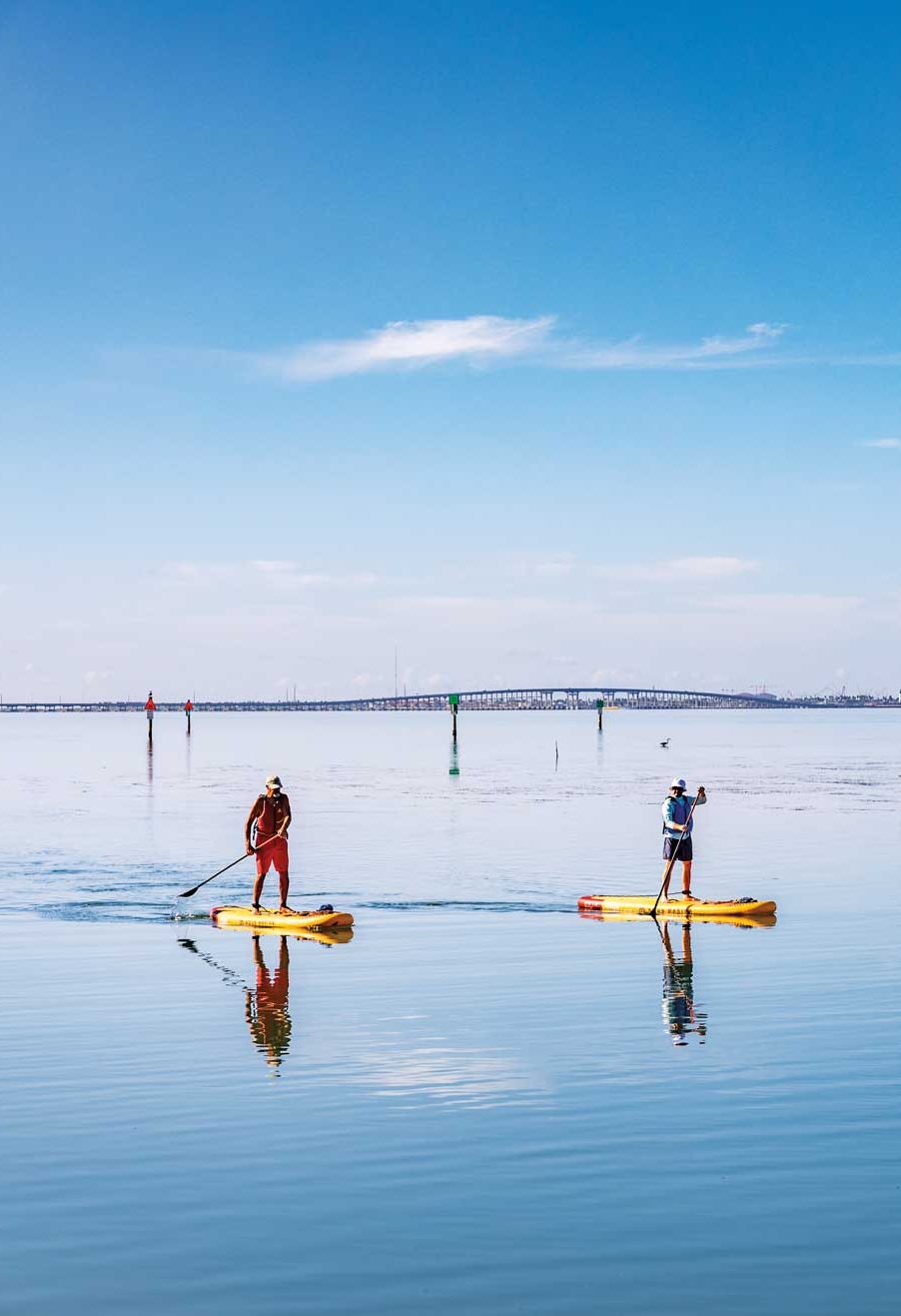
In the Rio Grande Valley, it’s commonplace to visit the island year-round. With its tropical climate, South Padre breaks the stereotype that Texas beaches are dirty—nothing beats driving over the Queen Isabella Causeway on a clear day when the bay sparkles blue and you catch the dolphins breaching. And South Padre isn’t as sleepy as its neighbor to the north. Here, the waters are bright, the wildlife is abundant, and there’s always something to do.
This 34-mile stretch has served as a popular resort destination since the 1950s. The island sees an average of 7 million visitors annually, including folks from the RGV, Winter Texans, and thousands of spring breakers. Despite its party reputation, the island is generally a family-friendly spot. On any given day, the shores are filled with colorful umbrellas, children running through the soft sand, and people blasting Latin pop from their speakers, often with margaritas in hand.
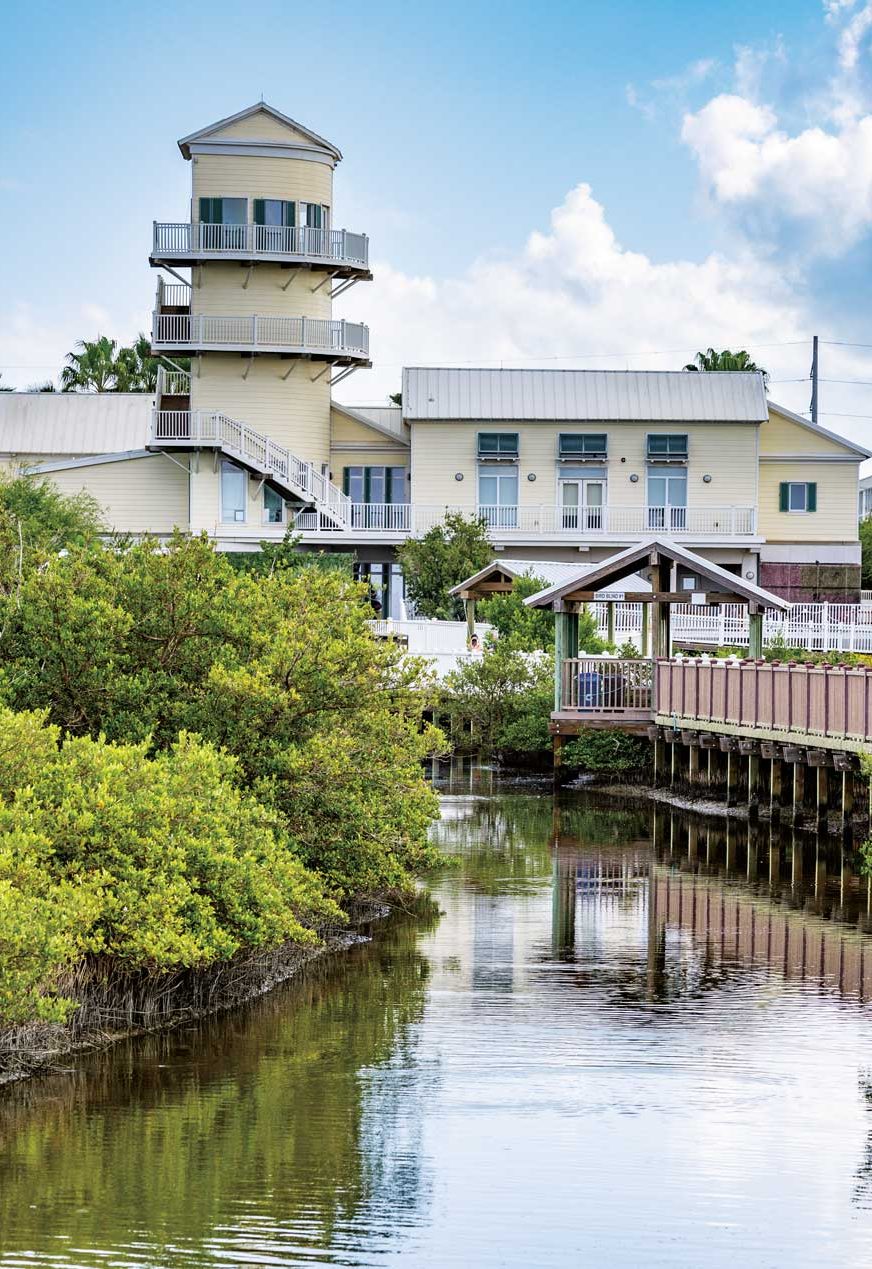
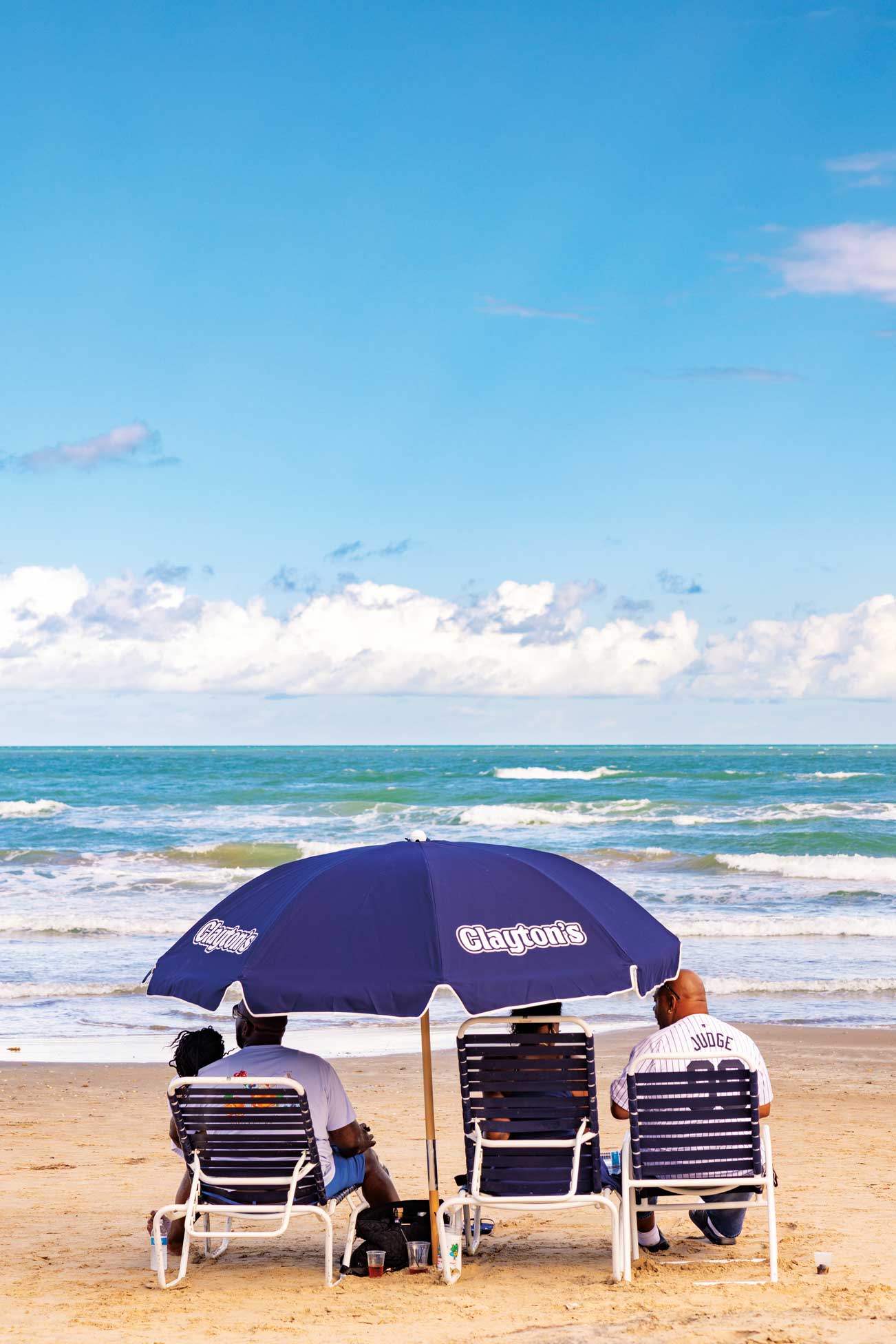
The island is connected bayside to the delightful town of Port Isabel, home to the historic Port Isabel Lighthouse, the only lighthouse in Texas that you can climb to the top. On Padre Boulevard stand dozens of local souvenir shops, stores, and eateries. The other side of the island faces the Gulf, offering 25 city-managed beach access points, some of which are tied to venues like Clayton’s—known as “the biggest beach bar in Texas.”
“I’ve been to other Texas beaches, but my heart always comes back to South Padre,” says Dennise Villalobos of Visit South Padre Island. She touts the work of local spots like Sea Turtle Inc., the world’s largest enclosed sea turtle hospital. “You really feel a sense of community here.”
Maybe it’s something in the South Texas air—or maybe it’s just the power of nostalgia—but I believe that once you visit this sun-kissed barrier island on the southern tip of Texas, it’ll stay with you forever.
Year Established
1973, city incorporated
Population
2,066
Miles of Coastline
34
Visitor Count
7 million annually
Beach Driving
Partial
Attractions
Historical museum
coming summer 2026
Prominent Shipwrecks
The Texas Clipper
(purposely sunk to create an artificial reef)
Bay Names
Laguna Madre
Nicknames/
Designations
SPI, Sandcastle
Capital of the World
Bridge
Queen Isabella
Causeway
Wildlife
Sea Turtle Inc.
(world’s largest enclosed sea turtle hospital), South Padre Island Birding, Nature Center and Alligator Sanctuary

Matagorda
Matagorda is the best beach in Texas because it’s the wildest.
By Jason Stanford
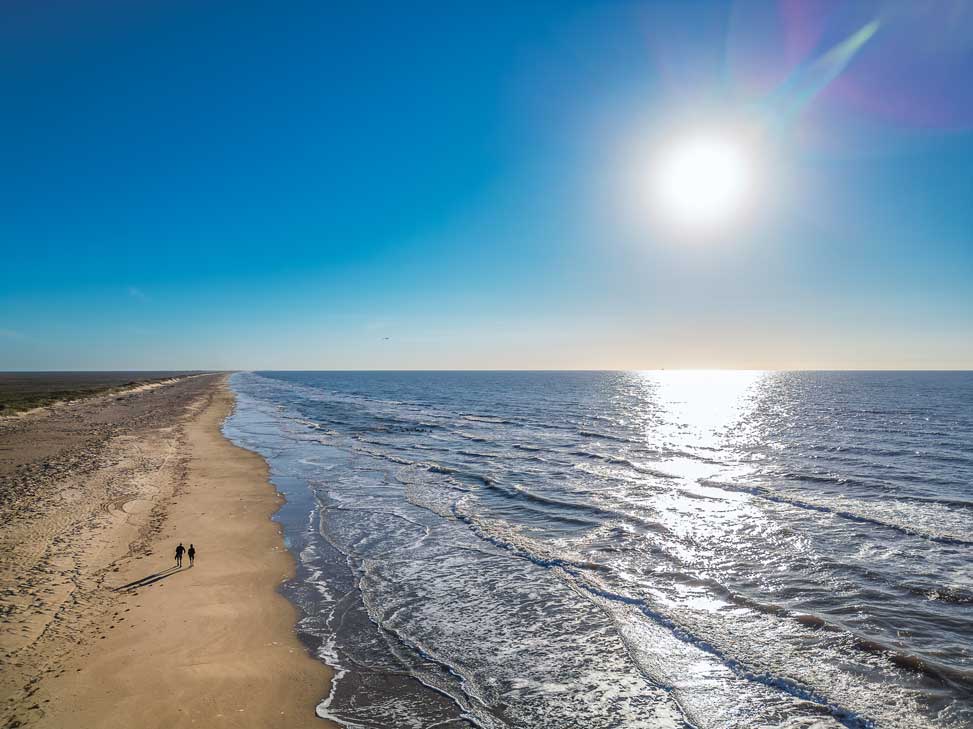
My wife, Sonia, and I are city people. We prefer hotel bathrobes to sleeping bags. I consider camping anti-evolutionary and an insult to the inventors of air conditioning and ice makers. But we also like an adventure, so we decide to spend a night on Matagorda Island, the most remote beach in Texas, to tell ourselves we’ve accomplished something.
I knew Matagorda has no power and no water. But it never occurred to me that I might have to deal with wildlife in a wildlife refuge. I was imagining a literal day at the beach, just a little harder to get to than any other in Texas. I knew I’d need to borrow camping equipment, but I never imagined I’d need a gun for protection.
Matagorda is a barrier island stretching 38 miles from Port O’Connor to Port Aransas. Originally used by the Karankawa for fishing and hunting, the northeastern end of Matagorda Island was settled by Hugh Walker in 1839, and a few ranching families began working the land. In 1933, oilman Clint Murchison Sr. turned the southern third of the island into a cattle ranch and his personal retreat complete with servants’ quarters and an airstrip. A couple of years later, President Franklin D. Roosevelt dropped by, disembarking from the USS Potomac to the island via a cattle chute they used to get livestock on and off the island. In 1940, the Army seized the land and turned it into the Matagorda Island General Bombing and Gunnery Range.
The Army spared Murchison’s ranch, which changed hands before the The Nature Conservancy purchased it in the ’80s. Eventually the ranch was sold to the Department of the Interior, which made the entire island public property. Now, Matagorda is jointly managed by the U.S. Fish and Wildlife Service, which handles the wildlife and habitat, and the Texas Parks and Wildlife Department, which manages the recreation.
There’s no ferry to Matagorda Island, so I have to charter a boat from Matagorda Bay. Charlie Paradoski, who goes by Capt. Charlie P., agrees to drop Sonia and me off at Oilfield Cut, a convenient dock for anglers, and pick us up the next day. But he has questions. What equipment was I bringing? “The normal stuff,” I say. “You know, a tent and sleeping bags.”
Capt. Charlie suggests a gun “for the rattlesnakes and hogs.” Suddenly, a lark becomes a beach trip with a non-zero chance of death. We scrap our camping plans for a day trip, out after sunrise, back on the mainland in time for happy hour. That spares me lying awake all night listening for predators—but I still need a gun. My friend lends me a good firearm for hogs, a 1960s lever-action .30-30 Winchester, the same kind used by Teddy Roosevelt and John Wayne. That just leaves the snakes.
My eldest son, Henry, earned a degree in Wildlife and Fisheries Sciences from Texas A&M. He assures me rattlesnakes stay in rock formations and the tall grass on the dunes. “They’re more scared of you than you are of them,” Henry says. By that reasoning, these rattlesnakes are downright terrified, but we’re determined to get to the beach.
Capt. Charlie drops us off in the morning on the backside
of the island half a kilometer from the beach. You have never seen anything as ridiculous as Sonia and me walking along the trail through the grassland. To show the snakes our benign intent, we loudly narrate our progress toward the beach. “Just us people, walking on the path, avoiding the snakes,” we say to the reptiles.
As we arrive at the sand dunes separating us from the beach, we encounter plastic trash. Climbing over the mounds, we arrive at the beach and can see for miles. But plastic trash is everywhere: a Croc here, a flip-flop there, hard hats and buckets galore, even half a rowboat. If it got thrown away into the Gulf, it got washed up on Matagorda Island.

BEACHING 101
WATER
The color of the waters off the Texas coast can shift surprisingly. Galveston’s water is so famously brown that NBA superstar Charles Barkley called it “dirty-ass water” in 2024. (He later apologized.) When the water suddenly turns blue, that excites people. “Check it out! Clear water in Galveston,” television station KHOU announced last August. The color changes happen most summers, depending on factors that include wind and current.
Steve DiMarco, a professor of oceanography at Texas A&M University, says some people mistakenly blame industrial pollution for ostensibly dirty coastal water. But the color shifts, he says, are largely the result of two big Gulf currents fighting it out. The sediment-heavy freshwater from the Mississippi and Atchafalaya rivers comes west and collides with the bluer, saltier water from Mexico. That current gives South Padre Island its stunning Caribbean turquoise. In the summer, the blue current can get the upper hand, and the rich nutrients of freshwater get pushed back. With low winds and low river flows, even more sediment settles. “It’s beautiful to look at,” DiMarco says, “but there’s nothing growing in it.”
—J.S.
Then we look up.
To our north, a phalanx of brown pelicans flies in formation, lazily circling the beach before settling in a floating pack among shallow water, hunting for fish. All day long they circle the territory, alternating with a pod of white pelicans. Tiny sanderlings play in the swash, looking for crustaceans while crowds of gulls hunt next to them.
We are standing in an open-air aviary. Matagorda Island is home to more than 400 bird species. At one point, two terns make me gasp, their blindingly white angular bodies shocking against the blue sky. We are surrounded by the feathered descendants of dinosaurs, and because they have never been taught to fear humans, they ignore us amid their airborne business. This is a Jurassic bird park, a bit safer than the movie version.
“If I weren’t the tiniest bit fearful for my life, this would be peaceful and serene,” Sonia says. “What did Buzz Aldrin say about the moon? ‘Magnificent desolation?’ This is magnificent desolation. But with trash.”
We don’t end up seeing a single rattlesnake or hog—or another person. But these birds are worth the trip. Matagorda Island is a home game for the hogs, snakes, birds, and other animals that live there. We even see cattle. It’s not set up for you to be safe, entertained, or fed. There are many sandbars on the island, and not a single one serves margaritas.
If you are willing to take a few precautions and go to the trouble and expense of chartering a boat, you’ll experience stepping onto a sandy, sunny wilderness where there’s nowhere to hide. Once the boat drops you off, it’s just you and the wildlife.

San Jose
San Jose is the best beach in Texas because you can be all alone and surrounded by history.
By Juli Berwald
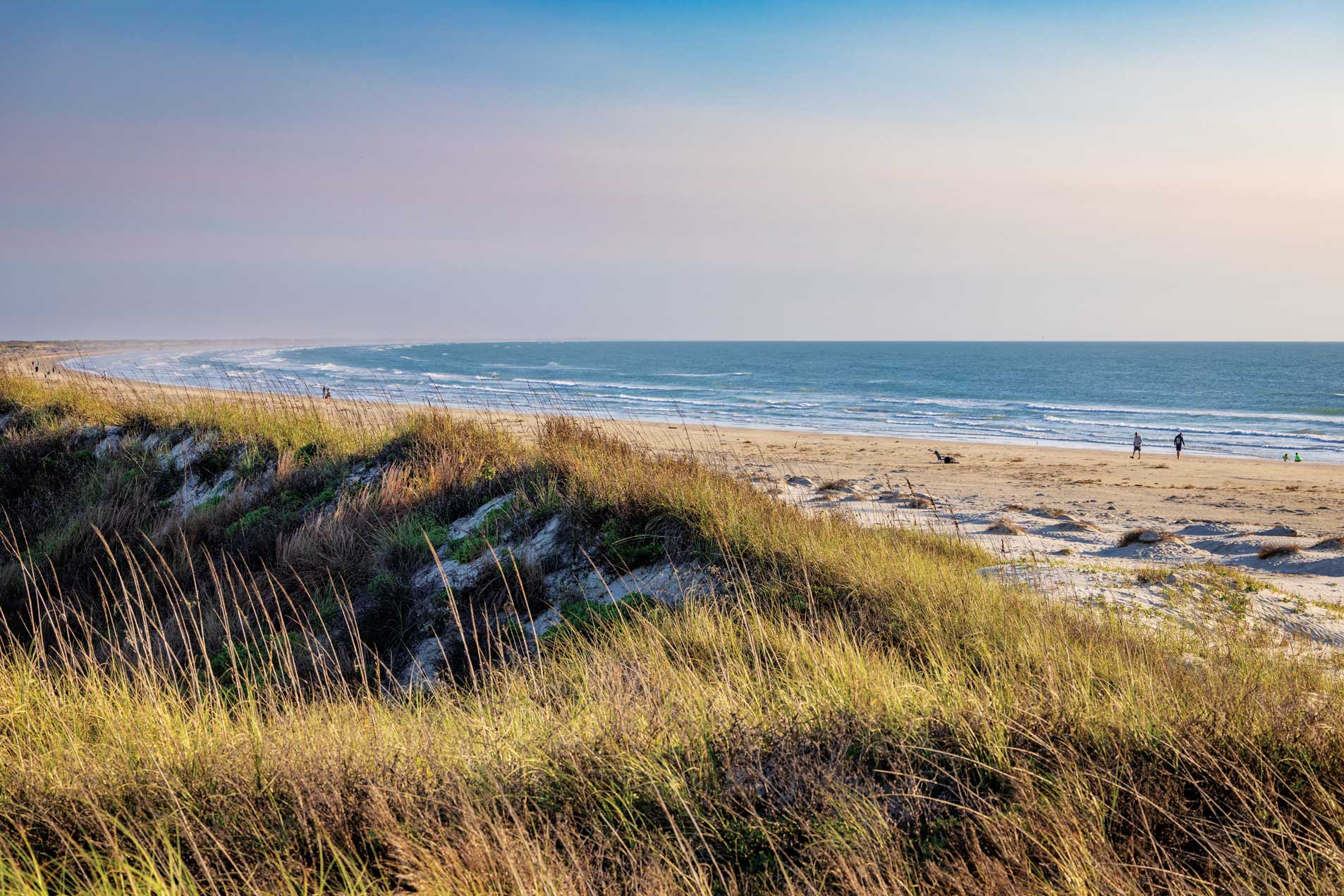
Halfway across the Aransas Pass, a pod of dolphins leaps into the air in an exuberant welcome to San Jose Island’s magnificent 21 miles of sandy beach. By the time I snap a few shots, it’s over—the four-minute ferry ride from Port Aransas’ Fisherman’s Wharf to the small rock jetty that welcomes the public to the island. I disembark beneath the tallest dunes on the Gulf, soaring up to 50 feet, along with just a dozen other people also seeking a castaway vibe.
The foot-traffic-only ferry means vehicles can’t come to San Jose, so beachgoers don’t have to play Frogger between the dunes and the shore. The beach also isn’t crushed under tires, allowing for unmatched shelling and the preservation of sand-dwelling creatures’ homes. I am mesmerized by what looks like millions of holes, mostly ghost shrimp domiciles, dotting San Jose’s beach. A sure sign of first-class health, some of the holes erupt with seawater like mini volcanoes, while others lay dormant. The plovers dip their bills here and there, fishing for breakfast as I ponder the extraordinary history that turned this isolated piece of paradise into a glorious beach.
In 1845, just as Texas became a state, Gen.—later President—Zachary Taylor waded ashore. He planted the first U.S. flag on Texas soil right here, a signal to the world that this land had changed allegiance. Then, in 1936, Fort Worth oil magnate Sid Richardson, considered one of the wealthiest men in the world at that time, purchased San Jose’s entire 33,000-acre expanse. His nephew, engineer Perry Bass, built his uncle a European-inspired, Texas ranch-style mansion, which still stands today.
San Jose became an unsung seat of power on the Gulf. If you wander into Port Aransas’ Tarpon Inn, you can still see photos of Richardson angling off San Jose with President Franklin Delano Roosevelt. After Pearl Harbor, Roosevelt sent an envoy to the island for his fishing buddy’s assessment of national oil reserves on the eve of America’s entrance into World War II. Presidents Dwight D. Eisenhower, Harry S. Truman, and Lyndon B. Johnson also sought Richardson’s counsel on San Jose and likely tossed a few hooks in the Gulf while they visited. In total, this obscure island has hosted five U.S. presidents.
At the urging of Texas folklorist J. Frank Dobie, Richardson began raising a small herd of longhorns on the island around 1939 to help save the breed from extinction. When he died in 1959, Richardson left the property to Bass, and it remains in the hands of his sons, who continue to ranch the island through the San Jose Cattle Company.
“Our goal is to manage for everything, from the butterflies to the white-tailed deer,” says Wade Ruddock, the ranch’s longtime manager. Ruddock and his wife, Ashley, meet me a mile or so into my beachcombing stroll. Wade is wearing tall, laced leather boots, and when I ask why, he says they are as much for the burrs as for the rattlesnakes that populate the dunes.
Through controlled burns, pasture rotation, and raising the cattle until they are heavy enough for their hooves to break up the turf, Ruddock works to create new habitat for varieties of plants and insects to feed the animals. “Think about a buffet,” he says. “People like choices, and so do birds.”
Hundreds of species, from whooping cranes to peregrine falcons to scissortails, migrate across San Jose. Ruddock wants to ensure they have everything they need to fuel up for or recover from their long oceanic journeys. Such care doesn’t come without commitment and financial resources, and Ruddock acknowledges the privilege of caretaking the island for biodiversity is only possible because of its owners’ continuous support.
BEACHING 101
SAND
“Sand’s the magical stuff,” says Stephen Leatherman, a professor in the Department of Earth and Environment at Florida International University. Leatherman, who goes by “Dr. Beach,” has developed 50 criteria for ranking beaches around the world. People idealize sand that is fine, soft, and white—think South Padre Island, which Leatherman calls “really high quality.” Move up toward Corpus, and at Mustang Island State Park you get “super fine and white” sand that can be whipped by gusts. “It’s best not to sleep on the beach when it’s windy,” he advises.
The color and feel of Texas sand varies along the coast. While we don’t get the volcanic black sands of Iceland and Hawaii, or the stunning pink of the Bahamas, the range is still broad. The brownish gold sand on Galveston Island gets its color from quartz and feldspar, along with shell fragments that provide calcium carbonate and other heavy minerals like zircon and garnet. On the Bolivar Peninsula, Crystal Beach is darker brown. Even when sand doesn’t fit the sugary ideal, Leatherman says, “it’s still sand, and people love it.” —J.S.
Although San Jose is a private island, the law requires that the beach remains accessible to the public up to the mean high-tide line. This is why the Jetty Boat concession out of Port Aransas generally makes nine daily trips. You can purchase $20 round-trip tickets ($10 for ages 6-12) at the convenience store at Fisherman’s Wharf. “It’s a great partnership that I hope can go on forever, as long as people continue to take care of the place while they’re visiting,” Ruddock says.
That includes bringing all the water, food, and sun protection you’ll need. Glass and fires aren’t allowed. The boundary of the mean high-tide line—plus, those rattlers in the dunes—means visitors can’t wander inland. And take everything you bring to the island with you when you leave.
After the Ruddocks head off to tend to the island’s concerns, I stroll on, rescuing a few stranded sea stars and admiring the symmetry of a dolphin vertebra. A boat’s helm has washed ashore, engraved with someone’s curlicue initials. Ruddock had said that debris forms the foundations for pioneer plants that eventually develop into San Jose’s record-high dunes. The sun is warm, but the breeze keeps me cool, and I am happy finding nothing more.
Meandering, I reflect on the political titans who had been here and the fate of this low-lying island on a warming planet. A lightning whelk, Texas’ state shell, jangles in my pocket. Its counterclockwise spiral is found in only about 10% of gastropods. This unexpected twist seems an apt metaphor for San Jose, which was bought with oil money and now supports outsize biodiversity because of that legacy.
I continue picking my way down the beach, marveling at the exquisite shells, the abundant birds, and the thoughts I don’t get to have very often. Just as I am taking myself too seriously, I step on a jellyfish, slip, and laugh out loud. A blue heron is the only witness.

Tide and True
Lay your blanket down at
six other quintessential beaches
By Joe Nick Patoski
Classic Beach
Lifeguards, restrooms, umbrella rentals, beach wheelchairs, a kiddie playground, food trucks, beach volleyball courts, and calm waves greet all ages, making this the coast’s most family-friendly beach.
National Seashore Beach
Malaquite beach in corpus Christi
This is the only stretch of the Padre Island National Seashore that does not allow motor vehicles on the beach. Pro tip: There is Wi-Fi in the nearby PINS Malaquite Visitor Center.
Pier Beach
Bob Hall Pier in corpus Christi
A bigger and better Bob, slightly elevated and more than a quarter mile long, reopened this spring after being severely damaged by Hurricane Hanna in 2020. Anglers, surfers, and beachgoers, rejoice!
Secret Surfing Beach
THe NORTH SIDE OF THE PORT MANSFIELD CUT
Texas Highways contributing photographer and surfer Erich Schlegel swears by the Port Mansfield Cut, north of South Padre Island, where he paddles his board across the channel for surf that breaks into some of the most dependable waves on the Texas coast.
Driving Beach
Port Aransas Coastline
A $12 beach permit buys access to this 6.2-mile stretch with a 15 mph speed limit. Following daily beach cleanings during high season, Port A boasts one of the cleanest and widest stretches of sand on the coast.
Clothing-Optional Beach
Bolivar/McFaddin Beach, 3-5 miles north of high island on state highway 87
Free-spirited beachgoers can be found at this remote spot not for the hard-packed sandy beach or the waves, which are tepid, but for the beachcombing for shells and archeological artifacts—and the isolation.