

Born to the Skies
The heavens know no limits in Texas
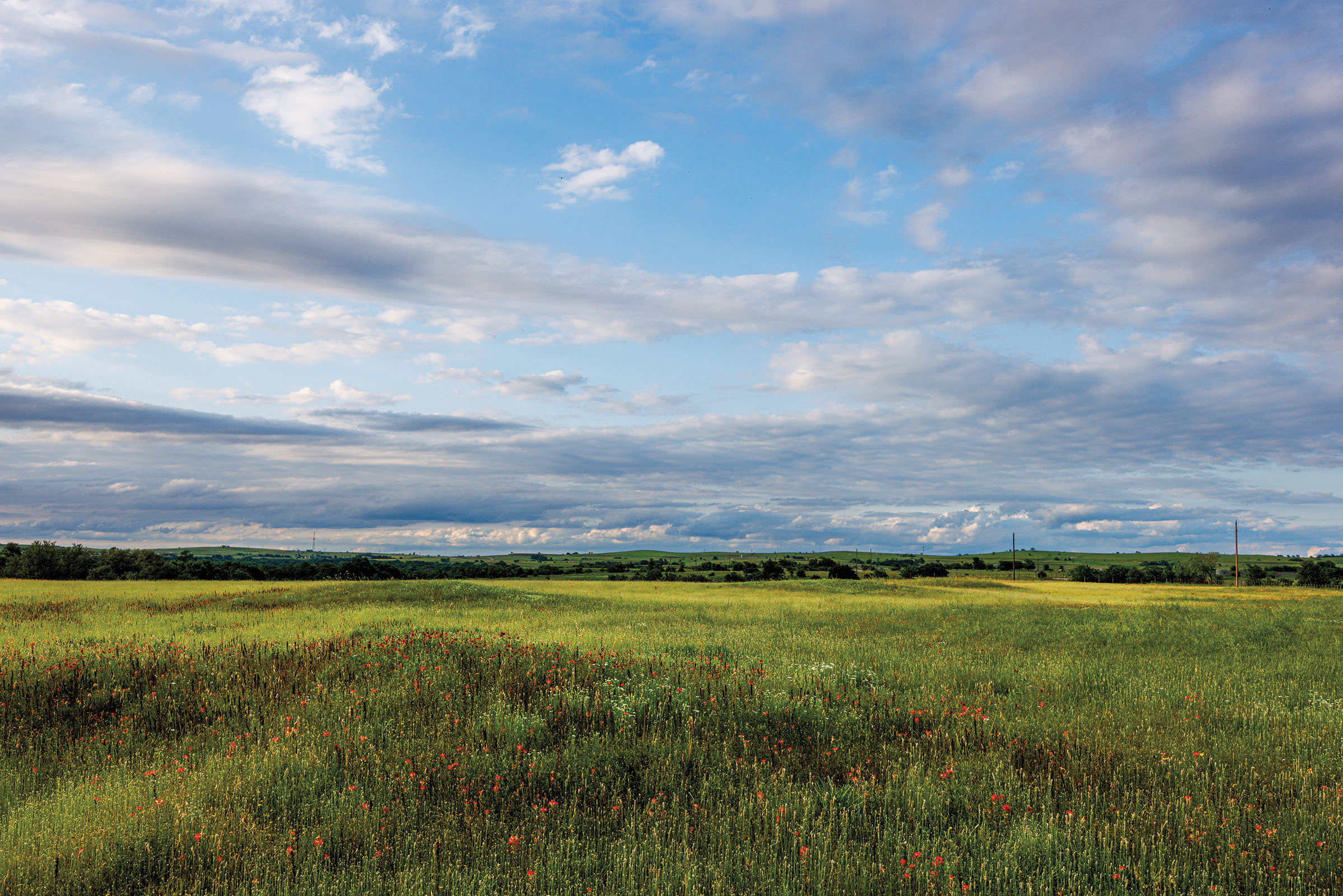
Behold: the Texas sky.
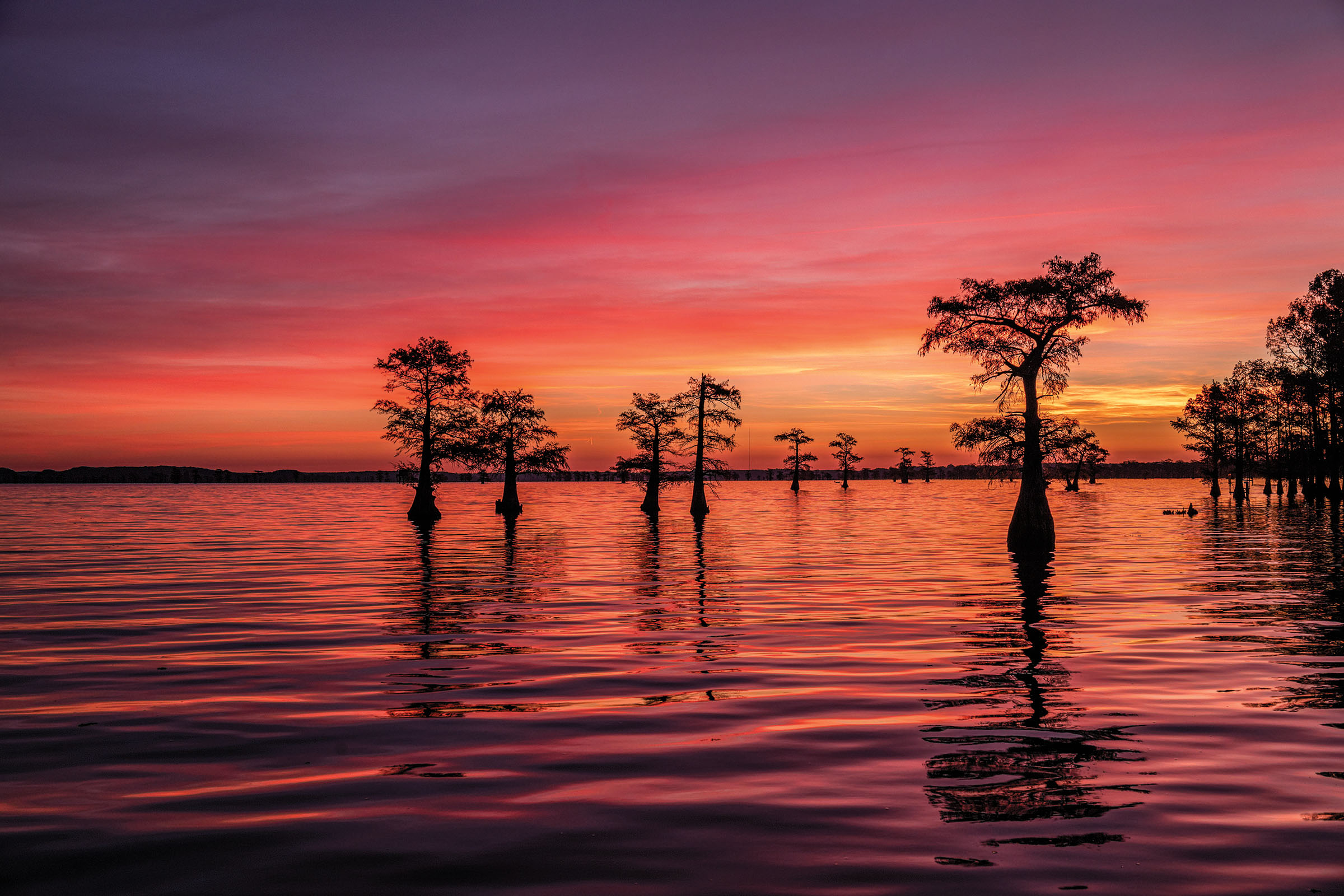
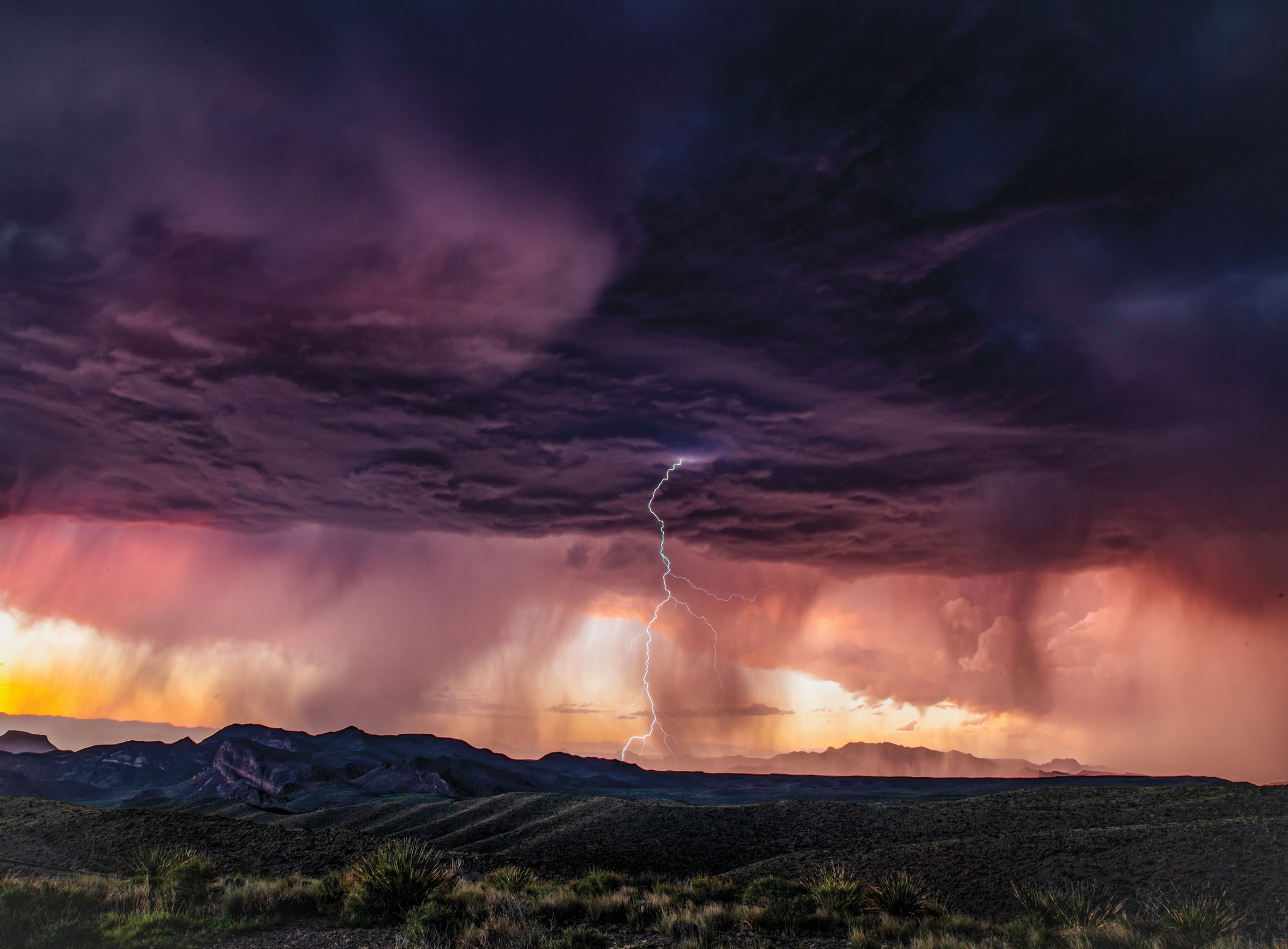
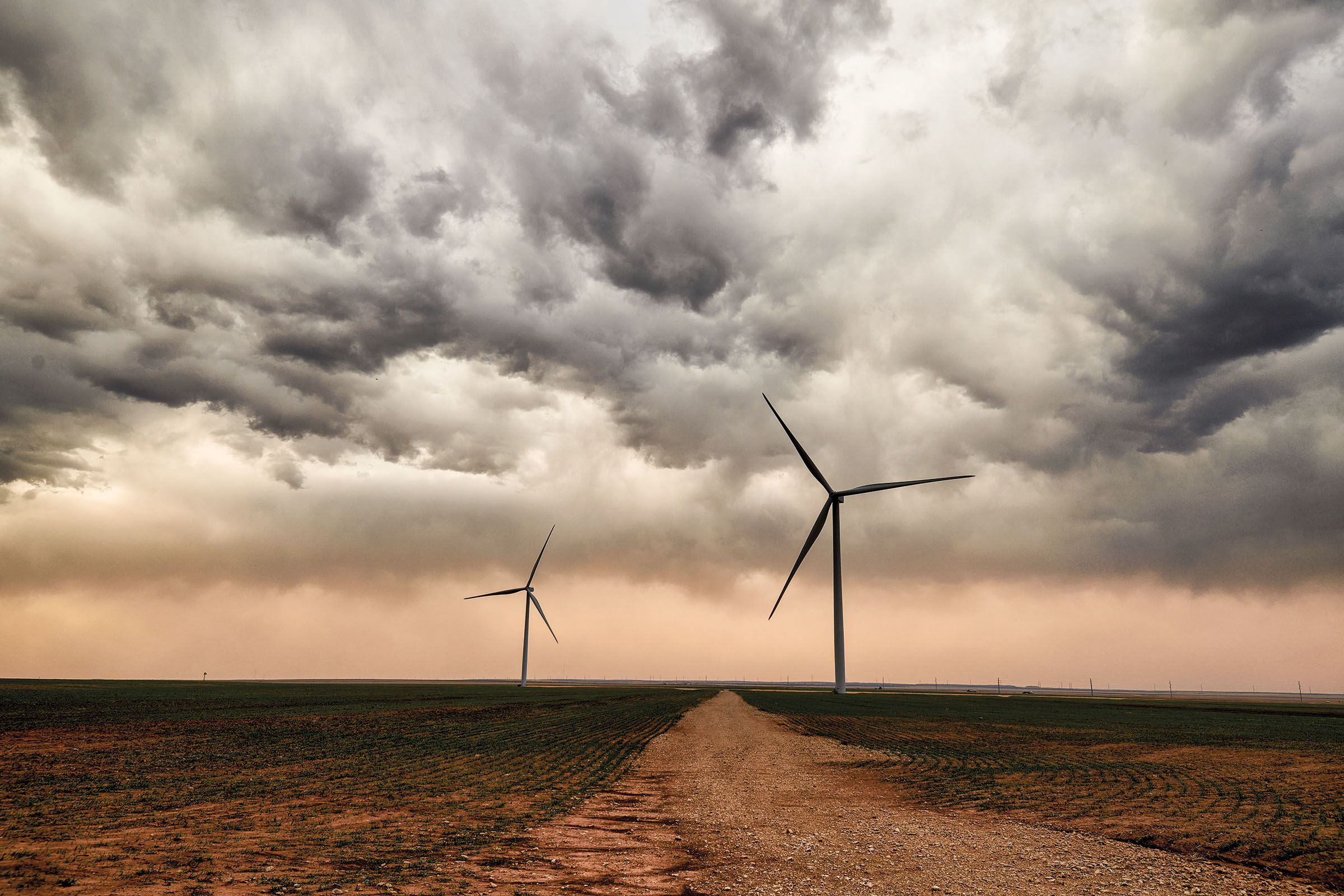
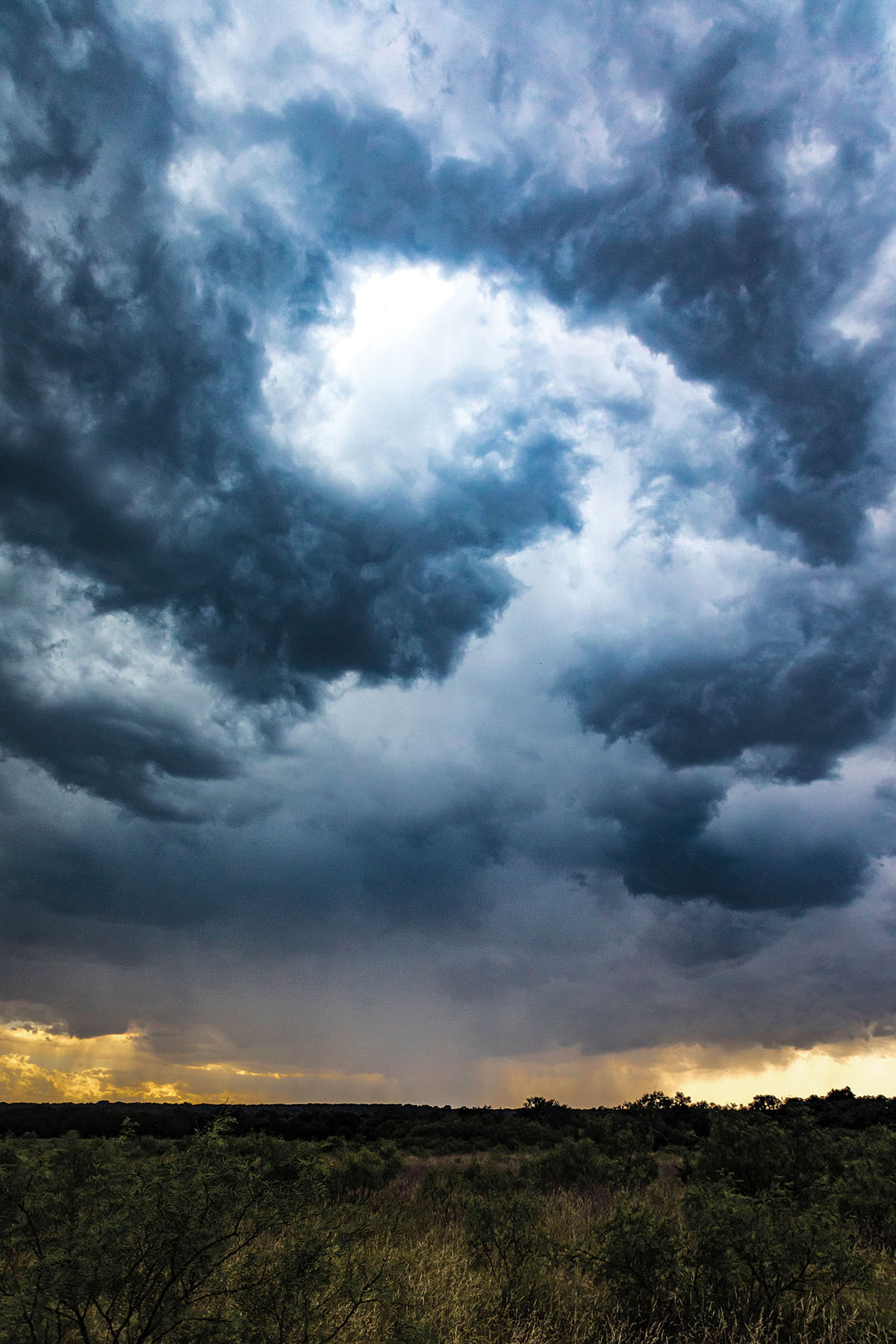
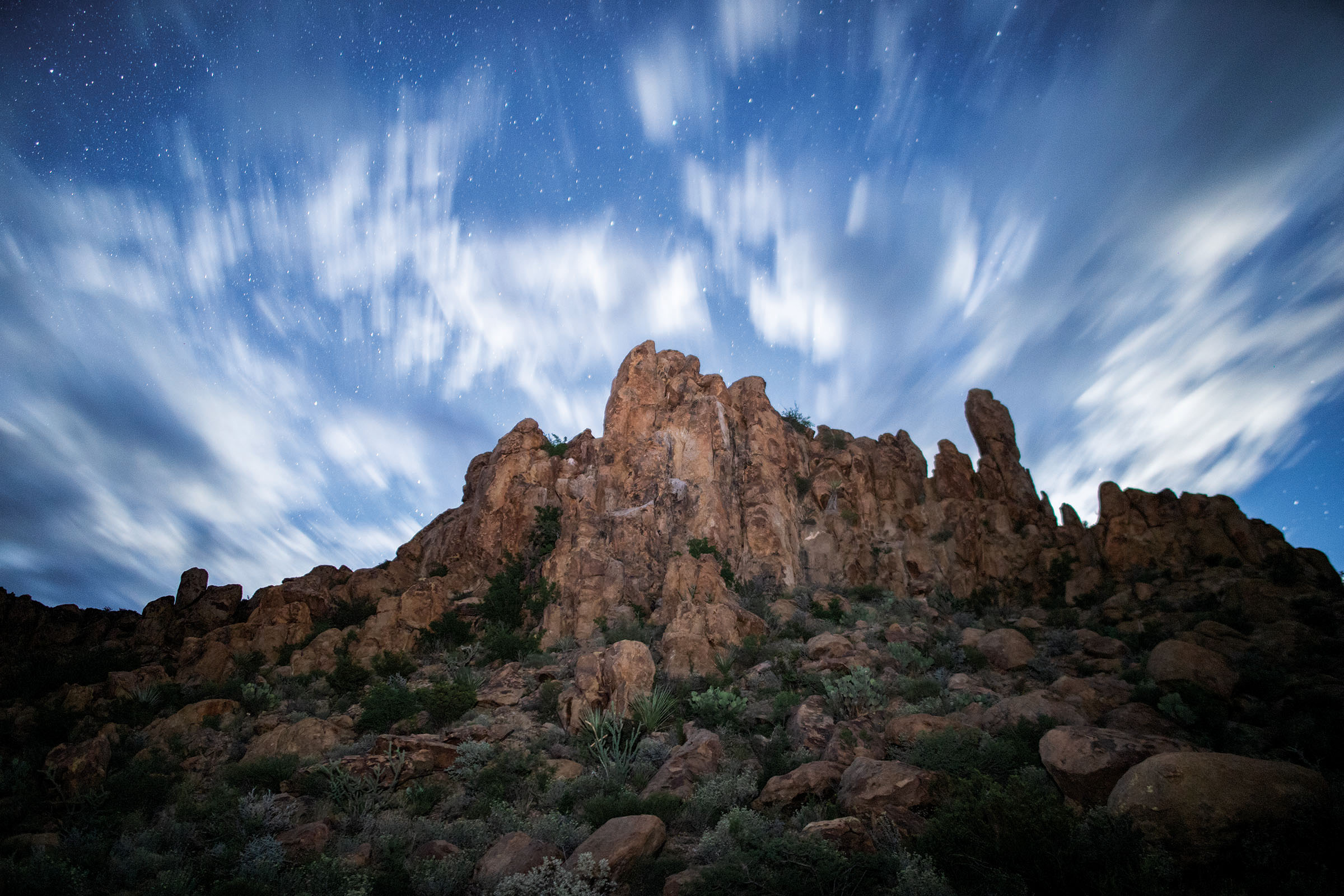
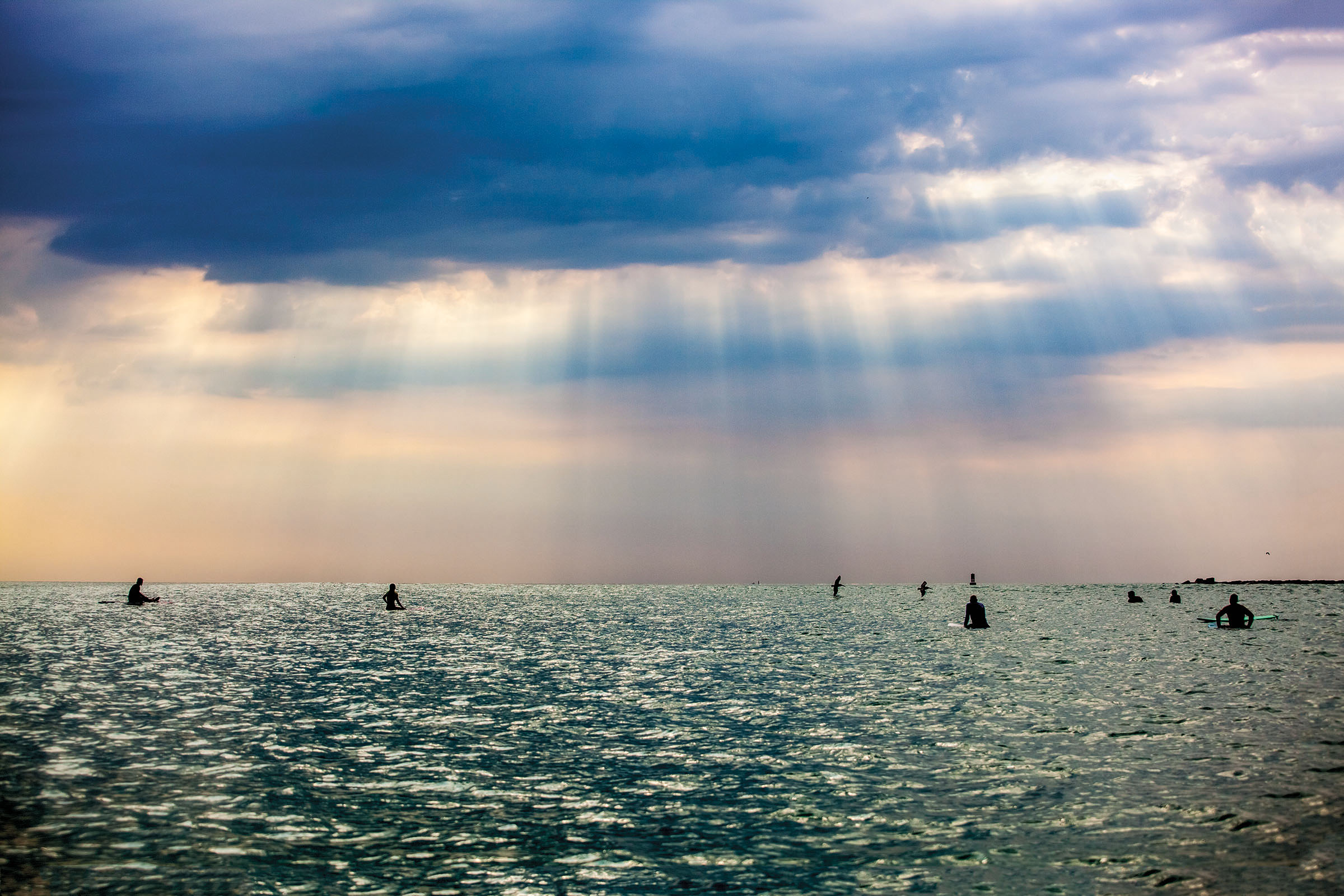
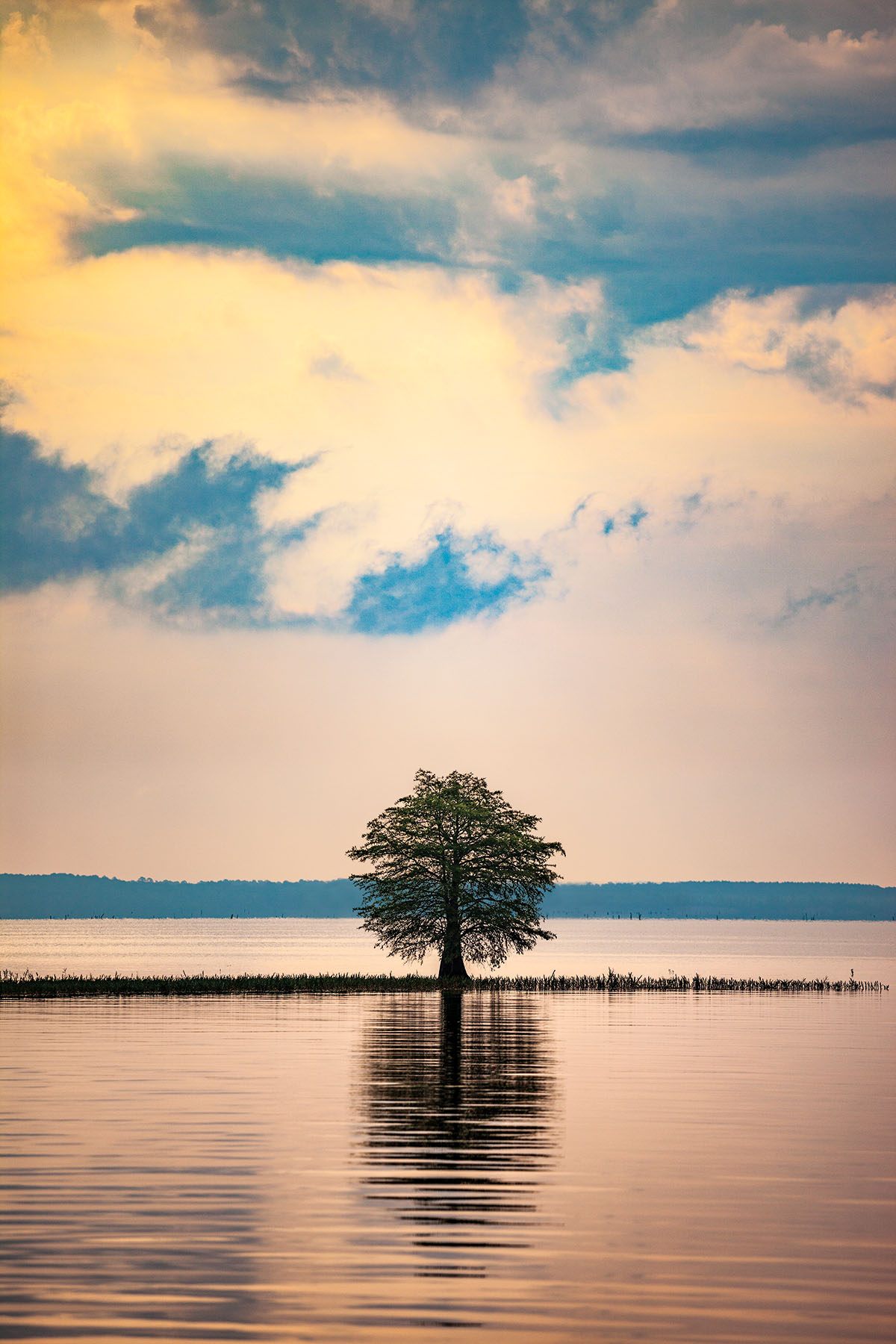
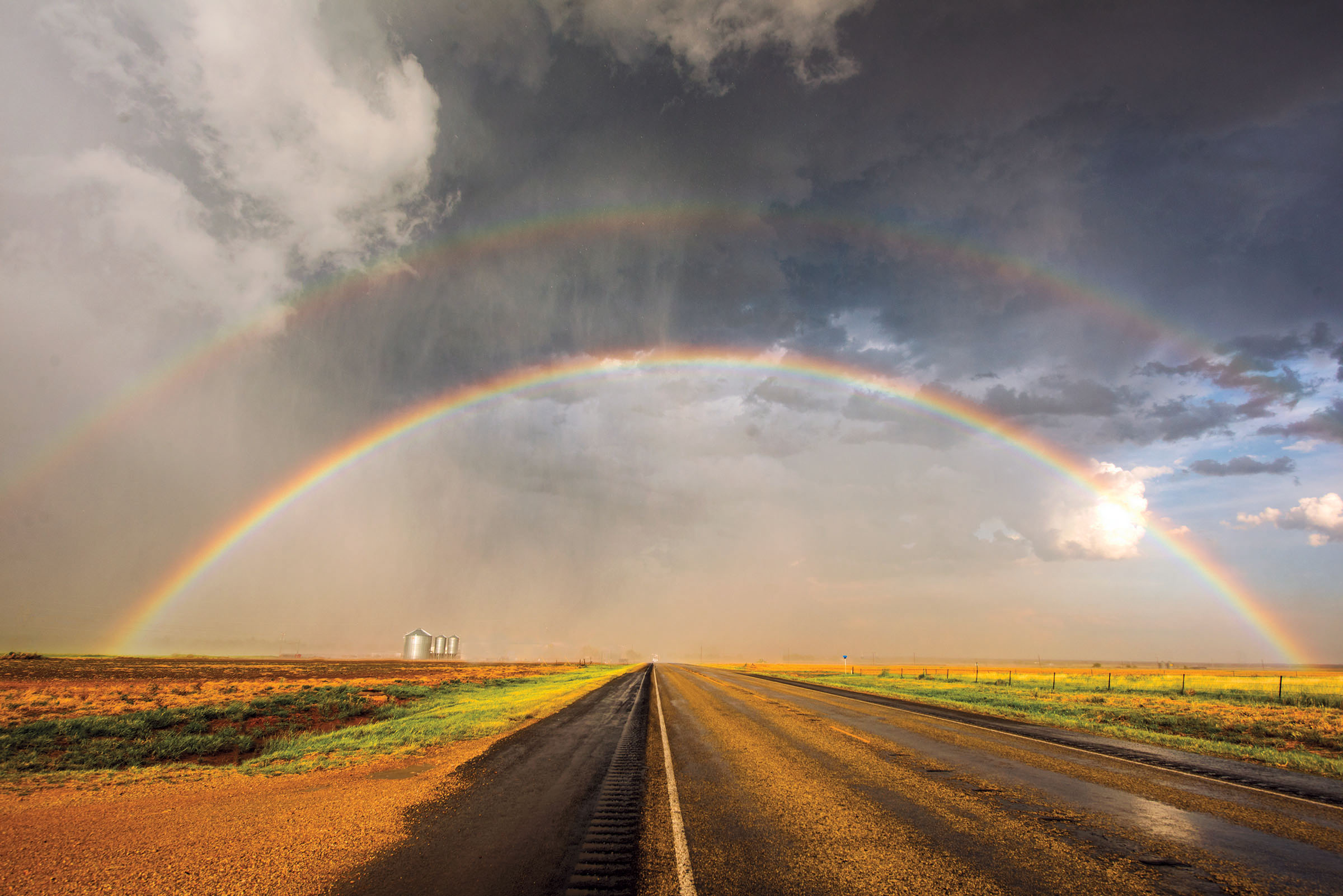
This wonder-inducing expanse in all its permutations. Flat whites and cool grays. Forever deep blues. Chaotic, swirling skies. Sad, soulful skies. Bright skies. Night skies.
Only a poet or an artist—or a fool—would try to cage the Texas sky in words or pictures. Yet, here I am, driving from Austin toward the setting sun in a red Corvette convertible, searching for the answer to a perhaps unanswerable question.
What makes the Texas sky feel so big, so bold, so … I dunno, Texan?
I’ve always possessed a deep affection for our state’s mythologized sky. I felt this most pro-
foundly in college, relaxing on the south lawn at the University of Texas at Austin, staring up at the bubbly cumulus clouds. After graduating, I pursued racing pedal bikes professionally, and the sport led me all over the world. I observed the moody skies of the Dutch impressionists and the cloudless desert air beyond Dubai. Today, I spend much of my time beneath the Texas sky exploring with my kids. We’ll scramble up a bluff with a view of the state Capitol, and I’ll opine that skies elsewhere simply don’t compare.
Months ago, when I began pondering the Texas sky, I journalistically hewed to the facts. I grilled an astronomer at the McDonald Observatory in far West Texas. Spent hours researching a hallucinatory phenomenon known as the Ganzfeld effect. Delved deep into the PR stunt proclaiming Montana the “Big Sky State.”
Eventually, I determined facts alone can’t capture this Texas spectacle. To get a clearer view, I decided to head away from life’s obstructions—trees, telephone lines, ugh, skyscrapers—until I reached a place without much to do but look up.
To get there I’d need a convertible, of course. I rent the Corvette from an aptly named Austin neighborhood, Skyview, and swoop up my mom, Lynn, on the way out of town. My mom is a former social studies teacher at Fossil Ridge High School in Keller and a fluent Spanish speaker. At 80 years old, she’s still limber enough to sink down into a sports car’s passenger seat. I wanted to know, would she see what I saw?
 Enjoying this article?
We drive as fast as my mom will let me, right down to where the Hill Country flattens, then west on US 90 toward the Chihuahuan Desert and Big Bend.
“We view the sky as one of our most valuable resources, akin to the ocotillo, the Rio Grande, and the Chinati Mountains,” Big Bend Ranch State Park Complex superintendent Cody Edwards explains to me when I ask him about the magnetism of the West Texas sky.
Annually, hundreds of thousands of Texans are drawn to the Big Bend region by its night skies, which are among the darkest in the country. The Greater Big Bend International Dark Sky Reserve is currently the world’s largest protected dark sky area. But Edwards often finds himself more mesmerized by the daytime skies. “I’ll sip coffee on my front porch and watch storms form over the mountains. You can see the rain coming down and which way the wind is blowing. Sometimes you can even smell it,” he tells me. “Then they’ll disappear just as fast as they came in.”
I’m certainly not the first person to ponder the sky or seek inspiration from above. Generations of Texans and Texas transplants have done so.
“The sky—Anita you have never seen the sky,” painter Georgia O’Keeffe wrote in 1916 to her friend, the photographer and suffragist Anita Pollitzer, while living in the Panhandle. “I wish I could tell you how big.”
Novelist Larry McMurtry once explained in a New York Times interview, “I feel sky-deprived in the forested places. Many, many people born to the skies of the plains feel that way.” In his 2018 book God Save Texas, Lawrence Wright describes the Texas sky as “a natural point of focus for the contemplation of eternity.”
These icons of Texas art and literature, though, are in the business of poetic hyperbole. What, I wonder, do everyday Texans think of the sky, if they think about it at all?
A few hours into our drive, my mom and I stop in Brackettville, population 1,341, about 30 miles from the U.S.-Mexico border. We marvel at the Kinney County Courthouse—built in 1911 in the French style of Beaux Arts Classicism, with a domed clock tower and twin turrets—then pull into a gas station on US 90. There, standing outside a Subway sandwich shop, I meet a bike tourist named Sean Downing, who started riding across the country on May 5, 2023.
“I did the Cascade bike trail all the way to Eureka, Montana,” near the Canadian border, he says. From there, Downing, an Army veteran with angular features and a GoPro strapped to his head, continued crisscrossing the country—ultimately acquiring an electric bike and deciding to pursue the Guinness World Records’ mark for the longest journey by bicycle within a single country. The record: 18,716 miles.
Downing tells me he’s documenting his journey online (Google: Ride or Die America) and offers free, transformative bike tours to anyone who wants to join him. “You just have to feed me,” Downing says, taking a long drag off a cigarette. “Now, I’m going home to Florida.”
After riding through El Paso, Downing says, he started posting photos to Facebook of his bag-laden bike and trailer framed against the sea blue sky, the wispy West Texas clouds, and the open road running into the horizon. “It’s kind of funny,” he says. “People have made comments like, ‘Gorgeous skies. Amazing skies.’
“Texas skies, they’re way different because … ,” he pauses. “I can’t explain it to you.”
Downing rides off. From the gas station, my mom and I drive across US 90 into Fort Clark Springs, an old Army outpost turned resort community. In the late-afternoon light, the long shadows of roofless stone ruins stream across our roofless sports car. Fort Clark’s spring-fed swimming pool is the state’s third largest, a literal oasis fed by springs that attracted Comanche and Lipan Apache and then the soldiers who fought them during the American Indian Wars.
It was frontier nostalgia that inspired Montana to promote itself as the “The Big Sky State” in a 1971 Department of Transportation tourism campaign. The moniker came from Montana author A.B. Guthrie Jr.’s popular 1947 novel, The Big Sky. Filled with fur trappers and frontiersmen, Guthrie’s book depicts a wild, unsettled West—an open sky absent people yet full of possibilities. The theme isn’t so different than our own state’s popular rallying cry from 1941, “Deep in the Heart of Texas,” where The stars at night / are big and bright and The prairie sky / is wide and high.
After checking into the Fort Clark Springs Motel, an old limestone building called Patton Hall, we put on our swimsuits and walk to the pool. It’s early February and nearly 80 degrees. In the fading daylight, the sky smooths out into an off-white, like a fresh bed sheet. The octagon-shaped pool is about the length of a football field and 11 feet deep.
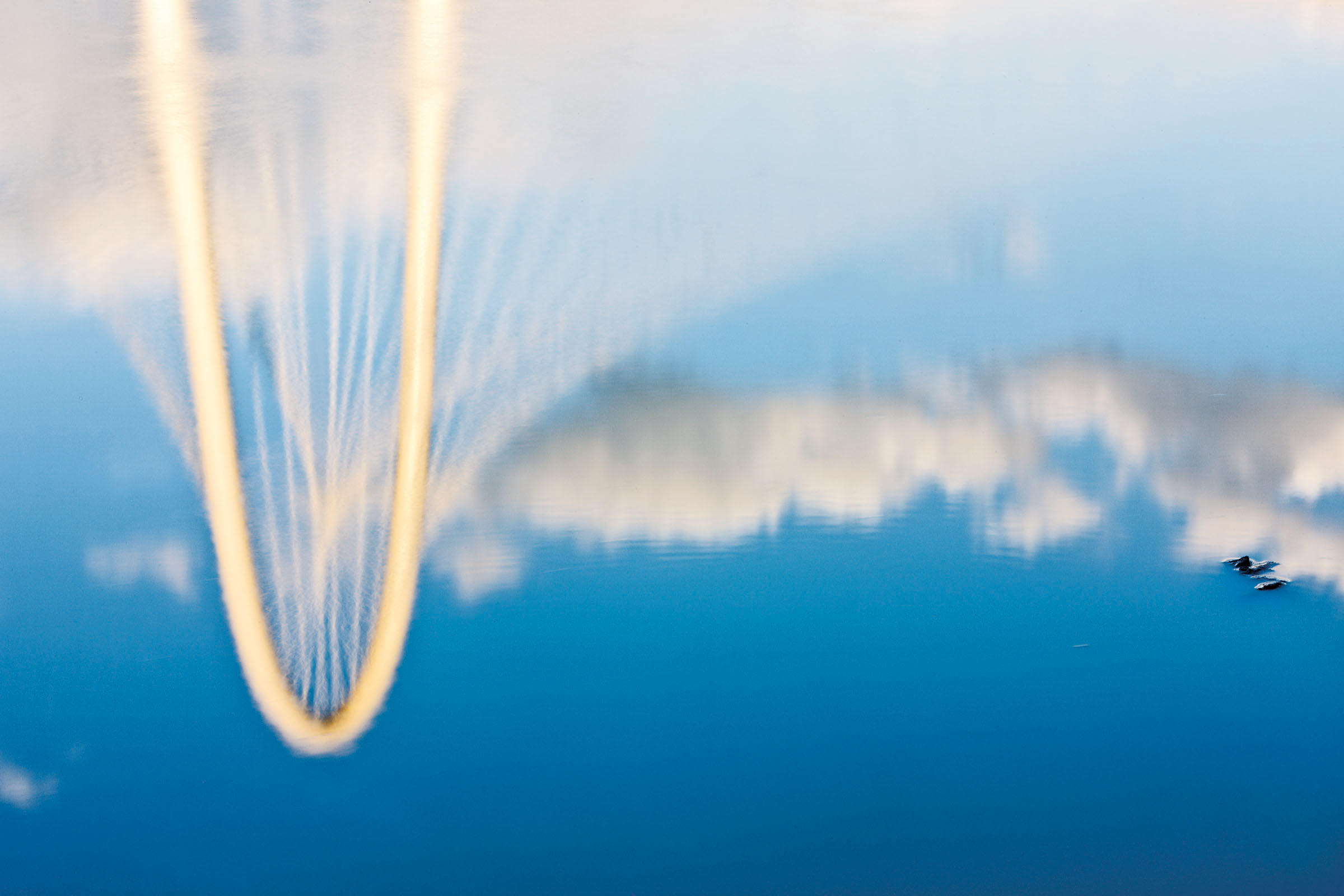
My mom takes a blurry picture of me cannonballing into the spring. As I let my feet dangle over the pool’s edge and watch the twilight reflect from the rippling water, I’m reminded of the Ganzfeld effect. I first experienced the phenomenon in December at the Turrell Skyspace, an art installation in the Student Activity Center at UT. On the center’s rooftop sits an oval white structure with a hole in the ceiling—one of nearly 100 “skyspaces” located throughout the world designed by artist James Turrell.
I sat inside the structure on a circular, basalt bench with about a dozen people, peering out through the oculus in the ceiling. As the sun set on the surrounding campus, a preprogrammed LED sequence within the structure transformed the naked sky into mesmerizing colors. Above us, a plane passed through an emerald green palette. The full moon emerged, a shimmering orb nestled within a deep violet egg.
An attendant explained that, actually, the sky wasn’t changing colors. The changing colors occurred solely within our “mind’s eye” because of the Ganzfeld effect.
The absence of depth perception within the skyspace forced us to look deep into the void. There, our brains searched for missing visual signals and amplified neural noise, leading to hallucinations. “Many people consider the Turrell Skyspace a spiritual experience,” Kathleen Brady Stimpert, deputy director of the university’s public art program, told me.
But you don’t need to visit a skyspace to experience the Ganzfeld effect. In an 1819 study of subjective visual phenomena, Bohemian physiologist Jan Evangelista Purkyně first chronicled the spontaneous appearance of light and dark spots within his field of vision while gazing at a uniformly clouded sky. Focusing on any sky absent a foreground and background for an extended period of time can cause a person to see things that aren’t there.
“It’s similar to when you’re out at sea,” my mom says to me. Her dad raced sailboats. And as one of five children, she and her siblings sometimes served as the boat’s crew. “I have spent a lot of time looking at the wake of a boat,” she says. “Everywhere you look, it’s pretty much the same.”
Walking back to the motel, I spot the Corvette parked, motionless, beneath an ochre horizon. I smile—a boat amid the sea.
The next morning, a thick mist settles over Brackettville. “The clouds are right on the ground,” I sulk. Her face reddened from yesterday’s long, exposed drive, my mom asks, “Can we drive with the top on?” I agree, for now.
We decide to wait out the weather in Camp Wood, a tiny hamlet an hour’s drive northeast, where the ranch roads trace the ridgelines of tall green hills. Along the way, the only person we find works in law enforcement.
A Kinney County sheriff’s deputy tells me, “The sky? Sure. I come in at 6 a.m. and leave at 6 p.m., and I have a lot of photos of sunsets and sunrises. Take a county road in pretty much any direction, and you’ll see a lot of sky.” Then he peers skyward, as if to say, Well, not today.
At a highway crossroads, an emu leans against a barbed wire fence. “I wonder if people feed it?” my mom asks. I get out of the convertible and admire the friendly bird: What does it know about the sky? It can’t even fly.
In Camp Wood, a long, languid morning passes. We buy beef jerky and Clamato juice from the Get-N-Go and explore the Rusty Pickle Wicks boutique, where the aromatic candles have names like Santa Farts and Narcissist—“for a family member,” the owner grins.
I spot a woman walking on the street pushing two small dogs in something resembling a baby stroller. Her name is Jeanie Christley, and though her family has owned a ranch here for generations, she grew up in Houston. “At night, the sky reminds me of elementary school,” Christley says. “We would go to NASA and sit inside a big domed room with all the stars and constellations cast against the walls.” Now, it’s as if she lives within a planetarium.
Christley reminds me of a woman I spoke with before we embarked on this trip, Amy Ray, an astronomer at the McDonald Observatory. Perched atop the Davis Mountains in West Texas, the Observatory’s telescope operates year-round. As one of four on-duty astronomers, Ray spends at least a quarter of the year observing the sky.
The vividness of the daytime sky, Ray explained to me, increases with lower humidity levels. “That means less of the shorter wavelength light is going to be scattered as it comes through the atmosphere, so the sky will appear as a really vivid, bright blue and seem much, much bigger.”
Ray, who’s from Tennessee, fell in love with the Texas sky while defending her dissertation on astrophysics at Texas Christian University. “I was heading from Fort Worth back to the McDonald Observatory and it was a clear, clear night,” she recalled. “As I drove away from the city, I remembered seeing just a couple of bright spots in the sky, some of the planets like Jupiter or Mars. But as I drove closer to the observatory, millions and millions of stars started appearing. I remember being so excited about working here and seeing these stars all the time.”
Even for a scientist, the Texas sky is as much feeling as fact.
Sometime after noon, my mom and I notice the clouds rising from the earth around us and a dappled sky emerging overhead. We remove the top from the Corvette and cruise back to Austin on the undulating roads that wind along the Nueces and Guadalupe rivers.
As we crest a rise, the road straightens and the horizon spills out in front of us, a vast landscape of swaying grasses and oak groves. I look over at my mom, a lifelong adventurer, and begin to accelerate. We disappear into the big Texas sky.