

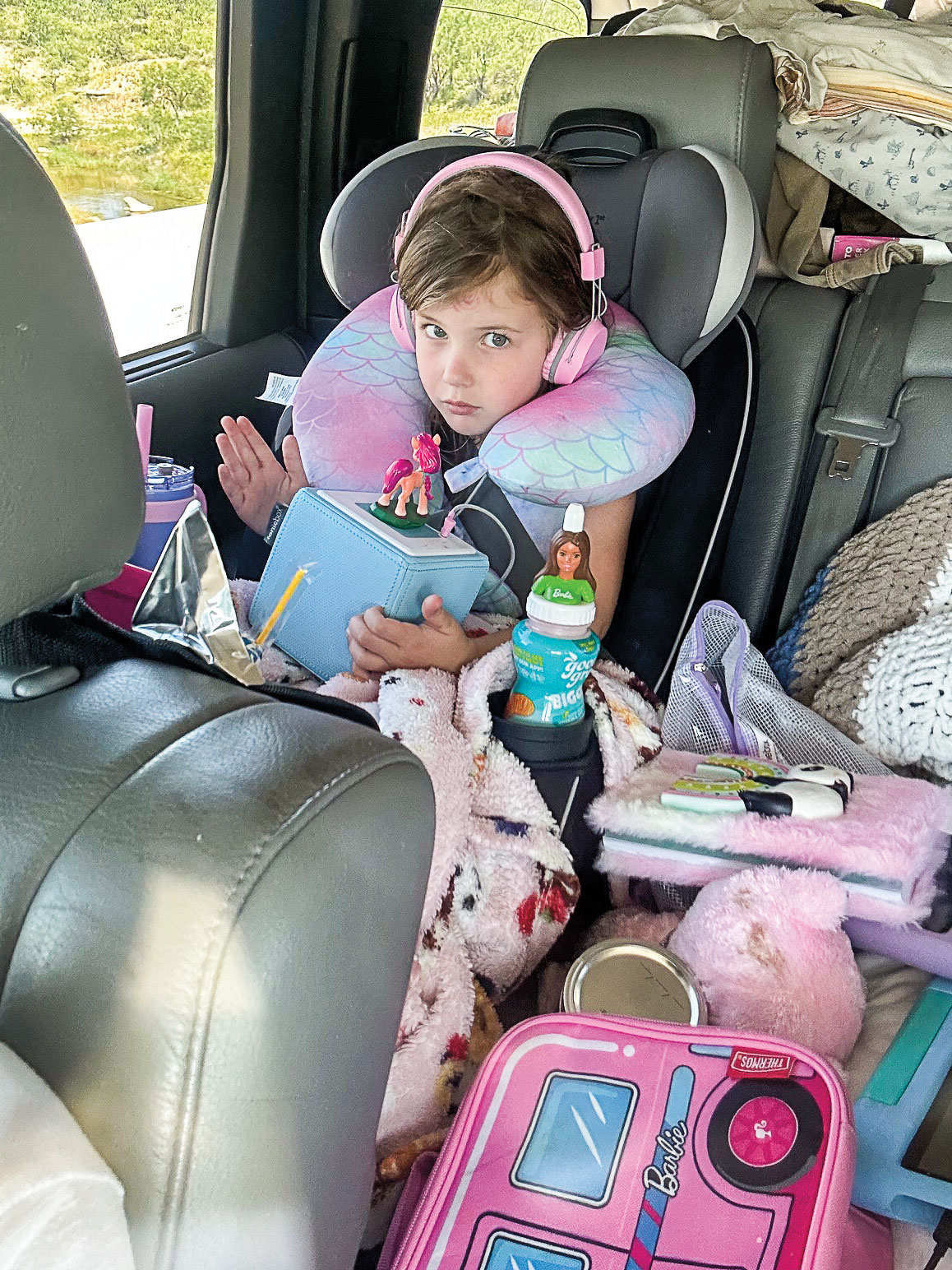
I’ll try to set the scene, but I’ll have to be quick. And quiet. We’re somewhere on Interstate 10 East, between Fort Stockton and Ozona in West Texas. My wife, Jordan, and our two children, Juniper (5) and Jonah (2), are on our last long drive of 2025. Between a short beach vacation, events to promote my novel Narrow the Road, and visiting family, we have driven around 3,000 miles in Texas over four trips.
Family road trips here can be serene—the miles of open road rolling by as Willie Nelson softly laments a lost love on “Blue Eyes Crying in the Rain.” From our air-conditioned Toyota Sequoia, I can see our great state unfurling before us: white-painted clouds against an impossibly blue sky, an unmatched biodiversity of flora, and … too late, they’re awake.
Jonah had a bad dream and now he’s screaming “Get me out!” at the top of his lungs.
“I want to listen to KPop Demon Hunters,” Juniper yells, her volume somehow rising over her little brother’s. “Willie Nelson is so boring.”
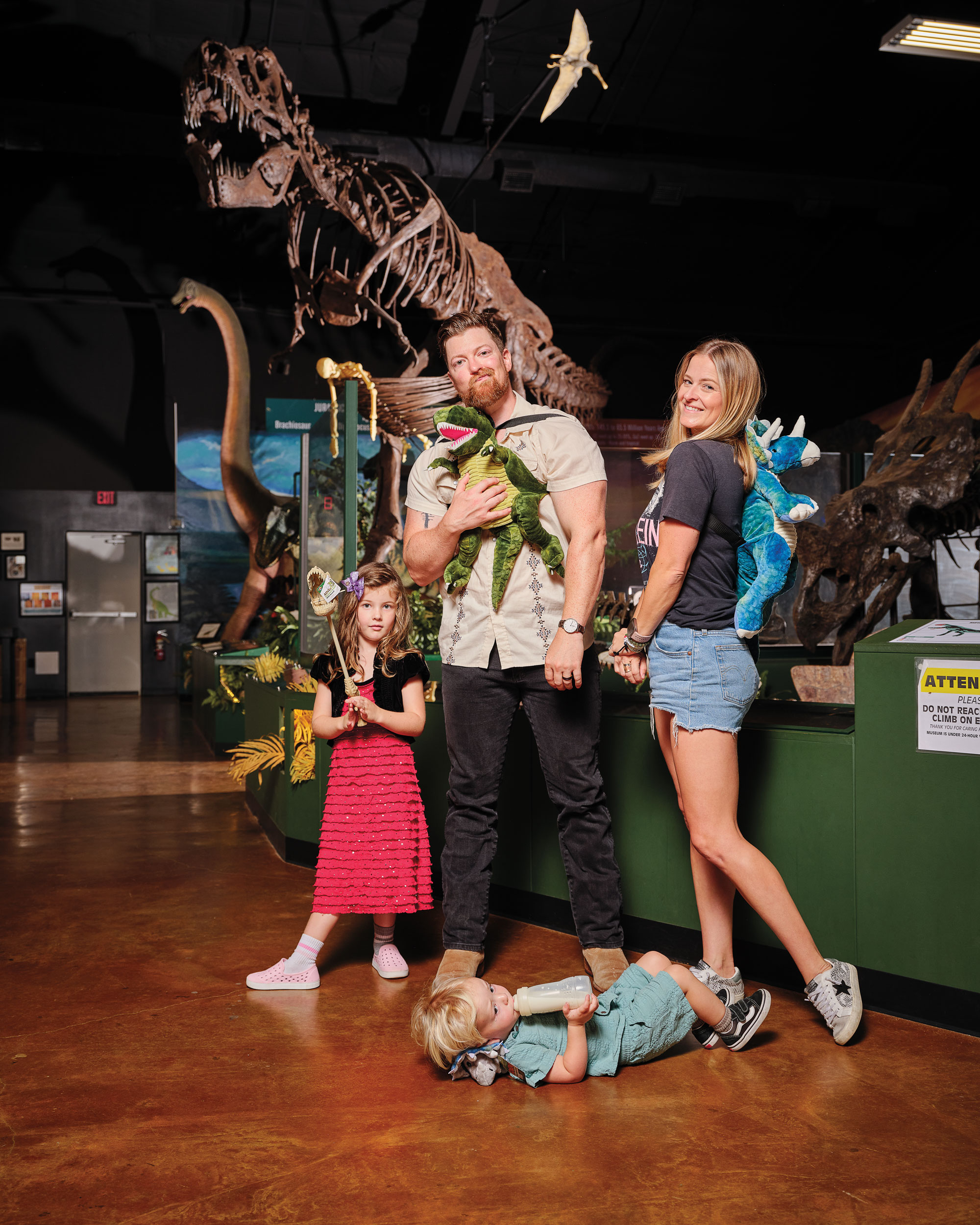
ABOVE: Dinosaurs are a family’s best friend at the Naranjo Natural History Museum in Lufkin. Photo by Jonathan Zizzo
Jonah throws his milk and it explodes against the window. Jordan unbuckles and corkscrews around in the passenger seat, reaching for the milk before it leaks over the books, toys, and blankets that cover the floorboard. A shrill and repetitive ding is added to the clamor of sound as the car chastises Jordan for not being buckled in. And even amid the chaos, as we pass a herd of mule deer, I can’t stop myself from saying, “Look, mule deer!”
“K-pop!”
Ding!
“Get me out!”
“They’re different from whitetail.”
Ding!
“Shhh! It’s OK, buddy.”
“You can tell by their ears.”
“I have to pee!”
“Out!”
“Daddy, it’s an emergency!”
“Did y’all see the deer?”
Family road trips can be complicated, especially in a state as big as Texas, where the answer to “Are we there yet?” is usually “Only a few more hours.”
With hundreds of thousands of road miles spidering out across the state, getting to a destination outside of our Central Texas home requires extensive planning and patience. But Jordan insists exploration and adventure are key to a happy childhood, and because I learned long ago that listening to my wife is, coincidentally, the key to a happy adulthood, I agreed we would bring the kids along as much as we could.
Natasha Klavon, a licensed counselor and certified mental health professional with the Bariatric Medical Institute in San Antonio, says travel can help build emotional flexibility, curiosity, and empathy in children. “It opens children up to the limitless possibilities not only of the world around them but also within themselves,” Klavon says. “It helps them develop confidence, resilience, and a deeper sense of who they are. When travel is shared with guidance, it strengthens attachment and creates meaningful, lasting core memories with connection.”
It’s the “core memories” part I’m most curious about.
After our moment of calamity ends—we find a bathroom for my daughter, we let my son out of the car, and we put K-pop on the radio when we get back on the road—I’m able to loosen my grip on the steering wheel and take in the passing landscape. This spring, West Texas is greener than I remember, saturated by the rain. I’ve always recalled only tannish brown vistas. I wonder why we hang onto some memories, while others slip away. I wonder what memories my kids will make from these adventures.
Our first trip, to North Padre Island, is our shortest, but that doesn’t make me any less anxious. Every inch of the SUV is full. I can feel the weight as I pull out of the driveway. The trampoline, the swing set, and the playhouses that entertain our kids for hours all look on as we depart. We can’t help you, they seem to say. You’re on your own.
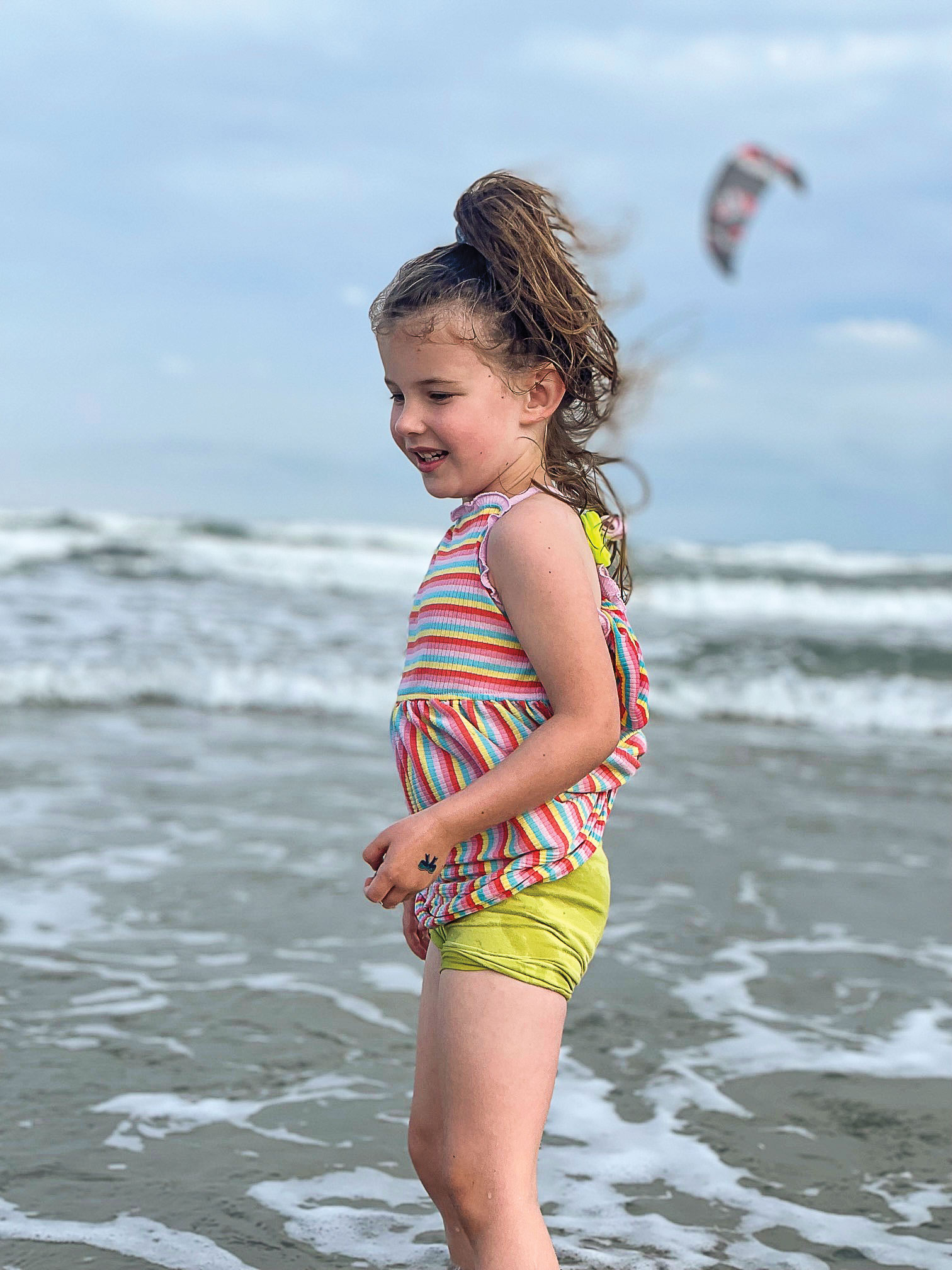
The beach is full of wonder for children. The sand on North Padre stretches forever and the water disappears into the horizon. When I ask my son where we are—expecting him to excitedly say the beach—he looks at me with confusion and says, “Right here.” So true.
We dig holes and watch the rising tide fill them with water. We inspect seashells for crabs and search the ocean surface for dolphins and pirates.
The community sand-washing stations are convenient for parents. Not only do they help minimize the sand mess, but because of the newness and novelty, kids might enjoy them—or at least try them without too much of a fight.
One steadfast rule we have for traveling with the kids is to always eat on a patio. There’s usually some room to move around freely without bothering other customers, the outside environment is more stimulating, and the kids’ inability to talk quietly is less of a problem. We choose Guajillo’s on the Island, a family-run Mexican restaurant on North Padre. The kids like their quesadillas, and the al fresco environment is much more relaxed than the inside dining room.
It’s our first night in the small townhouse we’ve rented, just a block from Whitecap Beach. Jordan is trying to get Jonah down in one bedroom while Juniper and I lie awake in the other. I “draw” a story on her back about an octopus that helps its friends find buried treasure.
“So, if you drown, you die, right?” she asks. The octopus story didn’t mention drowning, so I can tell she’s thought about this before.
“Yes,” I tell her. “If you drown, you die.”
“And then what?” she scrunches her face. “Like, where do you go?”
“I’m not sure,” I say. “I haven’t died.”
“Will you die before me?” she asks.
“Yes,” I say with certainty.
“Oh, OK, so you’ll already be there,” she says, and I nod. “Tell me another story.”
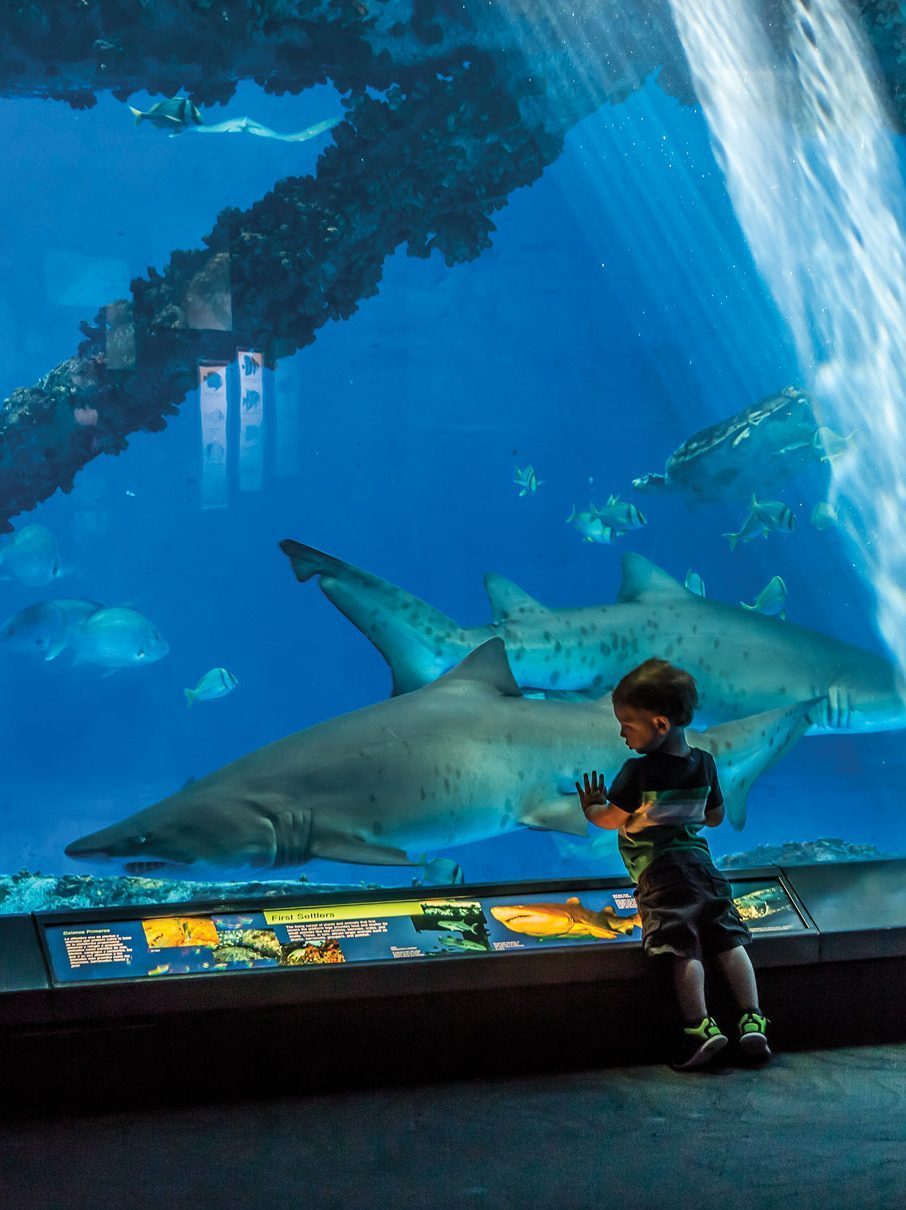
The next morning, we drive back to the mainland and visit Texas State Aquarium in Corpus Christi. We spend nearly the entire day exploring the reef and lagoon exhibits. Jordan and I like the tropical vibes of the jungle exhibit, but the highlight for the kids is watching aerial acrobatics from Shadow, Liko, Merlin, and Schooner—a quartet of dolphins who star in the Dolphins! show.
We stay only two nights on North Padre Island, but that’s plenty of time for my kids to bury me in the sand, run from waves collapsing on the beach, and shed enough sand into our suitcases that we’ll have it the rest of the year.
I sit on the board of the Western Writers of America, an organization dedicated to Western writing, poetry, music, and film. The group’s 2025 annual conference was held in Amarillo, which provided a great opportunity to take the kids to a part of Texas they’re less familiar with.
But Amarillo is eight hours away. We’re not sure our son is ready for that, so we cut the drive in half by staying overnight in San Angelo. Conveniently, it’s 100 degrees outside and the Love Municipal Pool is open. We pay a hotel tax that benefits the community, and our kids are free to burn off their cooped-up energy at a tax-funded pool. If only every government transaction was so clear.
We head to Amarillo the next day and Jonah points at every cow in every pasture and says moo. For a while this is cute, but the pastures are many, vast and steep, and there are so many moos to go before we sleep.
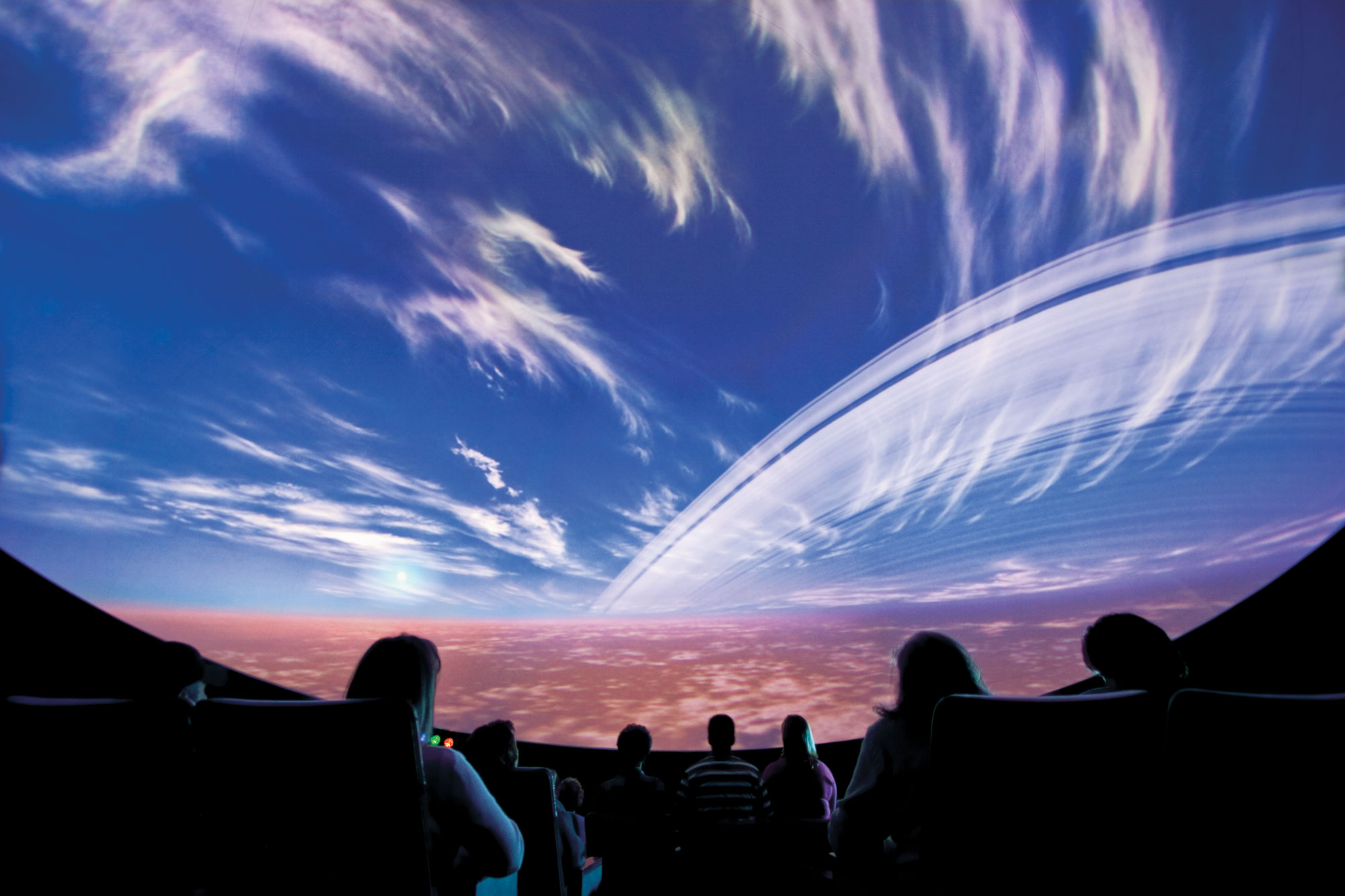
Palo Duro Canyon is a popular tourist destination in the Amarillo region, but I need to be downtown for the conference and Jordan has some remote work to do online. She drops me off and takes the kids to the Don Harrington Discovery Center, where she is able to work while the kids play and learn about science. The exhibit Beyond: Unity in Community explores Afghan history and culture. It’s designed to make the large refugee community in Amarillo—nearly 7,000 refugees were settled here between 2007-2017—feel more at home. It’s an opening for Jordan to talk with our daughter about the vastness of the world. When I meet them back at our Airbnb that evening, Juniper is excited to quiz me on Afghanistan trivia, point out the country in our Atlas, and show me a picture on Jordan’s phone of her and Jonah in front of a replica of the Arch of Bost Qala.
She doesn’t ask why Afghans fled their homeland, and I don’t offer. That lesson will come. I’m just glad she is learning about other places and peoples.
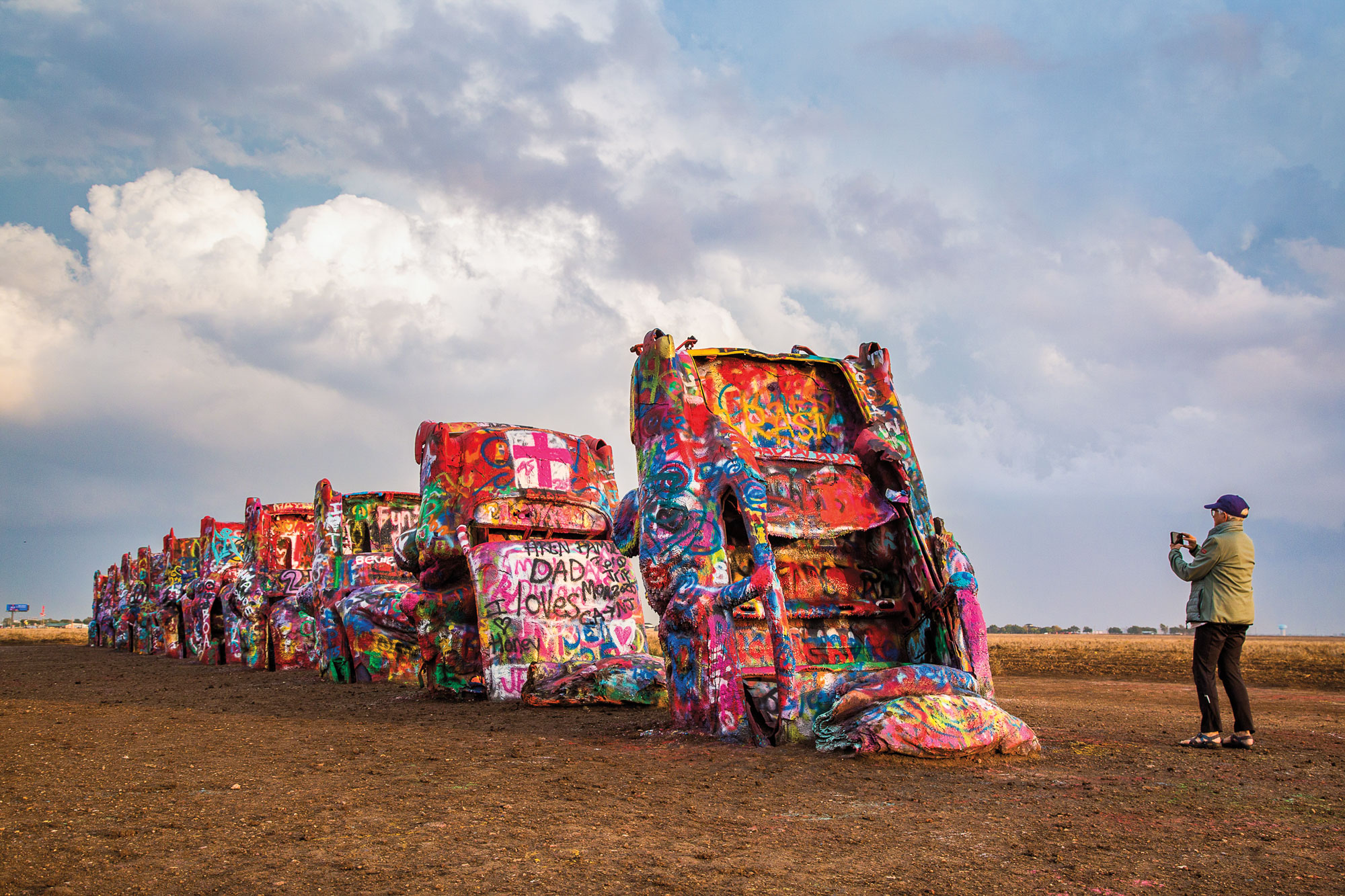
The next morning, we drive out to Cadillac Ranch, an art sculpture located near Route 66. Created in 1974 by the Ant Farm collective, the installment consists of 10 classic Cadillacs turned vertical, half-buried in the dirt, and spray-painted bright colors. Both children marvel at the giant, glowing cars sticking out of the ground. Kids are so often taught that things need to be the right way, and while that may be appropriate for many things, there is an obvious sense of joy when they see something that is celebrated for being wrong. Cars belong on the road, not submerged in the earth—and yet, here they are.
It’s a five-hour drive from our home in Canyon Lake to my hometown of Lufkin, and for reasons known only to the road trip gods, this is the drive both kids decide to unleash their tiny fury. Juniper’s voice seems permanently stuck in a whine-like register. Jonah is blowing out diapers every hundred miles. Neither can get comfortable or be satiated. We give them coloring books, stickers, and toys, but nothing is working. I consider warning that Santa is watching but instead resort to a nuclear threat: If you can’t listen and behave, then no dinosaurs.
The Naranjo Museum of Natural History in Lufkin is a fascinating compilation of exhibits that elucidates early life on earth, the evolution and extinction of various species, and the way minerals, natural resources, and space travel might impact the future. My kids do not care about any of this because—dinosaurs!
There are plenty of dinosaurs, from the animatronic T. rex that guards the entrance to the Mary Ann Hadrosaur, a novel species named after the owner’s wife. Nothing could be cooler except for, perhaps, the dinosaur-themed playground the museum opened in the fall of 2025.
Tiffany McVay is a local nurse whose son, Mason, is a frequent visitor to the museum. She tells me it’s exciting as a parent to see things through her son’s eyes. As we talk about the nature of memory, McVay says it isn’t “lavish vacations” that stand out most from her childhood.
“My dad knew all the backroads in and out of Angelina and Houston County,” she recalls. “We’d ride around for hours, and there was a creek, almost like a spring, that we swam in several times. Rope swing and all. That’s the stuff I remember, and I’m so glad for it.”
At the museum, Juniper locks in on the fossil discovery stations, where she uses a brush to “dig” for buried bones. Jonah’s favorite is the space exhibit, which includes a spacesuit and small replica shuttle. He’s been watching “The Planet Song” by Kids Learning Tube on repeat, so this is perfect timing for him. Both kids love the playground—so much so that milkshakes must be promised to facilitate a non-nuclear departure. Is it the best parenting to have ever been parented? Probably not. Do we make a clean exit despite it being an hour past Jonah’s nap time? Absolutely.
Later we take the kids to Kiwanis Park, where I played growing up. In Lufkin, much has changed but much has not. Afterward, we visit my paternal grandmother in an assisted living facility. Mostly she does not remember me or my wife or that she has great-grandchildren. Then, like a tide coming in, for a few minutes she knows my name and who I am. Then the tide goes back out. She oscillates between memory and discovery for most of the visit. At one point, after I’ve written my name and our relationship on a piece of paper, I ask her if she remembers riding stick horses with me when I was little. “Why yes,” she says, “of course.” Who could forget a thing like that?
“Is Nini 100 years old?” Juniper asks when we leave.
“Almost,” I tell her. “She’ll be 94 this year.”
“Will you remember me when you’re that old?”
“What do you think?”
“I think you’ll always remember me.”
I am trying not to choke up in front of my kids because they don’t yet understand the complexity of being simultaneously happy and sad. The poet James Tate said poetry is everywhere; it just needs editing. But with the way the sunlight and the pine trees make a show of the shadows on the road—and the way my son and daughter are staring out the window at the town that raised me—I hope the editor has a soft touch.
“I think so, too,” I tell Juniper.
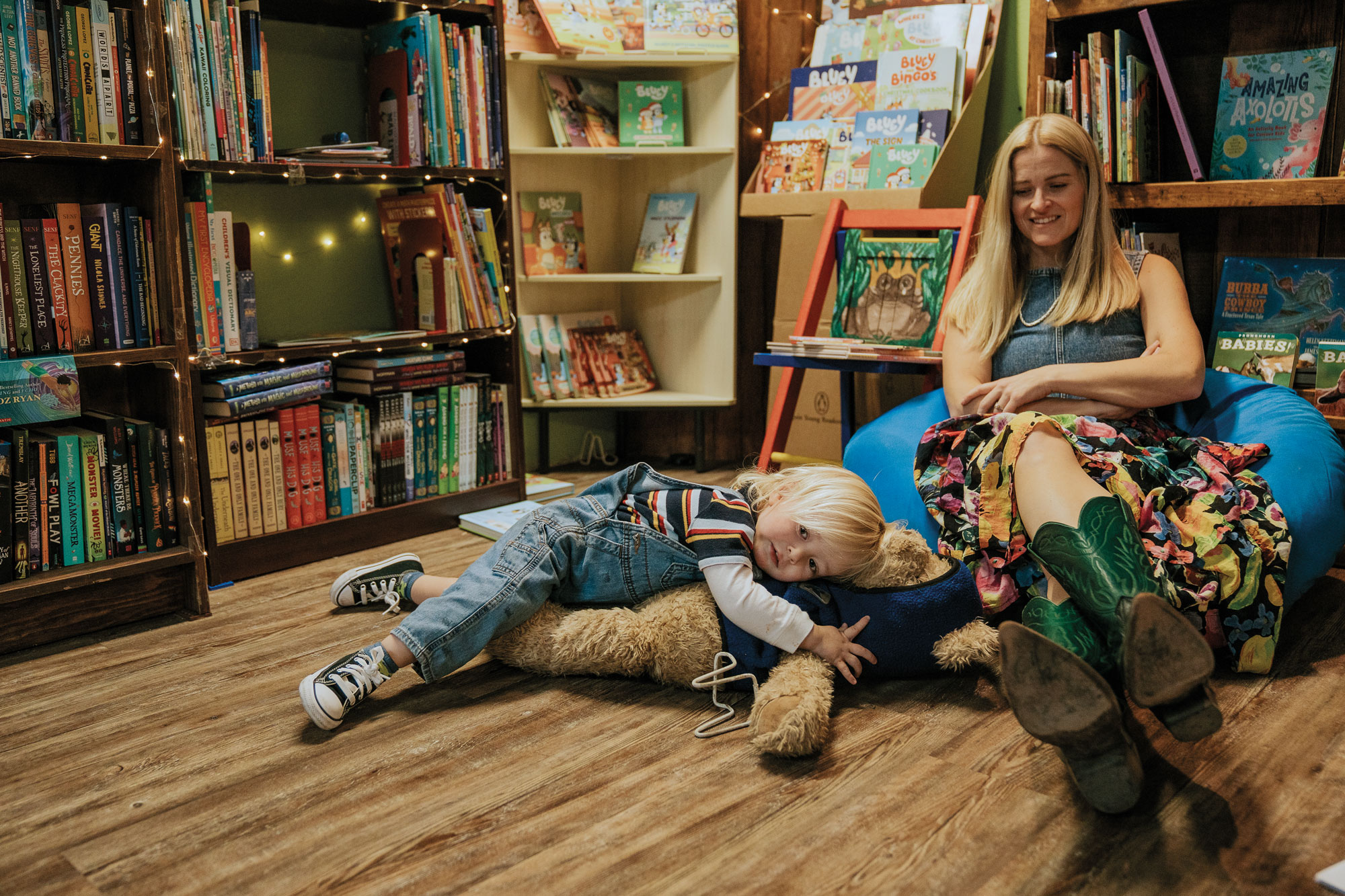
We meet our friends Lucy Griffith and Andy Robinson in Marathon out in far West Texas. Lucy, an incredible poet, is a featured author at Artwalk Alpine later in the day, but first we want to check out the new Leather Bound Books. Lucy and Andy are great with kids, and they make a “bridge” for Juniper and Jonah to run under time and time again while Jordan and I look at books.
We go back to their Airbnb for lunch and Lucy takes Juniper afield to teach her about cacti species and show her javelina tracks. Andy convinces Jonah there is a frog inside his cupped hands by making silly noises. It is a wonderful time that comes to a sharp end when Jonah refuses to nap. In his 24 months earthside, he has never skipped a nap, but he does on this day, leading to the inevitable fussiness later during the art walk. Still, the festivities are infectious. Seemingly the entire town of Alpine has transformed into vendors, artists, and maker booths. There is live music on every corner. Storefronts keep their doors open late and revelers pass in and out of shops and galleries, shaking hands and calling one another by name. We are wowed by the connectedness of the community, a feature that Front Street Books owner Kendra DuBois says is a pillar of the event.
“This event is about visibility, encouragement, and the shared belief that art matters, especially this far from everywhere else,” DuBois tells me. “It reminds us that creativity doesn’t need a big city to thrive; it just needs a community that believes in showing up for one another.”
We wander the streets as a family, oohing and ahhing at the art and buttoning our coats against the first cold wind in West Texas since last winter. Eventually, the lack of sleep catches up with the little ones. I feel guilty I get to stay and peddle my novels at Front Street while Jordan takes care of the kids. Jonah cries and arches his back as Jordan tries to put him in his car seat. OK, maybe I don’t feel that guilty.
The next morning, we eat at Marfa Burrito. The temperature is in the 40s, so we break our patio rule and eat inside. I ask the kids what they want. Juniper says she hates burritos. Jonah has disappeared. Juniper says she is bored and this is boring. Where is the playground? Jonah bumps his head on a table and starts crying while also saying “playground” in the most pathetic way. Now Juniper is making a whining noise that mimics her brother’s. People are staring. Our food is ready but we’re dealing with the kids and don’t realize it. Another customer has to come tell me. I’m flustered. Five minutes later, both kids are asking for bites of Jordan’s tortilla while staring at screens. Juniper is playing Roblox on the iPad and Jonah is watching a cartoon on my phone. I feel like a bad parent. A lazy parent. A defeated parent. But then on the way back to Alpine, I see a herd of deer a hundred yards off the highway.
“Daddy, look, deer,” Juniper says before I can point them out, which causes Jonah to repeat “deer” over and over.
“Wow, good eye,” I tell them, grateful for their noticing. So much of parenting can feel like a battle between what they notice and what they don’t.
That night I score the ultimate dad-win as both kids climb into bed and ask me to read from a Hank the Cowdog book I bought at Leather Bound earlier in the day. With one child on each side, and both leaning in to see the book, I try to remember every second.
Memory, as a mirror, is cloudy at best. At worst it’s a black Sharpie that scribbles on our reflection. Wasn’t the yard bigger than this? Didn’t it take longer to get to that place? We don’t pick which memories we keep or how vivid they are. Jordan and I have taken on stress and anger and sleeplessness to ensure our children have memories of traveling, but what will they actually hold on to? Jonah is 2. It’s likely he won’t keep any part of this, and yet I can’t help but believe that the elasticity of his brain is benefitting from new places and experiences and time spent with family. And for Juniper, what will all this amount to? A dolphin show? Painted cars buried in the ground? Or maybe just the quiet highway, the Texas sun, and her dorky dad saying, “Deer!”
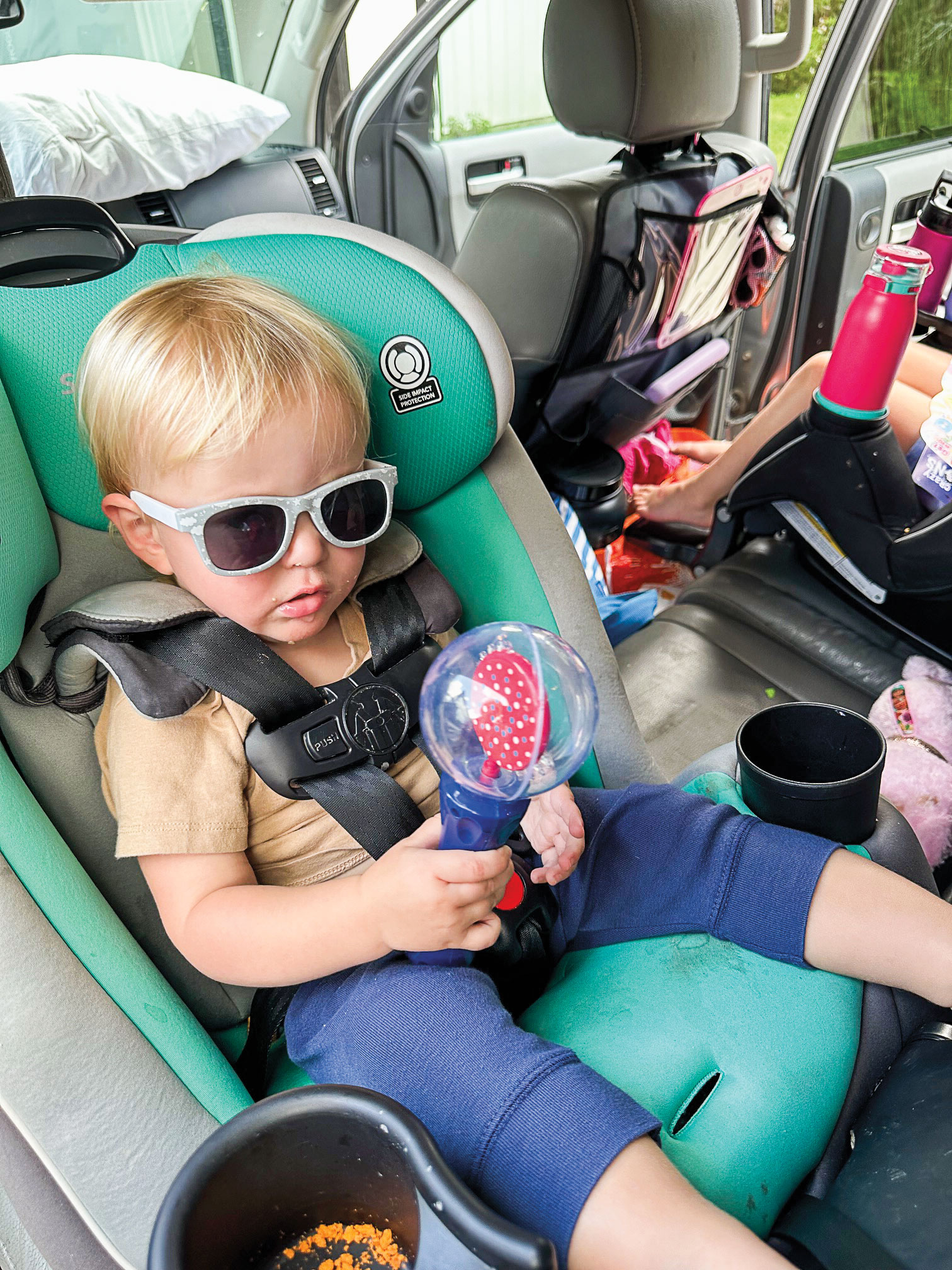
On the road home, between Fort Stockton and Ozona, the storm finally passes. Jordan soothes Jonah, and I stop at a rest area for Juniper to use the bathroom. The kids are quiet again. Jonah is flipping the pages in Chris Barton’s We Match book. Juniper is writing a letter to her best friend, Emma.
Jordan leans over and takes my hand, motioning with her eyes at the kids. I nod. I know. She sneaks a photo of the two of them quietly reading and writing, and I believe we understand these memories are more for us than anyone else. They are another set of photos we can scroll through in a few years when I’m not Juniper’s favorite person anymore and Jonah wants to swing by himself without our help.
“Remember this?” We’ll ask one another, as if we could forget.