
Scenes From the El Paso Mission Trail

Photos reveal the vibrancy of El Paso and Ciudad Juárez’s centuries-old missions and presidios

The Mission Nuestra Señora de la Limpia Concepción del Pueblo de Socorro.

For photographer Christ Chávez, the missions in and around El Paso are all about community. During his 50 years in the city, he’s watched the areas near the missions from El Paso to Ciudad Juárez evolve and transform, just as they did when they were established starting in the 1600s. “If it weren’t for these missions, El Paso wouldn’t be what it is now,” Chávez says. “They’ve helped El Paso grow.”

The Camino Real de Tierra Adentro ran from Mexico City to Santa Fe, New Mexico, to connect Spanish missions and presidios from the 1500s to the 1800s. The missions along the way, which housed Spanish settlers and Indigenous pueblos, grew food, held religious services, and allowed the Spanish to settle the frontier. 

Chávez photographed four missions and one presidio chapel from El Paso to Juárez, an extension of El Paso’s Mission Trail tourism initiative that started in 1986. Built, rebuilt, and restored between 1659 and 2020, the adobe structures have been embraced by surrounding communities as gathering places for centuries. 

Magda Maureira, docent at the Socorro Mission, traces her family’s lineage in the area back 345 years. “When you have roots of that magnitude, they pull you,” says Maureira, who is descended from the Piro tribe brought to the Socorro Mission after the Pueblo Revolt of 1680. “These missions were truly the anchor for these little pueblos.”

Over time, many of the missions, situated on riverbanks and built with cottonwood and adobe, were damaged or washed away by the Rio Grande. Some have been rebuilt several times, and most are in need of lengthy, expensive repairs. But locals continue to embrace the cultures that called the missions home through historical performances, religious ceremonies, and traditional arts and cuisine. Chávez’s photos explore the missions as both capsules of the past and anchors of activity in the present. —Julia Jones

San Elizario
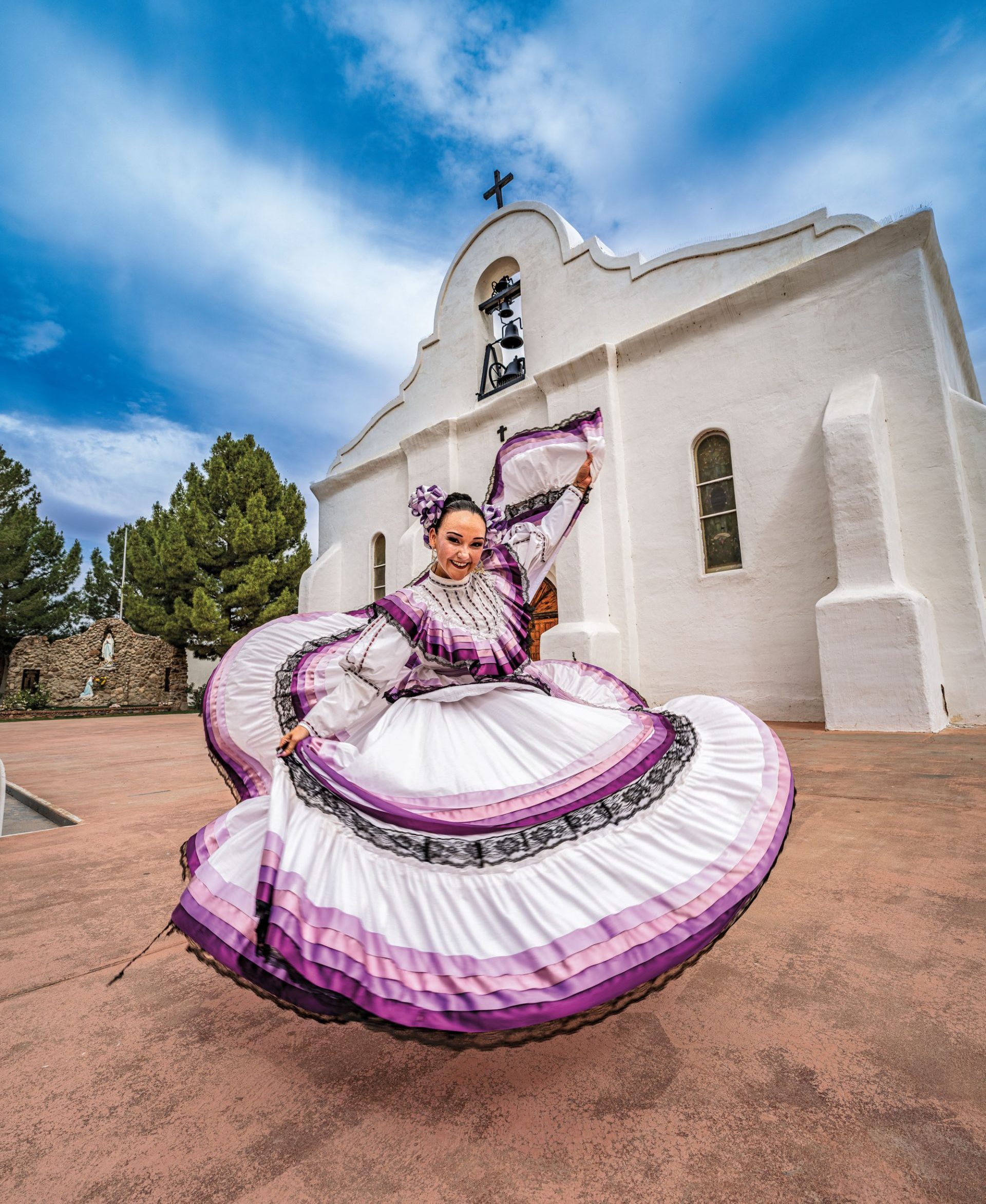
A woman in a purple and white traditional Mexican dance dress twirls her skirt and smiles in front of a white adobe chapel.
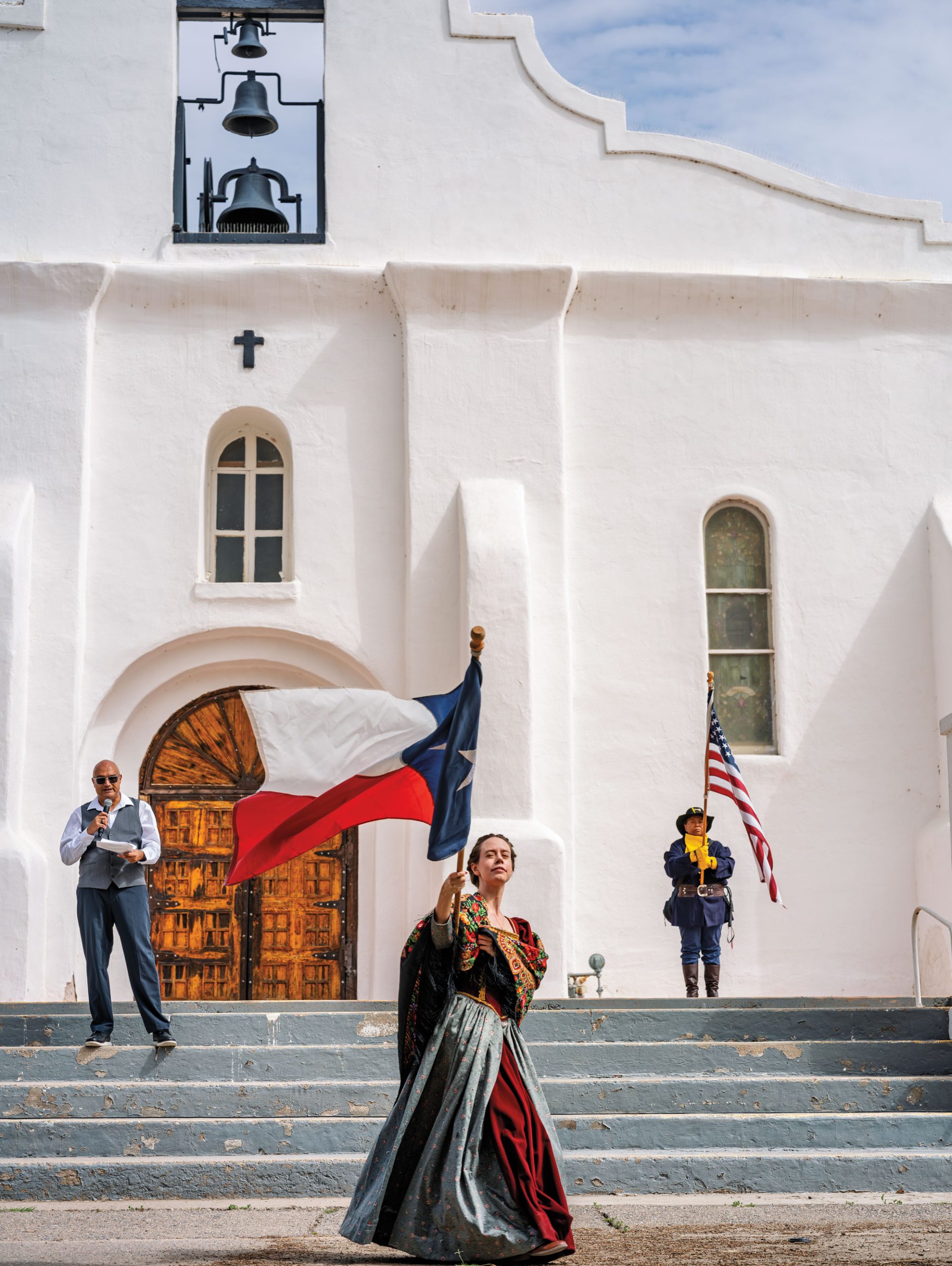
Pilar Muñoz’s “Threads of Time” performance details San Elizario’s history.
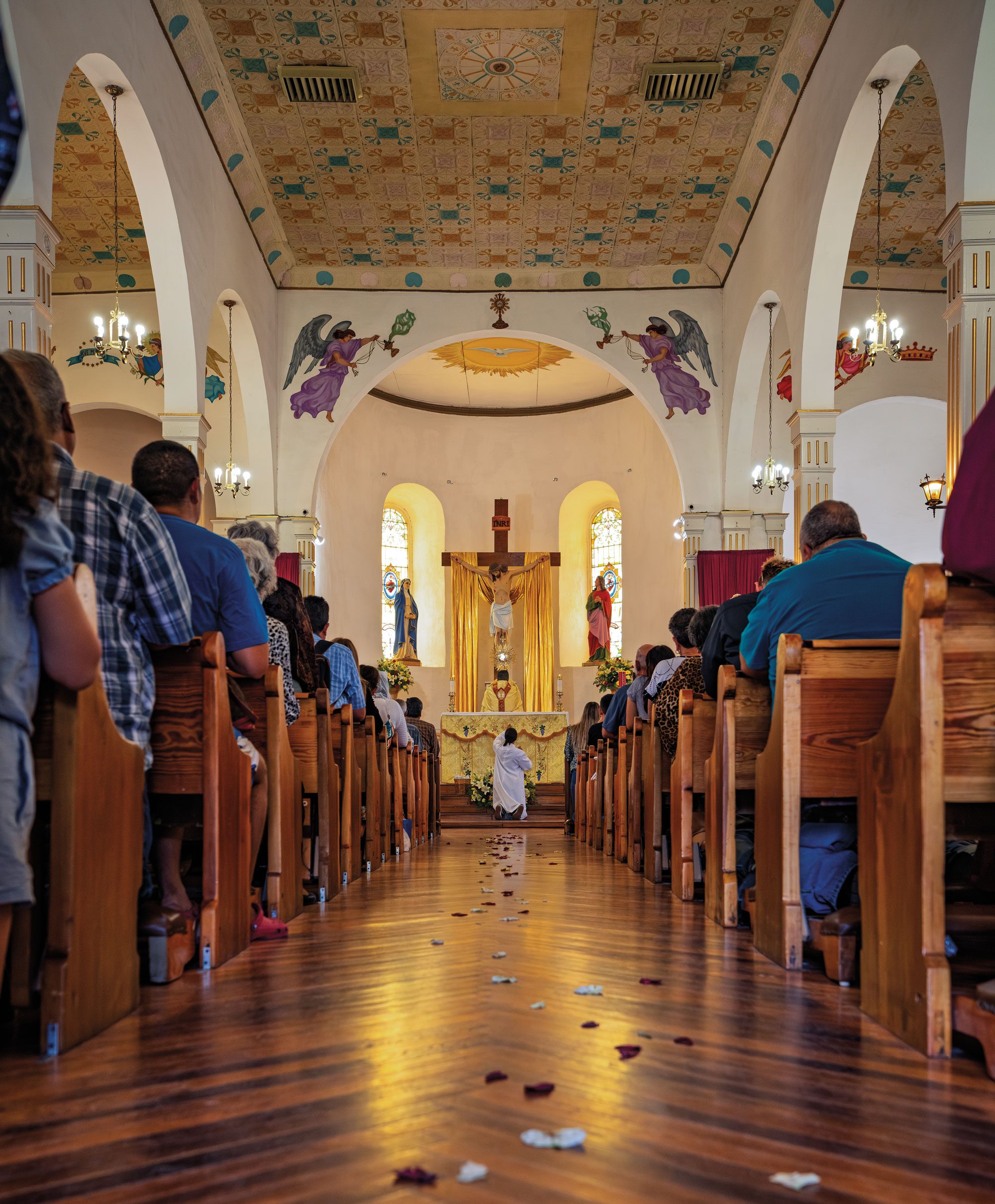
People sit in wooden pews leading up to an altar featuring a large crucifx. A man sits on his knees while praying in front of the altar inside a white church
Not technically a mission but rather a chapel serving a Spanish presidio, “San Elceario” was built in 1789. The edifice standing today on San Elizario’s square was built in 1877.
A woman in a red and blue dress stands in front of a white chapel waving a Texas flag. A man to the back right holds an American flag.
Community gatherings like the “Threads of Time” performance showcase the town’s culture.
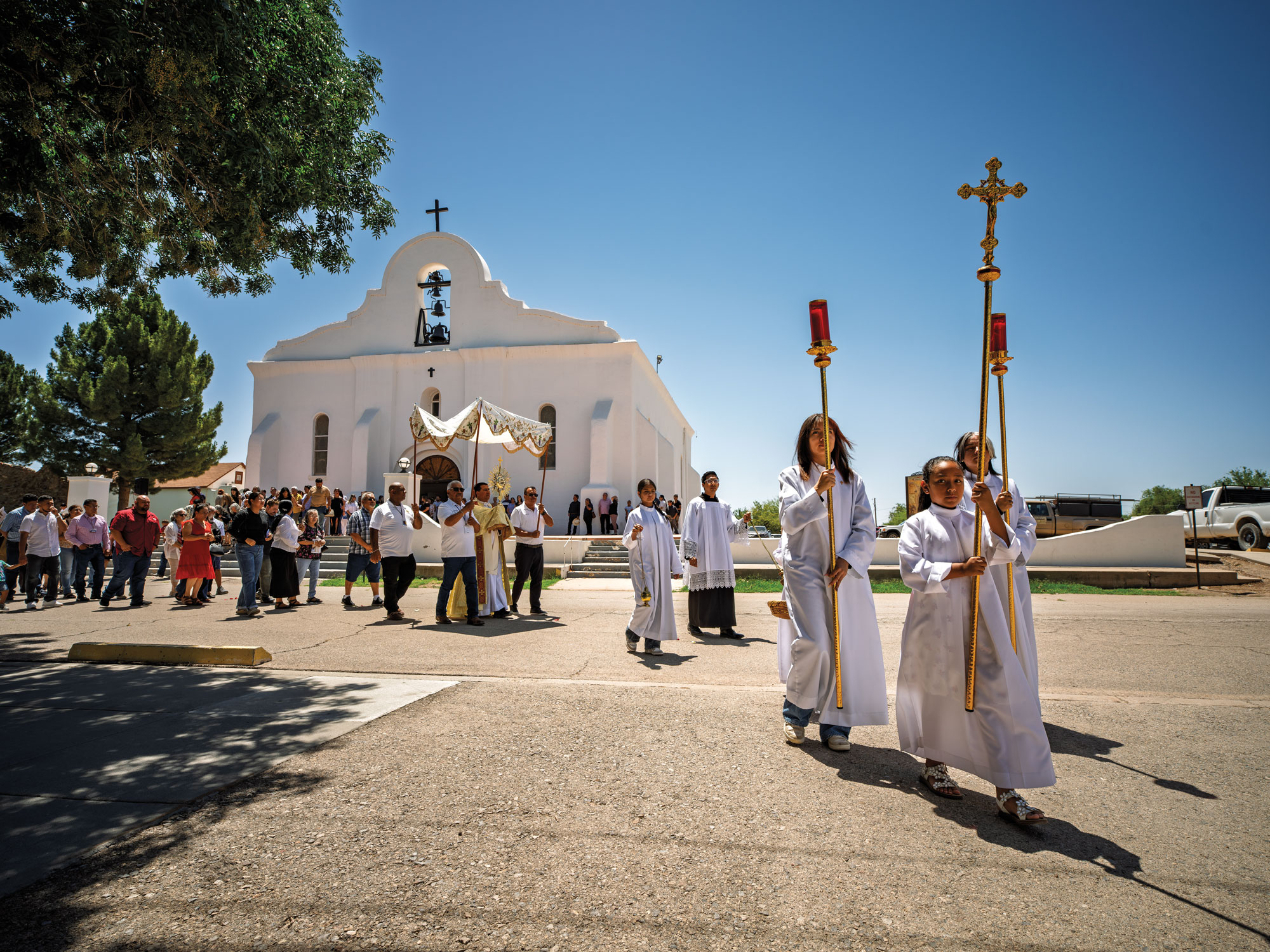
People dressed in white church robes holding a cross and candles lead a procession in front of a white chapel.
Members of the still-active church participate in a procession for the feast of Corpus Christi on June 4.

Socorro

The bell of a white adobe mission
Originally completed in 1691, Mission Nuestra Señora de la Limpia Concepción del Pueblo de Socorro housed members of the Piro after the 1680 Pueblo Revolt.
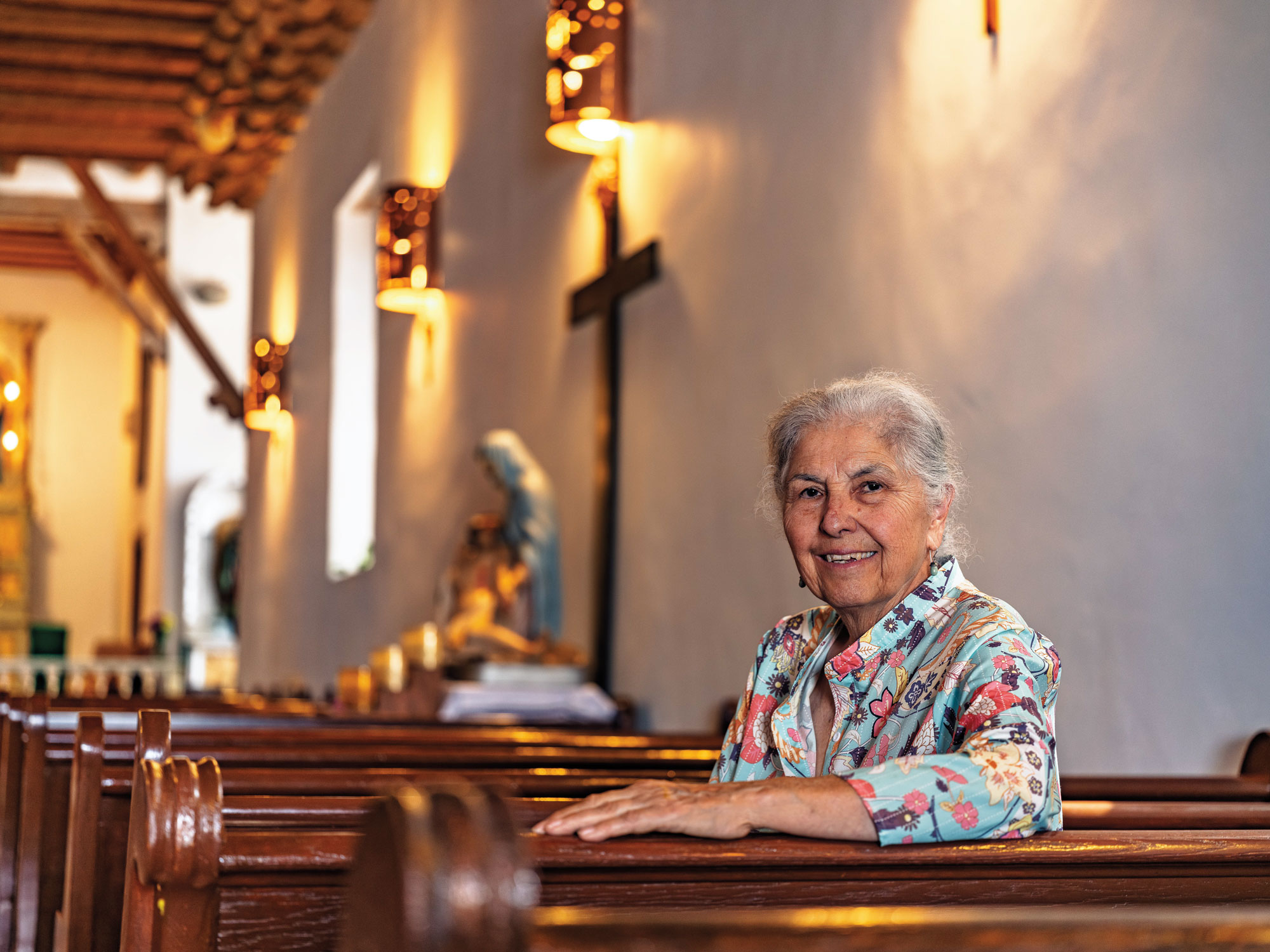
A woman with grey hair and a floral blouse smiles while sitting in a church pew
Magda Maureira and a team of volunteers run the gift shop at the current structure, rebuilt circa 1840 after the Rio Grande swept it away.
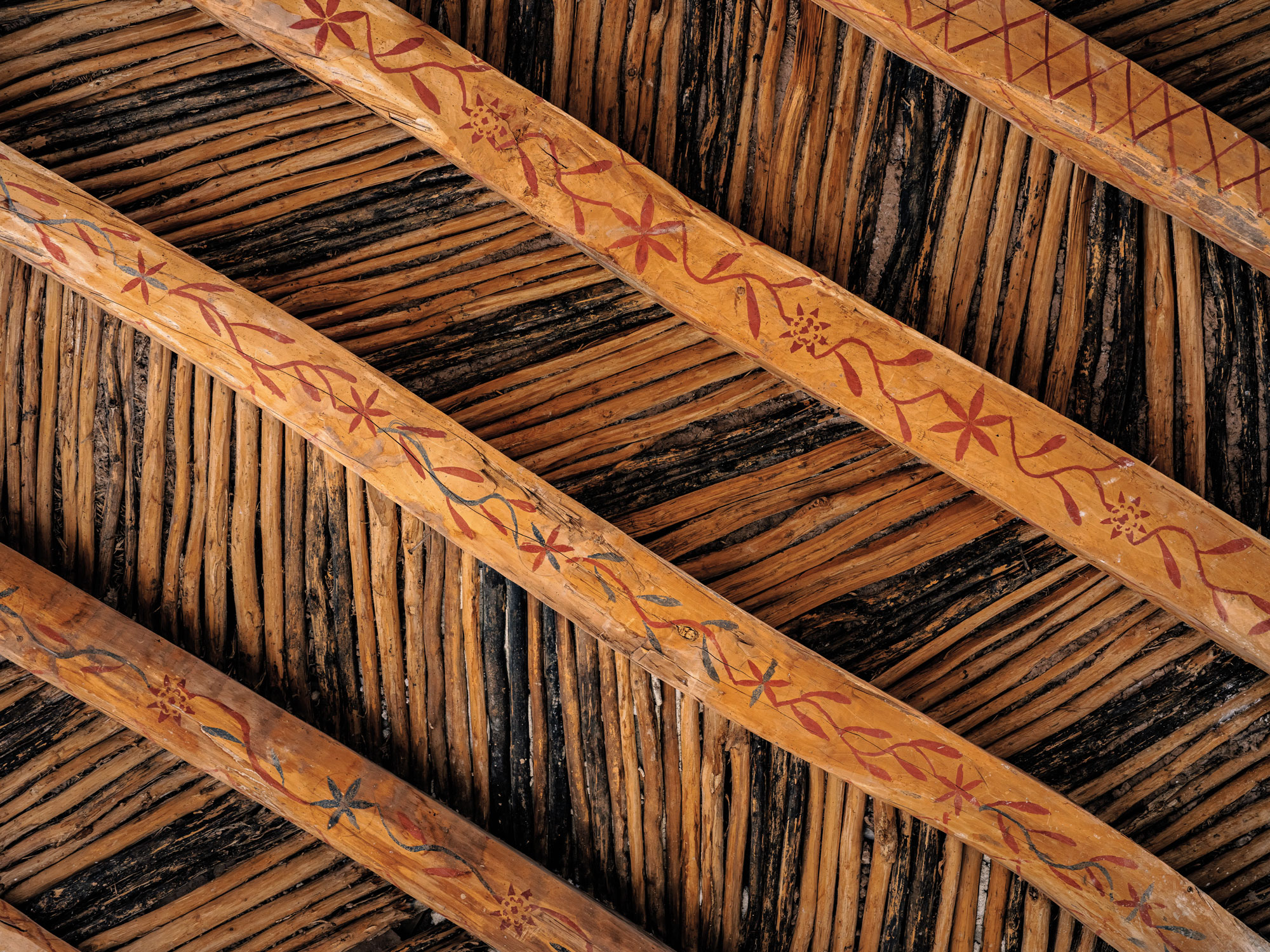
Reddish floral accents painted into wooden panels.
Painting styles were preserved from the pueblos when the mission was rebuilt.
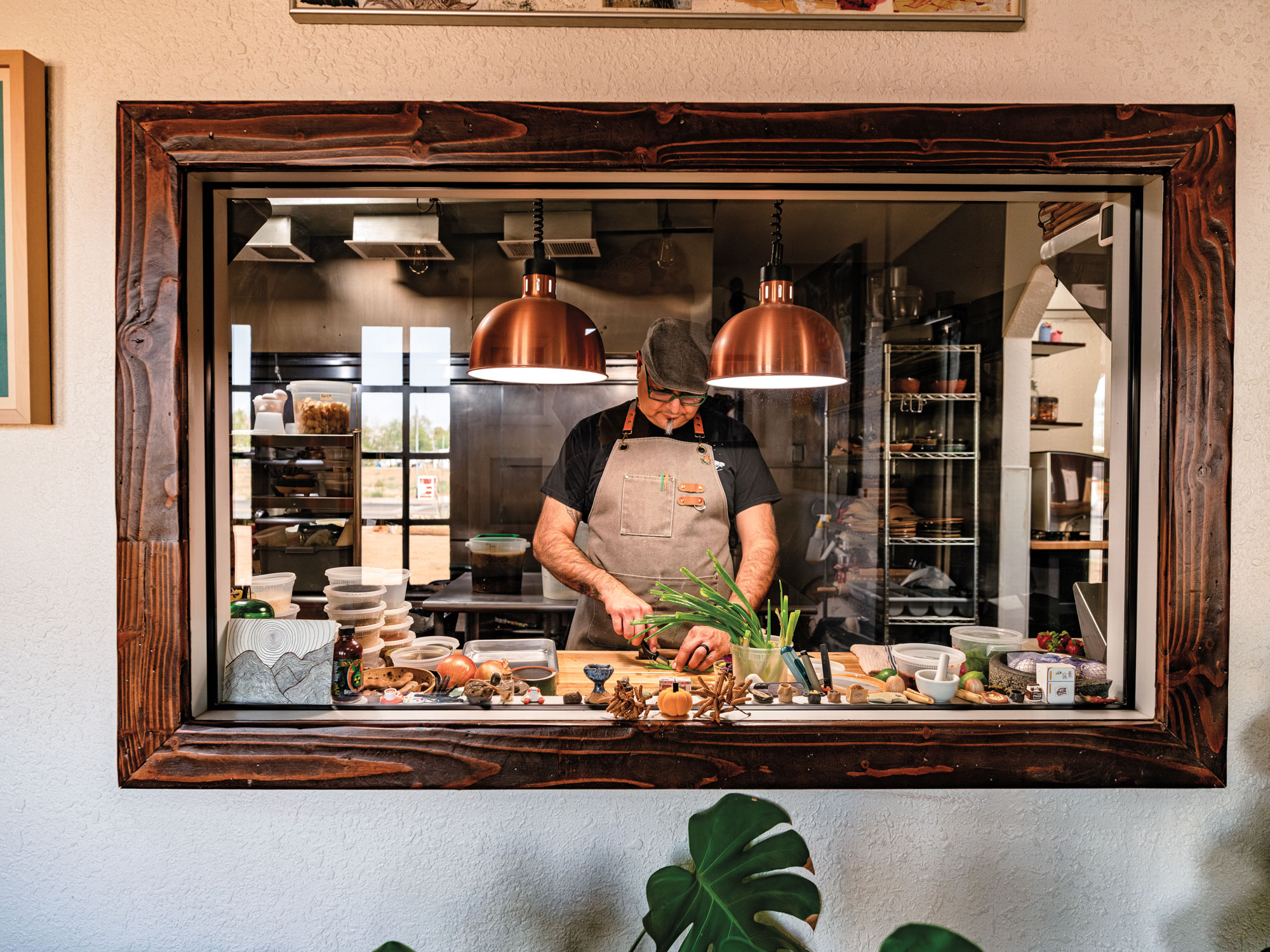
A man in glasses, a cap, and apron prepares food in an industrial kitchen.
Co-owner Gabe Padilla serves Indigenous-inspired recipes at Café Piro across the street.

San Jose, Ciudad Juárez

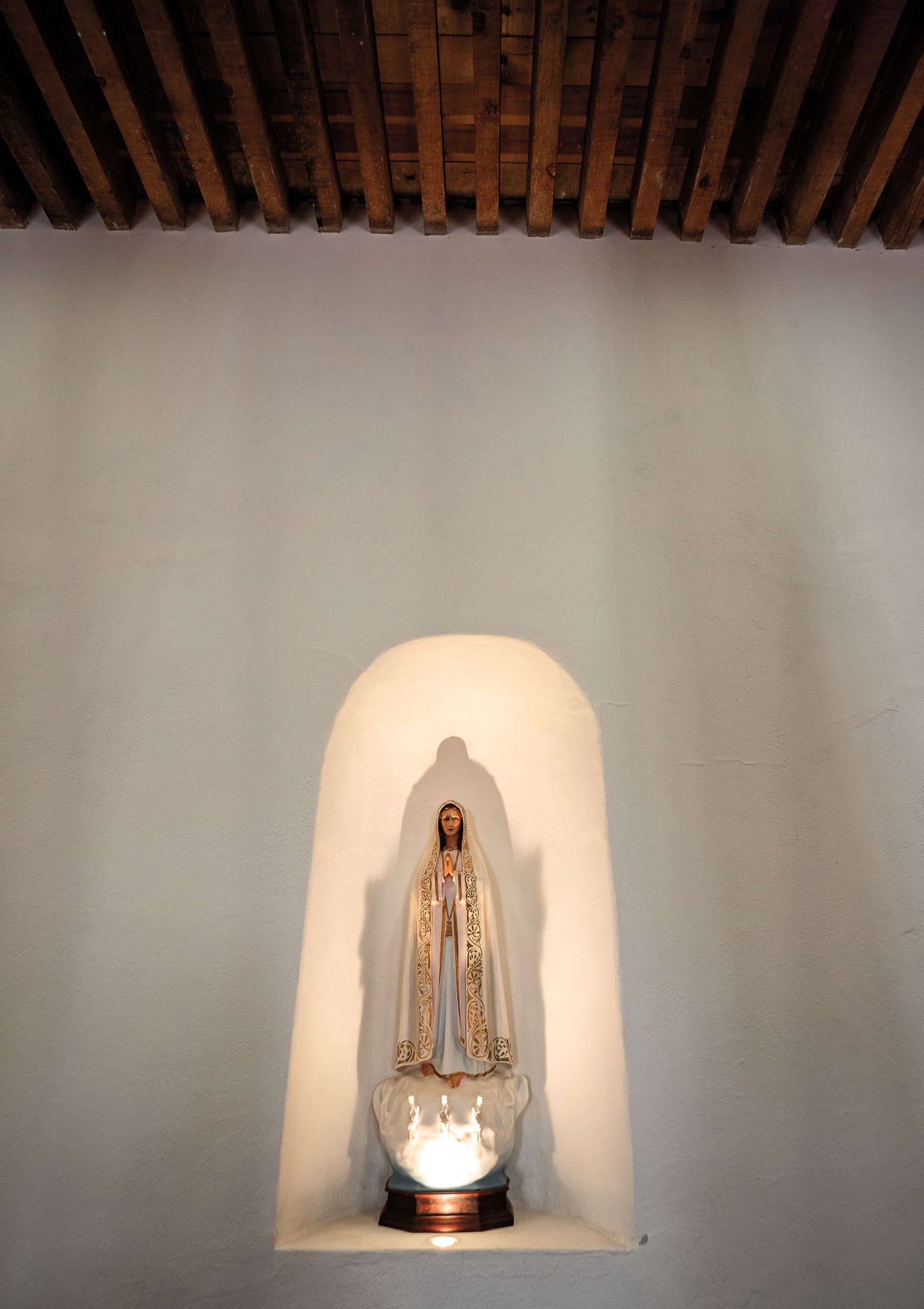
A small statue of the Virgin Mary dressed in a white rob sits illuminated inside a white adobe alcove.
Just across the Rio Grande, Misión de San José was established in 1786.
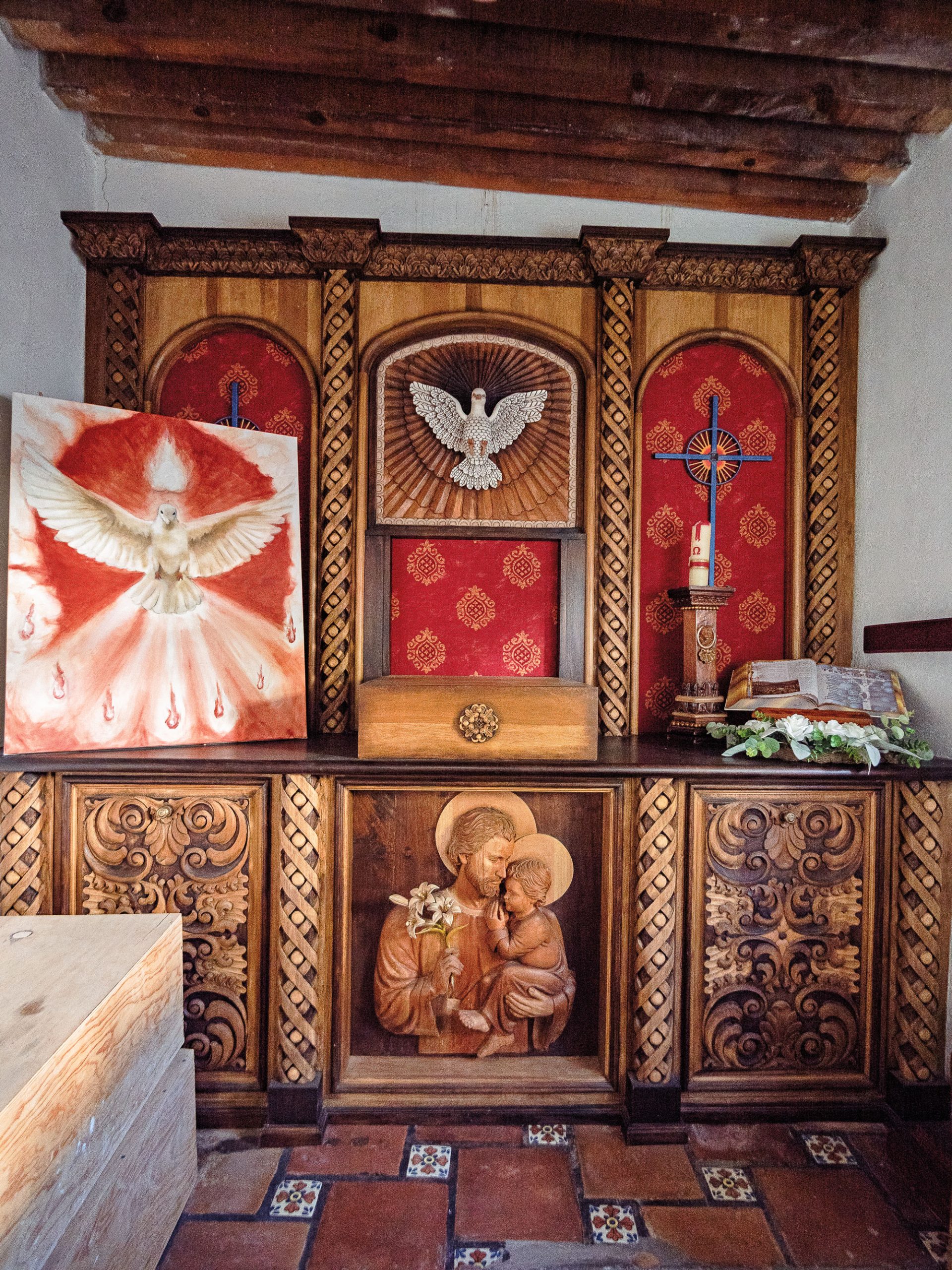
An ornate wooden and red upholstered altar depicts doves, crosses, and Christ.
The Diocese of Ciudad Juárez and the local government restored the mission in 2020, repairing damage from a flood in 2013. “A lot of people don’t know it still exists,” photographer Christ Chávez says.

Ysleta

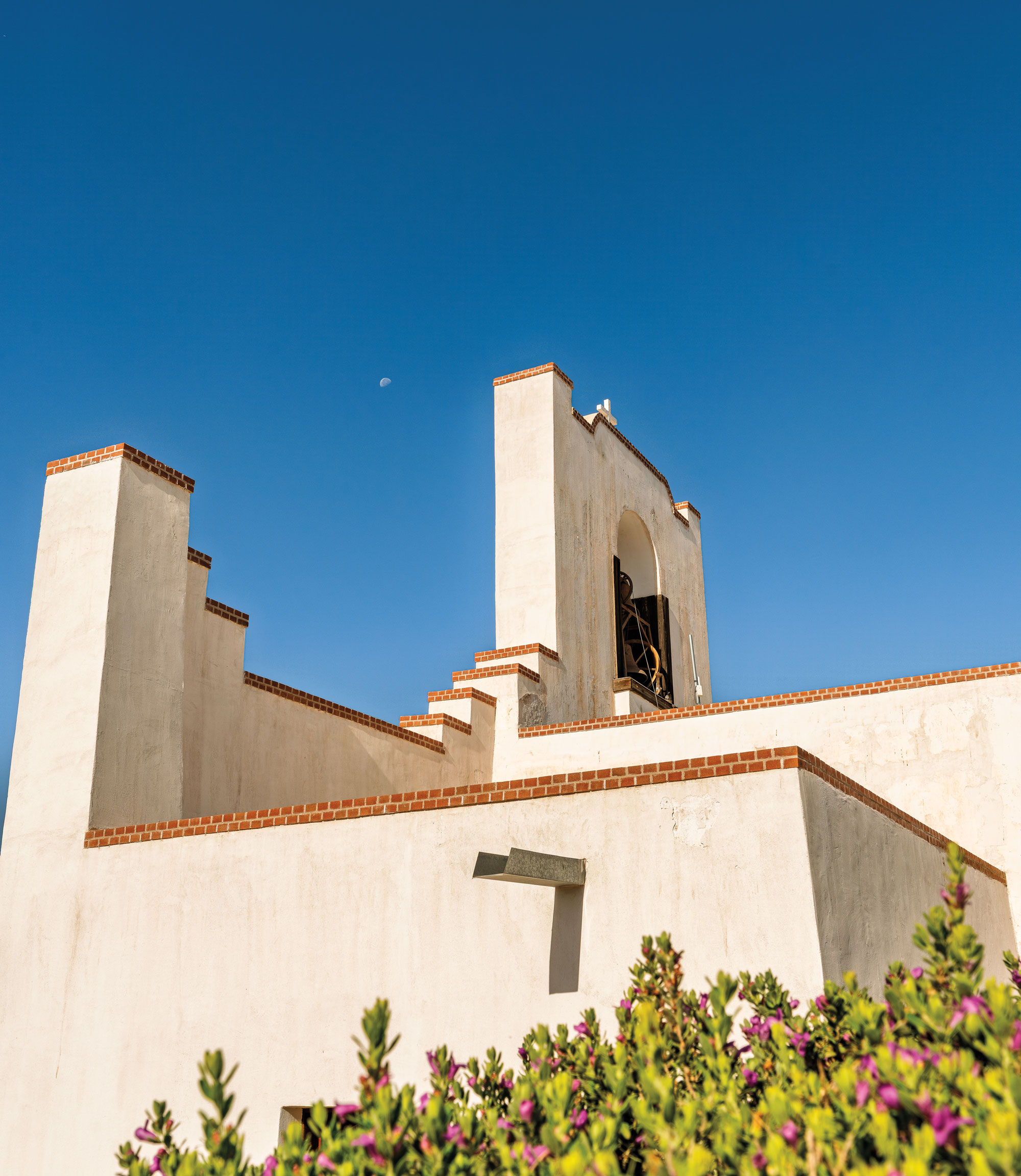
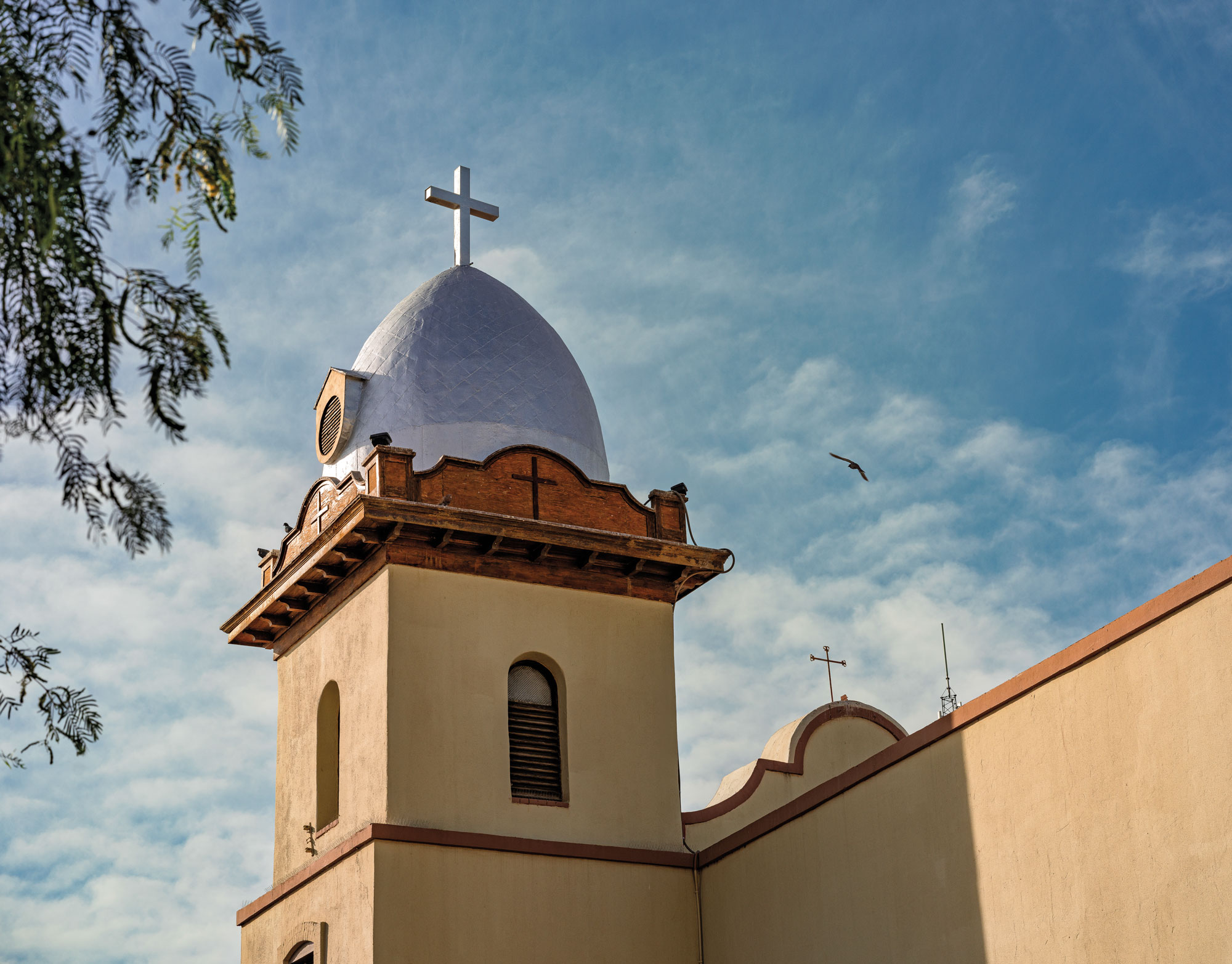
The top of a beige and blue adobe mission against the sky.
Dating to 1682, La Misión de San Antonio de Ysleta del Sur is considered the first mission in Texas.
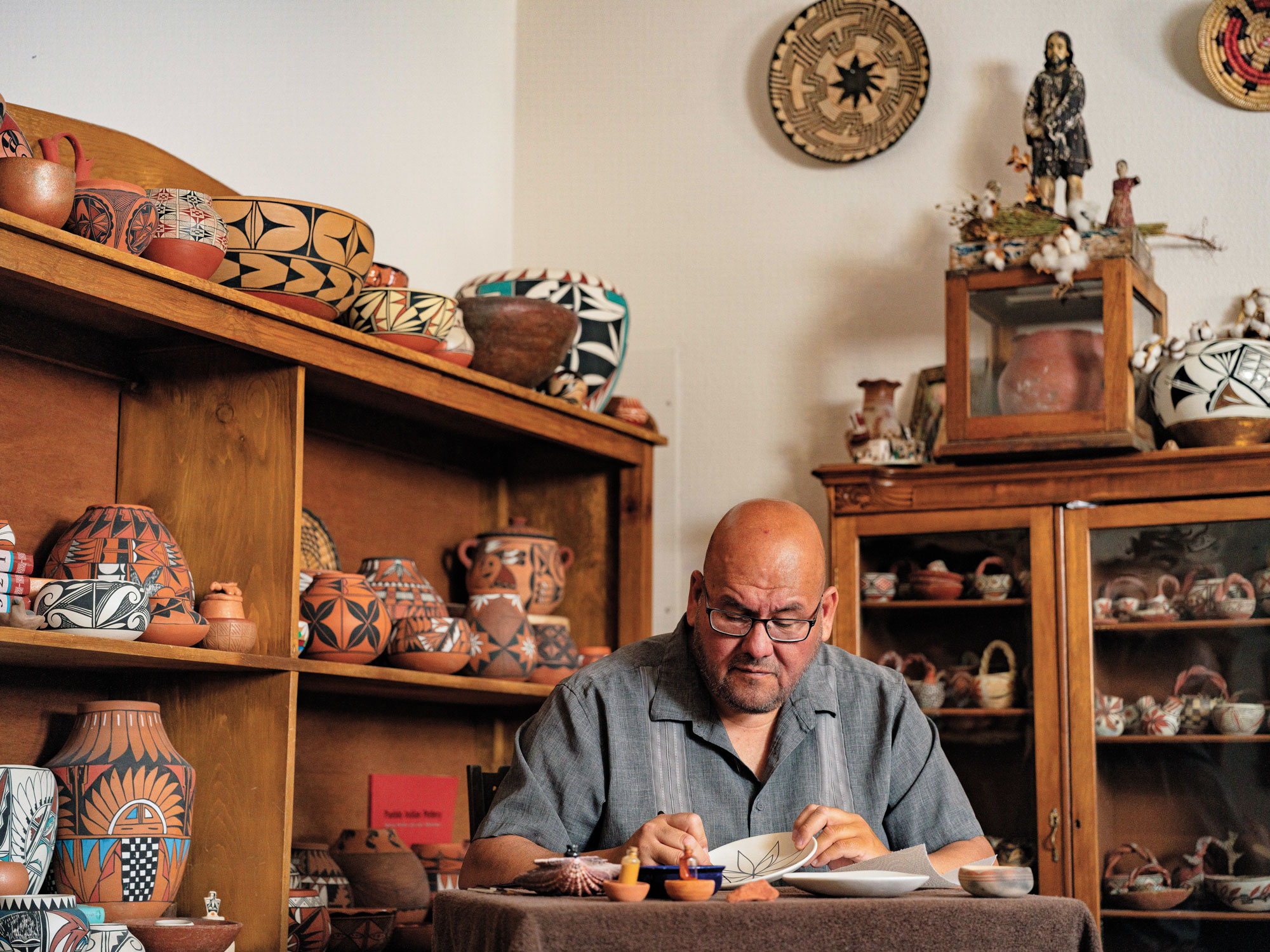
A man works on a piece of pottery inside a studio surrounded by more pieces of pottery.
Albert Alvidrez crafts traditional pottery as a member of the Tigua Pueblo.
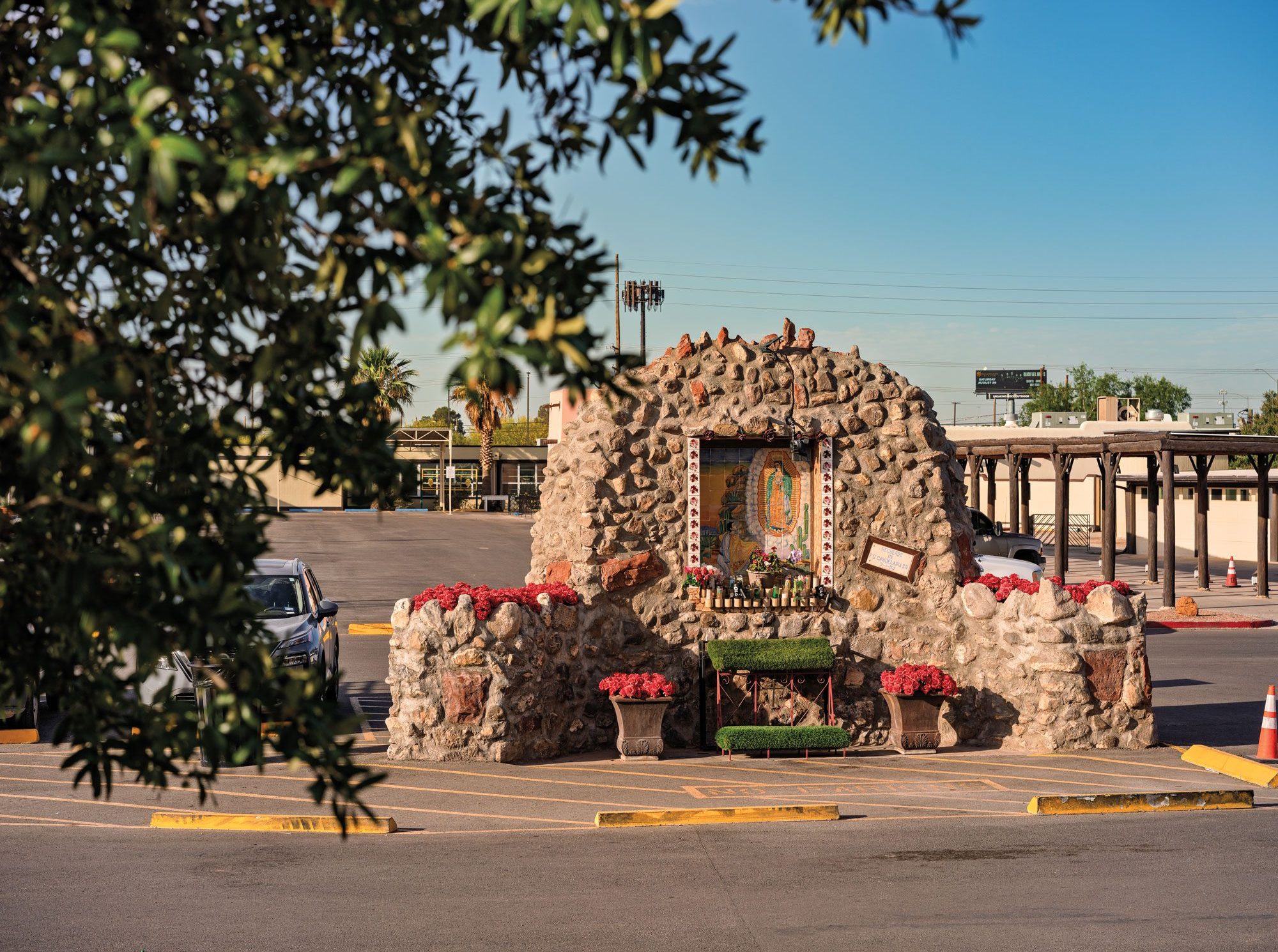
A shrine honoring the Lady of Guadalupe made of cobblestones stands in a parking lot.
A small shrine in a nearby parking lot honors Our Lady of Guadalupe.
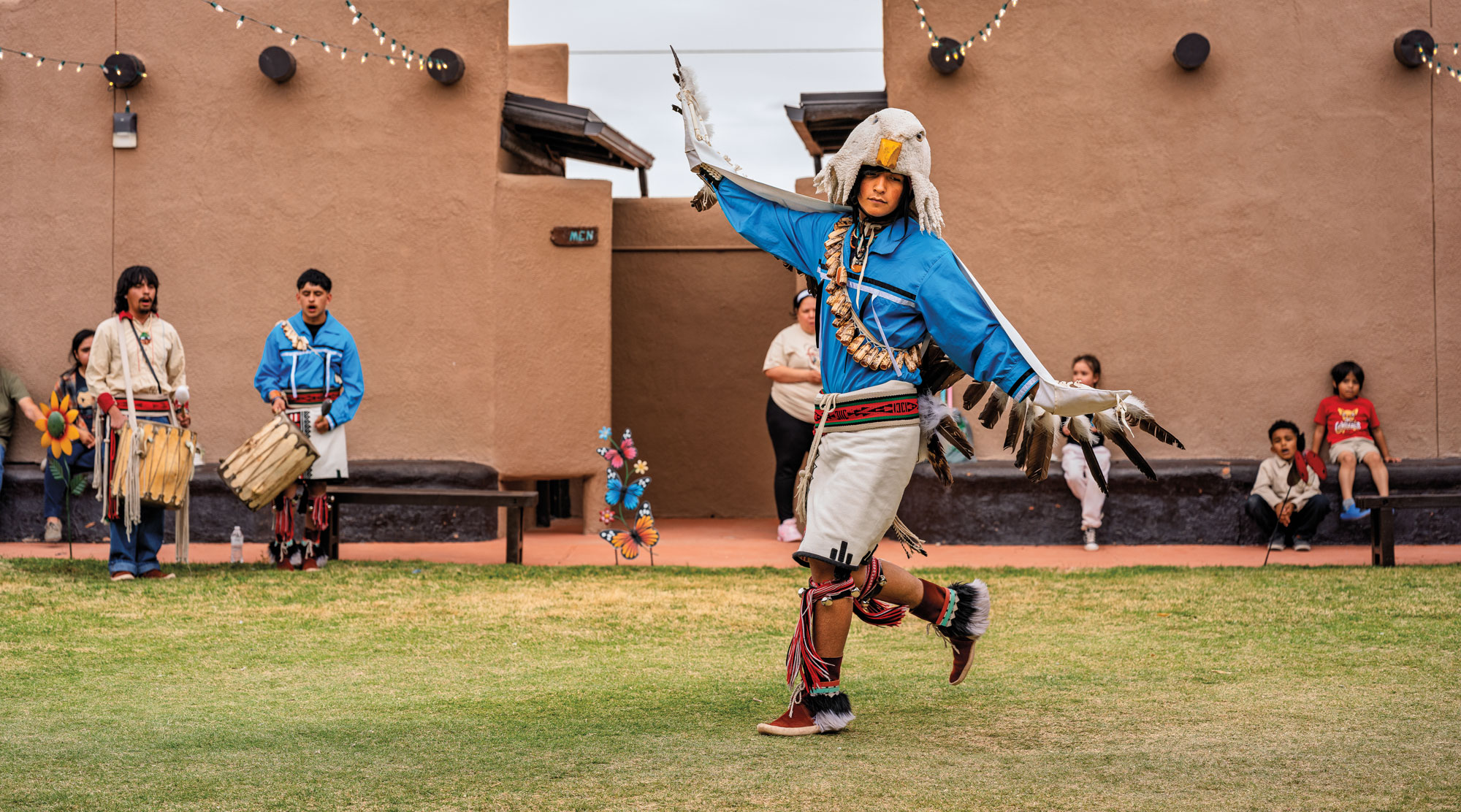
A man wearing a traditional Indigenous eagle headdress dances in a field of grass in front of others.
The Ysleta del Sur tribe hosts cultural events throughout the year.

From the October 2026 issue

Get more Texas in your inbox

Sign up for our newsletters and never miss a moment of what's happening around the state.