
A TEXAN’S GUIDE TO BIRDING
SUMMER EDITION
Summer birding tests the mettle of birds and birders alike. Migratory species have either moved on or are hunkered down, limiting movement to sunrise and sunset. Nesting season has wrapped up by June, and for many species, brilliant plumage used to attract a mate takes on more sensible colors. Summer resident birds stay close to water sources. In many respects, this is the quieter season in Texas.
For birders, it’s the sweaty season. Best viewing times are from sunrise until about 10 a.m., when the heat sets in and the singing stops, and at sunset. Experienced birders know to use sunscreen, wear a hat and long sleeves, and bring water and bug spray. Knowing what poison oak and poison ivy look like and avoiding both make for a more pleasant outing. This is also an excellent time to consider birding by car. Actually, birding by water is the way to go if you can manage it, because that’s where the birds hang out in summer.
Frigate spotting by ferry is a good choice. Take the Bolivar-Galveston Ferry across the mouth of Galveston Bay, or the Port Aransas ferry across Corpus Christi Channel to behold the magnificent frigate. The big black seabird (males have an inflatable red throat pouch; females have a white chest and belly) with a seven-foot wingspan and prominent forked tail has feathers that are not waterproof, meaning it cannot float. It hovers above the gulls, terns, and other seabirds following the ferries, looking for an opportunity to steal food from other birds with midair acrobatic moves.
Up by the northeastern border between Texas and Louisiana, Caddo Lake is the only natural lake in the state. It also happens to be where great blue herons, little blue herons, great egrets, green herons, and yellow-crowned night herons pass the summer. To see them, “Take a tour boat,” advises local Tom Walker. “One could see these along the shoreline, but being out on the water is far better.”
Walker walks the wooded parts of Caddo’s shoreline to look for yellow warblers, prothonotary warblers, and northern parula. “They like nesting in the Spanish moss,” he says.
Caddo Lake State Park, the Caddo Lake National Wildlife Refuge, and Big Cypress Bayou are popular land-based birding sites. Rent a canoe or boat at the state park or in Uncertain.
“A canoe down the Neches River or Village Creek is a great way to see nature and hear and see birds,” says Julie Shackelford, Texas director of the Conservation Fund and spouse of Cliff Shackelford, the retired state ornithologist. Texas Parks & Wildlife has dedicated paddling trails on both streams.
Flight Path
A new
seasonal newsletter for Texas’ novice birders and longtime enthusiasts
The Piney Woods host a wide variety of songbirds in summer, including yellow-throated warbler, prothonotary warbler, red-eyed vireo, yellow-throated vireo, yellow-breasted chat, summer tanager, indigo and painted bunting, scissor-tailed flycatcher, and great-crested flycatcher. “They’re secretive,” Shackelford says, “but have big voices. If you know their songs you will have an easier time finding them. [It’s the same with] barred owls and nightjars like common nighthawk and chuck-will’s-widows in the evening.”
Schackleford is also partial to birding sites in the 20 miles between Lufkin and Nacogdoches, which includes Angelina National Forest, the Alazan Wildlife Management Area, the Stephen F. Austin Experimental Forest, and in-town birding trails, like Lufkin’s Azalea Trail and Nacogdoches’ Pecan Acres Park. “As a bonus, you can head for a dip into the natural springs at Camp Tonkawa about 30 minutes north of Nacogdoches to cool off in the afternoon,” she says.
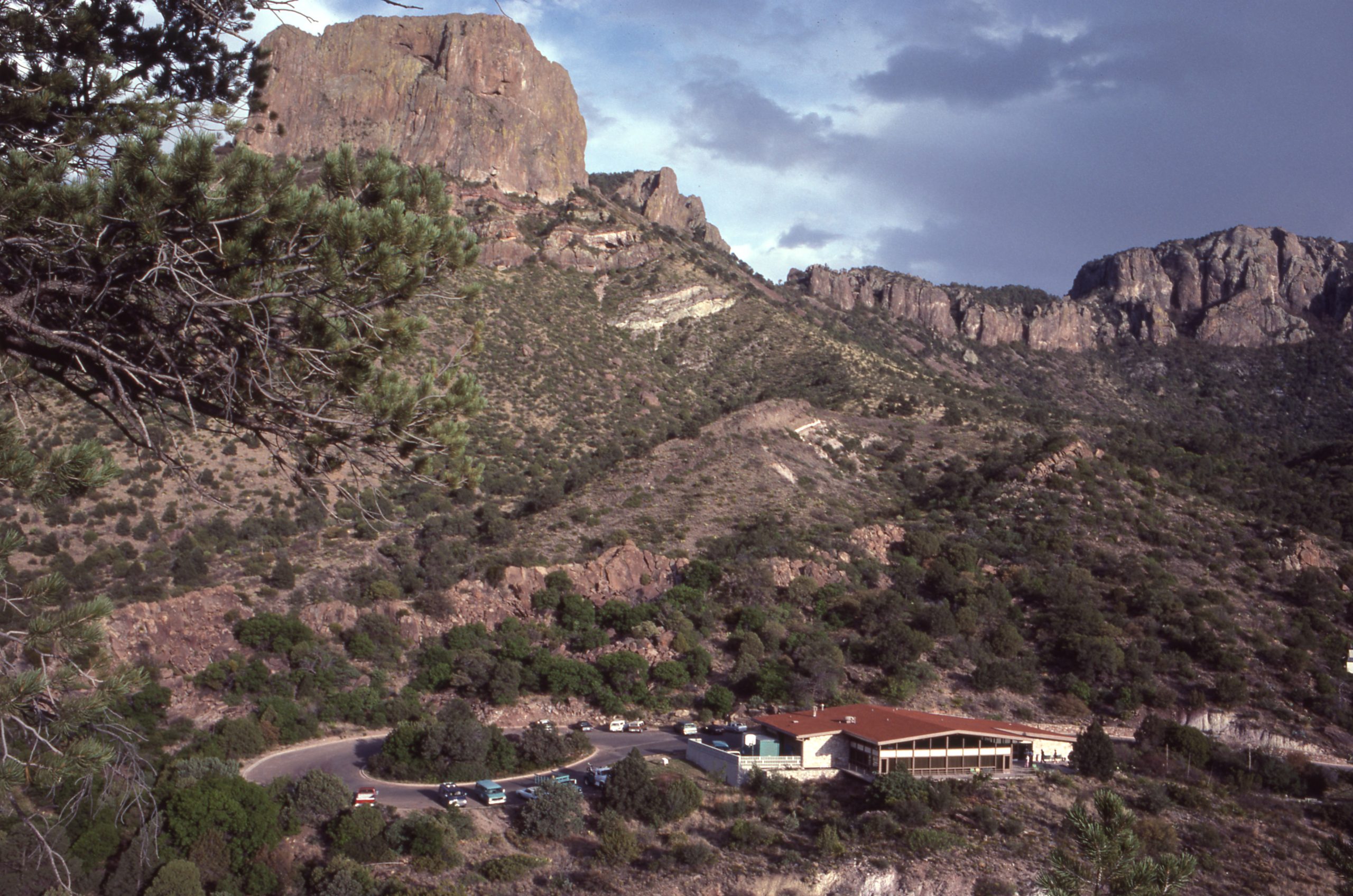
The suffocating humidity drops the farther west of I-35 you go, all the way out to Far West Texas, where summer nights can actually be pleasant, and where desert and mountain species flourish. It’s a strenuous 11-mile round-trip hike with 1,500 feet of elevation up the Chisos Mountains to reach Boot Canyon and the upper part of the Laguna Meadows Trail, the summer home of the Colima warbler. But it’s worth it for the summer birding in Big Bend National Park.
This rather mild-mannered grey neotropical distinguished by a touch of yellow on its rump and a rusty smudge on its crown is more common to the mountains of western Mexico. The habitat below the South Rim of the Chisos is its only breeding home in the United States.
“The warblers are there through the summer but get a lot quieter and harder to detect after June,” says birding guide Stephen Falick.
Once the youngsters are raised, the family is gone to Mexico by August. Vermillion flycatchers, woodpeckers, jays, thrashers, and roadrunners are among the other summer residents in the Chisos. Camp in the backcountry overnight with a permit and the hike up and down will be a whole lot easier, with the added reward of sunrise and sunset birding.
Staying in Far West Texas, “summer birding nirvana is August in Fort Davis,” Shackelford says. “Escape the heat, swim at Balmorhea, and experience the hummingbird migration of a dozen or so species. Couple it with a Star Party at McDonald Observatory, visit the state park, go to the Chihuahuan Desert Research Institute, and maybe a baseball game in Alpine. Fort Davis is the perfect mix of birds and fun in the summer.” The summer birding season in Texas peaks in late August with the hummingbird migration through the Davis Mountains and other sky islands in the American West.
The highest high country there is in Texas—Guadalupe Mountains National Park—is home to a rich mix of desert, canyon, and montane species in June, July, and August. The most popular viewing spots—Frijole Ranch, Smith Springs, and McKittrick Canyon—are all spring-fed desert oases. Woodhouse’s scrub jays and broad-tailed hummingbirds are common around Frijole Ranch, where park rangers occasionally lead birdwatching walks. Smith Springs is home to white-throated swifts, violet-green swallows, blue grosbeaks, and eastern meadowlarks. McKittrick Canyon, a day-use-only area that requires a 4.8 mile minimum hike, harbors ash-throated flycatchers and Cassin’s kingbirds.
It’s a 12-mile round trip hike from the Pine Springs Visitor Center up into The Bowl, the forested top of the Guadalupe range containing the four highest peaks in Texas to see spotted and northern saw-whet owls, Steller’s jay, and pygmy nuthatch. Western and hepatic tanagers, black-headed grosbeaks, Grace’s warblers, plumbeus vireos, and cordilleran flycatchers are among the other summer visitors found up top.
The Panhandle is rife with orioles, buntings, and other neotropical songbirds from June through August along with a wide range of waterfowl in wet summers when playa lakes hold water.
“Water can make or break a viewing area in the Panhandle,” says Linda Durante, Texas Parks & Wildlife volunteer coordinator for the wildlife viewing area at Palo Duro Canyon State Park, where a new water feature installed late last year is already attracting a larger number of species. “It’s a great location,” she says. “The viewing blind has bird ID photos of species seen in the canyon.” Among the summer residents in the canyon are painted buntings, blue-gray gnatcatchers, ash-throated flycatchers, Bewick’s wren, greater roadrunner, Rio Grande turkey, blue grosbeak, eastern screech owl, Mississippi kite, and western kingbird.
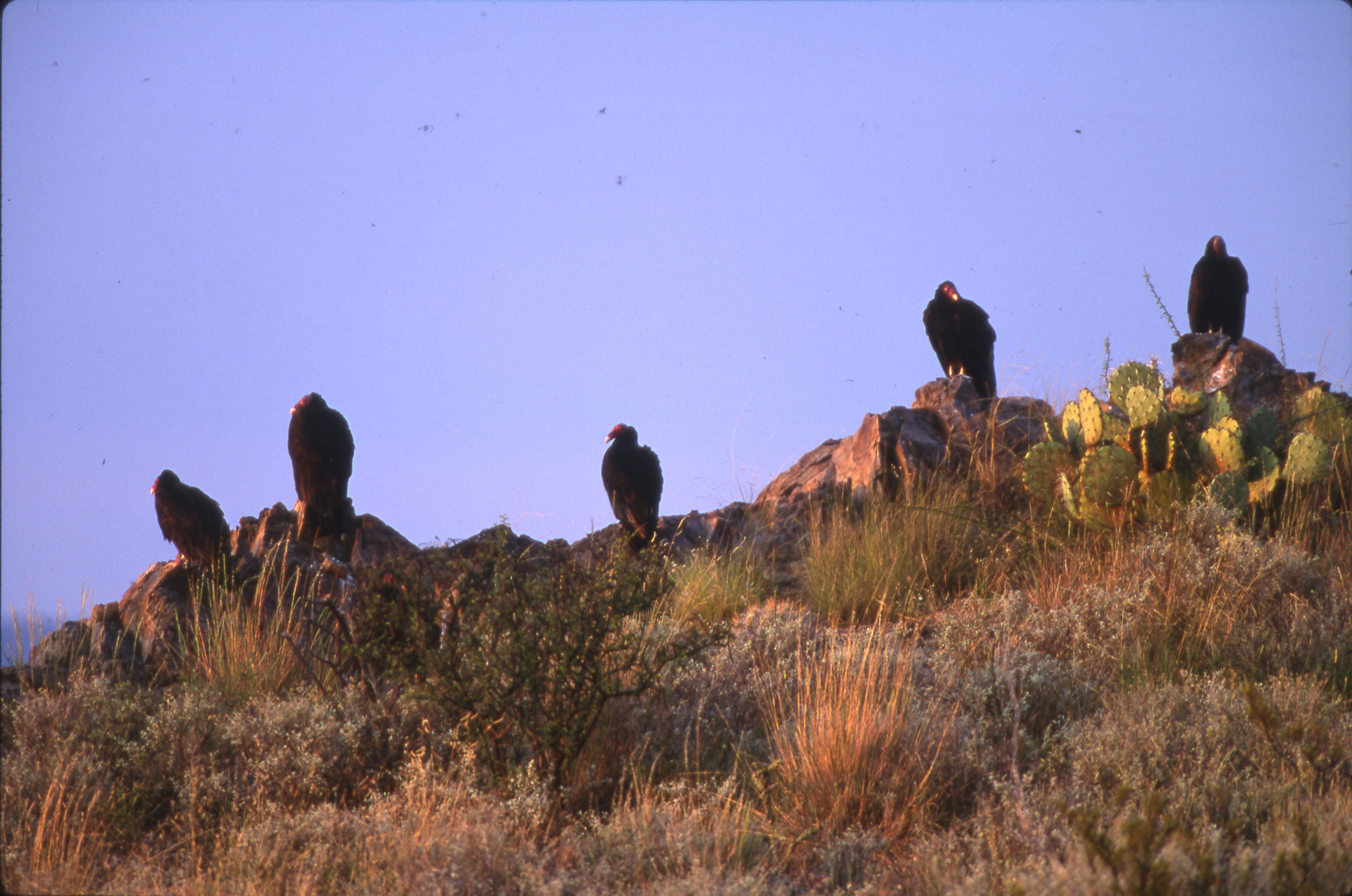
Durante likes the Cow Camp Cabin overlook at Palo Duro for evening viewing of turkey vultures flying in to roost in the cottonwoods for the night. “Mornings, the vultures warm their wings in the roosts before taking flight to circle higher and higher riding the thermals before dispersing for the day,” she says. Similar turkey vulture flights occur anywhere in where radio towers and other tall infrastructure serve as convenient roosts. Birding hikes led by local experts are scheduled a couple times a month at the park.
Up in North Texas, 6,000 acres of bottomland forest and blackland prairie 10 miles south of downtown Dallas were saved from a century of being dumped on or ignored to become a point of pride. What was once the biggest illegal dump site in Texas is now recognized as the largest urban hardwood forest in the United States. The centerpiece is the Trinity River Audubon Center, built in 2008. As birding headquarters for Dallas County, the center features an extensive trail system with manmade wetlands and ponds for spotting buntings, orioles, finches, shrikes, meadowlarks, and spoonbills. The center presents nature education programs throughout the year, with an emphasis on place-based learning. Saturday morning bird walks are scheduled for June 20, July 18, and August 15, with a Sunday morning bird walk on June 28.
In the Hill Country, Kerr Wildlife Management Area is accessible from FM 1340. The four-mile self-driving tour on a paved road includes habitat where the golden-cheeked warbler and the black-capped vireo—the big two of the Hill Country, the former endangered and the latter only recently delisted—nest and spend the summer. The Spring Trap Golden-Cheeked Warbler Trail is accessible on foot only. No camping, no hunting; just birds and abundant wildlife, including white-tailed deer, wild turkey, and javelina.
Birdsong may seem muted in early summer compared to all the warbling, chirping, and tweeting during peak nesting season. But by late July, a few species in Texas signal the start of the big shift from migrating north to migrating south, making a racket while they’re at it. They are preludes of the big show to come.
You can view that show in a lighted parking lot near you. Every July and August, flocks of purple martins, finished with nesting, gather by the tens of thousands in small trees in lighted parking lots, forming massive roosts where they socialize and prepare for their autumnal flight south.
Every evening and morning for a few weeks, the flock performs swirling aerial displays as they take flight, often drawing crowds of humans to watch the spectacle. Serious purple martin birders scour NEXRAD II radar to find flocks, which appear in late July and early August, or use the locator maps for specific roosts. Houston, Dallas-Fort Worth, Austin, San Antonio, and surrounding suburbs are among the more popular roosting sites, although specific roost locations vary from year to year.
Who to See
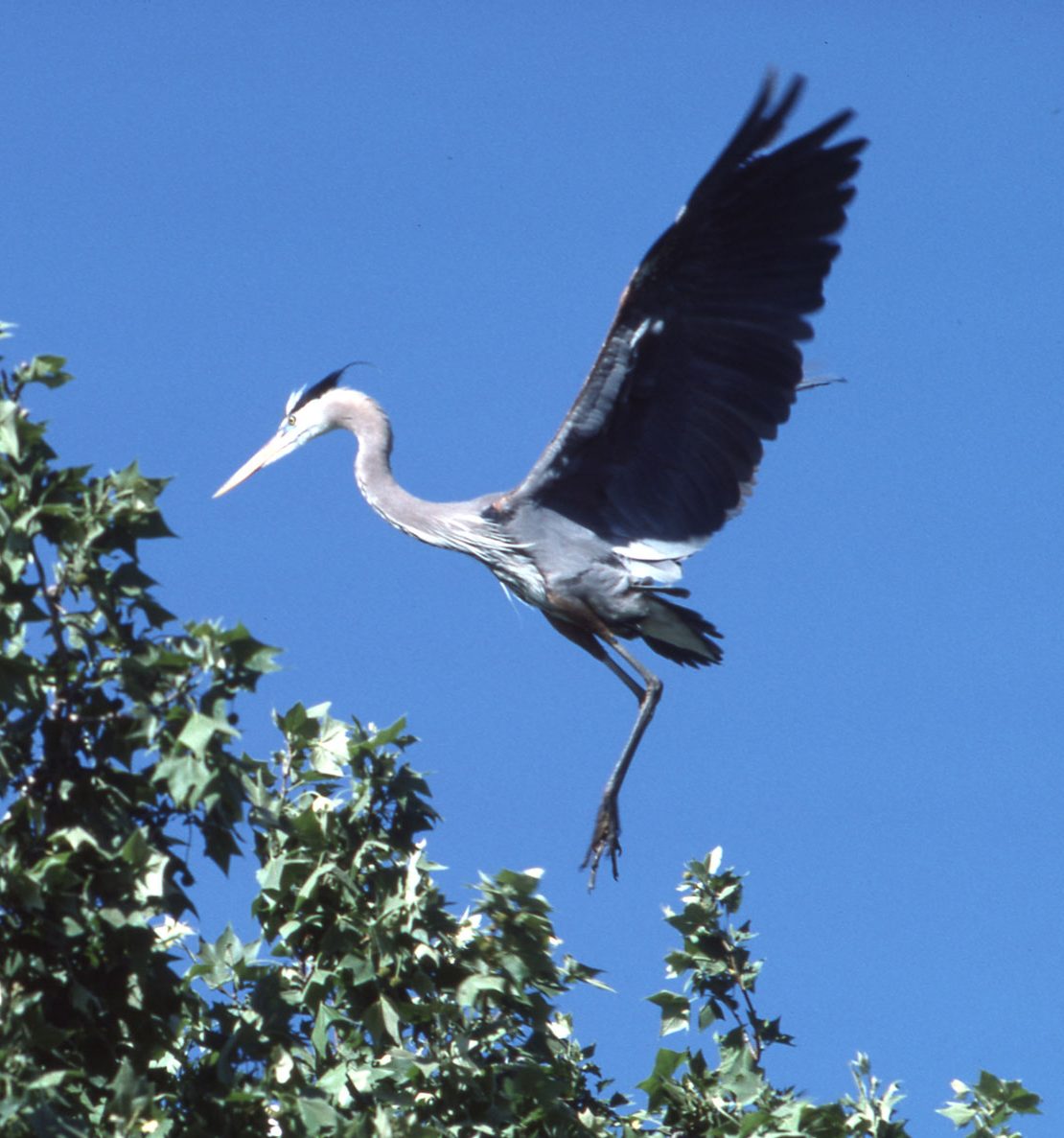
Great blue heron
The prehistoric big bird of the skies, they can be found perched in trees along riverbanks and shorelines or lumbering along in the sky above creeks and streams. No paddling trip on a Texas river is complete without sighting a great blue: it’s a good luck charm, making for a great day on the water.
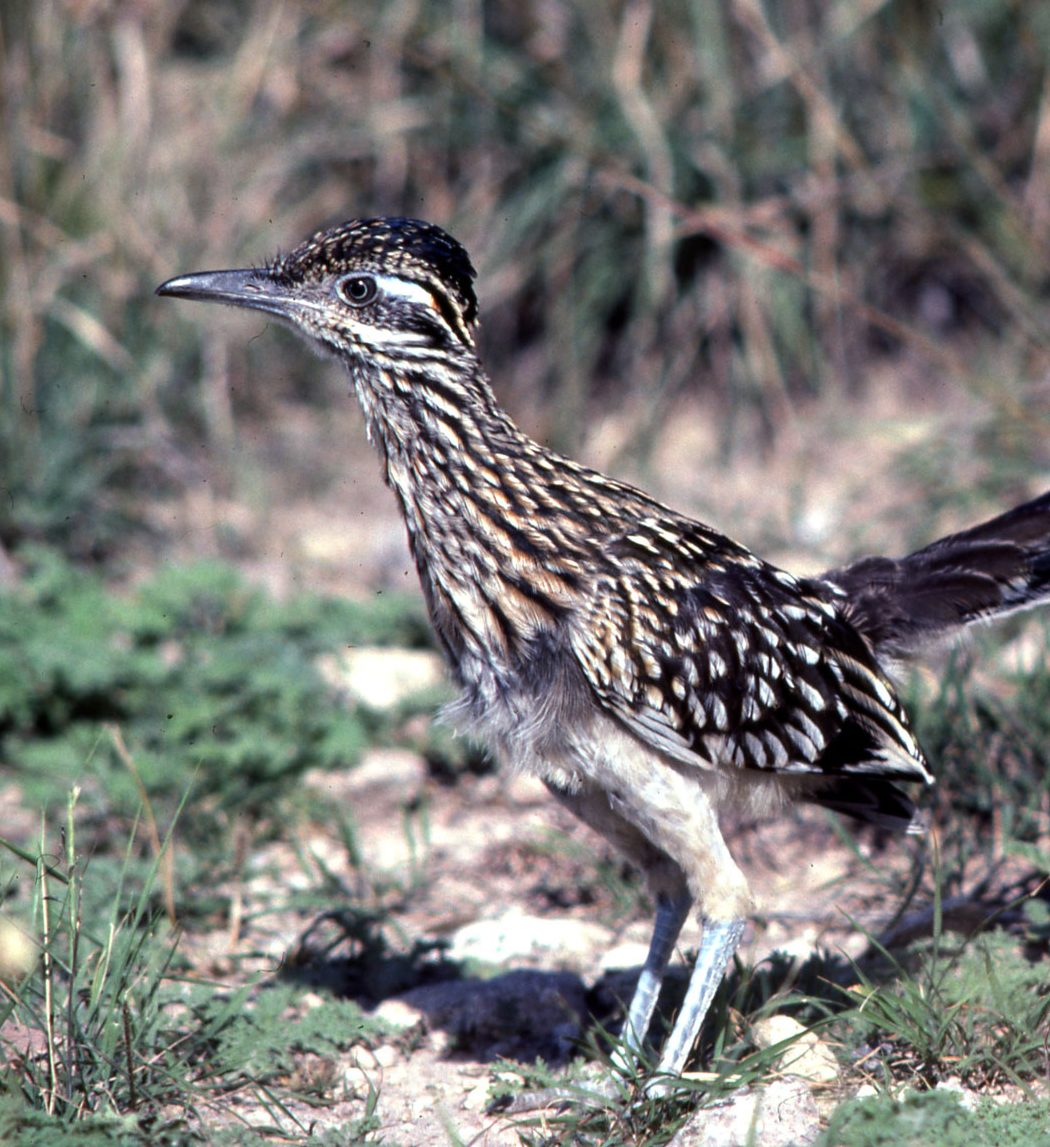
Greater roadrunner
This iconic bird around which legends and myths have been built since humans began telling stories is found in all parts of the state, but is most common in the Chihuahuan Desert and in South Texas brush country. Ground-dwellers known for their swiftness, roadrunners take flight only when necessary.
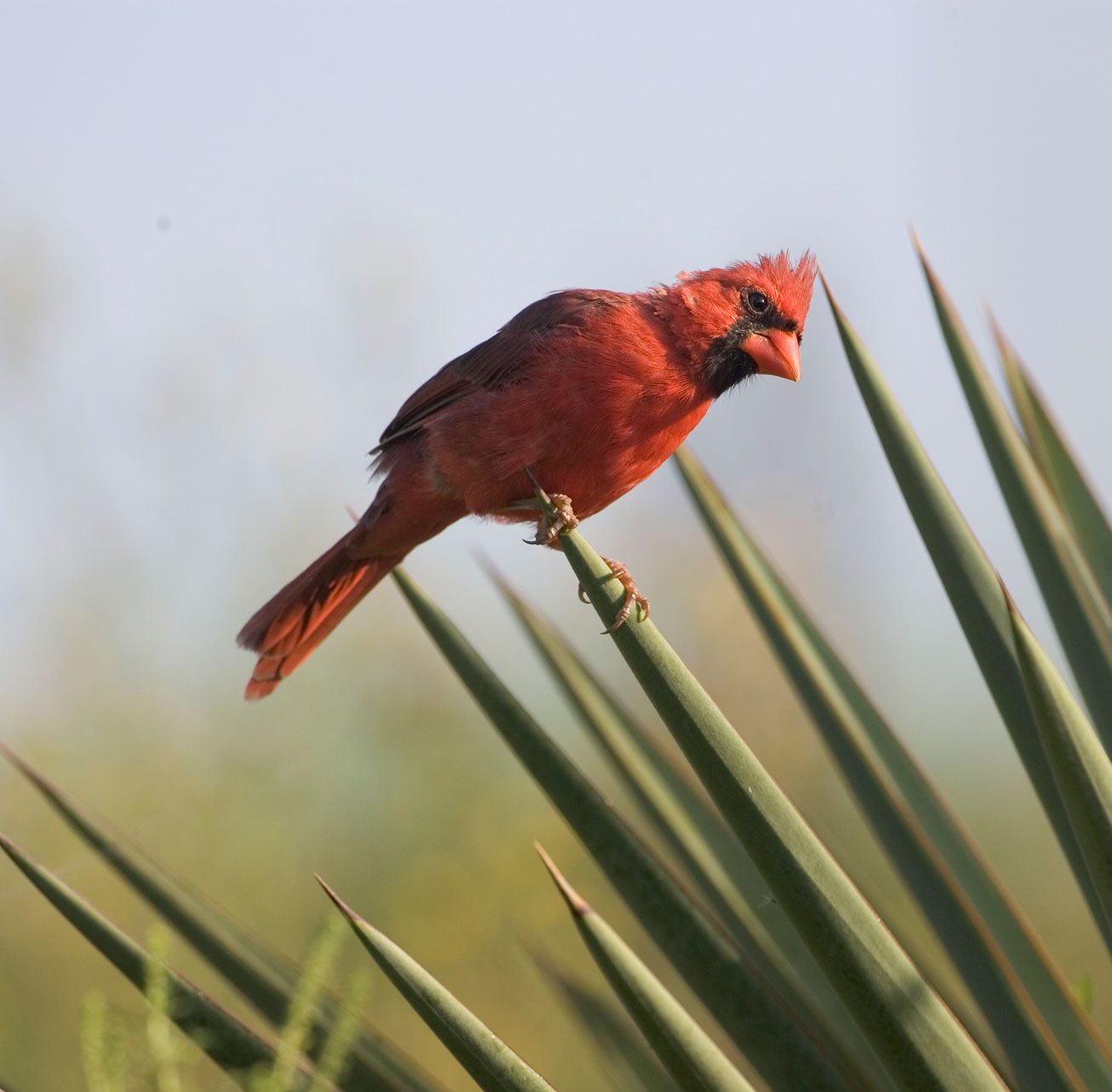
Northern cardinal
Year-round residents in the eastern two-thirds of Texas, these are the backyard birds of Texas. Their robust songs stand out as much as the males’ bright red coloring, crested heads, and black masks around their eyes. With a breeding season that extends into August, the Northern Cardinal is one of the most frequently observed birds found in the state.
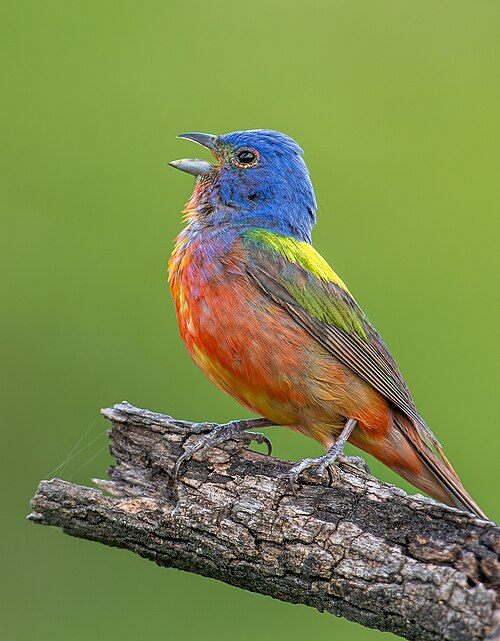
Painted bunting
The most colorful bird you’ll encounter during a Texas summer, with males a mashup of scarlet, orange, lime-green, and deep cobalt blue and females and youngsters a more uniform yellow-green. The painted bunting’s breeding season extends to late August before the songbirds migrate to Central America for the winter.
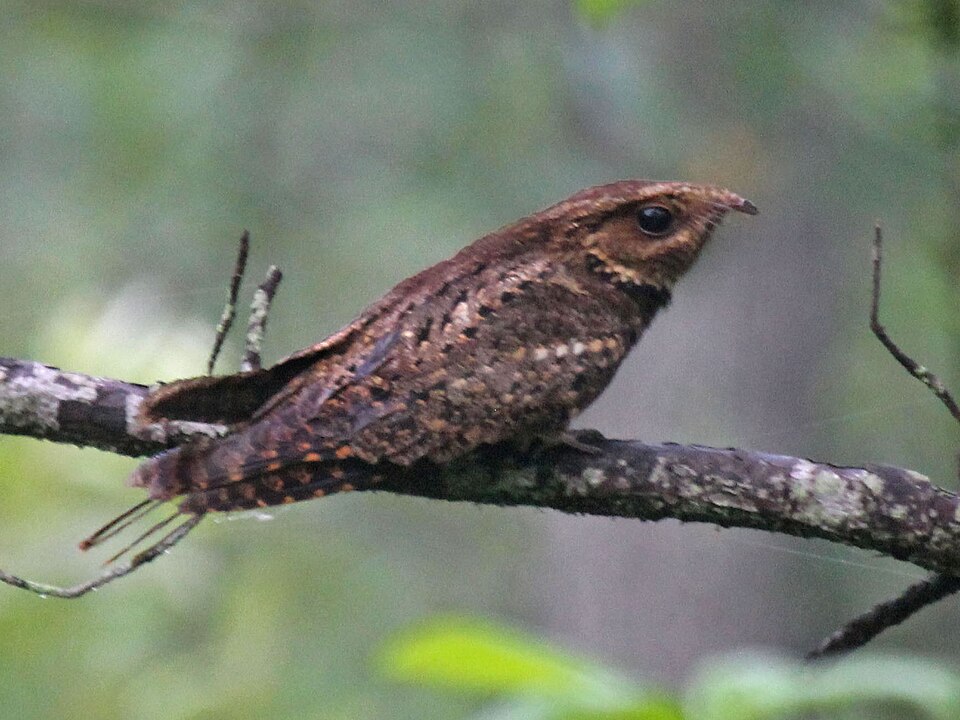
Chuck-will’s-widow
This nightbird is more easily heard than seen. Its loud song, which sounds just like its name, pierces through the night air. Common across the eastern two-thirds of Texas, the bird’s ability to remain motionless on the ground and its mottled brown plumage provide camouflage and protection. Often confused for the Eastern whip-poor-will, which also summers in Texas, the chuck-will’s-widow takes to the air to feed on winged insects from dusk to dawn.
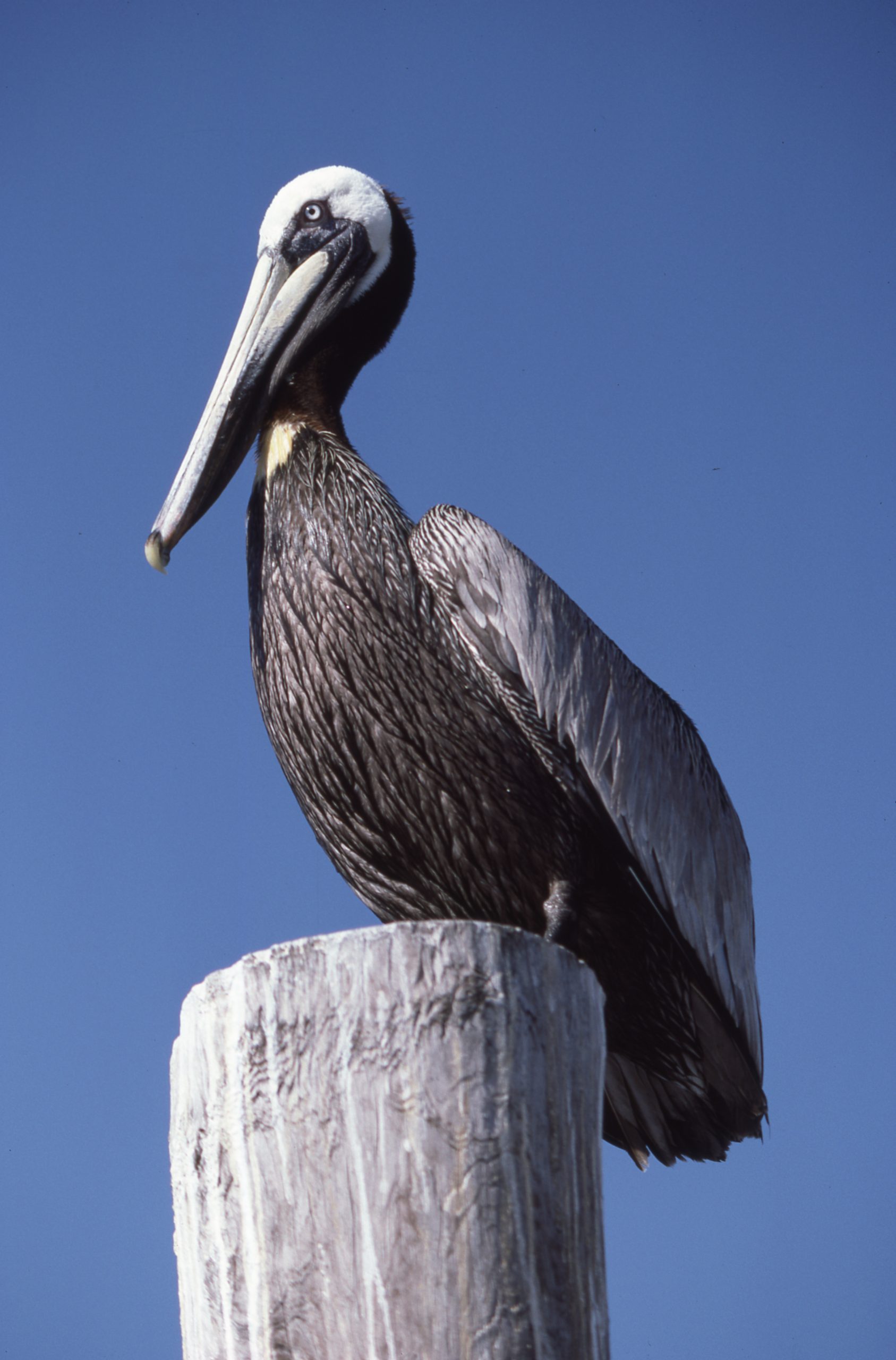
Brown pelican
The great sentinel of Texas beaches, the brown pelican patrols the shoreline in orderly squadrons, calmly riding the sea breezes with barely a flap of the wings, despite the bird’s weird aerodynamics.