

CULTURE
Earth, Water, Wind, and Fire
Each Fall, Día de los muertos celebrations guide the departed home
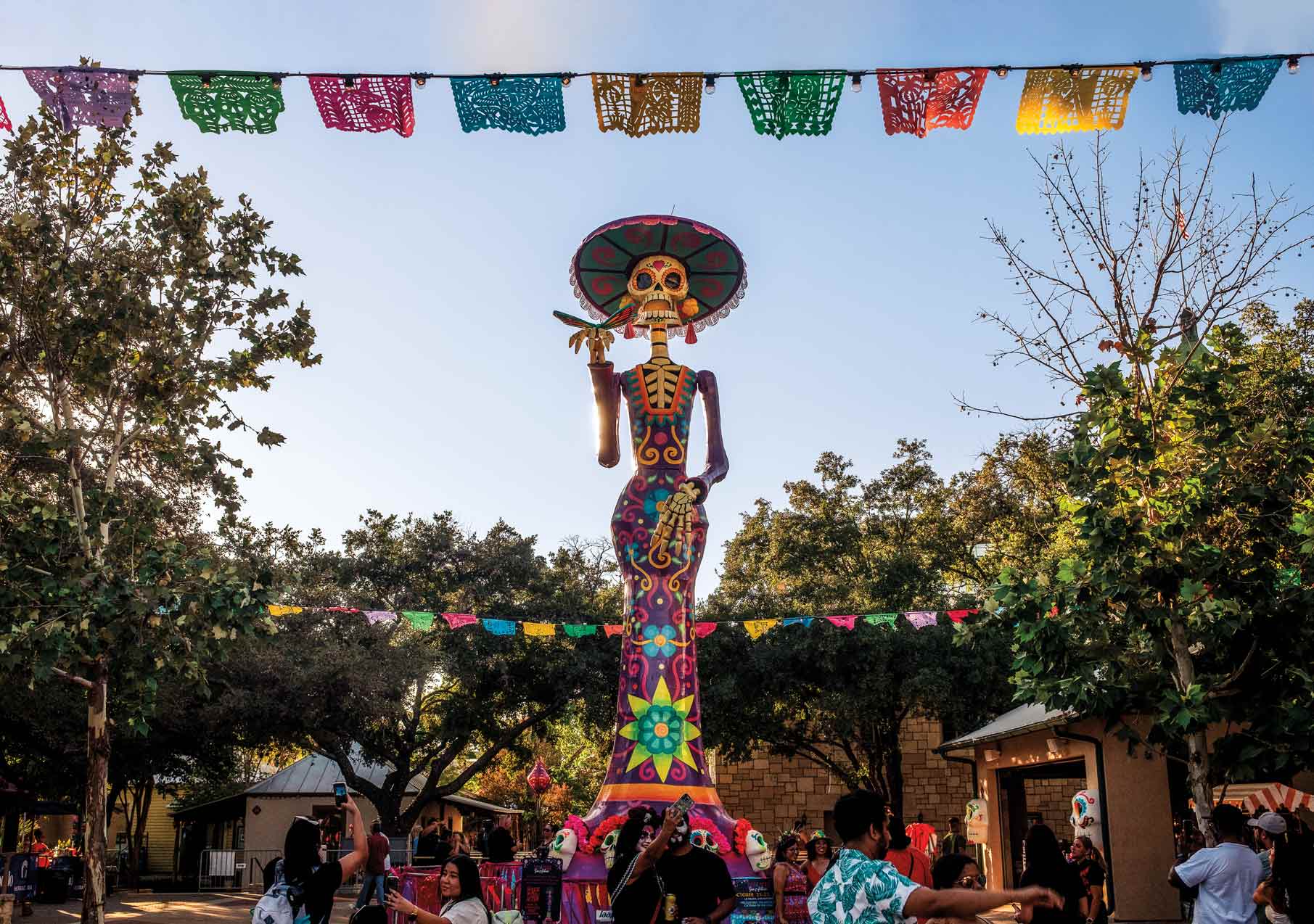
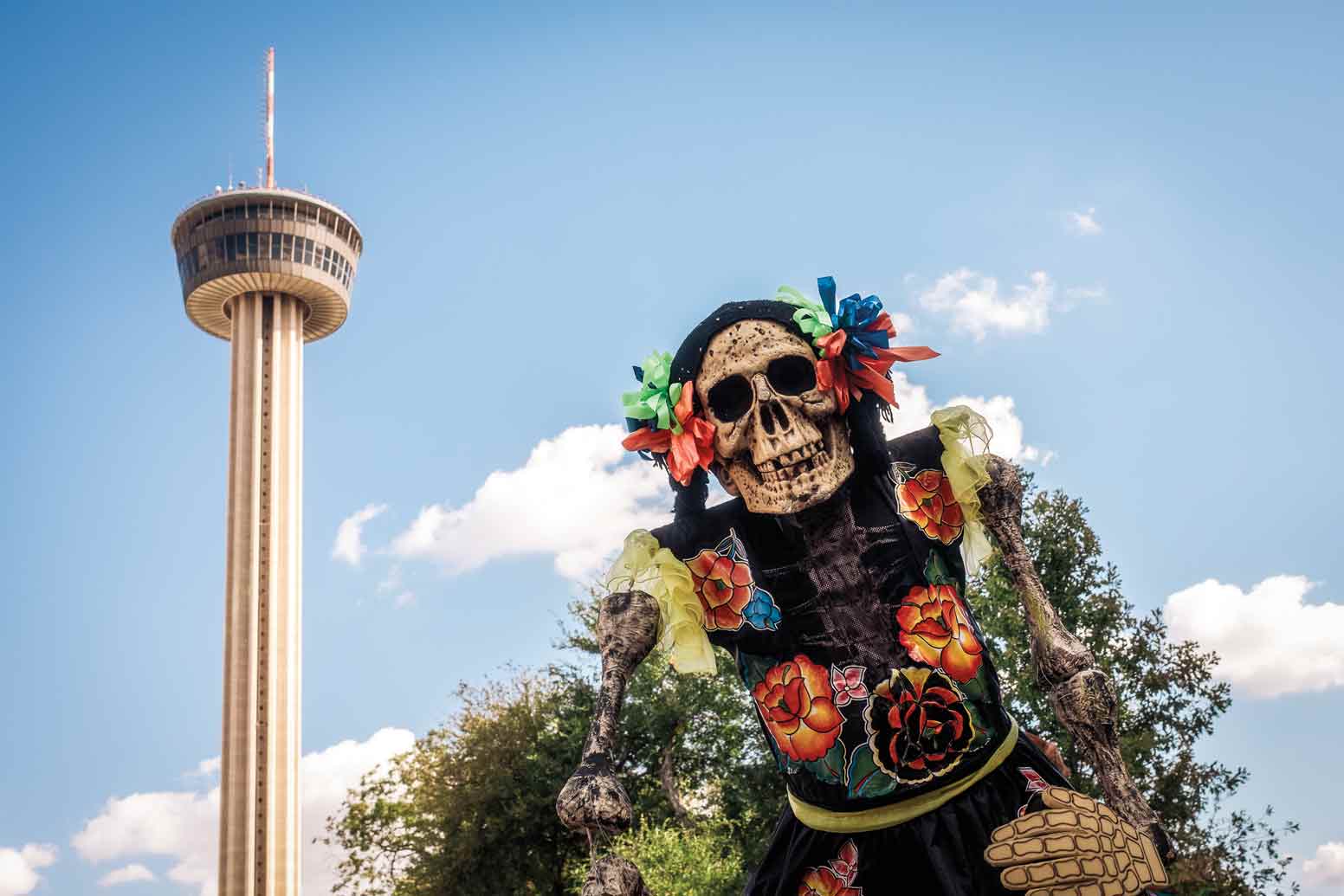
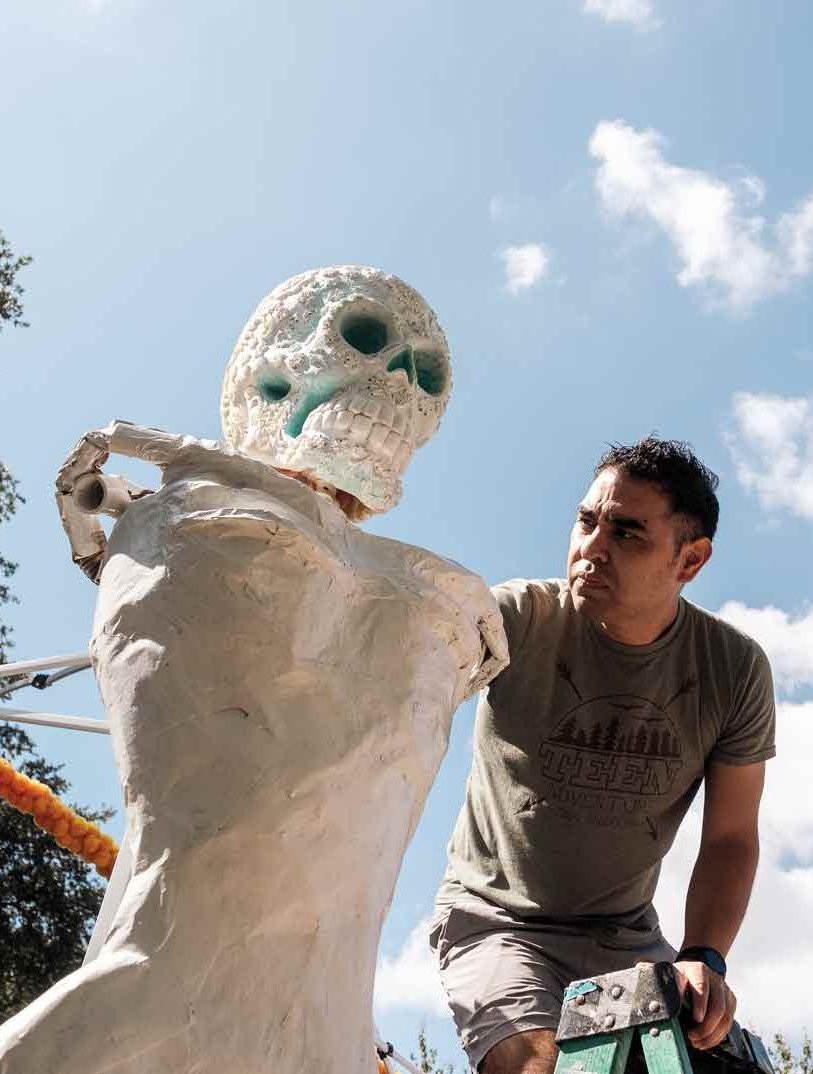
In their living room in San Antonio’s historic West Side, Victor and Maribel Gardea push their brown leather couch against the wall and choose the music—Lila Downs or the Frida soundtrack, something with energy to feed their spirit and guide their hands. For several weeks in the fall, the room fills with strips of cardboard and scissors, glue guns, staplers, and carefully measured pieces of PVC pipe. An hour or two at a time, the Gardeas will transform these everyday materials into a 10-foot-tall papier-mâché Catrina—an elegantly adorned female skeleton—for San Antonio’s annual Muertos Fest, the largest Día de los Muertos celebration in the United States.
“Every season as we start making the altar, even the wind itself reminds us that our ancestors are here,” Maribel says. “Our energy calls them to help guide the process, the painting, the intention.”
Día de los Muertos, or Day of the Dead, is celebrated in late October and early November in Latin America—especially Mexico—and the U.S. It’s a homecoming, a reunion between the living and the dead, the ancestors we knew and those we never met. According to a tangled tradition of Roman Catholicism and 3,000-year-old Indigenous rituals, for two nights—Nov. 1 for babies and children, Nov. 2 for all other souls—the dead journey from the afterlife back into this before-world. They follow the sweet scent of cempasúchiles—marigolds, the flower of the dead—and the blue plumes of copal smoke to consume the essence of their favorite foods and drinks, to share in music and dancing, to press their spirits and memories upon us before departing once more.
“People ask, ‘Why does Mexico celebrate death?’” says José Pilar Sánchez, a school director in Monterrey, Mexico. “We don’t celebrate death. It’s a celebration of life because our dead have always been with us.”
The Aztecs and other agriculture-based Indigenous peoples believed life and death were codependent, one springing from the other. They buried their dead with food, clothing, and valued items to help them on their journey through the afterlife, and they honored the souls’ progress in conjunction with harvest cycles and particularly during August, their ninth calendar month.
In August, they celebrated Mictēcacihuātl, Queen of Mictlān, the lowest level of the underworld. They believed she protected the bones of past lives, which were used to create new life in the land of the living. Once a year, Mictēcacihuātl ascended from Mictlān to ensure the bones were being cared for as they should, and the Aztecs welcomed her with lavish feasts and offerings, known as ofrendas.
Despite the Catholic Church’s efforts to eradicate such “pagan” practices, the rituals persisted. Indigenous peoples set up ofrendas inside their homes, continuing to secretly worship and make offerings to their gods. In the 16th century, the priests reluctantly admitted that in order for Christianity to last, it required flexibility—so they transferred the Indigenous remembrance holiday from August to coincide with All Saints’ Day and All Souls’ Day on Nov. 1 and 2, two Catholic holy days dedicated to honoring the dead and the saints.
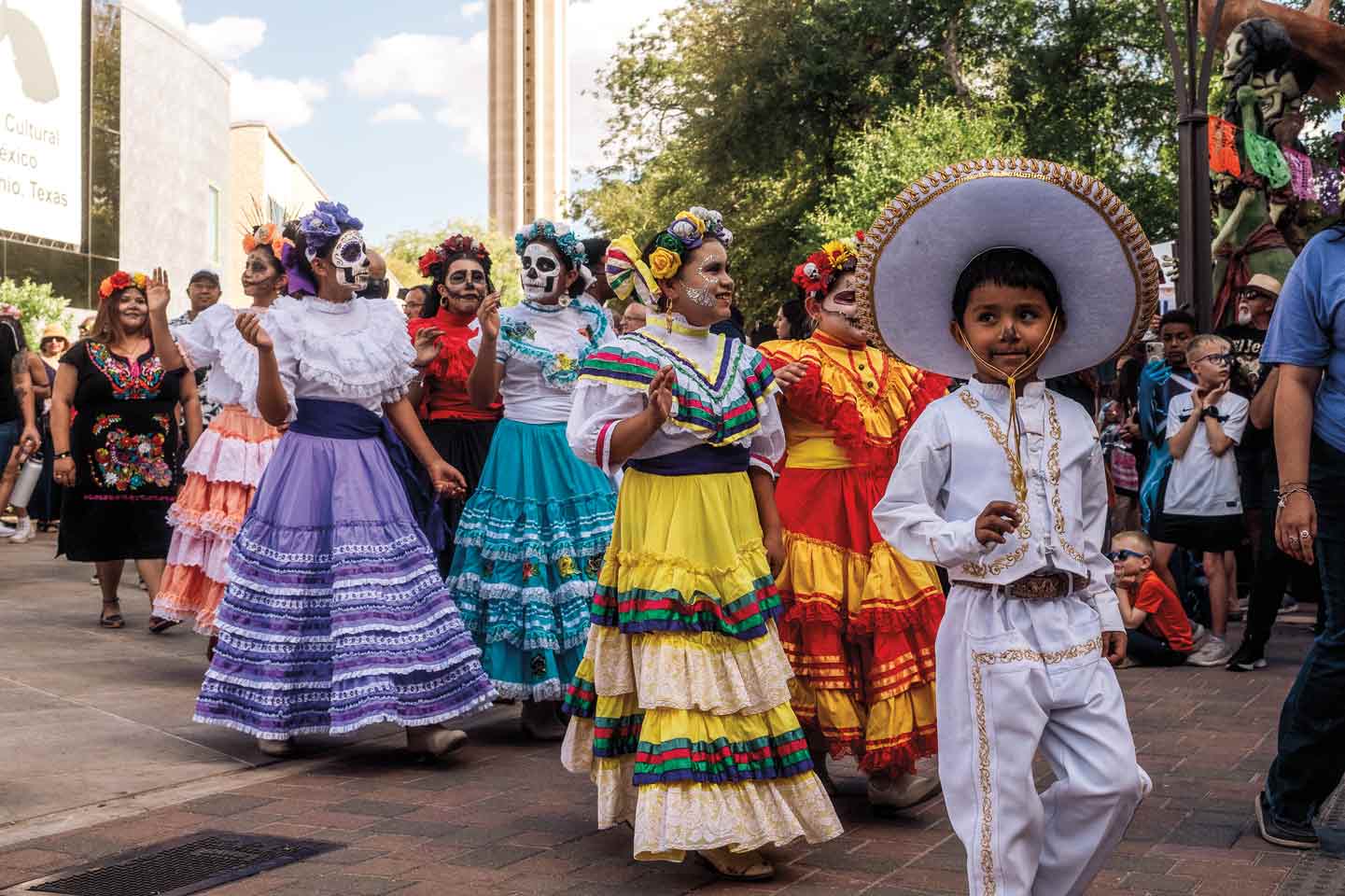
Today, Día de los Muertos is a hybrid of the secular and liturgical, ancient Indigenous practices and Catholicism. It’s celebrated in myriad ways across Latin America and the U.S., where it has grown in popularity since the 1970s. Last year, nearly 135,000 people attended San Antonio’s Muertos Fest. Other Texas cities, including Austin, Houston, Corpus Christi, and Terlingua, have also embraced the day as a way to both honor the departed and celebrate Chicano identity.
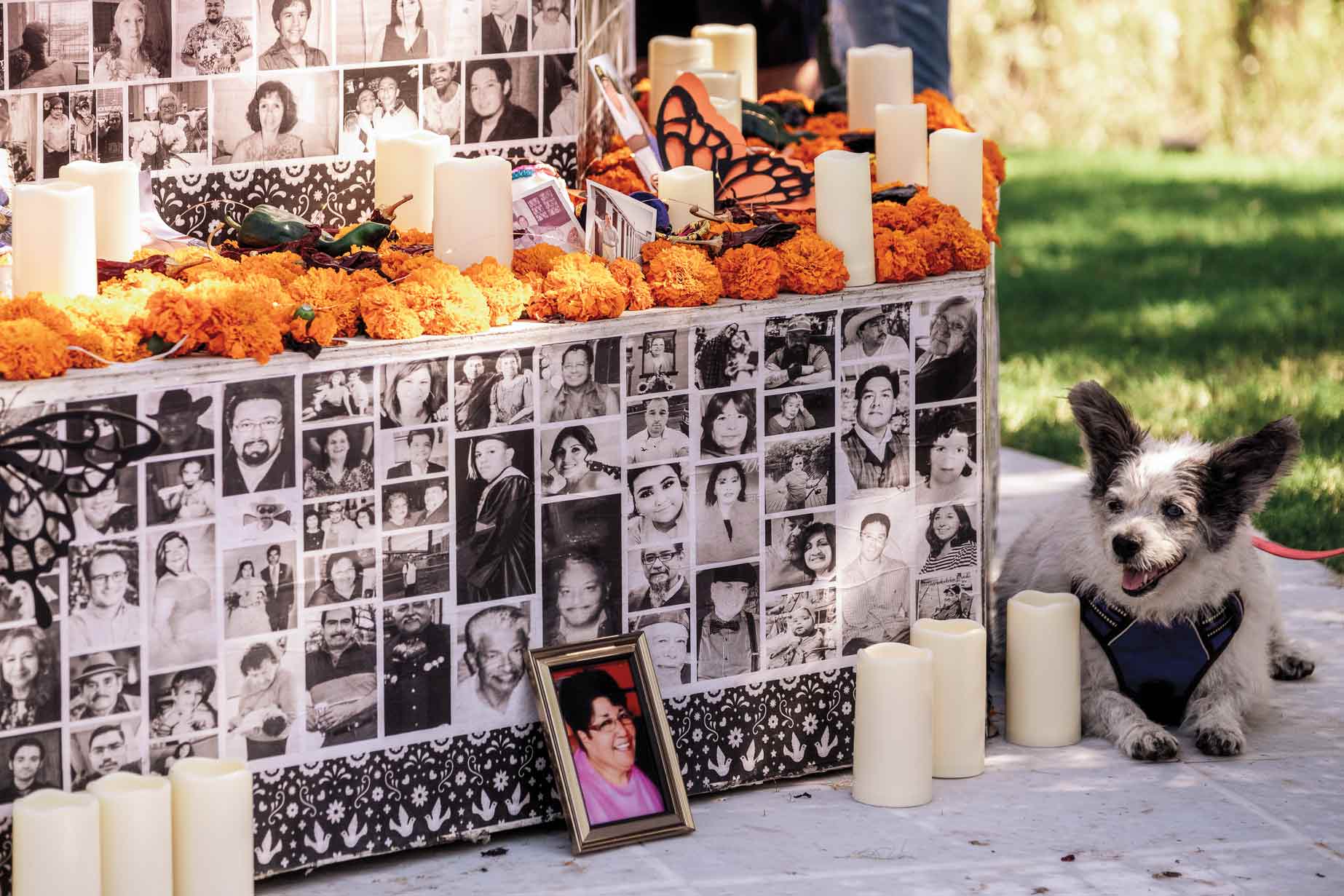
At the heart of any Día de los Muertos observance—from public parades to intimate family gatherings—is the ofrenda. Often referred to interchangeably as an altar, an ofrenda is an offering, a gift, an invitation. It’s a sacred space meant to honor one’s ancestors and to welcome them back for one night.
“A traditional ofrenda has nine levels, one for each level of the inframundo, or the underworld,” says folklorist Norma Elia Cantú, who holds a doctorate in English and is the Norine R. and T. Frank Murchison distinguished professor of the humanities at Trinity University in San Antonio. “Most cultures have a version of the inframundo, these beliefs that after you die, you go through stages to get wherever you’re supposed to be.”
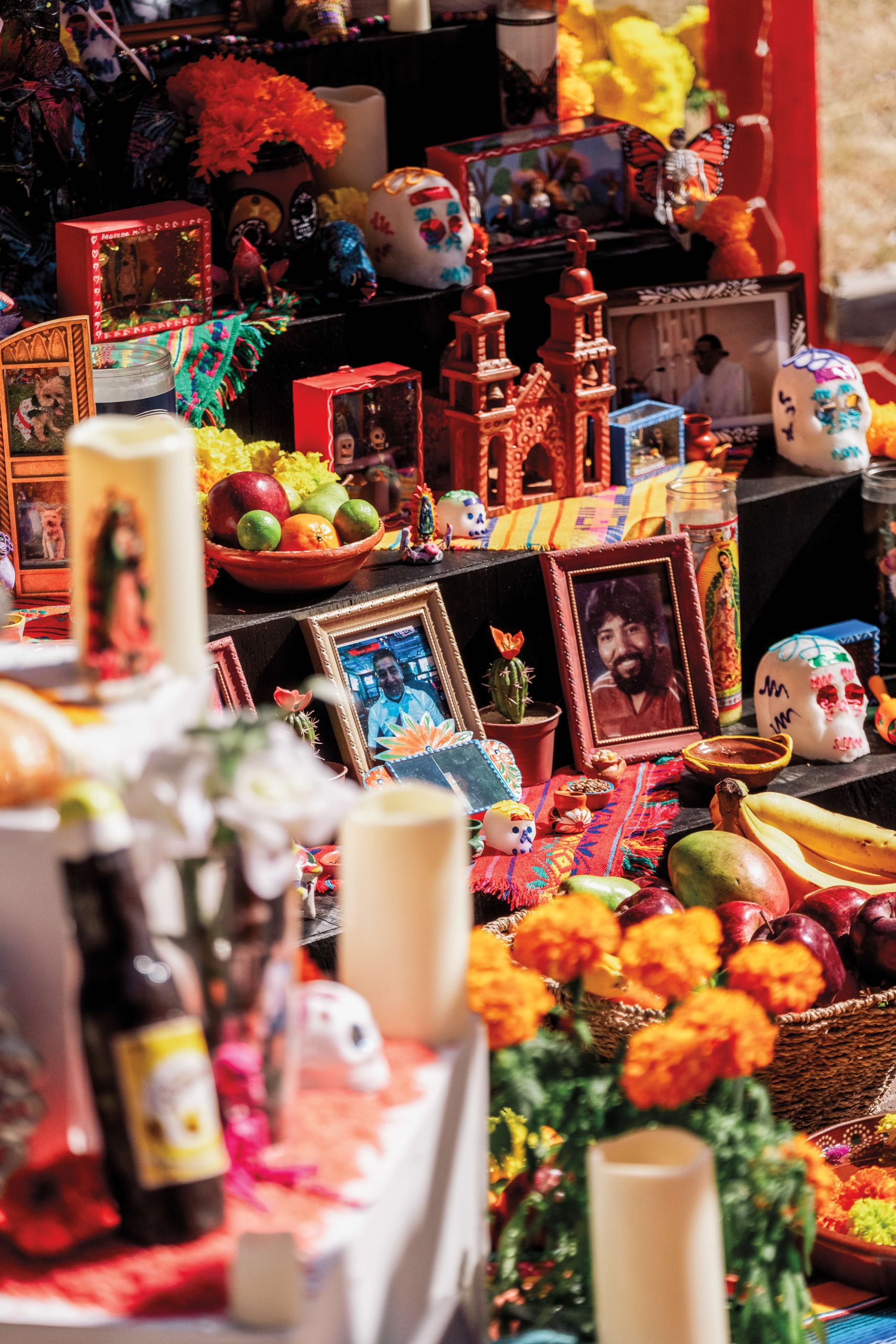
For their ofrendas, Indigenous peoples used items to represent the four natural elements: earth, water, wind, and fire. A plate with salt; a glass of water; candles or incense or copal; papel picado that flutters with the wind. They adorned their ofrendas with vibrant yellow cempasúchiles and included imagery or representations of their deities, which after the Spanish Conquest would come to include Christian figures like Jesus, La Virgen de Guadalupe, and saints. They offered chocolate, maize, squash, grains, fruits, legumes, tortillas, and fermented corn and grain beverages. The intention of an ofrenda was—and is—communion: between the living and the dead, the gates between this life and the next thrown open wide.
Despite its widespread public observance in Mexico, Día de los Muertos has historically been a quiet affair for Mexican American communities, even those along the border. “I remember as a child in Laredo, 70 years ago, we would just go to the cemetery, clean the tomb, put out flowers,” Cantú says. “Sometimes people would bring mariachis and they’d be playing at the tombs. But it was not an altar celebration at all.”
Victor Gardea, who also grew up in Laredo, remembers his grandmother driving down from San Antonio every Nov. 2 so the family could visit and clean his grandfather’s gravesite in Nuevo Laredo. “There was no altar,” Victor recalls, “and my mom is very religious, so she always steered away from imagery like calaveras and Catrinas.”
That iconic Día de los Muertos imagery—of grinning, dancing skulls and flamboyantly dressed skeletons—is, according to Cantú, not Indigenous at all. It was the Mexican printmaker José Guadalupe Posada who popularized calaveras, satirical skull and skeleton illustrations making fun of the bourgeoisie and political figures. He created La Catrina—originally called Calavera Garbancera—in 1912 to parody the way Indigenous peasant women who sold garbanzo beans at the street markets tried to make themselves look upper class by powdering their faces and wearing French fashion. But it wasn’t until 1947, long after Posada’s death, that La Catrina became immortalized in one of Mexican painter Diego Rivera’s most famous murals, Dream of a Sunday Afternoon in Alameda Park. From there, other Mexican and Mexican American artists incorporated her into their creations, including the ceramic toys and papier-mâché figurines sold during Día de los Muertos.
As recently as the 1970s, the observation of the holiday in the U.S. was more liturgical than secular, even by Mexican immigrants.
“When I was in graduate school in the ’70s, we were interviewing a man in Nebraska,” Cantú says. “He spoke an Indigenous language from Mexico. And we said, ‘Do you celebrate Día de los Muertos?’ He said, ‘Yes, but not here.’ We thought that was odd. So my professor who was doing that interview said, ‘¿Y por qué no? (And why not?)’ And he said, ‘Mis muertos no están aquí. (My dead are not here.) They’re back in Mexico.’”
My dead are not here.
Throw the Gates Wide Open
Where to celebrate Día de Los Muertos across the state
Day of the Dead
Festival
Denton, Oct. 24-26
The event includes traditional elements of the holiday, such as a community altar, while also mixing in new celebrations, like the popular paper lantern and costume parade. dentondayofthedeadfestival.com
Viva La Vida Festival
and Parade
Austin, Oct. 25
For 42 years, the Mexic-Arte Museum has put on Austin’s longest-running and largest Día de los Muertos celebration, with a procession featuring floating ofrendas and traditional dancers. mexic-artemuseum.org
Muertos Fest
San Antonio, Oct. 25-26
The largest celebration of Día de los Muertos in the U.S. brings 135,000 people to Hemisfair Park and features live music, traditional art, and San Antonio’s biggest public ofrenda. muertosfest.com
Día de los MuertoS
San Angelo, Oct. 30-Nov. 1
Hosted by the San Angelo Hispanic Heritage Museum and Cultural Center, this celebration features an art exhibition, a community altar event, and a daylong festival. sanangelohispanicheritage.org
Día de los Muertos Street Festival
Corpus Christi, Nov. 1
Four stages of entertainment, including mariachi bands and ballet folklórico dancers, keep festival-goers engaged in a celebration that starts at 3 p.m. and goes until midnight. diadelosmuertoscc.com
MECA Día de los
Muertos Festival
Houston, Nov. 1-2
Houston has many Día de los Muertos celebrations and activities, but this two-day festival reigns supreme. For 24 years, the event has included an exhibition of ofrendas, live entertainment, and artisan vendors. meca-houston.org
Día de Los MuertoS
Terlingua, Nov. 2
At sunset, residents of Terlingua and neighboring West Texas counties gather at the town’s historical cemetery to celebrate the deceased. The cemetery entrance is marked with a large public ofrenda and candles are placed on every grave in a 30-year-long tradition. visitbigbend.com
Cantú moved from Laredo to San Antonio in 2000, and there, she noticed a change—a stirring in the cultural consciousness. “It was really the artists who were starting to do things,” she says. Artists Terry Ybañez, David Zamora Casas, Joe Lopez, Gloria Sanchez Hart, and many others began exhibiting ofrendas not only in galleries but in restaurants, museums, and other public places as an expression of Chicano identity. Cantú specifically remembers a public ofrenda made for victims of the AIDS epidemic.
Still, in 1995, The New York Times reported, “For the most part, reunions with the dead remain too bright a streak of local color for San Antonio’s tourists; few Anglos venture into the West Side.”
The West Side, which thrived in the early 20th century because of immigrants fleeing political unrest in Mexico, suffered in the ’60s when highway construction cut it off from downtown. It’s the site of San Antonio’s largest labor strike, when 12,000 pecan shellers successfully protested wage cuts from the Southern Pecan Shelling Company, and a hub of activism, art, and Mexican American culture. This is where the Esperanza Peace and Justice Center, founded by a group of Chicana activists in 1987, began hosting Día de los Muertos celebrations in 2005. Twenty years later, Esperanza continues to build a community ofrenda at the Alazán projects, the Courts, where community members can add their photos and items to the ofrenda and take potted cemapsúchiles home.
The West Side is where artist and founder of Que Retro Arts, Janie Villarreal McClinchie, has hosted the Muertos Mercado since 2015. To McClinchie, some local Muertos-related festivals have gotten “too big,” she says. “Like more of a Fiesta event. That’s why I do this. Eighty percent of the art here is handcrafted by local artists. I try to always bring in the altar, bring in the bakers who have actual pan de muertos.”
Pan de muerto, a sweet bread traditionally flavored with anise seed and orange zest and coated with sugar after baking, is made as an offering to the dead and placed on the ofrenda. It has pre-Columbian sacrificial origins but changed in the 16th century after the Spanish Conquest to become more symbolic. Its circular shape represents the cycle of life and death, and the raised design at its center conveys the skull surrounded by four canillas, which symbolize the bones and tears of departed loved ones.
McClinchie grew up in Laredo, going to school during the week and staying with her grandmother across the Rio Grande in Nuevo Laredo on the weekends. Her grandmother kept a home altar up year-round. “As the months progressed, she would start adding different things to it,” McClinchie says. “It’s photos of her loved ones, but then she would also incorporate La Virgen de Guadalupe in December, put up roses, things like that.”
She points at the photos on her ofrenda. Her cousin Gilberto, who passed away during the worst months of the COVID-19 pandemic. Her abuelita Lupita “in her young, glorious days.” Her nephew, OJ. Esther Guajardo, a well-loved vendor in the artist community.
“This is my abuelita Angelita,” McClinchie says, pointing. “And that’s my mom’s mom, Chiquita. My abuelita on my mom’s side of the family, pues era India (she was Indigenous). Trenzas, morenita, chaparrita (Braids, brunette, short). And then my abuelita on my dad’s side of the family, era Española (she was of Spanish ancestry). So ella era alta, güerita (she was tall, fair). Completely different backgrounds. But they loved and adored each other, and I love that.”
In West Texas, the Chisos Mountains cradle Terlingua in a kind of basin, and at night there is no veil of light pollution to obscure the endless expanse of stars. The wildness presses itself into your skin.
A formerly abandoned quicksilver mining camp, the ghost town isn’t as remote as it used to be, though, according to residents and regular visitors—especially in early November, when Día de los Muertos coincides with the annual Terlingua International Championship Chili Cookoff. The events draw up to 7,000 visitors to the outpost and its RV parks, gleaming refurbished Airstreams, adobe casitas, luxury tepees and yurts, and alienlike “bubble houses” that dot the barren landscape along FM 170.
Drought-tolerant creosote bushes, with their sharp waxy leaves, branches speared up and thrashing in the afternoon wind, give off the scent of campfire smoke at the Terlingua Cemetery. There, at sunset on Nov. 2, visitors and community members gather to join a tradition that began more than 30 years ago when Bill and Lisa Ivey decided to place a candle on every grave.
“It’s just one of those things we thought we ought to do,” says Bill, whose family has lived in Brewster County for more than a century, and who owns the Terlingua Ghost Town and the cemetery property. “You’re supposed to remember the departed.”
This was no simple task. The Terlingua Cemetery was established in 1902 and mapped for the first time over the winter months of 2020 and 2021 by former Big Bend National Park archeologist Thomas C. Alex. He was able to map 529 graves or monuments but identified only 98 of them. Most of the gravesites are simple rock mounds, marked by cairns or makeshift crosses twined together from slats of picket fence or other discarded wood. Only a small percentage have raised altar tombs or monuments, fewer still with inscribed headstones. Of those, most belong to the Mexican mining workers and their families who fled political unrest and oppressive working conditions in Mexico before the Mexican Revolution in 1910, and whom Alex notes were the backbone of the region.
That first night in 1992, it was only Bill and Lisa at the cemetery. They brought boxes of jars, small candles, and hundreds of matches. A cold front moved in as they began lighting candles, a sharp wind blowing out matches as soon as the flame caught. They ran out of candles just before they could finish.
“I bent over to pick up some stuff, and something fell out of one of the jars,” Bill recalls. “It was a book of matches. I had no idea it was in there. And, this is the God’s honest truth, on the book of matches it said, ‘Your host thanks you.’ I still get goosebumps.”
Sánchez, the school director, often comes to Terlingua from Monterrey, Mexico, with his wife, Rosie, to visit Bill and his family, and to help set up for the evening’s festivities. Some years ago, Bill invited Sánchez to see the celebration, which at that point included a temporary altar made with cinder blocks, boards, and sheets of fabric that would blow off their hooks in a sudden wind, and on which the community would place photos and other remembrances. Once, someone left ashes.
“In that moment, we said we need to give them our Mexican culture ideas,” Sánchez says, “starting with a real Mexican altar.”
Today there are three large permanent white altars, each with seven levels. A dozen or so people, mostly out-of-towners with deep ties to Terlingua, work to drape brightly colored papel picado over different tiers, layering the ofrendas with calaveras and candles, framed images of Catrina and the Virgen de Guadalupe. And of course, the cempasúchiles.
“We bring it all from Mexico,” Sánchez says. “The cempasúchil is a seasonal flower. Right now, all the markets are selling it—hundreds, thousands of flowers—to make it more pleasant for the spirits.”
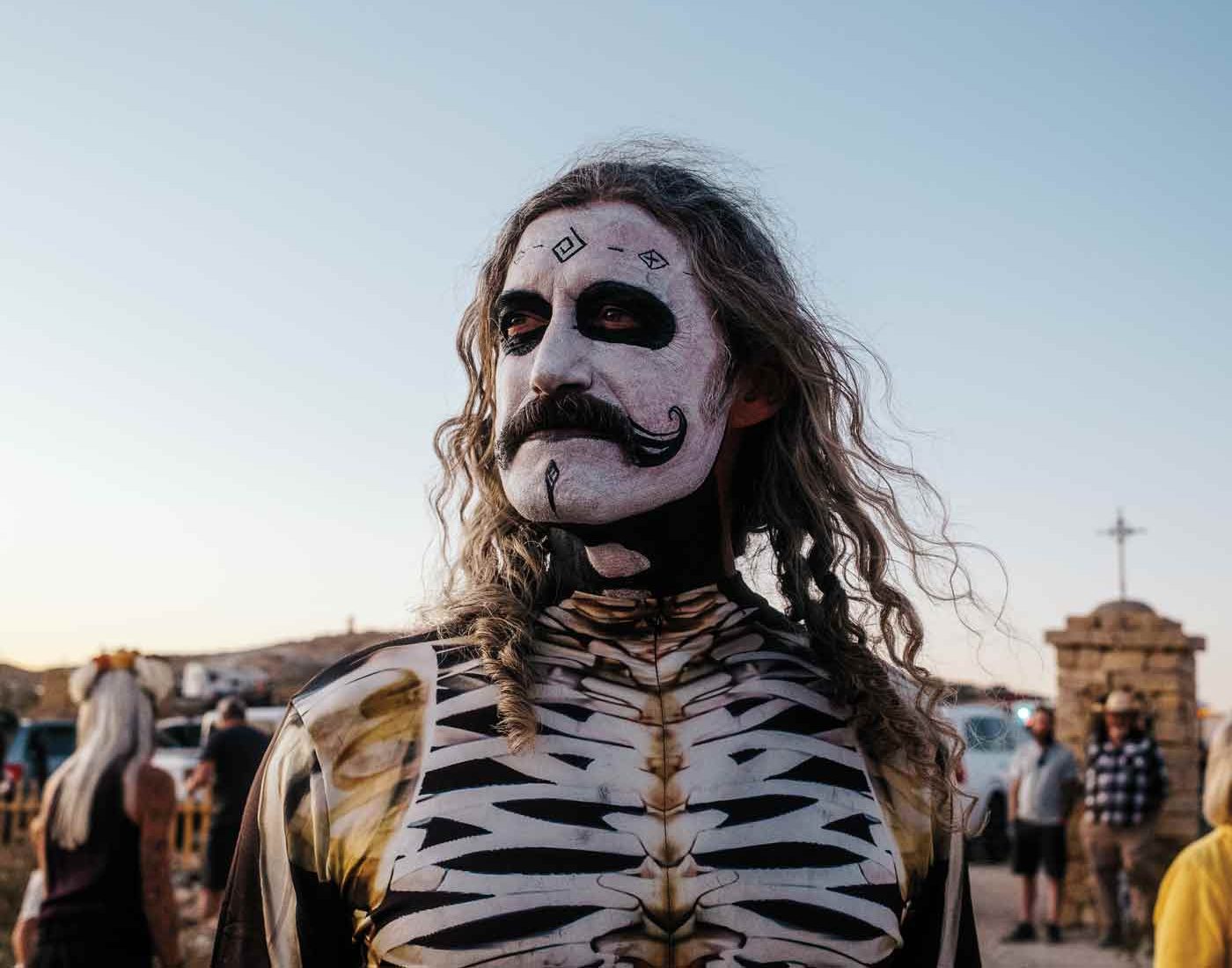
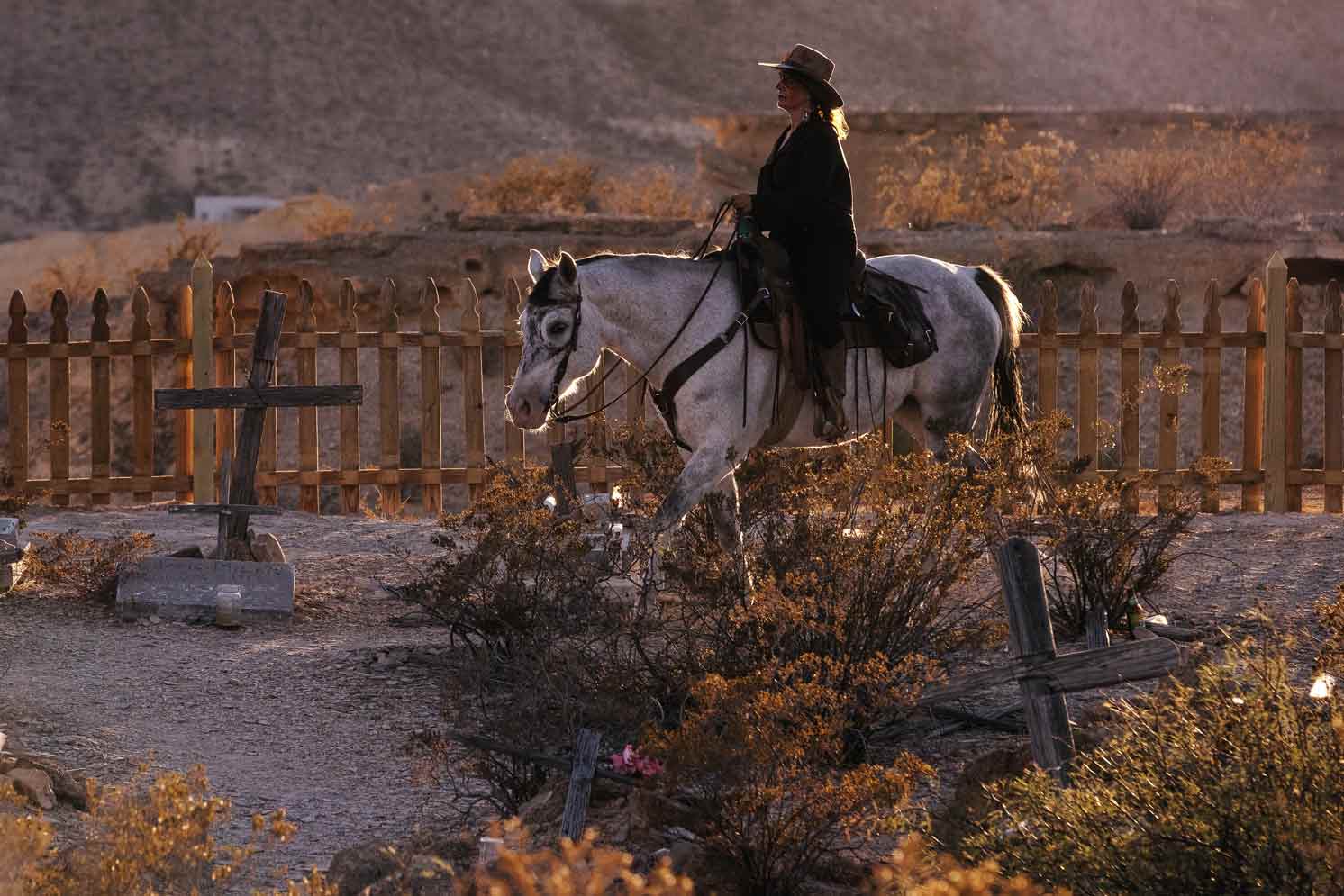
People begin arriving before sunset: men in cowboy hats, some women with elaborate Catrina makeup, a woman on horseback. They each take a votive candle from the table manned by Bill’s cousins, Mickey and Moppy Miller, and other volunteers. As the sun lowers behind the mountains, there’s a quiet sense of camaraderie: careful footsteps between graves marked and unmarked, flickering candles placed in grutos or balanced on stones, silhouettes of wooden crosses against a tangerine-streaked sky. Names and birth and death years are read out loud: Alfonsa Castro, Ismael Canas Santiago, Eduardo Huerto Robles—so many babies. Miners and ranchers: Martin Zamaroon, Rodrigo Vasquez, Manuel Rios.
Judy Magers—better known in this area as the Burro Lady—is buried in the far corner of the cemetery. Bill met Magers in Lajitas, where he ran the trading post, in the early 1980s. She hardly spoke, he recalls, and even over the course of their 25 years of friendship, she never told Bill about her past. For decades she roamed the Big Bend region on the back of a burro, carrying everything she owned, camping wherever she could. Eventually, Bill became her legal guardian to provide her with a mailing address for her social security checks. “The reason she trusted me is because I never asked her any questions,” he says.
Magers told Bill once that she wanted to be buried in Terlingua. When she died in 2007 at 65, it was Bill who tracked down her next of kin: five children who hadn’t seen her in 20 years. When the youngest was 11, their mother walked out the door while they were watching TV, and they never saw her again. The children were separated, sent to different homes, led different lives.
“Those kids, they all showed up at the very same time, and they all got to carry the casket into the church,” he says. “After all this time, they were genuinely so glad to know where she was.”
As darkness descends, the cemetery glows with candles and stars and bonfires. An older man with a guitar sings a haunting country song. People gather before the ofrendas, paying homage to each other’s loved ones.
“We have the faith and the belief that the spirits will be with us,” Sánchez says. “They are the watchers. And today is a celebration.”
For many people, Día de los Muertos in San Antonio has become nearly synonymous with Muertos Fest. Founded in 2013 by Jimmy Mendiola and Faith Radle, Muertos Fest has grown from 15,000 attendees in its first year at La Villita to upward of 135,000 at Hemisfair Park in 2024. The event includes 25 food vendors, more than 80 art, souvenir, and textile merchants, plus musical headliners and workshop instructors. Mendiola gives credit to community groups like Esperanza, the Guadalupe Cultural Arts Center, and Centro Cultural Aztlan, which have been doing public ofrendas much longer.
“I can see where some artists have pulled away because it has gotten commercial in some ways,” says Eddie Vega, poet laureate of San Antonio, who read poetry, including an impromptu calavera—a short, satirical poem—at Muertos Fest in 2024. “They’ve got a corporate sponsor, it’s broadcast on KSAT. But proceeds of the festival go to Inner City Development, and what I would say is puro is that the number of altars from community people and families has really increased. That’s not commercial at all.”
Last year, more than 80 ofrendas were created and displayed by artists, schools, and local families, like the Gardeas. “Every year it starts with the idea,” Maribel says. “What do we want to honor? Typically our abuelitas show up because that’s who we credit as the heart of the familia. But this year [2024] our theme is the año de la mujer (year of the woman), and I think we need to honor everything from the hardships to the beauty to the resilience of women.”
Victor and Maribel are both working parents—he a physical therapy assistant, she an education advocate. They have two boys, their youngest with cerebral palsy, whose care consumes much of their time. Neither Victor nor Maribel claims to be an artist, but both have always been creative. “Coming from a family that doesn’t have a lot money,” Victor says, “you learn to be thrifty and make things on your own.”
When Victor was in first grade and assigned to build a pyramid for a class project, his brother taught him how to use cardboard, scissors, and glue to make something entirely different. Victor’s mother, who’d sewn her own dresses as a girl, taught him how to do papier-mâché over Christmas. The family would make and decorate their own piñatas using newspaper, flour, and water.
“My mother’s not an artist, per se, but the things she can make out of nothing…” Victor muses. “I think that’s the inspiration—being able to take your everyday materials and turn them into something.”
At their son’s school, Victor and Maribel were charged with creating bulletin boards and backdrops: cityscapes, dragons, all made out of recycled materials, papier-mâchéd and painted. Their son’s Spanish teacher, Jesus de la Torre, who teaches workshops every year at Muertos Fest, was the first to ask them to help build an ofrenda for the event.
Altar Artistry
The six traditional
elements of an ofrenda
CempasúchilEs
Known as the flowers of the dead in Aztec culture, the scent of cempasúchiles, or marigolds, are believed to help guide ancestors to their designated altar.
CANDLES AND INCENSE
Found on a path leading to an ofrenda or on the structure itself, candles represent the element of fire, lighting the way home for departed souls. Incense, particularly copal smoke, is used as another olfactory trigger to attract the dead.
PHOTOGRAPHS
Photos of loved ones who have passed away are often prominently displayed on the ofrenda, along with items that belonged to them or that they used to enjoy—from instant coffee to a specific brand of cigarettes.
PAPEL PICADO
Representing the element of wind, these thin, colorful pieces of tissue paper with cutout designs are strung on and above ofrendas.
PAN DE MUERTO
Usually flavored with anise seed and orange zest, this sweet bread is one of the traditional dishes associated with Día de los Muertos. Some celebrants also set out their deceased loved one’s favorite foods as an offering.
CALAVERAS
A symbol of death and rebirth, calaveras—often displayed in the form of sugar skulls—have become popular in recent years as a way to acknowledge death not as somber or dispiriting but as an essential and even joyful part of life. —Alice Scott
That year, around 2016, they built a 10-foot cross with some mariachis beside it and invited their family to celebrate with them in Market Square as they added the final touches. They brought tables and played lotería and ate, and it became an entirely new tradition.
“I think through this journey, my mom has realized that it wasn’t about those visuals of calaveras and muertos,” Victor says. “It was the representation of how we wanted to keep our ancestors’ memories alive with our kids, especially because our kids didn’t get to know them.”
Last year, Maribel wanted to work with cardboard in a different way, so she cut strips and stapled them together around the PVC-pipe frame of their Catrina. They repurposed their son’s no-longer-used IV pole for the Catrina’s base. For her skull, Maribel made a mold out of a ceramic head they bought at Ross Dress for Less, then filled it with expanding foam. Once the Catrina’s body was created, the Gardeas used wood glue and water to make the papier-mâché.
When they were finished, La Catrina stood taller than their living room ceiling, her papier-mâché hand-painted into a turquoise dress with bright pink and yellow flowers, vibrant green cacti, and vines that traced her curves. A lace shawl hung around her shoulders, her skull crowned with blue flowers and a regal headdress. A marigold was placed between her fingers, each culminating in a long painted nail.
Walking along the rows of ofrendas at Muertos Fest, stopping to honor the departed souls feels intimate—part art exhibition, part church, sacred and secular, often heartwarming, sometimes heartbreaking. There is an ofrenda remembering the 21 victims of the 2021 shooting at Robb Elementary School in Uvalde, black-and-white framed photos of smiling fourth-grade children and the teachers who tried to protect them.
The soul of Muertos Fest, according to organizers, is the Community Altar. Last year, more than 1,000 people in and around San Antonio submitted digital photos of their loved ones, which artist Mariana Vasquez, in collaboration with two other artists, wheatpasted onto a multitiered altar. Artist Edna Lugo, who also displayed an ofrenda at Centro Aztlan, created the skull for the altar.
“What makes our event so popular is that it’s a community effort and people know they can come with their family to have fun, do arts and crafts, and listen to music,” says Claudia Loya, a marketing strategist who submitted her grandfather’s military photo for the Community Altar. “And if they want to take time to feel their grief, they can do that, too.”
The Gardeas’ Catrina is only the entrance to their ofrenda, which takes up majestic space beneath the branches of live oaks behind the Magik Theatre. Their tiered ofrenda is bordered by cardboard panels cut and painted to resemble red brick walls and laid with candles and family photos—each in an individually hand-painted frame. There’s also plastic food: pan de muerto, squash, chiles, and even a shrimp cocktail. The pavers before the ofrenda are decorated with cempasúchiles, painted calaveras, and intricate colorful blooms made of dyed rice. Banners of papel picado flutter in the hot late October breeze.
“It is a lot of time-consuming work,” Maribel says. “But I use that as time to think about our ancestors: about how they would want to see this project or how amazing it would be to be honored downtown in San Antonio. I always think about that.”