

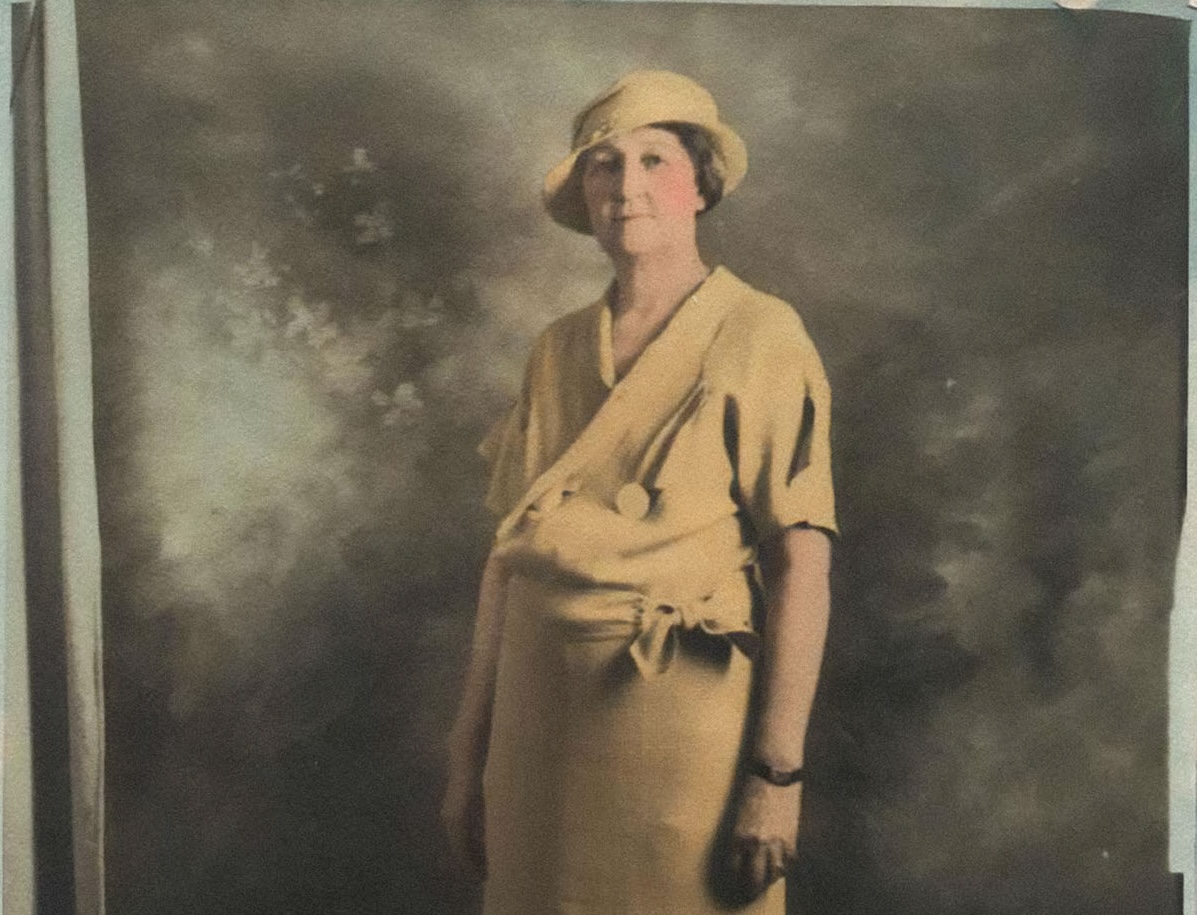
Miriam Ferguson was an unlikely candidate for Texas governor when she ran on the Democratic ticket in 1924. A shy homebody without political experience, she didn’t have “the slightest tendency toward diplomacy,” according to her daughter Ouida. She never joined any women’s clubs, which were the primary way women could advocate for legislation in the early 20th century. “Even if I had the right to vote, I do not think that I would care to use [it],” Miriam had said in 1914.
This political bystander entered the race at the behest of her husband, James E. Ferguson, the 26th governor of Texas. In 1917, when he was partway through his second term, the Senate impeached him on 10 charges, including the misapplication of public funds. It prohibited him from holding office, but Jim only took it as a challenge. After a failed reelection bid, he tried for U.S. president, U.S. senator, and Texas governor once more. This time, in 1924, a court struck his name from the gubernatorial ballot, but he concocted a brazen workaround: Run Miriam—then a 49-year-old grandmother and gardening enthusiast—in his place.
Miriam campaigned on a bold promise to defeat the Ku Klux Klan, a formidable force in Texas politics. She won the election, but her time as the state’s chief executive a century ago proved little more than a puppet show, exposing just how difficult it would be for women to gain true political power in Texas.
“There’s no question that Jim Ferguson had two additional terms as governor,” says Don Carleton, historian and executive director of the Briscoe Center for American History at the University of Texas at Austin.
Miriam Amanda Wallace was born to a wealthy family in Bell County on June 13, 1875. She studied at Salado College and Baylor Female College before meeting Jim, then a persistent young lawyer, at a party. They wed in 1899, and Miriam set about raising children—first in Belton, where Jim opened a bank, then in Temple, where he opened a bigger one.

This “epoch of tranquility,” as Ouida described it in her 1946 book The Fergusons of Texas, ended in 1914, when Jim made his own political debut and bid for governor. Despite his penchant for three-piece suits, he adopted a folksy “Farmer Jim” persona that critics labeled “ungrammatical” as he aired the frustrations of downtrodden tenant farmers and swore to veto liquor legislation.
Miriam entered politics hellbent on clearing her family’s name after the impeachment. She and Jim campaigned together under the slogan “Two Governors for the Price of One.” At rallies, she warmed up the crowd with a brief speech about vindication. Then Jim discussed his wife’s policy platform, which remained unchanged from his own previous run: dismantling the KKK, cutting taxes, and lowering government spending. Campaign stickers proclaimed “Me for Ma”—a nickname that played off her first and middle initials—and “Pa Ain’t Bad Either.” Everyone understood that a vote for Miriam was really a vote for Jim.
In an era when American women were entering public life, her old-fashioned persona fit a vision of femininity that the Klan also promoted. But she offered an alternative for voters, according to Shelley Sallee, a history teacher at St. Stephen’s Episcopal School in Austin who wrote about the Fergusons in her 1996 article “The Woman of It: Governor Miriam Ferguson’s 1924 Election.”
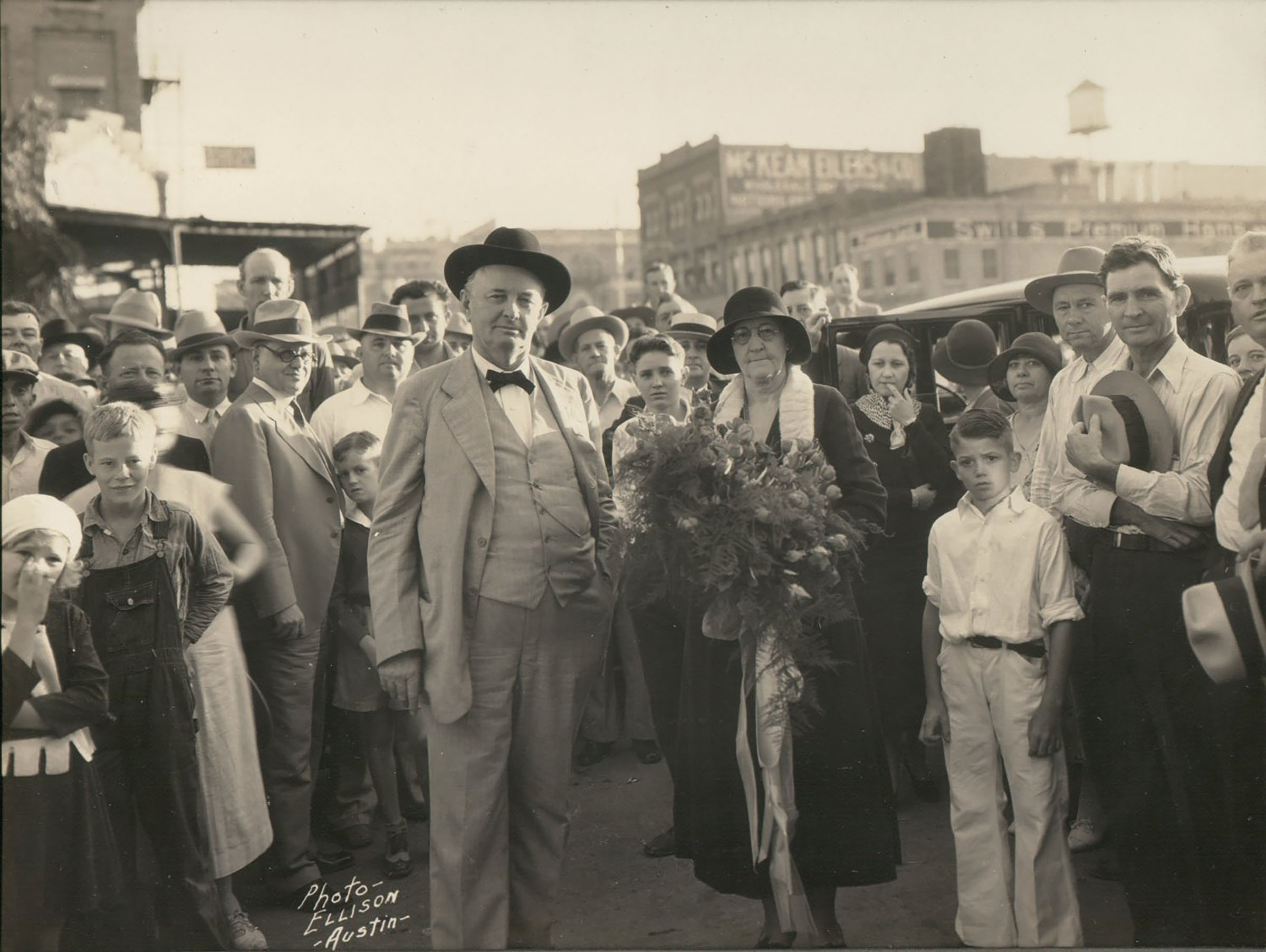
That might be why Ma proved such a fearsome adversary for the Klan. The organization, which had waned in Texas in the 1870s, resurged in 1920 as a middle-class backlash against modernity and immigration. By 1924, it dominated local and state politics, backing gubernatorial candidate Felix D. Robertson, also a Democrat, who claimed to carry “the banner of white supremacy … for America for Americans.”
The Fergusons supported white supremacy but expressed opposition to extrajudicial violence, which the Klan enacted against Black, Jewish, and Catholic people, and white people it deemed immoral. Ma assured voters she would “take the sheets and put them back on the beds and put the pillowcases back on the pillows, where they belong.”
Women’s rights leaders were split. In 1922, they had supported the Klan’s U.S. Senate candidate over Ferguson, who opposed suffrage. Now some, including anti-lynching leader Jessie Daniel Ames, set aside their contempt for Jim to support Miriam. Many others still voted for Robertson, seeing Miriam as unqualified and generally the “wrong” woman candidate, Sallee says.
“Women could vote, and that vote was dangerous enough that it had hurt her husband,” Sallee says. “There were the beginnings of some power, and Jim was trying to undermine it by having a woman [as his stand-in].”
But Miriam won the Democratic primary runoff by 97,000 votes, then easily won the general election. On Jan. 20, 1925, thousands packed the Texas Capitol to see her sworn in. In a short speech, she assured lawmakers she would seek the counsel of others, then nodded toward her historic achievement.
Less than a week into her term, however, visitors to the executive office found the First Gentleman sitting in the governor’s chair while Miriam unpacked at the mansion. Historian Bruce Rutherford, who wrote the 1983 book The Impeachment of Jim Ferguson, described her as a “co-governor,” but Jim held more power than she did.
“She’s not in the meetings,” Sallee says. “She’s not in the smoky bars, the back rooms, making the deals, the power plays.” Yet it was Miriam who signed legislation. That March, the Legislature passed a law forbidding secret societies from parading in disguise, which helped crush the KKK in Texas.
But it also passed an amnesty act, which pardoned impeached officeholders (hint: Pa). By late 1925, rumors of bribes, fuzzy contracts, and excessive pardons entangled the Fergusons. During Miriam’s reelection bid, the Texas Women Citizens’ Committee demanded “the stamp of every intelligent woman’s disapproval on the growing tendency of scheming, unscrupulous politicians who try to place feminine ‘cat paws’ or ‘figureheads’ in office.” Ma lost against Dan Moody, the state’s attorney general who had prosecuted the KKK, in 1926.
But the Fergusons returned in 1933 for one last term, which mostly focused on countering the effects of the Great Depression. Miriam subsequently fired all 44 members of the Texas Rangers, who had electioneered for her opponent, the incumbent Gov. Ross Sterling. She ran again in 1940, but lost. Jim died four years later, and Miriam spent her remaining years peacefully tending her roses in Austin.
In the half-century between Ferguson’s tenure and Ann Richards’ successful 1990 gubernatorial run, women gained few seats in the state Legislature—roughly 3% by the early 1970s. Today, they make up about one-third of its members, though only two women have assumed Texas’ highest office.
Puppet or not, Miriam broke that glass ceiling, but she didn’t live to see women achieve greater political power. She died on June 25, 1961, and was buried next to Jim. They shared a single tombstone. It declares: “Life’s race well run … now cometh rest.”