
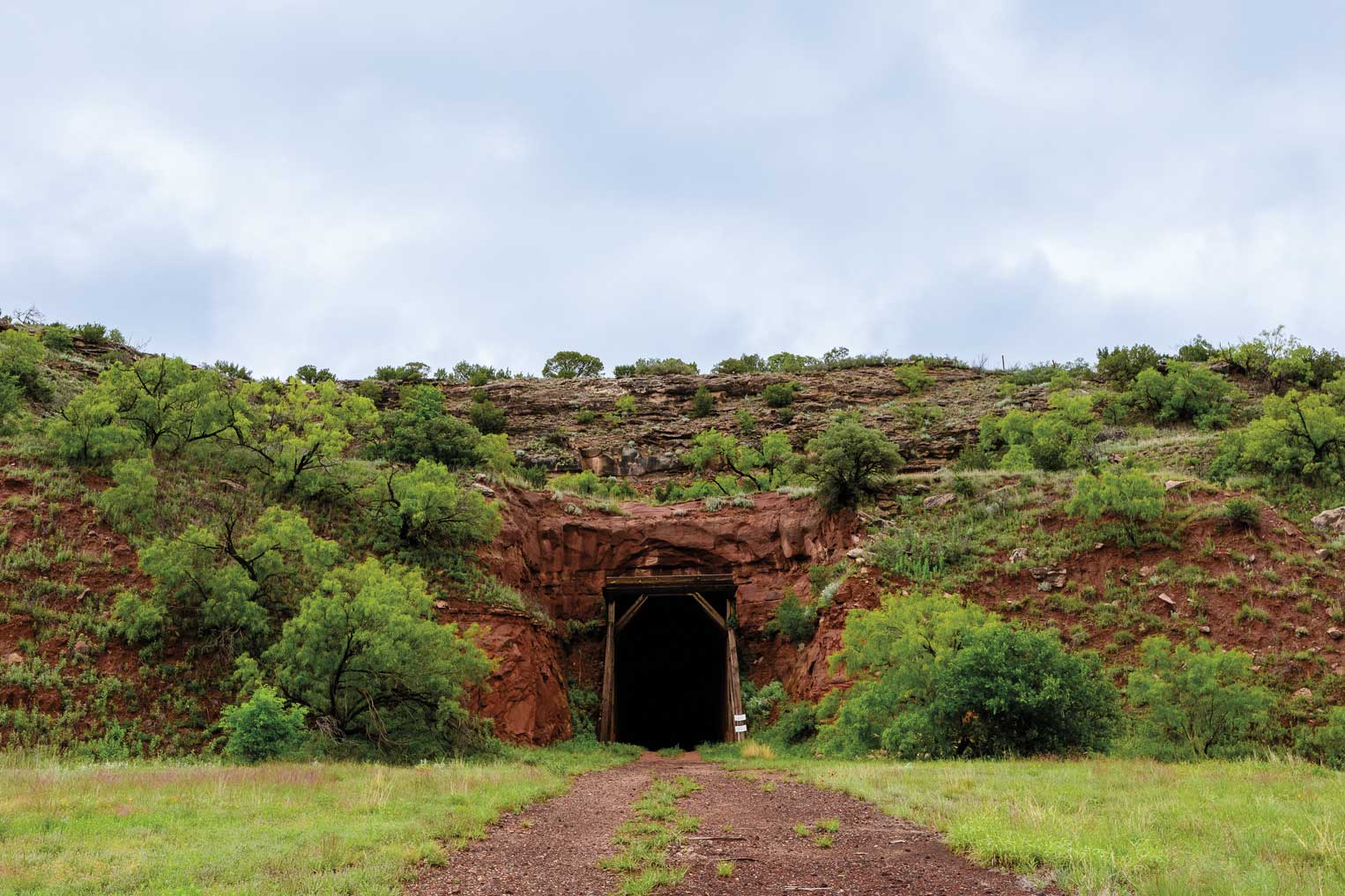
As my friend Lize and I step into the mouth of the 582-foot Clarity Tunnel, I feel as if I am embarking on the physical act of prayer or meditation—holy and timeless. The sturdy, uniform rafters of the high ceiling resemble an unadorned cathedral. As we walk farther into the shadowy darkness, ensconced by Caprock Canyons State Park & Trailway in the Panhandle town of Quitaque, we hear a soft chorus of squeaks and chirps. Though we don’t see one or hear their beating wings, evidence of the enormous colony of Mexican free-tailed bats is everywhere. Sizable piles of guano, like large mounds of ash, accumulate on the shoulders of the two-track as well as underfoot. A musty odor, like that of a wet cat, fills the dim space.
CAPROCK CANYONS STATE PARK & TRAILWAY
850 State Park Road, Quitaque. 806-455-1492; tpwd.texas.gov
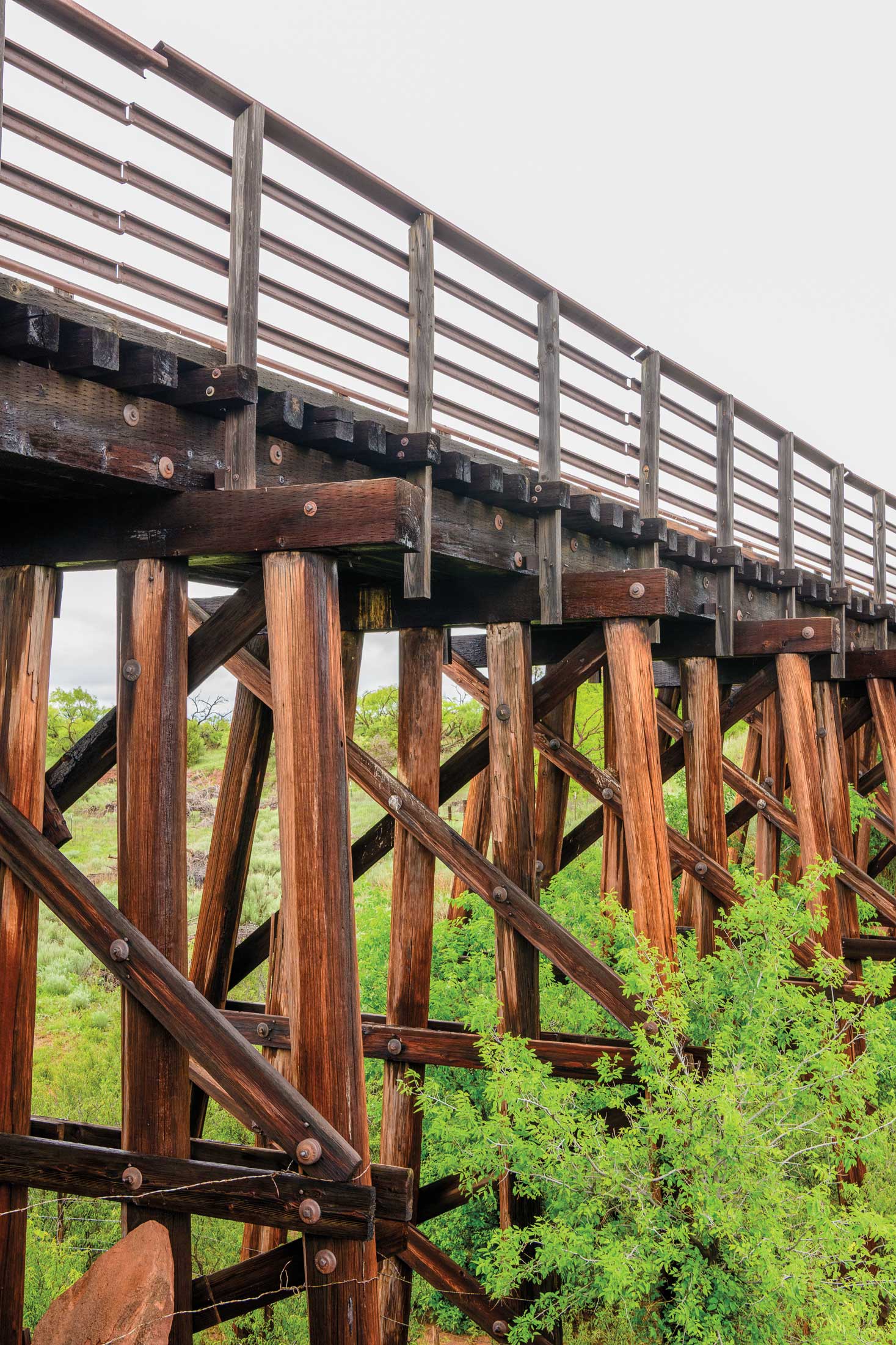
It doesn’t take much to imagine the clatter of metal wheels against railroad tracks barreling through the void. This was one of the last operating railroad tunnels in the United States and one of only three railway tunnels built in Texas. Today, it’s a highlight of the 64-mile Caprock Canyons Trailway, one of 44 rails-to-trails conversions throughout the state promoting new means of exploration for hikers, cyclists, and equestrians.

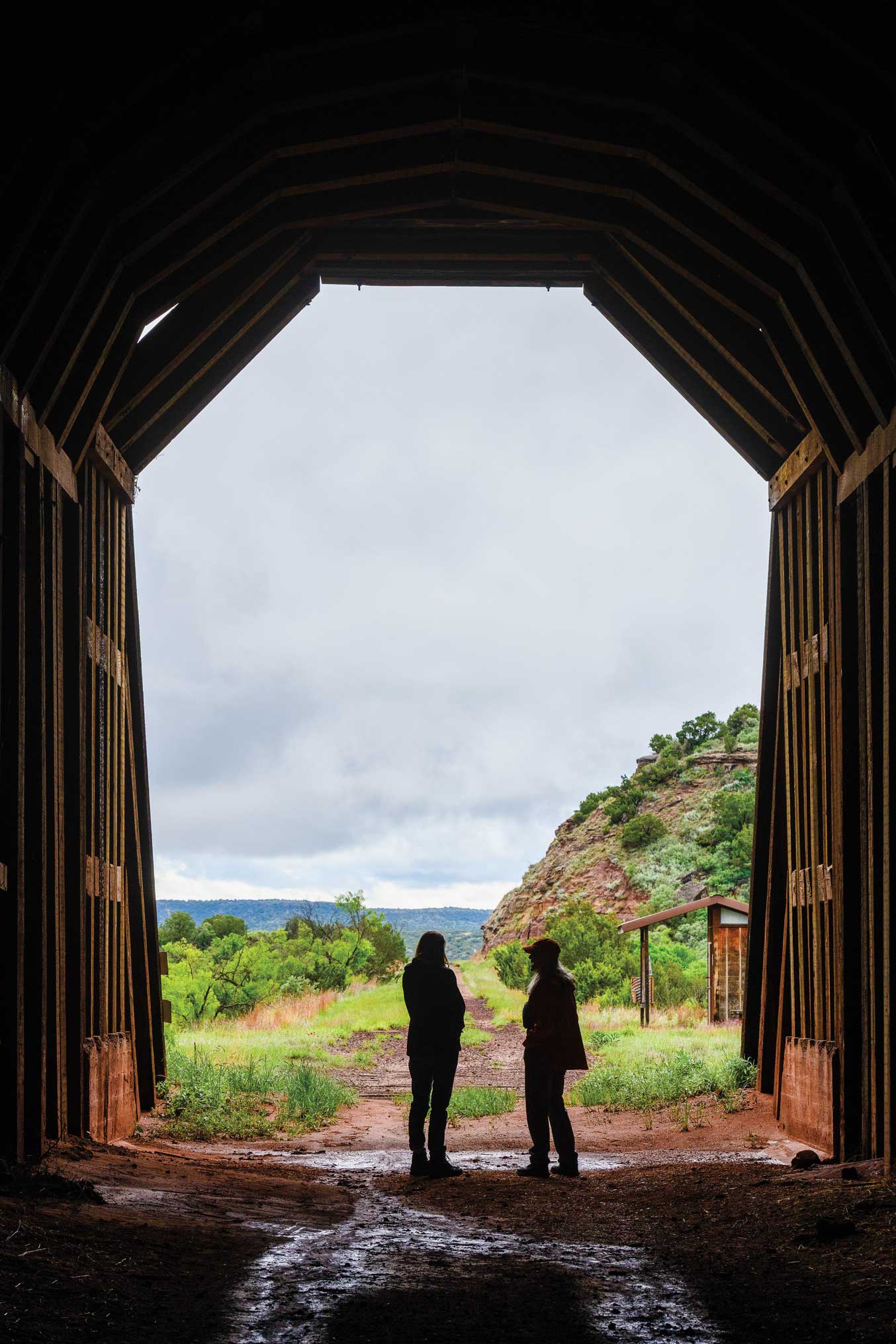
Three months have passed since my aunt Beverly Butcher Byron died of heart failure on Feb. 9, at age 92. Beverly was a considerable force of love, faith, and will in countless people’s lives. She often reminded me of what was important—the connection of extended family, what makes for a perfect crabcake, or hiking amid the country’s beautiful, unspoiled landscapes. Not surprisingly, as I walk through Clarity Tunnel, I feel Beverly’s presence. She is right there with me, in my footfalls against the moist ground.
During one of my last visits with Beverly, she spoke fondly of hiking in Catoctin Mountain Park and other areas not far from her longtime home in Frederick, Maryland. As a congresswoman in the sixth congressional district of Maryland from 1979 to 1993, Beverly was the original sponsor of a “rails-to-trails” amendment to the National Trails System Act of 1968. Congress passed this piece of legislation in 1983, allowing abandoned rail corridors to be preserved by converting them to trails. This is called “railbanking,” which is a voluntary agreement between a railroad company and a trail sponsor, such as a trail organization or government agency, to use an out-of-service rail corridor as a trail until a railroad might need the corridor again for rail service. “It was my proudest piece of legislation,” Beverly told me.
As we continue to explore the trailway, the park’s assistant superintendent, LeAnn Pigg, gives us the lay of the land. She says there are eight points along the trailway for visitors to access what is considered one of the region’s longest recreational corridors. She reminds us that this is home to a bison herd of 300 that descends from Charles Goodnight’s legendary herd.
“The layers of history in this park are amazing,” Pigg says. “You can experience it through the wildlife, the geology, the desert landscape, the railway. It’s awe-inspiring.”
We notice a sign that reads “289.22.” This is the number of miles to Fort Worth and a reminder of the former railroad line that used to chug along between there and this remote corner of Texas. In 1928—late by Western railroad standards—the South Plains spur was built by Fort Worth and Denver South Plains Railway Company to transport freight to this area of the Panhandle. Later, as the trucking industry exploded, the line became inconsequential for its parent company, Burlington Northern, and eventually went out of service in 1989.
In 1993, the spur was transformed into the Caprock Canyons Trailway with the assistance of the Rails to Trails Conservancy. This national nonprofit was established in 1986, three years after Beverly’s legislation passed, with the mission of advocating for rail trails and helping local groups acquire unused railroad for this singular purpose. In the early ’90s, the conservancy—with federal support from the legislation—was instrumental in the purchase of this corridor in the Panhandle. It became the trailway when the tracks were removed, before it was turned over to Caprock Canyons State Park & Trailway.
This occurred relatively early in the rails-to-trails movement. Today, there are more than 42,000 miles of multiuse trails throughout the country, according to Eric Oberg, senior director of programs for the Midwest regional field office of the Rails to Trails Conservancy. The 44 rail trails in Texas cover 344 miles, with 187 potential miles in the future. “This key piece of legislature inspired a movement in the early ’80s,” Oberg explains. “I doubt your aunt and the architects of this legislation understood that they would deliver such an impact, which is tenfold of what was imagined. It has blown everyone away.”
During her tenure, Beverly gained a reputation as a conservative Democrat with a focus on not only public lands but also defense and military due to the high concentration of both in her district. Numerous public parks are in the sixth congressional district, including a stretch of the Appalachian Trail, Antietam National Battlefield, and the 184.5-mile C&O Canal National Historical Park that connects Maryland and Washington, D.C.
Though her public service took Beverly all over the world to meet a multitude of iconic dignitaries, including Anwar Sadat and Queen Elizabeth II, one of her top priorities was what she could discover and experience back home. With her family, she often went on hiking trips to spectacular national parks throughout the Western states. For example, she went on a multiday camping trip in Glacier National Park in Montana, floated down the Colorado River in the Grand Canyon, and climbed the Grand Teton in Wyoming. “In her heart and soul, she believed in long-distance trails,” says her oldest son, Geb Byron, who remembers many hiking adventures with his mother.
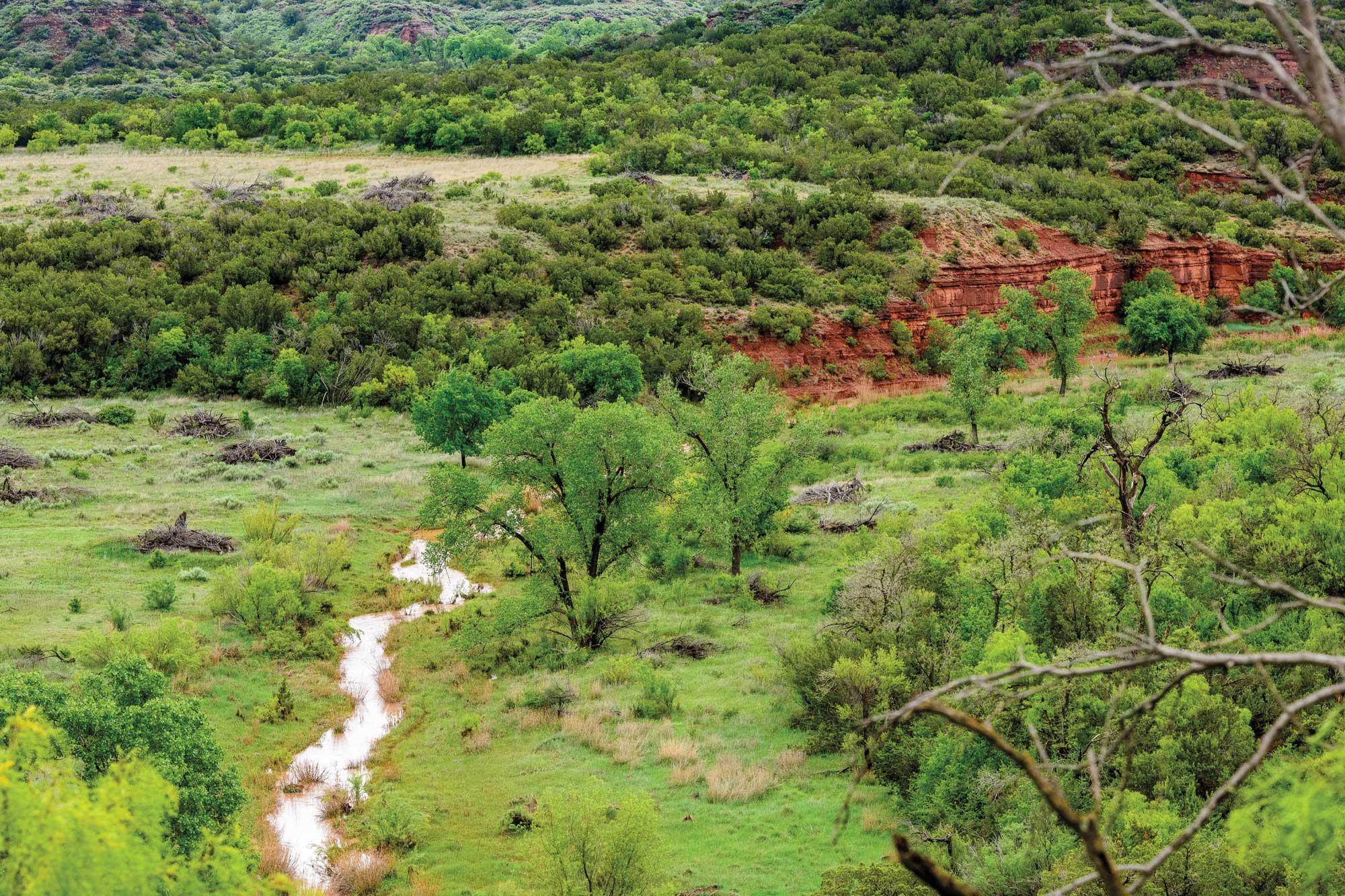
We continue to walk through Clarity Tunnel, and the aperture of the other end grows larger and brighter. When we step through the other side, the undisturbed landscape is defined by ridges of reds and greens. I imagine walking into an open book, where the past meets the present. To the left, tall cottonwoods border a hidden creek. An elegant Mississippi kite, with its distinct gray head, soars over the rippling treetops. Wild plum thickets, dotted with bright green plums, glisten with moisture from the recent rainfall. Pigg points out clusters of low-lying littleleaf sensitive-briar; just as its name implies, its delicate fernlike leaves fold into themselves as soon as they are touched.
It is a perfect afternoon. Banks of gray clouds continue to move and shift in the West Texas sky, and the sun breaks through here and there. After several inches of rain, the flat grasslands exhale. Countless narrow-leafed yucca with sturdy columns of pale-yellow bell-shaped blooms and many other flowering cacti dot the landscape. We are the only ones out here in this unspoiled terrain. There is a quiet and a stillness that come with this remote place. As someone who has lived in Texas for over 20 years, I am struck, yet again, by how much there is to discover in its vastness.
Though I know my aunt never traveled to this far corner of Texas, I walk away from Caprock Canyons State Park & Trailway with a renewed sense of admiration and appreciation for her life and legacy. Beverly was a headstrong woman who valued family, faith, and the gifts of the natural world over the power and prestige of the political world. During her later years, she always reminded me of these priorities.
I reflect on her countless accomplishments—as both a politician and a nature enthusiast. It’s moving and encouraging that we are still connected through our mutual love of nature and the steady rhythm of my footfalls.