
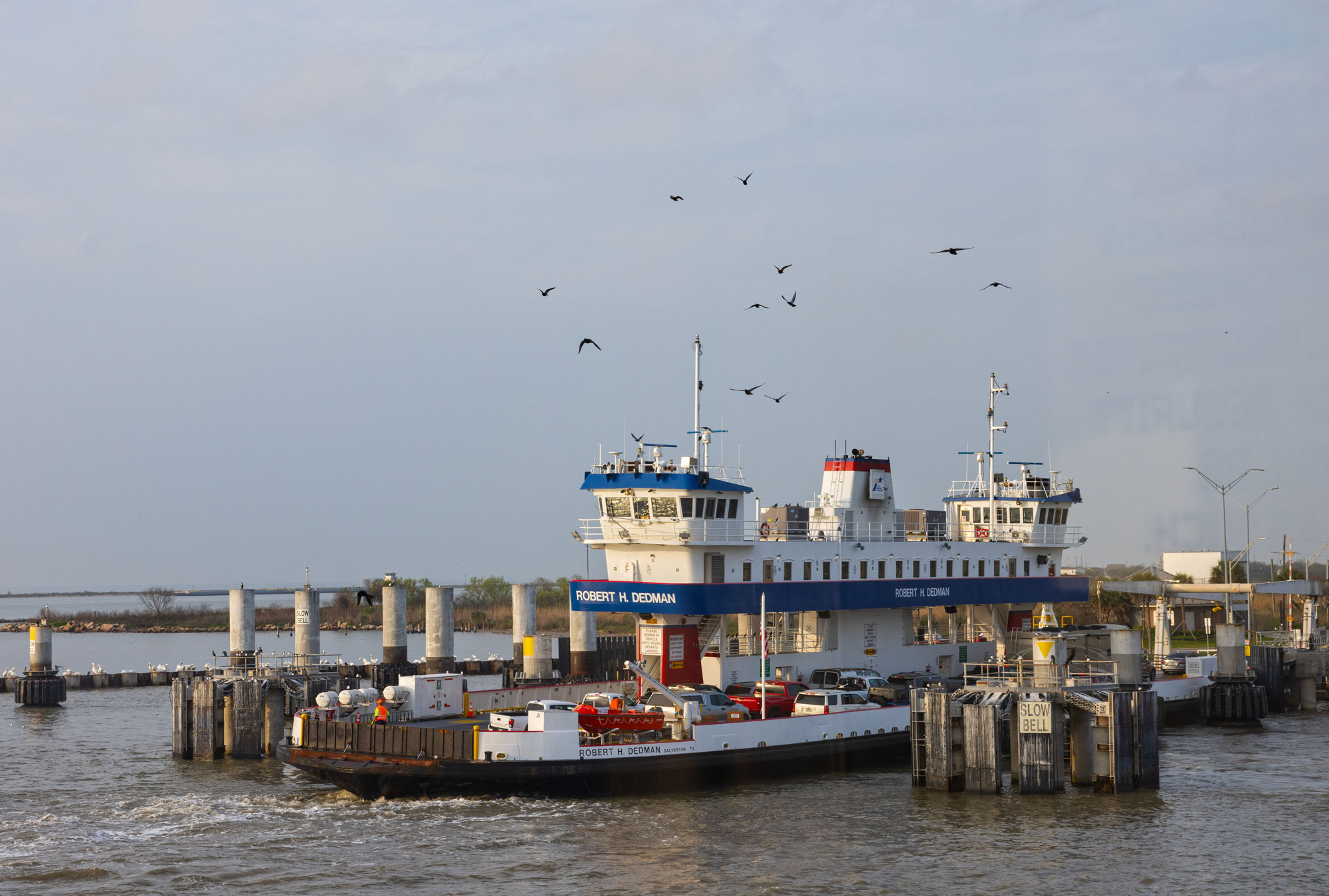
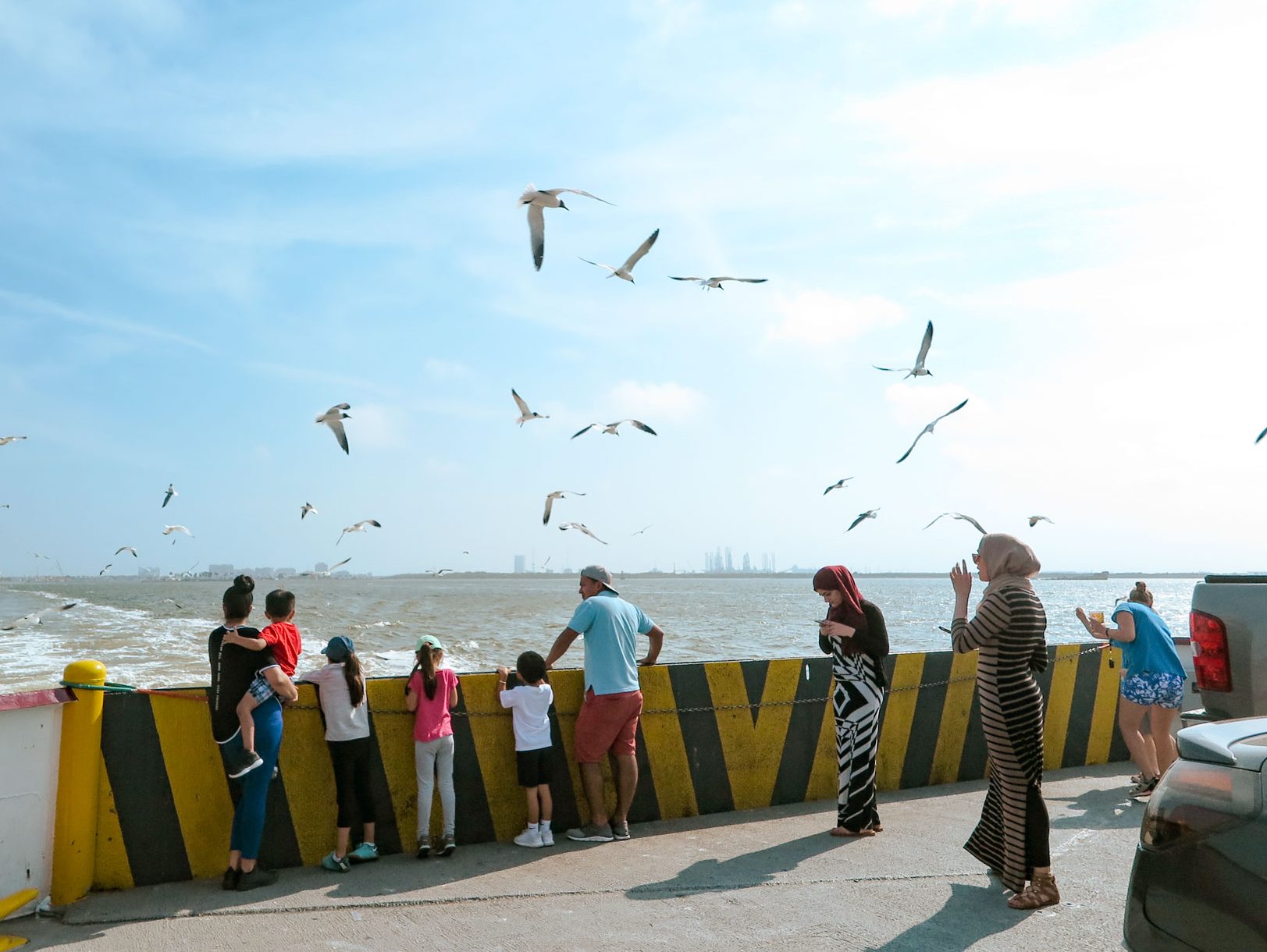
I have never been a boat girl. Still, one rainy Sunday morning in April, I found myself riding a vessel in Galveston Bay alongside a horde of commuters and cars with seagulls flying overhead, begging for food. It was my inaugural journey on the Galveston-Port Bolivar Ferry, which connects State Highway 87 between Galveston Island and the Bolivar Peninsula. My trip on the 264-foot Ray Stoker Jr. is an unexpected thrill, even for a sea-timid ferry first-timer.
Galveston-Port bolivar ferry
Riders can board the ferry at 1000 Ferry Road, Galveston, or 123 SH 87, Port Bolivar. 409-795-2230; txdot.gov
This might be my first commute sharing space with shrimping, shipping, and cruise traffic, but for many, this 24/7 ferry service is a lifeline: The 2.7-mile connection has carried passengers and vehicles of all shapes and sizes for nearly 100 years.

For some, the ferry means access to recreational places like Moody Gardens, Crystal Beach, and weekend camping getaways at places like Camp Margaritaville; for others, it’s a necessity for employment, schools, hospitals, and shopping. Galveston has a population of over 50,000, while the Bolivar Peninsula has nearly 3,000 residents in beach communities including Port Bolivar and Gilchrist.
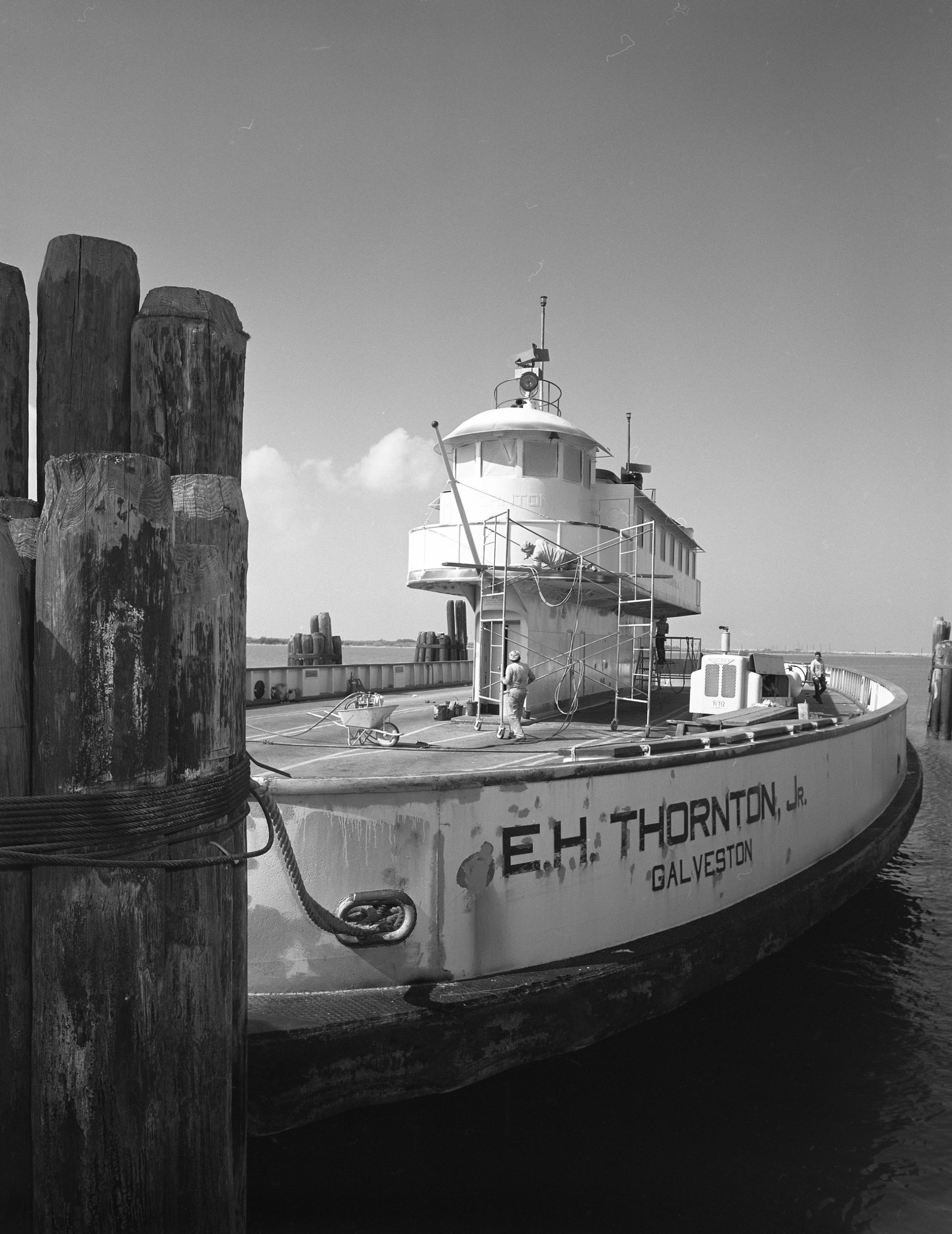
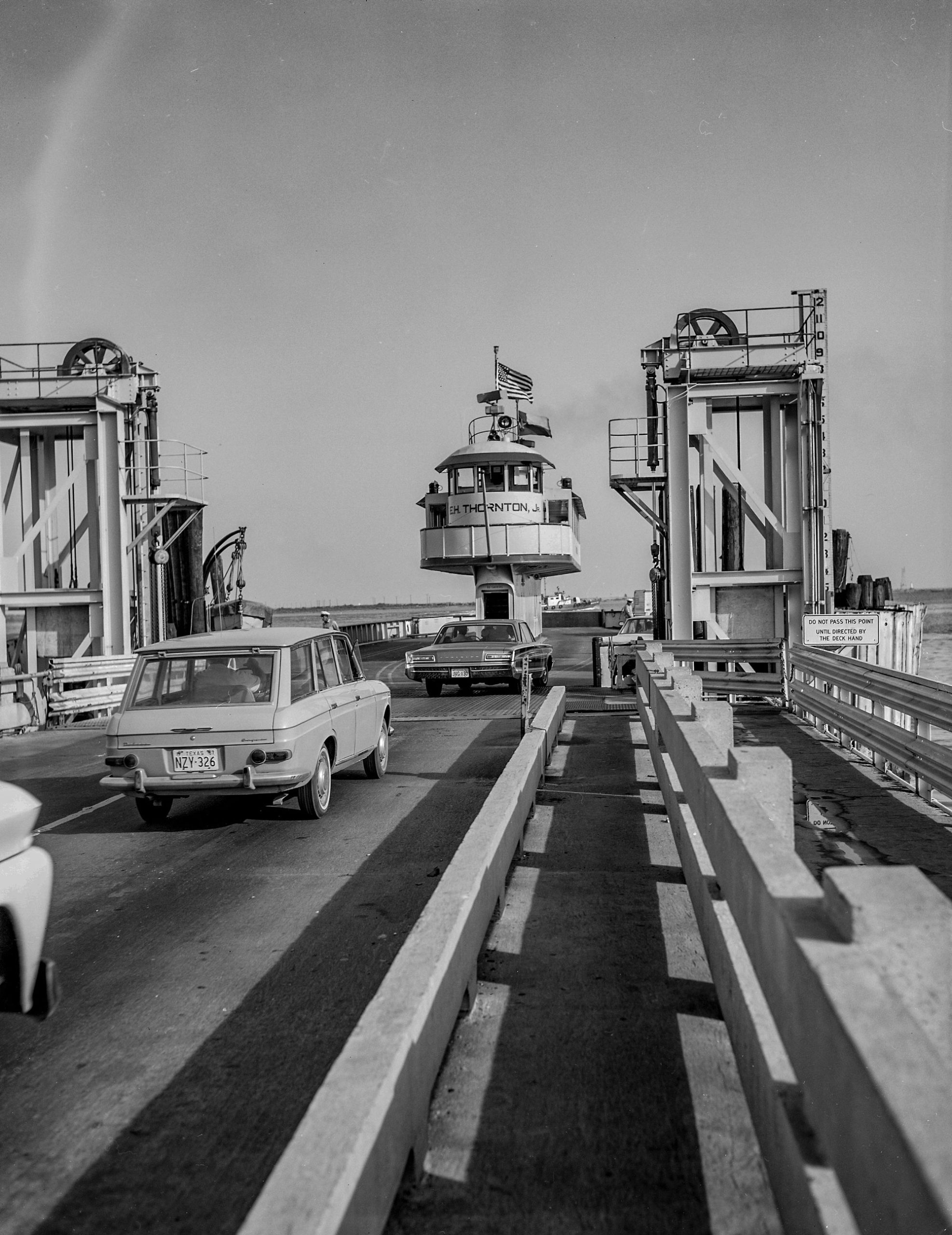
Ferry travel in the area is documented as early as the 1830s, but official service between Galveston Island and the Bolivar Peninsula debuted in 1930. In those early days, two maritime vessels called Galveston and Jefferson made six daylight-only round trips. Today, this free Texas Department of Transportation service operates around the clock at great demand.
In an average year, the Galveston-Port Bolivar Ferry carries nearly 5 million passengers on over 40,000 crossings. On busy days, there will be as many as six ferries working at a time, with traffic piling up during peak hours, holidays, and weekends. Tourists who want to ride the ferry without the burden of a vehicle are welcome to park and board on the Galveston side without waiting—a worthwhile endeavor.
On both sides of Galveston and the Bolivar Peninsula, drivers park in rows and wait, sometimes hours at a time, to hitch a ride across the channel. A one-way ride takes about 20 minutes; otherwise, it would take drivers nearly two-and-a-half hours to take the circuitous route from the Bolivar Peninsula back to Galveston. This staggering difference underscores the ferry’s value in connecting these two lands. Though there have been discussions of building a bridge to connect them, no such plans have ever materialized.
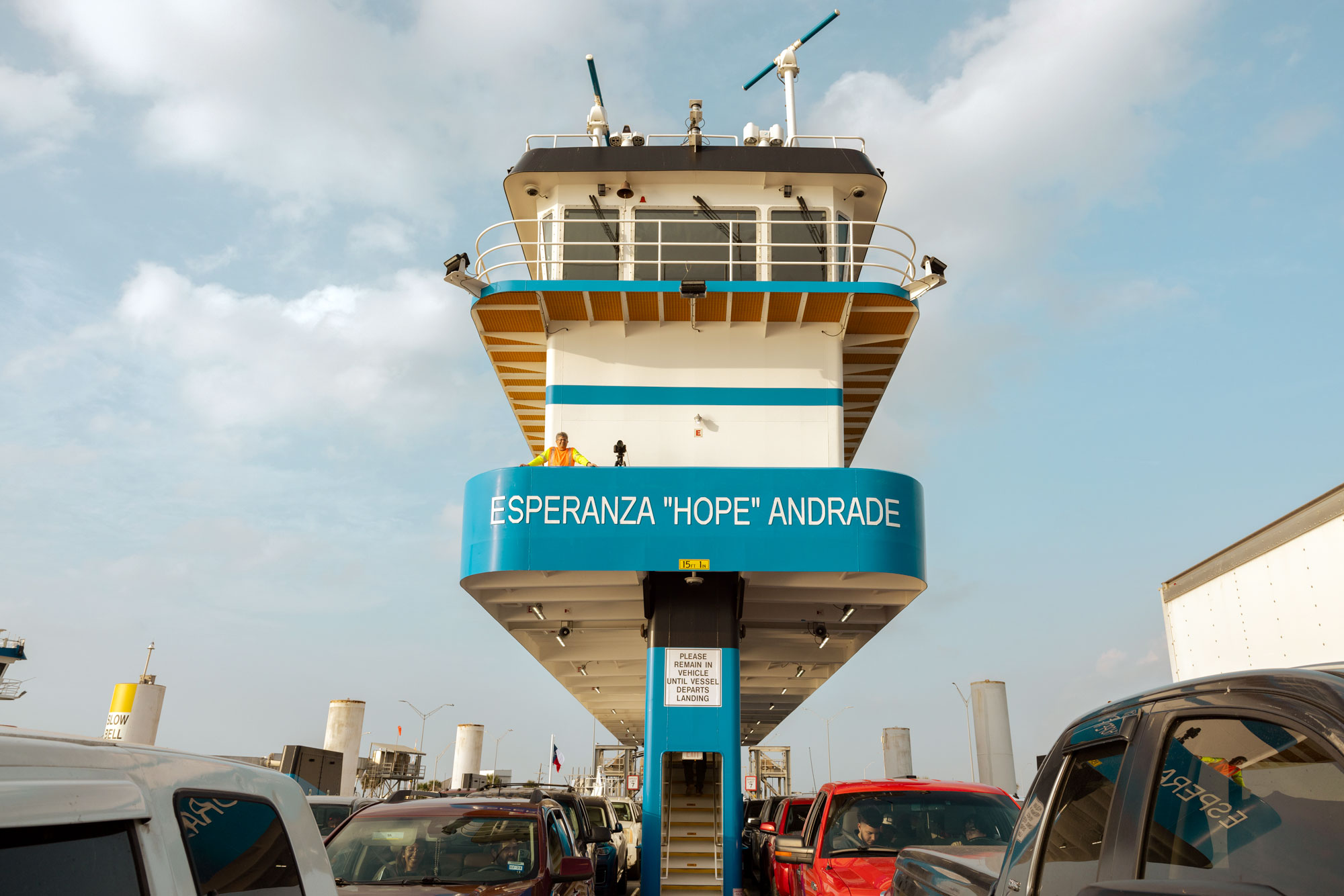
The ferry I rode on was introduced in the mid-1990s, but it’s not the newest member of the seven-vessel fleet. That would be the Esperana “Hope” Andrade—the first to be named after a woman—which was added last year. Navy veteran Capt. Larry Rosemon’s favorite is the orange-and-white Robert C. Lanier because of its namesake’s connection to the University of Texas at Austin.
Rosemon has worked on the Galveston-Port Bolivar Ferry for 32 years, even leaving retirement at one point to return to his position.
“I loved it so much I did it twice,” he says, perhaps only half-joking.
Rosemon started as a deckhand loading vehicles before eventually earning his captain’s license about 20 years ago. These days, Rosemon works as a relief captain—a commander who steps in for the permanent captain when they need rest or to shift cover—admitting that even after decades on the water, the view never disappoints.
“You really can’t beat it. You get to see the sunrise and sunset. You even have the dolphins off to the side,” he says. “But it’s also a huge responsibility. You have these lives and all this machinery on the line, and it’s one of the busiest waterways in the world in terms of ship traffic and small boat traffic. It’s not easy.”
Crystal Beach resident Donna Chafin says it’s a “never-ending effort” to have her family’s life revolve around the ferry schedule. Chafin moved to the peninsula seven years ago but enrolled her children in Galveston schools, meaning she’s taking a round trip on the ferry nearly every day.
Her commute, from leaving home to leaving the island, takes about an hour, which means everything from weekends in Houston to her kids’ sporting events is intertwined with ferry availability. However, Chafin has amassed a savvy self-care regimen to cope with the demand.
“I pray for the shady side of the ferry, and once we’re on, I read the news, check the weather, and put on my lotions and potions,” she says. “You always find a way to pass the time.”
A ferry novice but a driving pro, I imagined the peninsula-to-Houston journey home would be a scenic jaunt along the coast back to my familiar bustling city. And yet, even a stop at Cracker Barrel couldn’t help but make me think how much easier my life would be if I could just cruise the waterways and ditch this driving thing once and for all.