
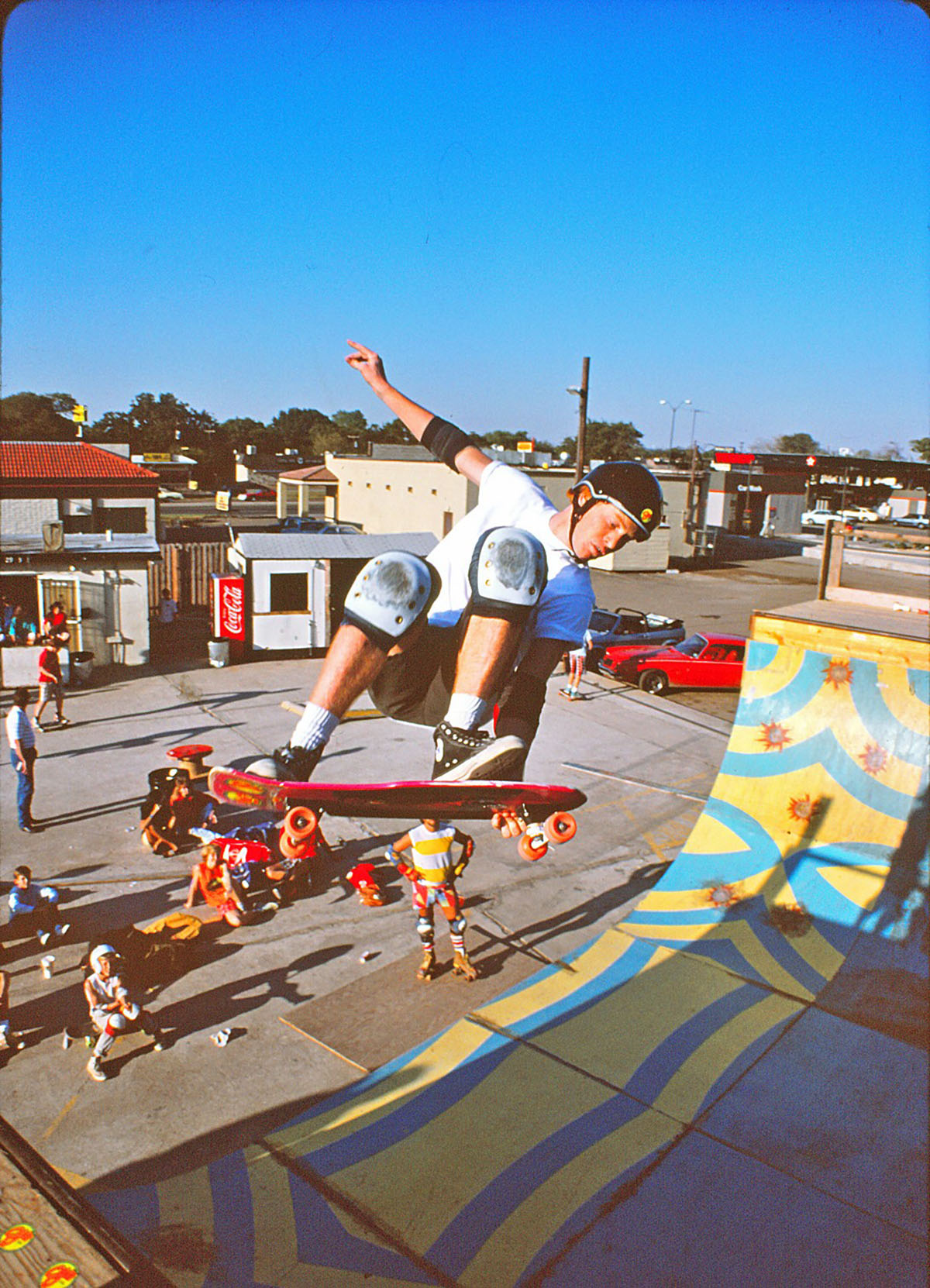
If you brought your skateboard to Bachman Lake’s Clown Ramp in the 1980s, you would have seen legends like Dallas’ Craig Johnson and Jeff Phillips launch into signature aerial tricks like the Phillips 66, a mid-air 360° turn. Even Tony Hawk, one of the greatest vertical skateboarders of all time, once soared beneath the airplanes taking off from neighboring Dallas Love Field Airport.
Now, decades after the ramp’s deconstruction in the late ’80s, the city of Dallas has poured its first permanent skate park over the site of original skating glory. Legislators, skateboarders, and hundreds of locals attended the Bachman Lake Skatepark opening on May 17. After ebbs and flows in skateboarding’s popularity, the Dallas park welcomes a new generation of skaters, attesting that the sport is here to stay. The legacy of Dallas’ forerunning skateboarders is set in stone by more than cement, though. Several former pros have joined forces to channel their countercultural ethos into serving their city.

“I saw some of the best guys in the world skating the Clown Ramp out at Bachman Lake,” says Mike Crum, one of the original X Games competitors, who began his career as a 12-year-old in Dallas. “It was my first real introduction to skateboarding.” Crum, who formerly ranked top ten globally among vertical ramp skaters, recalls that the ramp began with the purchase of a “Human Pinball Machine,” a game where skaters rode over red sensors embedded in a ramp to accumulate points. Once the ramp arrived in Dallas from Chicago, Jeff Newton, founder of the company Zorlac Skateboards, added the 90-degree elements that extended it into the vertical ramp that launched skaters to fame.
According to Crum, though, the infamous ramp wasn’t the beacon summoning skaters to the park: It was the feel of the place. “It was a horrible ramp—it was fiberglass, it was slippery,” he says. “It was the scene—the best scene in the community.” Across the street, a then sketchy strip dealt in drugs and adult shops. But, with its 24-hour lights, the Clown Ramp gave skaters a place to focus their energy, creating their own skateboarding sanctuary. Skateboarders would gather at the ramp’s corner to cajole new skaters to drop in, regardless of their skill level. The ramp provided a home to runaways searching for authenticity in the underground skateboarding scene. Live music amped up the crowd at the renowned “Shut Up and Skate” contests, which drew national pros and local skaters alike. The atmosphere at the ramp—where drivers showed off their cars, skateboarders innovated new tricks, and everyone was welcome—popularized Dallas’ underground skate scene.
The skateboarding culture in the ’80s consisted of the West and East coasts—and Texas. Texas could hang with the coasts because of its down-to-earth mentality, Johnson explains. Rather than feeling promoted, stylized, and marketable, Texas skateboarding rang true. “The whole Texas thing was: ‘Come down, have a good time,’” he says.
During the ’90s, though, Dallas’ skate scene fell dormant, largely due to skate parks’ liability risks. Although temporary interludes of skateboarding spiked in the city, with Jeff Phillips’ private skatepark in ’89 and the Texas Skateboarding Museum, Dallas lacked a public concrete skate park. In 2007, the city constructed a prefab park in Lakeland Hills, but the movable ramps, prone to rust and reflecting the heat of the Texas sun, didn’t signify a long-term commitment.
In the same year, a group of former elite skateboarders approached the city with funds for a public skate park; however, the city rejected the project. So, the skaters created their own private indoor park, which evolved into 4DWN, a South Dallas nonprofit that celebrated its 10th anniversary in May. Crum and Rob Cahill, a former pro street skateboarder, co-founded the skate park and urban farm, which rescues and distributes healthy food in one of Dallas’ harshest food deserts.
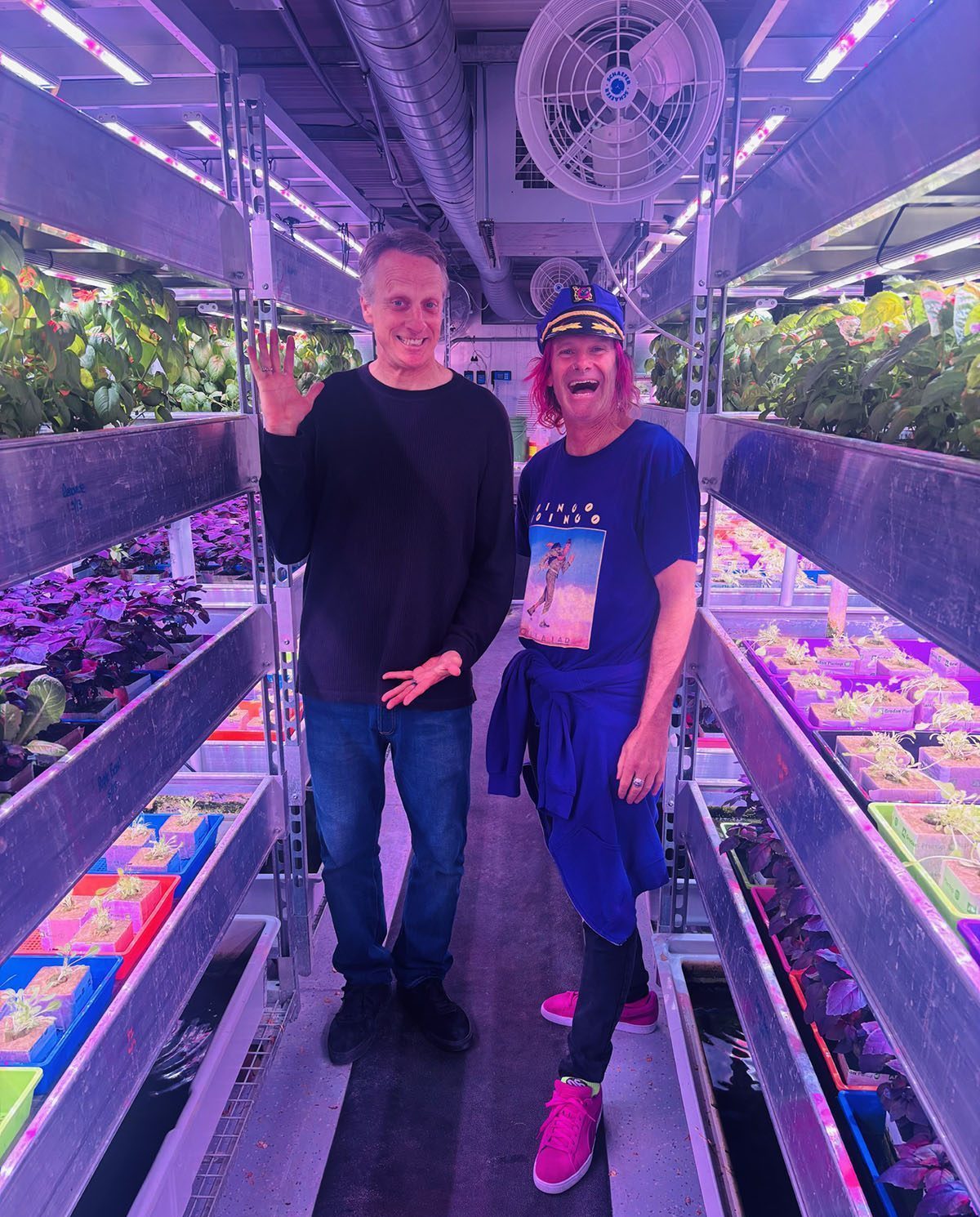
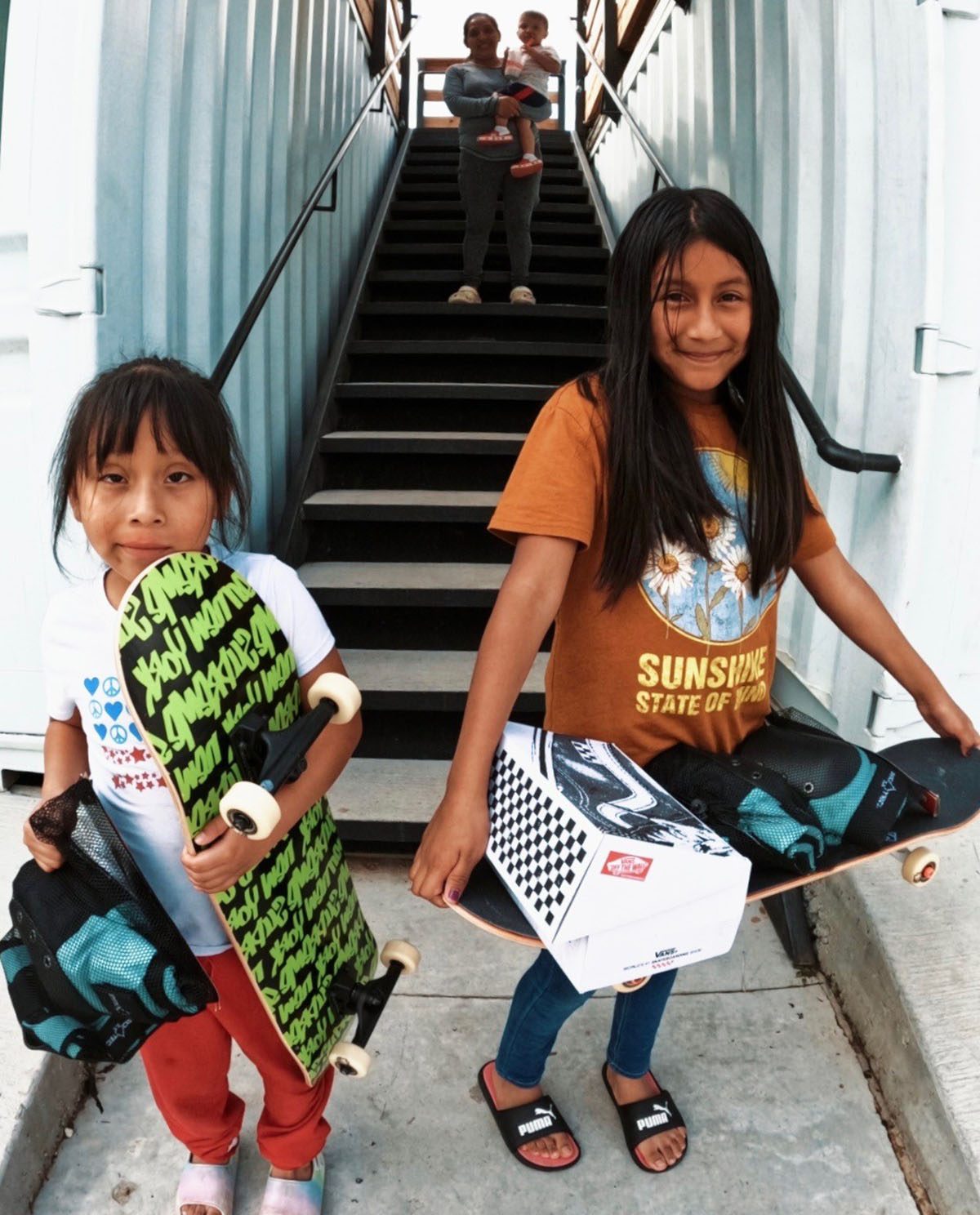
“We jumped in hard into, not ‘What we can do for skateboarding?’ but more of ‘What we can do as skateboarders for the community?’” Crum says.
The space, which houses the only free, public, professional vertical ramp in America, also hosts arts shows, concerts, biweekly volunteer gatherings, and cookouts. Microgreens and mushrooms grow beneath the vert ramp, and the adjacent lot cradles a compost farm for inedible rescued food. The resting place for the Clown Ramp’s remains, 4DWN has also created a vibrant skateboarding hub of its own. Skateboarders have always been considered countercultural, but Cahill has redefined the moniker, creating a space where skaters operate outside of a mainstream culture that prioritizes fame and fortune by serving their neighbors. “We’re doing things because we decide to do it,” says Cahill. “We decide what’s cool. So, what if we decide being of service and being helpful is cool?”
Both the Bachman Lake Skatepark’s grand opening and 4DWN’s 10-year anniversary celebration were held the same day. Famous skateboarders, ranging from 11-year-old prodigy Mazel Paris to 51-year-old Olympian Andy Macdonald, commuted from Northwest to South Dallas to skate both events. Dallas’ pro skateboarders, including Johnson, also traveled full circle to perform tricks in the new Bachman Lake Skatepark where the Clown Ramp once stood.
“It’s been 40 years since the Clown Ramp, but I’m still here, and I’ve been waiting, and I’m glad it’s here,” says Johnson. In addition to keeping the underground skateboarding scene alive in Oak Cliff, Johnson ventures above ground at 8 a.m. on weekends to make use of the Bachman Skatepark with his childhood skateboarding friends and their sons. “Bachman Park is the best North Texas park by far, by far.”
The park’s proximity to the Bachman DART Rail station makes it accessible to kids all over the metroplex. One young skateboarder, Seren Long, a 14-year-old who aims to someday compete in the Olympics, appreciates having a place to practice new techniques. Since the park is built with elements for both street and transition skaters, combining street’s stairs and rails with transition’s ramps and bowls, she can skate with her friends who prefer different styles. Having both a small and large stair set allows her to perfect tricks before scaling up. Long hopes the park will bring skateboarding competitions to Dallas. “It’s a perfect skate park for competitions, or for beginners, or advanced skaters, or really anybody,” she says.
Dallas’ flagship skate park was constructed in what the Trust for Public Lands identified as a park desert. District 6 Parks and Recreation representative Tim Dickey says that thousands of the kids living in Bachman Lake apartments lack recreational amenities. “Those kids get neglected and have been neglected for years by the city,” he says, adding that he interprets the skate park and its neighboring new aquatic center as good signs for the community. “We’re not forgotten. We’re not the stepchildren of Dallas over here, and I hope it continues. ”