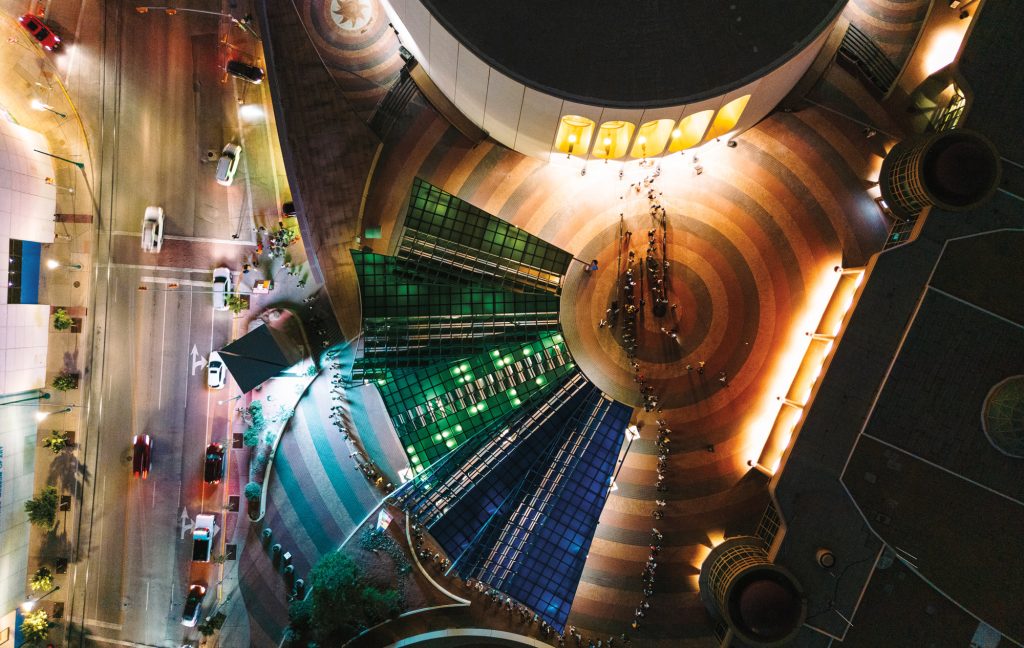

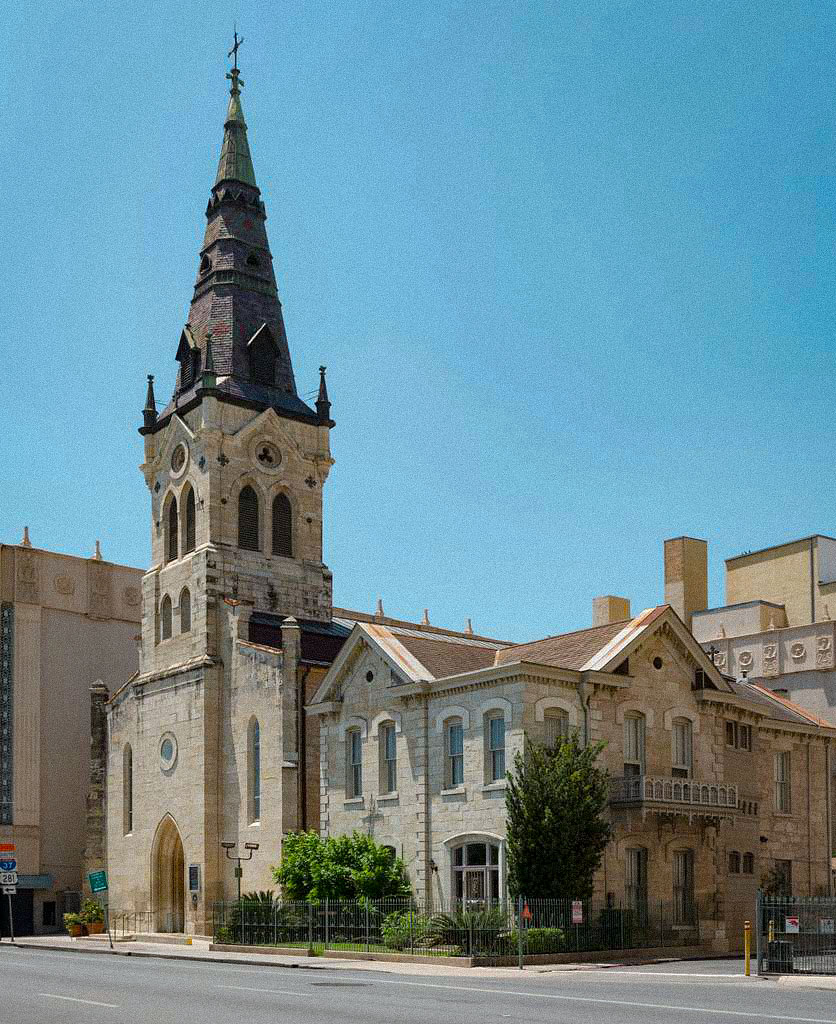
Every day at noon the bells of St. Joseph’s ring out over the din of downtown San Antonio. The 154-year-old Catholic church on East Commerce Street has been curiously enclosed on three sides by the Shops at Rivercenter for decades, yet its bells are heard for several blocks around as their peals join the cacophony of construction, birdsong, and passing traffic.
St. Joseph’s Catholic Church
Opens daily for quiet visitation 10:30 a.m.-12:30 p.m.
623 E. Commerce St., San Antonio. 210-227-0126; stjsa.org
On the next block, tourists pile into busses all day. A tour guide, Garrett O’Rourke, likes explaining how the church once literally stood its ground against Joske’s, a former retail giant that wanted more land. “I also say that it’s worth a look inside,” he says. “It’s beautiful.”
St. Joseph’s stands today because of the parishioners who saved their church from the wrecking ball 80 years ago. Their adversary was the Joske Brothers Company, which owned a shopping emporium on Alamo Plaza, near the Menger Hotel and the Alamo. By March 1945, Joske’s had expanded right up to St. Joseph’s west property line; the company sought purchase of the church building and its adjacent rectory, and San Antonio’s Archbishop Robert E. Lucey wasn’t opposed to selling. Until, that is, an impassioned letter from St. Joseph’s parishioners voiced “emphatic opposition to the sale and abandonment and the eventual destruction and wreckage of St. Joseph’s Church.” Lucey stopped negotiations, informing Joske’s: “Since the decision of the people was unanimous it would seem that nothing further can be done.”

Joske’s expanded behind and to the east of St. Joseph’s as some San Antonians playfully call the church “St. Joske’s,” a nickname that has stuck long after the store went out of business in 1987. That property changed hands several times (it’s been the Shops at Rivercenter since 2016), and the church added a two-story parish center to its tiny lot in 2017, leaving St. Joseph’s snugger than ever.
“It’s unfortunate to have this beautiful church tucked into a concrete block,” says Beck Williams, a student at San Antonio’s Trinity University who has attended services at St. Joseph’s and happened to be there that day I visited the church in April. “But I think it was noble that the parishioners didn’t let their church be taken over by commercial developments.”
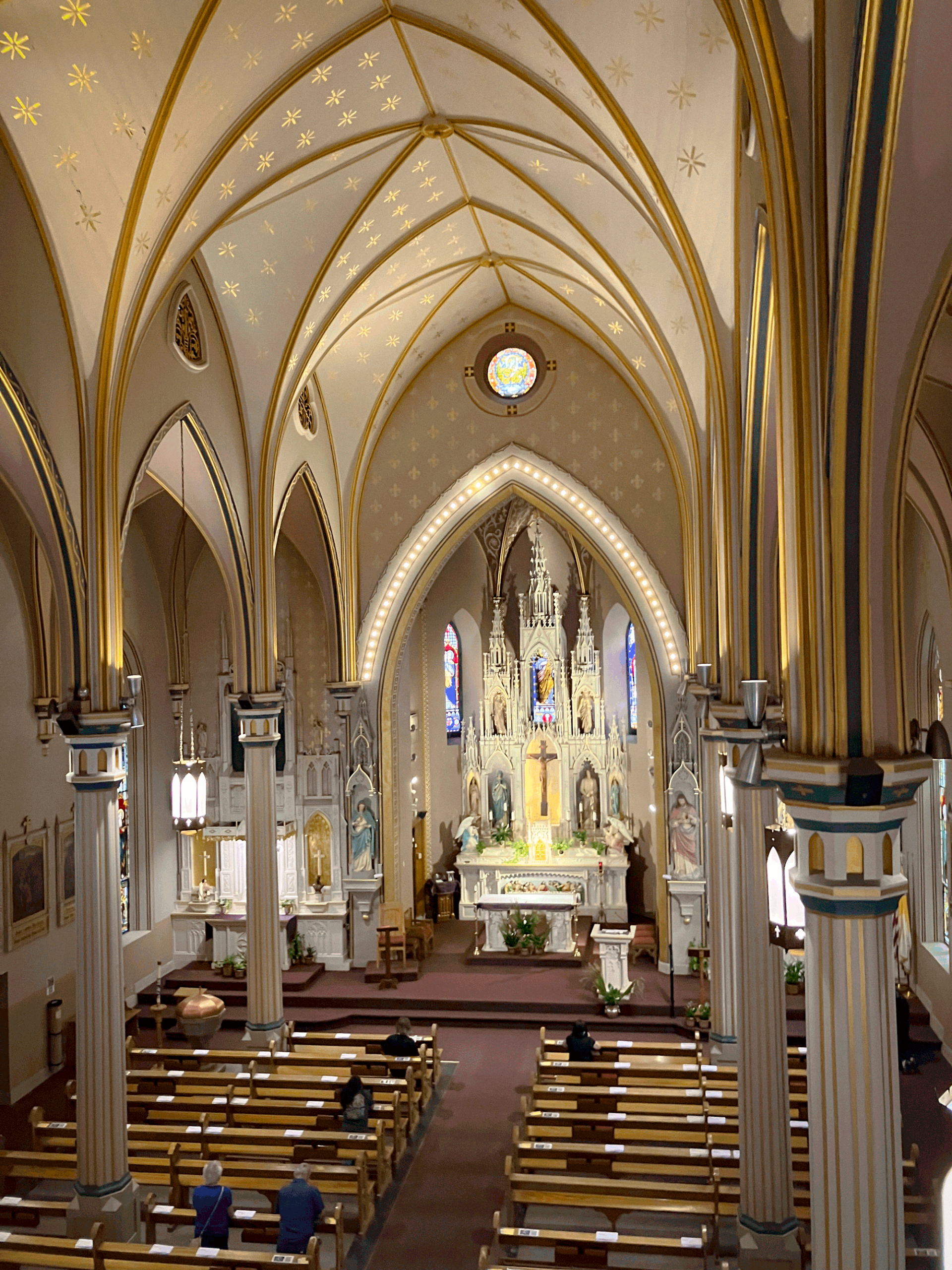
In addition to holding daily mass, the church opens two hours each morning for visitors to pray or just admire what those parishioners fought so hard to keep.
St. Joseph’s is the fourth oldest Catholic parish church (after San Fernando, St. Mary’s, and St. Michael’s) erected within San Antonio. Built by and for a growing German community in 1871, it was an early example of Gothic Revival architecture before the style was widely popularized in the city. After original architect Gustav Friesleben resigned, the parish replaced him with Theodore Giraud, who’d previously designed St. Mary’s Cathedral in Galveston for the first bishop of Texas.
The bell tower was handsomely constructed from locally quarried limestone but contained no bells until 1875. The impressive spire was added in 1898 and designed by James Wahrenberger, the first native Texan architect to earn a professional degree in architecture. In 1912 the sacristy at the back of the church was enlarged according to plans drawn up by Leo M. J. Dielmann, among San Antonio’s most celebrated architects of the 20th century.
Today, beneath 52-foot-tall painted and stenciled ceilings, the church interior is ornately adorned with antique statues and locally carved Gothic altars. During the 1880s and ’90s, Father Henry Pefferkorn painted the framed canvases, Annunciation and Assumption, behind the side altars and the 14 stations of the cross lining the walls. He also designed the choir loft and acquired the first pipe organ, from which the original casing and some pipes remain in use.
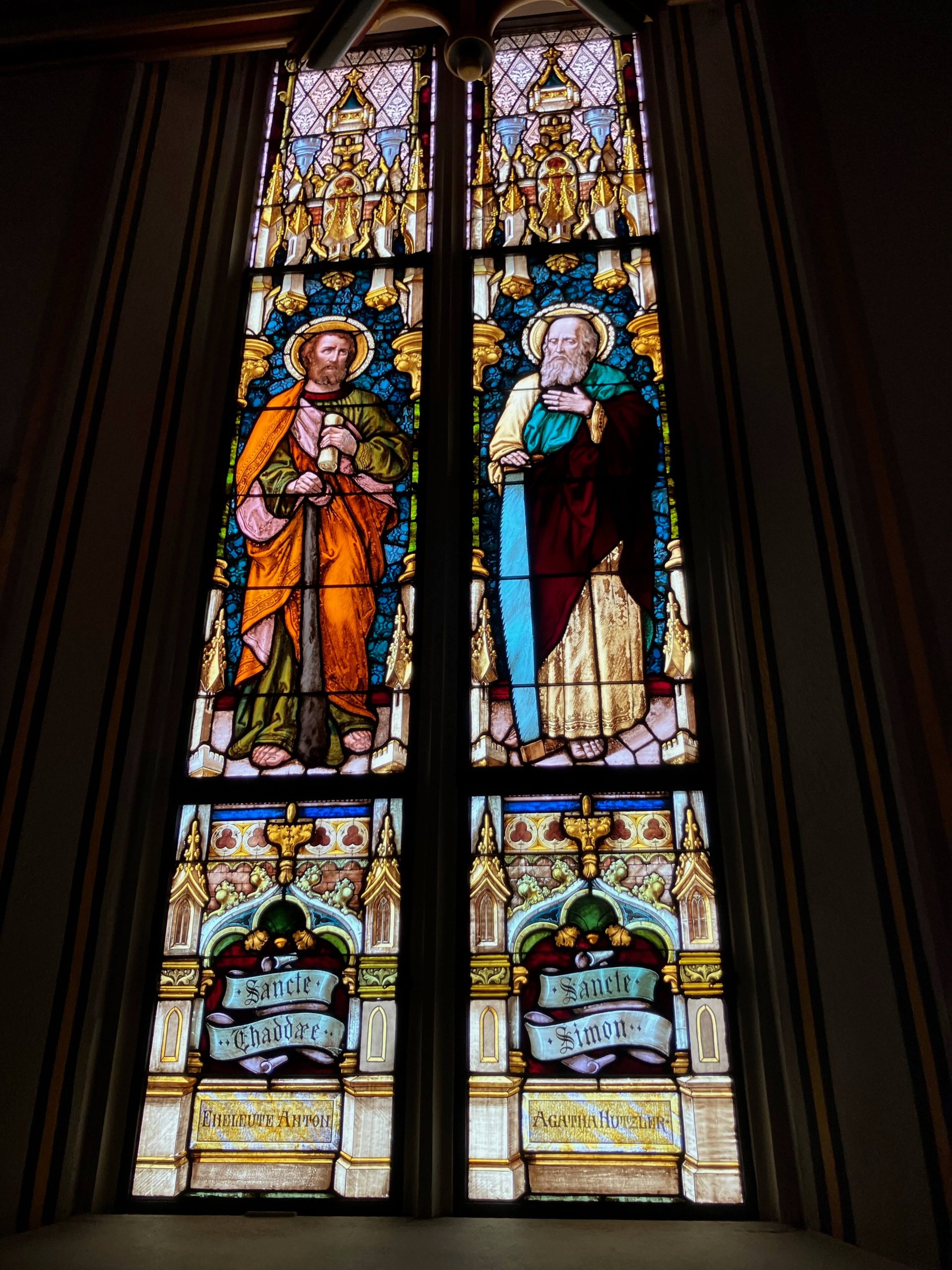
Most of the richly colored stained-glass windows were made in Bavaria at the turn of the 20th century and preserve names of early German parishioners who helped establish the parish.
Although most people from the old German neighborhood moved away long ago, their church remains an enduring monument to all the devoted parishioners. The bells of St. Joseph’s still ring every day at noon, welcoming guests to pray inside. And until further notice, it will remain quite the oddity of urban development. On occasion, the pen is mightier than the wrecking ball, which is why St. Joske’s still stands.