
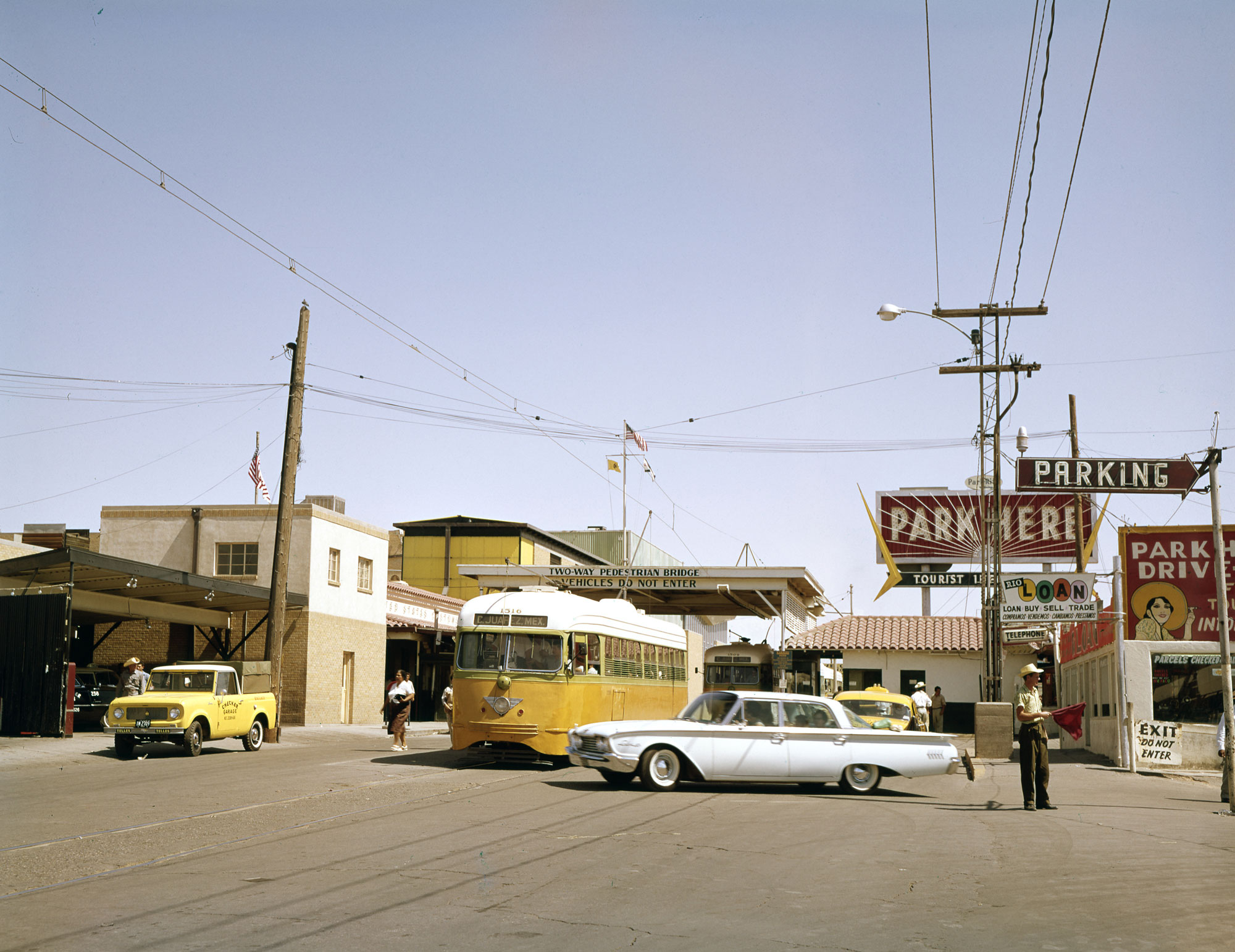
Over the years, El Paso has been known by many names. Some are self-explanatory: “Sun City,” “the Boot Capital of Texas,” “the 915”—after the city’s area code. Others require some context, like “the Six-Shooter Capital,” and “Sin City,” which refer to El Paso’s past reputation as a lawless Wild West frontier.
But one nickname continues to confound. There is no single unifying theory on why El Paso is called “El Chuco.” Some argue it refers to an obscure shoe company. Some say it recalls a 17th century Christian mission. Others still think it is a pejorative for the city itself.
But for many, El Paso is called “El Chuco” because it was the origin of Pachuquismo, a popular cultural movement in the 1930s and 1940s. Pachuquismo saw Mexican and Mexican American youth—known as Pachucos—rejecting assimilation into American culture by donning wide-shouldered suits with dramatic silhouettes, loose high-waisted trousers, and long jackets that draped across their bodies.
They danced to swing music, listened to jazz, and spoke caló, a dialect from the Iberian Romani that was brought to Mexico by the Spanish. At the Texas/Mexico border, it transformed into a mixture of English, Spanish, and the indigenous language, Nahuatl.

“Growing up here in the border land, it was just a part of your life,” says Victor Guzman, a member of the 915 Pachucos & Pachucas Unidos, a volunteer, nonprofit organization that supports the El Paso community through fundraisers.
Guzman recalls seeing his uncles dressed nicely in their pants and suits when he was a child. He bought his first suit at 16, and his mother gifted him a wide-brimmed, beaver-felt hat. When he wore the suit and hat for the first time, he says he felt like “a million bucks.”
Yvonne Patino, the organization’s president, also recalls admiring her family members in their suits. Now, she shares the culture with her son and wears similar suits. Sometimes she is dressed in narrow-cuffed trousers with a long chain hanging from the belt loops. Other times she dons a long skirt with suspenders and a flower, either attached to her hat or pinned to her hair.
“I loved when I would see my father and my uncles dressed in the suits and how they carried themselves with such respect,” Patino says. “When they put on that suit, I would see a glowing light.”
But Pachucos weren’t always viewed so positively, especially in the media. By the early 1940s, they would become more widely known as zoot suiters and would be associated with violence and juvenile delinquency because of the media’s coverage of the Sleepy Lagoon Trial of 1942, where 22 men of Mexican American descent were rounded up and put on trial for the murder of José Díaz despite a lack of evidence, and of the Zoot Suit Riots of 1943.
The media referred to the young men as “hoodlums” and depicted Pachucos as unpatriotic because of their excessive use of fabric during wartime rationing. However, PoloTeo Medina, a student at the University of Texas at El Paso researching Pachucos, explains that these depictions were racially motivated and untrue, especially considering that José Díaz was enlisted in the Army before his death and Henry Leyvas, one of the men on trial, was enlisted in the Merchant Marines.
“They were both in the military, they were about to leave,” Medina says. “They weren’t anti-American. They were proud to fight for America.”
The zoot suit couldn’t be contained to one city, though. For Medina, the cultural movement was able to make it to Los Angeles because of one important technological invention that transformed El Paso into a hub for transnational trade.
“We had the railroads,” Medina says.
In 1847, Congress proposed the first transcontinental rail route. The first route to reach El Paso was the Southern Pacific Railroad, which, in 1881 connected El Paso to Los Angeles. Later, additional railroads would connect El Paso to major cities like New York.
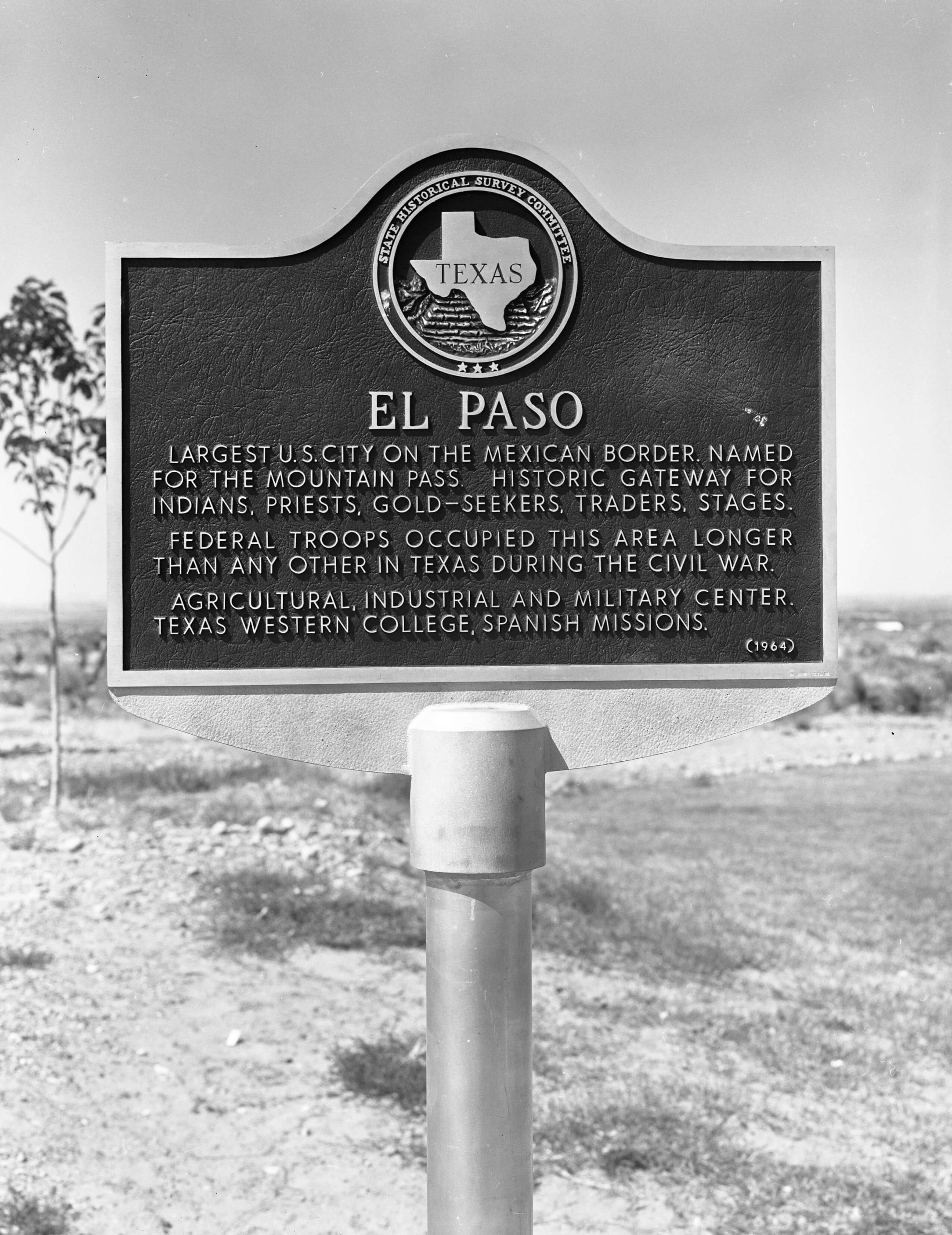
And in 1948, the famous El Pasoan bassist, Don Tosti, sang of just this in his song, “Pachuco Boogie” where he cheekily answered the question of where he was going with “Nel ese, pues si no voy ése, vengo del paciente ves. Un lugar que le dicen El Paso, nomas que de allá vienen Los Pachucos como yo.”
Or, “I’m coming from El Paso where Pachucos like me come from.”
As more railroads were built, opium was smuggled across the border, along with, Medina adds, the Pachucos who smuggled the drug across the country.
“You had a reason to hit the railroad, you had opium,” Medina says. “Not only that, but that gives a reason to why they were called Pachucos because if you break up Pachucos, ‘pa’ means ‘go to’ and ‘Chuco’ is short for ‘El Paso.’”
But the members of 915 Pachucos & Pachucas Unidos contest this depiction of Pachucos.
“Some people have this image of Pachucos, that they’re bad people or they’re in a gang, and it’s not true,” Patino says. “We’re very humble people and we’re here to help the community and at the same time keep our culture alive.”
To Patino, the word “Pachuco” and “El Chuco,” came from other origins.
“Back in the days when people from Mexico would be crossing to come and work over here, they would be like, ‘Where are you going?’” Patino says. “And they would respond ‘pa’el chuco.’”
Many, including Guzman, have heard that the Mexican laborers who were coming to El Paso for work were coming to work at a shoe company in town. When they said they were going to “El Chuco,” according to the legend, what they were really saying was that they were going to “the shoe co.”
But Medina is hesitant to believe that theory; it’s too vague and there isn’t one specific shoe company to point to. He believes that “chuco” was a derogatory term used to describe El Paso since it’s similar to the Spanish word, “chueco,” or “crooked.” He even found a postcard that describes the city as “chueco.”
According to Oscar Rodríguez, a researcher of Native history in Texas and Mexico and the host of the radio show Caló: A Borderland Dialect, the shoe company theory also doesn’t add up.
During his research, Rodríguez learned about a town and a mission called Senecú del Sur that previously occupied part of El Paso following the Pueblo Revolt of 1680. The uprising drove Spanish missionaries and powers out of what is now known as the Salinas area of New Mexico, returning the land to the Indigenous communities there for 12 years.
The missions retreated to El Paso and established Senecú del Sur in the area. Following a sudden change in the course of the Río Grande in the early 19th century, the mission ended up on what became the Mexican side of the Río Grande, on the outskirts of Ciudad Juárez and El Paso. As Rodríguez explains, the general area became known as Senecú, and likely this name evolved into Chuco.
While the origins of the name “El Chuco” still remain obscured, the history of the Pachuco and its connection to El Paso continues to be celebrated and honored through the 915 Pachucos & Pachucas Unidos.
“In a way, it is a secret fantasy of every vato that grew up in the barrio to put on a zoot suit and play the myth of our elders,” Guzman says, referencing a famous line from Luis Valdez’s play Zoot Suit. “It’s paying homage to a group that, most of them are already gone. But their style, their music, is still here.”