


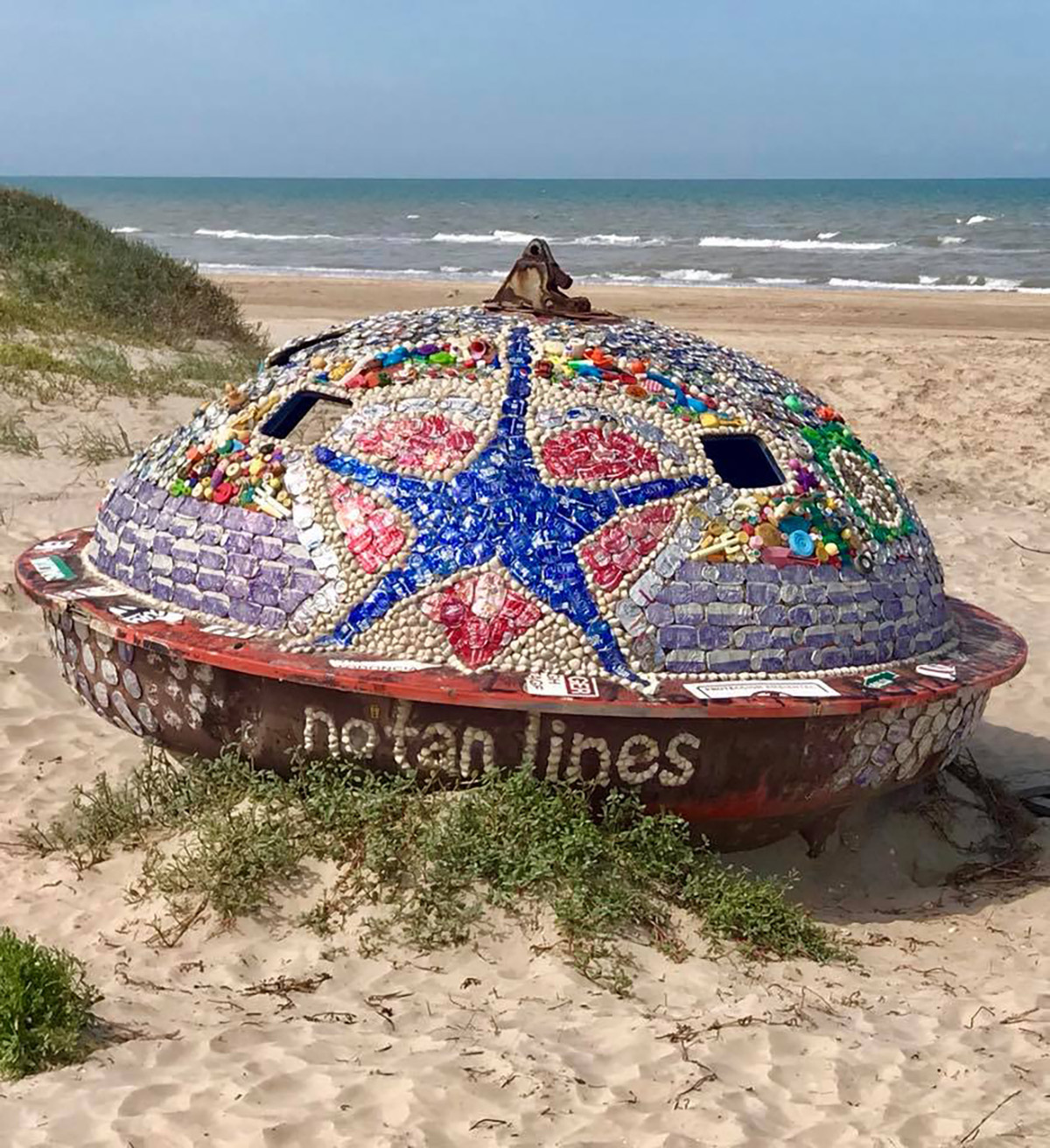
Nearly 6 miles north of South Padre Island’s Beach Access #6 is what appears to be the remains of a UFO crash site. Buried in the soft sand is an orange capsule, 14 feet in diameter, with holes punched into its hull, exposing a hollow interior and a pilot nowhere to be found. But a closer look at the mosaic of beer cans, bottle caps, and other trinkets decorating the surface of the spacecraft spells out its true purpose. The graffitied vessel is no spacecraft at all but an oil rig escape pod situated on SPI’s unofficial nude beach, known by locals as UFO Beach.
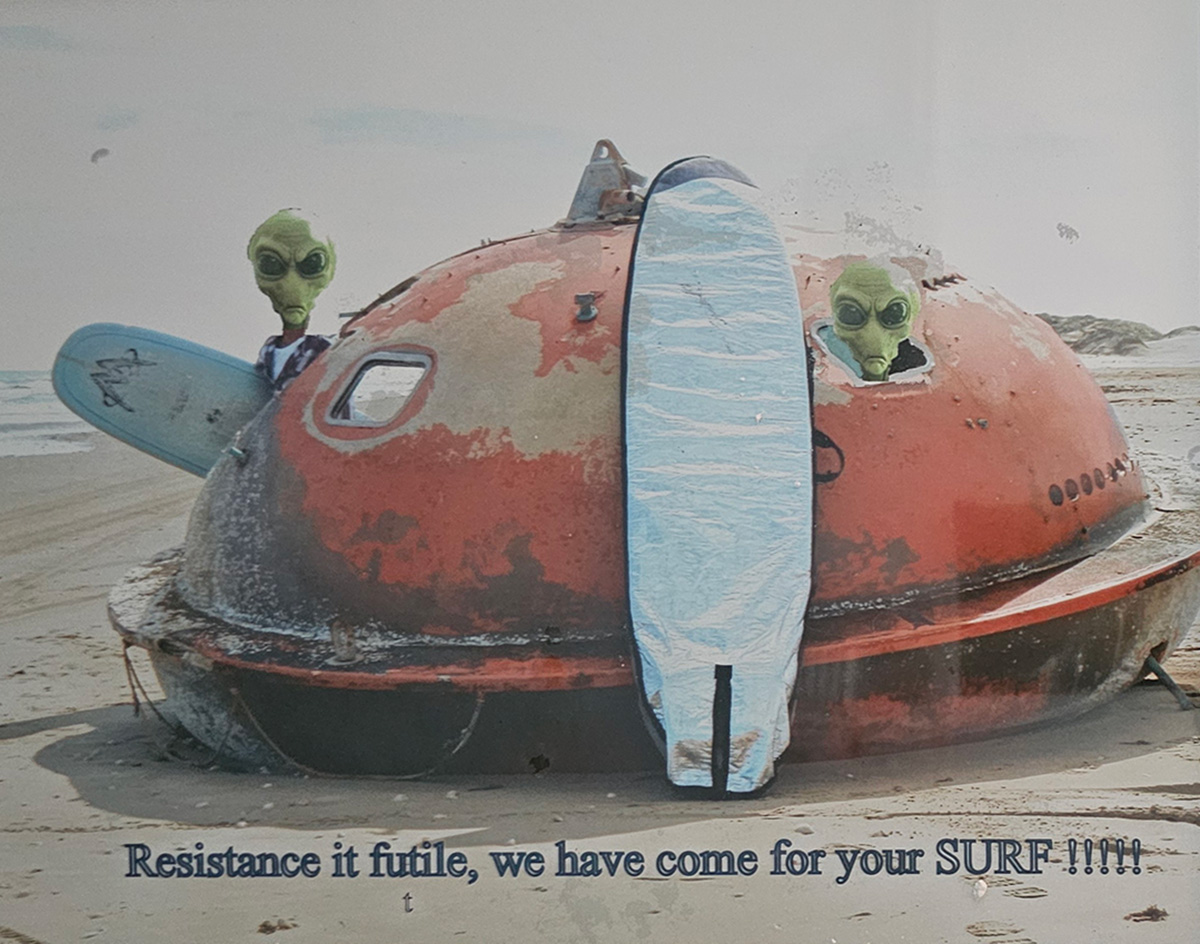
Tommy Saenz, known as Tiki Tommy in the area, is up early every morning to record the island’s beaches for his Facebook’s Surf & Beach Report which updates locals on the weather and conditions of SPI’s shores. Saenz says that the escape pod first washed ashore around 2003 and shared a picture that he took of himself and a friend inside the pod that reveals the craft’s original bright orange hue.
Little by little, the pod’s weathered surface was tagged with spray paint, including the word “nude” scribbled across its surface. This is when it was discovered by the late Doug Wicks, the artist behind UFO Beach’s iconic namesake.
“Believe it or not, Mr. Wicks loved to run around naked,” Saenz says. “The thing about Doug that got me the most though was that the gentleman would cruise the beach, pick up trash, dispose of it, and then he would keep the cans and plastic, and we would glue them onto the escape pod.”

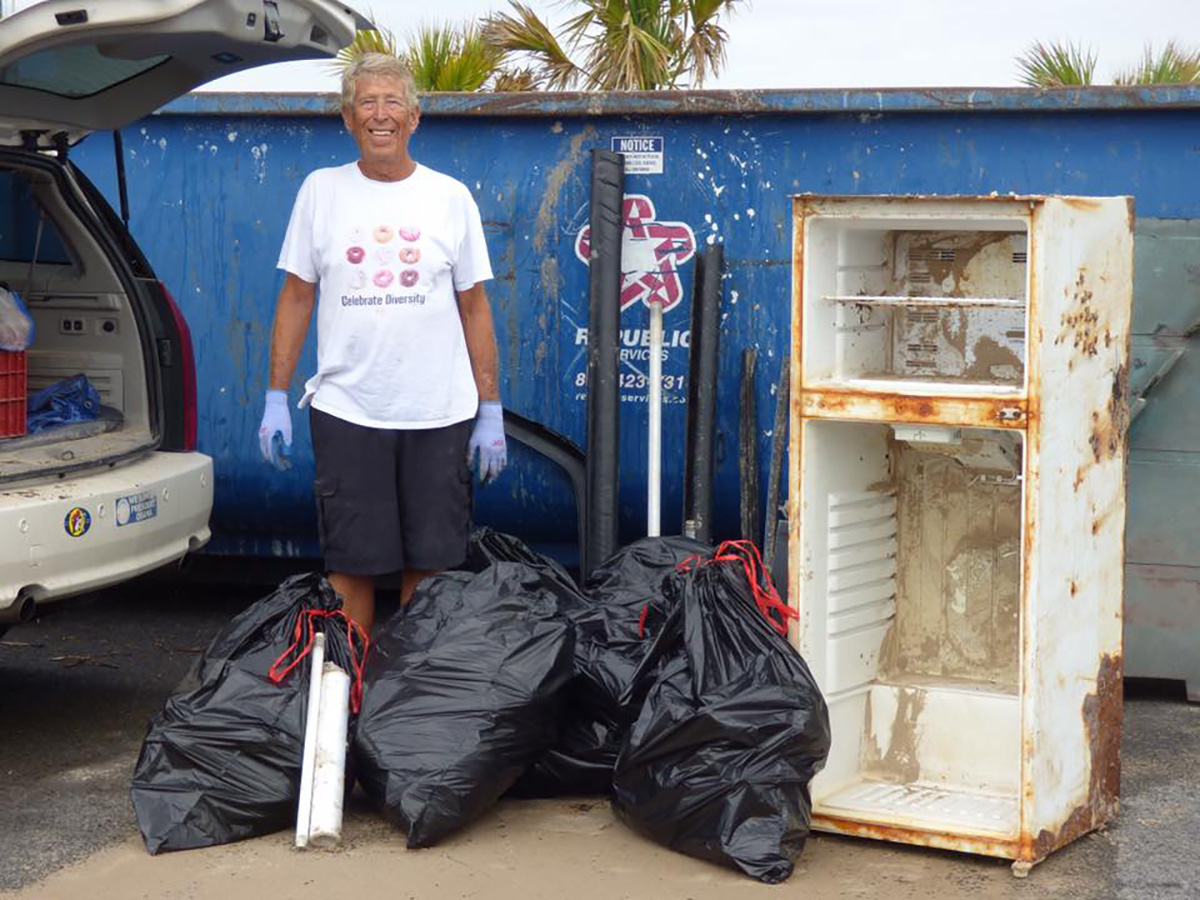
Wicks had plenty of trash to work with, too. Texas coasts accumulate 10 times more trash than other states lining the Gulf of Mexico, according to a 2018 study by researchers from the Dauphin Island Sea Lab and Mission-Aransas National Estuarine Research Reserve. Saenz typically heads toward the beach to surf and, along the way, looks for shells or objects that are interesting enough to catch his attention.
“I found some nice coral and some SpaceX parts,” Saenz says. “I even found a brick of marijuana one time, but it already had a cut in it, and it was full of water, so I just left it there.”
Artist Connie Lovell of Washed Up Texas, a nonprofit that takes truckloads of trash and transforms it into sculptures of South Texas coastal wildlife, often wanders along South Padre Island’s beaches in search of material for her art—elaborate pieces that often consist of around 6,000 pieces of trash. She’s found debris like a 25-year-old rabies shot tag from Veracruz, Mexico, along with bottle caps, bales of rubber dating to World War II, and toothbrushes.
“It always floors me that people don’t know that there’s that much trash in our ocean and that there’s that much trash washing up every day,” Lovell says. “When I take something that’s as big as one of my sculptures and people see it, I tell them this is nothing. This amount of trash is nothing compared to what’s in our ocean.”
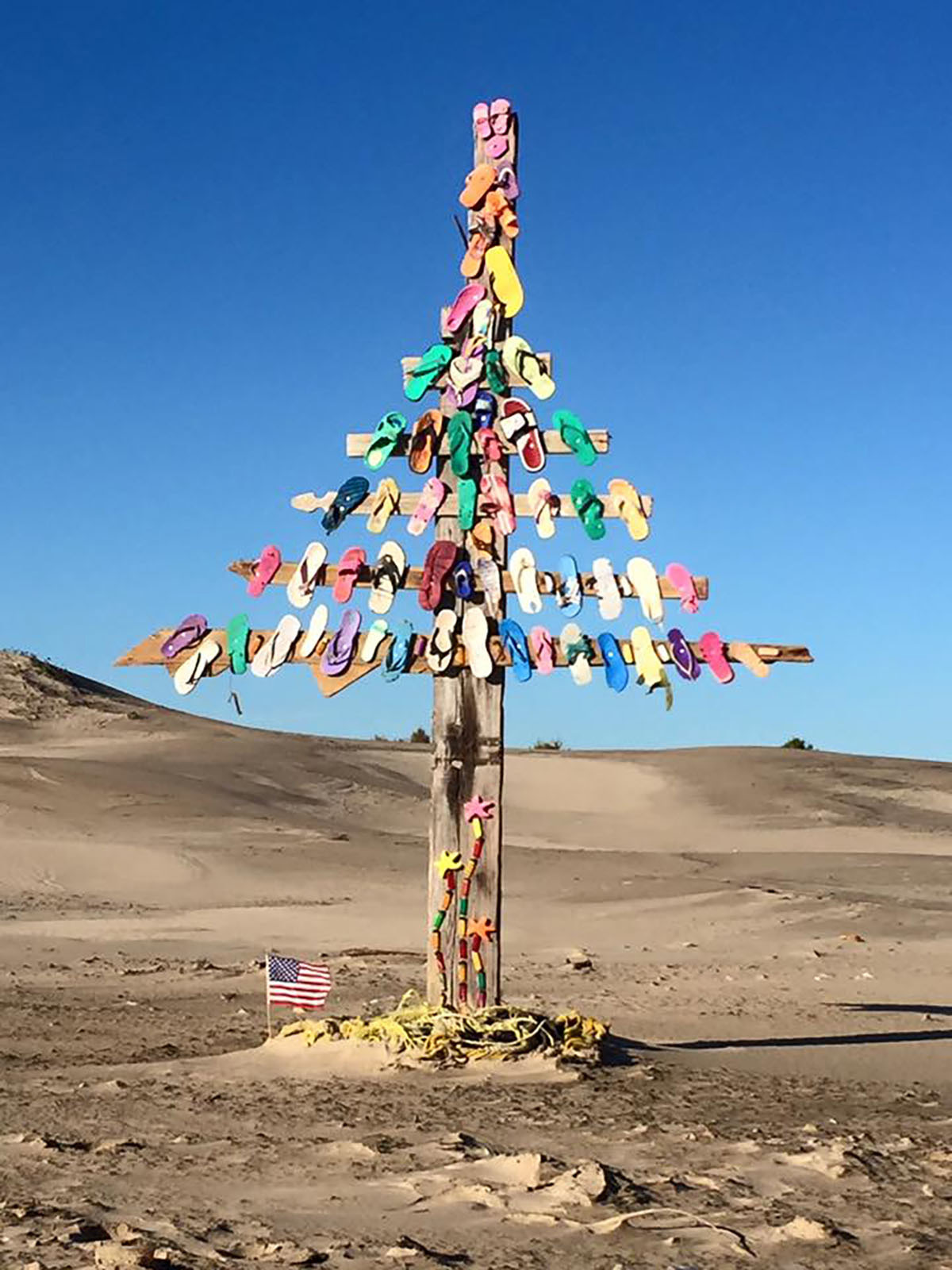
As litter continued to wash onto South Padre’s shores over the past decade, the UFO sculpture transformed. While Saenz doesn’t recall when Wicks first began his project, the UFO’s original graffitied surface was gradually covered by starfish, peace signs, and the phrase “no tan lines” made from pieces of repurposed trash. But Wicks’ art extended beyond the UFO landmark. Though some no longer stand, his works included enormous abstract sculptures made from hard hats and plastic buckets, as well as a Christmas tree molded out of old sandals.
Lovell stumbled across some of Wicks’ creations during her own treks for artistic material. Her favorite was a tree of hardhats that Wicks constructed that was partially destroyed during a storm. Lovell collected the hardhats that were ripped off by the hurricane and used them for her own art, though she had hoped to collaborate with Wicks before he died in 2018.
Despite repeated attempts to replicate the work that he created on the beach, Saenz says none have been able to capture the spirit of the originals. Still, visitors continue to flock to UFO Beach, drawn to take pictures with the remainder of Wicks’ original creations—and to avoid obnoxious tan lines.