
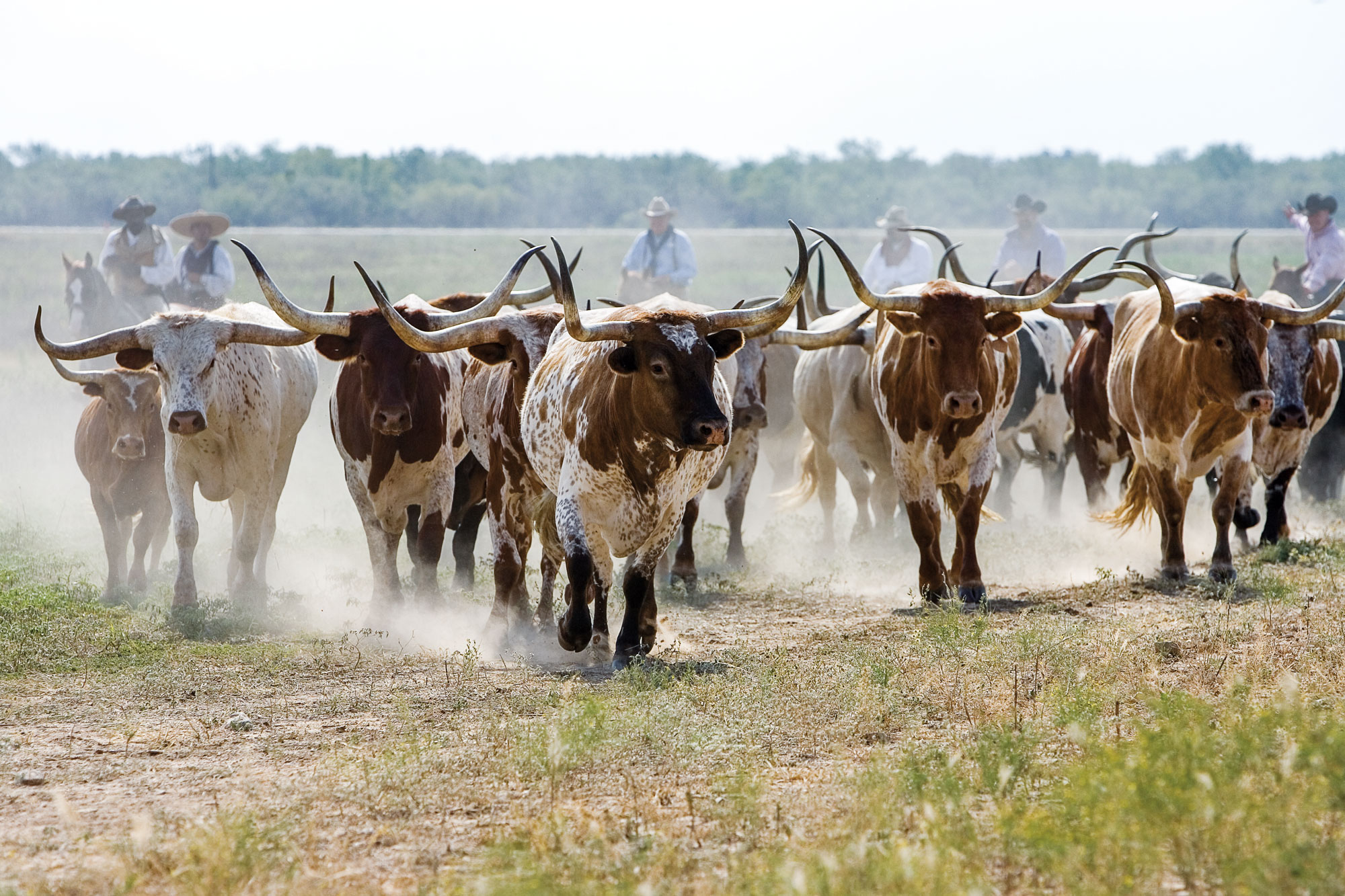
More than 100 years before the Goodnight-Loving and Chisholm trails became symbols of Texas’ cattle industry dominance, cattle drives were taking off across the state, potentially aiding in a war occurring over 1,000 miles away.
It seems improbable that Texas—not one of the 13 original colonies vying for independence or yet its own state—could contribute to the 1776 rebellion against England. But some historians believe that when Spain allied with France to battle the British along the Gulf Coast in 1779, ranchers from Spanish Texas drove cattle to Louisiana to provide a mobile food source for soldiers across the Southern front. Although historians and the ranchers’ descendants differ on how directly these drives aided revolutionary forces, the drives nonetheless reveal the origins of Texas ranching.

Jesse O. Villarreal Sr., author of Tejano Patriots of the American Revolution, traced his ancestry to the American Revolution through documentation of San Antonio’s founding in 1718. One ancestor, Cayetano Hernandez, numbered among the soldiers tasked with protecting a herd destined for the Spanish troops. Another, Carlos Martinez, sourced cattle for the Revolution from his land, one of Texas’ first private ranches. For Villarreal, telling their stories is about gaining recognition.
“It gives credit to our ancestors, that they helped with the Revolution,” Villarreal says. “If you don’t do that, they will never be mentioned.”
When Spanish settlers founded Bexar in 1718, in present-day San Antonio, they also established ranches. Soon after, immigrants from the Canary Islands, priests and soldiers from Spain and Spanish Mexico, and Indigenous mission residents laid the legislative and practical groundwork for future cattle drives.
“The first place of ranching in Texas is not King Ranch,” says Anthony Delgado, education chair of the San Antonio-based Canary Islands Descendants Association. “It is not Charles Goodnight and the trail drives that went to Kansas. It’s here, between the San Antonio and Guadalupe river valleys.”
By the mid-18th century, missions owned most of the cattle population and grazing land—millions of acres between the five missions in San Antonio and the two downriver missions, Espiritu Santo and Nuestra Señora de Rosario in Goliad. Ranchers protested the missions’ monopoly, and in turn mission padres accused Canary Islanders and Indigenous tribes of stealing cattle. Attempts to enforce laws and tax cattle caused further protests.
Despite these conflicts, Tejano ranchers and Indigenous precursors to vaqueros developed the industry that would underlie Texas’ persona. Frank de la Teja, the inaugural Texas state historian, says history often buries this segment of ranching lore as a “precursor” to Texas’ real heyday, when cattle drives turned from the South to the western American expansion. “The question is,” de la Teja says, “do we try to incorporate that earlier heritage into the overall fabric of the Texas identity?”
Before the Revolution, ranchers had routed herds to markets in Saltillo, Mexico. And although Spain had forbidden its territories in Texas and Louisiana from free trade, soldiers had illicitly traded cattle across the state border. So, when Bernardo de Gálvez, governor of Spanish Louisiana, requested cattle from Texas Governor Domingo Cabello y Robles in 1779, his plea had precedent. Though his letter does not mention troops, other correspondences and beef consumption records suggest that San Antonio’s cattle supplied the soldiers.
Not all the cattle drives that set out for Louisiana arrived at their destination. Native American tribes sometimes disrupted attempts to transport cattle. Hernandez, Villarreal’s ancestor, was killed by Comanches while collecting fodder for the cattle during one transport.
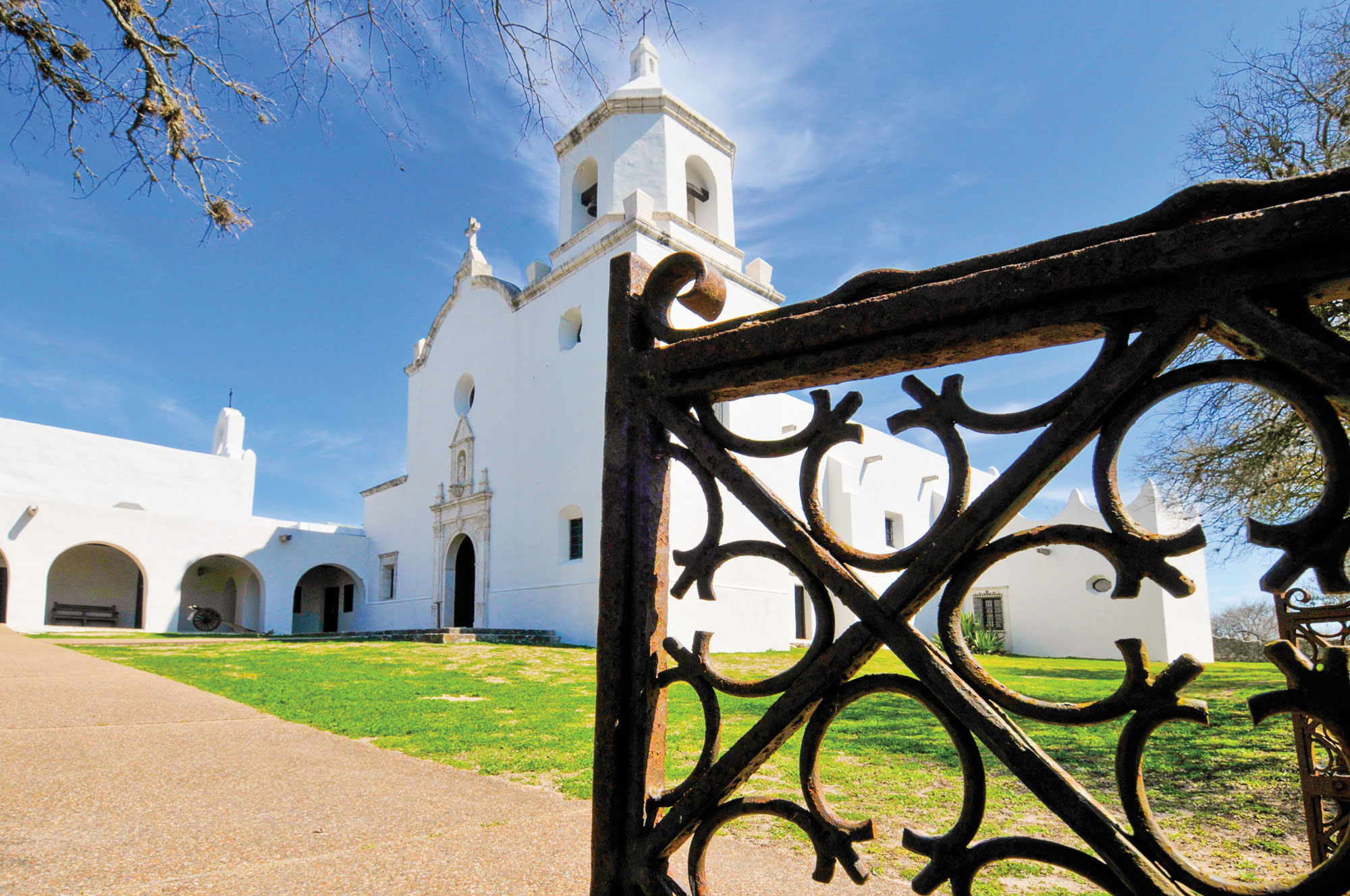
Archival letters in Austin, Louisiana, and Spain offer an idea of the total count of cattle Texas provided to the war effort, says Mary Anthony Startz, national chair of the Daughters of the American Revolution Specialty Research Committee. She estimates that Texas brought over several thousand heads to Opoleusas and Natchitoches in Louisiana. Likely traveling the Camino Real, a trail connecting Mexico to Louisiana, soldiers escorted the cattle over 12 drives between 1779 and 1782.
According to Delgado, the cattle sustained soldiers during pivotal battles in the Revolution. After defending Mobile, Alabama, in 1780, Gálvez’s soldiers engaged in one of the longest battles of the Revolution in Pensacola, Florida, which prevented British troops and ships in the South from reaching the colonies in 1781. Effectively, Gálvez blockaded the British from accessing the Gulf and the Mississippi River during the Revolution.
“When we were learning about the American Revolution, it was mostly things that happened in the 13 colonies,” recalls Joe Perez, a member of the Granaderos y Damas de Gálvez, a San Antonio organization founded in 1975 to educate the public about Spain’s role in America’s founding. “Yet Gálvez was defeating the British along the Gulf Coast and never losing a battle.”
Perez recalls growing up in the ’60s and ’70s unable to name a Tejano hero. “It’s important to me that for young Hispanic kids, if somebody asks them, ‘What did your people do? What did your heritage contribute?’” Perez says, “they’ll be able to tell them.”
While de la Teja remains skeptical that the archival evidence directly connects the cattle drives to revolutionary forces, he understands the desire to weave Tejanos into the story of America’s founding. “If we can tie ourselves to the American Revolution, it means we belong,” he says.
When Villarreal discovered that his ancestors had provided cattle to sustain the Spanish soldiers, he added their names to a growing list of Texas heroes on the Daughters of the American Revolution Patriot Monument at the Texas State Cemetery. He continues to link other descendants with their ancestors. “The more names we can put on that monument—they can finally get recognized for what they did,” Villarreal says.