First Light Books has only been open for three years, but it’s already become one of the little hearts that keep the city’s literary blood flowing. On a big moon evening too warm for February, the bookshop is holding its first Winter Salon, a party bringing local authors and patrons together to celebrate Austin’s writing community. I expect a good turnout. What I don’t expect is that the night will become, for me, a Dickensian trip—a visitation from the ghosts of my writing past.
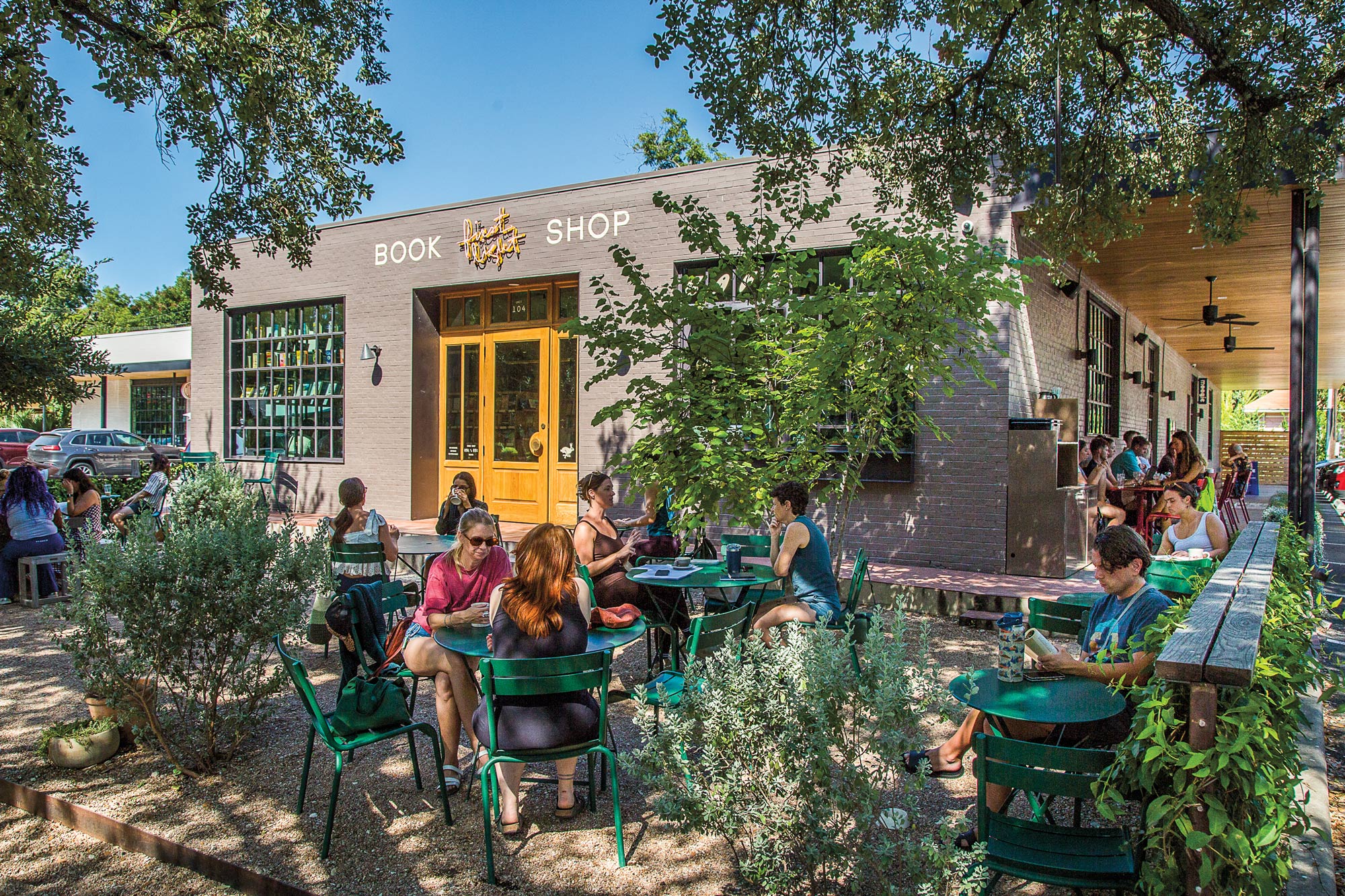
First Light shares space with Tiny Grocer and Allday Pizza on a corner at the center of the Hyde Park neighborhood, in a delightful mid-century modern building that used to house a post office. I remember its previous incarnation well. When I moved here from Venezuela in 2006, I rented an apartment blocks away, in a massive building full of University of Texas students.

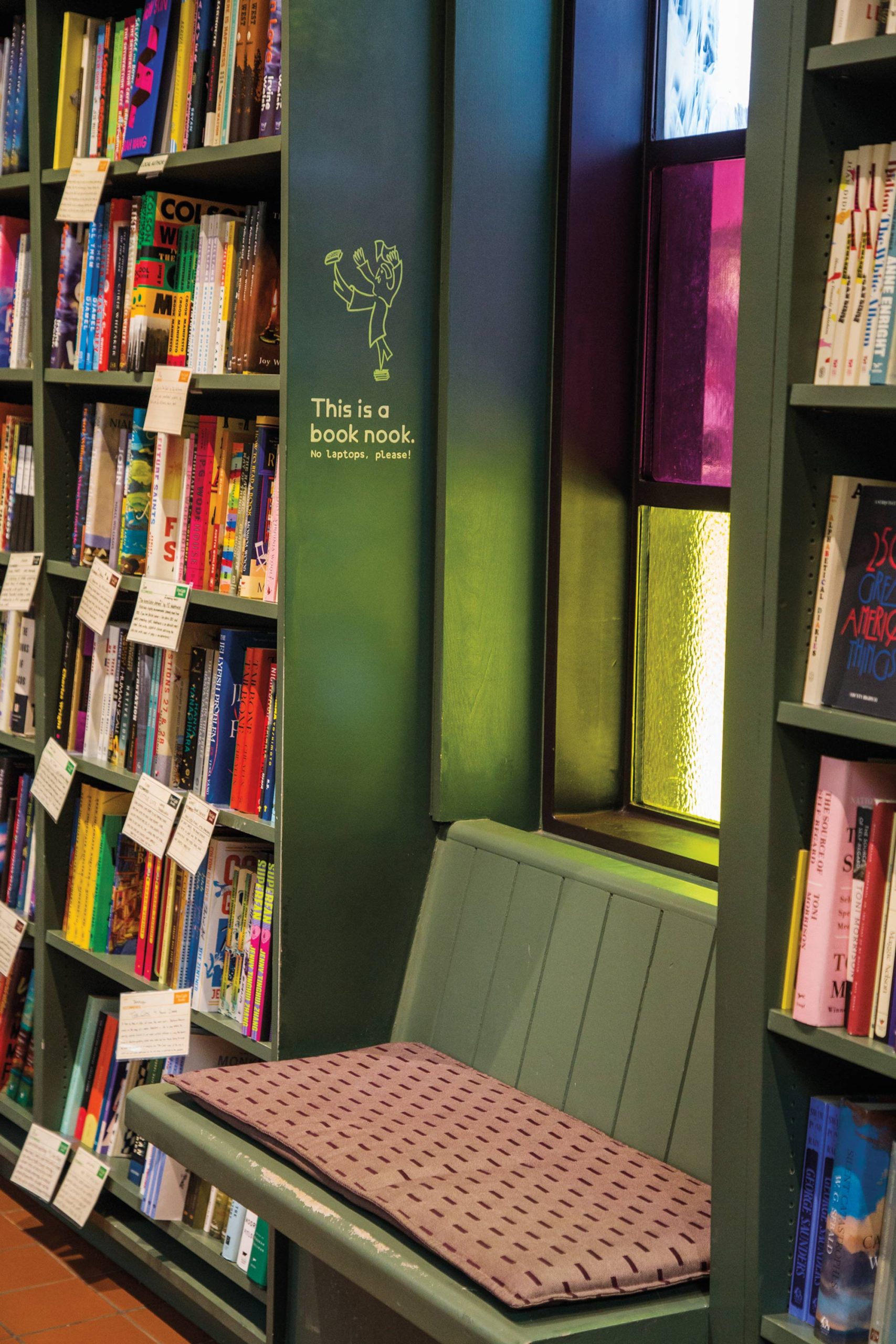
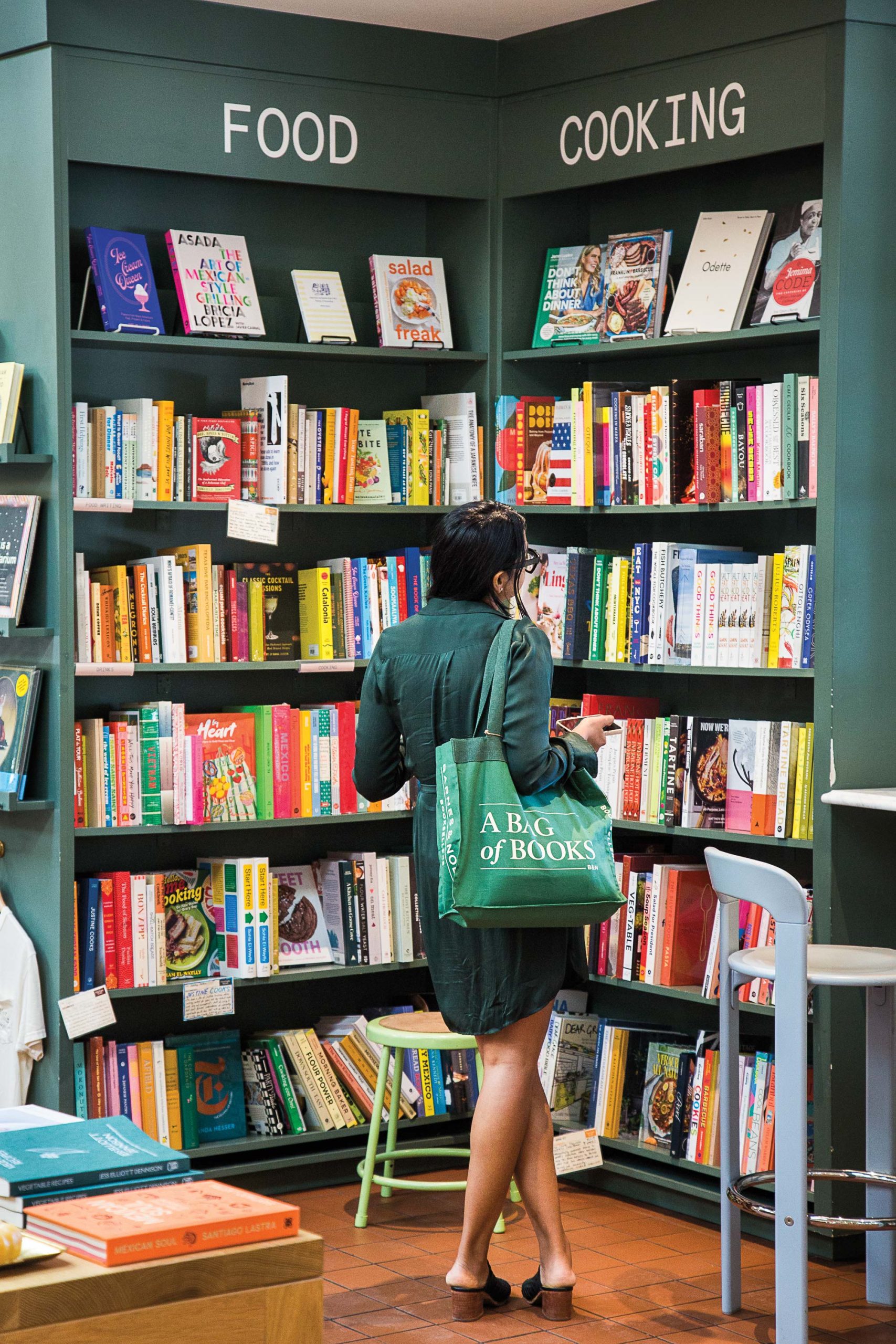
I had no dreams of being a writer yet. I was 26 and leaving a country turning into a dictatorship. I wanted to finish my master’s in advertising, build some work experience, and go back home once things got better. Looking back, it feels conspiratorial, like Austin nudged me onto a writing path.
Standing under oak trees framing First Light’s front entrance, I remember early 2013, when, streets away, I walked into my first-ever writing group. A message on the Hyde Park neighborhood LISTSERV read: “Are you a serious writer interested in getting a critique of your work and reading and critiquing others’ work? If so, our group may be for you.” After falling in love with a few short story collections from Julio Cortázar, Miranda July, and ZZ Packer, I was experimenting with short fiction. For a year or so, a handful of neighbors met weekly, exchanging work in a cozy cottage living room, our host’s teenager practicing violin in his bedroom. The work, at least mine, was not great. But on those balmy nights, I tucked into a sacred space and started to carve out a voice, an identity, maybe even a new home.

At First Light, groups of writers congregate, filling the space usually reserved for café tables. I see Lucas Schaefer and Elizabeth Crook, Callie Collins and Sarah Bird, Casey Gerald and Szilvia Molnar. Five novelists, one memoirist, all book writers. I catch up with Adeena Reitberger, coeditor of Austin-based literary magazine American Short Fiction, who years before had published one of my stories. Its unexpected inclusion in The Best American Short Stories anthology in 2020 launched my writing career.
By a wall full of art books, author Mary Helen Specht, months shy of releasing her second novel, Mudlark, chats with Mike Hoinski, the editor of the story you’re reading. Many years ago, Specht visited the first formal writing class I attended. After my time with the neighborhood group, I found a nine-month workshop with a dozen other writers led by Michael Noll, who would later publish The Writer’s Field Guide to the Craft of Fiction. Specht had just released her debut novel, and I remember the excitement of meeting someone who had done the thing. I wrote an essay for Noll’s class about my brother’s kidnapping in Venezuela that became the seed for my debut novel, Freedom Is a Feast. After its publication, Specht invited me to her class at St. Edward’s University, where she now teaches. It felt like a circle closing.
Over time, finding my writing voice meant tackling Venezuela and tapping into my deep longing for home. Austin inspired me. BookPeople, the largest independent bookstore in Texas—it turns 56 this month—brings in several big, influential names. I’ve attended book events with the likes of George Saunders, Junot Díaz, and Ann Patchett. There were also storytelling events and readings all over the city: Spider House, Home Slice Pizza, North Door. The Texas Book Festival, which takes over downtown for a weekend every November, feels reminiscent of the first time I attended a theme park—Isla Aventura on Margarita Island. Hundreds of writers spanning every genre come to talk about their books, field questions, and sign autographs. The downtown branch of the Austin Public Library, envy of cities everywhere, opened in 2017 and became a second home, where I wrote a big chunk of my book. I was discovering, in those days, the beautiful literary ecosystem that existed in this community.
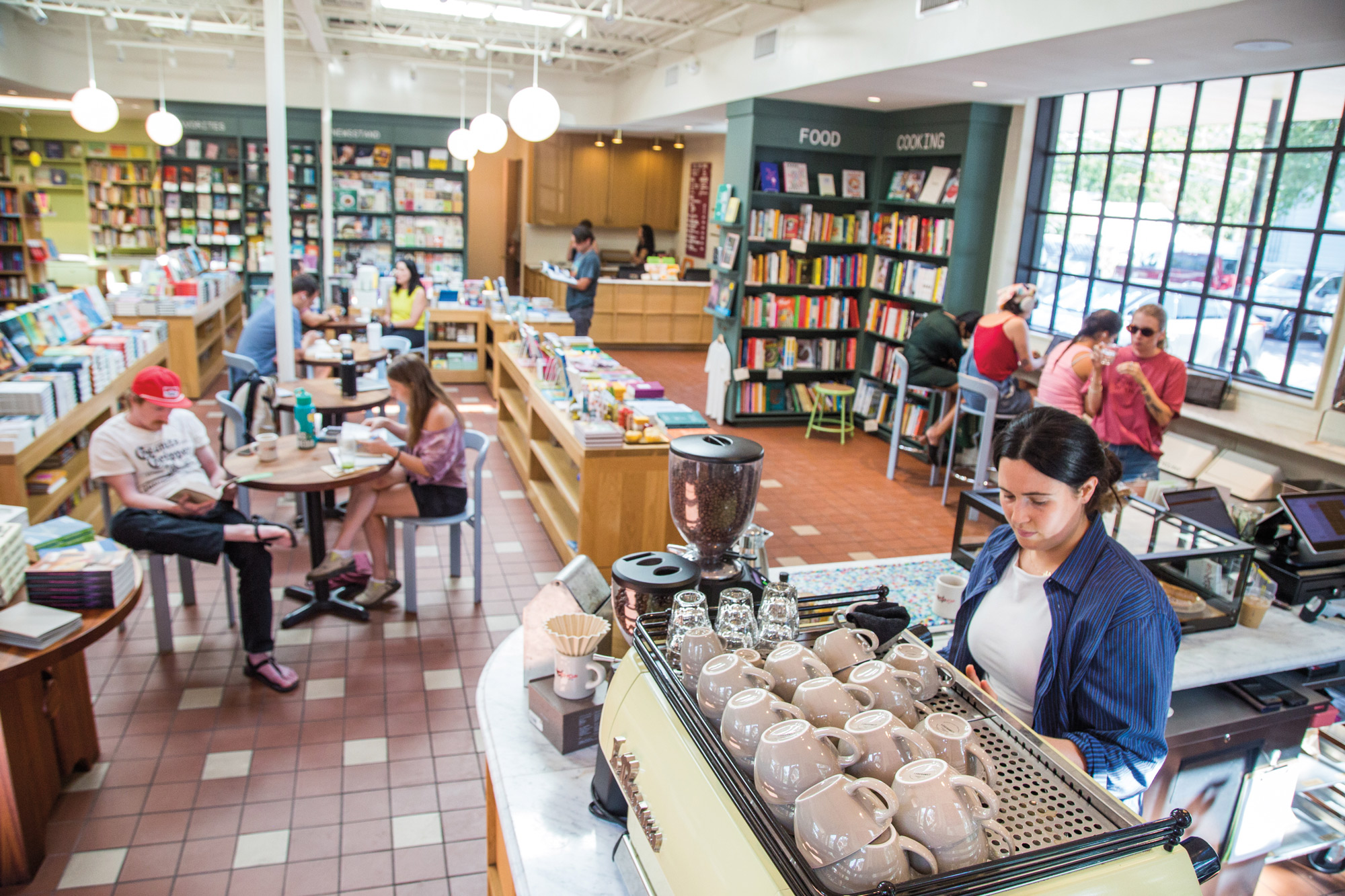
Husband and wife Taylor and Robin Bruce, along with Breezy Mayo, are the management team at First Light. They have many thoughts on what makes Austin a literary city. Taylor attributes the creative “minerals in the soil” that were deposited here by institutions like Texas Monthly and the filmmaking community led by figures such as Richard Linklater and Bill Wittliff. “The city has a commitment to leisure,” Mayo adds. “It lends itself to a life of reading.” Robin illustrates how bookstores fit into community: “They are one of the last democratic spaces where ideas can be held and discussed in interesting and diverse ways,” she says.
But First Light is just one star in the Austin indie bookstore constellation. BookWoman, the oldest running feminist and LGBTQ+ bookstore in Texas, celebrates 51 years of operation this December. Alienated Majesty has carved out a space as an underground, transgressive bookstore, where you can find a wide range of work in translation, new poetry releases, zines, and indie comics. We are so spoiled for choice that local writers and booksellers Jackie Rangel and Michelle Zhang created the Austin Book Trail. In its third year, the April bookstore crawl included 36 bookshops in the area and partnered with CapMetro, who offered free bus and bike-share passes to participants.
At the Winter Salon, I spot my friend Carrie R. Moore, stylish and standing a head above most attendees. I recall the day we met. She had just been admitted to the Michener Center for Writers at UT and came to audit my class. I was in my first year of the program, still adjusting to having short story maestro Elizabeth McCracken as my professor. A three-year, fully funded creative writing MFA program, the Michener admits a cohort of 12 fellows across four genres—fiction, poetry, screenwriting, and playwriting. Funded by an endowment from the late, great Texas novelist James Michener, it is considered one of the preeminent programs in the country. The New Writers Project, a similar MFA program in the English department at UT, is also superb. Combined, they have shepherded hundreds of renowned authors, including Guggenheim fellows and finalists for the Pulitzer Prize and the National Book Award. Moore stuns the crowd with a reading from Make Your Way Home, a heralded short story collection that chronicles the lives of Black women in the contemporary south.
I notice S. Kirk Walsh, who is, perhaps, the most important person in my writing journey. I attended her popular writing class, The Kirkshop, for three years before earning admittance into the Michener. In 2007, Walsh cofounded Austin Bat Cave, a nonprofit that offers access to writing programs for kids.
Emily Hunt Kivel reads from her novel-in-progress, a scene that includes a pregnant woman peeing in the bushes in the Italian countryside. It’s so funny, she has some of us longing to relieve ourselves, too. Kivel and I are part of a different group that meets monthly to exchange our writing. She introduces me to Rachel Cockerell, who wrote the memoir Melting Point, about her Jewish ancestors who immigrated to Texas pre-WWI. This is all part of the fermentation that Austin fosters—small connections form, bubble up, multiply. Eight years ago, at a party not very different from this one, I met a tall redhead named Brittani Sonnenberg, who was working on a memoir and teaching creative writing remotely for the University of Hong Kong. Now we are married with a toddler.
“How long have you been in Austin?” I ask Cockerell, thinking her a local, like most other writers in the room. Another person like myself who got to Austin, fell in love with the bookstores, the programs, the readings, the festivals, and the people, and decided to stay.
“I live in London,” she says. “Just visiting.” There is a dramatic pause. “For now.”