
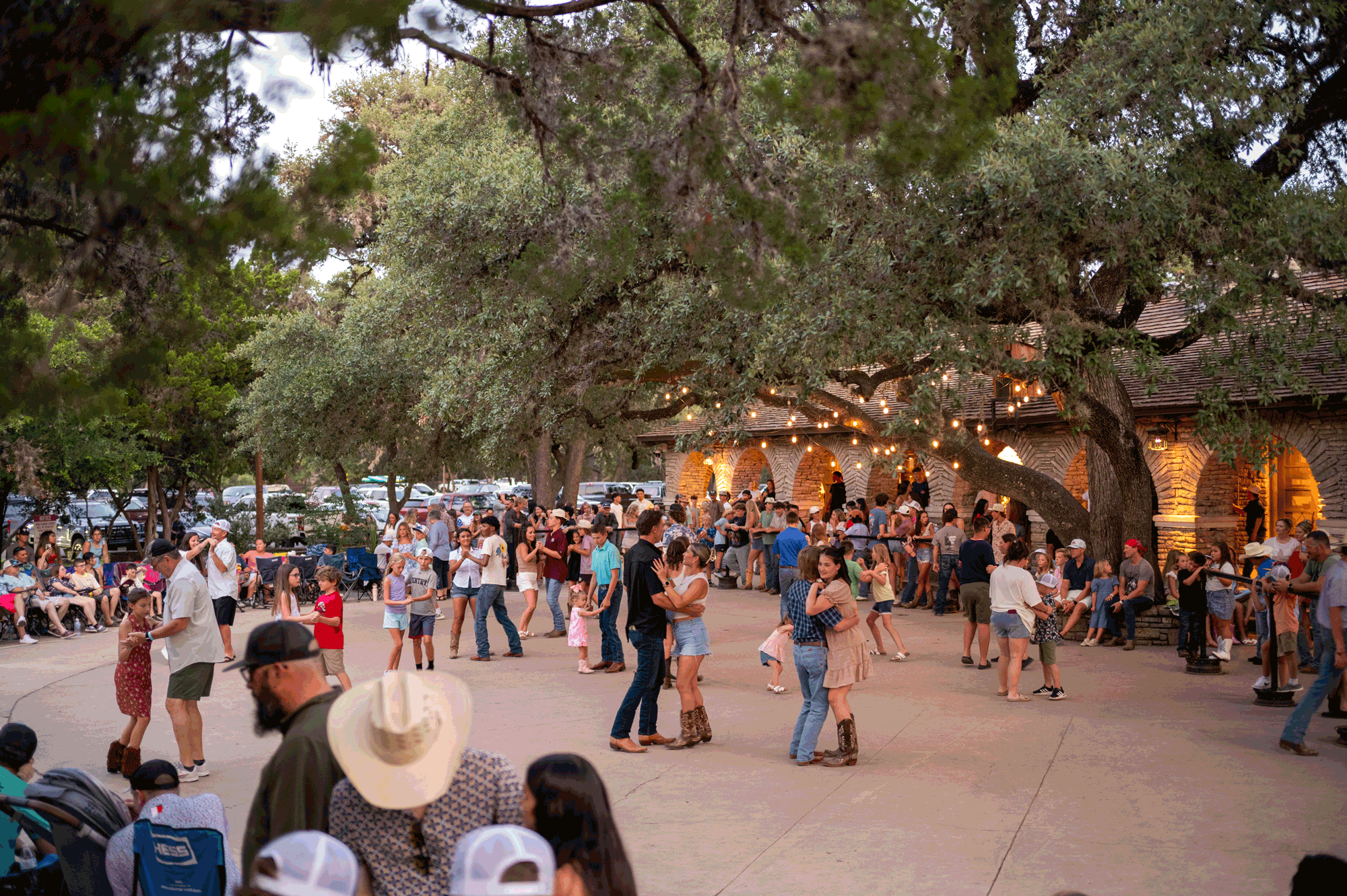
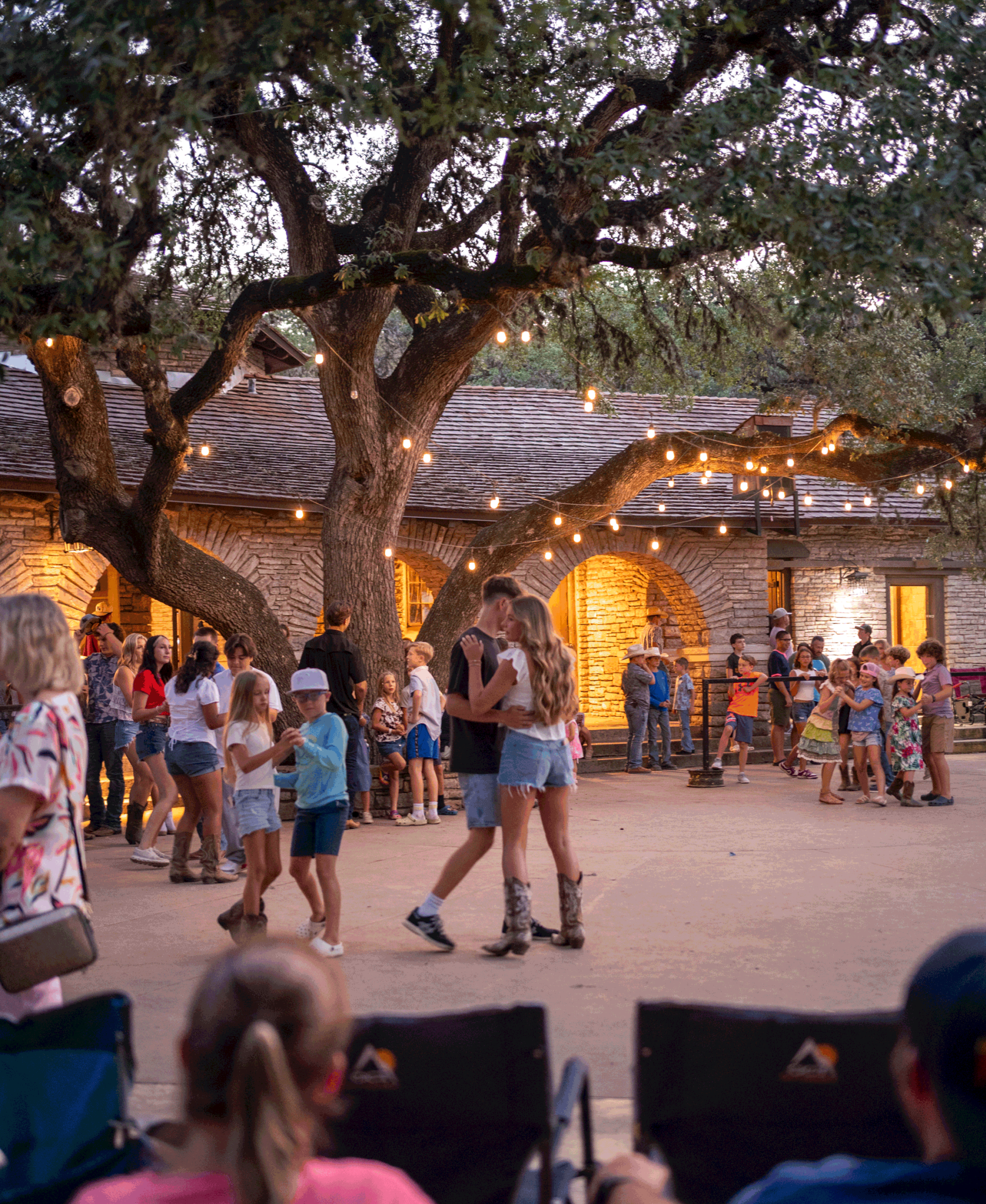
The Dance at Garner State Park might not have an official start time, but you’ll know when it begins. There are the sounds—the stomp of cowboy boots on the pavement, the excited shuffle of flip-flops still wet from the Frio—and the smells of fresh buttered popcorn, waffle cones, and the nearby Garner Grill. But more than that, there’s a shift in energy as the summer sun begins to dip below the hills and the string lights start to twinkle over the dance floor.
Every summer since 1941, the pavilion at Garner State Park has transformed into a gathering place where people from across the state come to dance under the stars. From Memorial Day to mid-August, newcomers and veterans alike two-step, line dance, and sway together at the whim of that night’s jukebox requests. But before the public ever set foot on that concrete dance floor, the first participants to establish this tradition were the same ones who built the park from the ground up: the members of Civilian Conservation Corps Company 879.

For $1 a day between 1935 and 1941, the young, unmarried men who joined the New Deal program turned the then-620 acres of wilderness nestled on the Frio River into a Hill Country getaway. Located about an hour and a half west of San Antonio, the park opened in 1941 with newly built hiking trails, roads, cabins, campsites, and the pavilion.
The corpsmen lived in worksite camps at the park, and as soon as the concrete was poured and set, their long hours of work faded into nights of music and dancing. Company 879 would invite locals and musicians from San Antonio to join in on the fun, and once the park was completed, the dancing continued each summer.
MaryAnn Laughlin Abbott, secretary of the Friends of Garner State Park, says her father, Guy Raymond Laughlin, helped construct Garner as a member of the CCC. While her first visit to the park as a child didn’t make much of an impression, her first time at the Dance did. It was Good Friday in 1962, and a friend from Uvalde had invited her to go. “As far as I was concerned, it was love at first sight, and it has been love ever since,” MaryAnn says.
Now 80, she still makes it to the Dance every summer. She knows all the traditions by heart: the dances to “Puttin’ on the Ritz” and “Rockin’ Robin,” the “Woos” during George Strait’s “Blame It on Mexico,” and the blinking porch light that signals the last song of the night. She’s seen dances, songs, and faces come and go, but some things always stay the same.
“It gets into your heart and it just stays there,” Abbott says. “You get together with your friends and you talk about things that happened up there, and you hear the same music you’ve been listening to since you were a teenager. You could be somewhere else and maybe hear one of the old songs and you’re right back there on the dance floor.”
On a Saturday evening in mid-July, the air buzzed with conversation and laughter as folks drifted in toward the pavilion. A lifted truck roared its engine, rolling coal on nearby attendees as high schoolers arrived in their finest summer Western wear—ladies in jean shorts and blouses, men in boots, jeans, and button-down shirts. Campers were dressed more comfortably in shorts, bathing suits, water shoes, and flip flops. On the outer edge of the dance floor, some sat in their folding chairs and watched, resting their feet while waiting for their song.
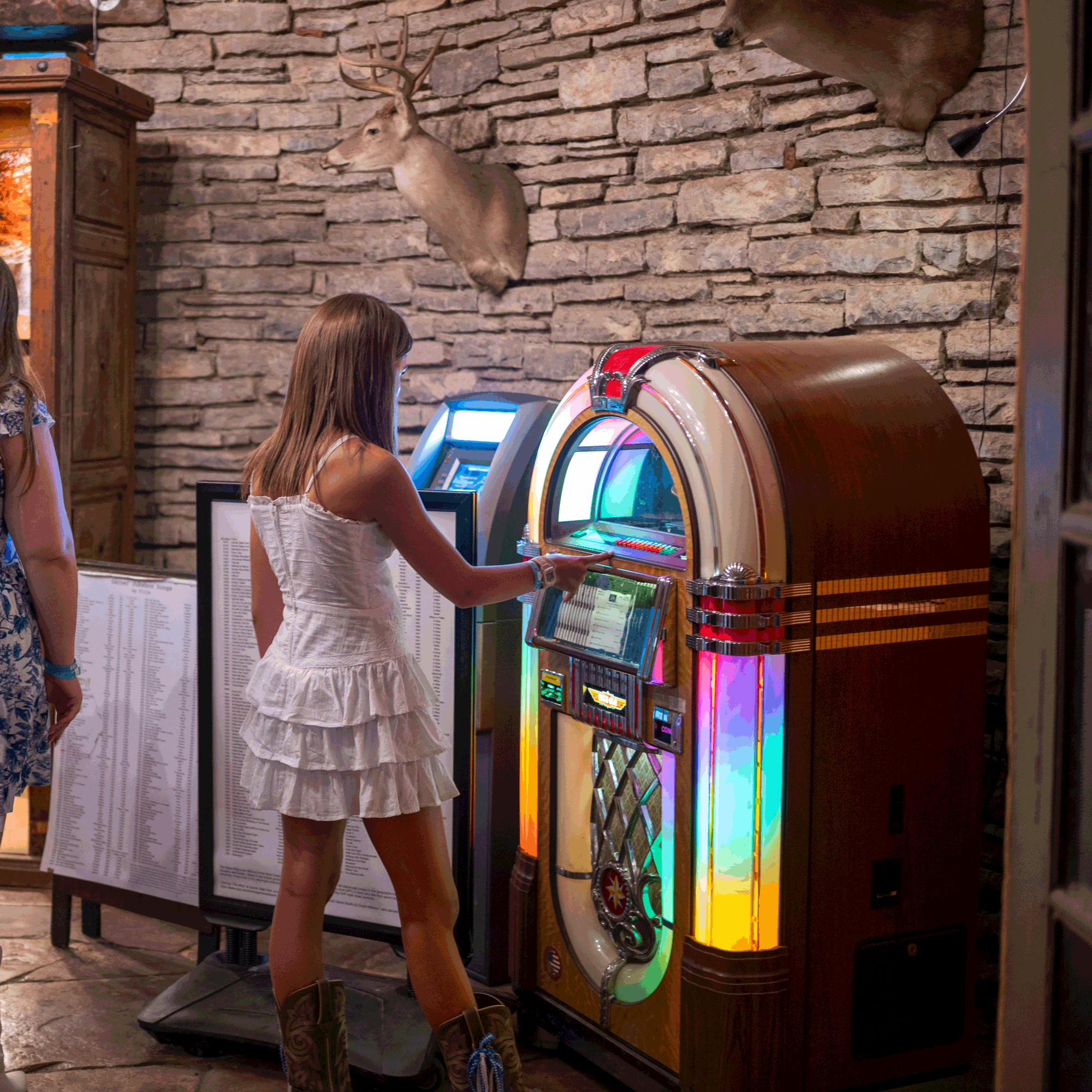
As George Strait’s “Write This Down” drew out the first big wave of dancers, as a flurry of teens ran over to the jukebox, running their fingers down a lengthy list of tracks that range from the 1950s all the way to the 2020s. A couple of preschoolers attempted their best two-step to “Boot Scoot Boogie,” with the young lead sneaking in a twirl. Behind them, a couple in their golden years moved in to show them how it was done.
That’s the charm of the Dance: under the sprawling branches of an old live oak tree, you might share a dance with a stranger, the future love of your life, a lifelong friend. And somewhere else on the dancefloor, maybe just a few feet away from you, there’s someone else falling under the park’s spell for the first, or the thousandth time.
“It’s just magic. Garner magic. I don’t know how else to describe it,” Abbott tells me. “For me and for a lot of my friends, if there wasn’t a dance, we wouldn’t have been there. Garner is a wonderful place, but it has always been the Dance for me.”