
In the June issue of Texas Highways, I wrote about the Lower Guadalupe River below Canyon Lake as a vacation and recreation destination. I half-apologized for the extended drought that had impacted the river, assuring readers that despite low flows, fun could still be had.
On July 4, on that same stretch of river, RVs and campers had to be evacuated due to flash flooding. That week, floods impacted the Colorado, Llano, San Gabriel, Frio, and Nueces rivers and Big Sandy Creek in the Texas Hill Country. They also affected the Concho River by San Angelo, and in the Trans-Pecos region of far West Texas, waterfalls poured over Santa Elena Canyon for the first time in decades.
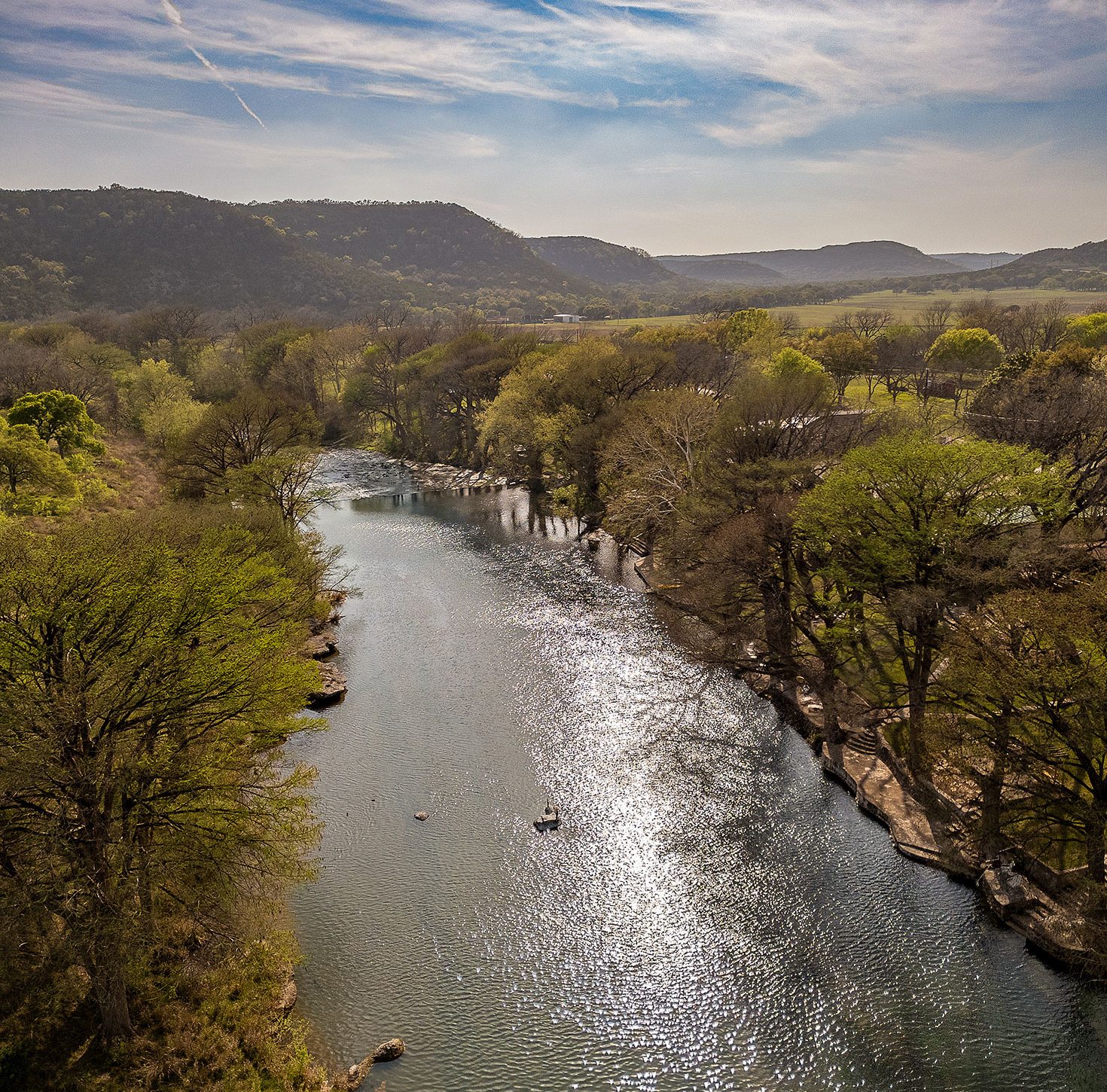
One hundred and twenty-five miles upstream from Canyon Lake, a cluster of thunderstorms infused with tropical moisture stalled over the upper Guadalupe River and its headwaters. As copious amounts of rain poured, the river and surrounding creeks swelled out of their banks. The water unleashed death and destruction as it ripped through summer camps, RV parks, cabins, homes, resorts, and campgrounds around Hunt, Ingram, and Kerrville. The deluge took the lives of people who were doing what Texans love to do in the summer: hang out by the water, swim, float, fish, paddle, and play on what is the prettiest stretch of river you’ll find in these parts.
Spring-fed, clear-running, and cool even in 100-degree heat, Hill Country rivers renew, replenish, and refresh in ways other rivers do not. A big part of their appeal is the rocky limestone topography they pass through on their way to the coast. That same landscape has earned its reputation as Flash Flood Alley. With little topsoil, hard rains quickly run off into creeks, streams, and rivers and turn waterways into raging, unforgiving torrents.
Ten years ago, on Memorial Day weekend, a destructive flash flood swelled the Blanco River, which rose 40 feet and swept through the town of Wimberley, killing 10 people. Property damage was severe. I cried seeing the cypress trees by my stretch of the river gone. We helped friends recover, while hearing harrowing stories of escape. The people of Wimberley, their neighbors, and strangers all converged along the river, rolled up their sleeves and started the arduous task of cleaning up and building back, just as Texans and people from all over the world are doing around Hunt, Ingram, and Kerrville, and in all the other parts of Texas impacted by flash floods.
It’s what Texans do.
The businesses along the lower Guadalupe below Canyon Dam have reopened and river lovers have returned. The healing for those around Hunt, Ingram, and Kerrville will not be so swift. The recovery is going to take months. The rebuild will take years. Some scars are permanent; the loss of life cannot be undone. But 10 years down the line, I can tell you there is hope. The Blanco remains the shining jewel of Wimberley, the main attraction for the hundreds of thousands who visit the community every year. Blue Hole is booked weeks in advance. Jacob’s Well is flowing again. Down by the river, young cypress trees have popped up where giant cypresses had been swept away by floodwaters. But across the river, where a stand of tall cypress survived, I can gaze up high into their branches and see debris from the flood of 10 years ago, a remnant and reminder of when this river ran too wild.
There will come a time when the upper Guadalupe is once again the Hill Country river of summer dreams, where the sounds of children learning life lessons at summer camps and vacationers kicking back to enjoy the natural world mixes with the soothing sound of flowing water. Until then, we grieve. We pitch in and help our neighbors. It’s what Texans do.