
Dallas business owner Lee Higginbotham, a newbie to the fossil collecting world in 2007, had heard whispers of an old landfill in Mineral Wells that was rife with fossils. Higginbotham loaded up his two sons, drove an hour and a half to Mineral Wells, and embarked on a camping trip in search of the secret spot. On their second day, they found it: an open dirt pit where 300-million-year-old fossils littered the ground.
“We called it crinoid heaven,” Higginbotham, a member of the Dallas Paleontological Society, says. “We found fossils everywhere.”
Mineral Wells Fossil Park
2375 Indian Creek Road, Mineral Wells. 940-567-5410; mineralwellsfossilpark.com

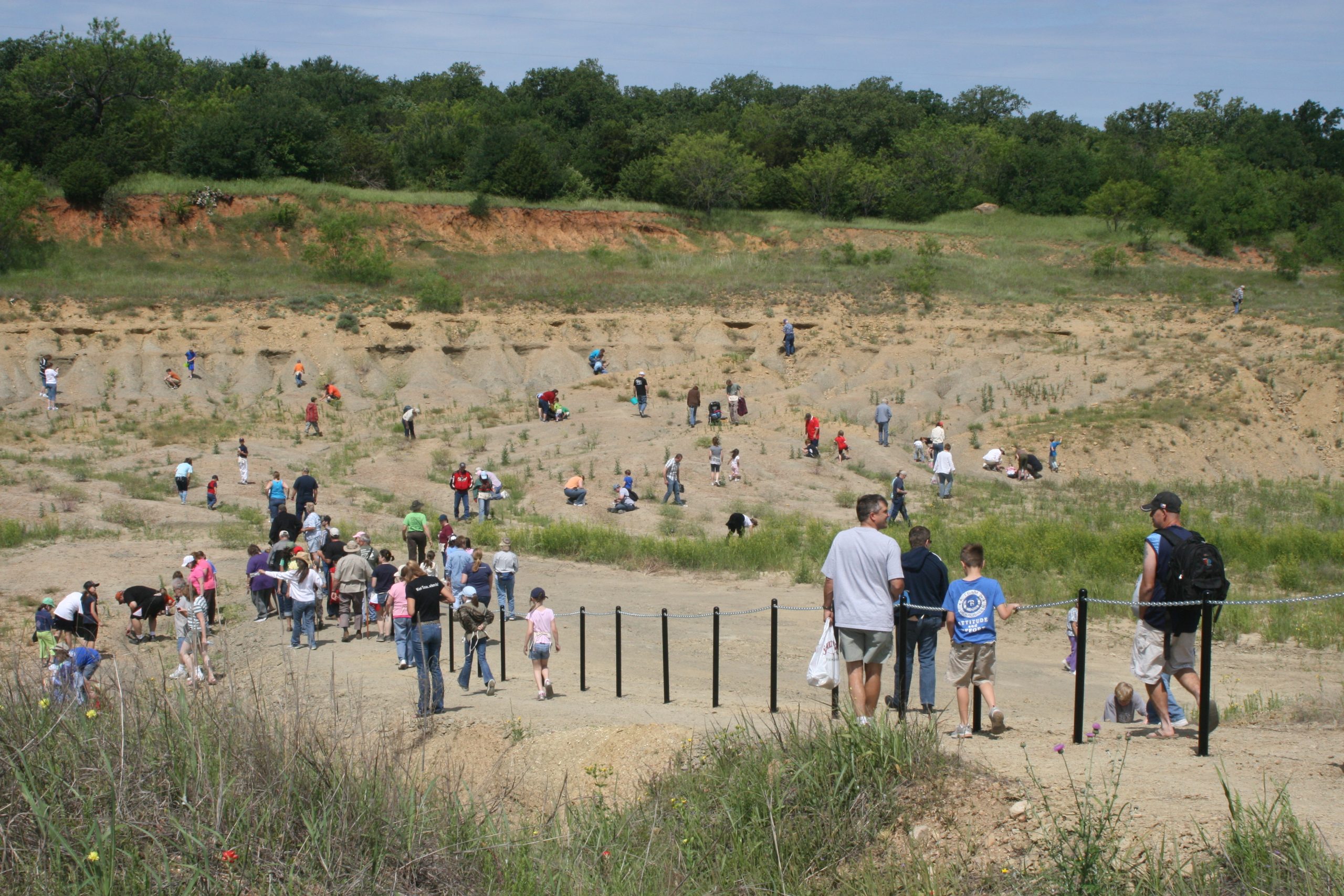
Today, Higginbotham’s “crinoid heaven” is Mineral Wells Fossil Park—an 8-acre free public park where visitors can take home the fossils they find. The park is a collaboration between the city of Mineral Wells and the Dallas Paleontological Society, and is laden with relics from the Pennsylvanian Period, a time when a shallow sea covered North Texas.
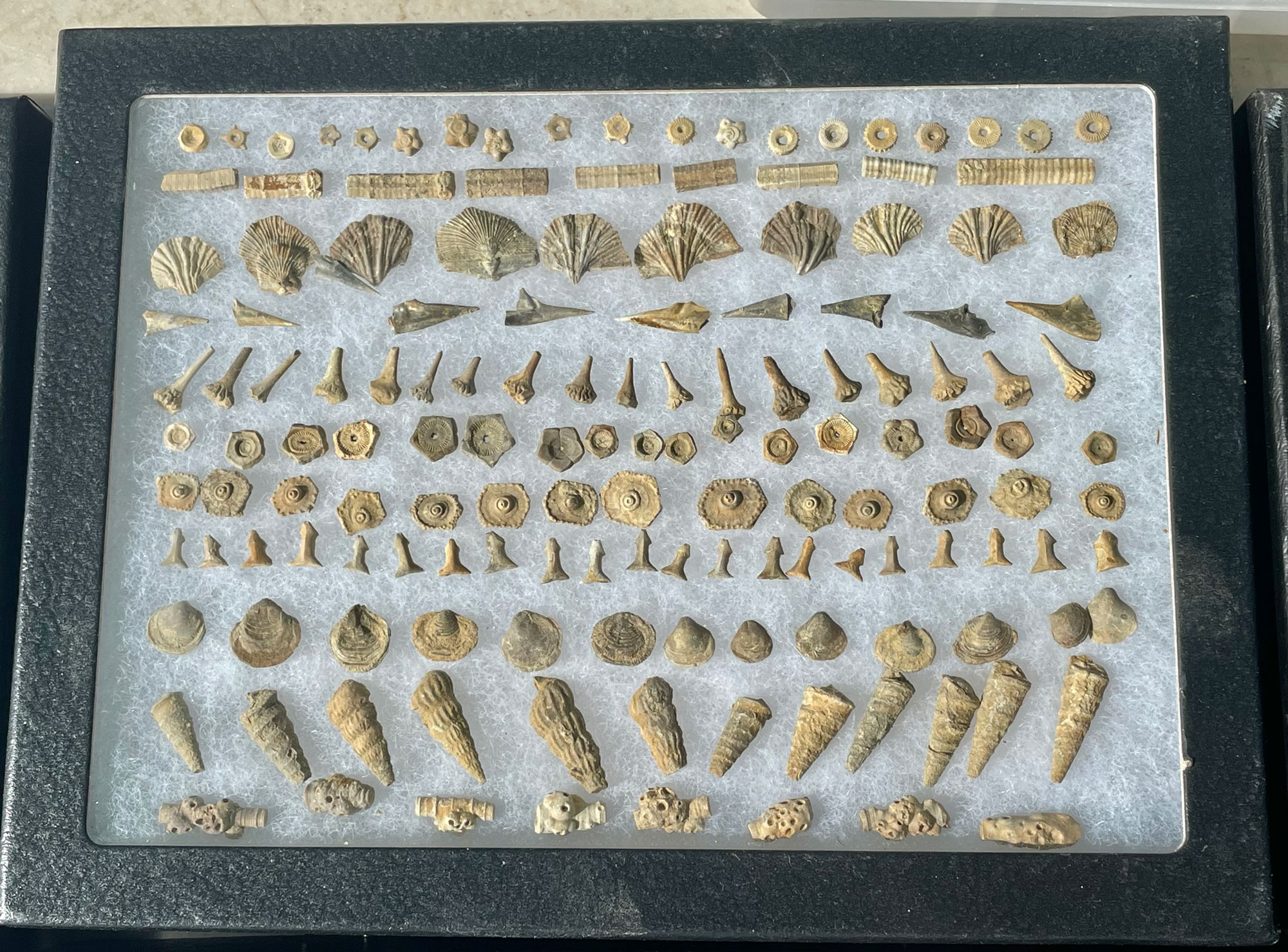
Since its opening, the area has become a popular place for field trips and has at least a few visitors on-site every day. “There’s almost always cars there with license plates from different states,” City of Mineral Wells Community Service Manager Carrie Stevenson says. “People come from all over to check it out.”
When Higginbotham first visited the site, it was the city’s old landfill borrow pit, a ditch used to transfer dirt into a landfill. After the landfill was closed in 1993, the land sat empty, and the elements eroded away the soil. Unbeknownst to the city, the spot became known among fossil hunters because the area was full of ancient sea species remains. Crinoids, or ancient sea lilies, are the most common fossils in the area, but preserved pieces of sea urchins, clams, and snails are also found there.
When members of the Dallas Paleontological Society heard there was interest in selling the land, they took their findings to the city and made a case for the creation of a fossil park. The city agreed and work began to make the area an official park. With the park’s grand opening in 2010, one city’s trash became a fossil enthusiast’s treasure. “It’s become this wonderful public resource for kids to get smarter, and adults too,” Higginbotham says.
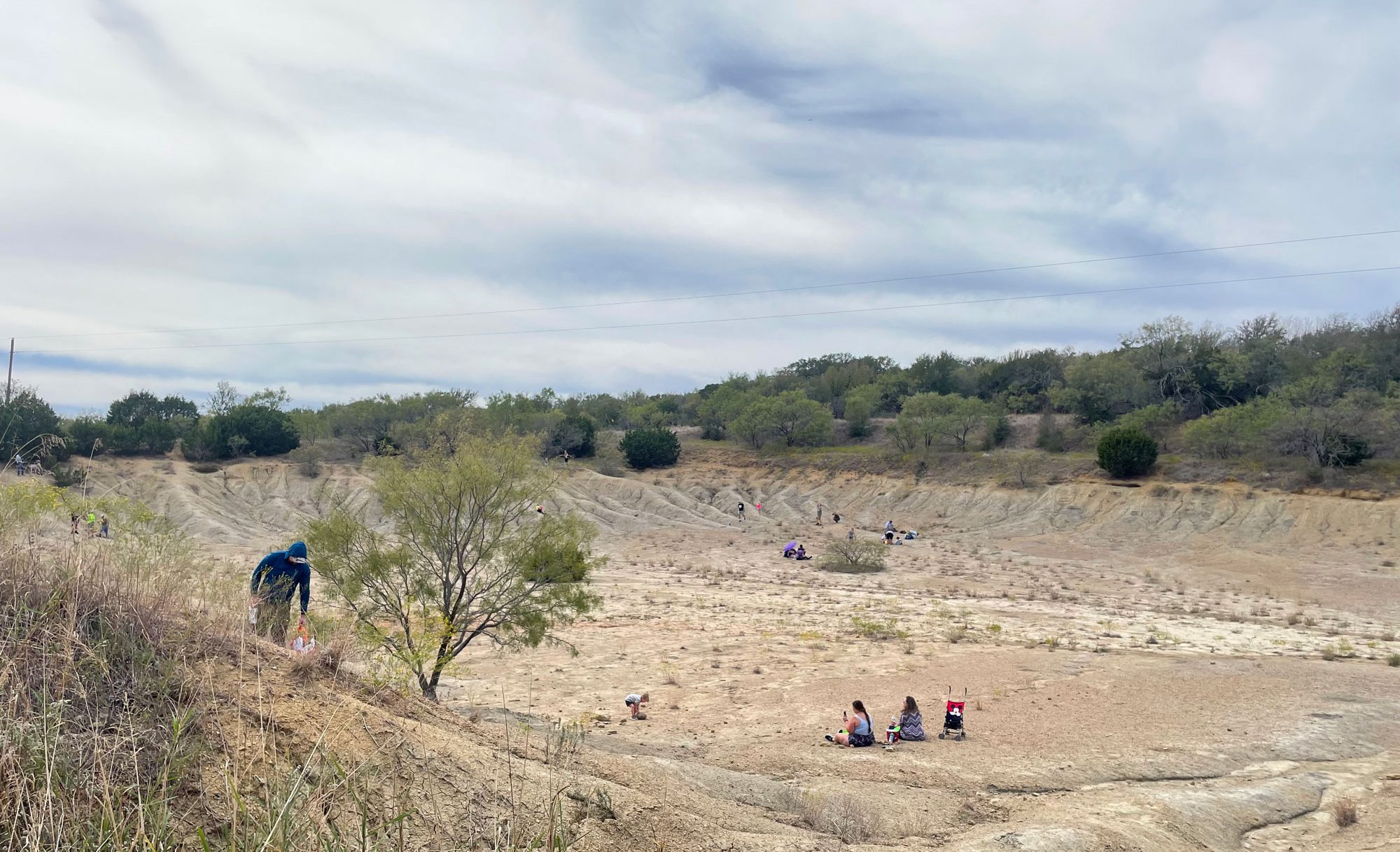
For visitors who are ready to dust off their paleontology skills, remember to bring a small bag or nail apron to collect the fossils in. There’s no special strategy to finding fossils; according to Higginbotham, the pieces of ancient sea life are everywhere—most sitting on top of the dirt. The fossils are small, often no bigger than a fingertip, but there’s no shortage of pieces to take home.
The park also has a shaded picnic area, but the fossil hunting grounds are directly in the sun. Since the site is quite bare bones, Stevenson recommends visitors bring water and a hat to contend with the Texas heat. Not all of the pit’s residents are prehistoric—scorpions and ants are common for this area—so keep an eye out for any hazards while searching for fossils.
Higginbotham has enjoyed watching the park turn into a popular spot, but wants visitors to leave with more than just fossils from their trip. “My hope is that a number of years from now, someone will come up to me,” he says, “and they’ll say, ‘I’m a world-famous scientist, and when I came here and I discovered the fossils, it turned me on to science.”