
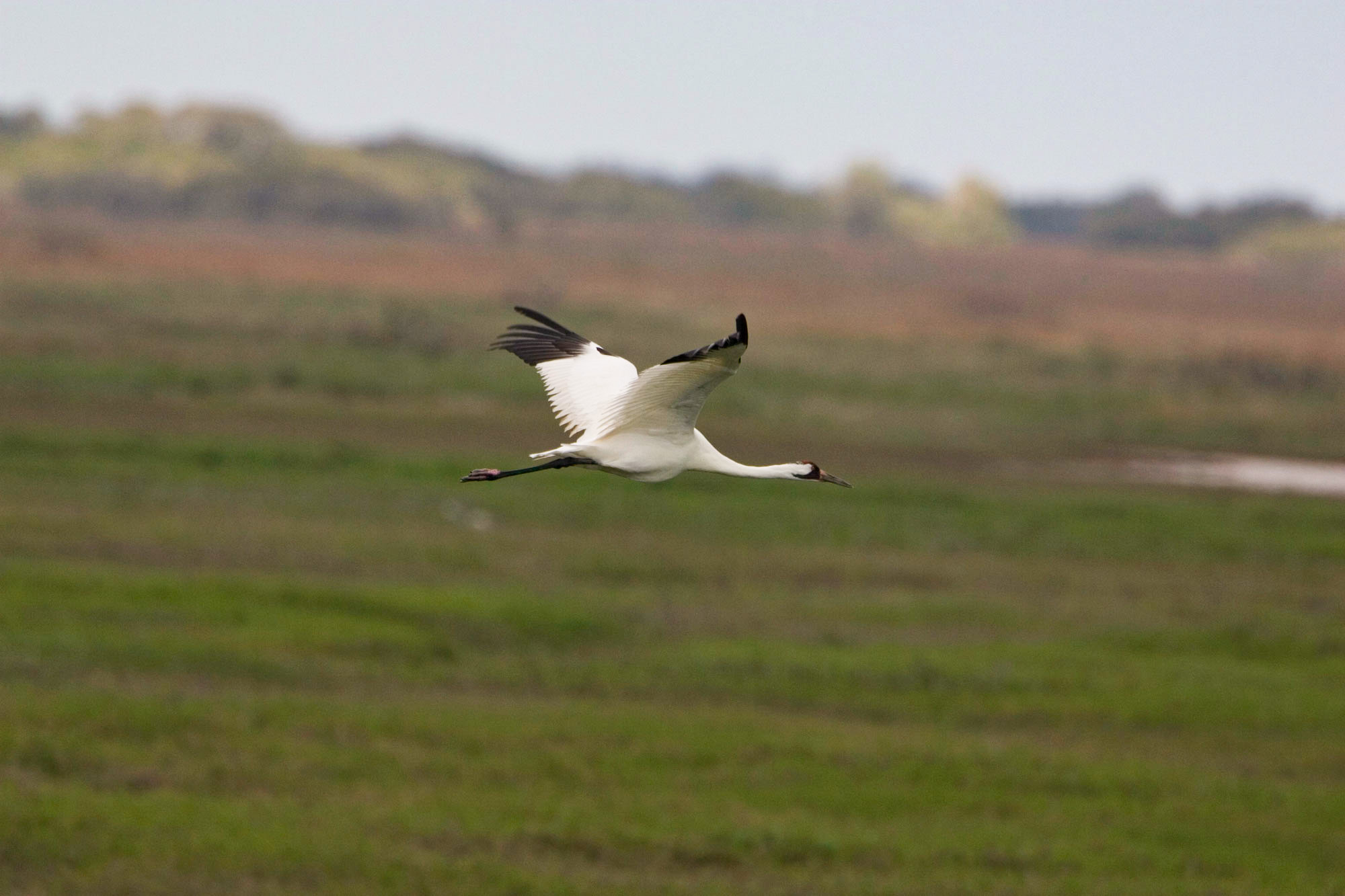
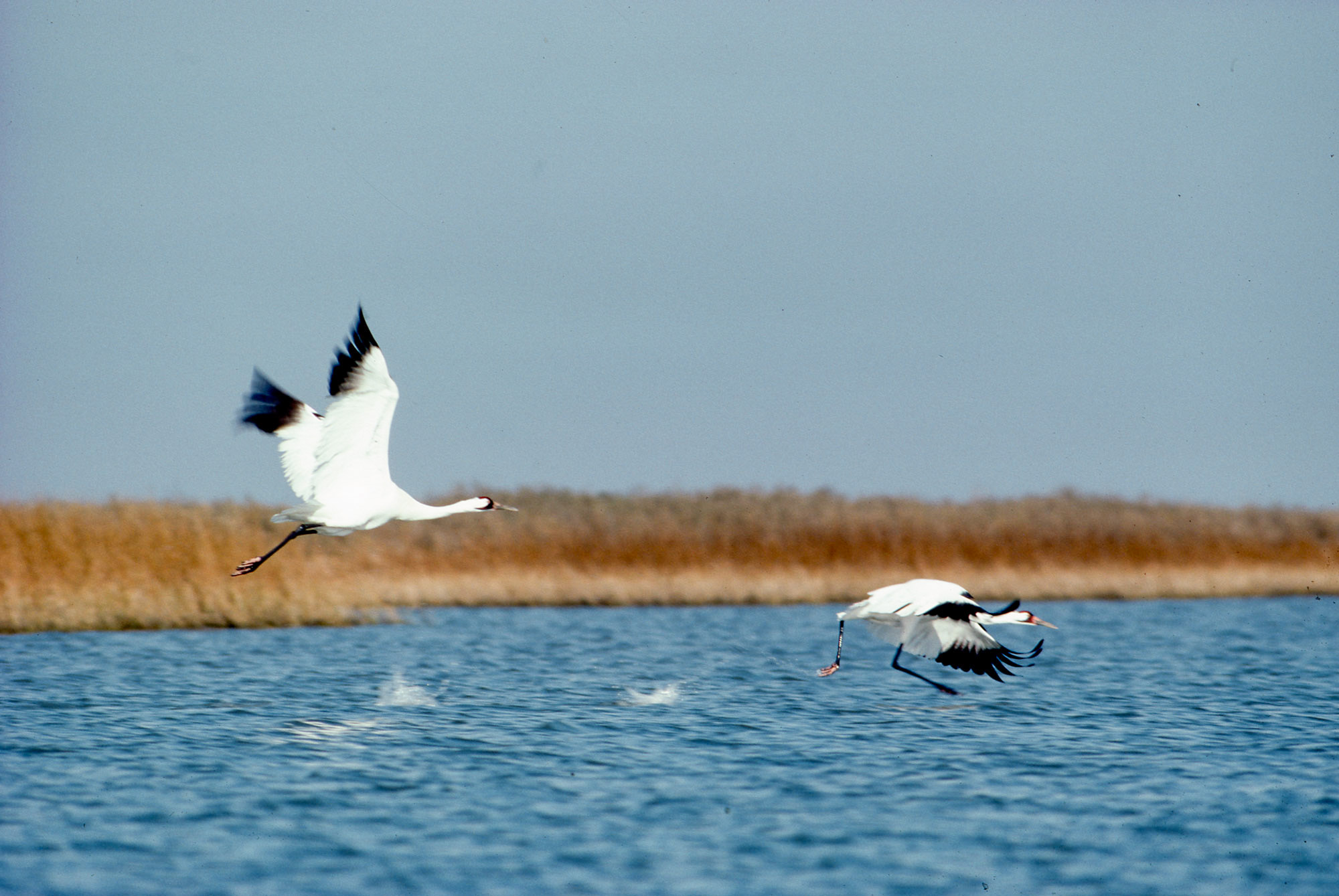
Watching a whooping crane take flight is like seeing a small plane lift off. The bird, 5 feet tall and with a 7-foot wingspan, lowers its head, heaves forward, and hits the sky in one fluid motion. From the ground, the birds appear small, just a white streak in the sky, save the gray tips of the flapping wings. All birds look natural in flight; the whooping cranes’ large size makes them look elegant. And while there are larger flying birds elsewhere in the world, the whooping crane—named for its telltale call, which sounds like someone shouting “whoop”—is the tallest bird in North America.
It’s hard not to be fascinated by the whoopers. Their sheer size alone makes watching them a spectacle: If I stood next to one, we would nearly see eye to eye. And while I haven’t been lucky enough to see one in person, I’ve watched dozens of whooping crane videos online, where I can get a close look at the birds taking flight, eating crabs, and calling with their mates—a phenomenon known as a “unison call,” which sounds a lot like singing.

I’m not alone in my admiration for the whooping crane. From October through April, thousands of visitors from around the world flock (pardon the pun) to Texas to see the cranes while they winter along the coast.
In addition to their aesthetic value to the average birder, they are also a rare sight to behold; The cranes that winter in Texas comprise the last remaining wild flock of whooping cranes in the world. While they spend most of their time in Wood Buffalo National Park in Canada, the best chance anyone has at seeing them is at the Aransas National Wildlife Refuge in Austwell. The Wildlife Refuge is much smaller and easier to access than Wood Buffalo, a remote park near Canada’s Northern Territories, and provides plenty of opportunities to spot the cranes: Wooden boardwalks weave across murky marshland where the birds hunt for crabs, and nearby charter services shuttle crane-seeking tourists out through the water on small boats.
The peak of whooping crane season in Texas is the annual Whooping Crane Festival in Port Aransas. It’s a four-day event held each February with lectures from whooper experts and a built-in community of fellow crane enthusiasts and conservationists, the latter of whom have their work cut out for them. Carter Crouch, director of Gulf Coast programs at the International Crane Foundation, says that the total number of whooping cranes in the world hit an all-time low of 21 in the 1940s. Thanks to land preservation efforts like Aransas National Wildlife Refuge, and a recent 3,000-acre acquisition along a remote part of the Texas coastline, whooping crane numbers are now just over 800.
“All whooping cranes on Earth today come from the Aransas Wood Buffalo population flock,” Crouch says, noting that around 550 whoopers will make it to Texas this year. The remaining birds migrate from elsewhere in Canada down to other wildlife refuges in Florida, stretching their migration over a slightly different section of the country. A separate flock in Louisiana was wiped out decades ago by a hurricane.
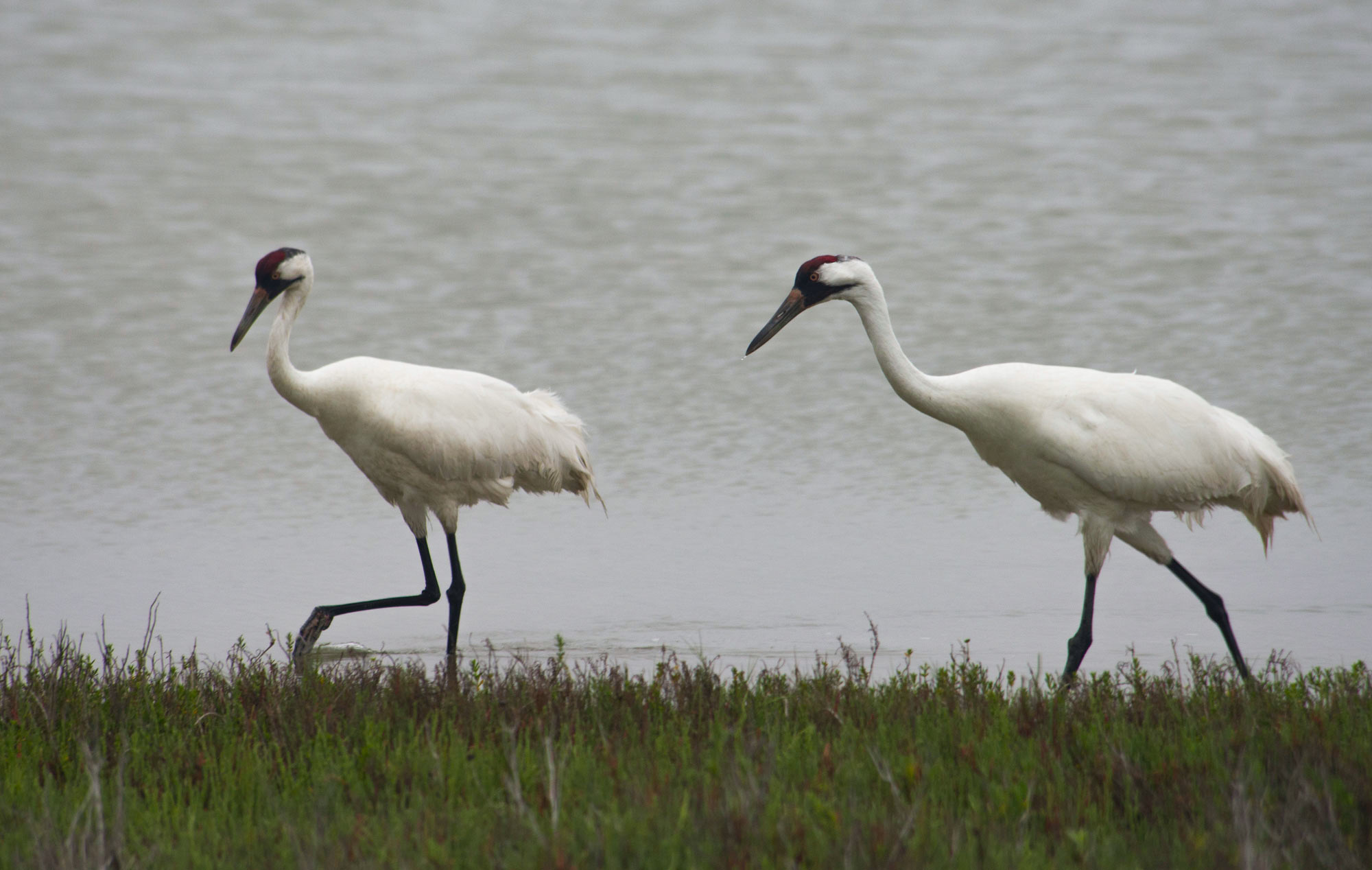
As with anything in nature, part of what makes the whoopers so fascinating are the similarities they share with us. Crouch says the cranes almost always mate for life, and typically “date a little bit before they settle down with their long-term mate.” The mated pairs are known to occasionally move around together in a way we might refer to as “dancing,” if they were human. They usually raise one chick at a time, and they migrate down to Texas from Canada together as a family. Their average lifespan is about 20 years, which means, theoretically, you could see the same crane couple at the Wildlife Refuge more than a dozen times.
Everyone navigates the whooping crane sightings differently. Julie Shackelford, the Texas state director with The Conservation Fund, has been to the Whooping Crane Festival several times, and has her own advice for how to best see a crane. “You need binoculars for sure,” she says. “And you can get closer to them on a boat than you can get to them on land.”
While the whooping cranes can be spotted at any time of day, both Crouch and Shackelford extoll the virtues of getting out to see the cranes as the sun rises over the marsh.
“We got up super early so that we were there at sunrise, and it was pretty special,” Shackelford says. “The experience of seeing so much life, and the smell and beauty of being there and seeing all these different kinds of birds getting into place and preparing for the day…It was really pretty magical.”