
If you wanted to hang out, you went to Deerbrook Mall—the nearest major commerce center to Kingwood, the Houston suburb where I grew up. Deerbrook was good for walking. It’s where, at just days old, my mom took me on my first public outing. Fast-forward to high school in 2008, and I was almost guaranteed to run into other groups of errant teenagers who were similarly looking for opportunities to confront each other in our mysterious after-school clothes and flirt beneath the neon of capitalism. We had fast metabolisms for romance. The mall was our incubator. Entire relationships were born and died at Deerbrook before our parents picked us up.
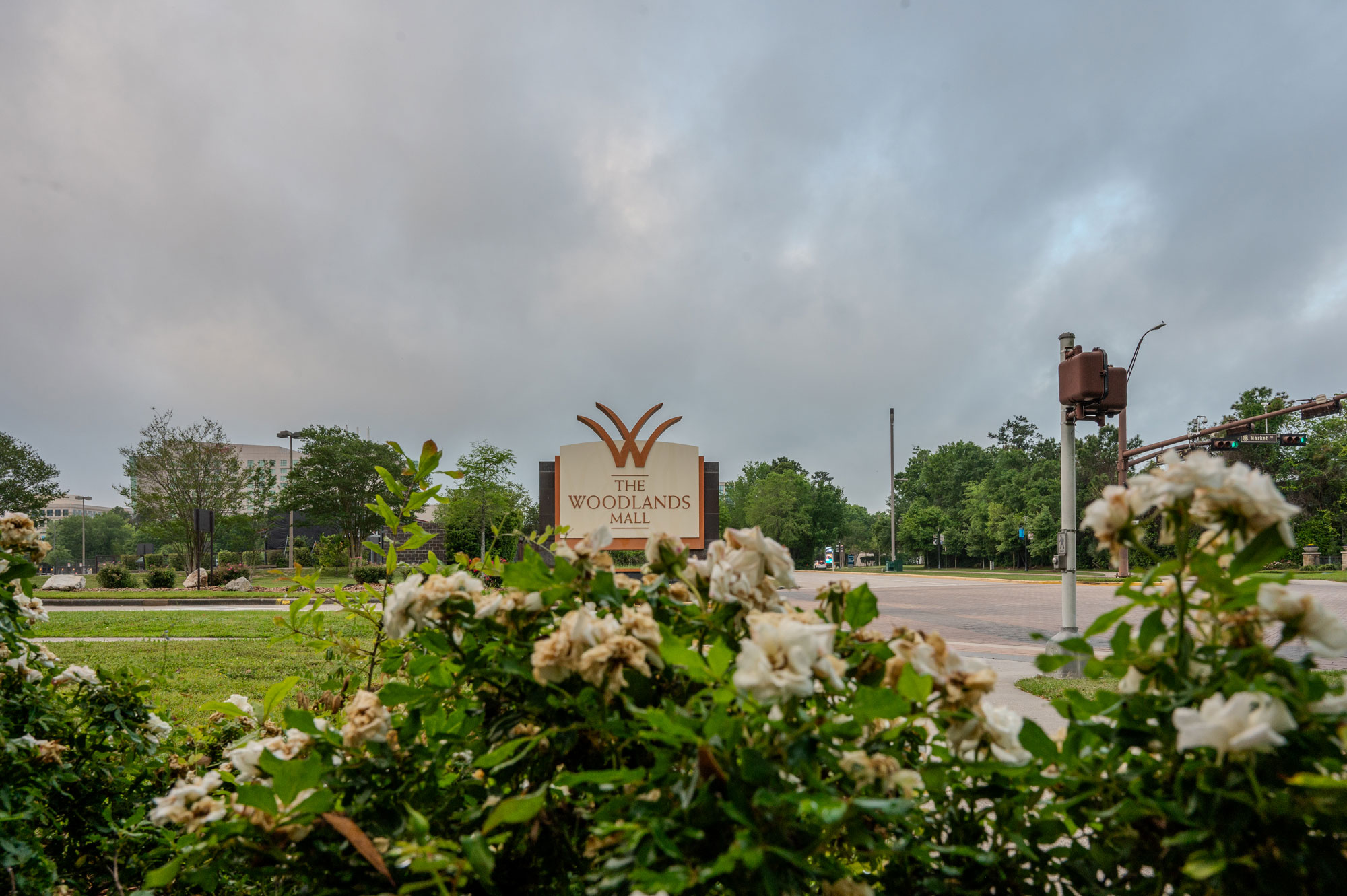
The Woodlands Mall
1201 Lake Woodlands Dr., Ste. 700, The Woodlands.
281-363-3363; thewoodlandsmall.com
If you wanted to shop, however, you went to The Woodlands. The Woodlands Mall was just over 45 minutes from my family’s house, far enough away to merit an occasion. The Woodlands Mall held the nearest Abercrombie & Fitch, where I wasted all the money I’d earned over the summers on skinny jeans. Every September, my mom and I went there to pick out a homecoming dress from one of the department stores, usually the Dillard’s that still smells like a rich lady’s perfume. My mom always ended up picking the winning gown—usually one I’d overlooked. One year it was a bubble-hem minidress with a black sequined corset top. I still remember the hot weekend afternoon when my mom and I made the drive to the other, seemingly better suburb to buy it.

To grow up in the suburbs is to grow up dreaming of anywhere else. We called Kingwood, population roughly 70,000, “the bubble.” The nickname referred as much to its aesthetic homogeny as it did our shared adolescent feeling that we’d never escape. I had a boyfriend in high school who called Kingwood Drive—one of a few main thoroughfares—the “taproot.” This was both physically true and a metaphor: There were only so many ways out. I can’t wait to get out of here was a common refrain among my friends.
For most of my life, anywhere else was The Woodlands suburb. Built as a passion project years after Kingwood by the businessman and real estate developer George Mitchell, The Woodlands opened in 1974 and had everything I felt we were missing, not just Abercrombie but an ice rink over the holidays at Town Center, more trees, fancier chain restaurants, and distance from the people I saw every day. According to Loren C. Steffy’s 2019 biography George P. Mitchell: Fracking, Sustainability, and an Unorthodox Quest to Save the Planet, the oilman wanted “founder of The Woodlands” inscribed on his headstone, along with “husband, father, and ecologist.” And for good reason—Mitchell’s planned community was so successful that it’s considered a model for suburban development throughout the country. As a teenager, I didn’t know or care about any of that. All I cared about was that they had the better mall.
Even today, The Woodlands still has the better mall. Both Deerbrook and The Woodlands are among a collection of international retail centers owned by Brookfield Properties, but The Woodlands Mall is “one of the shining stars,” according to Ted Harris, general manager for the enterprise. The occupancy rate consistently hovers above 90%, even as malls shutter around the state and nationwide. Only one anchor store space is empty—the old Forever 21, where I shopped endlessly in high school. Harris says it will fill soon.
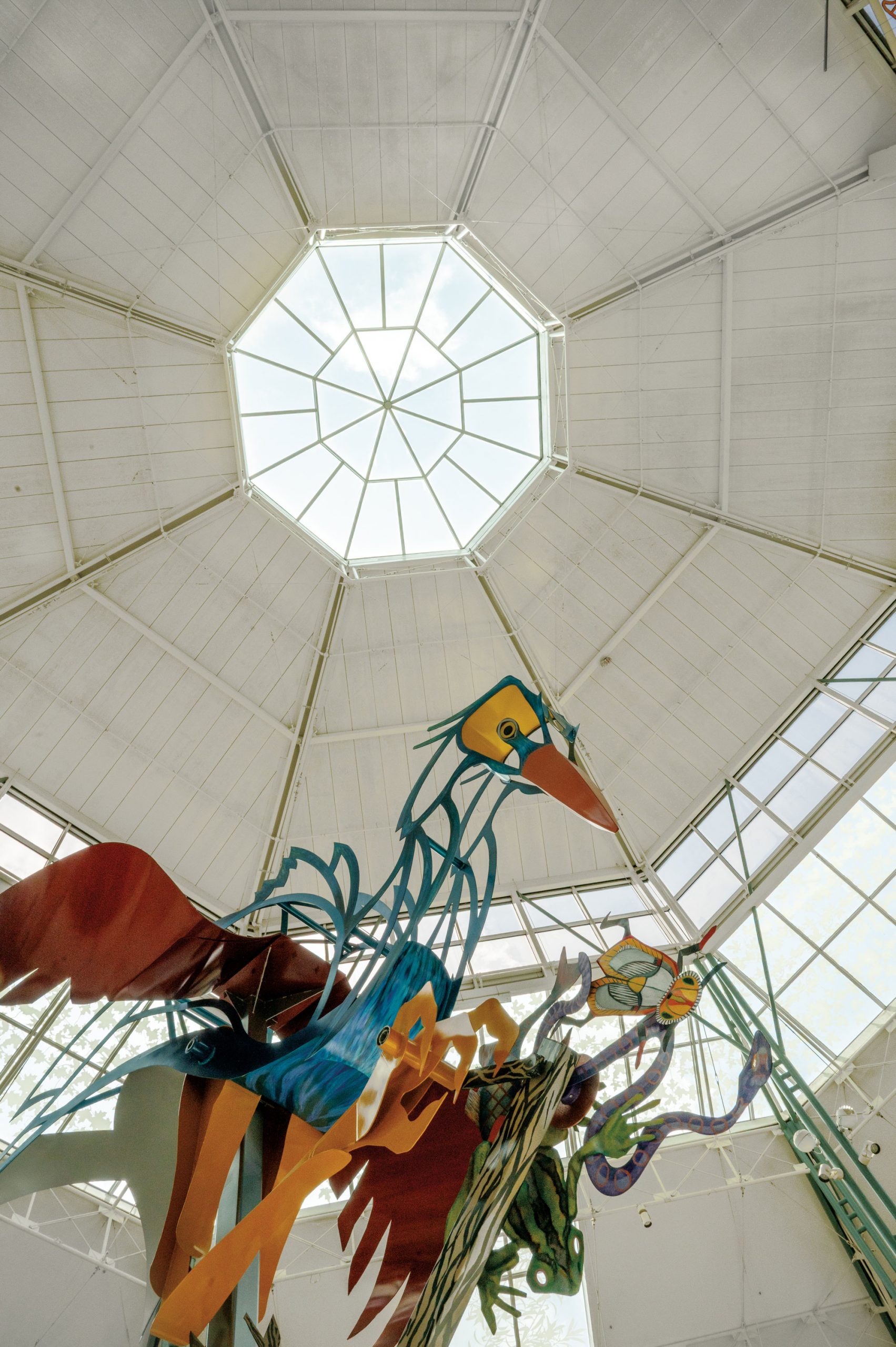
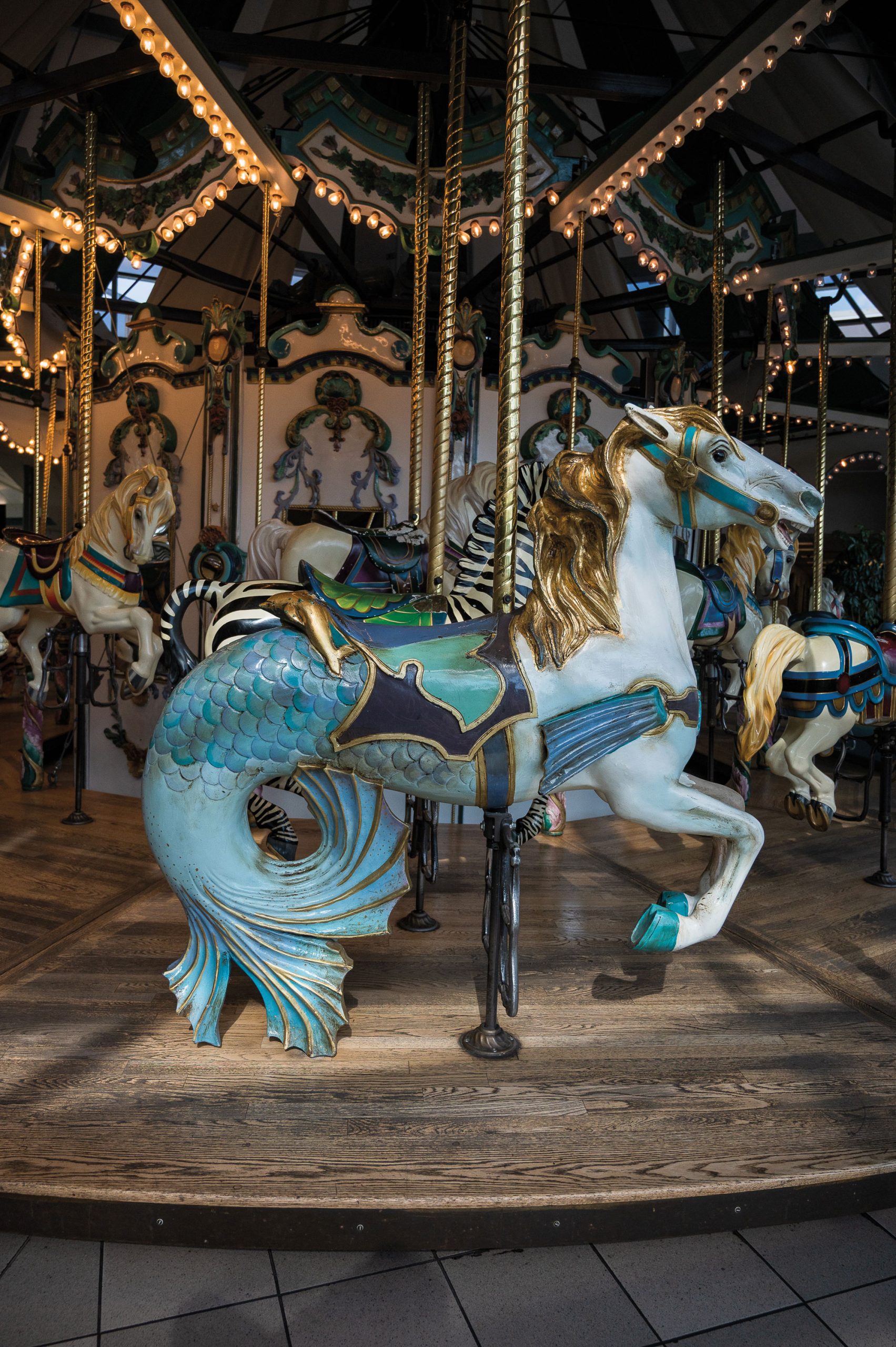
On a recent trip back to the mall I’d loved as a teenager, I am delighted to find it mostly unchanged. Certain stores have shuffled in and out—the Forever 21 is gone, of course, and a Psycho Bunny has moved in downstairs across from the Starbucks. But the beloved carousel next to the food court continues to spin, and the skylight above the mall’s atrium still sprays natural light across the slick tiles. I forget where in time and space I am, similar to being in a casino or on a cruise ship—an intentional feature of the mall.
Environmental perfection was the idea of Victor Gruen, the Austrian architect credited with creating the contemporary shopping mall. In the 1950s, before he built his first one, Gruen had unsuccessfully pitched an idea for an entirely enclosed shopping center in Houston. An open-air concept had, by then, existed for decades in Dallas’ Highland Park Village—the first self-contained shopping center in the country. Gruen’s idea was that Texas is hot, and enclosing the stores in one sealed block would protect shoppers from the nuisance of weather.
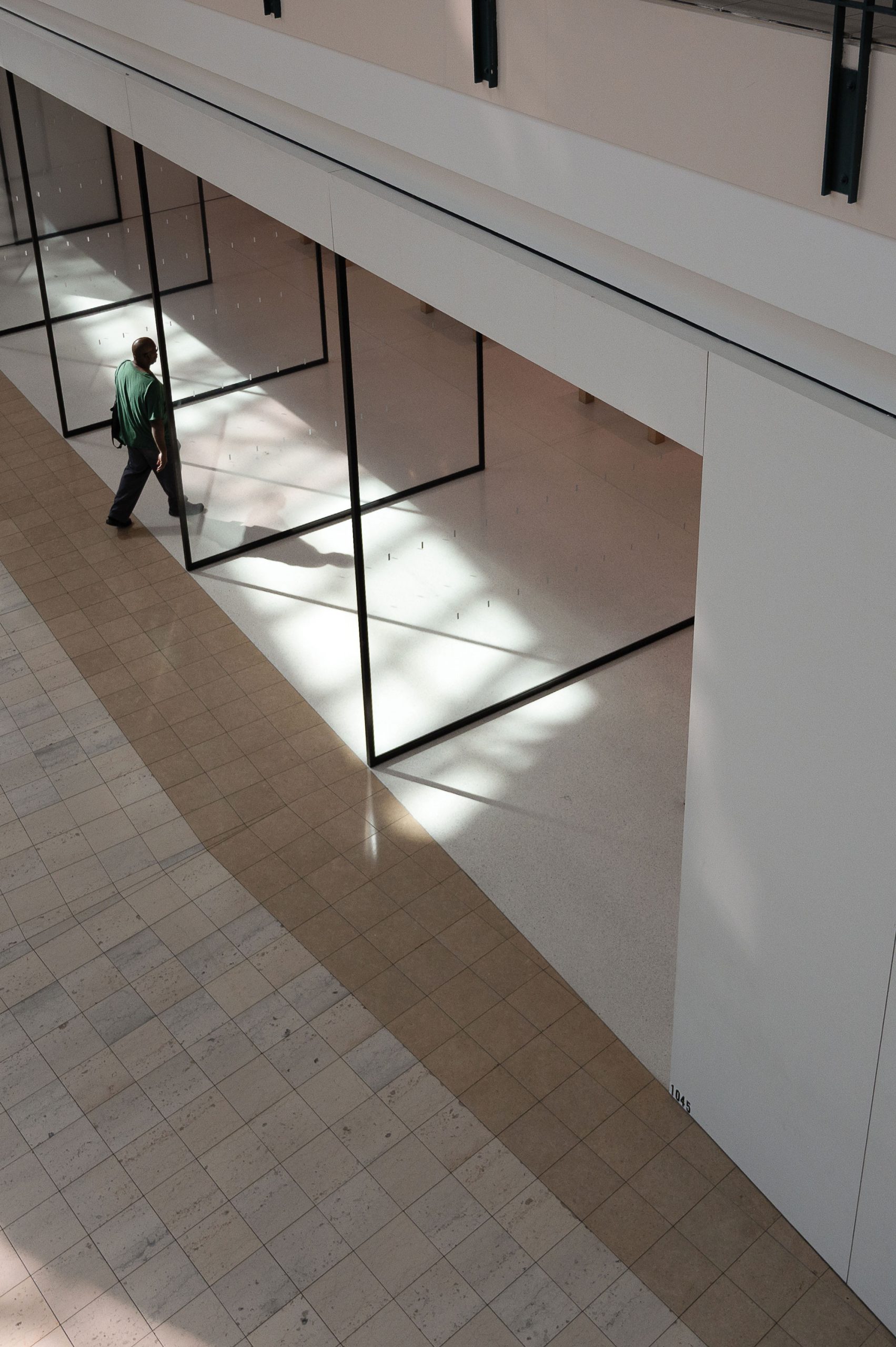
It is predictably hot on the early September afternoon I visit The Woodlands Mall. Inside, it won’t matter. My mom meets me in the parking lot and we enter through Nordstrom—a place we’d deemed too expensive to shop when I was growing up. We wind our way through the tiled halls, remarking at the places I’d once begged her to take me to: Abercrombie, the dimly lit Hollister, the Urban Outfitters where I’d bought a red dress for a school dance in eighth grade. Surprisingly, the halls are bustling. I’d long assumed the internet would’ve killed this place. But apparently people still love to shop in person, as long as the air conditioning is blasting.
Smell is considered the sense most closely associated with memory. We pass the Cinnabon near the food court and I am 17 again, my mom in tow, moving swiftly to our destination. Dillard’s is still in the same spot. In the back corner, a horde of teenage girls and their mothers rifles through racks of homecoming gowns while “Disturbia” by Rihanna, a song that was popular when I was in high school, plays from a speaker.
“You know what your granny would say,” my mom remarks, eyebrows raised. Judgmentalism runs along the matrilineal line in my family. “I never would’ve been allowed to wear this,” I say, holding up a particularly daring gown.
These were the girls I was so jealous of as a kid. I thought living in The Woodlands would make my life more glamorous. Or perhaps they were girls like me—from nearby suburbs and towns, making the pilgrimage to the best mall in the area to find a dress for a special occasion. We wander away from their corner and pick through racks of clothing elsewhere in the store, holding up certain items to our torsos, checking price tags, hanging the clothes back up. The best part of shopping is the imagined possibility—the way your life might change if only you owned this western-style blouse, the person you would be if you bought the loudly patterned dress. My mom and I take turns asking, “What about this?” knowing we won’t make any purchases. We walk out of the mall and into the summer heat empty-handed. Neither of us can remember the last time we’d “piddled around” together like that.
I left the bubble in 2011 for college in Austin, which was only three hours up the highway but was mythologized enough to feel wild and new. I met friends who grew up in places like Kingwood, and we bonded over our big dreams and cultural relics, one of which was Arcade Fire’s 2010 album The Suburbs. We blasted it at parties, relating to the restlessness of feeling trapped within the suburban sprawl. Not until much later did I learn the album was about The Woodlands, where band members Win and Will Butler grew up. I envied kids like them, with their better mall. But they’d wanted to get out, too.
My mom and stepdad still live in Kingwood, in the same house I slept in the night before my senior prom. In recent years, we finally cleaned out the last of my homecoming dresses from my former bedroom closet. You can’t hold on to everything forever. But The Woodlands Mall offers a time capsule—a way to revisit my restless years and Saturday afternoons spent browsing clothes with my mom. If its success is any indicator, the mall may outlive both of us.