
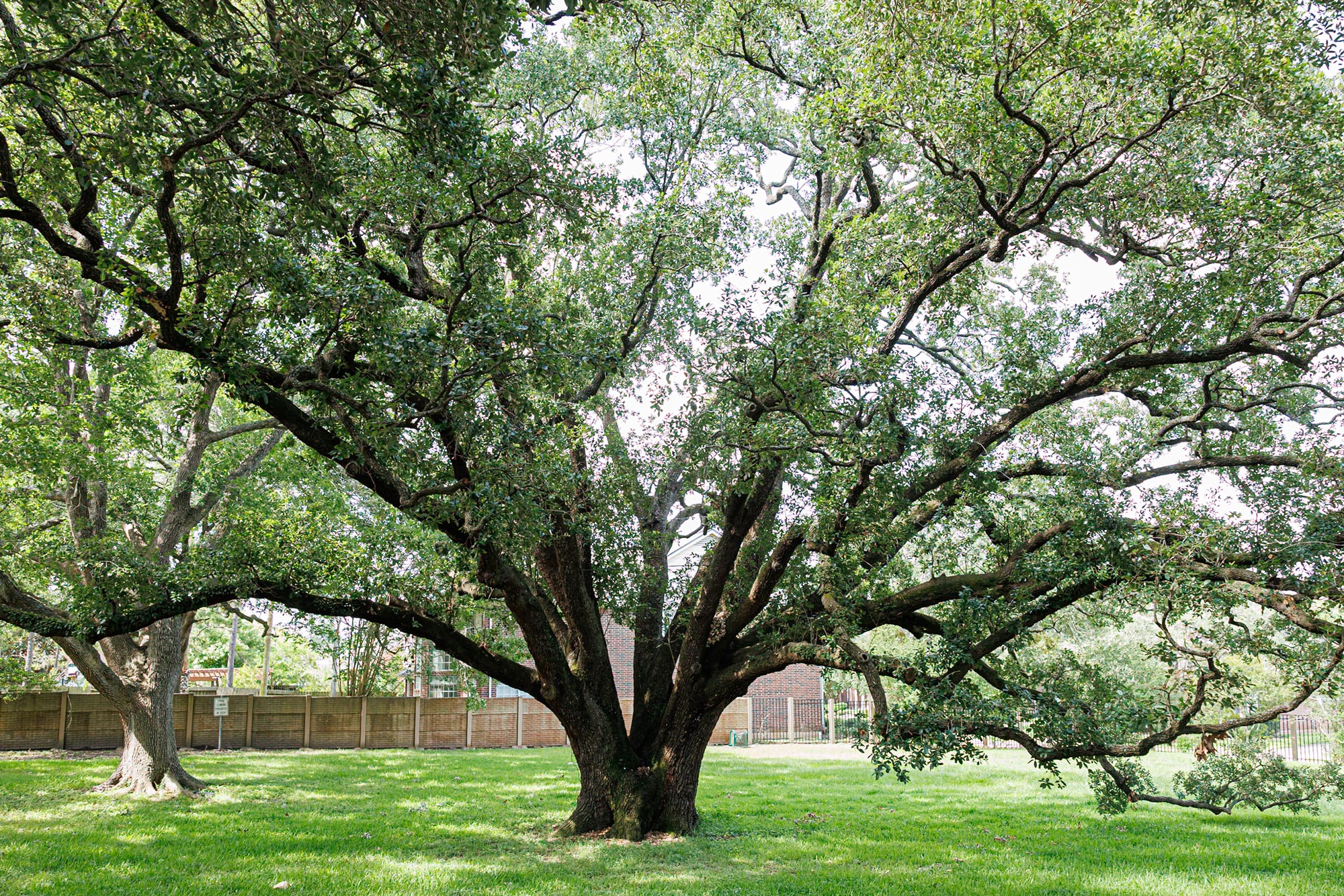
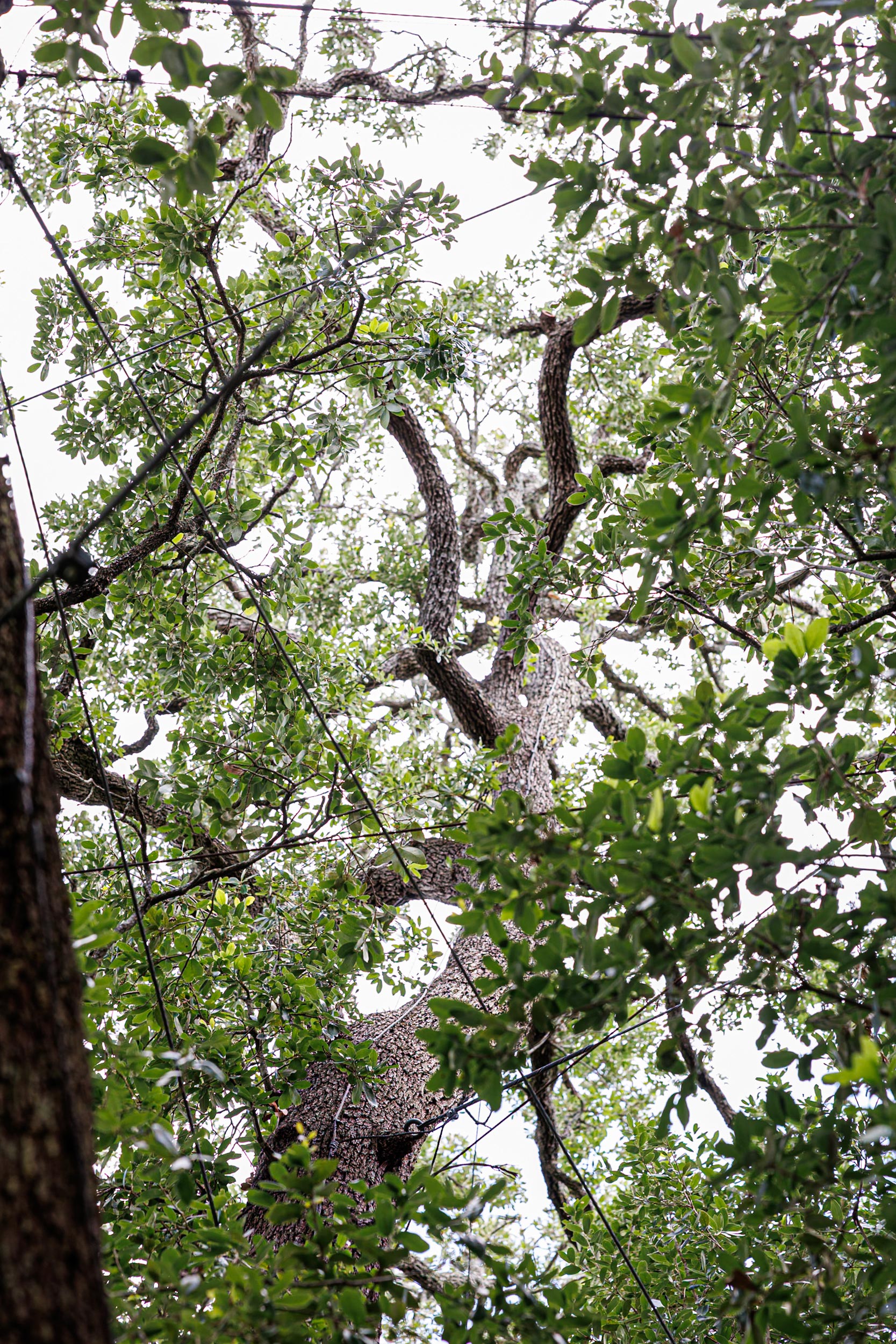
In the sweltering summer months, the sprawling canopy of one of Missouri City’s massive oaks offers a brief reprieve from the heat. Every year, people gather under its sturdy arms stretching across the Houston suburb’s Freedom Tree Park in recognition of an important moment in Texas history.
The park, on the west side of Misty Hollow Drive, is the site of what was formerly the Palmer Plantation. The oak tree, believed to be at least 200 years old, is known as the Freedom Tree because it stood witness to the plantation’s enslaved people learning that they had been freed.
This was two and a half years after President Abraham Lincoln signed the Emancipation Proclamation in January 1863, abolishing slavery in the Southern states. Despite Lincoln’s order, 250,000 people still remained enslaved in Texas until Gen. Gordon Granger, a Union commander, sailed into Galveston on June 19, 1865, to announce that enslaved people were free, an event that would eventually become the basis for Juneteenth celebrations across the country.

“When he arrived, he issued what was General Order No. 3,” says Daniel Burch, a paraprofessional in the genealogy and local history department at George Memorial Library in Richmond. In Galveston, Burch explains, legend has it that the order was read at the historical mansion Ashton Villa, but it was more likely published in the newspaper, then printed out in pamphlets, which were distributed in the area. “One was sent down to the Palmer Plantation.”
Ed Gibbs, the leader of the plantation’s enslaved people, announced this order under the shade of the Freedom Tree, according to the nearby historical marker.
“In spite of what may not still exist, or what may never have existed in terms of a printed chronicle or even an oral story, is to know that this tree was here and it witnessed what happened,” says Naomi Carrier, the founder of the Texas Center for African American Living History and the team lead of the Houston branch of the Black Heritage Tree Project.
The Black Heritage Tree Project is a collective that honors the legacy of Black communities across the African diaspora by sharing the stories of Black heritage trees described by the project’s website as having “overcome impossible odds to bear witness to historical moments in Black history.”
“The tree itself helps to tell the story, and that is a consequence of so much that has been taken away, torn down, disappeared,” Carrier says.
This became apparent to Alicia Odewale, the founder and director of the Black Heritage Tree Project. Odewale, who has a doctorate in archeology, says the trees forced her to pay attention to them while she was working on an archeological site in Greenwood, the neighborhood in her hometown of Tulsa, Oklahoma, that is known as the site of the Tulsa Race Massacre of 1921. Despite 35 city blocks being destroyed, remnants of the business district remained buried. The trees, Odewale discovered, had been holding artifacts and pieces of structures from the neighborhood in their root bulbs.
“Sometimes, it takes an archeologist to find those parts of it, but it’s such a powerful way to talk about how we, as people, have impacted this landscape,” Odewale says. She adds that discussions of enslavement and Black history tend to focus on portraying Black people as property. “It’s like we are robbed from that opportunity of actually how we contribute to history, how we impacted the landscape around us, how we made changes to this world.”
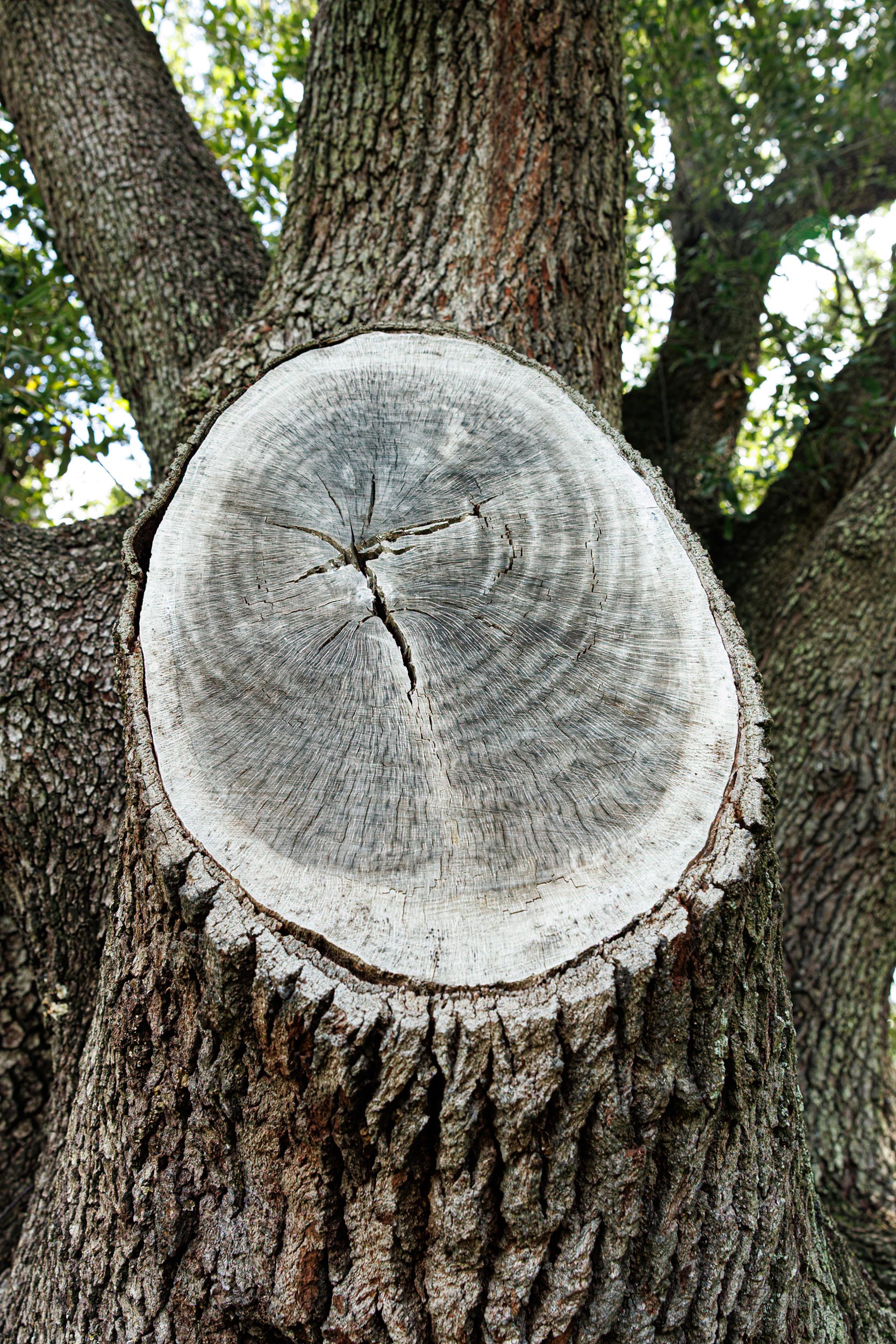
After receiving a National Geographic Society’s Meridian Grant, she was able to launch the Black Heritage Tree Project, and in the two years since, it has collected 105 tree stories, 19 of which have been mapped across four sites: Tulsa, Houston, Galveston, and St. Croix. An interactive map allows visitors to read about stories of Black freedom, celebration, joy, love, and resistance.
While many of these trees are considered by the Black Heritage Tree Project to be living witnesses, not all of them are still alive. Instead, some have been given a second life as works of art. One of these includes Earl Jones’ sculpture of Galveston native, Jack “the Galveston Giant” Johnson, the first Black heavyweight world champion in 1908, who inspired future boxers like Muhammad Ali.
“Jack Johnson is Galveston’s most famous native son,” says Samuel Collins III, the team lead of the Galveston branch of the Black Heritage Tree Project and the owner of Stringfellow Orchards, another site of Black heritage trees mapped by the collective. “We are 80 years after his death and people are still talking about him, he’s still being celebrated, but there’s so much more to learn about him. The tree gives us an opportunity to spark the conversation.”
Jones, a Galveston native like Collins and Johnson, carved Johnson’s figure out of the salt-choked body of an oak tree that was destroyed by Hurricane Ike in 2008. Johnson rises from the tree’s base, his championship belt sitting proudly on his waist and his gloved fists thrust in the air.
The carving is one of 27 sculptures made in the aftermath of Hurricane Ike. It is also one of almost 30 that Jones completed in the Galveston area that are on display at places like the Brazoria Heritage Foundation, which has one carved out of a Bois d’Arc tree from the Sweeny Plantation.
Along with the interactive map, which visitors can use to find out more about Black communities across the African diaspora, the project also has a list of guidelines that it recommends people read before making a trip to visit one of these sites. It offers ways visitors can show respect to the trees and their grounds, Odewale says, from hugging a tree to how to take action if a tree is in distress.
“Before we encourage people to go out and find these trees,” she says, “we want to make sure that they know how to show respect, know how to show love.”