
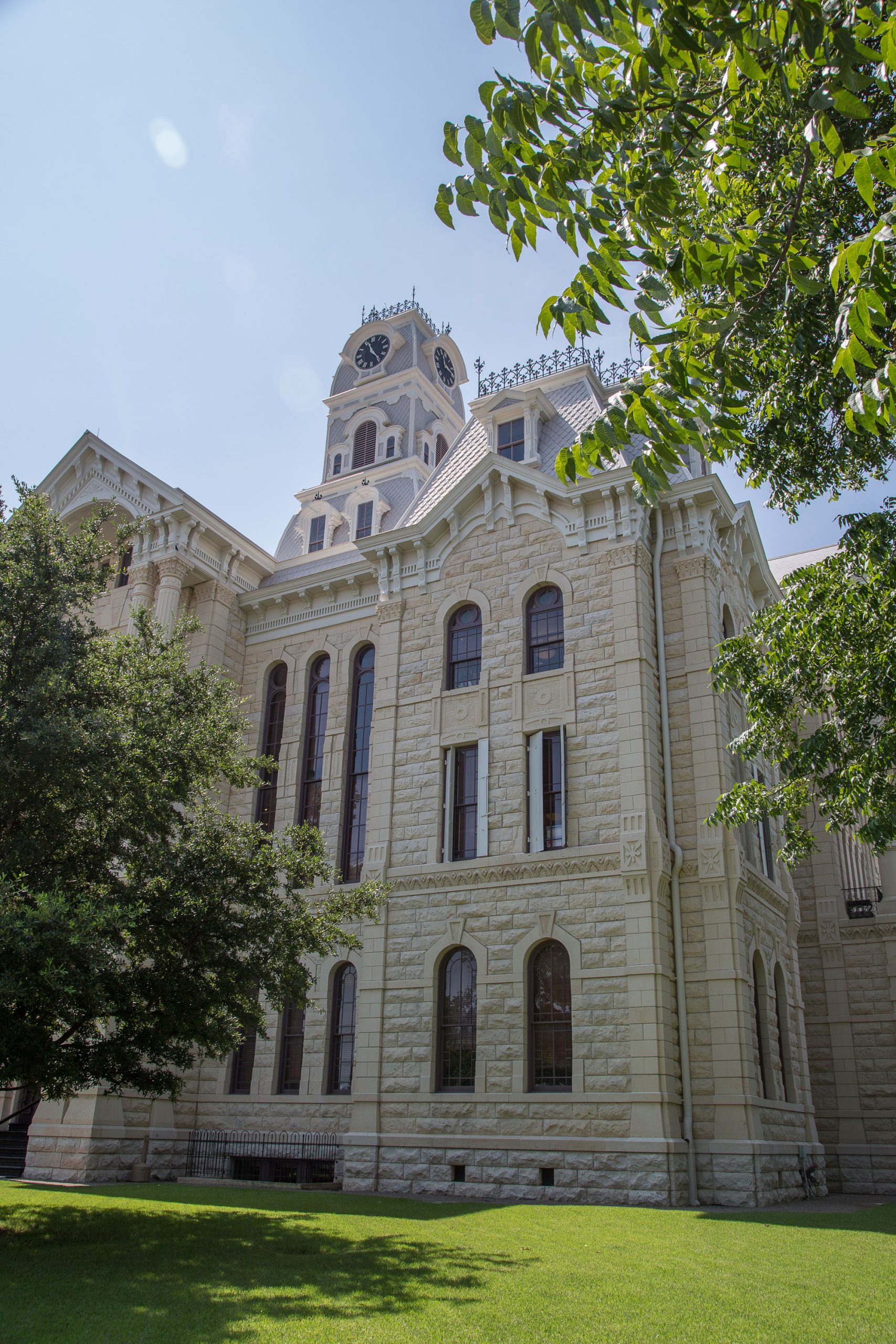
Heartsick onlookers watched from afar as the 70-foot bell tower on the Hill County Courthouse in Hillsboro collapsed in flames. The 1993 New Year’s Day blaze was started by an electrical short, and it consumed most of the 1890 building, leaving only four limestone walls and a community without its anchor. The rebuilding and restoration process took six years and cost $9 million, most of which was raised through grants, state funding, and donations, including money raised at a benefit concert by Willie Nelson.
In the years that followed the Hill County fire, then-Gov. George W. Bush asked the Texas Historical Commission to assess courthouses across the state. It was discovered many of them were deteriorating rapidly.

This prompted the creation of the Texas Historic Courthouse Preservation Program, which has partnered with counties for 25 years to save these architectural treasures, honoring the artistry and ingenuity of the past while ensuring they remain operational and open to the public. Largely constructed over a 100-year period from the 1850s to the 1950s, county courthouses are not only government buildings but also representative of a county’s history and identity. In May, the Bullock Museum will showcase artifacts from specific restoration projects in an exhibition on the history of the statewide program.
THCPP coordinator Susan Tietz says the program will be a legacy for the Texas Historical Commission, the state, and the legislature.
“I think people are still going to know about [this program] decades from now,” she says. “Maybe hundreds of years in the future, they are going to know about these restorations.”
In 1998, Texas courthouses were listed on America’s 11 Most Endangered Historic Places by the National Trust for Historic Preservation, drawing national attention to the cause leading up to Bush and the legislature establishing the preservation program in 1999.
Since then, the legislature has appropriated $486.2 million to THCPP, with grants funding 81 full restorations. The program has also issued grants for partial restorations and planning grants to assist counties in preparing construction documents.
“What’s important to me is preserving a sense of place,” Tietz says. “Courthouses are at the heart of the county seats, and it’s just such a critical piece to those communities.” In fact, it’s a grant requirement that the building be open to the public.
County Judge J.D. Clark says one of the reasons he was prompted to pursue restoration of the Wise County Courthouse in Decatur was to preserve local heritage as the fast-growing county near Dallas-Fort Worth continues to boom. In addition to it being a unique piece of architecture, he notes that it is also a way for Wise County to share its culture and history with the world.
“If you were born and raised here, you love and are fascinated by the courthouse,” he says. “If you just moved here last week, you’re fascinated by that courthouse.”
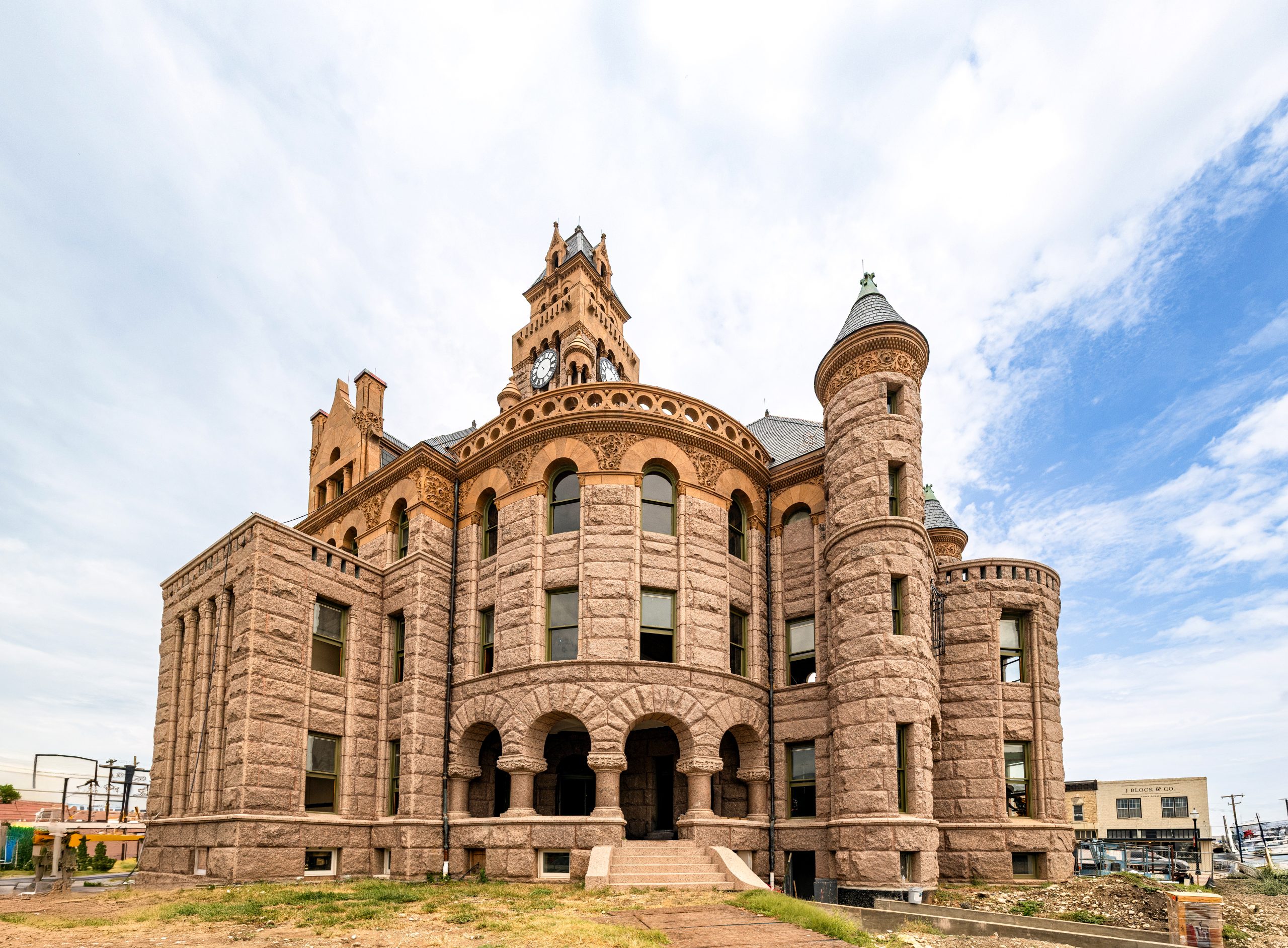
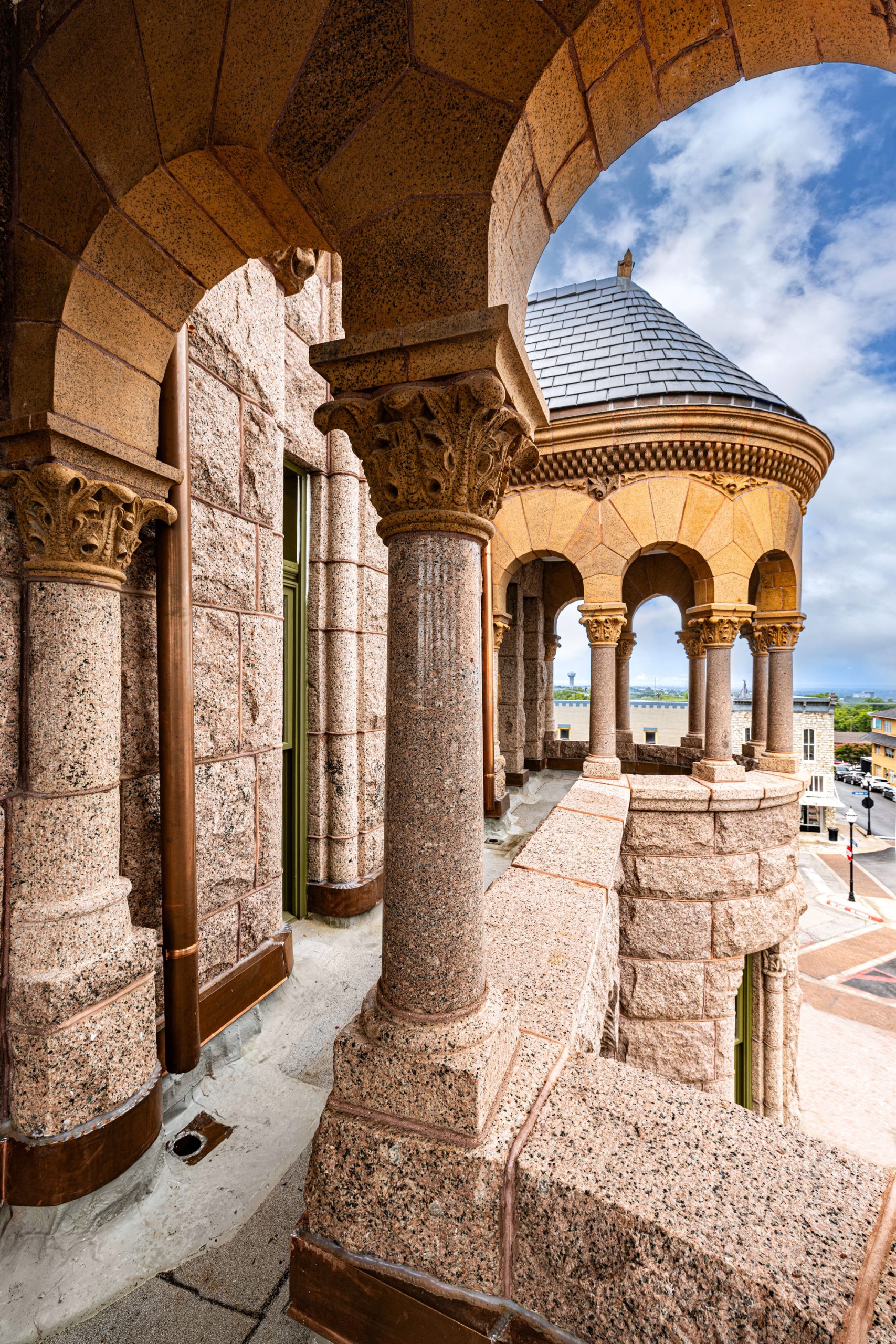
Designed by renowned architect J. Riely Gordon, the Romanesque Revival courthouse was built in 1896. Komatsu Architecture of Fort Worth took on the three-year project to restore the castle-like structure, which included preserving the exterior’s pink granite masonry and terra-cotta ornaments and installing a new roof, removing orange tiles and replacing them with dark slate, according to the original design.
The most jaw-dropping change is the district courtroom on the second floor. Originally two-stories with a balcony, the room was reduced to one floor with a dropped ceiling to create additional office space upstairs around 1960. The courtroom is now restored to its original grandeur with a balcony complete with seating, rich woodwork throughout, and an elegant arch above the judge’s bench. Sunlight now floods the once dark room through fully restored windows.
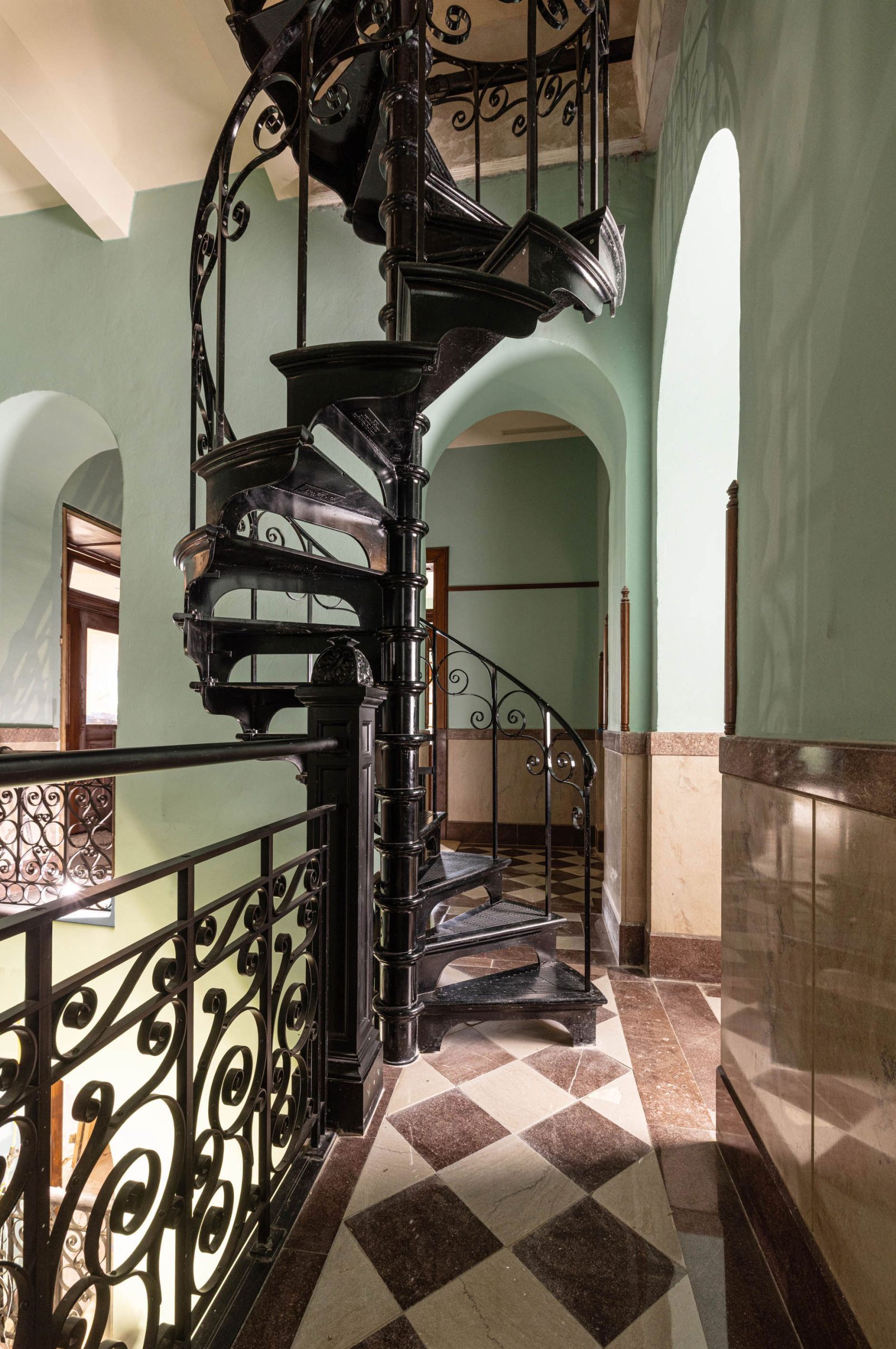
Tietz says reconstructing missing architectural features is one of the biggest challenges in these restorations. The complete historical plans are not always available, so following selective demolition, the architect and THC project lead explore the building looking for clues to the aesthetics of the original trim, newel posts, railings, and other items.
“They’re also looking for historic photographs or trying to find ghosting on the wall that might suggest the shape or profile of the wood trim,” she says. “It’s one of the most exciting things about the project, while also being the most challenging.”
To make the Wise County Courthouse a modern workspace, it was outfitted with a new HVAC system, fire suppression system, a new elevator, fiber internet, and security cameras. Although some of these things were installed in past remodels, most of that work did not factor in the historical accuracy of the building. The full restoration allowed everything to be updated and incorporated seamlessly—a challenge because the mechanics and technology didn’t even exist when the building was designed.
Clark acknowledges the process was tedious at times but says the work ensured the courthouse, which was rededicated in October 2025, will be used for generations to come. County offices are expected to reopen in the building in early 2026.
Other full restorations that are expected to be completed in 2026 are courthouses in Callahan, Hall, Polk, Taylor, and Upshur counties.
The Taylor County Courthouse in Abilene is expected to be rededicated in April after a five-year project. Built in 1915, the restoration included reconstruction of the entry stairs, new exterior doors and windows, and like the Wise County Courthouse, the removal of an inserted floor in the district courtroom to return it to its original two stories. Of course, it was also outfitted with modern technology and amenities.
Instead of a bell tower, the Taylor County Courthouse has a flat roof with a flagpole mounted on top. Just putting up a new flag and lighting it has drawn lots of local attention, says Tamra Lewis, deputy county administrator. “I think people are going to be in awe once they get inside and see the grand stairwell, the marble, and just the beauty of the building itself.”
Although these two majestic projects are completed, only one-third of all historic courthouses have been restored, so the work will likely continue for decades, Tietz says. Full restorations are in progress in Comanche, Freestone, Kimble, and Willacy counties with projected completion dates in 2027 or 2028. Although people often visit restored courthouses at the rededication ceremonies, Tietz notes they are public buildings and open year-round.
“I highly recommend you go inside because the finishes inside these courthouses are extraordinary,” Tietz says. “We restore all the original paint colors, ornamental finishes, and ornamental painting.You’d be amazed at how beautiful the buildings are inside.”