
This article is part of “New School Barbecue,” our list of 25 barbecue joints worth the drive around the state.
Barbecue is often seen as this rigid tradition in Texas. But anyone who has been around the scene will tell you just how much the cuisine has changed even over the past decade. Today, pitmasters face the same level of Michelin Guide scrutiny as the finest French chefs, and rising costs have turned a cheap lunch into a special occasion meal. But those additional pressures have also created new opportunities.

For the sake of modernization and cost-effectiveness, my colleagues and I at LeRoy and Lewis Barbecue in Austin have had to create a fourth leg to the Texas trinity of brisket, ribs, and sausage. Our sourcing standards restrict us to locally raised proteins, but there are so many other parts of cows and pigs that can inspire a chef.
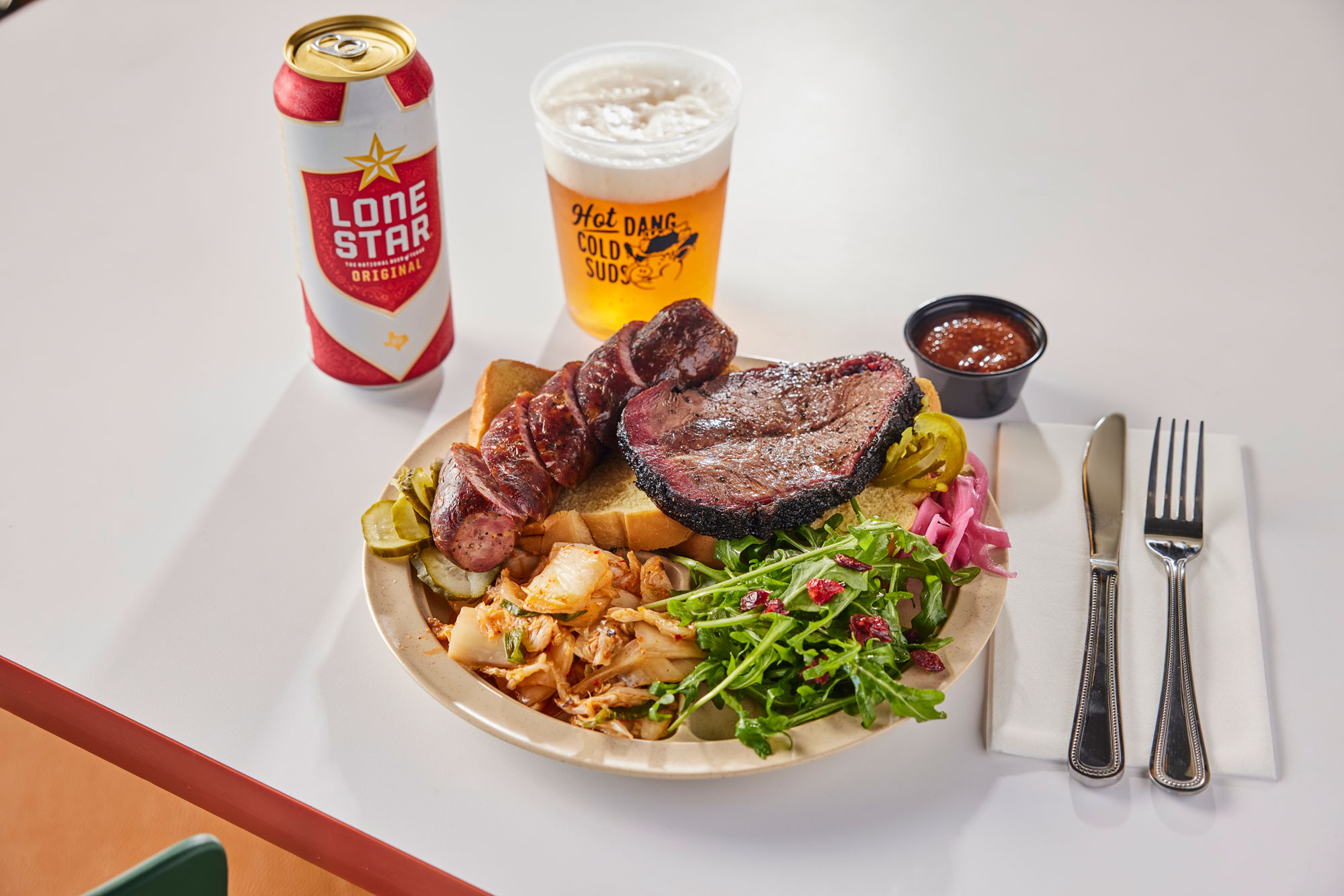
For instance, pitmasters are starting to look at cuts like flat iron and beef cheeks—which I trim like a brisket and slow-cook in their own tallow. Pork-wise, we’ve created bacon ribs: spareribs with the belly meat still attached. Afterward, the ribs are cured and smoked twice like a slab of bacon until they have a pronounced bark and luxurious tenderness. These kinds of alternative cuts and cooking methods not only give us the distinction of being “new school” barbecue, but also help Texas ranchers.
“Cattle don’t only produce briskets,” says Dustin Dean of Dean & Peeler Meats, a key beef producer out of Floresville, south of San Antonio. “For every two briskets on a cow, there are also four shanks, two navels, and hundreds of pounds of other meat. To help us grow, partners like LeRoy are crucial.”
What everyone in the industry must come to terms with is that ranchers need to sell the entire steer to make their businesses work. That requires restaurants getting creative while also educating consumers. Popularizing nontraditional beef cuts like shoulder clod and top round is only one component. Chefs must also look to alternative pork and poultry preparations as the next step in our culinary evolution. Because only when all facets of the barbecue food chain are scrutinized can we create a more affordable reality—one that’s more sustainable for ranchers, restaurant operators, and guests at the same time. have evolved.”