

Inside the Witte Museum’s Susan Naylor Center, a colossal Quetzalcoatlus glides overhead with outstretched wings. Not far from this pterosaur, other casted skeletons prowl in the sunlit galleries, among them an Acrocanthosaurus and the giant marine Tylosaurus, which lived in the shallow seas covering Texas some 90 million years ago.
“The creatures you see existed here over hundreds of millions of years,” says Nalleli Guillen, vice president of interpretation and curator of history. “They’re all part of the Texas story.”

Since 1926, visitors of all ages have flocked to the Witte, situated on the banks of the San Antonio River in Brackenridge Park, to marvel at its plethora of Texas treasures. This year, as the institution commemorates its centennial, the Witte is recounting its story for audiences anew through a trio of bilingual exhibitions and a special anniversary party for visitors of all ages on Oct. 10. Then at night, the festivities shift to a 21-and-up after-hours celebration with live performances by Saint Motel and DJ CatWalk.
In October 1926, visitors poured into The Witte Memorial Museum to marvel at its displays of Texas fossils, wildlife, art, and artifacts. The museum was made possible by the bequest of a local businessman, Alfred G. Witte, but the driving force behind it was a Michigan-born teacher and botanist. Ellen Schulz Quillin opened the first incarnation of the museum in the Main Avenue High School where she taught. With help from her students, she raised funds to purchase the Witte’s founding collection, the Attwater Collection of Natural History, working together with a taxidermist and other professionals to create dioramas from the namesake naturalist’s animal specimens.
These are among the many artifacts on display in The Witte Museum: 100 Years, a special anniversary exhibition running through Jan. 9, 2027, in the Robert J. & Helen C. Kleberg South Texas Heritage Center, one of the adjoining exhibition halls at the Witte. The show traces the museum’s evolution from its grassroots beginnings to its $120 million campus expansion in 2017, and accompanies the new book, The Witte Museum: 100 Years of Inspiration, Innovation, and Resilience, by President Emeritus Marise McDermott.
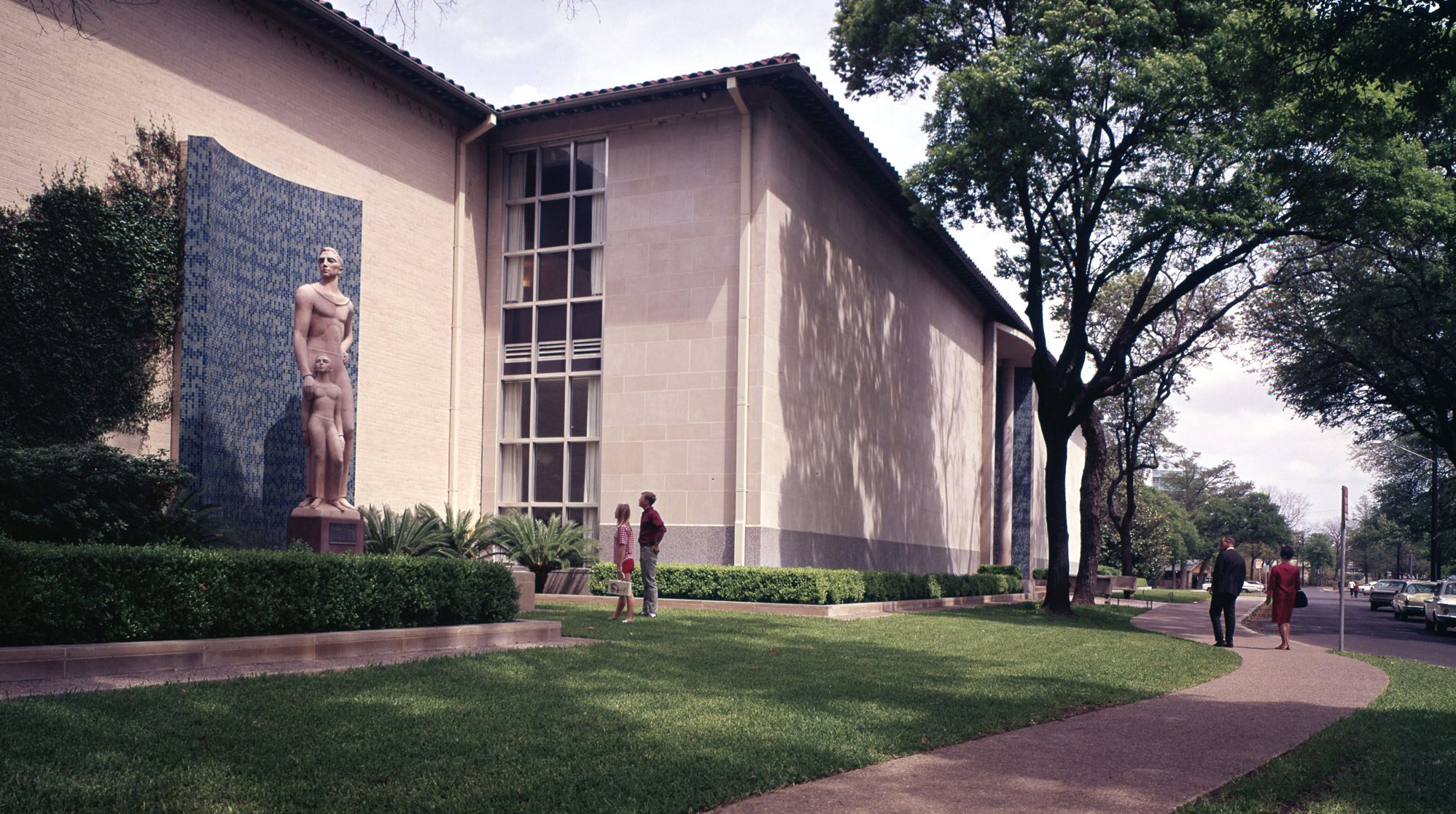
In the century since its founding, the Witte has become a renowned repository for Texas history, with a 400,000-piece collection that casts a broad net across nature, science, and culture. “It’s all of those things together,” says Witte CEO and President Michelle Cuellar Everidge. “Telling Texas stories is what we’re all about.”
Today, the 10-acre campus blends both indoor and outdoor spaces, from soaring glass galleries designed by Lake Flato to interactive venues like the H-E-B Science Treehouse, and a patchwork of riverside gardens, event centers, and leafy courtyards, including the 4,443-square-foot courtyard devised around a spiraling Fibonacci sequence.
Buildings aside, the museum sits on the San Antonio River, on the path of the acequias, the irrigation canal system built by Spanish and Native American laborers in 1718-19. “The remnants of the Acequia Madre de Valero are here on the campus,” says Everidge about the National Historic Civil Engineering Landmark. “This area of San Antonio has been alive for centuries.”
Equally lively is the natural world awaiting in the Texas Wild Gallery, where open dioramas crawl with animals representative of the state’s eight unique ecosystems. “Having open dioramas is something really ingenious for us,” Guillen says of the migrating birds, wild cats, and venomous snakes that dominate the permanent gallery’s visual landscape. “People love to say everything is bigger in Texas, but in this space, you really feel it.”
In addition to the centennial anniversary exhibition, there are the other two commemorative shows. Adventures in Texas Deep Time, open through March 14, 2027, explores ongoing research by the Witte and its collaborators as well as real discoveries happening today, from the search for the site of the Battle of Medina to newly discovered mosasaurs from Bexar County and dinosaur fossils from Big Bend National Park.
Through Feb. 7, 2027, Gather ‘Round the Table: Texas Food Traditions presents the ingredients, people, and cultural exchanges behind the state’s culinary scene. Expect interactive “food fights,” where visitors weigh in on longstanding staples, be it corn or flour tortillas or red or green salsa, as well as the history of regional food traditions, from Hill Country peaches to South Texas peanuts. The museum plans on hosting food tastings to accompany the exhibit.
Every year, roughly 350,000 visitors, one-third of which are children, walk through the Witte’s front doors. As the institution looks to its second century, Everidge and her team feel empowered to continue educating and inspiring the next generation, yet she admits it will be a challenge in today’s fast-changing world. “Museums used to be a part of our daily lives a bit more than they are now,” she says. “Some might think about museums as stodgy, quiet, or not for kids, but we’re getting out there to change people’s perspectives of that.”