

At Arwa Yemeni Coffee in Richardson, co-owner Susan Shihab says many of her visitors have never even heard of the country featured on the company’s marquee. But for some, like Athena Abujaber, a vice president at a health care staffing company, Arwa provides a “safe space” and a welcoming environment with Middle Eastern accents, such as Ramadan celebrations with strumming oud players. Others like Abrar Naely, a dietitian from Sachse, drive dozens of miles out of their way every weekend to hang out in an alcohol-free place she calls “a small piece of Yemen in Richardson.”
As a Yemeni American from Lubbock, Shihab has fielded questions about her native country her entire life. That lack of awareness, paired with the Dallas area’s booming Arab population, was the impetus for Shihab opening Arwa with her family in 2022. Reflecting its old world charms, the coffee shop channels Yemen’s beauty with geometric wood designs, ogee arches, honeycomb tile floors, and a mosaic of the capital city of Sana’a. Now, instead of explaining Yemen’s location on the Arabian peninsula and its centuries-long influence as a crossroads of ancient civilizations, they are displaying Yemen’s culture in 3D—while also sharing what many professional tasters, or cuppers, consider to be among the world’s best coffee beans.
“We wanted to teach people about Yemen,” Shihab says. “Coffee was just the vessel that allowed us to do it.”

Aside from crude oil, Yemen’s coffee has turned out to be the country’s most enduring natural resource. Demand for the stimulant started spreading as early as the 14th century, and quality beans can fetch as much as $240 per pound nowadays.
Smaller and sweeter than those harvested in Colombia or Brazil, the beans are air-dried in their husks on rooftops—just as it was done over 500 years ago. The 4-week process lends flavors of cinnamon, dried fruit, and chocolate. And with Yemen’s arid climate and high elevation (up to 7,900 feet), only a small crop of beans are grown every year. That scarcity, along with global demand and shipping issues, are why other Yemeni-focused concepts like Sayfani Yemeni Coffee & Tea in Allen and Coppell also sell beans from Ethiopia and other countries.
Today, local entrepreneurs like Shihab and Sayfani Coffee co-owner Omar Ahmed are among the approximately 900 Yemeni Americans living in Texas, according to the Arab American Institute. But those numbers don’t tell the whole story. Limited census data from 2020 indicates Texas has one of the fastest-growing Arab American populations in the country, with approximately 245,000 residents with Arab ancestry. However, organizations like the AAI consider that data incomplete. A more accurate number will be available when the next count occurs in 2030, but the AAI estimates Collin and Dallas counties, where Yemeni coffee shops have sprouted up in the last two years, have a population of more than 33,000 Arab Americans.
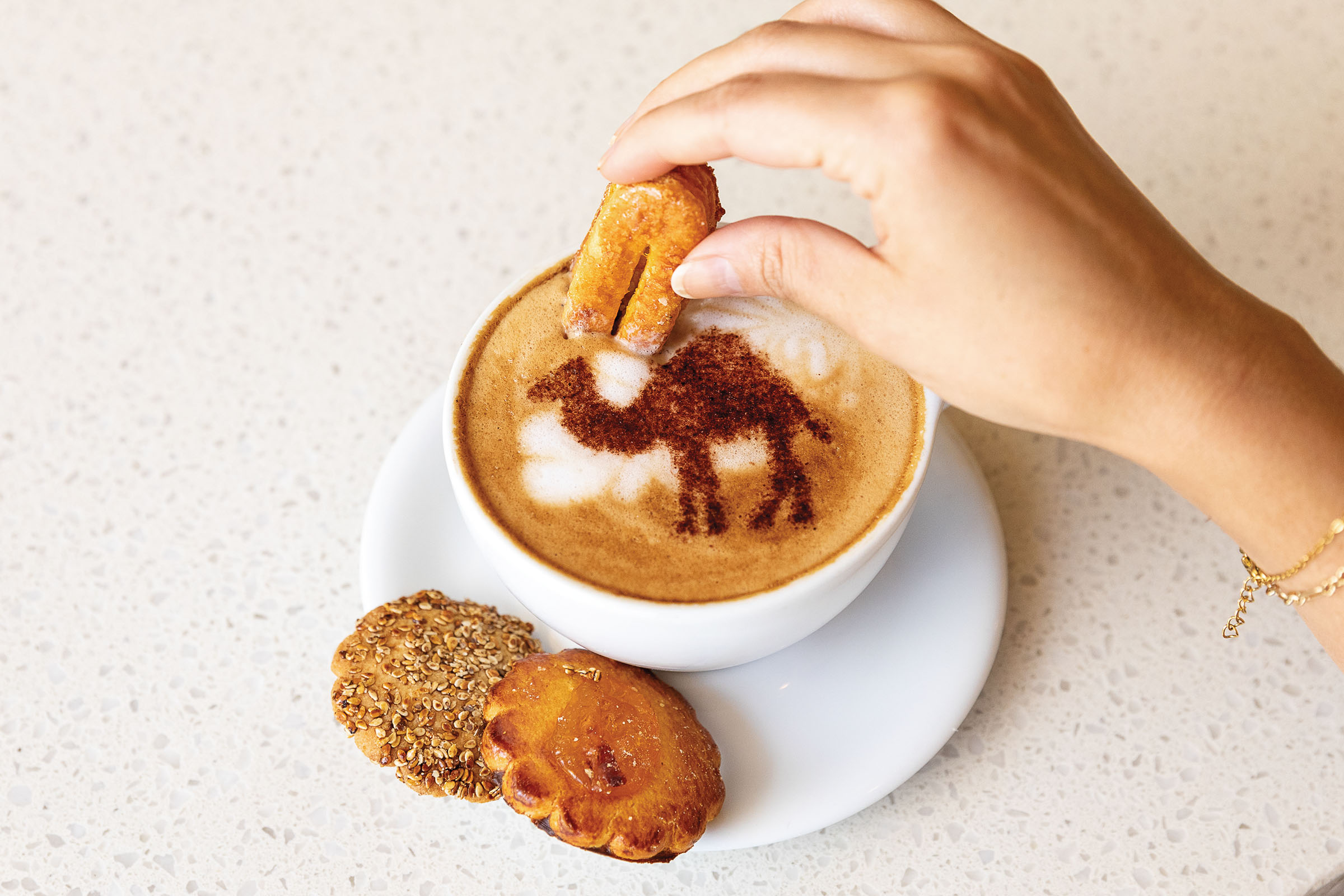
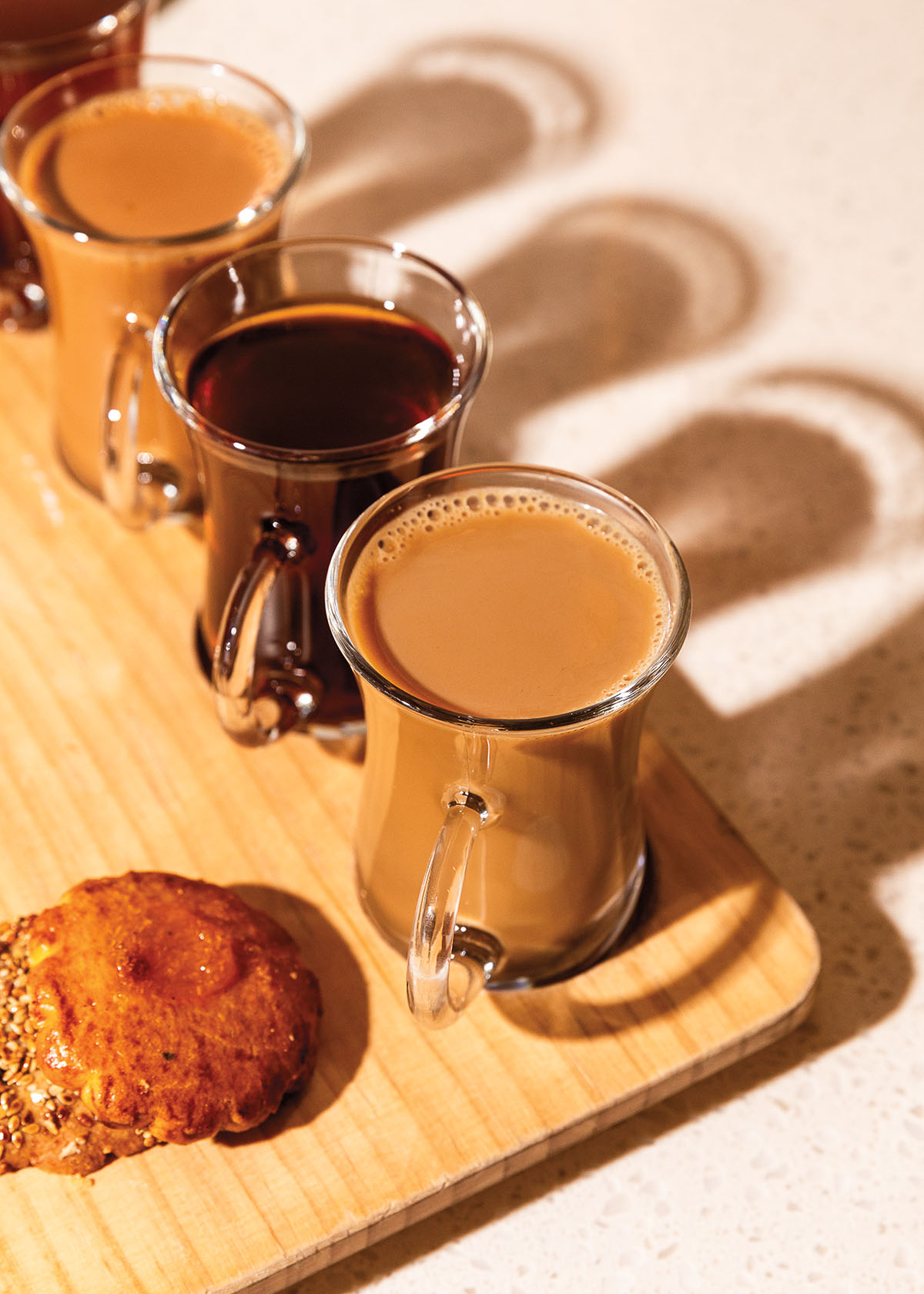
Shihab and her Detroit-born husband, Yazan Soofi, wanted to establish something similar to Michigan’s thriving Yemeni coffee scene after they moved to North Texas around 16 years ago. In addition to serving traditional drinks like qishr—which is brewed from the husks of coffee beans mixed with ginger and sometimes cinnamon—they also offer more modern creations, such as a cardamom-spiced latte topped with a dusting of cocoa powder in the shape of a camel. Glass cases are lined with Middle Eastern treats, including cream-topped milk cakes in flavors like rose, saffron, and pistachio.
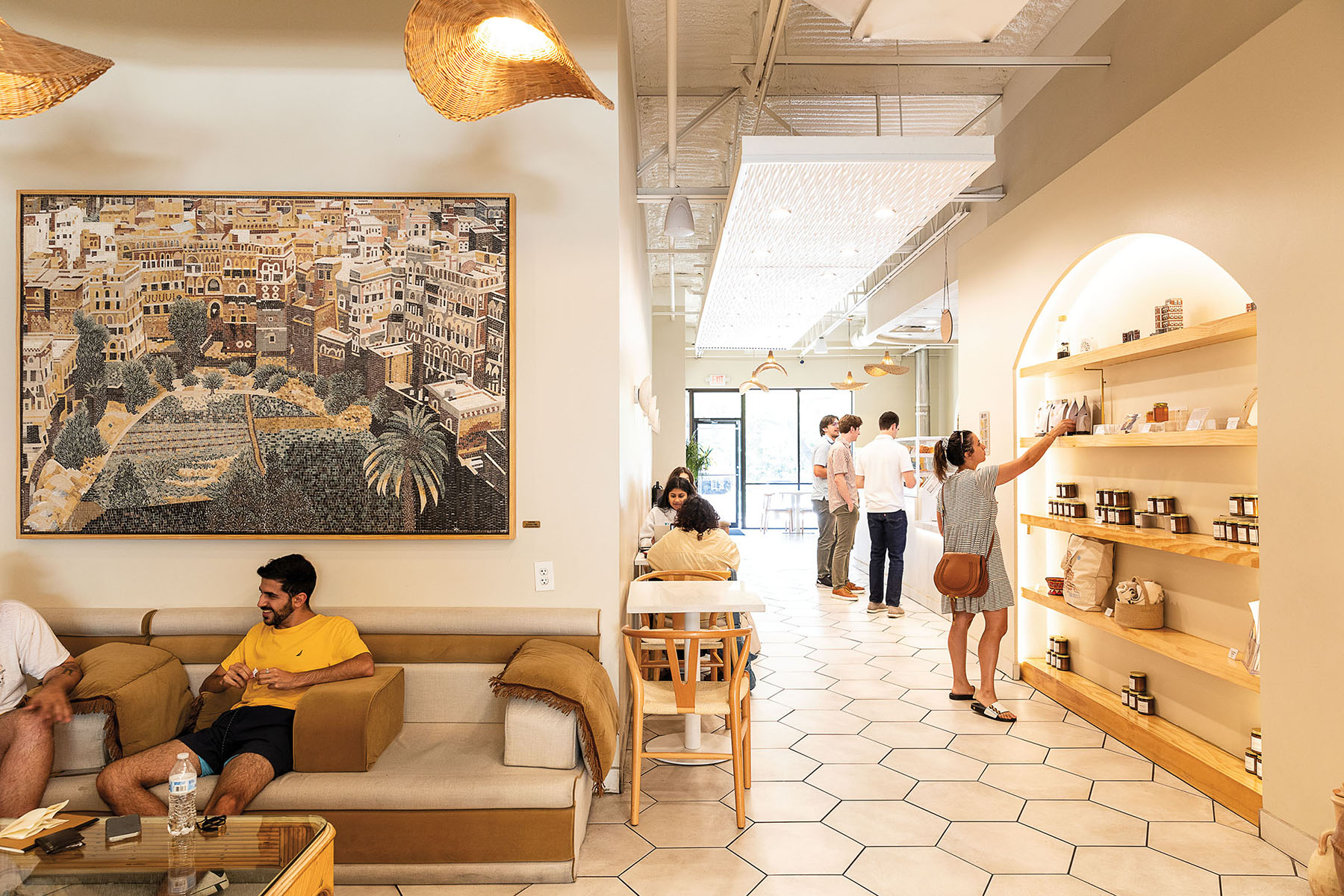
“We love our culture,” says Ahmed, who, like Soofi, moved to Texas from Detroit. As someone forced to adapt to large-scale corporate products in his youth, Ahmed says it’s a relief to see Yemeni-style coffee shops becoming more prevalent across North Texas. “Coffee isn’t just a wake-up drink [for Yemenis],” he says. “Coffee is like water.”
With an Arab American population that’s projected to keep swelling, Texas is seen as the next frontier for Yemeni coffee shops. Michigan-based Haraz Coffee House is multiplying rapidly after its first Texas location in Sugar Land debuted last year. Along with two new shops in Plano and Irving, nine more locations are in the works for the Dallas-Fort Worth area, as well as two more in Austin. Growth is also imminent for Arwa, the first Texas-based franchise.
Since opening the latter, Shihab and Soofi are already noticing a newfound familiarity with Yemen’s outsize role in coffee production. In addition to Arwa’s educational goals, cultivating community for customers like Abujaber is a bonus.
“When people used to think of Texas, they didn’t really see it as a melting pot—at least not when I was growing up,” Abujaber says. “So it’s been beautiful to see that change and see more Yemenis and Middle Easterners become business owners and share the culture that they love more freely.”