
In the rolling hills of Llano County, the town of Castell beckons with its goldfinch-yellow general store and off-the-grid charm. Despite its pint-size population—roughly 100 by last census count—and its blink-and-you’ll-miss-it appeal, this quaint ranching community is now home to a burgeoning art scene thanks to the Castell Hill Country Gallery and Museum and the opening of a new artist residency just up the road.
Rachel Farrington is the multi-disciplinary artist, designer, and visionary behind La Cuna Center, a 16.5-acre nonprofit arts and ecology complex focused on addressing the nuances and challenges of contemporary life. The project, which sits northwest of Castell on the artist’s family’s land, is composed of a series of structures in progress, all hand-built by Farrington, her husband, and their teenage son.
Together with architect Riley Triggs, AIA, and with help from Kelly Purkey, a refuge manager at Balcones Canyonlands National Wildlife Refuge, Farrington is bringing a deep-seated dream to life. The motive? To reconnect people to themselves, the land, and its natural cycles through the intersection of art, architecture, and environmental stewardship.

“For a long time, I’ve been really focused on our domestic lives, how we eat, how we shelter ourselves—all these questions of how we live,” says Farrington, who grew up in the Piney Woods of East Texas. “It seems to be a topic that’s super relevant now, with our out-of-control technology, systems, and bureaucracies, how do we live in a more meaningful, purposeful way?”
Drawing from her experience in place-driven design, landscape design, and construction management, La Cuna Center is intended to be an experimental, hands-on space where scholars, artists, and residents alike, can ponder the modern world—be it topics of sustainability, landscape ecology, architecture, or philosophy—and use creativity to address its trials. Admittedly, Farrington says her faith played a large role in the program’s genesis.
“I was trying to understand how God wants me to deal with my neighbor or to think about food. How do we slow down and what does it look like to consume less?” she shares. As such, residents visiting the site— whose name means “cradle” in Spanish—will have a safe, nurturing place to cultivate ideas and reflect on big questions during their stay.
The first phase of the project, which is currently under construction, includes a series of dwellings, including three bedrooms, two-and-a-half baths, a studio, screened living room and covered dining area, all of which reframe the ideas of comfort and discomfort in nature.
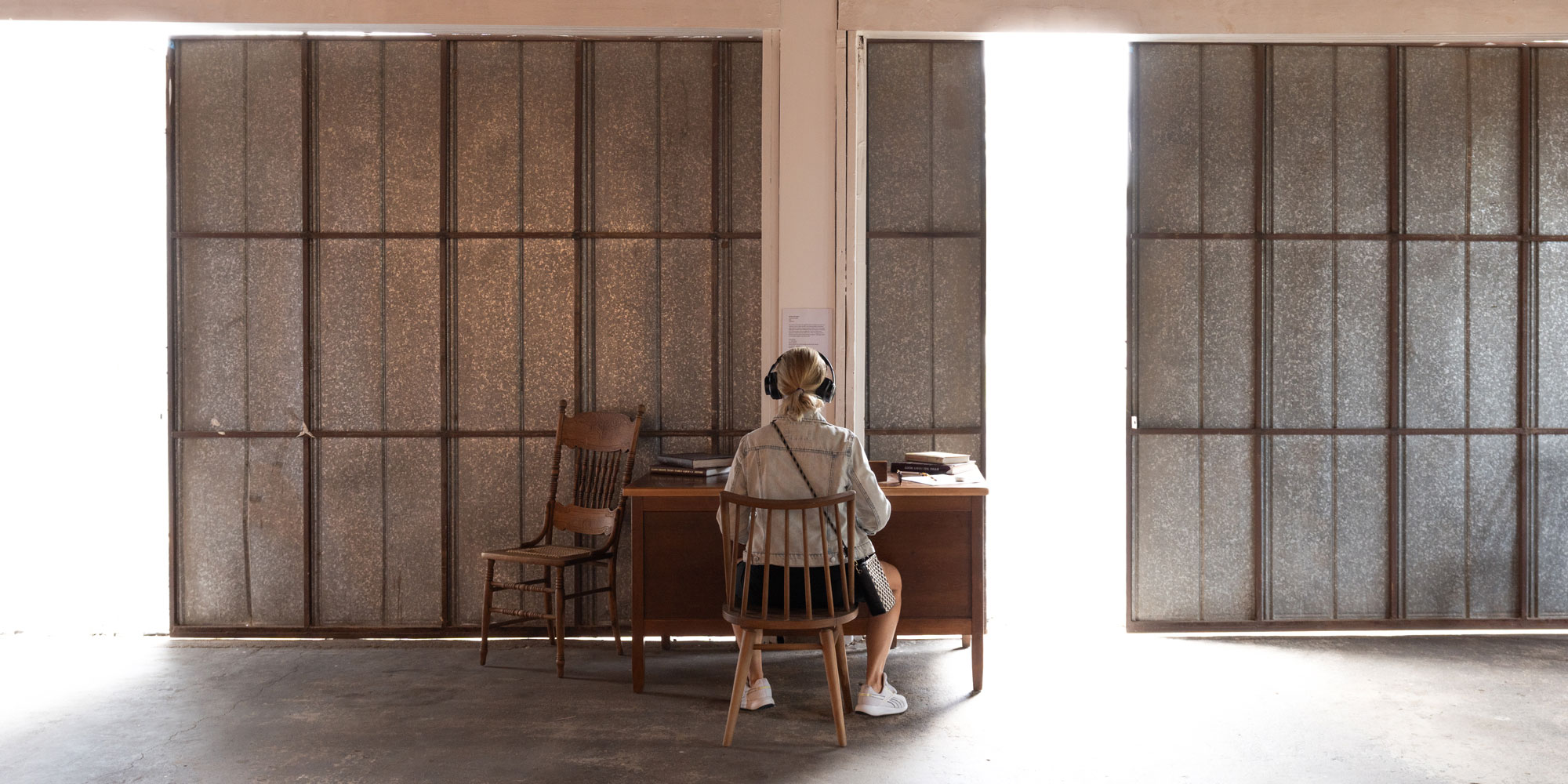
Whereas the bedroom was designed to induce relaxation, the living room employs physical interventions, such as stacked rocks counterbalancing a pulley system that opens large shutters, thereby connecting the individual to the weather. In the camp kitchen, guests wash their hands from a glass basin that offers real-time visibility of the water being used. At La Cuna, every detail is a tribute to intentional, mindful living, as evidenced by the passive cooling wall, rainwater harvesting, grey water recycling, and off-grid solar systems.
Eventually, Farrington hopes to invite four to eight creative professional residents to La Cuna every year, including artists, architects, landscape architects, and designers. The esteemed, Austin-based sculptor and land artist, Diego Miró-Rivera, recently spent a week camping onsite, immersing himself in the Llano River, and working on his art. “I loved being the guinea pig,” he opines of his experience. “Anyone who goes to La Cuna will see it’s a labor of love; it’s like a big sculpture itself.”
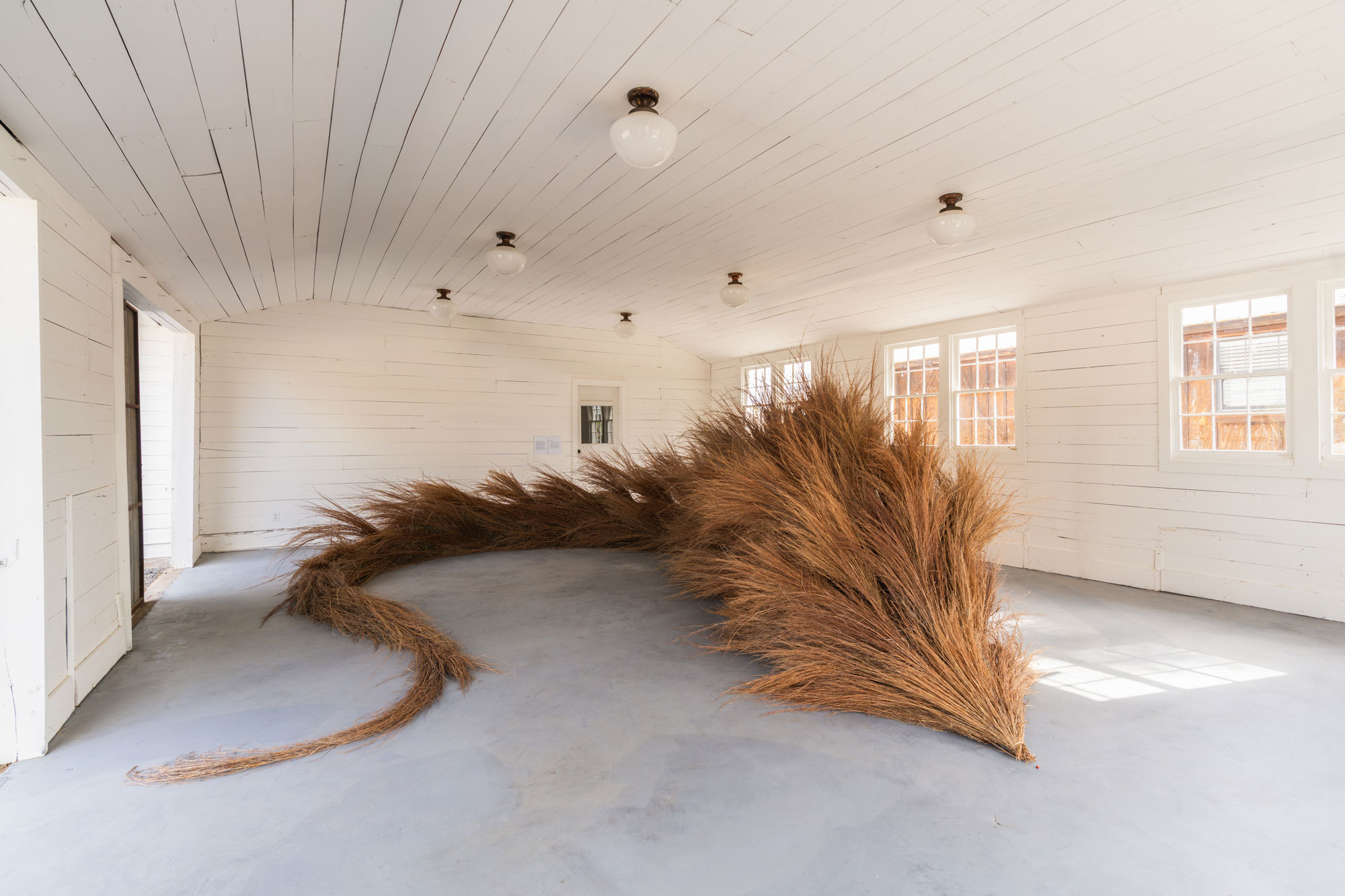
By the end of his stay, Miró-Rivera created “Poncho,” a large, site-specific abstract sculpture reminiscent of an undulating mythical creature, who wears a coat of hay and sticks wrapped in hand-harvested native Little Bluestem grass. The work, currently on view at the Castell Hill Country Gallery and Museum, draws attention to the grass’ increasing absence due to grazing pressures, and will be returned to the wild and fed to the local cattle come June.
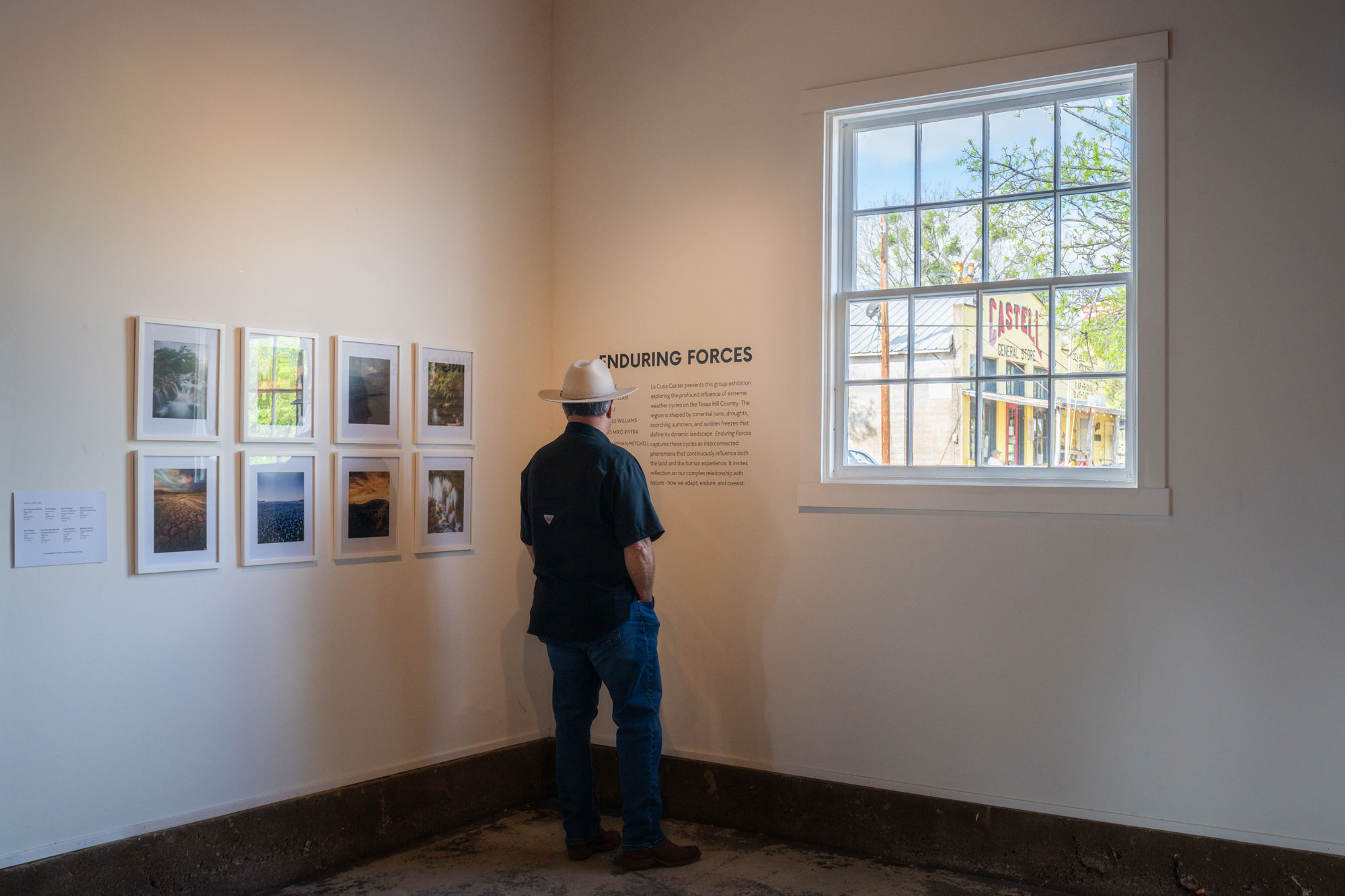
Aaron Ashmore, founder of the Austin-based AREA Group, opened the contemporary museum space—formerly an old barn—after stumbling upon the community during the pandemic. He and Farrington came together to launch La Cuna’s inaugural exhibition, “Enduring Forces” (through June 21), exploring the region’s wide-ranging weather patterns and environmental extremes. The show also features work by the 2024 Texas State Artist of the Year, Beili Liu, along with Abi Ogle, John Redington, and Texas nature photographers like Matthew Guthrie and Anna Mallam.
Despite the program’s inherent criticisms to modern living, Farrington is posturing La Cuna to traverse its constraints and restore connections between people, land, and place by using art to shift perspectives for the positive. In the years to come, the program also aims to produce a body of research specific to the Hill Country’s challenges, with invited residents responding to themes and drawing attention to data-driven solutions, be it new ways of ranching or regenerative architecture.
Until then, visitors to Castell can marvel “Poncho,” whose mane of native grass billows with life in the breezes that blow through town. “Rachel was looking for a way to introduce this space to both the town and the greater art world, and I think I helped her find the middle ground between all of us, which was the grasses that come from the land, that feed us, the cows, and that are also an amazing part of the ecology,” Miró-Rivera says. “By making that material choice, ‘Poncho’ was suddenly familiar, and very charismatic. Everyone from kids to the mayor were coming up with stories about what it was and what it could do—the imagination runs wild.”