

To hear research professor, podcaster, and bestselling author Brené Brown describe her home state of Texas, she could easily be describing herself. “Paradoxical.” “Tough and tender.” “Simple yet complex.” Her books and podcasts are filled with similar contradictions—easy humor riding shotgun with sophisticated research; nuanced findings explained through down-to-earth stories and a few choice expletives.
Perhaps best known for her research on shame, courage, empathy, and vulnerability—her TEDx talk “The Power of Vulnerability” is the fourth-most-watched of all time—Brown is a sought-after speaker worldwide, but she’s happily spent her entire adult life in the Lone Star State. Growing up here, with intermittent moves to New Orleans and Washington, D.C., the fifth-generation Texan is well-versed in fishing, hunting, and the art of sports metaphors—she’s a huge fan of the Spurs, Astros, and Longhorns. Her three degrees in social work, including a doctorate, led her to look at how people’s lived experiences could be mined for qualitative findings on emotions, peeling back layers of insights that sheer data may miss. A rarity in the world of academics, she often gives people a peek under the hood of her own life, sharing vulnerable experiences about family ruptures, academic detours, and sobriety, while asking nothing of her readers that she hasn’t risked herself.
Born in San Antonio, she now splits her time between Houston and Austin and holds professorships at both the University of Houston and the University Texas at Austin. Her first book, 2007’s I Thought It Was Just Me, unearthed research on shame. It was well received, but it wasn’t until 2012, when Daring Greatly was released, that she became a household name. She now has six New York Times bestsellers.
Her latest book, Strong Ground, came out in September and centers on how business leaders—and anyone in a position to effect change—can navigate this fast-changing world while staying steady and connected to ourselves and each other. “Individuals and organizations are building new muscles,” she writes in the book. “Finding our strong ground—that athletic stance—is the only thing that can provide both unwavering stability in a maelstrom of uncertainty and a platform for the fast, explosive change that the world is demanding.”

Texas Highways: What is your earliest memory of Texas?
Brené Brown: It’s the first thing that comes into my heart when I’m homesick, and that’s being in my grandmother’s backyard on the south side of San Antonio, sitting in one of those metal lawn chairs—the ones with the green-and-white mesh stripes—drinking iced tea and listening to cicadas. I can’t talk about it without crying. I thought cicadas were just part of a backyard until I went somewhere where there were no cicadas, and I thought, “Oh my God, the world’s ending.” I could never leave here and be happy, and I could never be happy if I left here.
TH: How did growing up in Texas affect your work?
BB: Asking me to describe Texas is like asking a fish to describe water. It’s really who I am. I did an identity exercise 10 years ago at a training and my three identifiers were, in this order: woman, mother, Texan. I travel all over the globe for work, and after being somewhere like London or New York for more than a few days, I’m like, damn, I want to be on Highway 71, driving with miles and miles in my windshield and my rearview mirror. I get claustrophobic.
TH: Did you take a lot of road trips growing up?
BB: We had a condo and fished in Port Aransas and Rockport, we lived in Houston, my family was all in San Antonio, and I went to school in Austin. So, I drove all over. There’s going to be a Styrofoam cup of coffee, a bag of kolaches, and three trucker hats on the dashboard. That’s everything about how I was raised. And if you don’t wave when I let you in, I’m going to think really terrible things about you and put a fifth-generation Texas curse on you. It’s not going to do anything bad, but you may have an accident in your pants while you’re driving.
TH: As someone who has traveled the world, I’m sure you’ve heard stereotypes about Texas.
BB: Yes. There are plenty of opportunities to reduce people in Texas to stereotypes, but you do that at your own risk. You can’t box people in. I grew up fishing and hunting and probably spent more time in a deer blind than in school during hunting season, and I’m very pro-gun reform. I’m a sports nut and I probably use five football metaphors a day but believe as heartily in mental toughness as I do emotional tenderness. You can find the extremes and divide us up by rural and urban, but once you get 6 inches outside that extreme, things are going to get poetic and complex. Look at people like Barbara Jordan, look at Ann Richards—strong, no-nonsense, no-horses— leaders who also had a deep capacity for inclusivity and kindness and basic human and bodily rights. They were forged in and of Texas.
TH: Texas politics is particularly divisive right now.
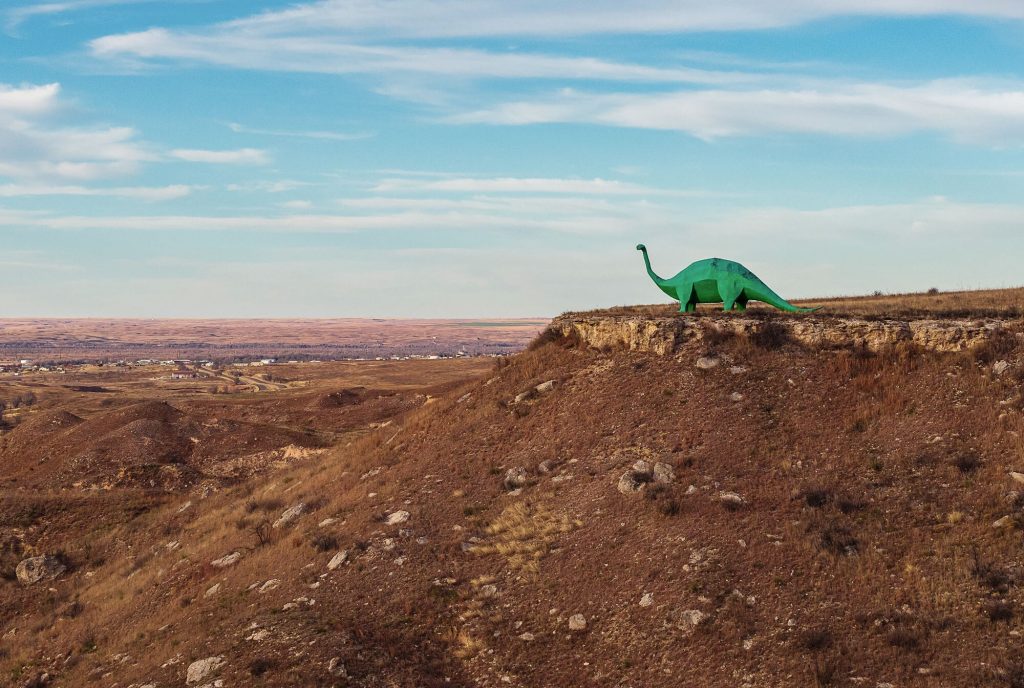
BB: What you see at play right now is more symptomatic of what the world is up against, and it’s easy to attribute it to our identity. I believe that the truest representation of Texas is in our music and our geography. If you look at the Hill Country, if you look at the tumbleweeds of Amarillo, if you look at the beauty of the Valley, there is something that is underneath the fragile ego, power grab stuff that people see in the politics here. If you want to know who Texas is, just listen to the music of Townes Van Zandt or Leon Bridges or Lyle Lovett. Listen to Lyle Lovett’s “Texas River Song.” That will tell you who we are.
TH: Your new book, Strong Ground, came out in September. What are its themes?
BB: It’s a follow up to Dare to Lead, and it’s about what courageous leadership looks like right now in the age of geopolitical turmoil, AI, shifting markets, and with people still struggling to recover from the pandemic. If you tell me how far, how fast, and how high you want to go as an organization, the first question I’ll ask you is: Tell me about your relationship with the ground. Are you grounded in values? Are you grounded in your mission? There are also a lot of sports and fitness metaphors in the book, in part because it starts with a pickleball injury I got.
TH: You play pickleball?
BB: I play most days of the week, but I got injured early on, and my trainer told me, “You’ve got no big muscles, so you’re going to have to build a core and a strong foundation.” That led me to think metaphorically about what organizations are going through all over the world today: They have not found their ground, and they are building on dysfunction. They have underdeveloped core functionality, and they’re experiencing a lot of compensatory injuries, just like middle-aged people who try to play pickleball and are using the wrong muscle groups.
TH: With all the traveling you do, you must miss Texas.
BB: I’m not well if I’m out of Texas for too long. I feel that way about Lake Travis, too. It is my spiritual place. I grew up there, running trotlines and fishing for perch and floating. It’s like holy water to me. I wrote Strong Ground at the lake. The day I turned in my last chapter, I went out and I thanked the lake. If I’m away from it for too long I just have to lay eyes on it.