
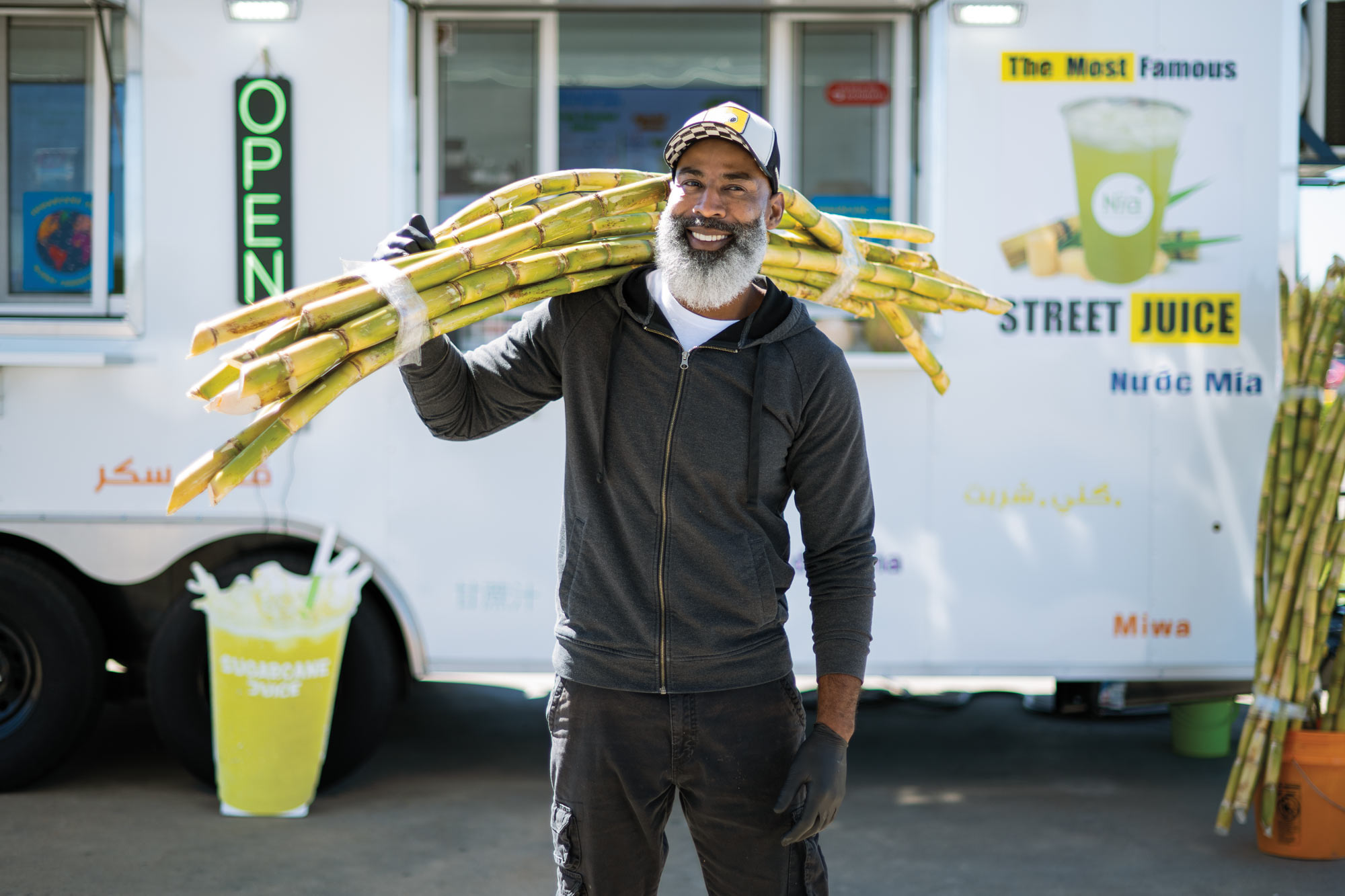
Red velvet ropes and brass stanchions corral a queue of customers extending well past a blockade of gas pumps. This incongruous setup is only made stranger by the tropical green juice truck positioned in the center of it all. Located in a Shell station parking lot at the intersection of State Highway 6 and Voss Road, Nia Cane’s clashing environs belie its significant ties to Sugar Land’s historical identity.
Located less than 5 miles from Imperial Sugar’s now-defunct eight-story, redbrick char house—a longstanding symbol of the town’s lucrative sugar legacy starting in 1908—Nia Cane serves 4-foot sugarcane stalks that are fed through an industrial juicer or simply split and stuffed with limes, ginger, and passionfruit. Sharod Coleman’s humble operation honors one of the first crops to be grown in Fort Bend County. It also caters to the city’s expanding diversity, where 30% of its population is foreign born—hailing from places like India, Africa, and the Middle East, where sugarcane juice is prized.

Like many of his customers, Coleman grew up gnawing on fibrous sugarcane stalks, savoring the grassy sweetness that emerged from the pulp. “The memories of that flavor are so strong,” he says, “that I can actually recognize the taste of a stalk grown in my hometown of Daphne, Alabama.”
And while his customers may not be able to name the terroir that birthed their favorite treat, they appreciate Coleman’s commitment to serving the freshest possible juice. That’s been unfeasible for a while, as Sugar Land stopped growing their titular crop in 1928. For decades, Imperial Sugar trucked in product from Galveston, until 2003 when it officially shut down its refinery. So, while Coleman continues to talk with local farmers about adding sugarcane back into their crop rotation, he brings in additional product from his native Alabama.
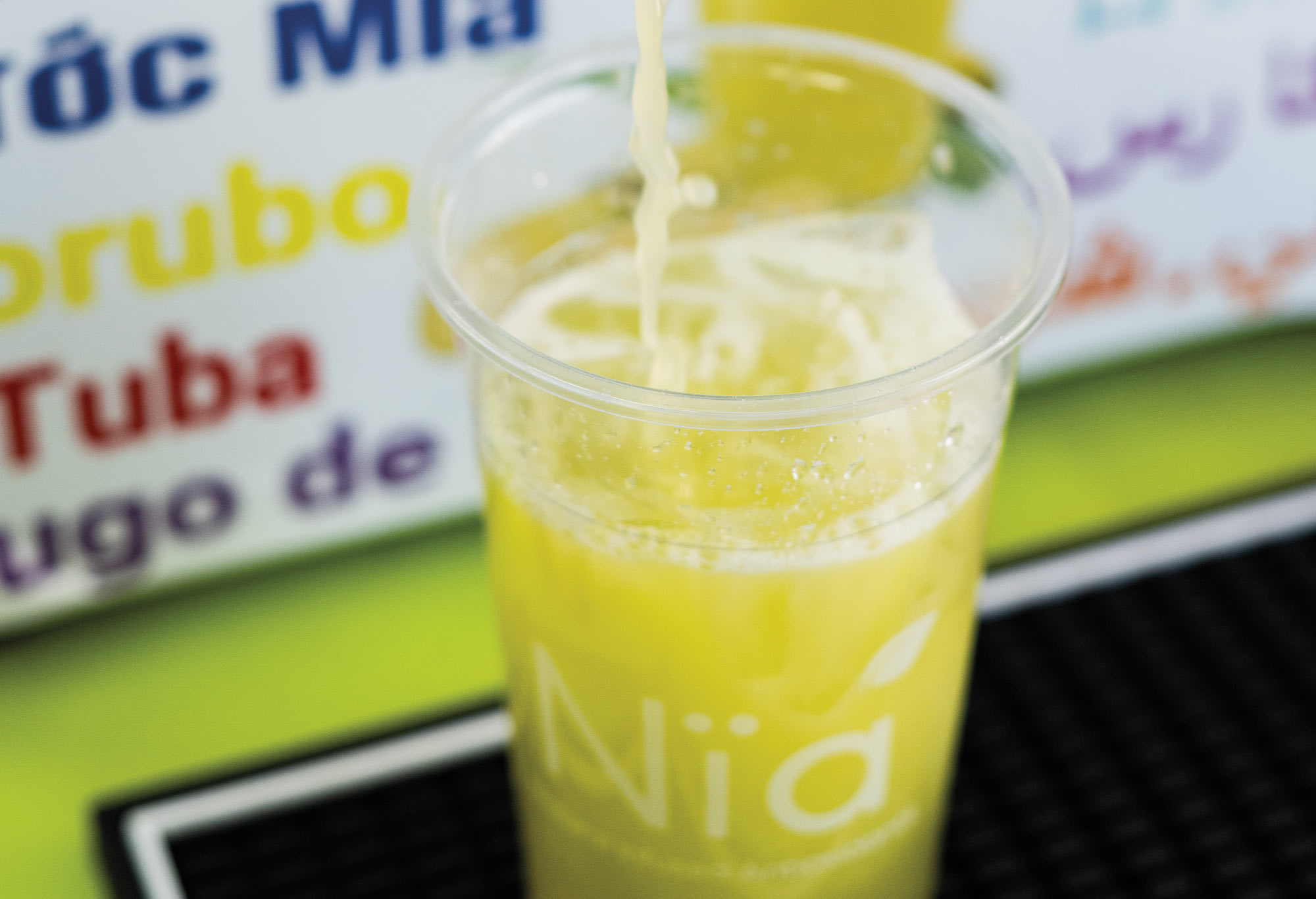
Situated in a parking lot that was once flush with the crop, Nia—an acronym for Natural Infused Antioxidants—still celebrates that Texas legacy while catering to its modern clientele. Plastered on Coleman’s juice truck are the words “sugarcane juice” translated into almost 20 languages. That approach has been good for business over the last three years, leading to the opening of two additional locations in Spring Branch and Southwest Houston. But more than any growth, Coleman says his greatest reward is providing something to the community that might’ve been missing from their lives.
“I’ve watched people get teary-eyed when they take their first sip,” he says. “Sugarcane is a connection to their childhood, their past, their history. This juice tastes like home—wherever that might be.”