
I haven’t been writing a film column all that long, so I’m unsure if it’s proper to start one with shameless praise. But I’ll do it anyway: Richard Linklater is a genius.
Over his four-decade career, the writer-director-producer who was born in Houston and attended high school and college in Huntsville has redefined what it means to be a writer-director-producer. Self-taught and Hollywood averse, Linklater is to independent filmmaking what Willie is to outlaw country. Both found their creative home in Austin—and both changed the city’s culture forever.
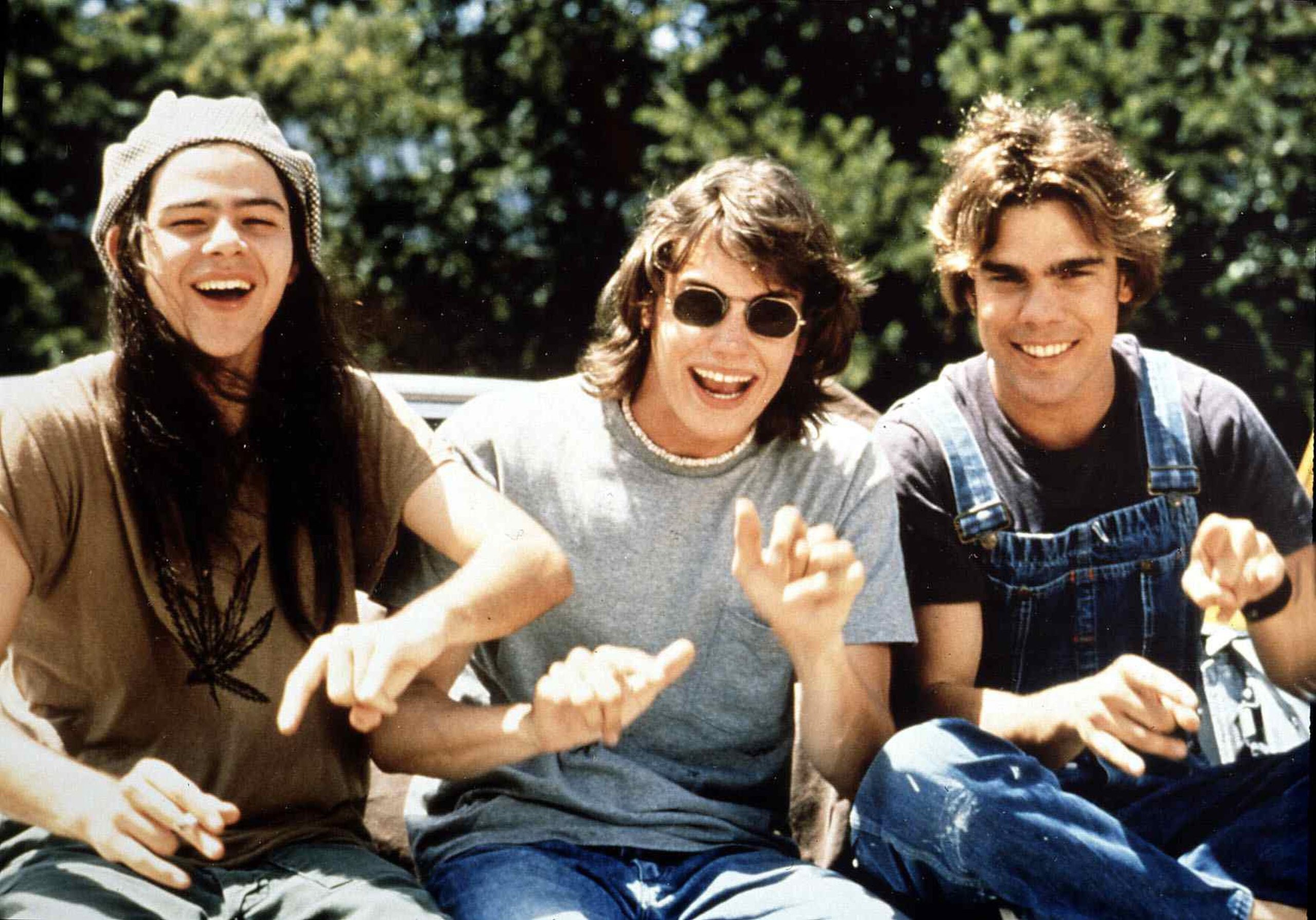
You could make a legitimate argument for any number of Linklater’s films to be the subject of this column (Slacker blazed the trail for a new generation of filmmakers; Boyhood is an emotional triumph of epic creative ambition), but it’s hard to dispute that Dazed and Confused has emerged as the most “famous” Texas movie ever made. What’s more impressive is that it did all that while making the difficult leap from cult classic to canon.
Think of it this way: When you hear the phrase “dazed and confused,” you don’t think about the Led Zeppelin song (all apologies to Robert Plant, who called Austin home for a time, though it is true that bandmate Jimmy Page steadfastly refused to let Linklater use their songs in the film). You think of high school kids in the ’70s driving around town, of the movie’s electric rock soundtrack, of nights at the Emporium pool hall (located at 6600 N. Lamar Boulevard and now the home of a software company), of weed and beer busts at the moon tower, and of the unyielding teenage instinct to find your place in the world. And, of course, you think of Matthew McConaughey as Wooderson, in his film debut that would launch him to superstardom and lead him to an Oscar for best actor just two decades later.
REEL TEXAS
We’re revisiting the classic films that shaped the mythos around the Lone Star State

Released in 1993, Linklater wrote and directed Dazed and Confused as his follow-up to Slacker, the Platonic ideal of indie filmmaking that was shot in Austin. Austin provides the main backdrop for Dazed and Confused as well, but this is not a typical Austin movie. There are no famous landmarks such as the Capitol or the UT Tower, and the only city that’s mentioned specifically is Houston (as in, we’re driving there in the morning to buy Aerosmith tickets). This story is pulled from the glow of Linklater’s memories of Huntsville and transplanted to Anytown in the South, USA.
Adding to the film’s restless energy is its ensemble cast, all generally unknown actors at the time: Ben Affleck, Parker Posey, Jason London, Joey Lauren Adams, Cole Hauser, Milla Jovovich, Wiley Wiggins, Michelle Burke, Adam Goldberg, Marissa Ribisi, Nicky Katt, and Anthony Rapp. This column barely has enough space to name them all. If you look closely, you’ll even spot Renée Zellweger, who had recently graduated from UT, in an uncredited role.
Set on the last day of class on May 28, 1976, at Lee High School (in real life, Bedichek Middle School at 6800 Bill Hughes Rd.), the film follows the intersecting exploits of two groups of kids on the precipice of monumental change: the juniors who are staring down the prospect of their senior year, and the eighth graders who are headed to high school.
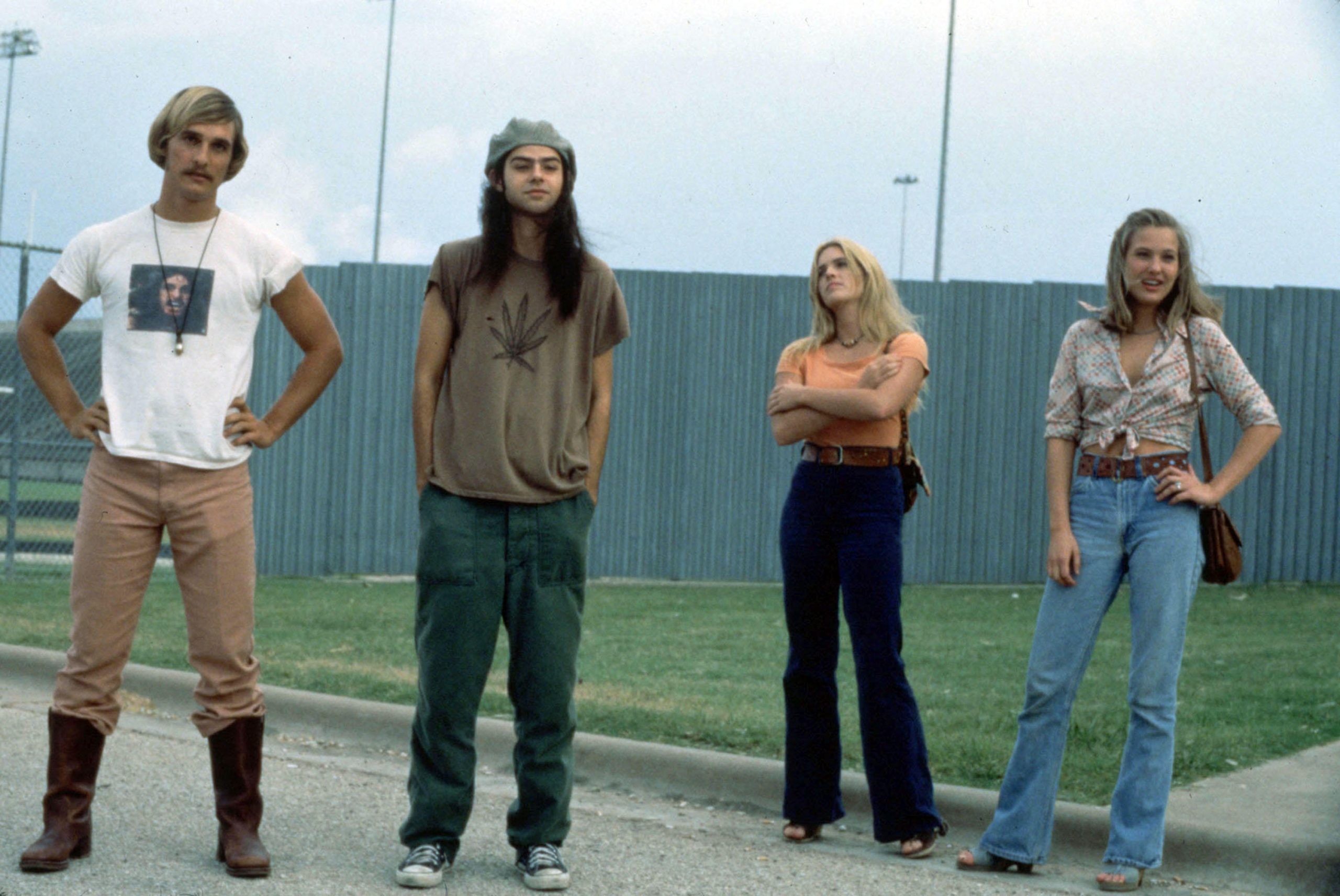
It’s common for teenage films to throw different types of students together: the brains, the jocks, the stoners, and the nerds. John Hughes’ The Breakfast Club is an obvious example, but Linklater’s trick is bringing them together fluidly, as they slide past one another in the hallway or cruise by each other in their cars until they all meet up—with varying results—at the moon tower party (filmed at Walter E. Long Metropolitan Park at 6620 Blue Bluff Rd. with a prop moon tower).
Randall “Pink” Floyd, played by London with an easy charm, is the ambivalent football player who serves as the connection between all these groups. With 13 starters returning and a shot at state, being the senior quarterback should rate more aura than being the governor of Texas, but Pink is the quintessential good guy who is friends with everyone and looks down on no one. And, pivotally, he may just have loftier ambitions than a winning season.
That matters because there is real menace in this film. Much of the action revolves around the seniors hazing the incoming freshmen. I use “hazing” politely. In fact, the senior boys relish the chance to spank the freshmen senseless with wood paddles (true story: my middle school gym teacher did have a paddle with holes, as does Hauser’s character Benny). In the case of Wiley Wiggins’ character, a wide-eyed freshman named Mitch who is pitching at his team’s baseball game, the seniors wait for him in the bleachers, taunting him as he tries to close out the game (the field is located at 7000 Ardath Street).
Mitch may get the win, but the seniors get him in a scene that’s frankly hard to watch for its depiction of brutality. (In fact, the reprieve comes only when Pink takes the paddle and taps Mitch gently, later inviting him out for the night.) The girls have a similar tradition. Though more psychological than physically harmful, it is wildly humiliating, with sexual overtones, breadcrumbs, ketchup, mustard, eggs, dog leashes, and a fair amount of yelling. And it all happens in the open in the parking lot of the local movie theater (now a branch of the public library located at 2200 Hancock Drive).
Of course, when I first watched the film not so long after college, I was squarely on the side of the students who were throwing off the yoke of their stuffy adult oppressors. In Pink’s case, he faces the pseudo-ethical dilemma of signing a pledge sheet issued by the football coach not to drink alcohol or smoke pot over the summer. His friends urge him to sign it and move on, but he simply cannot stand the “neo-McCarthyism” of it, as one character puts it. This plot device scans a little differently for me now. Somehow I have wandered into my 50s, and my son is days away from finishing his junior year. Given that he’s the same age as the characters in the film and will be a senior starting on his varsity football team in Austin in the fall, I think to myself, “You know, that pledge sheet doesn’t seem so unreasonable.”
And it’s true. Looking back on the film now, the overindulgence of the teenagers makes me more than a little uncomfortable and at times a little depressed. It’s a feeling that’s a bit hard to square with the film’s anything-goes attitude. But then I get caught up in the moment of the Edgar Winter Group’s “Free Ride” blasting as the sun is going down and the lights are coming up with the kids driving around town clearly reveling in the narrow window of their youth.
So what about McConaughey? “All right, all right, all right” is perhaps the most surprising signature line of any movie, and it has become so popular that it seems more associated with McConaughey himself than with his character Wooderson, the aging city worker who still hangs out with the high school kids. When Linklater gave him instructions for filming his first scene, the then-unknown McConaughey went for a walk to think about his character. “Who’s my man? Who is Wooderson?” McConaughey later said in an interview. “I’m about my car, I’m about getting high, I’m about rock ‘n roll, and I’m about chicks.” “All right, all right, all right” was born from McConaughey’s improvisation, and they are the first words he spoke in the first scene he filmed.
What is often overlooked is how that scene plays out. Filmed at Top Notch (serving cheeseburgers and fried chicken at 7525 Burnet Road since 1971). Wooderson rolls up in his Chevy Chevelle to hit on Ribisi’s character Cynthia, one of the three “brains” in the film. It is her reaction—totally counter to her character so far—that is one of the slyest moments of acting. She is smitten with Wooderson, and of course she will end up going to the Aerosmith concert with him. Wooderson may have only about 10 minutes of screen time, but he’s the character everyone remembers.
In the end, this is a movie about a single day and night in the lives of teenagers. None of the characters is on a quest for enlightenment. No great romances are launched. No transformative decisions are made. It’s simply one of the great American “hangout” movies. The movie ends with another scene that makes you feel: the characters in Wooderson’s car driving in the early morning hours to Houston to get Aerosmith tickets as Foghat’s “Slow Ride” plays. The final shot isn’t of the stars of the film. It’s a shot of the horizon just over the highway.
During his career, Linklater has been nominated for five Academy Awards, and he is currently working on a project that is intended to be shot over 20 years. But there is something powerful about the love his fans still have for his early work or the way they tend to utter “alright, alright, alright” reflexively. Such is the power of Dazed and Confused. It’s an ode to high school that is glorious and ridiculous and passionate and immature. Oh, to be young again.