
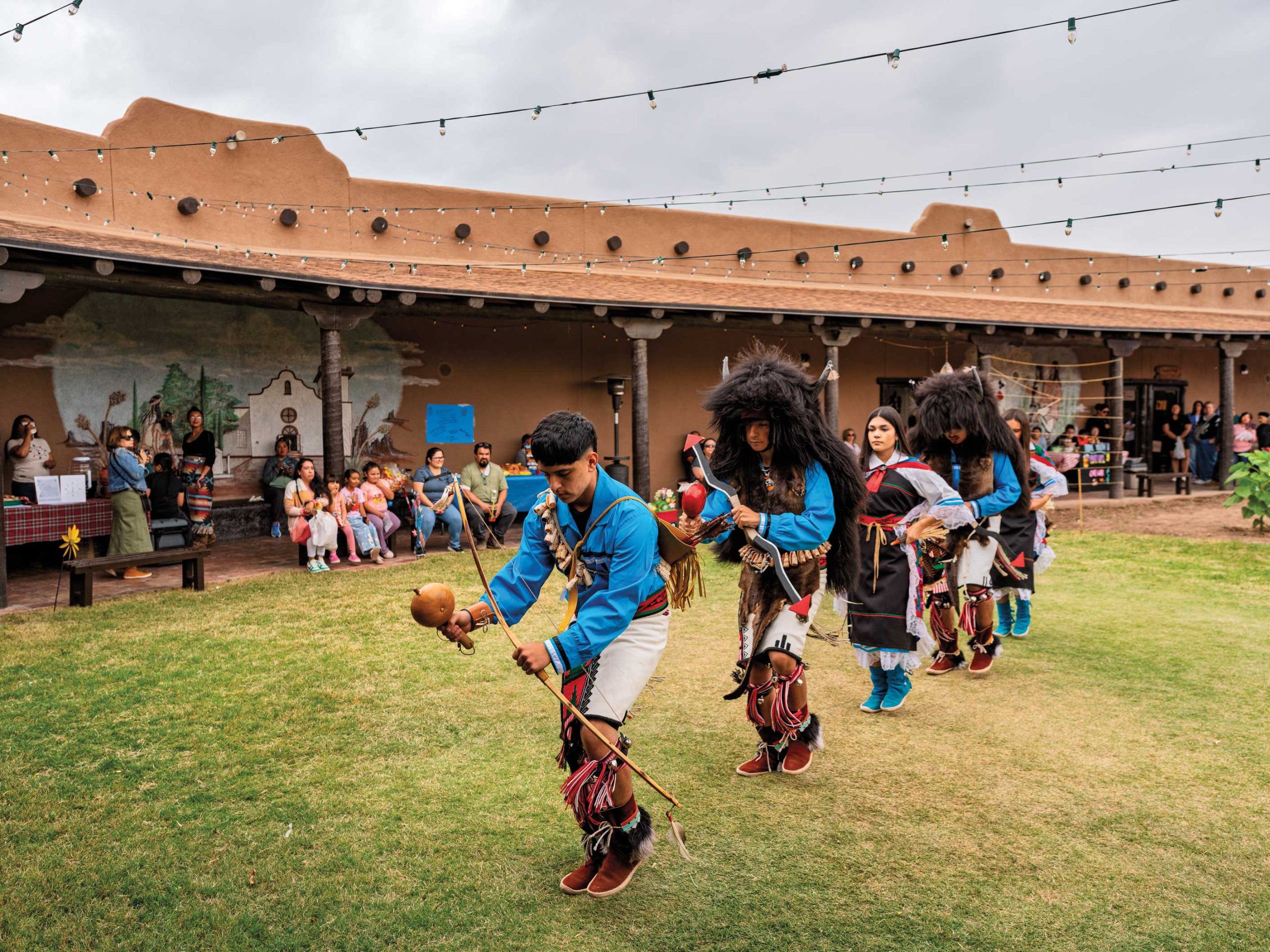
When 18-year-old Thursean Hurt dons a ceremonial headdress with buffalo fur and horns to perform the traditional Buffalo Dance, he says it connects him to his Tigua culture. This is especially true on Feast Day, a celebration of St. Anthony that the Tigua people of Ysleta del Sur Pueblo have honored every June 13 with dancing and prayers since their arrival to Texas in 1680.
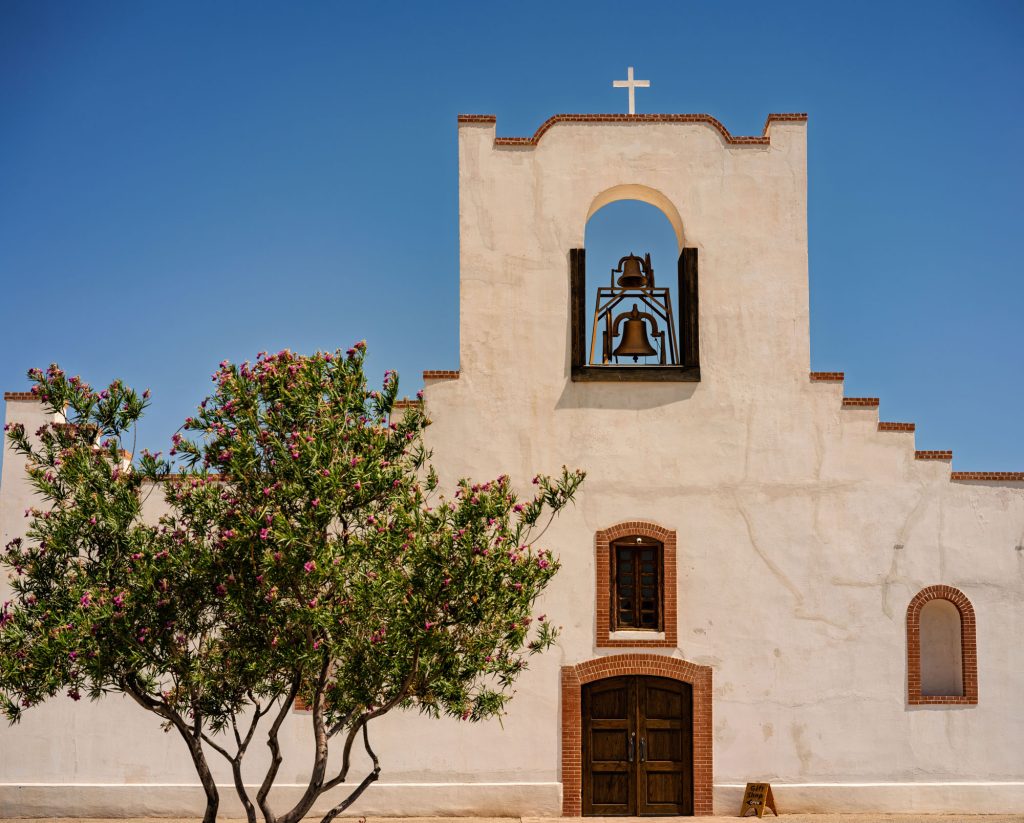
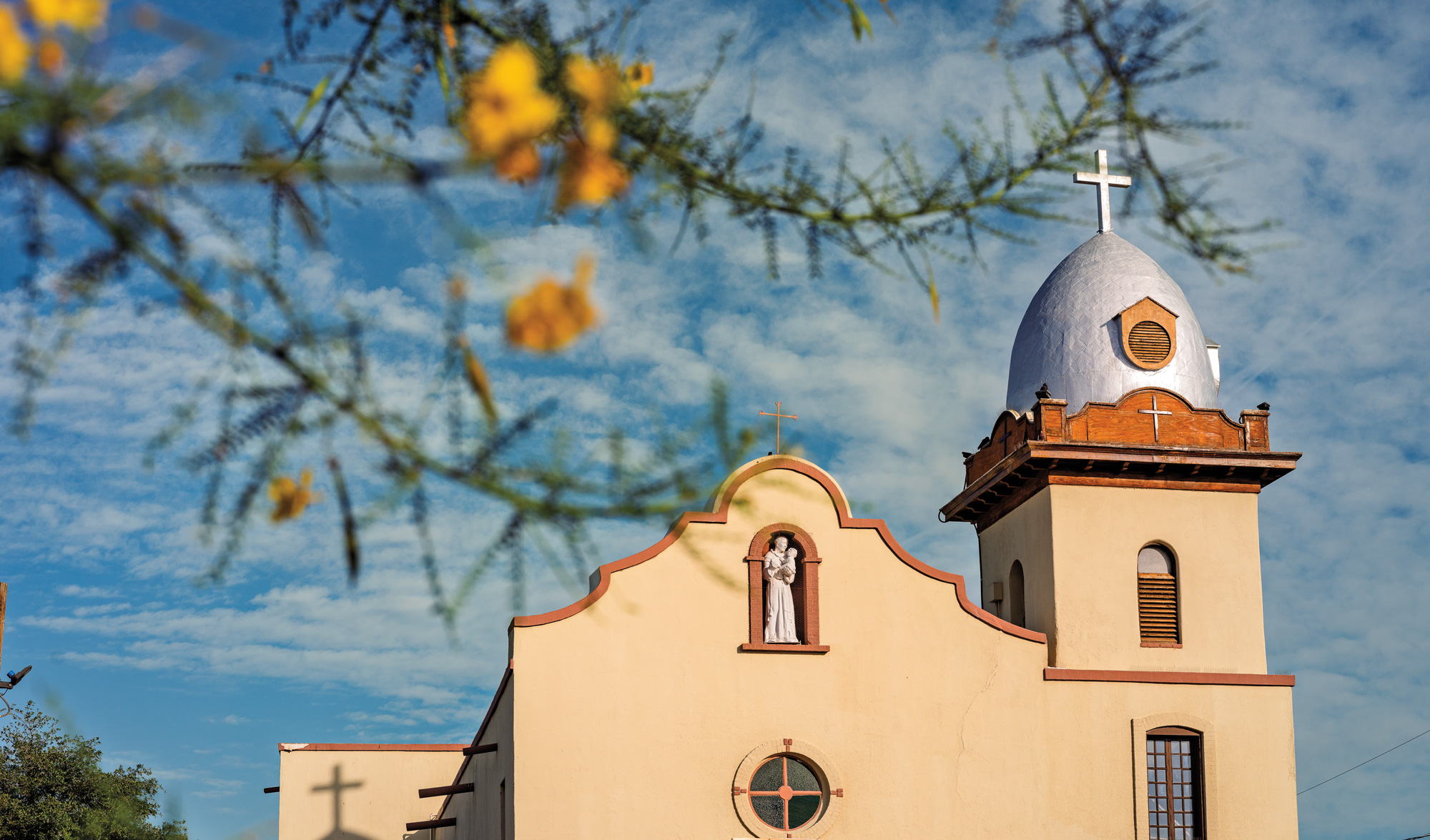
The day starts with a Catholic Mass at 8 a.m., followed by a procession to La Misión de Corpus Christi de San Antonio de la Ysleta del Sur, the oldest mission in the state. Dancers move well into the night performing the Tigua Corn Dance, a prayer for the crops and gardens that are planted that year.
“You may feel a little tired,” Hurt says, “but you start feeling that you’re connecting with your ancestors.”

Ysleta del Sur Pueblo, which translates to “Little Island of the South,” has been the home of the Tigua people for over 300 years, making it the oldest active community in Texas. It’s also one of three federally recognized tribes in the state, along with Alabama-Coushatta near Houston and Kickapoo in Eagle Pass.
“We’ve always identified as Native Americans,” says Rick Quezada, director of cultural preservation for the Pueblo. “We’ve always spoken our language, and we’ve always kept up our culture and traditions—whether we were state recognized or not.”
Historically, the Tiguas were farmers who grew wheat and corn and raised cattle and horses. There were two groups—the Summer People and Winter People—that lived seasonally in the region. The Summer People grew crops, while the Winter People were hunter-gatherers who moved between camps across West Texas, from Sierra Blanca to the Guadalupe Mountains, before returning to Na hluhli tui, or the “Old Village.” The archeological site and ancestral village near the Hueco Mountains in New Mexico and Texas is still used for Tiguas’ religious and cultural practices.
Their history dates back about 10,000 years in the Southwest and 1,000 years in their ancestral home in Quarai, 65 miles from present-day Albuquerque, New Mexico. Drought forced them to relocate 50 miles northwest to Isleta, New Mexico, in the 1670s. When the Spanish arrived in that region in the 1500s, they occupied the land of the Pueblo peoples, introduced them to Catholicism, and forced them to maintain their Indigenous culture in private.
In 1680, after 80 years of Spanish rule, the New Mexico Pueblo Indians revolted against—and defeated—the Spanish, who then retreated to Isleta. There, they captured 300 Tiguas and brought them 400 miles south to Misión de Nuestra Señora de Guadalupe in present-day Ciudad Juárez, Mexico. The next year, Spanish Governor Antonio de Otermín attempted to reclaim the Province of New Mexico and failed. He took more Tiguas with him back to El Paso, where he established Ysleta Mission in 1682.
“My people were the descendants of those two groups that were forcefully brought from the Mother Pueblo of Isleta, New Mexico, to El Paso del Norte in 1680 and in 1681,” Quezada says. “We’ve been here ever since, and we’ve made our home here.”
In 1692, the Pueblo received its first recognition from Spanish Governor Diego de Vargas, which formally allotted tribal lands. The 1751 Spanish Land Grant awarded the tribe 36 square miles that were protected by the Spanish and Mexican governments.
“You can say that the Spanish were not the nicest people in their ways, but one thing that differentiates them from other colonizing nations is that they gave rights to the native communities,” says Sebastián Ribas-Norman, director of the El Paso Museum of Archaeology. “When this region passed into Mexican hands, Mexico still gave them that. It was only when the Euro-Americans came into the region that things started to be messed up—because they didn’t recognize all those things.”
The Tiguas lost their plots of land in 1871 when Texas revoked them to declare Ysleta a city, a move that was later determined to be unconstitutional. When the city of El Paso annexed Ysleta in 1955, the tribe applied to become a federally recognized tribe, which they accomplished in 1968.
Today, the Pueblo is self-governed by its elected tribal officials and has built infrastructure for healthcare, employment, and education. For the latter, Quezada teaches the Southern Tiwa language to tribal members of all ages and collaborates with linguists and native speakers to create a dictionary to keep it from becoming extinct. A preschool within the Pueblo teaches an introduction to the language—words for colors and animals—in addition to the basic curriculum.
“Language is your identity,” Ribas-Norman says. “If you are able to maintain your language, your tribe will carry on as much as it needs to carry on because your stories, your everything, will go from generation to generation.”
The on-site Cultural Center also hosts activities for Tigua members such as pottery making and gardening in addition to programming for the general public that teaches Tigua history and culture. During the weekend, bread baking demonstrations and social dance performances are free to attend. Not only does the latter provide an opportunity for the younger generation to learn historical dances, but it is also a paying job.
Jacklyn A. Holguin, a former member of the dance group, helps run the program as cultural programs and events assistant, teaching the routines to new students. She says the teens already enter with a concept of the dances from watching their parents and siblings perform when they were younger.
Now that Hurt is 18, he will age out of the dance program, but he wants to continue contributing to his heritage by performing at traditional events like Feast Day.
“It felt like I was giving to my tribe, helping to keep the culture going, and continuing it for the newer generation,” Hurt says.