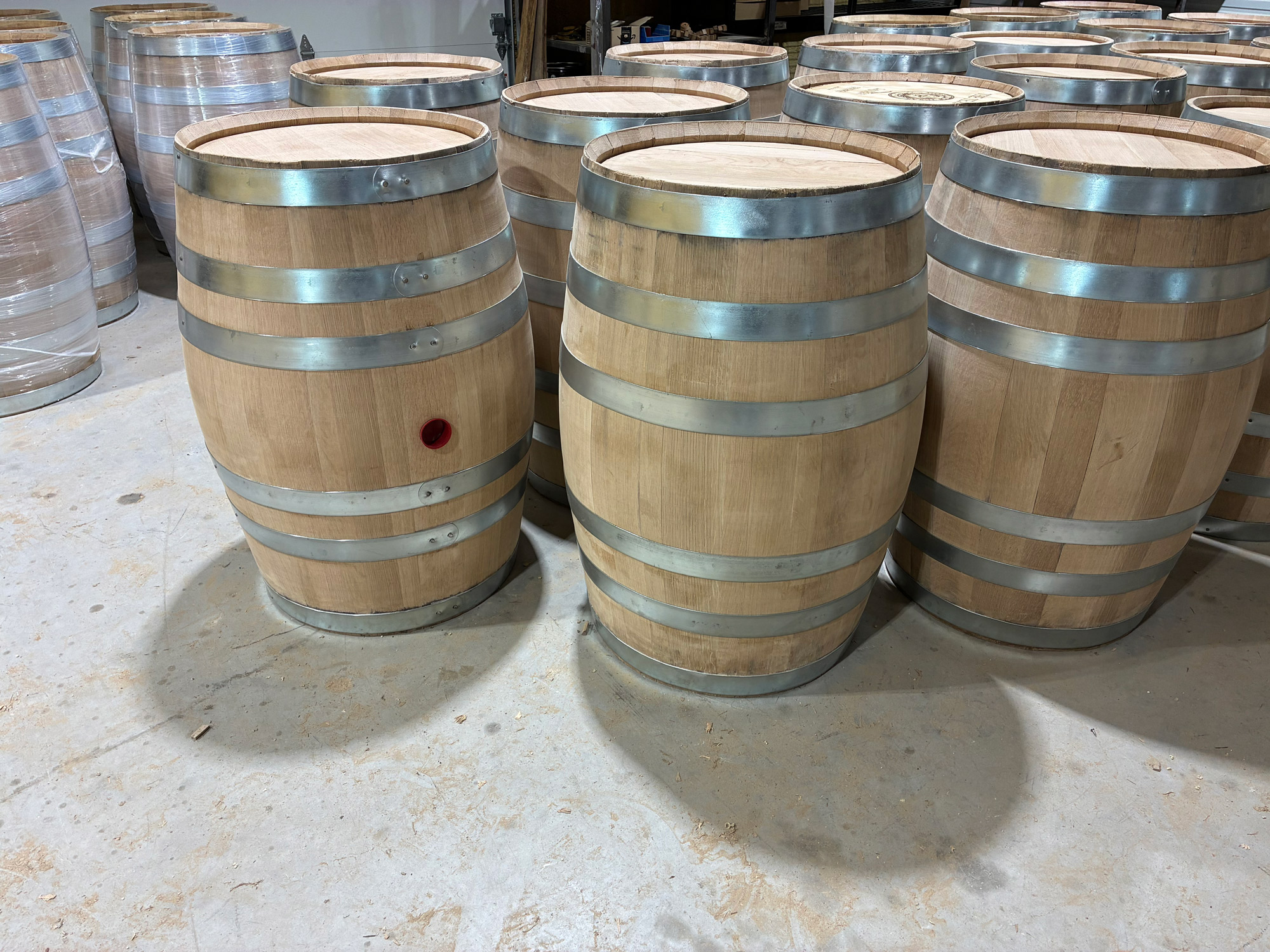
The aroma hits me as I step into the 12,000-square-foot warehouse, where pipes snake overhead and machines crowd the floor. The air is warm and thick with the scent of toasted bread, faintly sweet and spiced. A goliath hydraulic press jolts the warehouse to life as it forces steamed staves—narrow strips of wood that form a barrel’s curved edges—into place inside large metal rings. Inside Blanco’s Standard Cooperage, steel machinery rumbles and thumps as coopers finish what will become some of the state’s first barrels made from Texas white oak, also known as Quercus alba.
For wine, whiskey, and other spirits, wooden barrels are paramount, influencing everything from a drink’s texture and color to its structure and flavor. Historically, Texas distillers and winemakers have imported the vessels from out of state.
Standard cooperage
108 Clear Creek Road, Blanco.
512-826-1836; standardcooperage.com;
to schedule a tour, email [email protected]

In May, Greg Standard started Texas’s first working cooperage, pioneering the use of Texas-grown white oak for barrel-making. Bending Branch Winery owner Dr. Bob Young, a physician-turned-winemaker was among the state’s first vintners to experiment with locally grown oak on his own.
“If France can grow their own grapes, use their own oak, and make all their wine locally,” Young asked, “why are we bringing trees in from Missouri and other states instead of sourcing in Texas?”
Operating on a hunch, Young partnered with a multigenerational logging family in 2020 to send native white oak samples to a California cooperage. With a very limited supply, he began experimenting with oak chains instead, testing different sizes, toast levels, and aging methods. Satisfied with the early results, Young approached Standard, a builder and engineer by trade, and convinced him to start a Texas cooperage.
While Young’s interest stemmed partly from sustainability, he was also curious about whether Texas-grown oak could impart different flavors and aromas to the liquid it cradles. Partnering with Dr. Andreea Botezatu and Texas A&M’s Department of Horticultural Sciences, researchers found that the Texas white oak is chemically distinct from out-of-state trees, even varying by county.
Today, Standard separates Texas white oak by its county of origin, so producers may reference A&M’s research “to target sensory outcomes,” he says, “especially when combined with seasoning and toast decisions.” For example, wood from Nacogdoches County likely yields more vanilla or caramel notes, while Cass County trees produce more coconut and vanilla.
Bending Branch wasn’t alone in its dream of a fully-Texan barrel. Garrison Brothers Distillery, whose Lone Star heritage is a point of pride for the brand, had been mulling the possibility for over 20 years. But without a Texas cooperage, sourcing, seasoning, and shipping local white oak to an out-of-state cooperage would have been a major investment in both time and money.
“We work with Texas farmers to grow corn, wheat, and barley for our whiskey,” says Master Distiller Donnis Todd, “but the American white oak was the only thing that wasn’t Texan.”
For now, tasting the full effect requires patience. Oak aging is a marathon, with the full process adding many months, often years, before products are bottled and sold. Given that Bending Branch began experimenting with Quercus alba before the cooperage opened, several wines are already available to taste, including the 2022 Newsom Vineyards tempranillo and cabernet sauvignon.
Texas producers are already lining up. Standard’s clients include Becker Vineyards, Still Austin, Ron Yates, Milam & Greene, and a long list of others. For wine and whiskey fans, the reward will be getting their hands on some of the first bottles made with Texas-grown oak. Visitors can take behind-the-scenes tours of Standard Cooperage, where barrels are shaped, toasted, and charred, and the journey toward 100% Texan wine and whiskey begins.