Of his native West Texas, Elmer Kelton once wrote: “No stranger seeing this land for the first time would describe it as scenic. It is like the ugly child loved only by its mother. … It was the last part of the state to be settled, and then only because nothing else was left.” Predictably, the literary community had long regarded the region only as the desolate backdrop for ill-informed outlaw adventures. But the late Kelton, son of a ranch hand, saw the arid, cactus-dotted landscape as fertile ground for a new style of storytelling.
The famed San Angelo writer used his environs to great effect as the setting for several seminal works: The Good Old Boys, The Man Who Rode Midnight, and The Time It Never Rained. From the 1950s to the 2000s, Kelton, who died in 2009, put West Texas on the literary map and revitalized the Western genre with other Texas authors.

Now, he’s regarded as one of the foremost practitioners of his craft—a more refined, thoughtful, and historically accurate take on the trite cowboys-and-Indians tales of yore. Kelton won seven Spur Awards, and he was named the best Western writer of all time by the Western Writers of America in 1995, beating out Zane Grey, Louis L’Amour, and even Larry McMurtry. His work, along with that of other Texas-born masters of the genre including Dorothy Scarborough and J. Frank Dobie, eschews romanticism and depicts the real-world West, warts and all. Their style reverberates today.
Despite Kelton’s accolades and outsize influence on the modern-day Western, his friends say he never got too big for his Wranglers. “He was just a laid-back West Texas boy,” says Felton Cochran, who owns Cactus Book Shop in San Angelo and became friends with Kelton in the early 1980s. “He always seemed kind of amazed at his fame as a writer. Never really knew how to accept it.”
Kelton, who published more than 40 books, was an unlikely champion of the genre. Though he grew up on a ranch, he never had much aptitude for cowboying, holding a deep-seated fear of horses after a frightening incident on horseback as a youth. He never dreamed of running his own herd of cattle, and he was much more at home behind a typewriter than wielding a branding iron. The decision to pursue writing instead of ranching was a source of disappointment from his father, Buck Kelton, a lifelong cowboy. “He had the knowledge,” Cochran says. “He’d just rather read a book than ride a horse.”
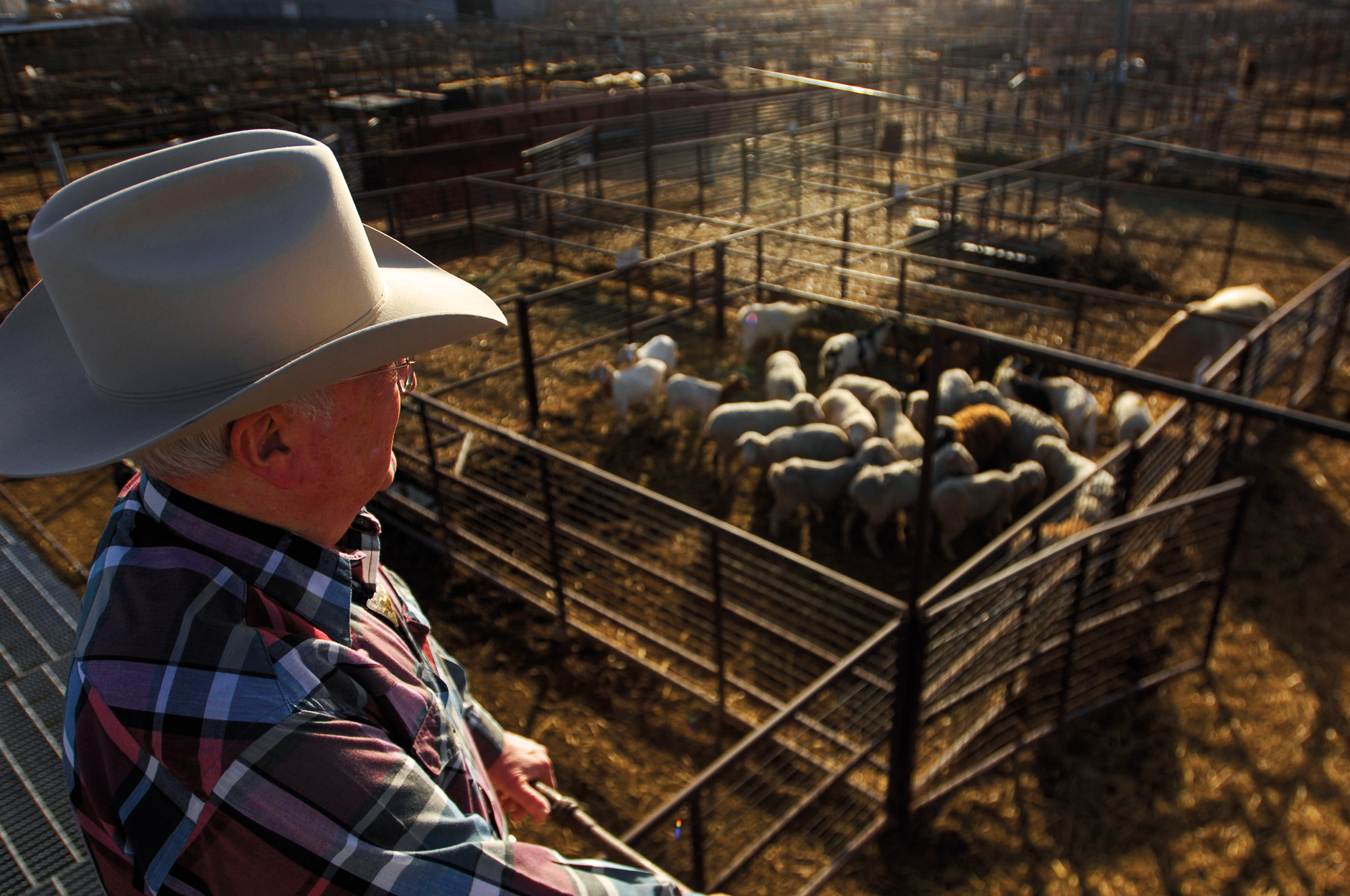
Though he never enjoyed the silver screen success of bestselling authors L’Amour or McMurtry, Kelton charted a new course through the genre, says Ken Untiedt, a retired professor of English at Stephen F. Austin State University in Nacogdoches. He insisted on historical accuracy and wrote characters who diverged from the typical tough-as-nails cowboys. “Kelton famously said that most heroes in Westerns were 6’4″ and bulletproof. His were 5’7″ and nervous,” Untiedt says.
Kelton and his contemporaries defied the conventions that had plagued Westerns for decades, perpetrated by the mass-produced “dime novel” Westerns that flooded markets from 1860-1900. “They would be packaged like cords of wood, loaded onto railway cars, and shipped out to the soldiers in the field during the Civil War,” Untiedt says.
Some of the most successful dime novel authors, such as Ned Buntline and Edward Wheeler, were from the Northeast and had little experience in the country’s western reaches. Their stories, which tended to be shallow and derivative, were populated by fictional versions of Buffalo Bill, Jesse James, Billy the Kid, and Sitting Bull. The quality of dime novels was such that if a particular title sold out, the publisher would be apt to change the book’s name, the names of the characters, and the typeface, and then resell it.
Westerns changed for the better, Untiedt says, with the publication of Owen Wister’s The Virginian in 1902. The story finds a Wyoming cowboy torn between friendship and duty, haunted by a murderous rival, and entranced by a beautiful young schoolmarm. “The Virginian pulled it all into one neat little package,” Untiedt says, “and after, people started writing more serious literature.”
Following in their hoofprints, Kelton and other Texan purveyors of Western literature went even farther off-script. They reimagined or entirely avoided early Western tropes: fewer gunfights, marauding Native American attacks, train robberies, river chases by canoe, high-noon duels, and shotgun weddings. Despite defying those conventions, their work still stands firmly on Western ground, says Untiedt, who asserts that a Western story must meet four criteria. It must contain a cast of characters including a hero, a villain, and an innocent person who requires protection; must be set in an area between civilization and the wilderness; must involve a struggle between good and evil; and must carry the theme of change, where the story’s hero adapts to the conditions and circumstances of an ever-changing world. Kelton’s seminal work, The Time It Never Rained, a story about a small-time rancher who struggles through the 1950s drought in West Texas, has all that and more.
Untiedt says Kelton holds a place on his Mount Rushmore of the greatest Texas Western novelists, alongside McMurtry, author of Lonesome Dove and Horseman, Pass By; Clay Reynolds, who wrote The Vigil and Agatite; and Dobie, the legendary folklorist, University of Texas professor, and author of The Longhorns.
After public interest slouched in the 1960s and ’70s, Cormac McCarthy, who lived in Texas for 20 years, helped to revitalize the genre. All the Pretty Horses and No Country for Old Men were given the Hollywood treatment, along with The Road, a reenvisioned Western set in a post-apocalyptic world, which won the Pulitzer Prize for Fiction in 2007.
Only one of Kelton’s books, The Good Old Boys, was turned into a movie, in 1995—directed by Tommy Lee Jones and starring Jones and Frances McDormand. Aside from that brush with Hollywood, Kelton’s stories typically kept a low profile, much like their author. Cochran recalls how Kelton was always gracious with his fans, noting several instances when strangers dropped by unannounced to Kelton’s home near Angelo State University and asked him to autograph a boxful of books. “He’d usher them in and pour them a cup of coffee and sign their books,” Cochran says.